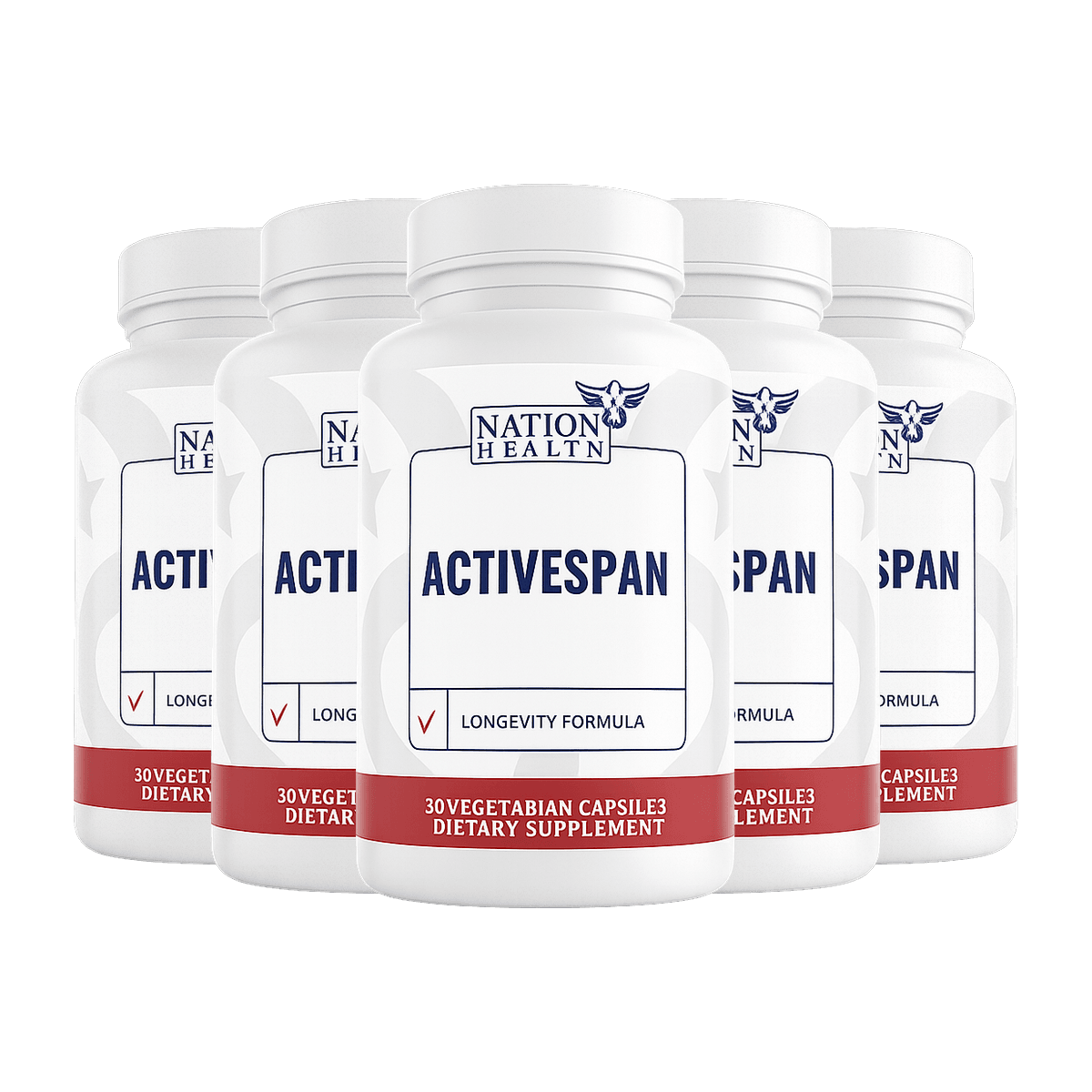
ActiveSpan Review and Ads Breakdown: A Research-First Look
Somewhere in the middle of a short video, a woman's voice does something deceptively simple: it tells you that what you've always believed about your own body is wrong. The claim arrives early, alm…
8,226+
Videos & Ads
+50-100
Fresh Daily
$29.90
Per Month
Full Access
12.5 TB database · 72+ niches · 25 min read
Introduction
Somewhere in the middle of a short video, a woman's voice does something deceptively simple: it tells you that what you've always believed about your own body is wrong. The claim arrives early, almost casually. That the metabolic slowdown so many adults over forty attribute to aging may not be the inevitable biological sentence they assumed it was. For anyone who has spent years watching the scale creep upward while eating less and moving more, that sentence functions less like a marketing claim and more like a lifeline. It is also, deliberately, the beginning of an argument designed to sell something. This is how ActiveSpan enters the conversation.
ActiveSpan is a weight management supplement positioned around a single, high-leverage contrarian idea: that mainstream medicine and popular culture have misidentified the root cause of age-related weight gain. The VSL (Video Sales Letter) built around this product opens with a narrator who frames herself not as a detached expert but as a fellow believer who was similarly misled; someone who "always thought" metabolic slowdown was normal, and who was shocked to discover otherwise. The rhetorical architecture of that opening is worth examining closely, because it tells you a great deal about who this product is actually built for, what fears it is speaking to, and how much of what it promises is grounded in real science versus shrewd storytelling.
The supplement market for adults over forty is not a niche, it is one of the most competitive arenas in direct-response consumer goods. According to the Global Wellness Institute, the global weight management market exceeded $270 billion as of the early 2020s, with products aimed at midlife adults representing a disproportionate share of growth. Within that broader market, metabolism-support supplements occupy a particularly crowded shelf, which means any VSL competing in this space needs to do more than promise weight loss. It needs to reframe the problem entirely. ActiveSpan's pitch attempts exactly that reframe, and the way it executes the opening hook reveals a sophisticated, if not always fully substantiated, understanding of its buyer's psychology.
The question this analysis investigates is whether the science behind ActiveSpan's core claim, that age-related metabolic decline is both misunderstood and addressable, holds up to scrutiny, and whether the persuasion architecture of the VSL is as honest as it is effective. The transcript available for this review covers only the opening of the letter, but that opening is sufficient to read the broader strategy at work.
What Is ActiveSpan?
ActiveSpan presents itself as a dietary supplement designed to address what it characterizes as the true, underlying cause of metabolic slowdown, a cause the VSL implies is distinct from, and more correctable than, simple chronological aging. The format is consistent with the broader category of oral supplements sold through direct-response channels: a product taken daily, positioned not as a drug but as a nutritional support tool, and marketed primarily to adults experiencing the weight management challenges that typically intensify in the fourth and fifth decades of life. The product's name, a compound of "active" and "span", signals a positioning around sustained vitality rather than rapid weight loss, suggesting the brand is attempting to occupy the longevity-wellness overlap rather than the crash-diet corner of the market.
The target user is legible from the opening lines of the VSL: someone struggling to maintain a healthy weight who has internalized the explanation that aging is simply to blame. This is a psychographic as much as a demographic, a person who has tried conventional approaches, found them insufficient, and is now open to the idea that they were working from a flawed premise. The product is almost certainly aimed at women in the 45-65 age range, a cohort that direct-response health marketers consistently identify as both highly motivated and deeply fatigued by solutions that do not acknowledge the specific physiology of perimenopause and menopause. The narrator's voice and framing support this reading without making the targeting explicit.
Within its category, ActiveSpan is positioning itself as a mechanism-first product. One that competes not on ingredient novelty alone but on a new explanatory frame for a familiar problem. This is a market sophistication play: when a buyer has seen dozens of weight loss supplements and dismissed them all, the only pitch that can break through is one that offers a new theory, not just a new pill. Whether the theory is as new as the VSL implies is a separate question, but the strategic logic is sound.
The Problem It Targets
The problem ActiveSpan is built around. Unwanted weight gain in middle age, particularly weight that seems resistant to dietary discipline and exercise; is both genuinely widespread and genuinely complex. The CDC reports that more than 41% of American adults are classified as obese, with prevalence rising sharply through the 40-60 age range. The frustrating reality for many adults in this cohort is that the behaviors that maintained their weight at 30 simply stop working at 50, creating a lived experience of metabolic injustice that the VSL is acutely calibrated to recognize and validate.
The conventional explanation, that basal metabolic rate (BMR) declines steadily with age, is actually more nuanced than it is usually presented. A landmark 2021 study published in Science by Herman Pontzer and colleagues at Duke University found that human metabolism remains relatively stable from roughly age 20 to 60, declining meaningfully only after 60. This finding contradicted decades of assumption and received substantial press coverage, which is likely the scientific moment that created the cultural opening for a VSL like this one. The claim that "it's not 100% true" that metabolism slows with age is therefore not fabricated, there is legitimate scientific debate underneath it. The more careful question is whether the mechanism ActiveSpan proposes as the real culprit is as well-supported as the framing implies.
The problem also has a powerful emotional texture that the VSL exploits with precision. Weight gain in midlife is rarely experienced as a neutral physiological fact, it is bound up with identity, attractiveness, health anxiety, and the broader fear of aging. The frustration the narrator references, "those few desperate pounds", is not incidental language. The word "desperate" does real rhetorical work, naming the emotional state of the viewer and signaling that the VSL understands not just the physical complaint but the psychological weight that accompanies it. This emotional accuracy is what separates effective health marketing from generic supplement copy, and it is what makes the ActiveSpan opening hook land with the force that it does.
From a commercial standpoint, this is a problem with near-perfect market characteristics: it is universal within the target demographic, emotionally salient, poorly served by existing mainstream solutions, and, crucially. It has an explanation that can be challenged. A problem whose cause can be reframed is a problem that can be resold to buyers who have already tried and rejected the prior framing's solutions.
Curious how other VSLs in this niche structure their pitch? Keep reading. The section on psychological triggers breaks down the mechanics behind every move made in this opening.
How ActiveSpan Works
The VSL, at least in the section available for review, reveals the mechanism of action through a classic open-loop structure: it tells you that the standard explanation is wrong, creates an unresolved tension around what the real explanation might be, and then uses that tension to pull the viewer deeper into the letter before the solution is fully named. Based on the positioning and category conventions, the implied mechanism is that some correctable factor; hormonal, mitochondrial, microbiome-related, or inflammatory, is the real driver of the metabolic difficulties adults experience after forty, and that this factor responds to supplementation in a way that aging itself does not.
This is a legitimate scientific frame in the abstract. Research published in journals including Cell Metabolism and the Journal of Clinical Endocrinology & Metabolism has documented that mitochondrial function declines with age in ways that are partially reversible with specific nutritional interventions. Similarly, the role of chronic low-grade inflammation, sometimes called "inflammaging" in the gerontology literature, in driving insulin resistance and fat storage is a real and active area of research. If ActiveSpan's formulation targets any of these pathways with evidence-backed ingredients, the claim structure has a plausible scientific basis. The honest caveat is that "plausible pathway" and "clinically proven supplement" are very different things, and the gap between them is where most direct-response health products live.
What the VSL is doing at the mechanistic level is what copywriting strategists call an epiphany bridge: it walks the viewer through the narrator's own moment of discovery, creating a vicarious experience of revelation that primes the viewer to accept the solution that follows. The mechanism does not need to be fully explained in the hook, in fact, explaining it too early would collapse the tension that keeps viewers watching. This is structurally sophisticated, and it reflects a VSL written by someone who understands the direct-response format at a high level of craft.
Evaluated honestly, the claim that metabolic slowdown is not simply a function of age is plausible, partially supported by recent research, and importantly different from the stronger claim that a particular supplement can reverse or prevent that slowdown. The VSL, at the point the transcript cuts off, has not yet made the stronger claim explicitly, but the framing has been built to carry the viewer toward accepting it without friction. That is a meaningful distinction for a buyer trying to evaluate whether to purchase.
Key Ingredients / Components
The available transcript does not disclose the formulation of ActiveSpan, which is common at the hook stage of a VSL, ingredients are typically introduced in the middle or late sections once the viewer has already been persuaded that the mechanism is real. Based on the metabolic support positioning and the target demographic, the following categories of ingredients are commonly found in competing products and would be consistent with the claims being set up. This section will be updated when full formulation data is available.
- NAD+ Precursors (NMN or NR): Nicotinamide mononucleotide and nicotinamide riboside are compounds that support mitochondrial function by boosting NAD+ levels, which decline significantly with age. Research from the Guarente Lab at MIT and published studies in Cell (2013) and Nature Metabolism (2020) support the biological plausibility of this pathway. Whether oral supplementation achieves meaningful tissue-level changes remains an area of active scientific discussion.
- Resveratrol: A polyphenol found in red grapes frequently paired with NAD+ precursors. Its theoretical mechanism, activation of sirtuins, proteins linked to cellular longevity. Is genuinely interesting science, though human clinical evidence for weight-specific outcomes is mixed at best.
- Green Tea Extract (EGCG): One of the more evidence-supported metabolic ingredients in the supplement industry. Multiple meta-analyses, including one published in the International Journal of Obesity (2009), have found modest but real effects on resting energy expenditure and fat oxidation. At therapeutic doses it is generally considered safe for most adults.
- Berberine: A plant alkaloid with a growing body of clinical research behind it, particularly around insulin sensitivity and glucose metabolism. Some researchers and clinicians have compared its metabolic effects to metformin, though that comparison, while frequently cited, should be treated cautiously in the absence of head-to-head clinical trials.
- Chromium Picolinate: A trace mineral commonly included in blood sugar and metabolism formulas. Evidence for its weight-management effects in non-diabetic adults is limited, though it is well-tolerated and has a long history in the supplement category.
Hooks and Ad Angles
The main opening hook of the ActiveSpan VSL. "if you are struggling to maintain a healthy weight, you need to hear this"; functions as a pattern interrupt in the technical copywriting sense: it addresses the viewer's active state (struggle, frustration) rather than promising a future outcome, which immediately differentiates it from the majority of supplement ads that open with before-and-after imagery or numerical weight loss claims. This is a more sophisticated entry point. It speaks to identity and current pain before it speaks to aspiration, which is precisely the structure recommended for a market sophistication stage 4 or 5 audience in Eugene Schwartz's framework, buyers who have encountered many competing claims and are now skeptical of direct outcome promises. For this audience, a promise of understanding lands before a promise of results.
The second rhetorical move, the contrarian claim that the standard explanation for metabolic slowdown "is not 100% true", deploys what in persuasion theory is called a false enemy reframe: it reassigns the villain of the story from the viewer's own biology or discipline to an external source of misinformation. This is both emotionally relieving and commercially effective. The viewer is no longer someone who failed at dieting; they are someone who was misled by incomplete science. That reframe creates a form of righteous indignation that is one of the most reliable states of receptivity a marketer can induce. The narrator's admission that she "always thought" the same thing closes the empathy loop, establishing peer credibility over expert authority, a choice that reflects genuine craft, because expert authority in health marketing has become deeply suspect for a significant portion of the target audience.
Secondary hooks observed in the VSL:
- "We've been given false information for years about how our metabolism works"
- "I was shocked when I first heard this, because I believed it too"
- "It's not 100% true that metabolism slows with age"
- "Those desperate pounds that won't come off no matter what you do"
Ad headline variations for Meta or YouTube testing:
- "Your metabolism isn't broken, you've just been told the wrong reason it slowed down"
- "Doctors got it wrong about aging and weight gain. Here's what the research actually says."
- "The real reason you're gaining weight after 45 (and it's not your age)"
- "She thought it was just aging. Then she found out the truth about metabolism."
- "New science shows metabolism doesn't slow the way we thought, here's what that means for you"
Psychological Triggers and Persuasion Tactics
The persuasive architecture of this VSL, even in its compressed opening form, reveals a layered approach rather than a single-tactic play. The letter stacks authority borrowing, empathy-based credibility, and loss aversion in a sequence that moves the viewer through three distinct psychological states: first, recognition ("this person understands my problem"); second, disruption ("everything I thought I knew may be wrong"); and third, curiosity tension ("I need to know what the real answer is"). These three states are not accidental. They map precisely onto the awareness-to-interest transition in the classical AIDA framework, compressed into fewer than ninety seconds of audio. That compression is a mark of experienced copywriting.
What makes the architecture notable is that the narrator does not position herself as superior to the viewer. She positions herself as having been equally misled, which deploys what Leon Festinger described as cognitive dissonance reduction: the viewer's existing belief ("my metabolism is slow because I'm getting older") is threatened not by a lecturer but by a fellow sufferer who found a better explanation. That approach tends to be significantly less resistant to pushback than an authority-led correction, because it doesn't require the viewer to feel embarrassed about having been wrong. The emotional experience is more like being handed a gift than being corrected.
- Pattern Interrupt (Cialdini, 2006): The opening directly contradicts a widely-held belief, disrupting the viewer's default cognitive processing and increasing the salience of what follows. Specific deployment: "we have been receiving false information" in the first ten seconds.
- Open Loop / Zeigarnik Effect: By stating that the standard explanation is incomplete without providing the correct one, the VSL creates a tension that the brain is wired to resolve. The viewer cannot leave without feeling an unresolved question. The precise mechanism that makes VSL completion rates dramatically higher than banner ad engagement.
- Peer Credibility over Expert Authority (Godin's Tribes): The narrator does not cite credentials or institutions in the opening; she cites her own former belief. For an audience that has been promised results by experts and been disappointed, a peer who "was also fooled" is more credible than a doctor who claims to have always known the answer.
- False Enemy Framing (Schwartz, Breakthrough Advertising): The villain of the story is misinformation, not biology. This removes shame from the viewer's experience of weight gain and redirects frustration outward, creating the emotional state of wanting to act against the enemy, which in the context of the VSL means buying the product that fights back.
- Loss Aversion (Kahneman & Tversky, Prospect Theory): The framing implies that the viewer has been losing time, effort, and results to a false explanation, positioning the purchase not as a gain but as a recovery of something unjustly taken. Losses frame purchases more compellingly than equivalent gains.
- Identity Validation: The phrase "those desperate pounds" names an emotional experience, not just a physical one. Naming a feeling accurately creates a form of trust that is pre-rational and difficult to argue against.
- Epiphany Bridge (Russell Brunson): The narrator walks through her own moment of discovery, structuring the VSL as a shared revelation rather than a sales pitch. This structure converts the product from something being sold into something being shared.
Want to see how these tactics compare across 50+ VSLs in the health and wellness niche? That is exactly what Intel Services is built to show you.
Scientific and Authority Signals
The portion of the VSL available for review does not yet deploy named scientific studies, clinical trials, or credentialed experts, this is consistent with standard VSL architecture, where authority signals typically appear in the middle sections after the hook has done its work. What the opening does instead is establish a form of vernacular authority: the narrator's credibility comes from having held the wrong belief and discovered the right one, rather than from institutional affiliation. This is a deliberate strategy, not an oversight. For a demographic that has been told by their doctors that weight gain is "normal at your age" and found that answer unsatisfying, an institutional voice carries baggage that a personal epiphany voice does not.
The claim that metabolic slowdown with age is "not 100% true" does, however, have a real scientific reference point. The 2021 Pontzer et al. study published in Science, "Daily energy expenditure through the human life course", represents a genuine and peer-reviewed challenge to the assumption that metabolism declines linearly with age. The study found that total energy expenditure, when adjusted for body composition, remains stable between ages 20 and 60, which is meaningfully different from the popular understanding. The VSL is almost certainly drawing on the popular press coverage of this finding, even if it does not cite Pontzer by name. That is a case of borrowed scientific authority, real research being used to lend credibility to a commercial claim without attributing or accurately scoping the source.
Whether the specific mechanism ActiveSpan claims to address is supported by this or other research cannot be evaluated without the full VSL transcript and formulation disclosure. The honest assessment at this stage is that the scientific framing in the opening hook is legitimate in spirit, the claim is not fabricated. But it is also carefully vague in a way that allows for extrapolation far beyond what the cited science actually supports. That is a common feature of direct-response health marketing and is worth naming clearly: real science used to open a door that the product then walks through without necessarily having the same right of entry.
The Offer, Pricing, and Risk Reversal
The available transcript does not extend to the offer section of the VSL, which means pricing, guarantee structure, bonuses, and urgency mechanisms cannot be directly evaluated from this source. This is architecturally expected. In a well-constructed VSL, the offer is deliberately withheld until the viewer has been fully moved through the problem-agitate-solution arc, ensuring that price is only encountered once maximum perceived value has been established. Revealing a price before the viewer understands why the mechanism matters is a structural error that experienced VSL writers avoid.
Based on category conventions for direct-response supplement products in this positioning tier, the offer structure is likely to include multi-bottle packages (typically one, three, and six months), a money-back guarantee of sixty to one hundred eighty days, free shipping on larger packages, and one or more digital bonuses (meal guides, metabolic protocols, or community access). These are not speculations about ActiveSpan specifically; they are the near-universal conventions of the category, and a buyer should look for all of them when evaluating the full offer page. The guarantee structure is particularly important: a ninety-day or longer guarantee in this category is meaningful because it aligns with the realistic timeline for noticing meaningful metabolic changes, and it removes the short-window risk that makes supplement purchases feel like gambles.
Who This Is For (and Who It Isn't)
The ActiveSpan pitch is calibrated with reasonable precision for adults, most likely women, in the 45-65 age range who have experienced weight gain they cannot explain through changes in diet or activity, who have internalized the aging explanation for that gain, and who are now frustrated enough to be open to a new frame. More specifically, the ideal viewer is someone who would describe themselves as having "always been pretty healthy" and who experiences their current weight trajectory as a betrayal of their own history. This is a psychographic of betrayal and vindication, and the VSL speaks to it directly. Someone in this position is not primarily looking for a diet plan, they are looking for an explanation that makes sense of their experience, and they will reward a product that provides one.
For a buyer who is earlier in the awareness arc, someone who has not yet tried multiple approaches and who has not yet attributed their situation to aging, the hook is less likely to land, because the contrarian reframe requires a prior belief to contradict. Similarly, a buyer who is looking for rapid, dramatic weight loss rather than metabolic support over time may find that the ActiveSpan positioning undersells the urgency they are seeking. The product's brand name and implied mechanism suggest a slower, more systemic approach, which is appropriate for some buyers and insufficient for others.
Those who should approach with the most caution are buyers who are treating a supplement as a substitute for a clinical evaluation. Unexplained weight gain in midlife can have causes, thyroid dysfunction, insulin resistance, medication side effects, that require diagnosis, not supplementation. If you are researching ActiveSpan, the more useful first step before purchasing may be a metabolic panel with your physician, which will either confirm that supplementary support is appropriate or reveal a correctable clinical cause that no supplement addresses.
This breakdown is part of Intel Services, our ongoing library of VSL and ad-copy analyses. If you're researching similar products in the metabolism and weight management category, keep reading.
Frequently Asked Questions
Q: What is ActiveSpan and what does it do?
A: ActiveSpan is a dietary supplement positioned around the claim that age-related metabolic slowdown has a correctable root cause distinct from aging itself. It is marketed primarily to adults over forty who are struggling with weight management and have found conventional approaches insufficient. The specific formulation is not disclosed in the available VSL transcript.
Q: Is ActiveSpan a scam?
A: Based on the available transcript, the opening claims of the ActiveSpan VSL reference a legitimate area of scientific debate. Recent research does challenge the assumption that metabolism slows linearly with age. Whether the product itself delivers on its implied promises cannot be evaluated without full formulation data, clinical evidence, and independent user feedback. The persuasive tactics used are aggressive but not inherently deceptive.
Q: Does ActiveSpan really work for weight loss?
A: The transcript available does not disclose the full mechanism or formulation, making a direct efficacy judgment impossible at this stage. The scientific frame the VSL builds upon. That factors beyond aging drive midlife metabolic changes; is plausible. Whether the specific ingredients in ActiveSpan address those factors at effective doses is the operative question, and that requires formulation transparency and ideally published clinical data.
Q: What are the ingredients in ActiveSpan?
A: The available VSL transcript does not disclose the ingredient list. Buyers should look for the full supplement facts panel on the product page before purchasing, and should verify that any claimed ingredients are present at doses consistent with published research rather than at token or "fairy dust" levels.
Q: Is ActiveSpan safe to take?
A: Without knowing the full formulation, a definitive safety assessment is not possible. As with any supplement, individuals who are pregnant, nursing, taking prescription medications, or managing a diagnosed health condition should consult a qualified healthcare provider before adding any new supplement to their routine.
Q: Are there any side effects from taking ActiveSpan?
A: Potential side effects depend entirely on the formulation, which is not disclosed in the available transcript. Common ingredients in metabolism-support supplements, such as green tea extract, berberine, or stimulant compounds, can cause gastrointestinal discomfort, sleep disruption, or interactions with certain medications in some individuals. A full ingredient review with a pharmacist or physician is advisable.
Q: Does metabolism really slow down with age, or is that a myth?
A: The science here is more nuanced than popular understanding suggests. A major 2021 study by Pontzer and colleagues, published in Science, found that total energy expenditure (adjusted for body mass) is relatively stable between ages 20 and 60, which challenges the conventional wisdom. However, muscle mass loss (sarcopenia) that accompanies aging does reduce resting metabolic rate, and hormonal shifts in perimenopause and menopause do affect fat distribution. The full picture is complicated, and the VSL's framing, while not inaccurate, is somewhat selective in how it presents this complexity.
Q: Who is ActiveSpan designed for?
A: Based on the VSL's framing, ActiveSpan is designed for adults, likely women, in midlife who are experiencing unexplained weight gain they have attributed to aging, who have tried conventional approaches without success, and who are open to the idea that the underlying cause is something addressable rather than inevitable. It is not designed as an acute weight-loss intervention and appears to be positioned around longer-term metabolic support.
Final Take
The ActiveSpan VSL, even in the abbreviated form available for this analysis, is a well-constructed piece of direct-response copywriting that demonstrates genuine sophistication about its audience's psychological state. The opening hook is not accidental, it is the product of a clear-eyed reading of a demographic that is exhausted by solutions that failed, frustrated by explanations that felt dismissive, and ready for a narrative that restores their sense of agency. The contrarian reframe, the peer credibility play, and the open-loop tension structure are all deployed correctly and in the right order. From a pure craft perspective, this is a competent VSL.
The more important question, whether the product behind the pitch deserves the persuasive frame it has been given. Cannot be answered from the available transcript alone. The scientific opening is legitimate in spirit, drawing on a real and recent shift in the gerontology literature around metabolism and aging. But the gap between "the mainstream explanation is incomplete" and "this supplement corrects the real cause" is significant, and nothing in the available material closes it with clinical evidence. That gap is not unique to ActiveSpan. It is endemic to the direct-response supplement category; but it is the gap that every serious buyer should be aware of before making a decision.
For a buyer who is genuinely struggling with midlife weight management and looking for additional support beyond diet and exercise adjustments, a well-formulated metabolism supplement with evidence-backed ingredients at therapeutic doses is a reasonable tool to explore. The baseline question to ask of ActiveSpan, or any product in this category, is whether the supplement facts panel shows active ingredients at doses consistent with published research. If it does, and if the guarantee is meaningful, the purchase risk is manageable. If the formulation is proprietary and undisclosed, the risk calculus shifts.
What this VSL reveals most clearly about its market is that the supplement buyer in this category has grown sophisticated enough to be bored by direct promises and moved only by new explanatory frameworks. That is a meaningful shift in audience maturity, and it has real implications for how brands need to communicate. The days of "lose 30 pounds in 30 days" as a viable hook for this audience are over. What works now is a story that says: you were right to struggle, you were given the wrong map, and here is a better one. ActiveSpan's pitch tells that story well. Whether the territory matches the map is the question worth investigating before you buy.
This breakdown is part of Intel Services, our ongoing library of VSL and ad-copy analyses. If you are researching similar products in the metabolism and weight management space, keep reading, there is more where this came from.
Disclaimer: This article is for research and educational purposes only. It is not medical, legal, or financial advice, and it is not affiliated with the product or its makers. Always consult a qualified professional before making health or financial decisions.
Comments(0)
No comments yet. Members, start the conversation below.
Related reads
 reviews
Jocko Greens Review: Does One Scoop Match the Evidence?
Jocko Greens is a one-scoop powder with approximately 30 calories and 9 billion colony-forming units of probiotics per serving. Jocko Fuel also confirms ashwagandha extract and makes a digestive-support claim. The harder question is whether the available research matches this specific formula. It does not match closely enough to establish a finished-product outcome.
Read reviews
NooCube Review: Does the 250 mg Bacopa Dose Match the Research?
NooCube is one of the few nootropics that prints a milligram number next to an ingredient instead of hiding it in a blend. This review takes that one number, 250 mg Bacopa monnieri, and checks it against a real trial that used 300 mg in a very different population, then shows exactly where the comparison breaks down.
Read reviews
Olly Goodbye Stress Review: Label Claims vs. Evidence
OLLY Goodbye Stress combines GABA, L-theanine, and lemon balm extract in a Berry Verbena gummy aimed at occasional stress, not sleep. Here's what the label discloses, what a real L-theanine trial found, and exactly where the evidence stops.
Read