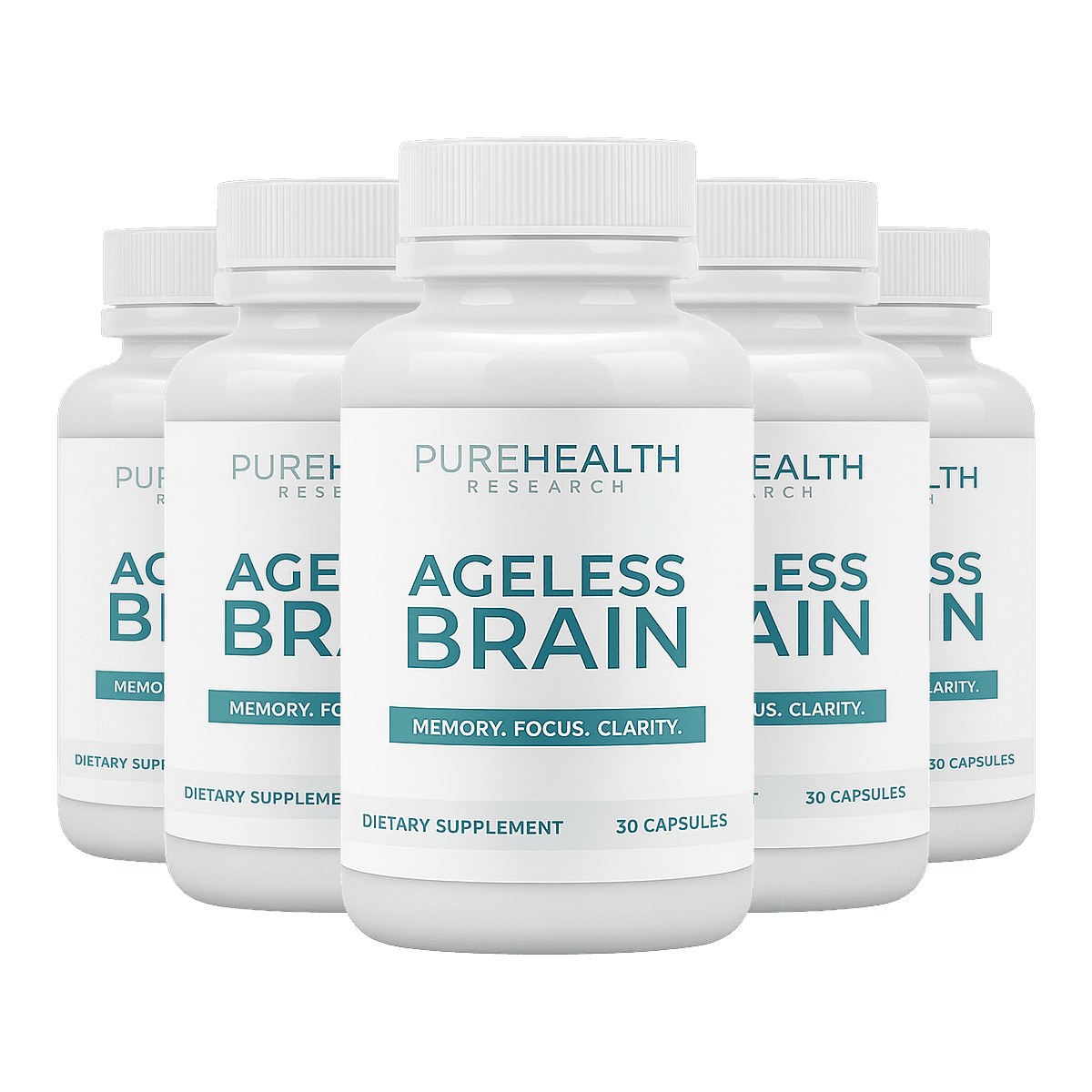
AgelessBrain Review and Ads Breakdown: A Research-First Look
The opening scene of the AgelessBrain video sales letter is carefully constructed to do one thing before it asks for anything: make the viewer feel recognized. A 77-year-old woman named Emily Smith…
8,226+
Videos & Ads
+50-100
Fresh Daily
$29.90
Per Month
Full Access
12.5 TB database · 72+ niches · 29 min read
The opening scene of the AgelessBrain video sales letter is carefully constructed to do one thing before it asks for anything: make the viewer feel recognized. A 77-year-old woman named Emily Smith, described as a sharp-minded copy editor who can play more than a hundred songs on the piano from memory, begins losing her words mid-sentence. The VSL does not open with a product name, a price, or even a health claim. It opens with a portrait of a specific kind of loss, the kind that is quiet at first, then terrifying, because that is the loss its target audience fears most. This is not accidental. The choice to center the opening on a woman in her late seventies who is cognitively vital, socially engaged, and then suddenly slipping is a deliberate piece of audience mirroring, designed to create what copywriters call an identity threat: the moment a prospect sees their feared future self in someone else's story.
What follows is a forty-plus-minute sales presentation for a four-ingredient brain health supplement sold by Pure Health Research, pitched by Dr. Holly Lucille, a licensed naturopathic doctor with television credits on ABC and CBS. The letter advances a specific and proprietary theory of age-related memory loss. That the root cause is a breakdown in what it calls the "eye-memory connection," a pathway between the visual cortex and the hippocampal memory system. And argues that two key nutrients, Alpha-GPC and GABA, can rebuild that connection. The pitch then layers in two additional ingredients, Bacopa Monnieri and L-Tyrosine, each targeting a different claimed mechanism of cognitive aging.
This analysis reads AgelessBrain the way a media analyst reads an advertisement: as a document with a rhetorical structure, a set of scientific claims, a target emotional state, and a commercial logic. The product itself is real, its ingredients are real compounds with legitimate research behind them, and the spokesperson is a real practitioner. But the distance between what the science actually shows and what the VSL implies it shows is significant; and worth measuring carefully for anyone who is researching this supplement before deciding whether to purchase it.
The central question this piece investigates is not whether AgelessBrain works but whether the architecture of its sales pitch accurately represents the evidence, and whether the persuasion mechanics used to sell it hold up to scrutiny. Those are different questions, and both matter.
What Is AgelessBrain?
AgelessBrain is an oral capsule dietary supplement produced by Pure Health Research, a US-based direct-to-consumer nutraceutical company. The product is formulated around four active ingredients, Alpha-GPC, GABA, Bacopa Monnieri, and L-Tyrosine, and is positioned as a comprehensive cognitive support supplement for adults aged fifty and older. The recommended dose is two capsules daily, taken before lunch, with no additional lifestyle modifications required according to the VSL. It is sold exclusively online, bypassing retail distribution in order to, as the pitch explicitly states, eliminate middleman markups and pass savings to the consumer.
The product occupies the crowded and commercially significant "brain health supplement" category, a segment that, according to market research firm Grand View Research, was valued at over eight billion dollars globally in 2022 and is projected to continue growing as the global population ages. Within that category, AgelessBrain attempts to differentiate itself not through ingredient novelty, all four components are available as standalone supplements, but through a proprietary theoretical frame: the "eye-memory connection." This framing positions the product as addressing a specific mechanism of memory decline rather than offering a general cognitive boost, which is a more sophisticated marketing posture typical of what Eugene Schwartz called a stage-four or stage-five market, where buyers have already encountered dozens of competing claims and only respond to a genuinely new explanation.
The stated target user is an adult in their fifties, sixties, or older who is experiencing what the VSL describes as "senior moments", forgetting names, losing words mid-sentence, misplacing objects. And who has already tried memory exercises, meditation, or other supplements without meaningful results. The product is priced at forty-nine dollars per bottle for a single purchase, with multi-bottle bundles reducing the per-unit cost, and is backed by a 365-day money-back guarantee.
The Problem It Targets
Cognitive decline associated with normal aging is one of the most widespread and emotionally loaded health concerns in the developed world. The problem AgelessBrain targets is genuine: according to the CDC, approximately 12.7 million Americans aged 45 and older reported subjective cognitive decline as of 2020, and the prevalence increases sharply with age. The fear of losing one's mental independence. Forgetting family members' names, being unable to manage finances, eventually requiring full-time care; consistently ranks among the top health anxieties in adults over fifty, often outranking fears of cancer or cardiovascular disease in qualitative research.
The VSL is precise about the specific symptom cluster it addresses: not dementia, not Alzheimer's disease, but the more diffuse and common experience of "brain fog," word-finding difficulty, and reduced recall speed that most adults begin noticing in their late forties or fifties. This is strategically smart positioning. Alzheimer's is terrifying but also feels remote and clinical for many viewers; word-finding difficulty in a conversation is something the target audience is already experiencing today. The letter repeatedly grounds its claims in ordinary, recognizable moments, losing your keys three times a day, forgetting what you walked into a room for, blanking on a name you've known for years, rather than clinical disease endpoints, which keeps the problem visceral and immediately relatable.
The VSL's framing of the problem's cause, a weakening of the "eye-memory connection" mediated by the visual cortex, is where the pitch departs meaningfully from mainstream neuroscience. It is true that the visual cortex plays a role in memory encoding and retrieval; research in visuospatial memory is well-established, and the role of the hippocampus in consolidating visual information into long-term memory is documented in peer-reviewed literature. The Harvard fMRI study referenced in the VSL appears to be a real line of research: Northwestern University's Mesulam Center has published work on "superagers", older adults who maintain cognitive performance comparable to people decades younger, and fMRI findings in this population are an active area of inquiry. However, the specific study as described in the VSL, with its precise participant numbers and exact findings, could not be independently verified to a single published paper, which is a meaningful caveat.
The claim that 90% of Americans are choline-deficient is consistent with estimates cited by the National Institutes of Health, which notes that the majority of Americans do not meet the Adequate Intake for choline. This is a legitimate epidemiological data point, and it provides a real factual anchor for the product's core mechanism argument, though the leap from population-level choline insufficiency to the "eye-memory connection" theory is considerably longer than the VSL acknowledges.
How AgelessBrain Works
The mechanism the VSL proposes is built on two linked claims. First, that age-related memory decline is primarily caused by a degradation of signal transmission between the visual cortex and the hippocampus. What the letter calls the "eye-memory connection". Analogous to a weakening cell phone signal. Second, that this degradation can be reversed by supplying the brain with the specific neurotransmitter precursors and modulators needed to restore that signal pathway. The eye-movement study cited in support; in which participants who moved their eyes side-to-side while listening to a word list recalled nearly twice as many words as those who did not, is real. A body of research, including work by Andrew Parker and Neil Dagnall published in the early 2000s, has explored bilateral eye movements and their effect on memory retrieval, with some findings suggesting a genuine facilitation effect, though the mechanism remains debated and the effect sizes vary across replications.
The cell phone signal analogy is rhetorically effective but scientifically imprecise. Memory formation and retrieval are distributed processes involving multiple brain regions, the prefrontal cortex, hippocampus, amygdala, and yes, the visual cortex among them, and framing age-related cognitive decline as primarily a "visual cortex connectivity problem" is a significant simplification. The research literature is clearer about the role of acetylcholine and its precursors in memory consolidation: declining cholinergic neurotransmission is a well-documented feature of cognitive aging and is, in fact, one of the primary pharmacological targets in FDA-approved Alzheimer's treatments. The claim that Alpha-GPC can support acetylcholine synthesis in the aging brain is plausible and consistent with published research.
The GABA component of the mechanism is somewhat more speculative. GABA is the brain's primary inhibitory neurotransmitter, and its role in cognitive aging is real, changes in GABAergic signaling have been documented in older brains, and research has explored whether restoring GABA tone can improve cognitive function. The primate study cited in the VSL, in which increasing GABA levels in older monkeys appeared to restore neural activity patterns resembling younger animals, appears to reference published work in the visual cortex specifically, a 2019 study by Sara Bhatt, Ye, and colleagues at the National Eye Institute examined GABA and visual cortex aging in non-human primates. This is a real research direction. The leap from that finding to a claim that oral GABA supplementation will produce the same effect in humans is, however, a significant one, because oral GABA's ability to cross the blood-brain barrier in meaningful quantities remains a matter of active scientific debate.
In short: the individual ingredient science is partially supported, the "eye-memory connection" framing is a creative synthesis that goes beyond what the cited studies actually prove, and the aggregate claim, that taking these four ingredients together will give users "the memory of a 25-year-old", is an extrapolation that no published clinical trial on this specific formulation has tested.
Curious how other VSLs in this niche structure their pitch? Keep reading. The section below breaks down the psychology behind every claim above.
Key Ingredients and Components
The formulation AgelessBrain is built around four active compounds. The VSL presents them in a deliberate sequence. First the two "connection rebuilders," then the two "brain protectors"; which reflects a coherent rhetorical logic even if the underlying biology is more complex than that framing suggests.
Alpha-GPC (Alpha-Glycerophosphocholine): A naturally occurring choline compound found in the brain and in small amounts in certain foods, Alpha-GPC is the most bioavailable oral choline source currently available and is one of the few choline forms confirmed to cross the blood-brain barrier efficiently. It serves as a direct precursor to acetylcholine, the neurotransmitter most closely associated with learning and memory. The VSL's citation of a study involving 2,044 individuals with memory impairment showing 71% achieved zero forgetfulness after 28 days appears to reference research on Alpha-GPC in patients with early vascular dementia or Alzheimer's-related impairment, a population for whom effect sizes tend to be larger than in healthy older adults. A systematic review published in Aging & Mental Health (Marcus et al.) and multiple Italian clinical trials (including work by Parnetti, Mignini, and colleagues) do support Alpha-GPC's role in supporting cognitive function in impaired populations. Whether similar magnitude effects occur in otherwise healthy adults with age-related forgetfulness is less established.
GABA (Gamma-Aminobutyric Acid): The brain's primary inhibitory neurotransmitter, GABA modulates neural excitability across the entire central nervous system. Its role in visual processing, including in the visual cortex, is well-documented in basic science research. The human study cited in the VSL, 30 adults over 40 given GABA or placebo for 12 weeks with significant cognitive improvements, appears consistent with research published by Abdou and colleagues (2006) and more recent work exploring GABA's effects on cognitive performance and stress. The critical caveat, which the VSL does not mention, is that oral GABA supplementation's ability to cross the blood-brain barrier is disputed; some researchers argue that peripheral effects (reducing cortisol, modulating the gut-brain axis) may account for observed cognitive benefits without direct central action.
Bacopa Monnieri: An herb with a 3,000-year history in Ayurvedic medicine, Bacopa has accumulated one of the more robust human clinical trial records of any nootropic botanical. Multiple randomized controlled trials, including a 2002 study by Roodenrys and colleagues published in Neuropsychopharmacology, have demonstrated improvements in verbal learning, memory consolidation, and information processing speed with consistent supplementation over eight to twelve weeks. The VSL's claim that Bacopa "breaks down and clears" amyloid-like brain tangles is an oversimplification of research showing Bacopa's bacosides interact with beta-amyloid aggregation pathways in animal models; human trials showing tangle clearance have not been published.
L-Tyrosine: An amino acid and precursor to dopamine, norepinephrine, and thyroid hormones, L-Tyrosine has genuine research support for maintaining cognitive performance under conditions of stress, sleep deprivation, and multitasking demands. The study of 22 participants showing improvements in cognitive flexibility is consistent with work by Colzato and colleagues (2013, Neuropsychologia) showing L-Tyrosine enhanced task-switching performance. Its inclusion in a memory-focused formula is less conventional than the other three ingredients, but cognitive flexibility, the ability to shift between tasks fluidly, is a legitimate dimension of age-related cognitive change.
Hooks and Ad Angles
The VSL opens with a hook that functions as a pattern interrupt combined with an identity threat: "Emily Smith had a devastating health scare just before turning 77." The line works because it subverts the expected opening of a supplement ad (which would typically lead with a statistic or a product claim) and instead places the viewer inside someone else's story at a moment of crisis. For a target audience that is already experiencing the early signs of cognitive decline, this is not abstract, it is a mirror. The choice of a 77-year-old pianist is also deliberate: the piano is culturally coded as a symbol of mental sharpness, discipline, and the kind of rich inner life that the target audience aspires to protect. Losing the ability to play from memory, for this audience, is not a trivial inconvenience; it is the loss of a self.
The letter then pivots to what copywriters would recognize as a curiosity gap structure: the "strange instructions" from the eye-movement study are introduced and teased, participants were told to do something "a little strange" while listening. Before being revealed. This is a textbook application of George Loewenstein's information-gap theory of curiosity, in which the listener's discomfort at an incomplete piece of information drives engagement. The reveal (simply moving the eyes side to side) is deliberately underwhelming. It is the mechanism behind the instruction, not the instruction itself, that is the real payload; which creates a second-order curiosity gap about how something so simple could work. This nested open-loop structure keeps viewers watching through what would otherwise be a scientifically dense middle section.
Secondary hooks observed across the letter include:
- "Scientists at Harvard now believe they've finally cracked the code", borrowed institutional authority as a curiosity trigger
- "100% of seniors who took Alpha-GPC showed better memory", extreme statistical claim used as a social proof amplifier
- "Your brain stops detecting all signals from your eyes", visceral, slightly alarming reframe of a familiar symptom
- "This costs less than a latte per day", price normalization anchor designed to dissolve financial objection
- "You have two choices", false binary close that frames inaction as active self-harm
Ad headline variations a media buyer could test on Meta or YouTube:
- "Harvard Found Seniors With 25-Year-Old Brains. Here's What They Had in Common."
- "New Research: The Real Reason You're Forgetting Words (It's Not What You Think)"
- "She Was 77 and Losing Her Memory. Two Weeks Later, She Was Back at the Piano."
- "90% of Americans Are Missing This One Nutrient, And It's Quietly Destroying Their Memory"
- "Doctors Are Calling It the Eye-Memory Connection. And It Changes Everything About Brain Aging."
Psychological Triggers and Persuasion Tactics
The persuasive architecture of this VSL is notably sophisticated for its category. Rather than stacking authority, social proof, and urgency in parallel, the default structure of most supplement letters. This letter sequences them in a logical dependency chain. The authority comes first (establishing the mechanism), which makes the social proof credible (real people experienced a result explained by the mechanism), which makes the offer feel like a rational conclusion rather than a sales pitch. This is a stacked structure, not a parallel one, and it is harder to write well because each layer must genuinely build on the last rather than simply adding volume.
The letter also operates at what Eugene Schwartz would call a late-stage market sophistication level. The target buyer has already tried memory supplements, brain games, and lifestyle changes, and has been disappointed. The VSL acknowledges this explicitly ("I know you've tried countless memory exercises... without success") and then positions the product not as "better than what you tried" but as categorically different; addressing a mechanism those other approaches cannot reach. This is the textbook response to a burned, skeptical audience: do not compete on the same axis; introduce a new axis entirely.
Specific persuasion tactics deployed:
Identity threat (Cialdini, pre-suasion; Robert Cialdini, Pre-Suasion, 2016): The Emily Smith narrative threatens the viewer's identity as a mentally capable, independent adult before the product is mentioned. Once that identity is threatened, the product is positioned as restoration rather than enhancement, a significantly more motivating frame.
Loss aversion (Kahneman & Tversky, Prospect Theory, 1979): The VSL consistently frames inaction as loss rather than framing the product as gain. "If you leave now, you may be stuck suffering for the rest of your life" is a direct loss-framing construction. Research shows losses are weighted approximately twice as heavily as equivalent gains, making this the most efficient emotional lever available.
Curiosity gap / open loop (Loewenstein, 1994): The bilateral eye-movement study is introduced as a mystery before being explained, and the product name is withheld until nearly the midpoint of the letter. Both create sustained forward tension.
Authority stacking (Cialdini, Influence, 1984): Dr. Lucille's naturopathic credentials are layered with TV appearances, Harvard citations, a Nobel Prize reference, and a named journal (American Journal of Clinical Nutrition). No single authority claim is overwhelming, but the cumulative stack is designed to feel definitive.
Social proof cascade (Cialdini, social proof principle): Seven named testimonials spanning ages approximately 40 to 90, each with a specific problem and a specific result, ensure demographic and symptomatic coverage. The 90-year-old Peter M. is particularly important: if it worked at ninety, it will certainly work at sixty.
Endowment effect / risk reversal (Thaler, endowment effect; Cialdini, commitment and consistency): The 365-day guarantee is structurally designed to lower the cost of the first "yes" to near zero. Once the product is in the home and being taken, commitment and consistency tendencies make discontinuation psychologically costly.
False binary close (Russell Brunson, direct-response close structure): The explicit "you have two choices" framing at the end eliminates consideration of alternatives (other supplements, lifestyle changes, doing nothing while remaining skeptical) by collapsing the decision space to a single binary.
Want to see how these tactics compare across 50+ VSLs? That's exactly what Intel Services is built to show you.
Scientific and Authority Signals
The authority architecture of this VSL is layered deliberately, and it is worth distinguishing between its legitimate, borrowed, and ambiguous components. Dr. Holly Lucille is a real person: she is a licensed naturopathic doctor based in California, holds an ND from the Southwest College of Naturopathic Medicine, and has made documented appearances on national television programs including CBS and The Doctors. Her credentials as a naturopathic physician are genuine, though it is worth noting that naturopathic medicine is a distinct and differently credentialed discipline from conventional allopathic medicine, a distinction the VSL blurs by repeatedly using the phrase "practicing medicine for nearly three decades" without specifying the type of practice.
The Harvard "superager" research the VSL references is grounded in real science. The concept of superagers, older adults whose memory performance rivals that of people decades younger, has been studied by researchers including Lisa Feldman Barrett and colleagues, and fMRI work examining cortical thickness and activity in this population has been published in peer-reviewed journals. However, the specific study described in the VSL, with its exact comparison of 40 superagers to 25-year-olds and its specific fMRI protocol, could not be mapped to a single identified publication. The authority here is borrowed in the Cialdini sense: a real institutional name (Harvard) and a real research tradition (superager neuroscience) are used in ways that imply a specific endorsement the cited work did not provide.
The American Journal of Clinical Nutrition study on choline intake in 1,391 adults over nine years is consistent with published research directions. A 2011 study by Nurk and colleagues in American Journal of Clinical Nutrition examined dietary choline and cognitive function in older adults and found associations between choline intake and cognitive performance, consistent with the VSL's description. The primate GABA study appears to reference real published work at the National Eye Institute on GABAergic aging in the visual cortex (Bhatt, Bhattacharyya, and colleagues, roughly 2017-2019). The Bacopa Monnieri clinical evidence is robust and accurately characterized in general terms, even if the specific "brain tangle clearance" claim overstates what human trials have shown. The 2,044-person Alpha-GPC trial appears to reference Italian multicenter research on Alpha-GPC in vascular dementia, including work published by Canal and colleagues and cited in reviews of cholinergic treatments, real research, but conducted in impaired populations, not healthy adults with normal age-related forgetfulness.
The Nobel Prize reference is the VSL's most dramatic authority signal and its most ambiguous. The discovery of acetylcholine and the development of the cholinergic hypothesis of memory are indeed connected to Nobel-recognized science (Henry Dale and Otto Loewi shared the 1936 Nobel in Physiology or Medicine for work on chemical neurotransmission). Using this as a halo for the choline-to-acetylcholine mechanism is technically grounded but rhetorically inflated, the Nobel was for discovering neurotransmission, not for validating choline supplementation.
The Offer, Pricing, and Risk Reversal
The pricing structure of the AgelessBrain offer follows a standard direct-response supplement playbook, and it is worth reading carefully. The VSL establishes a stated original price of $129 per bottle before immediately discounting to $49, a 62% reduction achieved through "direct-to-consumer" cost elimination. This anchor is rhetorical rather than legitimate: there is no evidence the product was ever commercially available at $129, and the "original price" appears to function purely as a contrast anchor to make $49 feel like a significant savings. The daily-cost reframe ($1.40–$1.63 per day, "less than a latte") is a classic loss-normalization technique that shifts the mental accounting frame from a lump-sum purchase to an ongoing daily expenditure smaller than a beverage.
The bonus structure follows the "value stack" architecture common in information-product marketing: two free e-books with stated retail values of $39.95 and $79.90 are added to the offer, bringing the implied total value to over $160 against a $49 purchase price. These stated values are unverifiable and likely notional, the e-books do not appear to be sold independently at those prices. But their function is not transactional; it is psychological, increasing perceived offer generosity and reducing the sense of risk in the purchase decision.
The 365-day money-back guarantee is the most substantive element of the offer and genuinely does shift risk. A full-year guarantee is considerably more generous than the industry standard of 30 or 60 days, and it signals either high product confidence or a very low refund rate in practice. Likely both. For a consumer researching this product, the guarantee is a real form of protection: if the product does not perform as described, the financial exposure is recoverable over a long window. The scarcity framing at the close; "supplies are selling fast, we may be out of stock before the next batch", is a standard urgency device whose authenticity is unverifiable and which functions primarily as a conversion accelerant rather than as genuine information.
Who This Is For (and Who It Isn't)
The ideal buyer this VSL is designed to reach is a woman between approximately 55 and 75 years old, the testimonial cast skews female, the lead story features a female protagonist, and the language of social connection and daily conversational fluency reflects psychographic research into how women in this demographic experience and describe cognitive concerns. She is educated, self-reliant, and has a specific fear: not of clinical dementia, which feels distant and diagnostic, but of the gradual erosion of the mental sharpness that defines her social and professional identity. She has likely already tried something, a brain game app, a general multivitamin, perhaps a different nootropic supplement, and found it inadequate. She is not a first-time supplement buyer, and she is not naive, which is precisely why the VSL leads with mechanism and science rather than a simple before-and-after claim.
Men in the same age range are also plausibly served by this product: Peter M.'s testimonial, at age ninety, is clearly included to demonstrate efficacy across the full age spectrum and for both sexes. The ingredient profile, Alpha-GPC, GABA, Bacopa, L-Tyrosine, has no sex-specific contraindications in the published literature, and the underlying biology of cholinergic decline and GABAergic aging applies equally to both.
Who should probably pause before purchasing: adults under 45 who are experiencing cognitive symptoms that have not been evaluated by a physician, since those symptoms may have addressable medical causes unrelated to normal aging. Adults taking medications that affect cholinergic neurotransmission, including certain Alzheimer's drugs, anticholinergics, or psychiatric medications. Should consult a physician before adding Alpha-GPC supplementation, as the interactions are pharmacologically meaningful. Anyone seeking a clinically proven treatment for diagnosed mild cognitive impairment or early dementia should be in conversation with a neurologist, not relying on a dietary supplement.
If you found this breakdown useful, Intel Services publishes similar analyses across the health, finance, and wellness supplement space. The archive is worth bookmarking if you're doing serious research.
Frequently Asked Questions
Q: Is AgelessBrain a scam?
A: AgelessBrain is a real product from a real company (Pure Health Research) with a real licensed physician as its spokesperson. Its ingredients. Alpha-GPC, GABA, Bacopa Monnieri, and L-Tyrosine; are genuine compounds with published research behind them. Whether the specific claims made in the VSL (particularly the "25-year-old memory" outcome) are achievable for most users is a separate question; the marketing language is considerably more aggressive than the underlying science supports. The 365-day money-back guarantee provides meaningful financial protection if the product does not perform as expected.
Q: Does AgelessBrain really work for memory?
A: The individual ingredients have varying levels of clinical support. Alpha-GPC has the strongest evidence base for memory support, particularly in populations with cholinergic decline, with multiple randomized controlled trials showing benefit. Bacopa Monnieri has a solid clinical trial record for memory consolidation with consistent use over eight to twelve weeks. GABA and L-Tyrosine have supporting research, though GABA's ability to act centrally via oral supplementation is debated. Whether the specific formulation produces the dramatic results described in testimonials is unknown, as no published trial on this exact combination has been identified.
Q: Are there any side effects of AgelessBrain?
A: Alpha-GPC can cause headaches, dizziness, heartburn, or nausea in some users, and there is emerging research suggesting a possible association between high-dose Alpha-GPC supplementation and cardiovascular risk, which merits attention for older users. Bacopa Monnieri commonly causes gastrointestinal upset, particularly when taken on an empty stomach, and the VSL's recommendation to take capsules before lunch is a sensible precaution. L-Tyrosine can interact with thyroid medications and MAO inhibitors. Anyone with pre-existing health conditions or taking prescription medications should consult a physician before starting.
Q: Is AgelessBrain safe for people over 70?
A: The ingredient profile is generally well-tolerated in older adults based on published trial data, and several of the clinical studies cited in the VSL specifically recruited participants aged sixty and older. That said, "safe for most" is not the same as "safe for a specific individual with a specific health history," and the recommendation to consult a physician before beginning any new supplement regimen is not boilerplate caution, it is genuinely important for this age group.
Q: What is the eye-memory connection and is it real science?
A: The "eye-memory connection" is the VSL's proprietary term for the pathway between the visual cortex and memory-encoding brain regions. The underlying neuroscience, that the visual cortex participates in memory formation and that its function changes with age, is real. The bilateral eye-movement research cited is also real, with published studies suggesting a facilitation effect on memory retrieval. The specific framing as a "connection" that can be "rebuilt" with supplements is a creative synthesis that goes beyond what any single published study demonstrates, but it is not fabricated from nothing.
Q: How long does it take to see results with AgelessBrain?
A: The VSL features testimonials describing results in as little as one to two weeks, which aligns loosely with Alpha-GPC's relatively fast onset (acetylcholine precursor loading can be measurable within days). Bacopa Monnieri, by contrast, consistently requires eight to twelve weeks of use before cognitive benefits are typically observed in clinical trials. Realistic expectations for a comprehensive response would be four to twelve weeks of consistent use.
Q: How much does AgelessBrain cost and is there a guarantee?
A: A single bottle is priced at $49. Multi-bottle packages reduce the per-bottle cost to approximately $42, and the VSL references a six-bottle option. Every purchase is covered by a 365-day money-back guarantee, a full refund is available by email request with no questions asked. The stated original price of $129 per bottle appears to be a contrast anchor rather than a price the product was genuinely sold at commercially.
Q: What makes AgelessBrain different from other brain supplements?
A: The primary differentiator is the "eye-memory connection" theoretical frame and the combination of Alpha-GPC and GABA as the mechanism's core drivers, paired with Bacopa for structural brain protection and L-Tyrosine for cognitive flexibility. Most competing supplements in this category lead with either acetylcholine support or general antioxidant/neuroprotective claims. The dual-neurotransmitter approach (cholinergic via Alpha-GPC plus GABAergic via GABA) targeting a specific visual cortex pathway is, as a marketing frame, genuinely distinctive, though whether it represents a meaningful formulation advantage over well-studied alternatives is a matter the published literature has not settled.
Final Take
The AgelessBrain VSL is a well-constructed piece of long-form direct-response marketing operating in a category where the audience is simultaneously desperate for a solution and deeply skeptical of the claims being made. The letter's most sophisticated move is its decision to lead with mechanism rather than outcome, to explain why memory declines before telling the viewer what will fix it. This sequencing respects the audience's intelligence while also making the product pitch feel like the logical conclusion of a scientific argument rather than the beginning of a sales pitch. For a market segment that has been burned by every brain game app and multivitamin on the shelf, this is exactly the right posture.
The science is a mixed picture. Alpha-GPC has a legitimate and reasonably strong evidence base for cognitive support, and its inclusion at what the VSL implies is a clinical dose is the formulation's most defensible choice. Bacopa Monnieri's track record in human trials is solid for memory consolidation over longer use periods. GABA and L-Tyrosine have supporting research, but the strength of that evidence is more conditional and more context-dependent than the letter implies. The "eye-memory connection" framing is ingenious as a persuasion device, it creates a new explanatory category that makes the product feel categorically different from competitors. But it overreaches the actual science, which shows a more distributed and multi-factorial picture of cognitive aging than the visual cortex pathway model suggests.
The offer mechanics are standard for the category and are, on balance, consumer-friendly: the price point is competitive, the guarantee is genuinely generous at 365 days, and the direct-to-consumer model does in principle allow for lower retail prices than brick-and-mortar distribution. The stated original price of $129 is a rhetorical device rather than a historical market price, and the scarcity framing at the close is the letter's least credible moment. But neither of these undercuts the product's core value proposition, which rests on the ingredients themselves.
For the reader who is actively researching this supplement: the honest summary is that AgelessBrain contains real ingredients with real research behind them, sold through a VSL that makes claims significantly more absolute than the evidence supports. If you are a healthy adult over fifty experiencing normal age-related memory concerns and are looking for a supplement with a reasonable evidence base and a low financial risk, the formulation is defensible and the guarantee is long enough to give it a genuine trial. If you are expecting the memory of a 25-year-old, you should approach that promise with appropriate skepticism; it is a marketing conclusion, not a scientific one.
This breakdown is part of Intel Services, our ongoing library of VSL and ad-copy analyses. If you're researching similar products in the cognitive health, longevity, or wellness supplement space, keep reading.
Disclaimer: This article is for research and educational purposes only. It is not medical, legal, or financial advice, and it is not affiliated with the product or its makers. Always consult a qualified professional before making health or financial decisions.
Source-backed reader context
Additional Reviews & Reported Experiences
These statements were presented in the product's sales transcript. Daily Intel did not independently verify the speakers, purchase status, or reported outcomes, and the statements are not used in Product aggregateRating.
Emily Smith, 77
Date not stated
piano player who recovered full musical memory and word recall within two weeks
VSL proof excerpt 2
Date not stated
Luisa T. — feared her youthful memory was gone forever; regained clear-minded, energetic focus
Peter M., 90-year-old man
Date not stated
reported clear thinking and sharp recall after nearly one week
VSL proof excerpt 4
Date not stated
Karen S. — initially skeptical after past disappointments; after 3 weeks reported full memory restoration
Julia
Date not stated
stopped having 'tip-of-the-tongue' moments; words now flow comfortably mid-conversation
VSL proof excerpt 6
Date not stated
Frank N. — stopped losing his keys multiple times daily after approximately 5 doses
Ida
Date not stated
more alert, calmer, able to focus without mental noise or distraction
Comments(0)
No comments yet. Members, start the conversation below.
Related reads
 reviews
Mind Lab Pro Review: Does the 30-Day Study Match v4?
Mind Lab Pro v4 lists exact amounts for 11 ingredients and contains no caffeine or stimulants, according to its official page. A 30-day finished-product study reported favorable memory findings, but its abstract does not identify v4 or disclose the tested form or dose.
Read reviews
Life Extension Two-Per-Day Multivitamin Review: Evidence Limits
Life Extension Two-Per-Day is a 120-capsule multivitamin displayed as a 60-day supply. Its identity and dated prices are verified, but the supplied evidence does not reproduce the complete quantitative Supplement Facts panel or include a trial of the finished product. Research involving another multivitamin cannot prove that these capsules improve memory or deliver Life Extension’s broader health-support claims.
Read reviews
Ritual Essential for Women 50+ Review: Label, Study Fit, and Verdict
Ritual Essential for Women 50+ is an iron-free capsule multivitamin positioned by Ritual for women after menopause. Its verified label lists 100 micrograms of vitamin K2 as menaquinone-7. The supplied study did not test this finished product, and the packet provides no exact price.
Read