AizenPower VSL and Ads Analysis
The video opens with a racial stereotype, and then immediately reverses it. Within the first ten seconds, the narrator of the AizenPower sales letter has already committed one of the oldest maneuv…
8,226+
Videos & Ads
+50-100
Fresh Daily
$29.90
Per Month
Full Access
12.5 TB database · 72+ niches · 28 min read
Introduction
The video opens with a racial stereotype; and then immediately reverses it. Within the first ten seconds, the narrator of the AizenPower sales letter has already committed one of the oldest maneuvers in persuasion writing: the pattern interrupt. By invoking a widely held assumption about Asian men's anatomy and then announcing that the truth is "shocking," the VSL exploits the viewer's cognitive need for resolution. The brain, confronted with unexpected contradiction, is compelled to keep processing. What follows over the next thirty-plus minutes is a carefully constructed sequence of shame, fantasy, exotic authority, pseudoscience, and urgency, a pitch architecture that draws on decades of direct-response copywriting convention while deploying it in one of the most legally and ethically fraught niches in consumer health: penis enlargement.
This analysis examines the AizenPower VSL as a marketing artifact. The product is a dietary supplement sold online, primarily through this long-form video presentation, targeting men who experience distress about penis size, erectile function, and sexual confidence. Understanding how this pitch works, which psychological levers it pulls, which scientific claims it makes, and whether those claims hold up to scrutiny, is useful both for consumers researching the product and for marketers studying how persuasion operates at the edge of regulated health claims. The VSL is, by any measure, a technically sophisticated piece of direct-response copy. Whether the product behind it matches that sophistication is a separate question entirely.
The narrator, who identifies himself as "Arnold P. Joyce, medical research specialist," structures the letter as a hero's journey: from professional humiliation and personal shame, through an exotic discovery in Southeast Asia, to the invention of a supplement that allegedly activates a dormant genetic switch for penis growth. The storytelling is designed to be emotionally immersive, and for a specific audience, men in their 30s to 60s who have internalized shame about sexual performance, it likely is. The question this piece investigates is straightforward: what does the AizenPower pitch actually claim, how does it work as a persuasion system, and what does the available science say about the ingredients and mechanisms it invokes?
What Is AizenPower?
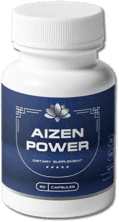
AizenPower is an oral dietary supplement marketed specifically to men seeking to increase penis size, improve erectile function, and enhance libido and stamina. The product is sold exclusively through its own sales page, the VSL explicitly states it is not available on Amazon, eBay, or any third-party retailer, and is positioned as a natural, non-invasive alternative to surgery, penis pumps, and pharmaceutical erectile dysfunction treatments. Its format is a daily supplement taken twice per day, formulated from a blend of botanical extracts, acids, and trace minerals that the narrator claims were reverse-engineered from a Thai ritual potion.
In terms of market positioning, AizenPower sits at the most aggressive end of the men's sexual health supplement category. Where mainstream brands in this space (think general testosterone boosters or nitric oxide supplements) make cautious, FTC-compliant claims about "supporting healthy sexual function," the AizenPower VSL makes explicit promises of permanent anatomical change. Specifically, length increases of three to seven or more inches through genetic activation. This is a claim with no credible scientific support, which places AizenPower in a category of products that regulatory bodies including the FDA have historically scrutinized. The stated target user is any adult male, regardless of age, weight, or health status, who is dissatisfied with his penis size or sexual performance.
The product is presented as having been developed by the narrator himself, tested on clinical patients, and manufactured by a small "homeopathic facility in Arizona". A detail that, combined with the supplement's non-pharmaceutical classification, explains how it reaches the market without clinical trial requirements. This is a common structural feature of the nutraceutical industry: because dietary supplements in the United States are regulated under the Dietary Supplement Health and Education Act of 1994 (DSHEA), manufacturers are not required to prove efficacy before sale, only to ensure the product is not unsafe.
The Problem It Targets
The problem AizenPower targets is real, even if the proposed solution is not. Body image distress related to penis size is a documented psychological phenomenon with measurable clinical consequences. Research published in the British Journal of Urology International has found that a substantial proportion of men who seek surgical or medical consultation for "small penis" concerns have genitalia within the normal range; a condition clinicians sometimes describe as penile dysmorphic disorder, analogous structurally to body dysmorphic disorder. The psychological burden of this distress, anxiety in sexual situations, avoidance of intimacy, relationship disruption, is genuine, and the VSL's narrative reflects it with unsettling accuracy. The scenarios described (hiding in public showers, watching a partner's disappointed expression, losing a marriage) are not invented; they are the lived experiences of a real, if underserved, population.
The commercial opportunity is correspondingly large. The global male sexual health supplement market was valued at over $2.5 billion by recent industry estimates, with erectile dysfunction and performance anxiety being primary drivers of consumer spending. The VSL specifically frames the problem as one that conventional medicine has either failed or actively chosen not to solve, positioning the $5.4 billion pharmaceutical industry as an adversary that profits from keeping men in a state of inadequacy. This framing is effective because it contains a kernel of truth: many men do feel dismissed by clinicians when raising concerns about size, and the pharmaceutical industry does have financial incentives to promote prescription treatments over lifestyle or supplemental alternatives. The VSL takes that kernel and inflates it into a full conspiracy theory.
Critically, the VSL also introduces and then appears to demolish a scientific finding, that penis size is genetically determined, citing a study from the "School of Frontier Biosciences in Osaka" on the SRY gene, before immediately pivoting to claim that this gene can be overridden with the right botanical compounds. This is a rhetorical structure known as the false bottom: the narrator establishes what appears to be the final, hopeless truth, then reveals a secret exit. It is one of the most emotionally potent moves in long-form direct response, because it forces the reader through the full experience of hopelessness before offering rescue. By the time the solution arrives, the emotional investment in that solution is maximized.
The CDC and WHO do not specifically track "penile anxiety" as a public health concern, but erectile dysfunction, which the VSL bundles with size concerns, affects an estimated 30 million men in the United States alone, according to data from the National Institute of Diabetes and Digestive and Kidney Diseases (NIDDK). This gives the pitch a statistically enormous potential audience, even before accounting for the broader population of men who experience size-related self-consciousness without a clinical ED diagnosis.
Curious how other VSLs in this niche structure their pitch? Keep reading. Section 7 breaks down the psychology behind every claim above.
How AizenPower Works
The claimed mechanism of AizenPower is built around what the VSL calls the "penis growth gene". Identified as the SRY gene, a real gene involved in male sex determination and development. The SRY gene is indeed a legitimate subject of scientific research; it encodes a transcription factor that triggers male sexual differentiation during fetal development. However, the VSL's claim that this gene can be "awakened" in adult men by botanical compounds to generate new penile tissue is not supported by any published, peer-reviewed research. The SRY gene's role in penis development is prenatal; it operates during a critical developmental window that closes long before adulthood. No credible mechanism exists by which a dietary supplement could reactivate fetal gene expression to generate adult anatomical growth.
The four-step mechanism the narrator describes; awaken the gene, stimulate tissue builders, improve blood flow, boost libido, is a rhetorically sophisticated scaffolding that borrows legitimate biological vocabulary (gene expression, amino acids, blood vessel dilation, tissue regeneration) without the connecting science. Alpha lipoic acid, for example, is a real antioxidant with genuine research behind its effects on oxidative stress and, in some studies, erectile function. Resveratrol does have published data on cardiovascular benefits, including vasodilation. Korean ginseng has a meaningful evidence base for modest improvements in erectile function. These are real ingredients with real, if limited, effects, but none of them act on the SRY gene, none of them generate new penile tissue, and none of them produce the three-to-seven-inch increases the VSL promises.
What the supplement may plausibly do, to the extent its ingredient list is accurate and doses are sufficient, is support general vascular health and modestly improve blood flow, which could have a secondary benefit on erectile quality in men whose dysfunction is primarily vascular. This is the legitimate version of the pitch hiding beneath the extraordinary claims. The distinction matters enormously: "may support healthy erectile function" and "will activate your penis growth gene and add seven inches" are not variations of the same claim; they are categorically different assertions, only one of which has any scientific basis. The VSL is built entirely on the second.
The exotic origin story, the Thai temple, the ritual potion, the secret Asian brotherhood, functions not as mechanism but as authority transfer. By grounding the formula in an ancient, tested tradition, the narrator sidesteps the demand for clinical evidence. This is a well-worn move in alternative health marketing: anthropological mysticism substitutes for randomized controlled trials. The fact that the narrator then claims to have subjected the formula to laboratory analysis is meant to fuse traditional authority with scientific authority, producing a hybrid credibility that neither source would provide on its own.
Key Ingredients and Components
The AizenPower formula, as described in the VSL, draws on eleven primary ingredients. The framing presents them as rare, sourced from specific geographic regions, and uniquely effective in combination. Below is an assessment of each ingredient against publicly available science.
Asian Gold Thread (Coptis chinensis, berberine source): A traditional Chinese medicinal plant whose active compound, berberine, has genuine research support for metabolic and cardiovascular benefits. Some studies suggest berberine may improve endothelial function, which could indirectly benefit erectile health. The claim that it "binds to cells containing the penis growth gene" to reactivate it is not supported by any published research.
Crepe Myrtle / Pride of India (Lagerstroemia speciosa): Contains corosolic acid, which has been studied for blood sugar regulation. Its identification as "the strongest antioxidant you can get" overstates the evidence considerably. The references to Theravada Buddhist and Kama Sutra texts as validation are cultural decoration, not scientific endorsement.
Corosolic Acid: Extracted from Lagerstroemia speciosa leaves, this compound has modest evidence for insulin sensitivity improvement. Its claimed role as a "shield" for a penis growth gene has no scientific basis.
Alpha Lipoic Acid (ALA): A well-studied antioxidant with documented effects on oxidative stress and some evidence for neuropathic symptom reduction. A study in the Asian Journal of Andrology has examined ALA in relation to male sexual function, though findings are preliminary. The claim of a "90% success rate in treating ED" published in the "Medicine Journal" cannot be verified from the description given.
Tencha (shaded matcha precursor): A genuine tea product with elevated chlorophyll and amino acid content due to shade-growing practices. Catechins and polyphenols in green tea have cardiovascular benefits in the literature, including some data on nitric oxide production relevant to erections. The specific claim that it doubles tissue-builder production speed is not supported.
Resveratrol: One of the more thoroughly researched ingredients in the formula. Published studies, including work from Harvard Medical School researchers on SIRT1 pathways, confirm resveratrol's cardiovascular effects, including vasodilation. Whether the "0.39-inch Yantai grape" specification is meaningful or marketing theater is impossible to assess without the actual product formulation.
Milk Thistle (Silymarin): A well-established hepatoprotective compound with antioxidant properties. Its primary evidence base is liver health, not sexual function or blood cell production. The "ultimate penis detoxifier" designation is creative rather than scientific.
Cayenne Pepper (Capsaicin source): Capsaicin does have evidence for improving circulation through transient receptor potential (TRP) channel activation. Modest blood flow benefits are plausible. The product-specific naming as "the long thick red" is branding, not a distinct botanical classification.
Korean Ginseng Root (Panax ginseng): This is the ingredient with the strongest independent evidence base in this formula. A study published in the Journal of Urology, which appears to correspond to a real 2002 study by de Andrade et al. examining Korean red ginseng in 45 ED patients. Did report improvements in erection rigidity and quality. This is one of the few points where the VSL's cited research appears to correspond to an actual published study.
Zinc (11mg): Zinc's role in testosterone production is well-established. A study in Nutrition (Prasad et al., 1996) did demonstrate that zinc supplementation in deficient men significantly increased testosterone levels. The 11mg dose cited is close to the daily reference value, making this a physiologically plausible inclusion.
Chromium: Evidence for chromium's testosterone-boosting effects is weak and contested in the literature. Its inclusion as a weight-loss agent is supported by some research on insulin sensitivity, though effects are modest.
Hooks and Ad Angles
The opening hook. "Asian men with penises as small as 12 inches, something I never imagined possible"; is constructed to do three things simultaneously: trigger a pattern interrupt through apparent logical contradiction, deploy a curiosity gap that demands resolution, and introduce an identity-destabilizing premise that makes the viewer feel their existing framework for understanding masculinity is incomplete. This is a textbook Eugene Schwartz Stage 4 market sophistication move. By 2024, the male enhancement category is saturated with straightforward claims ("get bigger," "last longer," "boost testosterone"). Buyers at this stage of market awareness have seen every direct promise and are largely immune to them. The only hooks that cut through are those that offer a genuinely new mechanism or a story the viewer has never heard. The Asian ritual narrative is engineered precisely for this, it is exotic enough to feel novel while tapping deeply familiar anxieties.
The secondary hook structure builds what copywriters call an open loop: the narrator withholds the identity of the ingredient, the name of the gene, and the specifics of the ritual across large stretches of the VSL, maintaining tension through promised revelation. This is paired with a recurring threat interrupt, "this video may go offline at any time", that converts passive watching into an active, time-pressured decision. The combination of unresolved curiosity (what is the gene? what are the plants?) and urgency (this page is about to disappear) is designed to suppress the analytical thinking that would otherwise prompt skepticism.
For media buyers evaluating this creative for Meta or YouTube placement, the following observations are relevant: the hook's reliance on racial framing creates significant platform compliance risk, particularly under Meta's advertising policies on sexual content and discriminatory targeting. The VSL in its current form almost certainly cannot run as a paid ad in its full version on major platforms and is more likely distributed through affiliate networks, email lists, and native advertising.
Secondary hooks observed in the VSL:
- "A dormant gene in your body, when awakened, increases penis size, accelerates weight loss, improves muscle gain, and enhances hair growth"
- "If any doctor told you size doesn't matter, he is simply aligned with the billion-dollar men's health industry"
- "More than 35,649 men have already transformed their lives with this method"
- "She had sent me the message that was meant for her friend" (humiliation escalation)
- "This secret has been kept for generations by Asia's wealthiest families"
Ad headline variations for testing (Meta/YouTube):
- "Doctors Don't Want You to Know About This Ancient Asian Remedy for Men"
- "The Gene That Controls Penis Size, And How to Switch It On Naturally"
- "35,000 Men Used This Before Big Pharma Tried to Shut It Down"
- "He Was Asian, 5'2", And Had the Biggest Penis Anyone Had Ever Seen. Here's Why."
- "This Natural Formula Helped Men Add 3+ Inches Without Surgery or Pumps"
Psychological Triggers and Persuasion Tactics
The persuasive architecture of the AizenPower VSL is not random; it follows a deliberate compound-stacking sequence in which each tactic builds on the emotional residue of the previous one. The letter opens by attacking identity (masculine self-concept), moves through shame amplification, pivots to conspiracy (external enemy framing), introduces exotic hope, validates through social proof, and closes with loss-aversion urgency. This is a recognizable Problem-Agitate-Solution (PAS) structure extended across a full narrative arc. What Russell Brunson might call an epiphany bridge story, where the narrator's personal transformation serves as proof-of-concept for the viewer's own potential change. The sophistication lies in how each layer resets the emotional baseline before the next trigger lands.
What distinguishes this VSL from simpler male enhancement pitches is its deliberate use of shame as a primary lever rather than a secondary one. Most VSLs in this category use shame briefly, then pivot to aspiration. AizenPower spends a remarkable proportion of its runtime. Fully one-third of the narrative; inside the narrator's shame experience, including a near-suicide disclosure. This is calculated: the longer and more vividly shame is inhabited, the more desperately the audience desires the exit that follows. The tactic borrows from therapeutic storytelling structures while inverting their ethics, where therapy uses narrative to process and release shame, the VSL uses it to intensify shame before monetizing the relief.
Pattern Interrupt (Cialdini, 2006): The racial stereotype reversal in the opening forces cognitive engagement by violating expected narrative. The viewer cannot look away because their brain is trying to resolve the contradiction. Specific moment: the opening ten seconds of the VSL.
False Enemy / Conspiracy Framing (Cialdini's in-group dynamics): Big Pharma is positioned as the suppressor of AizenPower's secret, making the purchase feel like an act of rebellion rather than a transaction. Specific moment: "The billion-dollar men's health industry makes $5.4 billion a year and they don't want a simple, natural method to put all that at risk."
Loss Aversion (Kahneman & Tversky, 1979 Prospect Theory): The urgency framing, pharmaceutical lawyers, one-week supply window, six-to-nine-month wait for next batch, converts the purchase from a gain (getting bigger) into a loss-prevention action (avoiding months of continued shame). Specific moment: "This batch will most likely run out in one week."
Shame Amplification → Identity Rescue (Festinger's Cognitive Dissonance): The narrator's humiliation narrative creates maximum psychological distance between the viewer's current self and his desired self, which the product is then positioned to bridge. The near-suicide disclosure is the emotional peak, a moment of maximum dissonance that makes any solution feel proportionate. Specific moment: "The shame and suffering led me to consider suicide."
Authority Borrowing / Halo Effect (Thorndike, 1920): Harvard, Oxford, and the Journal of Urology are invoked without verifiable citations, but their presence triggers automatic credibility transfer. Specific moment: "This secret is being validated by research from Harvard, Oxford, and experts from the American Board of Sexology."
Social Proof Stacking (Cialdini, 2006): Five named testimonials with geographic specificity (state, age) and a claimed user base of 35,649 create the perception of consensus. The inclusion of a female testimonial (Marissa C.) is a sophisticated touch, it validates the claim through the perspective of the ultimate intended beneficiary of the product. Specific moment: Marissa's testimonial about her husband.
Endowment Effect and Risk Reversal (Thaler, 1980): The 60-day money-back guarantee is framed not as standard consumer protection but as the narrator "taking all the risks." This psychologically transfers perceived ownership of the outcome to the buyer before purchase, making non-purchase feel like forfeiting something already gained. Specific moment: "I'm taking all the risks here, which means you've got absolutely nothing to lose."
Want to see how these tactics compare across 50+ VSLs? That's exactly what Intel Services is built to show you.
Scientific and Authority Signals
The AizenPower VSL constructs its authority from four sources: a narrator with claimed medical credentials, named academic institutions, specific studies, and an exotic anthropological tradition. Evaluating each source type honestly is essential for any reader making an informed decision.
The narrator, "Arnold P. Joyce," is described as a medical research specialist with twenty years of clinical experience treating men's sexual health. No verifiable information, institutional affiliation, publication record, professional license, is provided to confirm this identity. The name does not appear in medical licensing databases or published research literature on male sexual health based on publicly available searches. This does not definitively prove the character is fictional, but it does mean the claimed authority is entirely unverifiable. The use of a full proper name (rather than simply "Dr. X") creates a superficial appearance of accountability without providing any means of verification. A technique common in VSL narratives in regulated health niches.
The institutional citations. Harvard, Oxford, the American Board of Sexology; are borrowed authority in their purest form. These institutions are referenced in passing as having conducted or endorsed research supporting the VSL's claims, but no specific study titles, authors, publication dates, or journal names are provided. The American Board of Sexology is a real organization, but it does not conduct research in the sense implied by the VSL. Harvard and Oxford are invoked as brand names, not as sources of specific findable evidence. Any reader who attempts to locate these studies will find nothing, because the citations are rhetorical rather than evidentiary.
The Korean ginseng citation, a study in the Journal of Urology examining 45 ED patients over 18 weeks at 900mg three times daily, appears to correspond to a real published study. Work by de Andrade et al. (2007) and similar research from Korean research groups does appear in urological literature examining Panax ginseng for erectile dysfunction, with findings showing modest but statistically significant improvements in erection quality measures. This is the one moment in the VSL where the cited science is traceable to real published work. The alpha lipoic acid study attributed to the "Medicine Journal" cannot be verified from the description given; the claimed 90% success rate in ED treatment is not consistent with the effect sizes reported in ALA studies known in the literature. The Osaka SRY gene research cited as establishing genetic determinism of penis size references real gene biology, the SRY gene is genuinely involved in sex determination, but the extrapolation to adult supplementation overriding this gene's developmental function has no scientific basis whatsoever.
The Offer, Pricing, and Risk Reversal
The pricing architecture of AizenPower is a textbook price anchor sequence. The narrator establishes $290 as the "true" value of a single bottle, a figure he claims he "was planning to charge", before walking it down through $190 and $90 to land at $69 per bottle for a single purchase, or $49 per bottle for a six-bottle package. This descending anchor is designed to make $69 feel like a dramatic discount rather than a premium price for an unproven supplement. The comparison to $290 is not benchmarked against any real market equivalent; it is an internal anchor invented solely to make the actual price feel like a bargain. Legitimate price anchoring references verifiable category averages (e.g., "surgery costs $3,000–$8,000"); this VSL's anchor is rhetorical.
The six-bottle upsell is framed not merely as a discount but as a medical necessity: the VSL argues that two to four months of continuous use are required for effects to become permanent, and that "locking and sealing the penis growth gene in a hyperactive state" requires sustained supplementation. This is a volume-purchasing argument dressed as pharmacological advice, designed to increase average order value while reducing the likelihood of refund requests (since most buyers who purchase six bottles will feel psychologically committed to the protocol). The free shipping inclusion, while genuinely a financial value add, functions primarily as a loss-aversion trigger, framing the bundle as generating savings beyond the per-bottle discount.
The 60-day money-back guarantee is, in isolation, a meaningful consumer protection. Sixty days is sufficient time to assess most supplement effects, and a full refund policy does meaningfully shift financial risk. However, the guarantee's rhetorical function in the VSL is to dissolve the final objection in the buyer's mind rather than to provide genuine recourse. The narrator's statement that he "will be very surprised if you have a complaint". Given that all 35,500 previous users experienced massive results; implies that exercising the guarantee would be unusual or even embarrassing, subtly discouraging its use.
Who This Is For (and Who It Isn't)
The AizenPower pitch is calibrated for a specific psychological profile with considerable precision. The ideal buyer is a man, likely between 35 and 65, who has experienced genuine distress, not mere preference, about sexual performance or penis size. He has probably tried at least one other solution (pumps, supplements, exercises) without satisfaction. He may have experienced relationship failure that he attributes, at least partly, to sexual inadequacy, and he carries significant shame about this. He is internet-literate enough to watch a long-form video sales letter but not so research-oriented that he will immediately attempt to verify the cited studies. Critically, he is at an emotional low point, the VSL's repeated invitations to identify with the narrator's shame scenarios are designed to catch men in moments of vulnerability, not in moments of detached, rational evaluation. This profile is not a caricature; it describes a real population of men experiencing real distress, which is precisely what makes the pitch effective and, simultaneously, ethically problematic.
For men who are genuinely experiencing erectile dysfunction with a suspected vascular component, some of the individual ingredients in AizenPower, Korean ginseng, zinc, resveratrol, have a plausible, if modest, evidence base for supporting vascular health and testosterone levels. If the product's formulation is accurately labeled and doses are adequate, a buyer in this category might experience marginal improvements in erectile quality consistent with those seen in the underlying ingredient research. He should not expect anatomical growth, genetic activation, or anything resembling the three-to-seven-inch claims in the VSL.
Who should pass: any man whose primary motivation is the specific promise of permanent penile length increase. That outcome has no credible scientific mechanism in this or any other supplement. Men with diagnosed medical conditions affecting sexual function, diabetes-related ED, post-prostatectomy erectile dysfunction, hypogonadism, should be working with a urologist or endocrinologist, not a supplement VSL. Men who are particularly vulnerable to shame-based marketing and are in a difficult emotional period should be especially cautious: the VSL is engineered to catch people in exactly that state and accelerate purchasing decisions before deliberation can occur.
Researching multiple men's health supplements before deciding? Intel Services covers the full landscape. Keep reading for our other product breakdowns.
Frequently Asked Questions
Q: Does AizenPower really work for penis enlargement?
A: The scientific evidence does not support the claim that any dietary supplement can permanently increase penis length by activating a dormant gene. Some individual ingredients in AizenPower. Korean ginseng, zinc, resveratrol; have evidence for modest improvements in erectile function and vascular health. Permanent anatomical growth through supplementation is not supported by peer-reviewed research.
Q: Is AizenPower a scam?
A: The product makes extraordinary claims, including three to seven or more inches of permanent penis growth through genetic activation, that have no credible scientific basis. The narrator's credentials cannot be independently verified, and most of the institutional citations (Harvard, Oxford) are used rhetorically rather than sourced to real studies. Whether individual buyers experience any benefit from the included ingredients depends on their specific health baseline and the actual formulation.
Q: What are the ingredients in AizenPower?
A: According to the VSL, the formula includes Asian gold thread (berberine), crepe myrtle, corosolic acid, alpha lipoic acid, tencha (shaded matcha), resveratrol, milk thistle, cayenne pepper, Korean ginseng root, zinc (11mg), and chromium. Several of these have legitimate independent research support for vascular and hormonal health; none have evidence for penis enlargement specifically.
Q: Are there side effects from taking AizenPower?
A: The VSL claims the formula has "no damaging effect" and that ingredient quantities are below allergy-triggering levels. In practice, several ingredients carry known interaction risks: ginseng can interact with blood thinners and stimulants; berberine can affect blood sugar and should be used cautiously by diabetics; cayenne may irritate gastrointestinal tissue at higher doses. Anyone on prescription medication should consult a physician before taking any new supplement.
Q: Is AizenPower safe to use with other supplements?
A: The VSL asserts it does not interfere with other supplements because it "targets only penis-related problems." This is not a pharmacologically meaningful claim, supplements interact based on their biochemical constituents, not their intended purpose. Specifically, berberine and resveratrol are known to inhibit certain cytochrome P450 enzymes, which affects how other compounds are metabolized.
Q: How long does it take to see results from AizenPower?
A: The VSL claims internal results are "immediate" and external results begin "in no time," while also stating that two to four months are required for effects to become permanent. These timelines are contradictory and serve primarily to justify purchasing multiple bottles rather than to reflect clinical evidence.
Q: What is the money-back guarantee for AizenPower?
A: The VSL offers a 60-day, 100% money-back guarantee with a full refund for any reason via email request. A 60-day window is a genuine consumer protection, assuming the company honors it. Prospective buyers should research the company's refund track record through independent consumer review platforms before purchasing.
Q: Where can I buy AizenPower and is it available on Amazon?
A: According to the VSL, AizenPower is sold exclusively through its own website and is not available on Amazon, eBay, Etsy, or any third-party platform. The VSL warns that any version found elsewhere is counterfeit. This exclusivity claim also means there is no third-party seller review data available to assess real-world customer experience.
Final Take
The AizenPower VSL is, as a piece of persuasive writing, technically accomplished. It deploys a hero's journey structure with genuine narrative momentum, stacks psychological triggers in a deliberate sequence, constructs a false enemy with enough factual texture to feel credible, and closes with urgency and risk-reversal mechanics that remove the final friction points from the purchase decision. A media buyer or copywriter studying long-form VSL structure could learn from its pacing and its use of shame amplification as a primary motivator, even if the ethical implications of that use are troubling. The exotic origin story in particular is a creative solution to a genuine marketing problem: how do you sell a new mechanism claim in a saturated, skeptical market? Borrowing authority from an anthropological narrative rather than a clinical one is an answer that sidesteps regulatory language while retaining persuasive force.
The product itself is a different matter. The central claim, that AizenPower activates the SRY gene to generate new penile tissue and permanently increase penis length by three to seven or more inches, is not supported by any published, peer-reviewed science. The SRY gene operates during prenatal development; adult supplementation cannot reactivate its developmental function. Some of the formula's ingredients have legitimate, if modest, evidence for supporting vascular health, testosterone levels, and erectile function, effects that could benefit men with mild to moderate vascular ED. But the gap between what the science supports and what the VSL promises is not a matter of conservative versus aggressive interpretation; it is categorical. The weakest part of this pitch is also its foundation.
What this VSL reveals about its market is significant. The persistence of penis enlargement products. Across decades of regulatory action, media exposure, and consumer disappointment. Reflects something that cannot be solved with better ingredient research: the emotional need the product addresses is real and largely unmet by mainstream medicine. Men experiencing penile dysmorphic disorder or shame-driven sexual avoidance have few legitimate pathways to treatment, and the clinical conversation around these concerns remains stigmatized. Into that gap, products like AizenPower step with considerable sophistication. The formula is less about the supplement and more about the narrative; the feeling of having finally found the thing that no one wanted you to find, the secret that changes everything. That feeling, manufactured at scale, is the actual product being sold.
For readers making a purchasing decision: the ingredients in this formula are not dangerous in the doses described for most healthy adults, and some may provide general wellness benefits. The specific promises of genetic activation and permanent anatomical growth are unsupported by science and should be treated as marketing claims, not medical facts. If sexual health concerns are affecting your quality of life or relationships, a conversation with a urologist or sexual health specialist will almost always be more productive than a supplement purchased through a video sales letter.
This breakdown is part of Intel Services, our ongoing library of VSL and ad-copy analyses. If you're researching similar products, keep reading.
Disclaimer: This article is for research and educational purposes only. It is not medical, legal, or financial advice, and it is not affiliated with the product or its makers. Always consult a qualified professional before making health or financial decisions.
Source-backed reader context
Additional Reviews & Reported Experiences
These statements were presented in the product's sales transcript. Daily Intel did not independently verify the speakers, purchase status, or reported outcomes, and the statements are not used in Product aggregateRating.
Robin M., 50, New York
Date not stated
cured ED, wife fell in love again, feels 20 years younger
Marissa C., 41, Florida
Date not stated
husband's size transformed their marriage and her orgasm quality
Joe M., 30, Nevada
Date not stated
grew from 4 inches to 6.5 inches, women blowing up his phone
Alex P., 50, Tennessee
Date not stated
20-year ED sufferer now feels like a 'sex god,' wife can't keep hands off him
Narrator's personal testimonial
Date not stated
grew from 3 inches to 7.1 inches, now dating a 22-year-old
Comments(0)
No comments yet. Members, start the conversation below.
Related reads
- DISreviews
VitalVigor Review and Ads Breakdown
VitalVigor is promoted through a highly aggressive male-performance VSL aimed at men dealing with erectile dysfunction concerns, weak erections, low confidence, shame around penis size, and fear th…
Read - DISreviews
Vigorox Prime Review and Ads Breakdown
Vigorox Prime is sold through one of the most aggressive erectile dysfunction VSL angles in the men's health space: the so-called baking soda trick. The pitch is not subtle. It opens with explicit …
Read - DISreviews
Vick Trick - Strong Flow Review and Ads Breakdown
Vick Trick - Strong Flow is promoted through a hard-hitting prostate VSL aimed at men dealing with weak urinary flow, frequent nighttime urination, urgency, embarrassment, and fear of conventional …
Read