AquaFit Review and Ads Breakdown: A Research-First Look
The opening seconds of the AquaFit Video Sales Letter make a specific kind of promise, not the polished, hedged language of a pharmaceutical ad, but the breathless testimony of a friend who just d…
8,226+
Videos & Ads
+50-100
Fresh Daily
$29.90
Per Month
Full Access
12.5 TB database · 72+ niches · 28 min read
The opening seconds of the AquaFit Video Sales Letter make a specific kind of promise, not the polished, hedged language of a pharmaceutical ad, but the breathless testimony of a friend who just discovered something secret: "It's like it's freezing the fat right off your body." The image is deliberately visceral, the grammar deliberately casual, and the emotional register precisely calibrated to feel like something that leaked out of a group chat rather than a marketing studio. Before the product has even been named, the viewer is already inside a story. That is not an accident, and understanding why that opening works, or why it is designed to work, is the central project of this analysis.
The supplement in question, AquaFit, is a daily capsule marketed as the world's most effortless weight loss solution, a formula of five natural compounds that, when taken with cold water each morning, allegedly triggers a state of "24/7 metabolic activation" and increases fat burning by 720 to 1,080 percent. The VSL runs roughly twenty minutes and follows Paula Smith, a self-described busy working mother from Albany, New York, as she recounts her social humiliation at a Hamptons bachelorette party, her introduction to a mysterious New York City weight loss doctor named Dr. Blaine, and her subsequent 54-pound transformation. The letter is a sophisticated piece of direct-response copywriting, deploying every major tool in the contemporary persuasion arsenal, and it operates in one of the most crowded and legally scrutinized categories in consumer marketing: weight loss.
This piece is not a customer testimonial, nor is it a simple ingredient review. It is a close reading of how AquaFit's sales architecture is constructed, what psychological levers it pulls, what scientific claims it makes and whether those claims hold up, and what the overall offer structure reveals about the business model behind the product. If you arrived here after watching the VSL and you are trying to decide whether to buy, this analysis is built for exactly that moment in your decision process. The question this piece investigates is a layered one: Is AquaFit a scientifically credible product, and does the marketing apparatus surrounding it reflect or obscure that credibility?
What Is AquaFit?
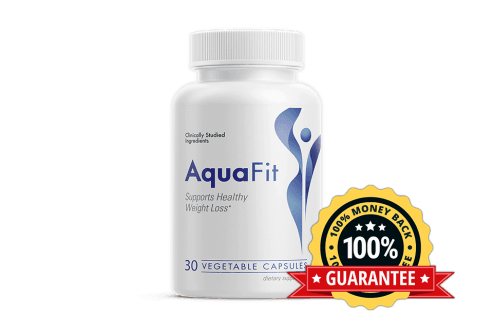
AquaFit is a dietary supplement sold in capsule form, designed to be taken once daily with a cold glass of water before breakfast. Its market positioning sits at the intersection of two durable consumer trends: the thermogenic supplement category (products claiming to raise metabolic rate) and the "biohacking" aesthetic popularized by cold-exposure practitioners and influencer wellness culture. The product is sold direct-to-consumer through a dedicated sales page featuring the VSL described throughout this analysis, with no apparent retail distribution at the time of writing.
The stated target user, as constructed throughout the VSL, is a woman between roughly 35 and 65 years old who has tried and failed with conventional weight loss methods, caloric restriction, gym programs, branded diet plans like Weight Watchers or intermittent fasting, and who attributes her lack of results to something beyond her control. The framing is explicitly non-intimidating: no gym required, no diet changes, no willpower discipline. The product is positioned not as an enhancement for already-active people but as a rescue mechanism for people who have exhausted other options. This is a deliberate market segmentation choice, targeting what Eugene Schwartz would recognize as a stage-4 or stage-5 market sophistication audience: buyers who have been pitched so many times they are immune to direct benefit claims and only respond to a genuinely novel mechanism.
AquaFit is presented as the creation of "Dr. Blaine," a character whose full name and credentials are never disclosed in the VSL. The product contains, according to the letter, five active compounds: lipoacin, banaba leaf extract (mislabeled as "bonobo leaf" throughout the recording, which may indicate a production error or deliberate obfuscation), berberine, an artichoke-derived compound called "areole extract," and resveratrol. It is marketed as vegetarian, non-GMO, gluten-free, and manufactured in a GMP-certified facility with third-party testing.
The Problem It Targets
The problem AquaFit addresses is, on the surface, straightforward: excess body weight and the frustration of failed weight loss attempts. But the VSL makes a more specific diagnostic claim, that the root cause of persistent overweight is not caloric excess, hormonal imbalance, or lack of effort, but a metabolism that has been "shut off" entirely, rendered dormant by age, stress, pregnancy, or illness. This reframe is rhetorically important because it simultaneously exonerates the viewer ("it's not your fault") and invalidates every intervention they have previously tried ("no amount of dieting or exercise was going to overcome your shut-off metabolism").
The underlying problem. Obesity and difficulty achieving sustainable weight loss. Is genuinely widespread and genuinely underserved by existing solutions. The CDC estimates that more than 42 percent of American adults are classified as obese, and long-term data consistently shows that most people who lose weight through caloric restriction regain the majority of it within five years, a phenomenon extensively documented in the New England Journal of Medicine and related clinical literature. The emotional dimension of this problem; the shame, the social comparison, the sense of bodily betrayal, is equally well-documented. Research published in Obesity Reviews has found that weight stigma in social settings produces measurable increases in cortisol and disordered eating behaviors, which creates a feedback loop the VSL exploits with considerable narrative precision.
The commercial opportunity in this space is enormous and perpetually renewable. The global weight management market was valued at over $224 billion in 2021 according to market research firm Grand View Research, and the dietary supplement subcategory grows at roughly 5-6 percent annually. What makes AquaFit's entry point distinctive is its specific timing relative to the cultural saturation of cold-exposure content on TikTok and Instagram, ice baths, cold plunges, and cryotherapy have received sustained influencer coverage since 2021, making the "ice water" hook feel timely rather than invented. The VSL explicitly references this cultural context in its opening: "this ice water hack is taking over social media," borrowing legitimacy from a trend the viewer is likely already aware of while claiming to offer an upgraded, accessible version of it.
What the VSL frames as a novel scientific discovery, that cold water stimulates metabolic activity, does have a basis in published literature. Several studies, including work by Boschmann et al. published in the Journal of Clinical Endocrinology & Metabolism (2003), found that drinking approximately 500 ml of water increased metabolic rate by roughly 30 percent for 30-40 minutes. That is a real finding. The question is what happens when a real, modest, and time-limited finding is extrapolated into a marketing claim about "24-hour fat incineration", a question this analysis addresses directly in the sections that follow.
How AquaFit Works
The mechanism the VSL proposes is built in two stages. The first stage establishes that cold water alone has a meaningful metabolic effect, citing the Berlin Medical School trial and the Stanford study to suggest that drinking ice water in the morning activates a dormant metabolism. The second stage argues that while water alone is beneficial, it only keeps the metabolism active for approximately 35 minutes before it "shuts off again," and that the five compounds in AquaFit function as a kind of metabolic lock that holds the activation window open for the entire day. The formula, in this framing, is not simply a supplement, it is a key that fits a specific biological loophole.
The claim that a metabolism can be "completely off" rather than merely slower is not standard clinical language. Metabolic rate. The rate at which the body converts food and stored energy into usable fuel. Exists on a continuum shaped by lean muscle mass, thyroid function, age, hormonal status, and activity level. The concept of a binary "on/off" switch is a simplification so dramatic that it crosses into misleading territory. What is accurate is that resting metabolic rate (RMR) declines with age and prolonged caloric restriction, a phenomenon sometimes called "adaptive thermogenesis," which has been documented rigorously in studies following participants of shows like The Biggest Loser (Leibel, Rosenbaum & Hirsch, New England Journal of Medicine, 1995; Fothergill et al., 2016). But adaptive thermogenesis produces reductions of perhaps 10-15 percent of expected RMR; not a complete shutdown, and not something reversible by a morning capsule.
The claimed 720 to 1,080 percent increase in metabolic fat-burning is the most extraordinary number in the letter, and it bears close scrutiny. If taken at face value, this would mean a person burning 1,500 calories at baseline rest would burn between 12,300 and 17,700 calories per day, a figure that is physiologically impossible without catastrophic hyperthermia. The VSL does not define what baseline it is measuring this percentage against, which is a critical omission. It is possible the number refers to a percentage increase in fat oxidation from one specific measurement window compared to a depleted starting point, a framing that could be technically defensible in a narrow laboratory context while being wildly misleading in a weight-loss context. Without a published, peer-reviewed methodology attached to that specific claim, it cannot be taken as credible.
The cold-water activation mechanism does have legitimate scientific grounding at a modest scale. Thermogenesis triggered by cold exposure is a real phenomenon, brown adipose tissue (BAT), which humans retain in small amounts, is activated by cold and burns calories to generate heat. This is the same biology that makes cold plunges feel warming afterward, as the VSL correctly notes. The question is one of magnitude: the metabolic effects documented in peer-reviewed cold-exposure literature are meaningful at the margins, not transformative at the scale the VSL implies.
Curious how other VSLs in this niche structure their pitch? Keep reading, the psychological triggers section breaks down the architecture behind every claim above.
Key Ingredients and Components
The AquaFit formulation draws on ingredients with varying levels of independent research support. The VSL frames them as the product of a 16-month, 120-compound elimination process by a "dream team" of biochemists, nutritionists, and pharmaceutical insiders, a framing that cannot be verified but is structurally designed to imply extraordinary rigor. What follows is an assessment of each ingredient based on publicly available research.
Lipoacin, This ingredient is the most ambiguous in the formula. The name does not correspond to any widely recognized compound in peer-reviewed nutritional biochemistry. It may be a proprietary trade name, a novel synthetic compound, or a marketing invention. The VSL cites a 2017 randomized study claiming women lost "585% more weight" with lipoacin, but no study matching this description appears in major nutritional databases under that compound name. Without a verifiable INCI name or CAS number, independent evaluation is not possible. Consumers should apply heightened scrutiny here.
Banaba Leaf Extract (Lagerstroemia speciosa), Banaba leaf, sourced from a flowering tree native to Southeast Asia, contains corosolic acid, which has been studied for its effect on glucose transport. Several small human trials, including one published in the Journal of Ethnopharmacology (2003), found modest reductions in blood glucose in type 2 diabetic patients. The VSL's claim that it "shuttles fat into cells where it's more quickly burned for energy" and produces a 1,080% metabolic increase is an extraordinary extrapolation from the available evidence, which primarily concerns blood sugar regulation rather than fat oxidation at that scale.
Berberine (Berberis aristata root extract). Berberine is among the most studied compounds in the formula and the most credibly represented. It is an isoquinoline alkaloid found in several plants including barberry, goldenseal, and tree turmeric. A 2012 meta-analysis published in Evidence-Based Complementary and Alternative Medicine found that berberine produced modest but statistically significant reductions in body weight, BMI, waist circumference, and triglycerides. Its primary mechanism appears to be AMPK activation, which mimics some effects of caloric restriction at the cellular level. The claim that it "turns the body into a fat-burning furnace" overstates the literature, but berberine is one of the more legitimately researched weight-adjacent supplements available without a prescription.
Artichoke Extract (Cynara scolymus). The VSL refers to this as "areole extract" and credits it with making the body "47% better at burning carbs and sugar." Artichoke extract has a reasonable research base for liver function and bile production support, and some small trials suggest modest lipid-lowering effects. The 47% carbohydrate oxidation claim, however, is not traceable to a published, named study in the VSL, which is a meaningful omission for a number that specific.
Resveratrol; Resveratrol, a polyphenol concentrated in red grape skin and red wine, has attracted significant research attention since the early 2000s following studies suggesting it activates the SIRT1 longevity pathway. The VSL claims it "boosts thermogenesis, cuts cravings, and physically changes the structure of your fat cells." There is published research supporting a modest role for resveratrol in thermogenesis and adipocyte (fat cell) differentiation, notably work by Lagouge et al. in Cell (2006) using animal models, but human clinical evidence for meaningful weight loss at typical supplement doses remains limited.
Hooks and Ad Angles
The VSL opens with what is arguably its most carefully engineered line: "This ice water hack is taking over social media." In fewer than ten words, this hook performs three simultaneous functions. It invokes social proof (widespread adoption on trusted platforms), signals novelty (a "hack" implies an unconventional shortcut), and creates an open loop, the listener does not yet know what the hack is, but the framing guarantees they want to. This is a textbook curiosity gap structure, as described by George Loewenstein's information-gap theory of curiosity (1994), where partial information creates a felt tension that can only be resolved by continued attention. The word "hack" is also doing cultural work: it borrows the vocabulary of the productivity and biohacking communities to signal that the information is insider knowledge, not mainstream advice.
The hook then immediately pivots to a physical sensation, "it's like it's freezing the fat right off your body", which is a pattern interrupt in the Cialdini tradition, disrupting the viewer's expectation of a typical diet product pitch with an image that is almost tactile in its strangeness. Freezing fat is counterintuitive; the body burns fat through heat, not cold. The cognitive dissonance this creates is not a flaw in the copywriting, it is the mechanism by which the viewer leans in to have the contradiction resolved. This is what Eugene Schwartz would recognize as a Stage 4 market sophistication move: the target audience has heard every conventional weight loss pitch, so the only effective entry is a mechanism so surprising it bypasses the "I've heard this before" filter.
Secondary hooks observed across the VSL include:
- "Your metabolism isn't slow, it's completely off, dormant, asleep" (reframe hook that invalidates prior product failures)
- "It's physically impossible for your fat not to melt away" (certainty and guarantee language)
- "33,000 men and women have already used this" (social proof as urgency)
- "A glass of ice water and one little capsule. That's it" (simplicity hook, targeting effort-aversion)
- "She was in every photo they took. And I wasn't in a single one" (identity threat / social exclusion hook)
Ad headline variations a media buyer could test on Meta or YouTube:
- "Doctors Are Calling This the 'Metabolic Off Switch'; Here's How to Flip It Back On"
- "She Lost 54 Lbs Without the Gym. Her One Morning Habit Might Shock You."
- "Why Cold Water + This Capsule = All-Day Fat Burning (Backed by 3 Studies)"
- "Your Metabolism Isn't Slow, It's Off. Here's the 7-Second Fix."
- "Big Pharma Hates This NYC Doctor's Ice Water Formula, And Here's Why"
Psychological Triggers and Persuasion Tactics
The persuasive architecture of the AquaFit VSL is not a simple stack of individual tactics applied sequentially. It is a compounding structure in which each layer reinforces the others: authority legitimizes the mechanism, the mechanism validates the testimonial, the testimonial personalizes the authority, and the narrative villain (Big Pharma) makes all three feel urgent and oppositional. Cialdini would recognize the principles at work, authority, social proof, scarcity, reciprocity, but what distinguishes this VSL from a basic application of those principles is the sophisticated sequencing. The letter builds a felt epistemic world before it makes a purchase request, which is why the offer, when it arrives, does not feel like an interruption but like the logical conclusion of a story the viewer has been living inside for twenty minutes.
The epiphany bridge structure, Paula's moment of discovery via Michelle's DM, followed by the Zoom call with Dr. Blaine, is the load-bearing frame of the entire letter. This narrative device, associated with direct-response strategist Russell Brunson, works because it transfers the avatar's emotional journey onto the viewer. By the time the product is named, the viewer has already experienced (vicariously) the humiliation, the hope, the skepticism, and the vindication. Buying AquaFit is not a transaction at that point, it is an enrollment in a completed arc.
Fault transfer and cognitive dissonance resolution (Festinger, 1957): The repeated phrase "it's not your fault" is one of the most studied openers in direct-response copywriting precisely because it resolves the dissonance between effort and failure. The viewer tried, failed, and likely blames themselves. Removing that blame creates immediate emotional relief and gratitude toward the speaker. A micro-reciprocity moment that primes the buyer to trust what follows.
False enemy / conspiracy framing (Kennedy's "Us vs. Them"): Dr. Blaine's claim that Big Pharma "fought violently" to suppress the formula does three things at once: it explains why the viewer has never heard of this before (plausibility maintenance), it creates an in-group identity between the viewer and the VSL narrator (we know the secret, they want to keep it from you), and it pre-inoculates against skeptical external voices (anyone who doubts this is probably on Big Pharma's side).
Authority borrowing (Cialdini, Influence, 1984): Harvard, Stanford, and Berlin Medical School are mentioned by name but never with specific paper titles or DOIs that would allow verification. This is borrowed authority. The halo of prestigious institutions transferred to the product without those institutions having endorsed it.
Loss aversion and the two-path close (Kahneman & Tversky, Prospect Theory, 1979): The VSL's closing section explicitly presents two futures in visceral terms; continued social exclusion, joint pain, breathlessness, and reflected shame on one path; ease, romance, confidence, and freedom on the other. Research consistently shows that the pain of a loss is psychologically roughly twice as powerful as the pleasure of an equivalent gain, and this close is engineered to activate that asymmetry.
Specificity as credibility (Schwartz, Breakthrough Advertising, 1966): Numbers like "33,467 users," "27.8 pounds average loss," "585% more weight," and "720 to 1,080%" function as credibility signals because fake precision reads as real precision. Round numbers feel estimated; decimal-place numbers feel measured.
Scarcity and urgency stacking (Cialdini's scarcity principle): The VSL layers at least four distinct scarcity signals in its closing segment, limited warehouse inventory, supplier price increases, the "lowest price ever" framing, and the VIP bonus availability, compressing the decision window from days to minutes.
Endowment effect priming (Thaler, 1980): By asking the viewer to "just take a moment and imagine" having the body they want before presenting the price, the VSL invites the viewer to mentally own the outcome. Once you feel you already have something, the price to obtain it feels like an avoidance of loss rather than a discretionary purchase, a subtle but well-documented conversion lever.
Want to see how these tactics compare across 50+ VSLs? That's exactly what Intel Services is built to show you.
Scientific and Authority Signals
The authority architecture of the AquaFit VSL rests primarily on a single unnamed figure, "Dr. Blaine", whose credentials are never fully disclosed. The VSL identifies him as a former medical director of a "prestigious hospital in Southern California" who has spent "30-plus years as a doctor and scientist" and now practices weight loss medicine in New York City. No last name, no license number, no hospital affiliation, and no verifiable publication record are offered. This is not standard practice for a legitimate medical authority figure; it is consistent, however, with the legal practice of creating a character plausible enough to anchor a narrative without creating a traceable individual who could be subjected to regulatory scrutiny.
The institutional citations, Harvard, Stanford, Berlin Medical School, are used in what researchers of health misinformation call authority laundering: real institutions are attached to real findings, but the findings are then extrapolated far beyond what the original researchers concluded, and the institutions' prestige is transferred to the product as though they had endorsed it. The Boschmann et al. study from Berlin is the clearest example: it is a real, published trial (Boschmann M. et al., Journal of Clinical Endocrinology & Metabolism, 2003) showing that 500 ml of water increased metabolic rate by about 30 percent for roughly 30-40 minutes in a small cohort. The VSL takes this finding and uses it as the scientific foundation for a claim of 720-1,080% all-day fat burning. That is not an extension of the research. It is a replacement of it.
The "2016 study published in the journal Obesity" claiming that dieting and exercise worsen metabolic inactivity likely refers to legitimate research on adaptive thermogenesis following caloric restriction, a real phenomenon. However, the VSL's characterization. That dieting "makes your metabolism worse" as a reason to stop dieting and instead buy a supplement; is a motivated misreading of that literature, which advocates for sustainable, moderate caloric deficits rather than no behavioral change at all. The lipoacin citation (a 2017 randomized study showing 585% more weight loss) cannot be independently verified because "lipoacin" does not appear as a recognized compound name in PubMed or major supplement databases, which raises significant questions about whether this compound and its cited study are real.
The VSL's overall scientific authority posture is best described as plausibly borrowed: it leans on enough real science (cold water thermogenesis, berberine's AMPK effects, resveratrol's fat-cell research) to pass a quick credibility check, while making claims of magnitude and mechanism that the cited research does not support. For a consumer researching this product, the distinction matters: some ingredients have real, modest evidence; the overall system claim does not.
The Offer, Pricing, and Risk Reversal
The AquaFit offer is structured using a classic direct-response price-anchoring sequence. The VSL opens its pricing section with a rhetorical escalation, asking the viewer to imagine paying $5,000, then $1,000, then $500 for the promised transformation, before revealing that the actual price is $69 for a single bottle, anchored against a stated "regular price" of $249. This is a phantom price anchor: the $249 figure is presented as a real previous price rather than a constructed comparison point, but there is no verifiable retail history at that price. The anchor functions to make $69 feel like a steep discount rather than an introductory direct-response price, which is likely what it is. The six-bottle package at $39 per bottle is the clear target SKU, the VSL devotes significantly more copy to it, and the bonus offers and free shipping are restricted to three- and six-bottle orders.
The 60-day money-back guarantee is the risk-reversal mechanism, and it is a genuine one in the sense that 60-day guarantees are legally enforceable and regularly honored by direct-response supplement companies. However, the practical friction of a refund process, finding the contact information, initiating the request, waiting for processing, means that the effective psychological risk for the buyer is lower than the practical risk. The guarantee shifts the framing from "will this work?" to "what do I have to lose?" which is its intended function. Whether the refund process is genuinely frictionless or involves the kind of customer service obstacles common in the supplement DTC space cannot be determined from the VSL alone.
The bonus structure, a $39 e-book and a $97 VIP community access, both offered free, follows the standard direct-response "value stacking" playbook. These items are almost certainly produced at negligible marginal cost, but their stated retail values inflate the perceived total value of the package and make the $39-per-bottle price feel asymmetrically cheap by comparison.
Who This Is For (and Who It Isn't)
The ideal buyer profile for AquaFit, as constructed by the VSL, is specific: a woman in her late 30s to early 60s, likely a mother, who has tried multiple diet and exercise programs without lasting success, who is emotionally motivated by social comparison and body image, and who is currently in a moment of heightened frustration or renewed motivation. A vacation coming up, a social event, a photograph that stung. She is not a gym-goer, not a nutrition-label reader, and not a medical skeptic by default. She responds to personal narratives more than clinical abstracts, and she finds the "it's not your fault" frame genuinely relieving rather than patronizing. The $39-per-bottle price point targets a middle-income consumer who can absorb a $234 six-bottle investment but would hesitate at a $500 commitment.
There is also a meaningful male minority in the target audience. The VSL references 30 percent male participants in the internal study and frames the product as gender-neutral in its FAQ; but the narrative, the shame triggers, the social-comparison framing, and the bachelorette party story are all calibrated for women. Men who respond to this VSL are likely doing so despite the gendered framing, not because of it.
If you are researching this supplement, there are also profiles for whom it is probably a poor fit. Anyone with a diagnosed thyroid condition, metabolic disorder, or type 2 diabetes should consult an endocrinologist before taking a supplement containing berberine, which has documented interactions with blood sugar medications and can amplify the effect of insulin-sensitizing drugs. Anyone expecting the 720-1,080% metabolic claim to reflect their experience should calibrate expectations significantly downward. Anyone seeking a product with a fully transparent formulator, published clinical trials specific to the AquaFit formula, and a verifiable authority figure behind the product will not find that here.
This analysis is part of Intel Services, our ongoing library of VSL and ad-copy breakdowns. If you're researching similar products in the weight loss or metabolic health space, keep reading.
Frequently Asked Questions
Q: Does AquaFit really work for weight loss?
A: Some of AquaFit's ingredients, berberine, resveratrol, and banaba leaf extract, have modest independent research support for metabolic and blood sugar effects. However, the VSL's headline claim of 720-1,080% increased fat burning is not supported by published peer-reviewed evidence at supplement doses. Results, if any, are likely to be significantly more modest than the marketing suggests.
Q: Is AquaFit a scam?
A: "Scam" is a strong characterization, but the VSL makes several claims that significantly exceed what the available science supports, cites an authority figure ("Dr. Blaine") whose credentials cannot be independently verified, and references at least one ingredient ("lipoacin") that does not appear in standard biochemical databases. Consumers should approach the marketing claims with considerable skepticism while recognizing that some ingredients in the formula have legitimate research backgrounds.
Q: What are the ingredients in AquaFit?
A: According to the VSL, AquaFit contains five active compounds: lipoacin, banaba leaf extract (Lagerstroemia speciosa), berberine (from Berberis aristata root), artichoke extract (referred to as "areole extract"), and resveratrol from red grape skin. The product is described as vegetarian, non-GMO, gluten-free, and free of stimulants and artificial additives.
Q: Are there any side effects from taking AquaFit?
A: The VSL states "100% safe with zero side effects," but this is a marketing claim, not a clinical assessment. Berberine, one of the formula's better-studied ingredients, can cause gastrointestinal discomfort at higher doses and has clinically meaningful interactions with blood glucose-lowering medications. Anyone taking prescription drugs, particularly diabetes or blood pressure medications, should consult a physician before adding berberine-containing supplements.
Q: How does the AquaFit ice water hack work?
A: The mechanism proposed is that cold water briefly stimulates thermogenesis and metabolic activity, and that AquaFit's ingredients extend this activation window from roughly 35 minutes to a full 24 hours. The cold-water thermogenesis effect is real but modest in the published literature; the claim that a supplement can extend this window to 24 hours at 720-1,080% the baseline rate is not supported by publicly available peer-reviewed research.
Q: Is AquaFit safe to take?
A: The product is manufactured in a GMP-certified facility and claims third-party testing, which are legitimate quality markers. The individual ingredients are generally recognized as safe at standard supplement doses. However, berberine in particular is pharmacologically active and not appropriate for everyone. The blanket "zero side effects" claim in the VSL is an overstatement that should not substitute for individual medical guidance.
Q: How much does AquaFit cost and is there a money-back guarantee?
A: At the time the VSL was produced, the price was $69 for a single bottle (one-month supply) or $39 per bottle for a six-bottle package ($234 total). A 60-day full-refund guarantee is offered with no questions asked. Free shipping is included on three- and six-bottle orders. Two digital bonuses (an e-book and VIP community access) are included with qualifying purchases.
Q: Who is Dr. Blaine and is he a real doctor?
A: The VSL identifies "Dr. Blaine" as a former Southern California hospital medical director who now practices weight loss medicine in New York City, but no full name, medical license number, hospital affiliation, or verifiable publication record is provided. The character functions as the product's authority anchor and narrative device, but cannot be independently verified. This is a significant transparency gap for a health product.
Final Take
The AquaFit VSL is a technically accomplished piece of direct-response marketing that is most instructive for what it reveals about the current state of the weight loss supplement category. The letter does not use crude fear tactics or implausible before-and-after imagery. Instead, it constructs a detailed, emotionally coherent narrative world, Paula's humiliation, Michelle's DM, the mysterious Zoom call with Dr. Blaine, and uses that narrative as a delivery vehicle for scientific-sounding claims that would not survive peer review but that feel plausible inside the story's emotional logic. This is the defining characteristic of what marketing researchers sometimes call "narrative transportation": when a story is sufficiently immersive, the listener's critical evaluation of factual claims decreases measurably. The VSL is engineered for exactly this effect.
The scientific architecture of the letter deserves to be evaluated separately from the narrative architecture, and the verdict there is considerably less favorable. The core claim, that AquaFit produces a 720 to 1,080 percent increase in fat burning, is either a misrepresentation of the underlying research or a reference to a proprietary study that has not been made publicly available for scrutiny. "Lipoacin," the lead compound in the formula, does not correspond to a recognized ingredient name, which is troubling for a product whose entire scientific premise rests on that compound's 585% weight-loss superiority claim. The authority figure at the center of the letter, Dr. Blaine, is named but not identified, which is an unusual choice for a product whose credibility depends entirely on his expertise. These are not minor gaps, they are the structural joints of the argument, and they do not hold under pressure.
What is more credible is the secondary ingredient layer. Berberine has a genuine, if modest, research record in metabolic health. Resveratrol and banaba leaf extract have plausible mechanisms at the cellular level. If AquaFit is a well-formulated berberine and resveratrol supplement sold at a fair price with a real refund guarantee, it may deliver marginal metabolic support. The kind that pairs meaningfully with dietary improvement and activity rather than replacing it. That is a very different product from the one the VSL describes, but it is not a worthless one. The mismatch between what the science supports and what the marketing claims is the central tension any buyer must reckon with.
For the reader who has reached this point: the decision ultimately rests on how much weight you assign to the gap between the claimed mechanism and the verifiable evidence, and how you value the 60-day guarantee as a risk buffer. This breakdown is part of Intel Services, our ongoing library of VSL and ad-copy analyses. If you are researching similar products in the weight loss, metabolic health, or supplement categories, keep reading. The patterns that appear here appear throughout the niche.
Disclaimer: This article is for research and educational purposes only. It is not medical, legal, or financial advice, and it is not affiliated with the product or its makers. Always consult a qualified professional before making health or financial decisions.
Source-backed reader context
Additional Reviews & Reported Experiences
These statements were presented in the product's sales transcript. Daily Intel did not independently verify the speakers, purchase status, or reported outcomes, and the statements are not used in Product aggregateRating.
Paula Smith (narrator)
Date not stated
lost 54 pounds and dropped five dress sizes in about three months
Michelle (friend at bachelorette party)
Date not stated
lost nearly 85 pounds using Dr. Blaine's formula
VSL testimonial 1
Date not stated
lost 32 pounds just in time for vacation
VSL testimonial 2
Date not stated
down six dress sizes, maintained with no gym and eating pasta
VSL testimonial 3
Date not stated
can eat whatever she wants and not gain an ounce
Study participants
Date not stated
average weight loss of 27.8 pounds in 30 days; improvements in energy, sleep, mood, blood pressure, and blood sugar
Comments(0)
No comments yet. Members, start the conversation below.
Related reads
 reviews
Jocko Greens Review: Does One Scoop Match the Evidence?
Jocko Greens is a one-scoop powder with approximately 30 calories and 9 billion colony-forming units of probiotics per serving. Jocko Fuel also confirms ashwagandha extract and makes a digestive-support claim. The harder question is whether the available research matches this specific formula. It does not match closely enough to establish a finished-product outcome.
Read reviews
NooCube Review: Does the 250 mg Bacopa Dose Match the Research?
NooCube is one of the few nootropics that prints a milligram number next to an ingredient instead of hiding it in a blend. This review takes that one number, 250 mg Bacopa monnieri, and checks it against a real trial that used 300 mg in a very different population, then shows exactly where the comparison breaks down.
Read reviews
Olly Goodbye Stress Review: Label Claims vs. Evidence
OLLY Goodbye Stress combines GABA, L-theanine, and lemon balm extract in a Berry Verbena gummy aimed at occasional stress, not sleep. Here's what the label discloses, what a real L-theanine trial found, and exactly where the evidence stops.
Read