barebiology Review and Ads Breakdown
This barebiology review is based only on the provided ad transcript. That matters because the transcript does not give a conventional product page, ingredient label, supplement facts panel, checkou…
8,226+
Videos & Ads
+50-100
Fresh Daily
$29.90
Per Month
Full Access
12.5 TB database · 72+ niches · 22 min read
This barebiology review is based only on the provided ad transcript. That matters because the transcript does not give a conventional product page, ingredient label, supplement facts panel, checkout price, guarantee terms, or clinical references. What it does provide is a highly aggressive VSL-style ad about Alzheimer's, dementia, brain fog, and a claimed honey and lemon ritual.
The ad is not subtle. It opens with a person claiming to be the director of research at Yale, then says the viewer has been lied to by white coat experts about Alzheimer's and dementia. It claims that honey and lemon are all someone needs to wake up with a sharp mind by the following Tuesday. It then escalates into claims about a hidden cure, toxic brain plaques, a grandmother dying in a nursing home, Yale suppression, Big Pharma, a $22 million cover-up, and a free video allegedly recorded by Dr. Sanjay Gupta.
For a research-first review, the most important point is this: the transcript makes extraordinary health claims, but it does not provide the evidence needed to substantiate them. The presentation claims the method can reverse even stage six Alzheimer's in 15 days and says more than 23,394 people secretly tested it, with every single one reversing Alzheimer's or dementia in less than two weeks. Those are the manufacturer's or advertiser's claims as presented in the ad. The transcript does not include a published clinical trial, study design, patient criteria, safety data, journal name, or independent verification.
So this barebiology VSL analysis should be read as an examination of the offer's messaging, hooks, persuasion structure, and disclosed details. It is not a medical endorsement. Based on the transcript alone, the ad relies heavily on fear, authority borrowing, conspiracy framing, urgency, and a simple at-home ritual promise.
What Is barebiology
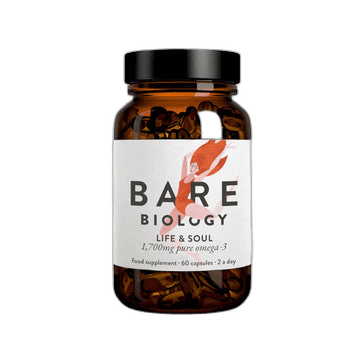
According to the task label, the product being reviewed is barebiology, in the General Health niche. But the provided transcript does not clearly explain what barebiology is. It does not describe a supplement bottle, capsule, powder, tincture, subscription, bundle, or brand background. It also does not disclose a formal ingredient list.
Instead, the transcript presents a traffic-driving ad that appears designed to send viewers into a longer VSL. The ad's subject is not a typical supplement explanation. It is a dramatic claim about a honey and lemon ritual that allegedly affects memory loss, Alzheimer's, dementia, and brain fog.
The transcript says the ritual is natural, easy, has zero side effects, and takes less than 60 seconds to prepare. It also says a free video shows exactly how to prepare it at home. However, the transcript does not confirm whether barebiology itself is the honey and lemon ritual, a supplement related to the ritual, an educational video, or a separate product sold after the viewer clicks.
That missing product detail is important. A normal supplement review would evaluate the label: active ingredients, serving size, delivery form, dosage, manufacturing standards, contraindications, and third-party testing. Here, none of that is supplied. The only named components in the transcript are honey and lemon, and even those are presented as part of the ad's story rather than a verified product formula.
Because of that, this barebiology review cannot responsibly say, "barebiology contains X, Y, and Z." It can only say that the ad transcript revolves around a claimed honey and lemon memory ritual and uses that ritual to frame a dramatic brain health promise.
The Problem It Targets
The ad targets one of the most emotionally charged health fears: losing memory and identity. It speaks directly to people who are tired of mental confusion, forgetting things, or losing glasses and keys. It also names Alzheimer's, brain fog, and dementia in the opening sentence.
The pain point is not just ordinary forgetfulness. The transcript intensifies the fear by connecting everyday memory slips to catastrophic decline. The ad eventually warns the viewer to click or risk not recognizing your own face in the mirror by the end of the year. That is a severe fear appeal. It turns common memory anxiety into an urgent crisis.
The presentation also targets caregivers and family members. The speaker says his grandmother would not have been dumped in a nursing home and forgotten if he had discovered the method earlier. That line is designed to activate guilt, grief, and protective instinct. It shifts the issue from personal brain fog to the fear of abandoning someone loved.
The stated enemy is also carefully chosen. The ad says the viewer's memory issues have nothing to do with genetics or how many crossword puzzles they stopped doing. This reframes the problem away from personal responsibility, aging, lifestyle, or inherited risk. Instead, the ad claims the real cause is toxic plaques that build up in the brain as people age.
The transcript then adds a provocative twist: it claims that if the viewer has ever taken omega-3 or expensive memory supplements, those plaques have already doubled in the mind. This is a direct attack on competing brain health products. It positions common memory supplements not just as ineffective, but as potentially worsening the problem. Again, the transcript provides no evidence for that claim.
From a marketing perspective, the problem being targeted is not only cognitive decline. It is a cluster of fears: fear of Alzheimer's, fear of being misled by experts, fear of wasting money on supplements, fear of family tragedy, fear of institutional neglect, and fear of missing a hidden solution before it disappears.
How barebiology Works
The transcript does not explain how barebiology works as a product. It does, however, explain how the advertised honey and lemon ritual supposedly works according to the presentation.
The claimed mechanism is toxic plaques. The ad says memory issues and mental decline are caused by toxic plaques that build up in the brain with age. It then claims the honey and lemon ritual completely clears out those toxic plaques, allegedly reversing even stage six Alzheimer's in just 15 days.
Those are claims made by the ad. The transcript does not provide the scientific pathway, dose, preparation details, biomarker evidence, imaging scans, physician evaluation, trial endpoints, or safety monitoring. It does not define what type of plaques are being discussed, how the ritual would interact with them, how clearance would be measured, or why honey and lemon would produce such a rapid effect.
The presentation also claims the method works regardless of age, memory condition, or family history. It even says that if someone is 80, weighs 230 pounds, and is bedridden, they can still erase brain fog without pills or invasive treatments. That is an extremely broad outcome claim. In health advertising, broad claims that apply to nearly everyone deserve especially close scrutiny.
The ad's mechanism has three marketing functions. First, toxic plaques give the audience a concrete villain inside the body. Second, the phrase makes the problem sound scientific without requiring the ad to explain the details. Third, the idea of clearing plaques creates a visual, easy-to-understand promise: remove the bad buildup and the mind becomes sharp again.
For consumers, the key takeaway is that the transcript does not prove the mechanism. It only states it. An honest barebiology VSL analysis has to keep that distinction clear. The ad says the ritual clears plaques. The transcript does not show that it does.
Key Ingredients and Components
The transcript mentions only two components: honey and lemon. It says "honey and lemon are all you need" and describes the concept as a honey ritual. It also says a free video will show the viewer exactly how to prepare the ritual at home.
No other ingredients are disclosed. There is no supplement facts panel. There is no serving size. There is no mention of capsules, tablets, softgels, powder, liquid drops, or gummies. There is no dosage. There is no sourcing information. There is no manufacturing standard. There is no allergen information. There is no third-party testing claim. There is no warning for people with diabetes, medication interactions, citrus sensitivity, or any other health consideration.
Because the transcript does not disclose a specific barebiology ingredient list, it would be misleading to invent one. In the broader brain health supplement category, products often use typical nutrients or compounds such as omega-3 fatty acids, B vitamins, phosphatidylserine, bacopa, ginkgo, citicoline, lion's mane, or antioxidants. But those are typical category ingredients, not confirmed barebiology ingredients from this transcript.
Interestingly, the ad attacks omega-3 and expensive memory supplements. It claims that if viewers have taken omega-3 or those supplements, the plaques have already doubled. The transcript provides no evidence for that statement. But strategically, it helps the ad separate itself from ordinary brain health products. It tells viewers that familiar solutions are not merely insufficient; they are part of the problem.
The component story is therefore simple but incomplete. The ad gives the audience honey and lemon as the memorable ritual. It withholds the actual preparation details until after the click. And it gives no verifiable product formulation for barebiology itself.
The VSL Hook and Story
The VSL hook is built like a medical whistleblower confession. The first sentence says: "I'm the director of research at Yale, and if I died tomorrow, I'd want every person with Alzheimer's, brain fog, or dementia, including you, to know this." That line combines authority, mortality, and urgency in one move.
The speaker then claims that white coat experts have been lying about Alzheimer's and dementia. This shifts the viewer into a skeptical frame. If the viewer already distrusts institutions, the ad validates that suspicion. If the viewer does not, the ad tries to create doubt by promising proof.
Next comes the everyday pain hook: tired of confusion, forgetting things, or losing glasses and keys. This makes the ad feel personally relevant to people who may not have a diagnosis but are worried about cognitive decline.
Then the ad introduces the simple solution: honey and lemon. The phrase is familiar, low-cost, and non-threatening. It feels like a home remedy, not a medical intervention. That simplicity is central to the hook. A complex disease is paired with a kitchen-counter solution.
The story escalates quickly. The speaker claims to have worked at Yale for over 35 years and says his team discovered the biggest breakthrough in the history of health, calling it the cure for Alzheimer's. The transcript provides no verification for the identity of the speaker, the Yale role, the team, or the discovery.
The emotional center of the story is the grandmother anecdote. The speaker says he wishes he had discovered the method earlier because his grandmother would not have been left in a nursing home until she died. That is not a technical claim. It is a grief-based persuasion element. It makes the ad feel personal and morally urgent.
The villain enters next. The ad says Yale blocked the discovery after Big Pharma offered $22 million to keep it hidden. This is classic suppression framing. The ad implies that the method is not unknown because it lacks evidence, but because powerful interests are hiding it.
The final story move is the rescue. The speaker says Dr. Sanjay Gupta recorded a free video showing exactly how to prepare the ritual. The viewer is told to click, watch until the end, and do it before the video is shut down.
That is the full VSL arc: respected insider, hidden truth, simple ritual, personal tragedy, corrupt institutions, celebrity medical authority, disappearing video, urgent click.
Ads Breakdown (the specific ad angles/hooks used to drive traffic to this offer)
The ad uses several distinct angles to push the viewer toward the click.
The first is the deathbed confession hook. The speaker says that if he died tomorrow, he would want people with Alzheimer's, brain fog, or dementia to know the secret. This makes the message feel urgent and morally weighty. It implies the information matters so much that it would be the speaker's final wish.
The second is the Yale authority hook. The speaker claims to be the director of research at Yale and to have worked there for over 35 years. Yale is used as credibility shorthand. The ad does not simply say "a researcher." It ties the claim to a prestigious institution, then later turns that same institution into a suppressor.
The third is the experts lied hook. The ad says white coat experts have been lying about Alzheimer's and dementia. This line appeals to people who feel dismissed by doctors or confused by mainstream advice. It also positions the ad as a corrective to the medical establishment.
The fourth is the simple kitchen ritual hook. The claim that honey and lemon can make someone wake up with a sharp mind by next Tuesday is designed to feel easy and accessible. It lowers friction. Instead of asking the viewer to buy a complex protocol immediately, the ad teases a fast home preparation.
The fifth is the breakthrough cure hook. The transcript uses the phrase cure for Alzheimer's. That is an extremely strong claim. The ad also says it has nothing to do with medication. This positions the method as both revolutionary and natural.
The sixth is the toxic plaque mechanism hook. The ad says memory decline is caused by toxic plaques and that the ritual clears them. This gives the promise a pseudo-mechanistic structure: identify the cause, remove the cause, reverse the condition. The transcript does not provide evidence, but the mechanism is easy to visualize.
The seventh is the anti-supplement hook. The ad says omega-3 and expensive memory supplements may have doubled plaques in the mind. This is used to differentiate the offer from the crowded brain health supplement market. It also creates urgency for people who have already tried supplements.
The eighth is the personal tragedy hook. The grandmother story adds emotional stakes. It suggests the speaker is not merely selling information; he is trying to prevent others from suffering what his family suffered.
The ninth is the suppression hook. The ad claims Yale blocked the discovery after Big Pharma offered $22 million. That precise dollar amount makes the story feel specific, even though the transcript provides no proof.
The tenth is the borrowed media authority hook. The ad references CNN's chief medical correspondent, Dr. Sanjay Gupta. This name is used to make the viewer feel the video is tied to a recognized medical communicator. The transcript does not verify his participation.
The eleventh is the secret mass test hook. The ad claims more than 23,394 people tested it and every single one reversed Alzheimer's or dementia in less than two weeks. The number is precise and dramatic. However, the transcript does not give study documentation.
The twelfth is the universal applicability hook. The ad says the method works no matter the viewer's age, memory condition, or family history. It even names an extreme profile: 80, 230 pounds, and bedridden. This removes objections by claiming the method applies to almost everyone.
The thirteenth is the shutdown urgency hook. The ad says Big Pharma will do anything to shut it down, so the viewer must click immediately. This is a scarcity tactic applied to information access rather than inventory.
The final hook is the identity-loss fear hook. The closing line warns the viewer could fail to recognize their own face by the end of the year. That is the darkest fear in the ad and is designed to make inaction feel dangerous.
Psychological Triggers and Persuasion Tactics
The ad is built around authority first. A claimed Yale research director appears at the center of the message. Then the ad invokes Dr. Sanjay Gupta. These names and institutions are not incidental. They are meant to reduce skepticism before the viewer sees evidence.
It also uses anti-authority at the same time. The speaker borrows credibility from Yale while claiming Yale blocked the discovery. That creates a useful contradiction for persuasion: the institution is credible enough to make the speaker impressive, but corrupt enough to explain why the viewer has not heard the claim before.
The ad relies heavily on fear appeal. It names Alzheimer's and dementia immediately, then adds nursing home abandonment and the possibility of not recognizing one's own face. The emotional pressure is clear: click now or risk irreversible decline.
Another major tactic is conspiracy framing. The ad claims Big Pharma paid $22 million to hide the discovery. This transforms lack of public awareness into proof of suppression. In that frame, skepticism can be reinterpreted as evidence that powerful interests are working against the viewer.
The ad uses simplicity bias through the honey and lemon ritual. Complex health problems are exhausting to research. A simple ritual that takes less than 60 seconds feels emotionally attractive because it reduces the burden of action.
It also uses specificity bias. Numbers like 35 years, 60 seconds, 15 days, $22 million, and 23,394 people make the story feel concrete. But specificity is not the same as evidence. The transcript gives numbers without documentation.
The ad uses loss aversion by emphasizing what the viewer could lose: memory, independence, family recognition, and identity. It does not merely promise improvement. It warns of deterioration if the viewer fails to click.
There is also social proof, but only in aggregate form. The claimed 23,394 people are presented as evidence of mass success. However, there are no named testimonials, no first-person buyer quotes, and no before-and-after details in the transcript.
Finally, the ad uses curiosity gap. It does not explain exactly how to prepare the ritual. It says the free video will show the method. That keeps the viewer from evaluating the details upfront and pushes them toward the next step.
Scientific and Authority Signals
The transcript uses scientific and medical language, but it does not provide scientific substantiation.
The main scientific-sounding term is toxic plaques. The ad says these plaques build up in the brain with age and cause memory decline. It then claims the honey and lemon ritual clears them. This language is meant to evoke a biological mechanism, but the transcript does not specify plaque type, diagnostic method, measurement standard, or evidence of clearance.
The strongest authority signal is Yale. The speaker claims to be the director of research at Yale and says he has worked there for over 35 years. The ad also claims Yale blocked the discovery. This dual use is powerful: Yale confers credibility while also playing the role of gatekeeper.
The second authority signal is Dr. Sanjay Gupta, described in the ad as CNN's chief medical correspondent. The ad says he recorded a free video showing exactly how to prepare the ritual. The transcript does not include proof that Dr. Gupta participated, endorsed the method, or made such a video.
The third authority signal is the alleged secret test involving 23,394 people. The ad says every single person reversed Alzheimer's or dementia in less than two weeks. In a real research setting, such a claim would require extraordinary evidence: participant selection criteria, diagnoses, controls, endpoints, adverse event tracking, ethics oversight, statistical analysis, and independent review. None of that appears in the transcript.
The ad also claims zero side effects. That is another broad medical claim. Even ordinary food ingredients can be unsuitable for some people depending on allergies, blood sugar concerns, medications, dental issues, gastrointestinal sensitivity, or other factors. The transcript does not discuss safety screening.
Overall, the scientific and authority signals are strong as marketing devices but weak as evidence within the transcript. The ad sounds medical, names prestigious authorities, and uses precise numbers. But the provided material does not let a reviewer verify the underlying claims.
What Real Buyers Say
The transcript does not include real buyer testimonials. There are no named customers, no first-person success stories, no quoted reviews, no star ratings, no screenshots, and no customer before-and-after accounts.
The only social proof claim is the advertiser's statement that the method was secretly tested on more than 23,394 people and that every single one reversed Alzheimer's or dementia in less than two weeks. That is not a buyer testimonial in the transcript. It is a mass-results claim made by the ad.
This distinction matters. Testimonials usually give a consumer-level perspective: what someone tried, how long they used it, what changed, what did not change, and whether they bought the product. This transcript does not provide that. It gives a sweeping performance claim without individual voices.
For a health-related offer, the absence of buyer testimonials is not automatically proof that the product is ineffective. But it does limit what a research-first review can say. Based only on the transcript, there are no buyer quotes to analyze.
The Offer / Pricing / Risk Reversal
The transcript does not disclose the price of barebiology. It does not mention a one-bottle cost, bundle pricing, subscription terms, shipping fees, discounts, or payment options.
It also does not mention a refund policy or satisfaction guarantee. There is no 60-day guarantee, 180-day guarantee, trial offer, or risk-free language in the provided ad. The only offer-like element is a free video that allegedly shows viewers how to prepare the honey and lemon ritual.
The price anchoring comes indirectly. The ad says the method has nothing to do with medication and criticizes expensive memory supplements. That makes the advertised ritual feel cheaper and easier by comparison. But without the downstream VSL or checkout page, we cannot know whether the final offer is truly low-cost.
The urgency is intense. The ad says Yale blocked the discovery, Big Pharma offered $22 million to keep it hidden, and the video may be shut down. The call to action is to click immediately and watch until the end. The ad also warns that delaying could result in severe cognitive decline.
From a buyer-protection standpoint, the missing offer details are a major gap. Before considering any purchase, a consumer would need to know the actual product, ingredients, dosage, price, subscription terms, refund policy, and seller identity. None of that is available in this transcript.
Who This Is For (and Who It Isn't)
This VSL appears aimed at people worried about memory, brain fog, Alzheimer's, dementia, or family history of cognitive decline. It also appears aimed at caregivers who are emotionally affected by a loved one's decline and who may be searching for hope.
It may also appeal to people who distrust pharmaceutical companies, mainstream medicine, academic institutions, or conventional supplements. The ad validates that distrust and offers a hidden natural alternative.
However, this offer presentation is not suitable for people looking for careful, evidence-first health information. The transcript makes very large claims while providing no verifiable clinical evidence. It uses the phrase cure for Alzheimer's, claims reversal of dementia in under two weeks, and says the method works no matter the viewer's age or condition. Those claims should be approached with skepticism.
It is also not appropriate for someone who needs medical evaluation for cognitive symptoms. Memory loss, confusion, and personality changes can have many causes. Some require timely medical attention. A VSL ad is not a substitute for diagnosis, treatment planning, medication review, nutritional evaluation, or professional care.
People with Alzheimer's or dementia, and caregivers managing those conditions, should be especially cautious about any presentation that promises fast reversal, universal results, zero side effects, and institutional suppression without verifiable evidence.
Frequently Asked Questions
What is barebiology according to the transcript?
The transcript does not clearly define barebiology as a product. It presents an ad about a claimed honey and lemon ritual for Alzheimer's, dementia, and brain fog. No supplement format or product label is disclosed.
Does the transcript disclose barebiology ingredients?
No. The only named components are honey and lemon, and those are presented as part of the ritual. The transcript does not provide a confirmed barebiology ingredient list.
Does the ad prove honey and lemon reverse Alzheimer's or dementia?
No. The ad claims this, but the transcript does not include clinical evidence, citations, published studies, or independent verification. The claim should be treated as an advertising claim, not a proven medical fact.
What is the main hook in the barebiology ad?
The main hook is a claimed Yale whistleblower revealing a hidden honey and lemon method that powerful institutions allegedly tried to suppress.
Is a price mentioned?
No. The transcript does not mention pricing, discounts, bundles, shipping, subscriptions, or refund terms.
Are there buyer testimonials?
No. The transcript contains no first-person buyer testimonials. It only includes a broad claim that 23,394 people secretly tested the method.
What authority figures are used?
The ad uses a claimed Yale research director and references Dr. Sanjay Gupta. The transcript does not verify their involvement.
Who should be cautious?
Anyone dealing with Alzheimer's, dementia, brain fog, or cognitive decline should be cautious. The ad makes extreme claims without providing supporting evidence in the transcript.
Final Take
The provided barebiology ad transcript is a high-pressure VSL traffic piece built around memory fear, medical authority, conspiracy, and a simple natural ritual. It claims that honey and lemon can clear toxic brain plaques and reverse Alzheimer's or dementia in days. It invokes Yale, Big Pharma, Dr. Sanjay Gupta, a hidden breakthrough, a secret test of 23,394 people, and the threat of the video being shut down.
But the transcript does not disclose the actual barebiology ingredients, product format, price, guarantee, clinical citations, or buyer testimonials. It also does not verify the authority claims or the alleged secret test. For a research-first reader, those omissions are central.
The ad may be emotionally powerful, but the evidence in the transcript is thin. Its claims should be treated as claims made by the presentation, not established medical facts. Anyone concerned about Alzheimer's, dementia, brain fog, or memory decline should consult qualified medical professionals and avoid relying on a promotional VSL as a basis for health decisions.
Disclaimer: This article is for research and educational purposes only. It is not medical, legal, or financial advice, and it is not affiliated with the product or its makers. Always consult a qualified professional before making health or financial decisions.
Comments(0)
No comments yet. Members, start the conversation below.
Related reads
- DISreviews
Workshop Doce de Leite Vegano Review and Ads Breakdown
The Workshop Doce de Leite Vegano is not positioned in its presentation as a generic recipe class. Lara Monetti frames it as a response to a very specific kitchen frustration: trying to make vegan …
Read - DISreviews
Ultra Liver Review and Ads Breakdown
This Ultra Liver review looks only at the supplied VSL and ad transcript. That matters because the presentation makes a very specific argument: most people who think they need a liver flush may act…
Read - DISreviews
Total Bowel Release Review and Ads Breakdown
Total Bowel Release is promoted through a high-intensity digestive health presentation built around one central idea: constipation is not just about too little fiber, too little water, or aging. Ac…
Read