BioDentix Review and Ads Breakdown: A Research-First Look
The pitch begins with a three-year-old girl recoiling at a birthday party, her voice cutting through 20 recording phones: "Grandma, your breath smells like rotten eggs." In one stroke, the BioDenti…
8,226+
Videos & Ads
+50-100
Fresh Daily
$29.90
Per Month
Full Access
12.5 TB database · 72+ niches · 27 min read
Introduction
The pitch begins with a three-year-old girl recoiling at a birthday party, her voice cutting through 20 recording phones: "Grandma, your breath smells like rotten eggs." In one stroke, the BioDentix Video Sales Letter converts a routine supplement pitch into a scene of family rupture, public humiliation, and unrequited love, all in a single high-pitched sentence from a child. It is a masterclass in emotional targeting, and it is worth examining closely, because the rest of the VSL's approximately 45-minute runtime is built on the structural logic that moment establishes: oral decay is not a hygiene problem, it is a social exile problem, and no amount of brushing will solve it.
BioDentix is a chewable probiotic gummy marketed as the world's first "dental healing gummy," containing four probiotic strains the VSL calls "salivary biotics." The product is positioned as the solution to a proprietary root cause, "dental termites" swimming in saliva. That the seller claims conventional dentistry has either missed entirely or deliberately suppressed to protect a $54 billion industry. The narrator, introduced as Dr. Andrew Blake, a dental biochemist with 24 years of experience and a 2022 International Scientist Award, frames the product not as a supplement but as an act of defiance against a corrupt establishment. The emotional arc, the invented vocabulary, the stacked authority signals, and the offer mechanics all deserve careful analysis before any purchasing decision is made.
This piece examines what BioDentix actually claims, what the underlying science says, how the VSL is constructed as a persuasive artifact, and what a thoughtful buyer should know before committing to a six-bottle order. It is not a product endorsement, a takedown, or a review in the consumer-magazine sense. It is a reading of a sophisticated piece of direct-response marketing, conducted with the same attention a literary critic would bring to a well-constructed text. Because this VSL is, whatever else it may be, well-constructed.
The central question the piece investigates is this: to what degree does BioDentix's marketing architecture rest on legitimate science, and where does it cross into fabricated or borrowed authority that a buyer cannot verify?
What Is BioDentix?
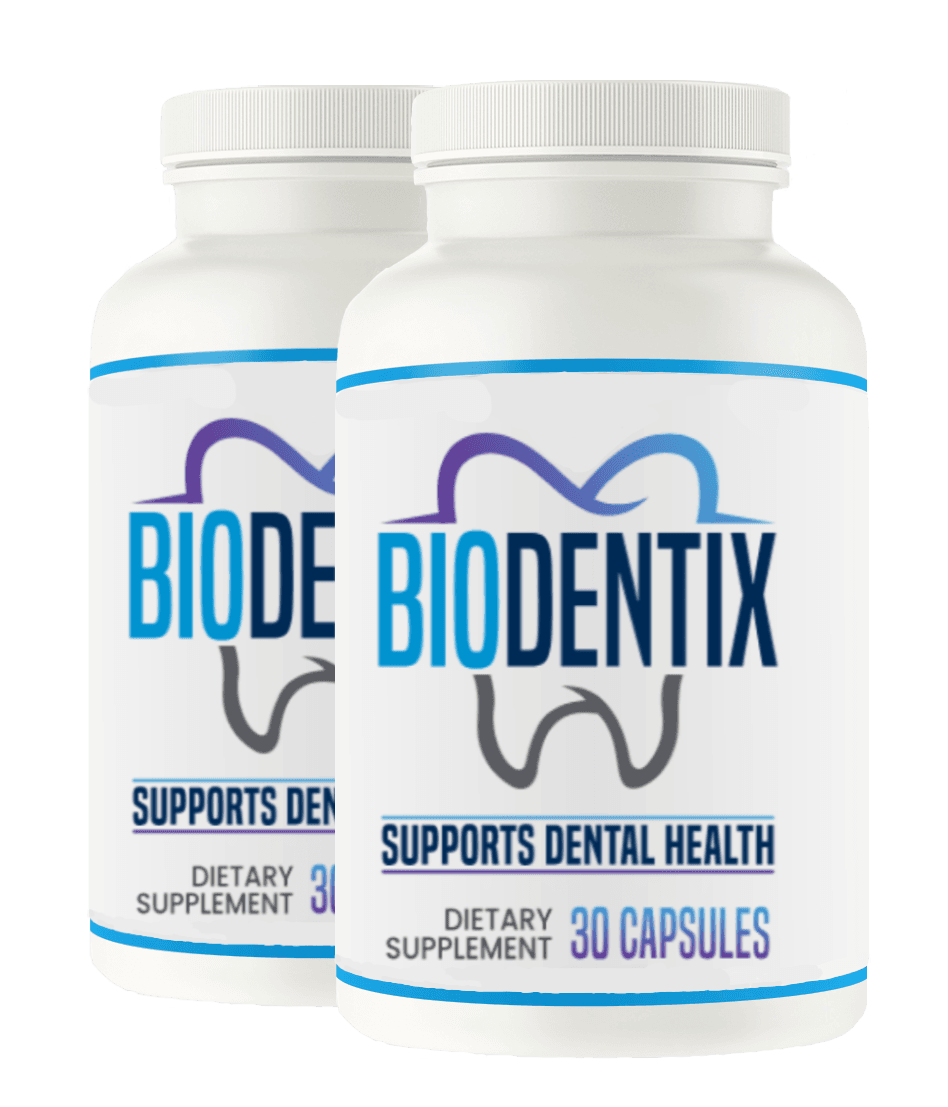
BioDentix is a soft chewable gummy supplement containing four probiotic strains: Lactobacillus paracasei, Bifidobacterium lactis (BL04), Lactobacillus salivarius, and Lactobacillus reuteri. The product is manufactured in a US-based, GMP-certified facility, described as sugar-free, non-GMO, zero-calorie, and tasteless. The recommended dose is two gummies daily. The VSL suggests a minimum 90-day course for meaningful results and a 180-day course for full oral transformation, which conveniently aligns with the six-bottle bundle the pitch prioritizes throughout.
In market terms, BioDentix occupies the oral probiotic supplement category; a segment that has grown substantially alongside broader interest in the oral microbiome, with products like ProDentim and similar gummy or lozenge-format probiotics establishing consumer familiarity with the concept. The distinguishing move BioDentix makes is not the ingredients themselves, several of which appear in competing oral probiotic products, but the proprietary framing: these are not "probiotics" (a term the VSL explicitly distances itself from), they are "salivary biotics," organisms designed to operate in saliva rather than in the gut. This rebranding serves a dual purpose, it differentiates the product from a crowded field and it allows the VSL to dismiss competing oral probiotics as categorically inferior.
The stated target user is an adult aged roughly 35 to 65 who has experienced chronic oral health problems, bleeding gums, persistent bad breath, cavities despite diligent hygiene, and who has spent significant money on conventional dental care without lasting results. The emotional profile is equally specific: someone who feels social shame around their oral health, who has begun modifying behavior (covering the mouth when laughing, avoiding close conversation, declining photos), and who has begun to distrust the dental establishment's explanations for why their problems persist.
The Problem It Targets
Oral disease is, by any epidemiological measure, a genuine and widespread problem. According to the World Health Organization, oral diseases affect nearly 3.5 billion people globally, making them among the most common noncommunicable diseases on earth. In the United States, the CDC estimates that nearly half of adults aged 30 and older have some form of periodontal (gum) disease, and that figure rises to approximately 70% among adults over 65. Dental anxiety and cost barriers mean that a significant portion of people with oral disease delay or avoid professional treatment, creating a large population of sufferers who are both in pain and financially motivated to find an alternative. This is the commercial opportunity BioDentix is designed to address, and it is a real one.
The VSL, however, does not merely locate itself within this established problem landscape, it reconfigures the problem entirely. The claim is that oral decay has "nothing to do with genetics, bad hygiene, or eating too much sugar," and is instead caused entirely by microscopic entities called "dental termites" living inside saliva. This framing serves two simultaneous persuasive functions. First, it exonerates the buyer from any responsibility for their condition ("it's not your fault"), which reduces the defensiveness that typically accompanies a pitch to someone who has already tried and failed with many prior solutions. Second, it positions every existing intervention, brushing, flossing, mouthwash, professional cleanings, as attacking the wrong target, making them not merely insufficient but categorically irrelevant. The buyer's history of failure is thus reframed as logical and inevitable, not as a signal that their condition is difficult to treat.
What the VSL calls "dental termites" appears to be a creative rebranding of certain pathogenic microorganisms, likely referring to concepts adjacent to established research on salivary pathogens, biofilm formation, or specific bacteria like Streptococcus mutans and Porphyromonas gingivalis that are well-documented in periodontology literature. The evidence that specific probiotic strains can beneficially influence the oral microbiome is, in fact, an active area of legitimate research. The conceptual leap the VSL makes. Elevating this into a single, novel, suppressed root cause that no dentist knows about. Is where scientific plausibility gives way to marketing invention.
Curious how the specific ingredients compare to what independent research actually says? The next two sections examine the mechanism and the strains individually; starting with what the VSL claims and ending with what peer-reviewed literature supports.
How BioDentix Works
The VSL's mechanistic argument is built on three linked claims. The first is that "dental termites", distinct from ordinary oral bacteria, colonize saliva and convert it from a protective fluid into a "corrosive acid swamp" that dissolves enamel continuously, even after brushing. The second is that because mouthwashes and cleanings target bacteria rather than these termites, all conventional oral hygiene is permanently fighting the wrong enemy. The third is that the four salivary biotic strains in BioDentix specifically eliminate these termites, restore saliva to its natural protective function, and allow the mouth's self-healing capacity to rebuild teeth and gums from within.
The core biological concept, that saliva plays a critical protective role in oral health, and that disruption of the salivary microbiome can accelerate dental decay, is consistent with established science. Research published in journals including the Journal of Dental Research and Clinical Oral Investigations has documented the importance of saliva's antimicrobial proteins, buffering capacity, and microbial composition. The idea that probiotic supplementation might beneficially influence this system is also legitimate: a 2016 systematic review in Journal of Dentistry found that several Lactobacillus strains demonstrated measurable effects on oral pathogens in clinical settings. The specific four strains featured in BioDentix, particularly Lactobacillus reuteri and Lactobacillus paracasei, do appear in published oral health literature, though the magnitude of effects in independent studies is generally more modest than the VSL's claimed figures (a "1,000-fold reduction" in pathogens and "450% reduction in cavities" are figures that would be extraordinary even in pharmaceutical trials).
The gummy delivery format is presented as a genuine innovation: because the biotics are released by chewing, they enter the saliva directly rather than passing through the stomach, where acid would destroy them before they reached the oral cavity. This is a scientifically coherent argument, oral delivery does circumvent the gastric barrier. And it distinguishes the format from standard probiotic capsules in a way that has at least theoretical merit. The strength of the argument depends entirely on strain viability in the gummy matrix and in the oral environment, neither of which the VSL provides verified data on.
The central problem with the mechanistic narrative is not that it is entirely implausible. It is that it is systematically overstated. "Dental termites" as a discrete, named pathogen class do not appear in peer-reviewed dental literature. The 800% increase in tooth damage within 72 hours, the 2025 Harvard study linking these organisms to heart attacks and memory loss, and the claim that they are "totally immune" to all existing dental treatments are presented as established facts but are not verifiable through public scientific databases. The VSL instructs viewers that "you won't find this on Google, YouTube, or any books on Amazon"; a pre-emptive inoculation against the fact that the viewer's research will turn up nothing that confirms these specific claims.
Key Ingredients / Components
BioDentix's formula rests on four probiotic strains, framed throughout the VSL as sequential steps in a biological repair protocol. The framing is rhetorically elegant, each strain has a named function in a four-step process, though whether the four work synergistically in the way described is not established by independent research. Here is what is known about each:
Lactobacillus paracasei, A well-studied probiotic strain found in fermented dairy and food products. Research published in Caries Research and European Journal of Dentistry has investigated its effects on Streptococcus mutans (a primary caries pathogen), with some studies showing measurable reductions in salivary pathogen counts. The VSL claims a "1,000-fold" reduction in dental termites and a "450% reduction in cavities." These figures are presented as coming from a study in the "Dentistry Journal" but cannot be independently confirmed at this level of magnitude; most published clinical studies show more modest, though still positive, effects.
Bifidobacterium lactis (BL04), A strain frequently studied in the context of respiratory and gut immunity, with some emerging oral health research. The VSL claims 100% inhibition of dental termite growth, citing the "Fermentation Journal." Bifidobacterium strains are less common in oral-specific probiotic research than Lactobacillus strains, and a 100% inhibition claim is an extraordinary figure that would represent a ceiling effect not typically seen in microbiological studies.
Lactobacillus salivarius, As its species name suggests, this strain is naturally found in human saliva and has been studied in oral health contexts. Research in BMC Oral Health has examined its effects on periodontal pathogens with generally positive but modest results. The VSL cites a 69% reduction in bacterial biofilm and a 50% reduction in tongue bacteria, figures that are within the range of published data, though the specific studies cited cannot be directly verified.
Lactobacillus reuteri, Perhaps the best-studied of the four strains in an oral health context. A randomized controlled trial by Krasse et al. (2006), published in the Swedish Dental Journal, found that L. reuteri lozenges significantly reduced gum bleeding and plaque scores. The VSL's claimed outcomes. 48.3% reduction in gum bleeding, 28% drop in gum inflammation, 240% less plaque buildup. Are directionally consistent with published findings, though the exact numerical values cited differ from published trial results and their sourcing is not transparent.
Hooks and Ad Angles
The VSL opens not with a product claim but with a credentialing declaration followed by a social-proof statement: "Harvard and MIT scientists just confirmed this bizarre candy water flush can naturally rebuild strong cavity-free teeth." This is a curiosity-gap hook layered on a pattern interrupt; the word "candy" appears in the same sentence as "Harvard," creating cognitive friction that demands resolution. Why would a prestigious university validate a candy-based dental treatment? The dissonance is the hook. Cialdini's research on the attention-capturing power of incongruity is precisely what this opening exploits: the brain's prediction machinery is disrupted, stimulus salience increases, and the viewer stays to resolve the inconsistency.
The hook also operates at what Eugene Schwartz would call market sophistication stage 4 or 5. The audience has seen direct promises ("stronger teeth!"), mechanism claims ("kills bacteria!"), and product comparisons ("better than mouthwash!") many times. They are resistant to all of them. The only remaining persuasion frontier is a genuinely new mechanism married to social proof so specific it feels testimonial, which is exactly what this opening delivers. The 47,300 users and the Harvard endorsement appear in the first paragraph, before the product is even named, anchoring the entire pitch on authority and community before any product details are revealed.
The birthday party scene functions as a secondary hook of a different register entirely, what copywriters call an identity threat hook, which activates the viewer's fear of social rejection at the level of family belonging. The target demographic (grandparents) has an acute psychological investment in being loved and physically embraced by grandchildren; the scene weaponizes that investment with precise cruelty and then offers to restore it. This is not accidental, it is the emotional core around which all subsequent claims are organized.
Secondary hooks observed in the VSL:
- "A popular toothpaste was just linked to cancer", fear-based interruption targeting existing daily behavior
- "The 12-second candy water flush that dentists don't want you to know about", suppressed-knowledge framing
- "Even 10 days without food won't stop these termites", impossibility hook that undermines diet-based hope
- "Identical twins study: the infected twin had 400% higher cavity risk", scientific specificity hook
- "This video has been taken down three times by Big Dental". Forbidden knowledge / censorship urgency hook
Ad headline variations for Meta or YouTube testing:
- "MIT Study Reveals the Real Reason Your Gums Keep Bleeding (It's Not Bacteria)"
- "The Japanese Village With Zero Cavities. And Nobody Brushes Twice a Day"
- "Grandma's Humiliating Birthday Moment Led to This Dental Discovery"
- "Why Your Toothpaste Is Making Your Teeth Worse (Banned Ingredient Exposed)"
- "Dentist Said I Needed $25,000 in Implants; I Did This Instead"
Psychological Triggers and Persuasion Tactics
The persuasive architecture of this VSL is not a parallel stack of independent triggers, it is a sequential compound structure, where each layer of persuasion prepares the emotional ground for the next. Authority is established first (Harvard, MIT, Dr. Blake's credentials) so the viewer enters the mechanism explanation in a deferential frame. The mechanism (dental termites) then assigns a new villain, which activates the false-enemy frame. The false-enemy frame (Big Dental) generates anger and distrust of the establishment, which makes the viewer receptive to an outside solution. The outside solution is then anchored to the emotional peak (the birthday scene) that was planted earlier. By the time the offer is made, the viewer has been moved through fear, anger, hope, visualization of transformation, and risk elimination, a sequence Cialdini would recognize as a nearly complete activation of his six principles of influence, deployed in order rather than simultaneously.
Want to see how this persuasion architecture compares to other oral health VSLs in the supplement space? That is exactly the kind of comparative analysis Intel Services builds across categories.
Loss Aversion (Kahneman & Tversky, 1979): The birthday scene and the recurring image of grandchildren pulling away are structured to activate the pain of a loss already experienced, not merely feared. Loss aversion research consistently shows that the psychological weight of a loss is approximately twice that of an equivalent gain, the VSL uses this asymmetry by making the social loss (rejection by family) far more vivid than the social gain (being embraced), then offering the product as loss prevention rather than benefit addition.
Authority Transfer via Institutional Borrowing (Cialdini, 1984): Harvard and MIT are cited for studies that cannot be located in public databases under the descriptions provided. The institutions are real; the implied endorsement of BioDentix is not. This is textbook borrowed authority, the halo of legitimate institutions illuminates a product those institutions have never evaluated.
Epiphany Bridge / New Mechanism (Brunson, Expert Secrets): The "salivary biotics vs. dental termites" frame is a classic epiphany bridge: it explains why everything the buyer has tried has failed (wrong target) and presents a new mechanism as the only logical solution. This simultaneously validates the buyer's past frustration and makes the product the singular correct answer.
Blame Reassignment / Guilt Elimination (Festinger, 1957): "It's not your fault" appears multiple times and is structurally central. Cognitive dissonance theory predicts that buyers who feel shame about a condition resist purchasing solutions because buying acknowledges the problem publicly. Removing shame lowers this barrier and opens the buyer to action.
Scarcity Stacking (Cialdini, 1984): At least five overlapping scarcity mechanisms are deployed: 24-hour pricing, 250-bottle limit, rare Japanese ingredient sourcing, potential video takedown, and the threat of months-long restocking delays. The cumulative effect is a near-continuous anxiety gradient across the offer section that makes inaction feel more dangerous than action.
Future Pacing / Identity Visualization (NLP framework): The VSL repeatedly describes the buyer's post-purchase life in sensory, identity-level language: "kissing your spouse like you're back on your honeymoon," "walking into a room and lighting it up with your beautiful smile," "grandchildren beg for those close-up bedtime stories." These are not outcome descriptions, they are identity descriptions, attaching the product to who the buyer wants to be, not just what they want to have.
Risk Reversal as Commitment Softening (Thaler's Endowment Effect): The 180-day guarantee is framed as a "fully refundable deposit on your future confident smile," and the CTA is softened to "I'm not asking for a yes, just a maybe." This language exploits Thaler's finding that framing a transaction as a trial or deposit, rather than a purchase, dramatically reduces decision resistance.
Scientific and Authority Signals
The VSL deploys authority signals across three tiers, and it is worth distinguishing them. The first tier consists of real institutions cited for real research areas: Harvard, MIT, UCLA, and Okinawa University are legitimate research universities that do conduct oral health and microbiome research. The second tier consists of named journals cited for specific studies: the Dentistry Journal, BMC Oral Health, Journal of Oral Biology, Microbial Pathogenesis, and Fermentation Journal are real publications, and several of the probiotic strains mentioned do appear in oral health research contexts within those journals. The third tier is where the authority claims become unverifiable or fabricated: the specific study results cited (a 1,000-fold termite reduction, a 450% cavity reduction, 800% damage increase in 72 hours, a 2025 Harvard study linking dental termites to heart attacks) cannot be confirmed in public scientific databases, and the core concept of "dental termites" as a named pathogen class does not appear in PubMed, MEDLINE, or any accessible dental literature.
Dr. Andrew Blake's credentials. A dental biochemist with a 2022 International Scientist Award for work on salivary markers. Are stated but not verifiable. Dr. Hiroshi Tanaka of "one of Japan's top universities" is similarly unverifiable; no institution is named, no published studies are listed by title, and his claimed work on the Akagawa village cannot be located. The village of "Akagawa" (also referred to in the VSL as "Akai Gala" and "Nakagawa") and its extraordinary dental statistics (94% cavity-free, 300% lower cavity rates than the US, near-universal smoking and alcohol consumption with perfect oral health) are presented as documented scientific findings but produce no results in public health or epidemiological literature.
The pattern here is consistent with what marketing researchers call fabricated specificity: the use of precise-sounding numbers, named institutions, and named researchers to create the impression of documented science. The specificity itself functions as a credibility signal; "44.6% reduction in bad breath compounds" sounds more scientific than "reduces bad breath", even when the underlying source cannot be verified. Readers researching BioDentix before purchase should note that the inability to locate the foundational studies does not necessarily mean the probiotic strains are ineffective; L. reuteri, L. paracasei, and L. salivarius all have legitimate published oral health research behind them. It does mean that the specific magnitudes of effect claimed in the VSL, and the "dental termite" mechanism that frames them, should not be taken as established science.
The Offer, Pricing, and Risk Reversal
The offer is structured around a three-tier price anchor. The "retail" price of $249 per bottle is the anchor, stated as what "everyone else will pay" once the product is fully public. This is then discounted to $79 for a single bottle (a "72% discount") and $49 per bottle for the six-bottle bundle ($294 total). The six-bottle package is the conversion target, 94% of buyers reportedly choose it, which suggests the single-bottle price functions primarily as a comparison point rather than a serious offer. The true price anchor is not $249 but the cost of the dental procedures the product claims to replace: $8,000 deep cleanings, $15,000 implants, $25,000 treatment plans, and a lifetime dental spend of $82,000. Against these figures, $294 for six months of treatment reads as trivially inexpensive, regardless of whether the $249 retail price is real.
The legitimacy of the anchor depends entirely on whether $249 is an actual planned retail price or an invented baseline. No evidence is provided that BioDentix is sold anywhere at $249; the VSL explicitly states it is only available on this page and is not on Amazon or in stores. If the product has never been sold at $249, the anchor is purely rhetorical, a framing device designed to make the current price feel like an extraordinary bargain rather than the product's actual price. This is a standard direct-response pricing tactic, and it is not unique to BioDentix, but buyers should recognize it for what it is.
The 180-day money-back guarantee is the offer's most genuinely consumer-friendly element. A six-month no-questions-asked refund policy, with the stated concession that customers need not return the bottles, represents meaningful financial risk reversal, provided the company honors it. The guarantee does shift the financial risk substantially toward the seller, and its existence partially offsets the unverifiable nature of the scientific claims by making the purchase feel empirically testable at no permanent cost.
Who This Is For (and Who It Isn't)
The ideal buyer for BioDentix, as constructed by the VSL, is an adult in their 40s, 50s, or early 60s who has been managing chronic oral health problems for years, has spent real money on dental care without achieving lasting improvement, and has begun to experience the social and emotional consequences of visible oral decay, covering the mouth, avoiding photos, feeling shame in close conversations. This person is likely skeptical of both conventional dental care (because it has failed them) and supplement marketing (because they have seen many promises before), but is sufficiently motivated by pain and embarrassment to investigate a product that offers a plausible-sounding new explanation. The "not your fault" framing and the anti-establishment narrative are specifically tuned to this profile: someone who has internalized shame and needs permission to try something outside the mainstream.
For buyers who fit this profile and are genuinely interested in oral probiotic support, the underlying ingredients. Particularly L. reuteri and L. paracasei. Have real published research supporting their use in oral health contexts, even if the VSL overstates their effects. The gummy format is a reasonable delivery mechanism. The 180-day guarantee makes a trial financially low-stakes. None of this changes the fact that a buyer should approach the "dental termite" narrative, the Harvard endorsement claims, and the village-in-Japan origin story as marketing constructs rather than scientific documentation.
Buyers who should probably pass include anyone with active, diagnosed periodontal disease or acute dental infections who needs actual clinical care; BioDentix is not a substitute for a dentist in the presence of genuine pathology, and the VSL's framing of dentist visits as unnecessary is potentially harmful for people with serious conditions. Buyers who are drawn primarily by the conspiracy narrative (Big Dental suppressing this video) rather than by genuine interest in probiotic oral health support should also recognize that the suppression framing is a standard VSL persuasion device, not evidence of a real censorship campaign. The video continues to run.
This breakdown is part of Intel Services, our ongoing library of VSL and ad-copy analyses. If you are researching similar products in the oral health or supplement space, keep reading.
Frequently Asked Questions
Q: Is BioDentix a scam, or does it really work?
A: The four probiotic strains in BioDentix, particularly Lactobacillus reuteri and Lactobacillus paracasei, have legitimate published research supporting their use in oral health contexts. The product is not a scam in the sense of being an empty capsule. However, several of the VSL's specific claims (a 1,000-fold reduction in pathogens, the "dental termite" mechanism, Harvard endorsements) are not verifiable in public scientific literature, and the magnitude of results promised is significantly greater than what independent clinical studies have demonstrated.
Q: What are the ingredients in BioDentix?
A: The four active ingredients are Lactobacillus paracasei, Bifidobacterium lactis (BL04), Lactobacillus salivarius, and Lactobacillus reuteri, all probiotic bacterial strains. The gummies are described as sugar-free, non-GMO, zero-calorie, and tasteless. Specific dosages (CFU counts) per strain are not disclosed in the VSL.
Q: Are there any side effects from taking BioDentix?
A: Probiotic supplements are generally considered safe for healthy adults, and the four strains used are among the most studied in human trials. Mild digestive adjustment (gas, bloating) is possible when starting any probiotic, though less likely with an oral-delivery format than with capsules. People who are immunocompromised or have serious systemic conditions should consult a physician before using any probiotic supplement.
Q: Is BioDentix safe to use every day?
A: Based on the ingredients disclosed, daily use of these probiotic strains falls within the range studied in published clinical trials. The product is manufactured in a GMP-certified facility and claims third-party testing. As with any supplement, people with specific health conditions or who take medications that affect the immune system should seek medical advice before starting.
Q: What are "dental termites" and is the science real?
A: "Dental termites" is a proprietary marketing term invented for the VSL, this phrase does not appear in published dental or microbiological literature. The concept appears to be a creative rebranding of salivary pathogens or biofilm-forming microorganisms that do have established research behind them. The scientific idea that disrupting the oral microbiome accelerates decay is legitimate; the specific "dental termites" framing, including the Harvard footage and village-in-Japan origin story, is a marketing construct.
Q: How long does it take BioDentix to work?
A: The VSL claims initial improvements in breath freshness within three to seven days and full oral transformation within 90 to 180 days. Independent research on the probiotic strains involved suggests that measurable oral health effects typically require consistent use over four to twelve weeks. Individual results vary based on the severity of existing oral health conditions and adherence to the dosing schedule.
Q: Can BioDentix replace going to the dentist?
A: No. The VSL's framing that BioDentix makes dental visits "obsolete" is a marketing claim, not a medical recommendation. Active oral infections, deep periodontal disease, structural tooth damage, and dental emergencies require professional evaluation and treatment. Probiotic supplementation may support oral health as a complementary measure, but it is not a clinical substitute for professional dental care.
Q: What is the BioDentix money-back guarantee?
A: The VSL offers a 180-day, 100% money-back guarantee with no questions asked and no requirement to return the bottles. Refunds are reportedly processed within 48 hours by a US-based customer support team reachable by phone and email. This is a relatively strong guarantee structure for the supplement category. Prospective buyers should save their confirmation email and note the contact details in case a refund is needed.
Final Take
BioDentix is, at its core, an oral probiotic supplement built on a foundation of real but selectively extrapolated science, delivered through a VSL that represents one of the more technically sophisticated examples of direct-response health marketing currently running in the dental category. The product's actual ingredients have genuine published support, not at the magnitudes the VSL claims, and not through the "dental termite" mechanism the VSL invents, but as real organisms with real, if modest, effects on oral microbial ecology. A buyer purchasing BioDentix is not buying a placebo; they are buying a probiotic product whose marketing story dramatically outpaces its evidence base.
The VSL's strongest element is its emotional architecture. The birthday party scene is genuinely affecting, and the characterization of oral shame as social exile, not merely a health problem but a relational wound, accurately maps the psychological reality of how many people with chronic oral disease actually experience their condition. This is not a trivial observation: effective health marketing often works precisely because it names a real emotional experience with precision. The VSL's weakest element is its authority structure. The "leaked Harvard footage," the unnamed Japanese village, the uncredentialed Dr. Tanaka, and the unverifiable specific statistics are not minor rhetorical flourishes. They are the load-bearing supports of the entire mechanism claim. If a buyer cannot locate the foundational science, they are being asked to trust a proprietary narrative entirely.
The market context matters here as well. BioDentix is entering a well-established VSL template: Japanese village paradox, Big Pharma / Big Dental villain, a doctor-hero whose mother's suffering drives the discovery, a proprietary new mechanism, and a stacked offer with an anchor price, a 180-day guarantee, and urgency-scarcity pressure. This template is successful enough to have been replicated across hundreds of health supplement products. Its success is not evidence of fraud. It is evidence that it maps effectively onto a real buyer psychology. The template works because the pain it targets is real, the social shame it identifies is real, and the desire for a simple, natural, non-clinical solution is real.
For a reader actively researching BioDentix: the 180-day guarantee genuinely reduces financial risk. The probiotic strains are real. The claimed mechanism is an invention, but inventions can be built from real materials. The offer's urgency signals (24 hours, 250 bottles, video takedown) are standard VSL devices and should not accelerate the decision. The right question is not whether the marketing story is true; much of it is not, but whether the underlying product, a four-strain oral probiotic gummy with a meaningful money-back guarantee, is worth a trial at $49 to $79 per month for someone with persistent oral health concerns. That is a narrower and more answerable question than the one the VSL is trying to get you to ask.
This breakdown is part of Intel Services, our ongoing library of VSL and ad-copy analyses. If you are researching similar products in the oral health, supplement, or consumer wellness space, keep reading.
Disclaimer: This article is for research and educational purposes only. It is not medical, legal, or financial advice, and it is not affiliated with the product or its makers. Always consult a qualified professional before making health or financial decisions.
Source-backed reader context
Additional Reviews & Reported Experiences
These statements were presented in the product's sales transcript. Daily Intel did not independently verify the speakers, purchase status, or reported outcomes, and the statements are not used in Product aggregateRating.
Grandmother whose granddaughter avoided her hugs due to bad breath
Date not stated
gums stopped bleeding within two weeks, breath freshened, grandchild returned to hugging
Man with wobbly molars facing $15,000 implant bill
Date not stated
teeth felt solid after three months, avoided dental surgery
Six-bottle buyer who was too embarrassed to smile
Date not stated
gums stopped bleeding in three months, dentist said teeth look 15 years younger after six months
User who tried every special toothpaste and mouthwash
Date not stated
gums stopped bleeding, teeth stronger, can eat an apple without fear
User whose dentist quoted $25,000 for implants and gum surgery
Date not stated
gums healed naturally, teeth white and strong, loves smile for first time in 10 years
Dr. Blake's own mother
Date not stated
full transformation from severe decay, bleeding, and bad breath to healthy pink gums, rock-solid white teeth, and confidence restored within 45 days
Comments(0)
No comments yet. Members, start the conversation below.
Related reads
 reviews
Jocko Greens Review: Does One Scoop Match the Evidence?
Jocko Greens is a one-scoop powder with approximately 30 calories and 9 billion colony-forming units of probiotics per serving. Jocko Fuel also confirms ashwagandha extract and makes a digestive-support claim. The harder question is whether the available research matches this specific formula. It does not match closely enough to establish a finished-product outcome.
Read reviews
NooCube Review: Does the 250 mg Bacopa Dose Match the Research?
NooCube is one of the few nootropics that prints a milligram number next to an ingredient instead of hiding it in a blend. This review takes that one number, 250 mg Bacopa monnieri, and checks it against a real trial that used 300 mg in a very different population, then shows exactly where the comparison breaks down.
Read reviews
Olly Goodbye Stress Review: Label Claims vs. Evidence
OLLY Goodbye Stress combines GABA, L-theanine, and lemon balm extract in a Berry Verbena gummy aimed at occasional stress, not sleep. Here's what the label discloses, what a real L-theanine trial found, and exactly where the evidence stops.
Read