Celluburn Review: Marketing Claims Behind Homemade GLP-1
The opening image is not a lab coat or a supplement bottle, but pants “falling down in 15 days.” Celluburn enters through that visual shock, making the first promise of this Celluburn review tactile before it becomes scientific. The VSL frames weight loss as something the viewer…
8,226+
Videos & Ads
+50-100
Fresh Daily
$29.90
Per Month
Full Access
12.5 TB database · 72+ niches · 30 min read
The opening image is not a lab coat or a supplement bottle, but pants “falling down in 15 days.” Celluburn enters through that visual shock, making the first promise of this Celluburn review tactile before it becomes scientific. The VSL frames weight loss as something the viewer can see in fabric, underwear, face shape, and camera confidence, then retrofits the spectacle with a homemade GLP-1 explanation. It promises a natural oral supplement that can awaken the body’s own GLP-1 production without injections, extreme dieting, or expensive monthly prescriptions. The narrator’s world is crowded with mothers, older women, tight clothes, late-night hunger, and failed attempts at control. That is the emotional terrain. The product is positioned less as another capsule than as an escape from the humiliations of visible weight regain.
The sales story is carried primarily by Grace Harper, presented as a former pharmaceutical chemical-department worker, natural-treatment specialist, mother, wife, and recovered struggler. Her authority is narrative before it is clinical. She says she tried patches, semaglutide, and Mounjaro, then suffered nausea, constipation, rebound weight, “Ozempic face,” and hair loss after stopping injections. This creates the VSL’s first major PAS sequence: the pain is stubborn weight, the agitation is drug dependence and bodily betrayal, and the solution is a homemade GLP-1 reset. Dr. Eric James then enters as the validating figure, turning Grace’s personal arc into a quasi-medical claim. The script quotes the body as needing a “powerful GLP-1 hormone reset,” an elegant phrase because it suggests restoration rather than intervention. Cialdini’s authority principle is doing heavy work here.
This analysis is a close reading of the VSL’s sales architecture, not a medical evaluation of whether the formula works. It is written for affiliate marketers, copywriters, media buyers, compliance reviewers, and skeptical buyers who want to understand how the persuasion system is built. The pitch moves through AIDA with unusual speed: the warning hook captures attention, the GLP-1 mechanism sustains interest, testimonials create desire, and the implied “starting today” action frame compresses decision time. It also uses an open loop in lines like “this video could go offline,” making continued attention feel like a scarce asset. Kahneman would recognize the loss-framed contrast between risky injections and natural repair; Schwartz would recognize the relief of narrowing overwhelming weight-loss choices into one decisive path. Brunson’s epiphany bridge appears when Grace reframes the enemy from GLP-1 itself to the synthetic version. Kennedy’s education-first sales logic gives the pitch its instructional disguise.
The result is a VSL that sells certainty by staging a conflict between natural bodily intelligence and a pharmaceutical false enemy. It claims 12 pounds in 15 days, invokes “over 23,500 Americans,” and later escalates into mass-result statistics that make individual doubt feel socially outdated. Festinger’s cognitive dissonance theory helps explain the appeal: a viewer who has spent money, endured side effects, or regained weight can preserve hope by accepting a new cause for past failure. The pattern interrupt is that the promised Ozempic alternative is not another clinic or syringe, but chili pepper, pink salt, and concentrated capsules before meals. The implication for marketers is clear: Celluburn’s power comes from sequencing fear, relief, authority, and insider revelation into one emotionally coherent buying rationale. The central question, then, is not merely whether the claims are dramatic, but whether the VSL makes skepticism feel more costly than belief.
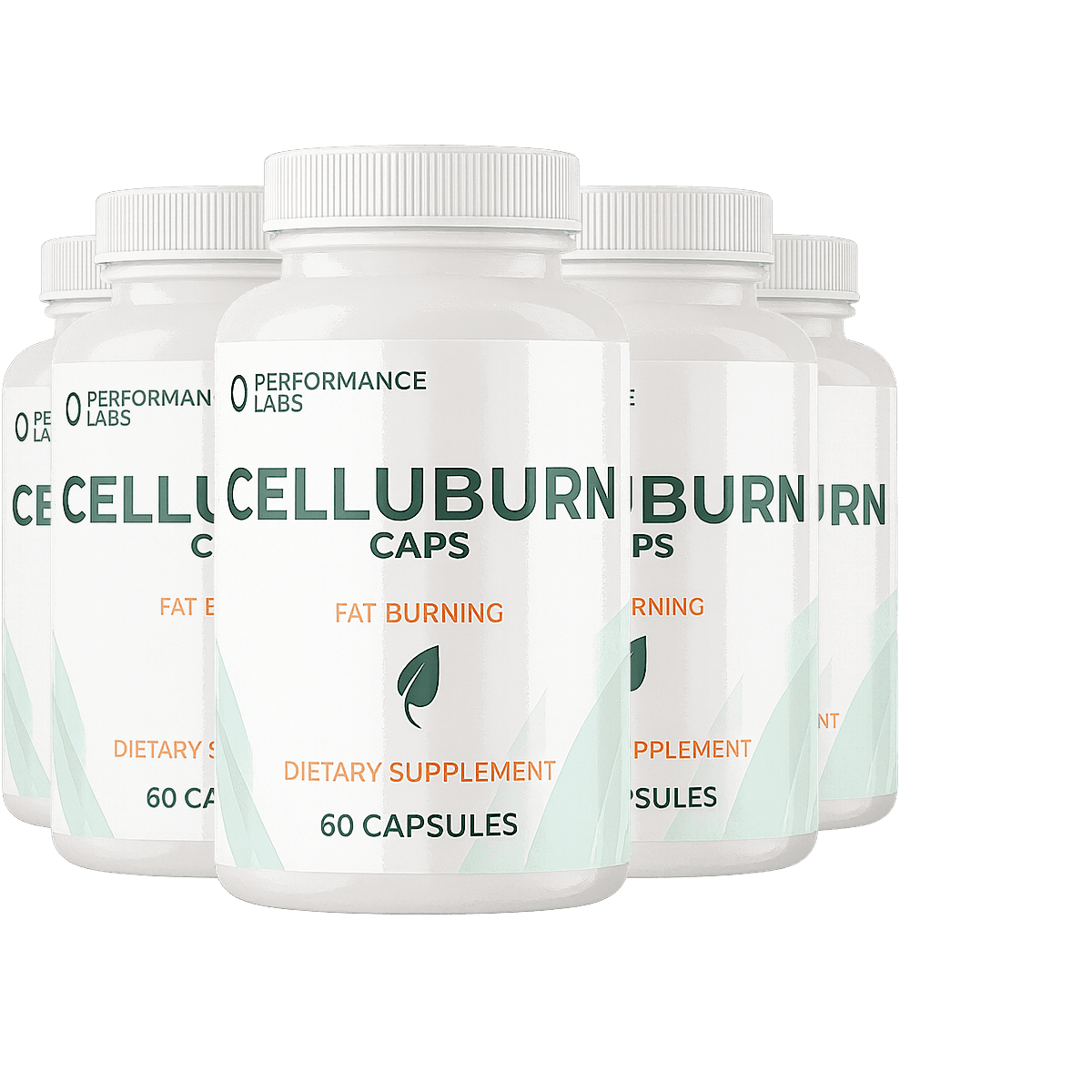
What Is Celluburn?
Celluburn is positioned as an oral weight-loss supplement in the GLP-1 alternative category, built around the language of a “homemade GLP-1” that can be taken before meals. The VSL frames it as a natural substitute for expensive injection-based drugs, promising the same hormonal logic without “expensive drugs or risky surgeries.” Its format matters strategically: capsules turn a messy kitchen recipe of chili pepper, pink salt, and supporting minerals into a repeatable daily ritual. The product rides two converging trends: consumer fascination with Ozempic-style results and anxiety over synthetic GLP-1 side effects. In Schwartz’s terms, this is a highly sophisticated market; prospects already know diets, keto, fasting, and GLP-1 drugs, so the pitch must introduce a new mechanism rather than a new desire.
The target user is described with unusual precision: women from roughly 25 to 85, especially mothers, aging women, and busy household managers who feel betrayed by diets, exercise, and medicalized weight loss. The VSL’s emotional center is not vanity alone but exhaustion, regain, and private shame: “hiding in baggy clothes,” avoiding cameras, and fearing that hunger will return “10 times stronger.” This is classic PAS, moving from stubborn fat to social discomfort to the danger of lifelong dependence on injections. It also follows AIDA, opening with a pattern interrupt, “pants falling down in 15 days,” then shifting into testimonial proof and authority. Kahneman’s loss aversion is visible in the fear of rebound weight, while Festinger’s cognitive dissonance appears when natural-health identity conflicts with synthetic-drug use.
The named creator is Grace Harper, presented as a 42-year-old mother, wife, former pharmaceutical chemical-department worker, and natural treatments specialist. Her authority is reinforced by Dr. Eric James, described as a physician and researcher connected to GLP-1 discovery work, though the VSL uses that credential more as borrowed legitimacy than as verifiable clinical substantiation. The persuasion structure relies on authority stacking, in Cialdini’s sense, then moves through Brunson’s epiphany bridge: Grace fails with patches, semaglutide, and Mounjaro before discovering the “real issue” is synthetic GLP-1. Ingredient claims center on capsaicin, pink salt, magnesium, potassium, calcium, berberine, Ceylon cinnamon, and turmeric/curcumin. Kennedy would recognize the education-first posture: insulin, GLP-1, and fat storage are explained to make the sale feel like diagnosis.
The Problem It Targets
Celluburn targets a familiar but commercially fertile problem: women who read their weight gain as personal failure after diets, childbirth, age, and GLP-1 experimentation. The VSL opens with a pattern interrupt, “pants falling down in 15 days,” then quickly moves into PAS by naming tight clothes, exhaustion, hunger, and rebound. This is not merely cosmetic anxiety. It is a diagnostic reframing. The viewer is told the body’s “fat burning hormone” is asleep, which shifts blame from willpower to physiology. That move echoes Schwartz’s market sophistication principle: when consumers have heard every diet promise, the seller must rename the cause. It also follows Kahneman’s insight that losses loom larger than gains; regained weight feels more punishing than weight never lost.
The surface pain is stubborn fat, but the deeper claim is endocrine betrayal. The VSL’s “homemade GLP-1” story borrows credibility from real obesity science: CDC data show U.S. adult obesity at 40.3% in August 2021-August 2023, while WHO reported more than 1 billion people living with obesity globally in 2022. Those facts create a large enough stage for the offer. Yet the pitch then stretches the science, moving from GLP-1 as a validated therapeutic pathway to chili pepper, pink salt, and capsules that supposedly “reactivate your body’s own GLP-1.” This is the false enemy structure Cialdini and Kennedy would recognize: synthetic injections, not overeating or inactivity, become the villain. The viewer is exonerated.
Its most important psychological maneuver is the epiphany bridge, in Brunson’s sense. Grace tries patches, semaglutide, and Mounjaro, suffers nausea and rebound, then asks, “What if the real issue isn’t GLP-1?” That question gives the audience a new belief without requiring them to abandon hope in the GLP-1 category itself. Festinger’s cognitive dissonance is handled elegantly: viewers can still believe GLP-1 works while rejecting injections as dangerous, expensive, or dependency-forming. The VSL keeps the open loop alive with “video could go offline,” a scarcity cue that makes education feel like contraband. Cialdini’s authority principle is then stacked through pharmaceutical insider language, a physician-researcher figure, and journal references. The implication is clear: the buyer is not buying a supplement, but an escape from a rigged medical economy.
Commercially, this is strong timing. The GLP-1 boom has made metabolic language mainstream, while side effects, access friction, and high monthly costs have created an opening for cheaper “natural alternative” positioning. Goldman Sachs has forecast the weight-loss drug market could reach $130 billion by 2030, and supplement marketers are competing for the adjacent demand that pharma helped educate. Celluburn’s VSL does not need to prove obesity science from scratch; Kennedy-style education marketing lets it inherit the category’s legitimacy. But its leap from hormone biology to “favorite foods” and rapid losses is the key extrapolation. The pitch succeeds because it translates a medical trend into a moral reprieve: her body was not weak, only misinformed.
How Celluburn Works
Celluburn explains its mechanism as a natural GLP-1 reset rather than a stimulant or appetite suppressant, and the VSL builds that claim through a familiar PAS sequence: excess weight is framed as failed hormone signaling, synthetic injections become the false enemy, and the supplement becomes the epiphany bridge. The pitch says “chili pepper, pink salt,” and other ingredients trigger “immense natural production of GLP-1,” putting metabolism into “deep fat burning mode.” The established science is narrower. GLP-1 is a real incretin hormone involved in insulin secretion, gastric emptying, appetite, and glucose regulation; pharmaceutical GLP-1 receptor agonists work because they produce durable receptor activation at drug-level potency. Cialdini’s authority principle appears when the VSL borrows medical language and journal cues, but the biological leap is large. Food compounds may influence satiety or post-meal glucose modestly. That is not the same as replicating injectable pharmacology.
The ingredient logic is plausible only at the margins. Capsaicin has some evidence for small effects on thermogenesis, appetite, and energy expenditure, while cinnamon, berberine, turmeric, magnesium, potassium, and calcium each have separate metabolic narratives that can sound coherent when bundled together. The VSL’s AIDA structure turns this bundle into a mechanism: attention through “pants falling down,” interest through GLP-1 education, desire through testimonials, and action through urgency. Yet the claim that capsaicin can raise GLP-1 “five times higher,” or that pink salt can multiply production by 330%, needs context the pitch does not provide: baseline levels, timing, sample size, comparator, dose, and clinical endpoint. Kahneman would recognize the framing effect. A relative biomarker increase can feel dramatic even when the practical weight-loss effect is small, transient, or not independently replicated in supplement form.
The numerical claims are where the mechanism strains hardest. Losing 12 pounds in 15 days requires a deficit of roughly 42,000 calories if treated as body fat, or about 2,800 calories per day, before accounting for water loss and glycogen shifts. A claim of 40 pounds in three months implies about 140,000 calories of fat loss, averaging more than 1,500 calories per day across the period. Those numbers can occur in medically supervised obesity treatment or under major diet changes, but they are extraordinary for capsules taken before meals while still eating “favorite foods.” Schwartz’s work on choice helps explain why the pitch simplifies a crowded market: injections, diets, gyms, and surgery are collapsed into one exhausting menu, then a single ritual appears to remove the burden. The math deserves more skepticism than the story invites.
A fair reading is that Celluburn’s GLP-1 theory sits in three tiers. Established science supports GLP-1 as a meaningful metabolic hormone and supports some modest metabolic effects from selected plant compounds. Plausible-but-unproven territory includes the idea that a standardized blend could slightly improve appetite control, glucose response, or meal satisfaction for some users. Speculative territory begins with “burning fat 24 hours a day,” “no yo-yo effect,” and injection-like outcomes without comparable pharmacology. Festinger’s cognitive dissonance theory explains why this pitch may resonate with buyers who fear drugs but still want drug-like results; Kennedy and Brunson would recognize the open loop that keeps them waiting for the exact recipe. The real science operates at a modest scale. The VSL sells it at a dramatic one.
Curious how other VSLs in this niche structure their pitch? Keep reading - the psychological triggers section breaks down the architecture behind every claim above.
Key Ingredients and Components
Celluburn presents its ingredient story less as nutrition than as a proprietary rescue sequence: kitchen familiarity is converted into biochemical authority. The VSL begins with PAS, agitating the pain of rebound weight, “pants falling down,” and drug side effects before reframing the solution as a homemade GLP-1 reset. Its open loop is the formulation process itself, especially the promise that chili pepper, pink salt, and “two natural ingredients” must be combined in exact ratios. That precision claim works as Brunson’s epiphany bridge: Grace moves from failed injections to a natural insight. Yet the scientific burden shifts. Independent evidence supports some metabolic effects, but not the VSL’s capsule-level claim of six times more powerful GLP-1 activation.
The formulation narrative also depends on a false enemy: synthetic GLP-1 drugs, pharmaceutical secrecy, and mainstream dieting are made to look not merely insufficient, but structurally deceptive. This is classic Kennedy education-based marketing with AIDA architecture; the viewer is taught enough physiology to feel informed, then moved toward the offer. Cialdini’s authority principle appears in references to doctors and journals, while Kahneman’s framing effect makes “natural” feel safer than “synthetic.” Schwartz would recognize the emotional mass market: the prospect wants appetite control without identity loss, nausea, or deprivation. Festinger’s cognitive dissonance is softened by the claim that favorite foods can remain. The implication is clear: buyers should separate ingredient plausibility from formula proof.
Capsaicin (Capsicum annuum; 8-methyl-N-vanillyl-6-nonenamide) - A chili-pepper compound associated with thermogenesis and appetite signaling. The VSL claims it wakes GLP-1 and can help lift production dramatically. Independent research in journals including Appetite, Clinical Nutrition, and Bioscience Reports suggests modest effects on energy expenditure, satiety, and metabolic markers, with some preclinical incretin data. Judgment: modest evidence, not proof of drug-like GLP-1 action.
Pink salt (sodium chloride; halite) - Mineral salt marketed for trace minerals. The VSL claims its “84 minerals” multiply GLP-1 output and complete the activation ratio. Independent nutrition literature does not support pink salt as a weight-loss or incretin ingredient; its trace minerals are usually nutritionally trivial. Judgment: unverifiable for GLP-1, with sodium cautions.
Magnesium (Mg) - An essential mineral involved in glucose metabolism and insulin signaling. The VSL folds it into the electrolyte-and-hormone reset frame. Meta-analyses in Nutrients and Diabetes/Metabolism Research and Reviews indicate magnesium may improve insulin resistance in deficient or metabolically impaired groups. Judgment: modest evidence for metabolic support, not rapid fat loss.
Potassium (K) - A key electrolyte for fluid balance, blood pressure, and cellular function. The VSL implies it helps the mineral matrix drive GLP-1 activation. Research in Hypertension and The American Journal of Clinical Nutrition supports cardiometabolic relevance, but not direct weight-loss or GLP-1 amplification. Judgment: ambiguous.
Calcium (Ca) - A mineral involved in bone, muscle, and cellular signaling. The VSL uses it as part of the “natural substances” authority stack. Studies in Obesity Reviews and The American Journal of Clinical Nutrition show inconsistent weight effects, often small and context-dependent. Judgment: ambiguous.
Berberine (Berberis aristata / Berberis species alkaloid) - A plant alkaloid commonly marketed for glucose and lipid control. The VSL claims concentrated berberine helps recreate GLP-1-like metabolic effects. Reviews in Frontiers in Pharmacology and Phytomedicine suggest benefits for glycemic control and lipids, though trial quality varies. Judgment: modest evidence, strongest for glucose markers.
Ceylon cinnamon (Cinnamomum verum) - A spice positioned as the cleaner, premium cinnamon source. The VSL implies it supports insulin balance and fat storage reduction. Reviews in Annals of Family Medicine, Cochrane Database of Systematic Reviews, and Journal of the Academy of Nutrition and Dietetics find mixed glycemic evidence and weak weight-loss support. Judgment: ambiguous.
Turmeric with curcumin (Curcuma longa; curcumin) - A polyphenol-rich spice extract associated with inflammation pathways. The VSL places it inside the anti-storage, metabolic reset story. Meta-analyses in Critical Reviews in Food Science and Nutrition and Pharmacological Research report small improvements in weight, BMI, waist circumference, and inflammatory markers, especially with enhanced-bioavailability forms. Judgment: modest evidence, not a GLP-1 substitute.
Hooks and Ad Angles
Celluburn opens with a hook built less as a claim than as a dare: "Never try this homemade GLP-1" if the viewer does not want "pants falling down in 15 days." The line works as a pattern interrupt because it reverses the expected supplement promise; instead of asking for desire, it frames the outcome as something almost inconvenient. Loewenstein’s curiosity-gap theory is visible in the missing cause: the audience is told a surprising result before being told the method, dosage, or ingredient logic. The phrase "or at least never do it the right way" sharpens the open loop, implying that most people have access to the recipe but fail at execution. That makes the hook perform several jobs at once. It signals speed, dramatizes physical proof, and creates a knowledge deficit the viewer must resolve by continuing.
The hook also borrows authority from social behavior before formal proof arrives. The VSL claims 23,500 Americans are "secretly using this homemade GLP-1," converting a niche-sounding kitchen remedy into Cialdini-style social proof. Schwartz’s market sophistication framework helps explain the move: in a crowded GLP-1 and weight-loss market, another direct fat-loss promise would feel interchangeable, so the ad must make the mechanism feel hidden, newly decoded, and socially validated. The "homemade" language lowers perceived complexity, while "GLP-1" imports medical prestige from the broader Ozempic conversation. This is a classic AIDA opening: attention through warning, interest through mechanism, desire through visible clothing change, and action through the implied need to learn the correct method. Its commercial implication is clear: the ad is not selling capsules first; it is selling access to a secret pattern.
"One glass of this bariatric recipe" (compresses the mechanism into a simple ritual)
"Activate the main fat burning hormone" (turns weight loss into a dormant-system story)
"Video could go offline at any moment" (adds scarcity and conspiratorial urgency)
"Drop two pounds in the next 24 hours" (uses an aggressive short-horizon result claim)
"Without giving up foods they like" (removes the familiar sacrifice objection)
Homemade GLP-1 Warning: Why Women Say Their Pants Fit Differently
The Chili Pepper GLP-1 Angle Behind Celluburn’s Weight-Loss Pitch
She Tried Expensive GLP-1 Shots, Then Found This Natural Reset
Why This “Pants Falling Down” Hook Stops Weight-Loss Scrollers
Celluburn’s Natural GLP-1 Claim: The Ad Angle Behind the Buzz
Psychological Triggers and Persuasion Tactics
Celluburn builds its persuasive architecture as a compounding system: each claim does less work alone than it does inside the sequence. The load-bearing frame is an epiphany bridge, close to a health-market hero’s journey, in which Grace Harper moves from failed injections to insider discovery to reluctant public revelation. The VSL opens with “pants falling down in 15 days,” a pattern interrupt that converts embarrassment into curiosity, then shifts into PAS by naming weight regain, nausea, hunger, and the feeling of being trapped by injections. The interpretation is not subtle: the prospect’s past failure is recoded as evidence that she was using the wrong mechanism. That is the bridge. By the time the pitch says the body can “make GLP-1 naturally again,” the offer has become less a supplement than a narrative correction.
The strongest psychological move is the careful transfer of blame away from the buyer and onto a false enemy. Diets, gyms, age, childbirth, and willpower are displaced by synthetic GLP-1, pharmaceutical secrecy, and a supposedly suppressed natural pathway. This is classic Kennedy-style direct response: intensify the wound, identify the villain, then present the offer as the only route out. Cialdini’s authority principle appears through Grace’s pharmaceutical backstory and Dr. James’s research role, while Kahneman’s loss framing appears in the threat of rebound weight, “Ozempic face,” and $24,000 a year dependence. Schwartz would recognize the sophistication level: this is not merely “lose weight fast,” but “the hidden biological switch behind why every other method failed.” The implication is commercial as much as emotional: if the buyer accepts the frame, comparison shopping becomes harder.
Fault Transfer (Festinger, A Theory of Cognitive Dissonance, 1957): The VSL reduces shame by arguing the buyer did not fail; synthetic methods failed her. Grace’s line about her body forgetting “how to function without the shots” converts prior relapse into proof of the new thesis.
False Enemy (Kennedy, No B.S. Direct Marketing, 2006): The villain is not appetite, but “the pharmaceutical industry” and expensive pens. This makes the natural capsule feel like resistance, not consumption.
Authority Borrowing (Cialdini, Influence, 1984): Grace’s chemical-department background and Dr. James’s award-adjacent positioning create borrowed credibility. The VSL does not need the audience to verify the science immediately; it needs the names to slow skepticism.
Loss Aversion (Kahneman and Tversky, Prospect Theory, 1979): The pitch dwells on vomiting, hair loss, rebound gain, and thyroid fears before offering relief. Losing control feels more urgent than gaining beauty.
Specificity As Credibility (Schwartz, Breakthrough Advertising, 1966): Claims such as 12 pounds in 15 days and 23,500 Americans create the texture of measurement. The numbers work rhetorically even when the evidentiary base remains thin.
Scarcity Stacking (Cialdini, Influence, 1984): “This video could go offline” is paired with secrecy and industry suppression. The open loop pressures continued viewing before the prospect can appraise the claim calmly.
Endowment Effect (Kahneman, Knetsch, and Thaler, 1990): By inviting the viewer to imagine looser clothes, slimmer cheeks, and renewed energy “starting today,” the VSL gives her a psychological preview of ownership. Buying then feels like keeping a future already pictured.
Want to see how these tactics compare across 50+ VSLs? That is exactly what Daily Intel Service is built to show you.
Scientific and Authority Signals
Celluburn builds its scientific case through authority stacking, not through transparent documentation. The VSL introduces Grace Harper as a former pharmaceutical insider, then moves quickly to “worked in the chemical departments” and “specialized in natural treatments,” credentials that sound relevant but remain unverifiable from the transcript alone. Dr. Eric James receives the heavier burden: he is framed as a physician-researcher tied to the 2024 Lasker-DeBakey Award. That is where the claim breaks. The 2024 Lasker GLP-1 honorees were Joel Habener, Lotte Bjerre Knudsen, and Svetlana Mojsov, not Eric James, according to the Lasker record. In Cialdini’s terms, the appeal borrows the authority cue while withholding the audit trail.
The institutional citation strategy is best described as authority laundering: real scientific nouns are routed through vague claims until the product inherits their credibility. The Journal of the American Medical Association is invoked as if it validated the exact “chili pepper, pink salt” combination, but the VSL gives no title, year, author, DOI, PMID, dosage, endpoint, or study population. PubMed-level literature supports the existence of GLP-1 biology, incretin signaling, and pharmacological GLP-1 receptor agonists; it does not, from the presented evidence, verify a home recipe that “reactivate your body’s own GLP-1 production” at drug-like magnitude. Capsaicin, berberine, cinnamon, turmeric, and minerals each have scattered metabolic research contexts. That is not the same as clinical proof for Celluburn.
The mechanism uses a classic epiphany bridge: synthetic drugs become the false enemy, then the natural recipe becomes the rescued truth. Grace’s arc moves from “brutal nausea” and “gained it all back” to a hidden natural reset, mapping neatly onto PAS and AIDA: pain, agitation, scientific discovery, and action. Kahneman would recognize the framing effect in the contrast between dangerous injections and “100% natural and safe,” while Schwartz and Kennedy would recognize the market sophistication play: the audience already knows Ozempic, so the pitch sells a safer inside secret. The open loop is persistent. The promised answer is always just beyond the next authority citation.
Claim by claim, the scientific posture is uneven. GLP-1 as a hormone is legitimate; the cited Lasker halo is borrowed; the “Dr. Eric James” award claim appears fabricated or, at minimum, severely misattributed; the JAMA ingredient citation is ambiguous without bibliographic details. The numerical proof is weaker still: 23,500 secret users, 98% insulin-resistance reversal, and “six times more powerful” are presented without a trial registry, methods, comparator arm, or adverse-event reporting. Festinger’s cognitive dissonance theory helps explain why this can still persuade: buyers burned by injections are offered a way to preserve belief in GLP-1 while rejecting the drug category. Overall, the authority system is plausibly borrowed, selectively translated, and commercially amplified.
The Offer, Pricing, and Risk Reversal
Celluburn prices itself before it names itself, using a price-anchoring sequence built around synthetic GLP-1 dependency. The VSL first installs the costly alternative: “$2,500 a month,” “$2,000 a month,” and “$24,000 a year” for injections that allegedly create rebound, nausea, and dependence. This is classic Kahneman framing: the supplement is not introduced as cheap in isolation, but as rational relief from an expensive status quo. The phantom price anchor is the implied medical-injection bill, not a stated retail value for the bottle. By the time the viewer hears “no expensive drugs,” the offer has already been compared against a four-figure monthly burden. The implication is straightforward: the target SKU is almost certainly the multi-bottle option, signaled by the invitation to take home “three bottles” and by claims that meaningful outcomes unfold across three months.
The risk reversal is less explicit than the urgency architecture around it. In the provided transcript, no clear money-back guarantee, refund window, or return condition appears; instead, the VSL substitutes narrative reassurance for formal guarantee mechanics. It repeatedly says the method is “natural, free of side effects” and “100% natural and safe,” which functions as emotional risk reversal rather than contractual risk transfer. Cialdini’s authority principle carries much of that load through Grace Harper, Dr. Eric James, and a borrowed medical-journal halo. Kennedy would read this as offer insulation: the buyer’s perceived risk is reduced through education, social proof, and a false enemy before the checkout promise is disclosed. For a buyer decision, the missing question is practical, not rhetorical: the guarantee terms would need to be verified on the order page.
The bonus structure, at least in the transcript supplied, appears muted or absent, which is notable for this category. Many supplement VSLs use value stacking through recipe guides, meal plans, or detox protocols, but Celluburn’s pitch stacks value mostly inside the core mechanism itself. The “homemade GLP-1” story, exact ratios, “five ingredients,” and “pharmaceutical grade purity” become the perceived extras. Brunson’s epiphany bridge turns the capsule from commodity supplement into condensed discovery, while Schwartz-style market sophistication is addressed by contrasting it with keto, fasting, and pens. Festinger’s dissonance reduction is also visible: the buyer can reject injections without feeling anti-science. The offer sells identity coherence as much as weight loss.
Who This Is For (and Who It Isn't)
Celluburn is written for women who recognize themselves in the VSL’s central before-state: post-childbirth or midlife weight gain, tight clothes, low energy, and a private sense that discipline has stopped producing visible rewards. The likely buyer is a woman from roughly 35 to 65, though the script stretches the market from 25 to 85, with enough disposable income to have considered GLP-1 pens, telemedicine, diet programs, or supplements, but not enough comfort with paying “$2,000 a month” indefinitely. Psychographically, she is skeptical of pharma but still wants scientific permission to believe; that is why the pitch blends PAS with authority cues from “Dr. Eric James” and the promise of a “natural production of GLP-1.” Cialdini’s authority and social proof are doing heavy work here. If you are buying emotionally, the offer is aimed at the exhausted woman who wants relief without another regime. The implication is clear: the ad is not selling thinness alone, but escape from blame.
A secondary audience is the GLP-1 dropout: someone who tried semaglutide, tirzepatide, patches, or compounded injections, lost weight, then feared rebound, cost, nausea, constipation, or “Ozempic face.” The VSL uses Kahneman’s loss aversion and Schwartz’s paradox of choice to narrow a crowded market into one contrast: synthetic dependence versus a “homemade GLP-1” reset. It also constructs a false enemy in pharmaceutical secrecy, then moves through Brunson’s epiphany bridge: the narrator suffers, researches, discovers the mechanism, and offers the viewer a shortcut. If you are already predisposed to natural remedies, this sequence can feel unusually coherent. Kennedy would recognize the education-first packaging around insulin, hunger, and metabolism. Festinger would add that the buyer is resolving dissonance: she wants medical-style results while preserving an identity opposed to injections.
You should not buy Celluburn if you expect verified drug-level outcomes such as “12 pounds in 15 days” without diet, activity, or clinical supervision. You should also be cautious if you are pregnant, breastfeeding, diabetic, taking insulin or sulfonylureas, using GLP-1 drugs, on blood thinners, blood-pressure medication, lithium, diuretics, or drugs affected by potassium, magnesium, berberine, turmeric, capsaicin, or cinnamon. Berberine may affect glucose and drug metabolism; turmeric may increase bleeding risk; concentrated minerals can matter for kidney disease or heart medications. The VSL’s open loop promises “two pounds in the next 24 hours,” but that is a conversion device, not a medical standard. If you have pancreatitis history, thyroid cancer risk, gallbladder disease, eating-disorder history, or kidney disease, medical clearance is the minimum bar. The wrong buyer is someone seeking certainty from a story engineered to create urgency.
This analysis is part of Daily Intel Service, our ongoing library of VSL and ad-copy breakdowns. If you are researching similar products in this niche, keep reading.
Frequently Asked Questions
Q: Is Celluburn a scam?
A: Celluburn is marketed through a classic PAS structure: weight-loss frustration, fear of GLP-1 side effects, then a natural “homemade GLP-1” resolution. The VSL’s scam risk is not that it sells hope, but that it makes unusually large claims, including 12 pounds in 15 days and “this video could go offline,” while providing limited verifiable sourcing.
Q: Does Celluburn really work for weight loss?
A: The VSL claims users can lose “up to eight pounds” in one week and as much as 34 to 40 pounds in three months. Analytically, this is an AIDA promise engineered to move attention quickly from skepticism to imagined transformation, but the transcript does not provide trial data strong enough to confirm typical results.
Q: What are the Celluburn ingredients?
A: The pitch centers on chili pepper, pink salt, capsaicin, magnesium, potassium, calcium, berberine, Ceylon cinnamon, and turmeric with curcumin. Its “exact proportions” language creates an open loop: ordinary ingredients are made to feel proprietary through precision, scarcity, and insider framing.
Q: What are Celluburn side effects?
A: The VSL repeatedly says the method is “natural, free of side effects,” contrasting it with nausea, vomiting, constipation, hair loss, and other risks associated with synthetic GLP-1 drugs. That contrast functions as a false enemy, in Kennedy’s sense: the supplement is positioned as the rational escape from a frightening pharmaceutical alternative.
Q: Is Celluburn safe?
A: Safety is asserted more than demonstrated in the transcript. Cialdini’s authority principle appears through Grace Harper, Dr. Eric James, and references to medical journals, but the buyer should still treat “100% natural and safe” as marketing language rather than medical clearance.
Q: How does Celluburn claim to work?
A: Celluburn claims to reactivate the body’s own GLP-1 production, balance insulin, reduce fat storage, and put metabolism into “deep fat burning mode.” The epiphany bridge is clear: synthetic GLP-1 is framed as the wrong tool, while natural GLP-1 activation becomes the hidden answer.
Q: How much does Celluburn cost?
A: The provided VSL does not state a clear price, but it anchors value against “$2,000 a month” injections and expensive weight-loss pens. Kahneman would recognize the framing: the product can feel inexpensive before the actual price is even disclosed.
Q: Who is Grace Harper in the Celluburn video?
A: Grace Harper is presented as a 42-year-old mother, former pharmaceutical chemical-department worker, natural treatments specialist, and creator of the homemade GLP-1 method. The role is built for Festinger-style consistency: once viewers accept her as both insider and sufferer, the product claim feels less like advertising and more like revelation.
Final Take
Celluburn is a disciplined weight-loss VSL because it understands that the modern GLP-1 buyer is already half-convinced by the category and half-afraid of it. The opening warning, “pants falling down in 15 days,” functions as a pattern interrupt and a compact AIDA hook: attention through threat, interest through curiosity, desire through bodily proof, action through urgency. Its PAS structure is blunt but effective, moving from stubborn fat and postpartum weight gain to nausea, rebound weight, and cost. Then it offers a false enemy: not GLP-1 itself, but synthetic GLP-1, expensive injections, and the pharmaceutical system. Cialdini would recognize the stacking of authority, scarcity, and social proof. Kahneman would recognize the loss framing.
The scientific architecture is more persuasive than rigorous. The VSL borrows credible biological terrain: GLP-1 is real, appetite regulation is real, insulin signaling matters, and capsaicin, berberine, cinnamon, minerals, and curcumin all have plausible metabolic associations in consumer-health discourse. That is the credible part. The less credible move is the leap from plausible ingredient activity to claims such as “natural production of GLP-1,” “burning fat 24 hours a day,” and “12 pounds in 15 days” without transparent trial design, dosage disclosure, published endpoints, or adverse-event reporting. The presentation uses Kennedy-style education to make the mechanism feel earned. But education is not evidence when the strongest claims remain inside the sales narrative.
The VSL’s real sophistication is psychological, not medical. Grace’s story is an epiphany bridge in Brunson’s sense: she suffers, investigates, discovers the hidden mechanism, then returns with a simpler truth. Festinger’s cognitive dissonance appears in the buyer’s likely state of mind: she may want Ozempic-like outcomes while rejecting injections, cost, dependency, and side effects. Celluburn resolves that tension by saying the desired result was natural all along. Schwartz would call this a mature-market appeal, where the customer has already heard the broad promise and now needs a new mechanism. The phrase “video could go offline” keeps the open loop alive long enough for that mechanism to take hold.
For a buying decision, the key question is whether the VSL’s credibility comes from verifiable evidence or from a well-built persuasion stack. There are believable category elements here, especially the focus on appetite, metabolic regulation, and the consumer backlash against expensive GLP-1 drugs. There are also large claim burdens, particularly around speed, permanence, side-effect absence, and disease-adjacent testimonials. A cautious reader should separate the marketing claim from the supplement decision and look for the label, dosages, clinical substantiation, refund terms, and independent safety review before buying. For more comparisons like this, Daily Intel Service is our ongoing library of VSL analyses.
Disclaimer: This article is for research and educational purposes only. It is not medical, legal, or financial advice, and it is not affiliated with the product or its makers. Always consult a qualified professional before making health or financial decisions.
Source-backed reader context
Additional Reviews & Reported Experiences
These statements were presented in the product's sales transcript. Daily Intel did not independently verify the speakers, purchase status, or reported outcomes, and the statements are not used in Product aggregateRating.
Grace
Date not stated
lost 10 pounds after 15 days and 32 pounds after three months while eating everything she liked
Unnamed friend
Date not stated
lost 41 pounds in three months and had not gained a single pound back
Unnamed person
Date not stated
lost 39 pounds in less than 90 days and said their doctor was shocked by their sugar levels and that they reversed type 2 diabetes
Comments(0)
No comments yet. Members, start the conversation below.
Related reads
 reviews
Olly Goodbye Stress Review: Label Claims vs. Evidence
OLLY Goodbye Stress combines GABA, L-theanine, and lemon balm extract in a Berry Verbena gummy aimed at occasional stress, not sleep. Here's what the label discloses, what a real L-theanine trial found, and exactly where the evidence stops.
Read reviews
Jocko Greens Review: Does One Scoop Match the Evidence?
Jocko Greens is a one-scoop powder with approximately 30 calories and 9 billion colony-forming units of probiotics per serving. Jocko Fuel also confirms ashwagandha extract and makes a digestive-support claim. The harder question is whether the available research matches this specific formula. It does not match closely enough to establish a finished-product outcome.
Read reviews
NooCube Review: Does the 250 mg Bacopa Dose Match the Research?
NooCube is one of the few nootropics that prints a milligram number next to an ingredient instead of hiding it in a blend. This review takes that one number, 250 mg Bacopa monnieri, and checks it against a real trial that used 300 mg in a very different population, then shows exactly where the comparison breaks down.
Read