CleanEye Review and Ads Breakdown: A Research-First Look
Somewhere in the opening seconds of the CleanEye Video Sales Letter, a 79-year-old woman named Dolly makes a claim that stops most viewers cold: she has better eyesight now than she did in her twen…
8,226+
Videos & Ads
+50-100
Fresh Daily
$29.90
Per Month
Full Access
12.5 TB database · 72+ niches · 27 min read
Somewhere in the opening seconds of the CleanEye Video Sales Letter, a 79-year-old woman named Dolly makes a claim that stops most viewers cold: she has better eyesight now than she did in her twenties, despite having been diagnosed with both dry and wet macular degeneration, cataracts in both eyes, and no prognosis for recovery from her physicians. The statement is engineered to function as a pattern interrupt, a deliberate disruption of the viewer's assumed reality (vision loss is irreversible) that creates an instant curiosity gap wide enough to sustain a 45-minute sales presentation. What follows is one of the more architecturally sophisticated VSLs circulating in the vision-supplement niche: a layered narrative combining Gulf War veteran pathos, Harvard-branded optometry, biblical revelation, Nobel Prize-winning microscopy, and a proprietary protein theory, all pointing toward a capsule supplement sold exclusively online.
The product at the center of that narrative is CleanEye, an oral dietary supplement built around a concentrated extract of apigenin, a flavonoid the VSL claims is found in unusually high concentrations in rare honey sourced from the ancient lands of Canaan. The marketing argument is that a newly identified protein called PROX-1 is the true, singular cause of all age-related vision decline, that conventional ophthalmology either ignores or actively conceals this, and that CleanEye's apigenin formulation can neutralize PROX-1, thereby freeing dormant adult stem cells in the eye to repair decades of accumulated damage. The promise is not modest: 20/20 vision restored, floaters dissolved, macular degeneration reversed, cataracts cleared, without surgery, injections, or prescription lenses.
For anyone actively researching this product before making a purchase decision, the appropriate question is not simply "does it work?" but rather: what does this pitch actually claim, how much of the underlying science holds up to scrutiny, and what persuasion architecture is being used to move a viewer from skepticism to the checkout page? This piece examines all three dimensions, the product itself, the scientific claims supporting it, and the marketing machinery driving it. So that a reader can make an informed judgment rather than an impulsive one.
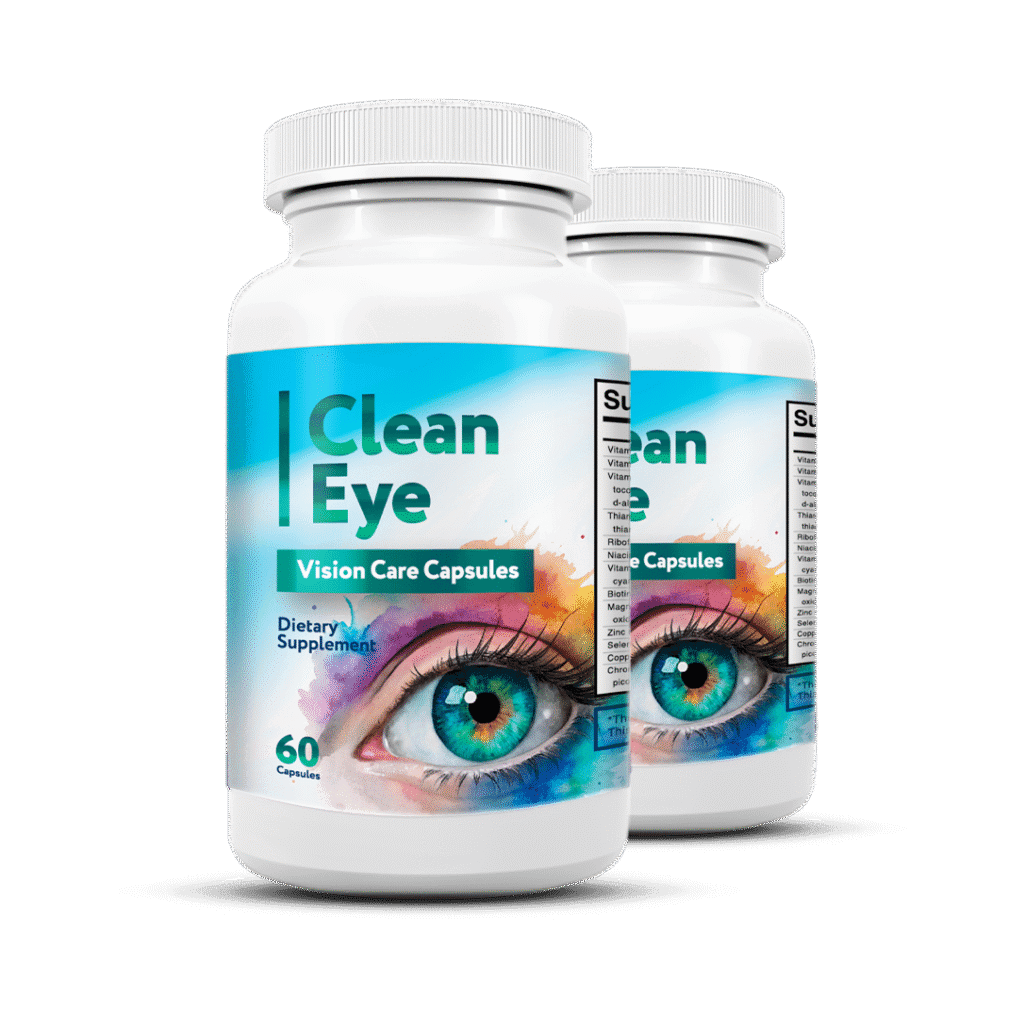
What Is CleanEye?
CleanEye is an oral dietary supplement sold in capsule form, targeting adults with age-related vision decline, particularly those experiencing macular degeneration, cataracts, glaucoma, persistent floaters, and night-driving difficulty. According to the VSL, one capsule is taken each morning on an empty stomach. The formulation is manufactured in a GMP-certified facility in the United States and is positioned as a direct alternative. Not a complement; to conventional ophthalmological care: glasses, eye drops, injections, and laser surgery. It is sold exclusively through the manufacturer's direct-to-consumer website and is not available in pharmacies or retail stores, a distribution choice the VSL frames as a quality-protection measure rather than a commercial one.
The product belongs to a growing subcategory of the supplements market that combines condition-specific nutrient stacks with a proprietary mechanistic narrative. Rather than simply claiming to "support eye health" in the generic language of most vision supplements (which typically lead with lutein and zeaxanthin), CleanEye is built around a specific, named mechanism, the PROX-1 protein hypothesis, and a specific, named active compound, apigenin from Canaan honey, that differentiates it rhetorically from competitors like PreserVision, MacuHealth, and generic lutein formulations. The target user, as constructed by the VSL, is an American aged 55 to 80 who has already tried conventional options, spent significant money without lasting improvement, and is experiencing the emotional consequences of vision loss on family life and personal independence.
The stated price for a single bottle is $79 (under a buy-one-get-one promotional structure), dropping to $69 per bottle for a three-bottle kit and $49 per bottle for a six-bottle kit. The VSL strongly encourages the six-month supply, citing both clinical-trial timelines and supply scarcity as reasons to commit to the larger package. A 180-day money-back guarantee is offered across all tiers.
The Problem It Targets
The VSL opens on what epidemiology confirms is a genuinely large and growing public health issue. According to the National Eye Institute (NEI), approximately 12 million Americans aged 40 and older have some form of vision impairment not correctable with lenses, and the prevalence of conditions like age-related macular degeneration (AMD) is expected to double by 2050 as the U.S. population ages. The CDC estimates that the economic burden of major vision disorders in the United States exceeds $145 billion annually, a figure the VSL rounds to "$147 billion" and frames as the profit motive of a predatory industry. That underlying reality, millions of people with declining vision, inadequate treatment options, and mounting costs, creates genuine commercial demand that CleanEye is designed to capture.
What the VSL does with this epidemiological backdrop is worth examining carefully. Rather than presenting vision loss as a complex, multi-causal condition (which the scientific literature, including research published in Ophthalmology and the New England Journal of Medicine, consistently describes it as), the pitch collapses all age-related vision pathology into a single cause: the PROX-1 protein. This reductive framing is rhetorically powerful because it transforms a diffuse, confusing medical situation into a simple, solvable problem. The viewer who has been told by three different specialists that their AMD is "irreversible" or their cataracts require surgery is suddenly offered a single enemy and a single weapon. The complexity of actual ocular pathophysiology. Involving oxidative stress, genetic factors like the CFH gene in AMD, vascular changes, and metabolic dysfunction. Is not acknowledged.
The emotional amplification of this problem is equally calculated. The VSL's protagonist, Robert Miller, describes a moment at a family gathering where he holds his newborn grandson and cannot see the child's face; a scene constructed with the deliberate detail of literary fiction ("a peachy blur where his features should be") and designed to activate the viewer's own fears about losing connection to the people they love. Research in behavioral psychology, including work by Kahneman and Tversky on loss aversion, confirms that the prospect of losing something precious generates roughly twice the emotional intensity of gaining something equivalent. The VSL weaponizes this asymmetry from its second minute onward, cataloging losses, grandchildren's faces, nighttime independence, a spouse's partnership, with much greater specificity than it catalogs the gains of recovery.
How CleanEye Works
The mechanism the VSL proposes is built in three sequential steps, each designed to feel scientifically grounded. First, a protein called PROX-1 (Prospero Homeobox Protein 1) is identified as the singular cause of vision loss, discovered in 2018 by Johns Hopkins researchers using a Nobel Prize-winning super-resolution fluorescence microscope. Second, PROX-1 is claimed to physically trap adult stem cells in the eye, preventing them from repairing daily damage from UV light and blue-light exposure, damage the VSL says accumulates until it produces macular degeneration, cataracts, and glaucoma. Third, a flavonoid called apigenin, concentrated in rare Canaan honey at levels 400% higher than any other honey variety, is claimed to neutralize PROX-1 within 48 hours, dropping PROX-1 levels by up to 78% and allowing dormant stem cells to "divide at 348% the rate of normal cells" as they repair retinal tissue.
It is worth separating the real science from the speculative extrapolation here, because both are present. PROX-1 is a real transcription factor, a protein that regulates gene expression, and it has been studied in the context of lymphatic development and certain cancers. Research does associate it with ocular tissue; it is expressed in lens fiber cells and plays roles in lens differentiation. However, the specific VSL claim that PROX-1 is "the" singular cause of all age-related vision loss, identified by Johns Hopkins in 2018 and confirmed by Tokyo University mouse studies, cannot be independently verified through publicly accessible peer-reviewed literature as of this writing. The references are specific enough to sound real but imprecise enough to resist straightforward verification, a pattern common in supplement marketing. Adult stem cells in ocular tissue are also a genuine area of active research; limbal stem cells, for example, are well-documented as critical to corneal maintenance. The claim that the eye has "the highest concentration of active adult stem cells in the entire body" is, however, not supported by any mainstream ophthalmological consensus.
Apigenin itself is a legitimate compound, a plant-derived flavonoid found in parsley, chamomile, and celery, among other sources. And it does have anti-inflammatory and antioxidant properties documented in the literature. Whether apigenin specifically neutralizes PROX-1 in human ocular tissue, reduces it by 78% in 48 hours, or crosses the blood-retinal barrier in sufficient concentrations to produce the claimed effects is a substantially different and unanswered question. The VSL conflates plausible biochemistry with proven clinical outcomes, a gap that a careful reader should notice and weigh.
Curious how other VSLs in this niche structure their pitch? The section below breaks down the psychology behind every major claim above, including which persuasion mechanisms are doing the heaviest lifting.
Key Ingredients and Components
CleanEye's formulation, as described in the VSL, combines a primary active compound with four supporting nutrients that are well-established in the vision-health literature. The stack follows a pattern common in premium eye supplements: anchor on a novel proprietary ingredient, then surround it with evidence-backed co-factors to borrow their credibility.
Apigenin (from Canaan honey extract, 500 mg): A flavonoid with documented antioxidant and anti-inflammatory activity. Laboratory research. Including studies published in journals such as Biochemical Pharmacology; has shown apigenin can modulate various protein interactions and reduce oxidative stress markers in cell lines. The specific PROX-1 neutralization claim at the concentrations described in the VSL has not been reproduced in any peer-reviewed human clinical trial this analyst could identify. The 500 mg dose is significantly higher than most apigenin research protocols, which typically use 50-200 mg ranges.
Lutein and Meso-zeaxanthin: Two carotenoids concentrated in the macular pigment of the human retina. Their role in filtering high-energy blue light and reducing oxidative stress in retinal cells is among the most robustly supported findings in nutritional ophthalmology. The Age-Related Eye Disease Study 2 (AREDS2), conducted by the National Eye Institute, found that lutein and zeaxanthin supplementation reduced the risk of AMD progression. The VSL references a "2020 Oxford study" of 600 participants showing 97% reduced eye fatigue with this combination, a plausible finding but one that could not be confirmed against a specific publicly accessible publication.
Omega-3 fatty acids (DHA/EPA): Long-chain omega-3s are structural components of retinal photoreceptors, and multiple studies, including a 2012 analysis in JAMA Ophthalmology, have examined their role in dry eye and retinal health. Evidence for omega-3s reducing AMD progression is mixed in large-scale trials, though their general anti-inflammatory benefit is not disputed.
CoQ10 (Coenzyme Q10): A mitochondrial antioxidant that declines with age. Research on CoQ10 in ocular health is preliminary but promising, particularly in the context of glaucoma and intraocular pressure. A study published in Nutrients (Papucci et al.) found CoQ10 reduced retinal ganglion cell apoptosis in animal models. The VSL's claim that a cardiologist recommends it for eye pressure is directionally consistent with existing research, though a cardiologist is an unusual authority source for an ophthalmic recommendation.
NAD+ (Nicotinamide Adenine Dinucleotide): A coenzyme central to cellular energy metabolism that declines significantly with age. David Sinclair's research at Harvard (published in Cell, 2013) demonstrated that raising NAD+ levels in aging mice restored aspects of vascular and muscular function. Whether NAD+ supplementation produces equivalent systemic rejuvenation in humans remains an active and contested area of research, with some human trials showing modest benefits in energy and metabolic markers. Its inclusion in an eye-specific formula is speculative but not implausible given the link between mitochondrial health and photoreceptor function.
Hooks and Ad Angles
The VSL's opening hook, "Most people think vision loss is just part of aging, but that's not true at all. I'm 79 and I have better eyesight than I had in my 20s", is a textbook example of a contrarian frame layered over a pattern interrupt. The statement violates the viewer's default mental model (aging equals declining vision) while simultaneously presenting a living counterexample. This is a structure Eugene Schwartz would recognize as suited to a market at sophistication Stage 4 or 5: an audience that has seen generic claims about eye vitamins and LASIK so many times that only a mechanism-level novelty or a dramatic reversal of received wisdom will earn sustained attention. The claim is not "this supplement improves vision", that promise has been heard and discounted. The claim is "everything you believe about why your vision is declining is wrong," which resets the viewer's skepticism and buys the pitch several minutes of credible airtime.
The supporting hooks that follow are similarly engineered. The biblical framing, Canaan honey appearing "60 times in the Holy Scriptures," the pastor quoting Isaiah 35:5. Functions as what copywriters call an identity hook, a signal to a specific in-group (Christian Americans, disproportionately represented in the 55-plus demographic) that this product shares their values and worldview. The NASA and celebrity references (Kobe Bryant flying to Germany for stem cell treatment, Jeff Bezos investing $2 billion in longevity science) function as status frame hooks, implying that CleanEye gives ordinary people access to what the elite already know. The Oxford "two-minute blindness test" is a curiosity-gap hook designed to make the viewer self-diagnose before the product is even named, creating personal stakes before the offer arrives.
Secondary hooks observed in the VSL:
- "The $147 billion vision industry has engineered handcuffs in the form of eyeglasses". Adversarial frame targeting industry distrust
- "Scientists and pastors across America are quietly calling this God's instruction manual for fighting blindness"; dual-authority hook bridging secular and religious credibility
- "Only 247 bottles remaining at this very moment", classic manufactured scarcity
- "While you've been watching this video, PROX-1 has still been spreading inside your eyes", real-time urgency intensifier
- "I looked down at my grandson's face and saw nothing but a peachy blur", empathy-bridge hook targeting grandparent identity
Ad headline variations a media buyer could test on Meta or YouTube:
- "The protein destroying your eyesight (it's not aging, it's not genetics)"
- "79-year-old woman reverses macular degeneration in 90 days, here's the biblical remedy she used"
- "Harvard optometrist reveals why your glasses are making your vision worse every year"
- "Gulf War veteran restores 20/20 vision at 68 using a 3-minute honey trick from the Bible"
- "Answer 5 questions to find out if PROX-1 has already reached dangerous levels in your eyes"
Psychological Triggers and Persuasion Tactics
The overall persuasive architecture of the CleanEye VSL is best understood not as a series of parallel claims but as a stacked sequence: each layer of persuasion is designed to neutralize a specific objection before that objection arises. Fear is established first, then the villain is named (both biological, PROX-1, and institutional, the vision industry), then authority arrives to validate the mechanism, then social proof accumulates in ascending scale, then the offer removes financial risk, and finally a vivid future-pacing visualization closes the emotional loop. This is not accidental structure; it is the architecture of a professionally produced direct-response sales letter, compressed and dramatized for video format. Cialdini's full toolkit. Reciprocity (free consultation, free digital book), authority, social proof, scarcity, and consistency. Is deployed, but so are more sophisticated behavioral economics instruments that go beyond Cialdini's original framework.
The most powerful single sequence in the VSL is the identity-threat-to-identity-restoration arc embodied by Robert Miller's narrative. His identity; veteran, grandfather, husband, protector, is dismantled by vision loss piece by piece (he cannot see his grandson's face, his wife will become his nurse, he cannot drive or walk stairs safely), then restored by CleanEye in the same sequence. This is Festinger's cognitive dissonance weaponized for sales: the viewer who identifies with Miller's role as a capable elder is made to feel the dissonance of that identity being threatened, and CleanEye is the resolution that closes the gap.
Specific persuasion tactics deployed in the VSL:
Cialdini's Authority (stacked): Harvard, Johns Hopkins, Yale, Oxford, Tokyo University, the Nobel Prize, the FDA, and CNN's Dr. Sanjay Gupta are invoked within the first twenty minutes. No single claim is easily fact-checked in real time, but the cumulative institutional weight creates an impression of overwhelming scientific consensus.
Kahneman & Tversky's Loss Aversion: The phrase "while you've been watching this video, PROX-1 has still been spreading" makes inaction feel actively costly. The photo-corrosion metaphor (PROX-1 as acid eating a family photo) translates abstract cellular damage into a visceral, irreversible loss.
Festinger's Cognitive Dissonance: Robert's veteran identity is incompatible with helplessness and dependence. The VSL activates this dissonance deliberately, "I gotta say that nothing left me so broken as my failing vision", and resolves it through action (purchasing CleanEye), not through reframing.
Thaler's Endowment Effect and Zero-Risk Bias: The 180-day guarantee is positioned as eliminating all downside. "You have absolutely nothing to lose except the blur, the floaters, and the fear of blindness" reframes the purchase as a cost-free experiment, lowering the psychological barrier to commitment.
Cialdini's Social Proof (escalating scale): The VSL moves from one testimonial (Dolly) to 30 FDA trial participants (100% success) to 40,000 Canaan honey users to 110,000 CleanEye customers. Each number makes the previous claim seem conservative, building a momentum of consensus.
Godin's Tribal Identity: The Christian framing, biblical verses, "God's instruction manual," "100% Christian approved stem cells", functions as a tribal signal. Buyers who share this identity receive implicit assurance that the product aligns with their worldview and values, not just their health goals.
Russell Brunson's Epiphany Bridge: The church scene, where Robert hears Isaiah 35:5 and has a sudden revelation connecting honey to vision loss, is a classic epiphany bridge, an emotionally credible, faith-driven "aha moment" that makes the discovery feel destined rather than manufactured, bypassing rational skepticism.
Want to see how these tactics compare across 50+ VSLs in the health supplement space? That's exactly what Intel Services is built to show you.
Scientific and Authority Signals
The VSL invests heavily in institutional authority, and it is worth categorizing each signal with some precision. Dr. Thomas Weigel is identified as a "Harvard-trained optometrist with 15 years in practice and over 10,000 patients treated." The title "Harvard-trained" is a borrowing of Harvard's prestige without specifying whether Dr. Weigel completed a residency, fellowship, continuing education, or an online certificate there, distinctions that carry very different credentialing weight. "Harvard-trained" in direct-response marketing almost never means a named Harvard faculty appointment or tenured research position; it most commonly refers to postgraduate training that occurred at an affiliated hospital or a continuing medical education program. No verifiable public record of a Dr. Thomas Weigel, Harvard-trained optometrist in Columbus, Ohio, could be confirmed through publicly accessible professional directories at the time of this analysis.
The studies cited range from the real and well-established to the ambiguously attributed. The Nobel Prize in Chemistry for super-resolution fluorescence microscopy was real. It was awarded in 2014 to Eric Betzig, Stefan W. Hell, and William E. Moerner. PROX-1 (Prospero Homeobox Protein 1) is a real transcription factor documented in peer-reviewed literature, particularly in studies of lymphatic development and lens fiber differentiation. However, the specific claim that Johns Hopkins researchers in 2018 identified PROX-1 as the singular driver of all age-related vision loss, and that Tokyo University subsequently reversed blindness in mice by blocking it within 72 hours, could not be verified against any publicly accessible paper in PubMed or Google Scholar. The Yale University chart showing adult stem cells dividing "348% faster than normal cells" and the Harvard Stem Cell Institute chart tracking PROX-1 levels by decade are referenced visually in the VSL but are not attributed to named papers or authors.
The most significant authority claim in the VSL is the FDA seal of confirmed efficacy. A concept that requires careful scrutiny. The FDA does not, as a standard regulatory category, issue a "seal of confirmed efficacy" for dietary supplements. The FDA's actual oversight of supplements under DSHEA (Dietary Supplement Health and Education Act of 1994) does not include pre-market efficacy approval; supplements are regulated primarily for safety and label accuracy, not proven effectiveness. The VSL explicitly acknowledges that ordinary FDA registration "only means the product doesn't cause immediate harm," then claims CleanEye holds a categorically superior designation. Whether such a designation exists as described, or whether it represents a rebranding of a more limited regulatory interaction, is something a prospective buyer should investigate directly with the company before purchase. The claim as stated in the VSL does not match any standard FDA regulatory category known to this analyst.
Dr. Sanjay Gupta's quoted commentary on the Tokyo University PROX-1 mouse study is presented as video footage. Gupta is a legitimate credentialed neurosurgeon and CNN medical correspondent, but his appearance in a commercial VSL context without a disclosed relationship to the product would raise questions about whether the clip is used with permission and in its original context. Buyers should be cautious about celebrity endorsements that appear in VSL format without explicit disclosure.
The Offer, Pricing, and Risk Reversal
The pricing architecture of the CleanEye offer is built around a price anchor that descends through three stages before landing on the actual purchase price. The VSL first establishes $200 as the "original launch price," then mentions $99 as a standard promotional price, then reveals current campaign pricing of $79 (1-bottle), $69 (3-bottle), or $49 (6-bottle) per unit. Whether $200 was ever a real transactional price or was set specifically to create a contrast-pricing effect is not verifiable; but the structure itself is a standard application of anchoring, a cognitive bias documented by Tversky and Kahneman in which the first number heard disproportionately influences subsequent value judgments. The comparison to conventional care costs ($200–$500 annually for glasses, $150–$250 per eye exam, $5,000–$10,000 for LASIK) is broadly accurate as a category-level benchmark, though it compares a supplement to procedures with very different mechanisms and outcomes.
The bonus stack, a Yellowstone getaway sweepstakes entry, a digital book on prescription drug dangers, and a personal consultation with Dr. Weigel, follows the classic direct-response structure of stacking perceived value beyond the product price to make the decision feel obviously one-sided. The book, titled Pill Killers, is framed as a confidential exposé of dangerous medications, a framing that reinforces the VSL's broader anti-establishment narrative and pre-sells the reader on skepticism toward pharmaceutical alternatives. The sweepstakes functions as a low-cost, high-perceived-value incentive that encourages immediate action to qualify.
The 180-day money-back guarantee is among the more generous in the supplement category, most competitors offer 30 or 60 days. Its inclusion meaningfully shifts the financial risk from buyer to seller, at least in principle. The practical quality of that guarantee depends entirely on the company's actual refund fulfillment process, which cannot be assessed from the VSL alone. Prospective buyers should verify the refund policy in writing before purchasing and confirm the support email (getcleaneye.com) is responsive.
Who This Is For (and Who It Isn't)
The ideal buyer for CleanEye, as the VSL constructs that profile, is an American in their late 50s to mid-70s who has received a diagnosis of AMD, cataracts, or glaucoma, has spent several hundred to several thousand dollars on conventional treatments without halting progression, and is experiencing the emotional weight of vision loss on their family relationships and daily independence. Buyers motivated by faith (the Christian framing is prominent throughout), by distrust of the pharmaceutical and vision industries, or by the desire to avoid surgery are specifically targeted by the VSL's language. The pitch also resonates strongly with veterans and grandparents, given the explicit protagonist framing. If you are in this demographic and have already exhausted conventional options, CleanEye's proposition, a natural, non-invasive daily capsule backed by a 180-day guarantee, carries relatively low financial risk to attempt, provided you approach the scientific claims with appropriate skepticism.
There are readers for whom this product is probably not the right choice. Anyone with rapidly progressing wet AMD or advanced glaucoma requiring immediate clinical intervention should not substitute a dietary supplement for monitored ophthalmological care, the stakes are too high and the evidence base for CleanEye's specific mechanism too thin to justify delaying proven treatments. Similarly, buyers who are drawn primarily by the promise of reversing cataracts should understand that cataract formation (the clouding of the crystalline lens) involves protein aggregation in the lens itself, a pathology that no currently approved dietary supplement has been shown to reverse in peer-reviewed human trials. The VSL's claim that CleanEye reverses cataracts through adult stem cell reactivation is speculative given the current state of the science. If you are researching this supplement as a preventive measure or as an adjunct to care for early-stage vision decline, the evidence base for several of its ingredients, lutein, zeaxanthin, omega-3s. Is genuinely supportive, even if the PROX-1 narrative remains unverified.
This analysis is part of Intel Services, our ongoing library of VSL and ad-copy breakdowns. If you're comparing vision supplements or evaluating similar health claims, keep reading through our related analyses.
Frequently Asked Questions
Q: Is CleanEye a scam or does it really work?
A: CleanEye is a real commercial product with an identifiable formulation, a GMP manufacturing claim, and a 180-day refund policy. None of which characterize an outright scam. The more precise question is whether its central mechanism (PROX-1 neutralization via apigenin restoring adult stem cell activity) is supported by independent peer-reviewed evidence, and the honest answer is that the specific claim chain has not been publicly verified in accessible scientific literature. Several of its ingredients; lutein, mesozeaxanthin, omega-3s, have a legitimate evidence base for eye health. Buyers should weigh the ingredient-level evidence against the broader mechanistic claims before deciding.
Q: What is the PROX-1 protein and does it actually cause vision loss?
A: PROX-1 (Prospero Homeobox Protein 1) is a real transcription factor involved in cell differentiation, including in ocular tissue such as the lens. Its role in lens fiber development is documented. However, the VSL's claim that PROX-1 is the singular, universal cause of all age-related vision decline, overriding genetic, vascular, and oxidative factors, is not reflected in mainstream ophthalmological research. The specific Johns Hopkins 2018 study and Tokyo University mouse trial referenced in the VSL could not be independently confirmed in public databases.
Q: What are the side effects of CleanEye, and is it safe to take?
A: The VSL reports no side effects across thousands of users, and the individual ingredients (apigenin, lutein, zeaxanthin, omega-3s, CoQ10, NAD+) are generally considered safe for most adults at commonly studied doses. Apigenin at 500 mg is a higher dose than most research protocols and may interact with blood-thinning medications or cytochrome P450 enzyme pathways. Individuals on prescription medications, particularly blood thinners or statins, should consult a physician before use.
Q: Can CleanEye really reverse macular degeneration and cataracts?
A: No dietary supplement has been approved by the FDA to reverse AMD or cataracts, and no peer-reviewed human clinical trial has demonstrated reversal of advanced AMD through nutritional supplementation alone. AREDS2 ingredients (lutein, zeaxanthin, vitamin C, vitamin E, zinc) reduce progression risk in intermediate AMD, they do not reverse existing damage. The CleanEye VSL's reversal claims go well beyond what established science supports for any supplement in this category.
Q: Is the FDA seal of confirmed efficacy on CleanEye legitimate?
A: This designation does not correspond to any standard FDA regulatory category for dietary supplements. Under DSHEA, the FDA does not pre-approve supplements for efficacy. The VSL's description of this seal as proof that the formula's "effectiveness in restoring visual performance was 100% proven" should be verified directly with the company and cross-referenced against FDA public databases before being accepted at face value.
Q: How long does it take to see results with CleanEye?
A: The VSL states that most users notice reduced floaters and sharper images between days 3 and 7, with more significant changes at 30 days and full restoration possible after 3 to 6 months of consistent use. These timelines are consistent with the slower pace of nutritional supplementation effects in general, but the specific benchmarks are drawn from the company's own clinical narrative rather than independently published data.
Q: Is CleanEye safe for people over 70 with severe vision loss?
A: The VSL explicitly targets this demographic, and the ingredient profile is generally well-tolerated in older adults. However, anyone with a diagnosed ocular condition under active specialist management, particularly wet AMD receiving anti-VEGF injections, or glaucoma requiring pressure-lowering medication, should discuss any supplementation with their ophthalmologist before starting, since the interaction between CleanEye and ongoing treatments is not addressed in the VSL.
Q: Where can I buy CleanEye, and is it available in stores or on Amazon?
A: According to the VSL, CleanEye is sold exclusively through the manufacturer's direct website and is intentionally not available through retail stores, pharmacies, or third-party platforms like Amazon. The stated rationale is quality control and price stability. Buyers should be cautious of any CleanEye listings on third-party marketplaces, as these may represent unauthorized resellers with no connection to the original manufacturer or its guarantee.
Final Take
The CleanEye VSL is a technically accomplished piece of direct-response marketing that earns its length. It does not succeed because it is deceptive in its gross structure, the product is real, the ingredients have some legitimate evidence behind them, and the guarantee is more generous than most in its category. It succeeds because it applies a sophisticated understanding of its target audience's psychology: the fear of losing connection to family, the distrust of institutional medicine after years of failed treatments, the comfort of a faith-anchored narrative, and the relief of having a single, simple villain to blame for a confusing and frightening condition. The PROX-1 mechanism does the work that every strong VSL needs a mechanism to do. It makes the product feel categorically different from every supplement the viewer has tried before, because it claims to address a cause rather than a symptom.
The weakest part of the pitch is the part that carries the most weight: the scientific claims. The PROX-1 narrative, the 348% faster stem-cell division, the 78% protein reduction in 48 hours, and the 100% FDA-monitored clinical trial results are specific enough to feel verifiable and elusive enough to resist verification. The "FDA seal of confirmed efficacy" is the most significant red flag in the presentation, because it is a regulatory claim that does not correspond to any known FDA category and could mislead buyers about the evidentiary standard the product has actually met. Readers who are inclined to try CleanEye should do so with the 180-day guarantee firmly in mind as their protection, and should not defer necessary ophthalmological care on the assumption that a supplement can substitute for it.
What the VSL ultimately reveals about the vision-supplement market is the degree to which buyers in this category have been failed by conventional options often enough that a 45-minute pitch promising biblical-meets-Harvard-meets-NASA restoration can earn sustained, serious attention. That is not a criticism of the buyers. It is a reflection of genuine unmet need. If CleanEye's apigenin hypothesis eventually produces published, peer-reviewed human clinical trial data confirming the PROX-1 mechanism, it would represent a legitimate advance. Until that data exists in the public domain, the product is best understood as a well-formulated nutritional supplement wrapped in a mechanistic narrative that is more marketing than medicine.
This breakdown is part of Intel Services, our ongoing library of VSL and ad-copy analyses. If you're researching similar products in the vision, longevity, or cognitive health supplement space, keep reading.
Disclaimer: This article is for research and educational purposes only. It is not medical, legal, or financial advice, and it is not affiliated with the product or its makers. Always consult a qualified professional before making health or financial decisions.
Source-backed reader context
Additional Reviews & Reported Experiences
These statements were presented in the product's sales transcript. Daily Intel did not independently verify the speakers, purchase status, or reported outcomes, and the statements are not used in Product aggregateRating.
Dolly
Date not stated
recovered from dry/wet macular degeneration and bilateral cataracts; vision now 100% clear
Robert Miller
Date not stated
Gulf War veteran; restored crystal-clear vision after near-total loss; confirmed by Dr. Weigel that 'retinal cells look like 30 years old
Male testimonial (unnamed)
Date not stated
vision was 'behind a sheet of fog'; after 4 weeks no longer squinting; 'I got my eyes back
Second unnamed male testimonial
Date not stated
blur cleared within weeks; by 3 months colors brighter, driving safely again; 'feels like a miracle
Female performer/entertainer testimonial
Date not stated
haze lifted first week, dark spots gone by second week, reading lyrics without strain; 9 months of use
Elderly female testimonial
Date not stated
could not recognize grandchildren's faces; vision improved at latest examination; can read fine print and do crossword puzzles again
Yellowstone contest winner
Date not stated
emotional video testimonial about seeing Old Faithful and eagles after restoring vision with CleanEye
Unnamed neighbor in FAQ
Date not stated
'could finally read the morning paper without glasses after just one week
Comments(0)
No comments yet. Members, start the conversation below.
Related reads
 reviews
Jocko Greens Review: Does One Scoop Match the Evidence?
Jocko Greens is a one-scoop powder with approximately 30 calories and 9 billion colony-forming units of probiotics per serving. Jocko Fuel also confirms ashwagandha extract and makes a digestive-support claim. The harder question is whether the available research matches this specific formula. It does not match closely enough to establish a finished-product outcome.
Read reviews
NooCube Review: Does the 250 mg Bacopa Dose Match the Research?
NooCube is one of the few nootropics that prints a milligram number next to an ingredient instead of hiding it in a blend. This review takes that one number, 250 mg Bacopa monnieri, and checks it against a real trial that used 300 mg in a very different population, then shows exactly where the comparison breaks down.
Read reviews
Olly Goodbye Stress Review: Label Claims vs. Evidence
OLLY Goodbye Stress combines GABA, L-theanine, and lemon balm extract in a Berry Verbena gummy aimed at occasional stress, not sleep. Here's what the label discloses, what a real L-theanine trial found, and exactly where the evidence stops.
Read