Dynamicjointenervesupport Review: Marketing Claims Analysis
The video opens with a strange collision of evening-news gravity and supplement-page urgency: Lester Holt, Elon Musk, government officials, Mars rovers, and pink Himalayan salt are all pulled into the same frame. Dynamicjointenervesupport is introduced not as a routine joint…
8,226+
Videos & Ads
+50-100
Fresh Daily
$29.90
Per Month
Full Access
12.5 TB database · 72+ niches · 29 min read
The video opens with a strange collision of evening-news gravity and supplement-page urgency: Lester Holt, Elon Musk, government officials, Mars rovers, and pink Himalayan salt are all pulled into the same frame. Dynamicjointenervesupport is introduced not as a routine joint formula but as the subject of a “Dynamicjointenervesupport review” demanded by the VSL’s own extravagance, because the pitch claims cartilage and lubrication can be restored “in less than 17 hours.” The narration borrows institutional tone before turning conspiratorial. Holt allegedly assures viewers that editors “checked all the facts,” while Musk is cast as the outsider-engineer who found what doctors, pharmacies, and pharmaceutical labs missed. This is the first move in the sales architecture: make the buyer feel that a medical problem has become a public revelation.
The promise is expansive and deliberately compressed. The VSL says chronic joint pain, arthritis, gout, stiffness, immobility, and even surgery fears may all trace back to “mineral starvation,” a phrase that functions as both diagnosis and open loop. From there, the product’s mechanism becomes narratively simple: pink Himalayan salt, “84 trace elements,” magnesium, potassium, boron, and botanicals supposedly restart synovial fluid flow and wake dormant cartilage cells. This is classic PAS with a biochemical costume. The pain is not merely aching knees or stiff fingers; it is a worsening system, “built to keep people dependent,” where every ibuprofen tablet becomes evidence of institutional failure. The VSL then offers an epiphany bridge: the true answer was not in a pharmacy, but “right under our feet.”
Its narrator strategy is more important than its ingredient story. Cialdini would recognize the authority stacking immediately: Holt lends media credibility, Musk lends technological genius, unnamed doctors and officials lend institutional approval, and geologists, biochemists, and nutritionists lend interdisciplinary seriousness. Kahneman’s framing theory is also visible in the false enemy: Big Pharma is not simply a competing category, but the villain that allegedly profits because “pain pays.” That move shifts the buyer’s decision from supplement evaluation to moral alignment. Schwartz and Kennedy would both recognize the market sophistication at work here; joint-pain buyers have heard promises of turmeric, collagen, glucosamine, and anti-inflammatory relief, so the VSL must create a sharper pattern interrupt. It does so by recoding pain as mineral absence rather than age, wear, or genetics.
This analysis is a close reading of the sales architecture, not a clinical judgment on the supplement’s medical efficacy. It is written for marketers, affiliate operators, copywriters, and skeptical buyers who want to understand how the VSL manufactures belief before it asks for the click. The relevant question is not only whether $39 sounds cheap after a claimed $5,000 pharmacy anchor, or whether 30,500 people sounds persuasive after enough testimonials. Festinger’s cognitive dissonance theory helps explain why the close works: once viewers accept that the system has hidden the cure, rejecting the offer can feel like returning to the system they now distrust. The central question, then, is this: how does the VSL turn an oral joint supplement into a rescue narrative urgent enough to override ordinary skepticism?
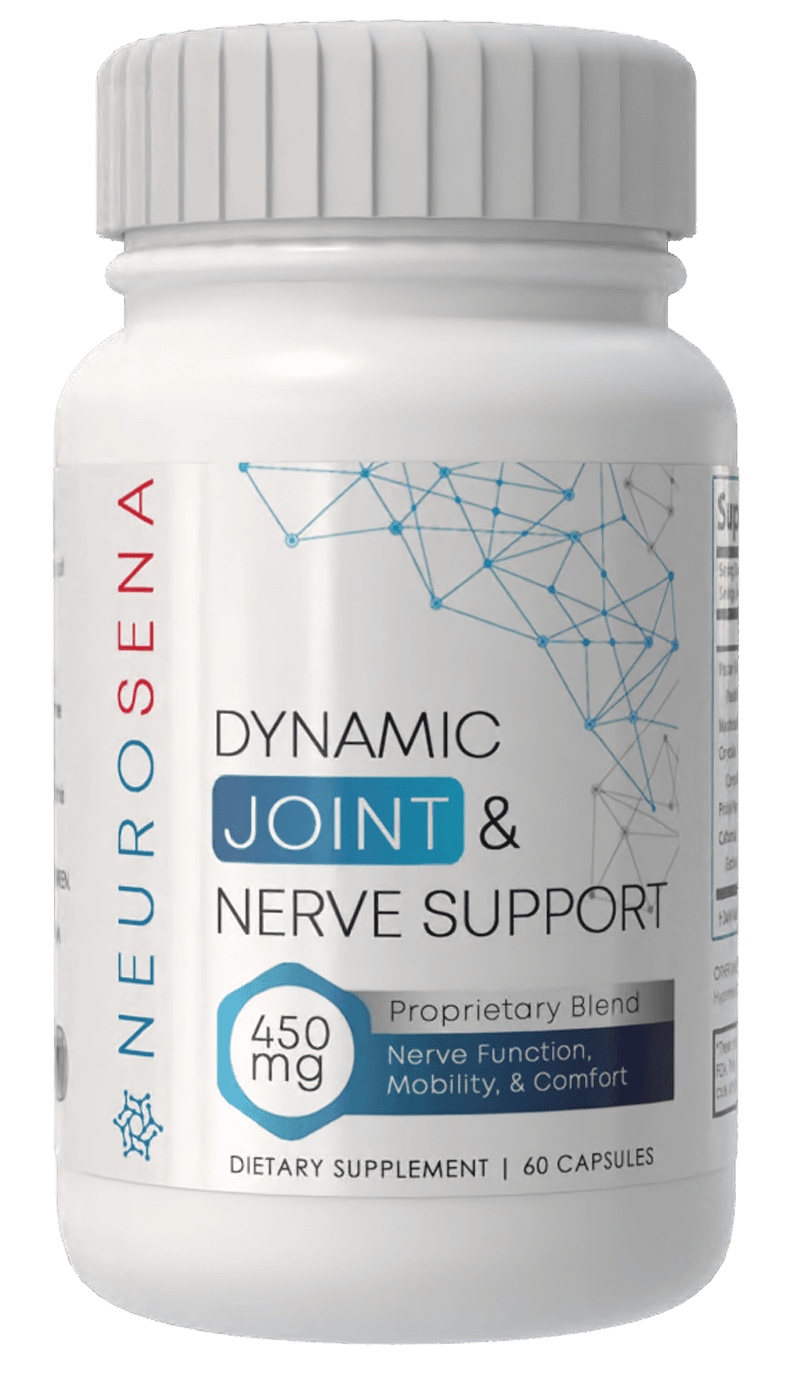
What Is Dynamicjointenervesupport?
Dynamicjointenervesupport is positioned as an oral joint-pain supplement, not as a conventional mobility aid, and the VSL works hard to separate it from the crowded glucosamine-and-turmeric shelf. Its claimed use case is simple: take a three-week protocol built around pink Himalayan salt, trace minerals, and botanicals to restore joint lubrication, calm inflammation, and reduce pain. The format matters because supplements can be framed as daily self-rescue, while pharmaceuticals are cast as dependency. The video’s Authority Stacking begins with “Elon Musk stunned the scientific community,” then adds Lester Holt, doctors, government officials, simulations, Mars rover data, and SpaceX-adjacent research. Cialdini would recognize the architecture immediately. The product is not merely sold as relief; it is sold as access to forbidden institutional knowledge.
The target user is an American adult roughly 35 to 75, likely already familiar with stiffness, arthritis language, painkillers, failed therapies, or a looming surgical conversation. The VSL speaks to both men and women, but its emotional center is the older pain sufferer who fears losing independence more than appearance. This is a PAS market: pain is named as “joint degeneration,” agitated through immobility and “irreversible complications,” then solved through a mineral-repair protocol. Kahneman’s loss aversion is visible in the movement from discomfort to catastrophe, while Festinger’s cognitive dissonance is recruited when viewers are told doctors helped but “the system wasn’t built to cure.” Schwartz would likely place this in a highly sophisticated market, where buyers have heard many joint claims and now require a novel mechanism. Hence the open loop: “what if chronic joint pain is not a disease?”
The ingredient story is deliberately earthy and technical at once: pink Himalayan salt, magnesium, potassium, boron, passionflower, marshmallow root, and the less familiar “corrodellus” are described as inputs for synovial fluid and cartilage repair. That blend rides several current supplement trends: mineral deficiency narratives, anti-pharma skepticism, natural repair language, and biohacking-style simplification. The VSL also uses a false enemy in Big Pharma, turning the buying decision into a small rebellion against pharmacies, markups, and “temporary relief.” Brunson would call the Musk origin story an epiphany bridge, because it moves the audience from skepticism to “brilliant in its simplicity” through a discovery narrative. Kennedy’s direct-response imprint appears in the specific promise of 17 hours, the mass validation claim of 30,500 people, and the eventual low-price contrast. The implication is clear: this is marketed less as a supplement than as a withheld cure narrative in capsule form.
The Problem It Targets
Dynamicjointenervesupport targets a problem larger than episodic knee soreness: the slow conversion of pain into identity. The VSL opens with the familiar PAS sequence, moving from “mild stiffness or bad pain” to surgery fear, pill dependence, and the claim that joint failure “kills slowly through immobility.” This is not merely symptom advertising. It reframes arthritis as captivity. WHO estimates 528 million people were living with osteoarthritis in 2019, while CDC data put doctor-diagnosed arthritis at roughly 53 million U.S. adults, making the addressable audience commercially immense. The implication is Kennedy-style direct response logic at population scale: a common, chronic, emotionally loaded condition becomes a continuity-market gateway, even when the product is sold as a simple oral supplement.
The deeper diagnostic claim is more important than the surface complaint. The VSL insists pain is not age, genetics, or wear and tear, but “mineral starvation,” a phrase that performs an epiphany bridge in Brunson’s sense: the buyer crosses from self-blame into hidden-cause clarity. That matters psychologically. Schwartz would recognize the move as market sophistication, because arthritis sufferers already know painkillers, braces, injections, and surgery exist; the script must therefore create a new mechanism, not another benefit. By saying the body lacks “the necessary building materials,” the message exonerates the viewer from negligence, aging, weight, and failed discipline. The commercial implication is powerful: if the cause is deprivation rather than degeneration, the supplement becomes restitution.
The VSL also builds its case through a false enemy structure, where Big Pharma, pharmacies, and the health system become the reason relief has been delayed. “Pain pays and healthy joints don’t” is the compressed moral thesis. Cialdini’s authority principle appears in the borrowed gravitas of Musk, Lester Holt, doctors, government officials, SpaceX, simulations, and “real science,” while Kahneman’s loss aversion appears in warnings about irreversible decline. Festinger’s cognitive dissonance is quietly managed: the viewer can remain skeptical and still act, because the script says skepticism is normal when something sounds “too good to be true.” This is also an open loop. If the establishment hid the answer, the only way to resolve the tension is to keep watching until the protocol is revealed.
The cultural timing is unusually favorable for this kind of pitch. An aging population, obesity-related joint strain, distrust of institutions, and post-pandemic suspicion toward expert gatekeepers all make the “not a pharmacy painkiller” claim feel socially fluent. The VSL borrows from real science: osteoarthritis does involve cartilage, synovial fluid, inflammation, cytokines, pain sensitization, and mobility loss. It then extrapolates far beyond that base by claiming pink salt trace minerals can “wake up dormant chondrocyte cells,” restore lubrication “in under 17 hours,” and produce full recovery in three weeks. That is the pattern interrupt. The credible vocabulary lowers resistance, but the leap from biological plausibility to universal reversal is where the marketing opportunity and the evidentiary risk sit side by side.
How Dynamicjointenervesupport Works
Dynamicjointenervesupport presents its mechanism as a PAS reversal: the problem is not aging, overuse, or arthritis pathology, but “mineral starvation” inside the joint capsule. The VSL claims pink Himalayan salt supplies “84 trace elements and minerals,” including magnesium, potassium, and boron, which then “wake up dormant chondrocyte cells” and restart synovial fluid production. At the established-science level, minerals do matter for human physiology, inflammation is relevant to joint pain, and synovial fluid is central to mobility. But the leap is large. Oral trace minerals do not selectively travel to arthritic joints and rebuild cartilage on command, and chondrocyte biology is not a simple switch waiting for pink salt. The implication is that the VSL turns a modest nutritional premise into an epiphany bridge: if pain is framed as deficiency, a supplement can appear more causal than symptomatic care.
The botanical layer adds plausibility without proving the advertised outcome. Passionflower, marshmallow root, and the transcript’s “corrodellus” are positioned as inflammation-soothing agents that improve “nerve and tissue comfort,” creating an AIDA sequence from pain to curiosity to belief to purchase. Some botanicals can affect perceived comfort, sleep, or inflammatory markers at the margins, and boron has been studied in relation to bone and inflammatory pathways. That is real science, but it operates slowly, inconsistently, and usually through small effect sizes, not instant structural repair. Kahneman would recognize the framing: the mind substitutes an easier question, “could minerals help joints?” for the harder one, “can this formula regenerate cartilage in hours?” Brunson and Kennedy would recognize the open loop: “what have they been trying to keep from us?” delays scrutiny until after the buyer accepts the mechanism.
The numerical claims are where the mechanism becomes most fragile. The VSL says pain fades in “under 17 hours” and that “in just three weeks” users see “full joint recovery,” after testing on 30,500 people where “every single person” supposedly felt relief. In clinical research, a universal response across that many heterogeneous patients would be extraordinary; even strong analgesics, biologics, and surgery do not produce 100 percent consistent outcomes. The math strains credibility further: osteoarthritis involves cartilage matrix breakdown, subchondral bone remodeling, inflammatory signaling, mechanics, weight, age, and genetics. Rehydrating cartilage is not the same as regenerating cartilage, and symptom improvement is not proof of tissue restoration. Schwartz’s paradox of choice is inverted here: the VSL eliminates complexity so one mechanism feels clean, decisive, and morally preferable.
Fairly read, the product’s most defensible claim is not “biological restoration” but possible modest support for comfort, hydration, routine, and placebo-responsive pain perception. Cialdini’s authority and scarcity principles intensify the promise through Musk, doctors, government officials, “just 1,100 units left,” and a false enemy in Big Pharma. Festinger’s cognitive dissonance also matters: a buyer who distrusts painkillers may find the mineral story emotionally coherent, especially when testimonials say “no pain, no meds.” Yet coherence is not evidence. The VSL’s real persuasive force comes from converting chronic pain frustration into a pattern interrupt: “This is not a toxic painkiller.” For buying decisions, the fair interpretation is narrow: it may be considered a supplement-style experiment, but the claims about rapid cartilage repair, surgery avoidance, and universal recovery should be treated as speculative until supported by transparent human trials.
Curious how other VSLs in this niche structure their pitch? Keep reading - the psychological triggers section breaks down the architecture behind every claim above.
Key Ingredients and Components
Dynamicjointenervesupport presents its formula less as a supplement blend than as a forensic discovery process: Musk-style engineering meets geology, then supposedly reveals that “chronic joint pain is not a disease” but mineral deprivation. The opening ingredient logic follows PAS: pain is reframed as progressive joint failure, agitation arrives through drugs and surgery, and the solution becomes a pink-salt mineral complex. Cialdini’s authority is supplied by celebrity, doctors, government officials, and “geologists, biochemists and nutritionists.” Kahneman’s loss aversion sharpens the threat. The formulation story also uses AIDA, an open loop, and Brunson’s epiphany bridge, moving from Mars-rover data to household salt with the rhythm of a Kennedy-style direct-response reveal. The implication is clear: ingredients are not merely listed; they are cast as evidence in a case against the false enemy of pharmaceutical dependency.
The second move is the pattern interrupt: instead of glucosamine, collagen, or turmeric, the VSL makes pink Himalayan salt the protagonist, claiming “84 trace elements and minerals” can restart synovial fluid and awaken chondrocytes. That is persuasive because it compresses Schwartz’s mechanism-first positioning into a familiar object with exotic credibility. It also creates Festinger-style dissonance: if the answer was “right under our feet,” then conventional treatment feels negligent. The VSL reinforces this by citing $1 billion in research, 2,100 simulations, and relief “in under 17 hours,” none of which is independently substantiated in the transcript. Independent evidence does not support that salt minerals rebuild cartilage on that timeline. The commercial implication is that the formulation process functions as proof theater before it functions as pharmacology.
Pink Himalayan salt (halite; sodium chloride) - The VSL calls it “a unique concentrate” of trace minerals that restores joint lubrication. Analyses in Foods and the Journal of the Chemical Society of Pakistan show trace minerals exist, but usually at nutritionally trivial levels beside sodium chloride. Evidence judgment: ambiguous for nutrition, weak for joint repair.
Magnesium, potassium, and boron (Mg, K, B) - These are framed as triggers that “wake up dormant chondrocyte cells.” Magnesium and potassium are essential electrolytes, while boron has limited human data in osteoarthritis, including discussion in Journal of Trace Elements in Medicine and Biology. None validates rapid cartilage regeneration from pink salt dosing. Evidence judgment: modest for biological relevance, weak for VSL claims.
Passionflower (Passiflora incarnata) - The VSL says it soothes inflammation and supports nerve comfort. Journal of Ethnopharmacology reviews describe sedative and anxiolytic traditions, with some safety discussion, but joint-specific clinical evidence is thin. Evidence judgment: modest for calming effects, ambiguous for arthritis relief.
Marshmallow root (Althaea officinalis) - The VSL positions it as a tissue-comfort botanical. Natural Product Research and Journal of Ethnopharmacology support mucilage-rich, demulcent, and anti-inflammatory traditions, mainly for mucosal irritation rather than joints. Evidence judgment: modest for soothing tissues, ambiguous for mobility outcomes.
Corrodellus (unverified botanical name) - The VSL lists it as an extract for inflammation and repair, but “corrodellus” does not correspond to a clearly indexed medicinal plant in standard scientific naming. Without a valid Latin binomial, journal evidence cannot be matched responsibly. Evidence judgment: unverifiable.
Hooks and Ad Angles
Dynamicjointenervesupport opens with a high-friction claim: Elon Musk has revealed a simple method that restores cartilage and lubrication “in less than 17 hours.” As a hook, it works first as a pattern interrupt, importing a technology celebrity into a category usually dominated by doctors, pharmacies, and aging testimonials. The curiosity gap is Loewenstein’s information-gap theory in plain commercial form: the viewer is told the answer came “from the depths of the earth,” but not yet how. That withheld mechanism keeps attention alive. Cialdini’s authority principle is then stacked through Musk, Lester Holt, doctors, government confirmation, SpaceX, simulations, and scientific vocabulary. The result is not merely a claim about pain relief; it is an open loop about why an outsider found what medicine allegedly missed.
The hook also performs a second function: it reframes the buyer’s pain from personal decline into institutional betrayal. This is classic PAS fused with a false enemy structure, where the problem is not aging joints but a system in which “pain pays and healthy joints don’t.” Schwartz would recognize the sophistication level: the audience has heard ordinary joint supplement promises before, so the VSL escalates from ingredient benefit to hidden-cause revelation. The “mineral starvation” idea becomes the epiphany bridge, moving the prospect from skepticism to a new explanatory model. It also borrows from AIDA: celebrity shock captures attention, pink salt creates interest, testimonials build desire, and scarcity pushes action. Social proof arrives through claimed testing on 30,500 people, converting an improbable story into a mass-participation event.
“What if chronic joint pain is not a disease, but mineral starvation?” (Strong curiosity gap; converts a familiar condition into a newly named cause.)
“This is not a toxic painkiller from a pharmacy.” (Sharp false enemy framing; separates the offer from NSAIDs and dependency anxiety.)
“You won’t find this in clinics or pharmacies.” (Conspiracy-coded exclusivity; implies suppressed access rather than ordinary distribution.)
“It works at any age, whether you’re 35 or 75.” (Broad avatar capture; reduces self-disqualification across stiffness, arthritis, and surgery fears.)
“Your joints weren’t meant to break down.” (Identity reversal; shifts the prospect from inevitable decline to recoverable design failure.)
Elon Musk’s “Pink Salt” Joint Claim: Why This VSL Stops the Scroll
Joint Pain in 17 Hours? The Hook Behind Dynamicjointenervesupport
The Mineral Starvation Angle Big Pharma Doesn’t Want Compared
Arthritis, Pink Salt, and a $39 Offer: Inside the Ad Psychology
From Painkillers to “Repair Mode”: The VSL Promise Driving Clicks
Psychological Triggers and Persuasion Tactics
Dynamicjointenervesupport builds its persuasive architecture as a compounding system, where each claim makes the next claim feel less implausible. The load-bearing frame is an epiphany bridge in Brunson’s sense: the audience is moved from “joint pain is aging” to “joint pain is mineral starvation” through a narrated discovery rather than a clinical argument. The VSL opens with a pattern interrupt, “Elon Musk stunned the scientific community,” then converts celebrity shock into diagnostic certainty. From there, the script follows a compressed hero’s journey: the outsider-engineer sees what doctors missed, confronts Big Pharma, and returns with an “open access solution.” Kennedy’s direct-response logic is visible in the steady escalation from problem to enemy to offer. The implication is not merely that the supplement may help, but that refusing it means remaining inside a rigged medical story.
The psychology is strongest when fear, resentment, and numerical precision overlap. The VSL uses PAS by naming pain, intensifying it into “irreversible complications,” and resolving it with pink salt, minerals, and botanicals. Kahneman’s loss-aversion frame is especially clear in the claim that joint failure “kills slowly through immobility,” which turns delay into danger rather than caution. Festinger’s cognitive dissonance also does quiet work: once the viewer accepts that “pain pays and healthy joints don’t,” skepticism toward the offer can be reframed as loyalty to the corrupt system. Schwartz’s paradox of choice is inverted; the VSL removes alternatives by portraying NSAIDs, surgery, clinics, and pharmacies as variations of the same failure. The buying implication is blunt: the prospect is not comparing supplements, but choosing between escape and continued dependency.
Fault Transfer (Festinger, A Theory of Cognitive Dissonance, 1957): The VSL transfers responsibility for suffering away from the buyer’s body and toward a system that “wasn’t built to cure.” This reduces shame and creates emotional permission to buy, because the purchase becomes self-rescue rather than another failed remedy.
False Enemy (Kennedy, No B.S. Direct Marketing, 2006): Big Pharma, pharmacies, and regulators are positioned as the antagonist behind continued pain. The line “pain pays and healthy joints don’t” gives the audience a simple villain, making the supplement feel like resistance.
Authority Borrowing (Cialdini, Influence, 1984): The script borrows credibility from Musk, Lester Holt, doctors, government officials, SpaceX, and “geologists, biochemists and nutritionists.” The evidence is not shown so much as atmospherically stacked, creating a halo around claims like “backed by real science.”
Loss Aversion (Kahneman and Tversky, Prospect Theory, 1979): The VSL makes inaction feel more dangerous than purchase by invoking immobility, surgery, amputation, and death. The claim that “84% of joint pain sufferers” face irreversible complications converts a supplement decision into a perceived protection decision.
Specificity as Credibility (Kahneman, Thinking, Fast and Slow, 2011): Numbers such as “30,500 people,” “2,100 simulations,” and “under 17 hours” create fluency and apparent precision. The specificity functions as proof texture, even when the underlying substantiation remains absent.
Scarcity Stacking (Cialdini, Influence, 1984): The close layers limited supply, rising demand, “1,100 units left,” a possible “36 months” production delay, and stock gone “in under an hour.” Scarcity here does not support the mechanism; it suppresses deliberation.
Endowment Effect (Kahneman, Knetsch, and Thaler, 1990): The VSL invites the viewer to mentally possess a future body that can “climb stairs without dread” and sleep without throbbing pain. Once that imagined mobility feels owned, not buying feels like losing it.
Want to see how these tactics compare across 50+ VSLs? That is exactly what Daily Intel Service is built to show you.
Scientific and Authority Signals
Dynamicjointenervesupport builds its scientific posture less through evidence than through transferred prestige. The central figure is “Elon Musk,” presented as an “engineer and an inventor,” not a clinician, rheumatologist, pharmacologist, or cartilage researcher. That distinction matters. The VSL turns a claimed weakness into an epistemic advantage: because he is outside medicine, he can supposedly see what doctors miss. This is classic authority stacking, in Cialdini’s sense, fused with Brunson’s epiphany bridge: the hero crosses from Mars rover geology to human joints and returns with “pink Himalayan salt.” The claim is borrowed authority, not medical authority. Musk’s real-world reputation in engineering is used to underwrite unverifiable biomedical claims about chondrocytes, cytokines, cartilage, and synovial fluid.
The institutional layer is even more revealing. “Doctors and the government” are invoked, but no agency, physician, university, trial registry, journal, or protocol is named. Lester Holt functions as a news-style credibility frame, creating a pattern interrupt before the sales argument begins; the viewer is asked to process the segment as journalism before recognizing it as persuasion. Kennedy would call this borrowed believability: the sales letter wears the costume of public-interest reporting. Kahneman’s framing effect is visible in the repeated contrast between “real science” and a corrupt system where “pain pays.” Yet the institutional citations appear ambiguous at best and fabricated at worst. They are not cited. They are gestured toward.
The biomedical claims follow the same pattern. Minerals such as magnesium, potassium, and boron have legitimate biological relevance, and cartilage biology does involve chondrocytes, inflammation, and synovial fluid. That is the plausible borrowed layer. But the VSL’s stronger assertions move beyond that foundation: relief in “under 17 hours,” “full joint recovery” in three weeks, testing on “30,500 people,” and “over $1 billion” in research. A PubMed-verifiable study would need named investigators, endpoints, controls, adverse-event reporting, and a PMID or journal citation. None appears in the transcript. The scientific vocabulary is therefore legitimate in fragments, borrowed in mechanism, and unsupported in outcome.
The result is authority laundering. Schwartz’s paradox of choice is reduced by giving the buyer one simple cause, “mineral starvation,” and one simple act, “click the button.” Festinger’s cognitive dissonance is also managed: skepticism is anticipated with “it sounds too good to be true,” then reframed as proof of suppression by Big Pharma. The VSL’s false enemy turns missing evidence into narrative evidence. Its PAS structure agitates pain, surgery, immobility, and death before presenting the supplement as the cure hidden from pharmacies. Overall, the scientific posture is plausibly borrowed, not clinically demonstrated. A buyer should treat the claims as marketing assertions, not verified medical findings.
The Offer, Pricing, and Risk Reversal
Dynamicjointenervesupport builds its offer around price anchoring, moving the viewer from institutional expense to impulse affordability in a tightly managed sequence. The VSL first raises a phantom pharmacy benchmark, claiming “they'd price it at $5,000 or more,” then contrasts it with an earlier protocol value of $1,600 before landing on the target SKU at $39. That $5,000 figure functions less as a market comparison than as a phantom price anchor: a hypothetical, unverifiable retail scenario that makes the final number feel morally protected. Kahneman would recognize the effect as anchoring under uncertainty, while Kennedy and Brunson would see the classic direct-response descent from large pain cost to small action cost. The interpretation is straightforward. The buyer is not asked to evaluate a supplement; the buyer is asked to accept a rescue price before the system reclaims it.
The risk reversal then narrows the remaining friction through guarantee mechanics and implied seller benevolence. Phrases like “your money back,” “no upsells, no subscriptions,” and “Shipping is 100% free” work as commitment-reducing devices, giving the offer the feel of a low-consequence trial rather than a medical-adjacent purchase. Cialdini’s reciprocity principle is visible here: the seller appears to give protection, free shipping, and access before requesting the click. The bonus structure is more implicit than explicit, since the VSL does not enumerate discrete add-ons; instead, it stacks value through outcomes, access, and avoidance. Pain relief, surgery avoidance, pill freedom, and the “civilian access program” become psychological bonuses attached to the core bottle. Schwartz’s buyer psychology explains why this matters. The offer sells not just capsules, but relief from indecision, distrust, and the fear of choosing too late.
Who This Is For (and Who It Isn't)
Dynamicjointenervesupport is aimed at buyers in the 45-to-75 range, with a secondary pull among active 35-to-45-year-olds who read early stiffness as a warning sign. Gender is effectively neutral, though the VSL’s testimonial mix and mobility language lean toward older men who miss fishing, stairs, sleep, and physical autonomy. The core buyer is middle income, price-sensitive, and suspicious of medical gatekeeping: someone who hears “pain pays and healthy joints don't” and feels recognized. That is classic PAS: pain, agitation, solution. Through Cialdini’s authority and Kahneman’s loss aversion, the script converts ordinary joint discomfort into a looming identity loss. The implication is clear: you are not buying a supplement as much as buying relief from dependence, decline, and the humiliating rituals of chronic pain.
The strongest fit is the buyer already frustrated by NSAIDs, cortisone talk, physical therapy fatigue, or a physician’s vague “manage it” plan. The VSL’s AIDA structure works because attention comes from Musk, interest from “mineral starvation,” desire from “pain fades in under 17 hours,” and action from limited stock. Brunson would call the pink-salt explanation an epiphany bridge: a simple mechanism that lets the buyer reinterpret years of pain through one new cause. Kennedy’s direct-response fingerprints are also visible in the contrast between a supposed $5,000 pharmacy route and a $39 direct offer. Schwartz’s sophistication model matters here; this is not a first-time joint-pain buyer, but a skeptical, exhausted one. If you need conservative evidence before purchase, this pitch will likely feel overextended.
You should not buy if you expect verified cartilage regeneration, surgery avoidance, or guaranteed full recovery in three weeks. The VSL’s open loop around Big Pharma and its false enemy framing may be emotionally powerful, but Festinger’s cognitive dissonance warns that a buyer can defend a weak claim after committing money and hope. Be especially cautious if you have hypertension, kidney disease, heart failure, sodium restriction, pregnancy, breastfeeding, or mineral/electrolyte limits. Because the formula references passionflower and marshmallow root, discuss it first if you take sedatives, anticoagulants, MAOIs, lithium, diuretics, diabetes medication, blood-pressure drugs, or tightly timed oral prescriptions. Marshmallow root may interfere with absorption of some oral medications. This is a discretionary supplement purchase, not a replacement for diagnosis, prescribed drugs, or urgent care.
This analysis is part of Daily Intel Service, our ongoing library of VSL and ad-copy breakdowns. If you are researching similar products in this niche, keep reading.
Frequently Asked Questions
Q: Does Dynamicjointenervesupport really work for joint pain?
A: The VSL claims Dynamicjointenervesupport can produce relief “in under 17 hours” and even support “full joint recovery” in three weeks. That is a classic PAS construction: pain is dramatized, the current medical system is agitated as inadequate, and the supplement is positioned as the resolution. From a buyer’s perspective, the key issue is that the VSL offers dramatic claims, but not publicly verifiable clinical evidence.
Q: Is Dynamicjointenervesupport a scam or legit?
A: The presentation uses several red-flag persuasion devices common in aggressive supplement funnels, including a false enemy in “Big Pharma” and an insider-revelation frame around suppressed science. That does not prove the product is a scam, but it does mean the sales argument relies heavily on suspicion, urgency, and borrowed authority. Festinger would recognize the appeal: the buyer is invited to resolve pain and distrust through one decisive purchase.
Q: What are the Dynamicjointenervesupport ingredients?
A: The VSL centers on pink Himalayan salt, “84 trace elements,” magnesium, potassium, boron, passionflower, marshmallow root, and corrodellus. It frames these as missing inputs for synovial fluid, cartilage repair, and nerve comfort. The language creates an epiphany bridge: joint pain is redefined from degeneration into “mineral starvation.”
Q: Does Dynamicjointenervesupport have side effects?
A: The VSL says “no side effects, no dependency,” which is stronger than responsible supplement marketing usually allows without robust substantiation. Any oral supplement can pose issues depending on dosage, medical history, allergies, kidney function, medications, or salt sensitivity. Schwartz would call this a demand-intensifying promise: it removes a major objection before the buyer has time to examine the evidence.
Q: Is Dynamicjointenervesupport safe to take?
A: Safety cannot be established from the VSL alone. The script uses an AIDA sequence: attention through Elon Musk, interest through pink salt science, desire through testimonials, and action through scarcity. If you are considering it, the practical buying decision is to inspect the full Supplement Facts label and ask a clinician, especially if you take blood pressure, blood thinner, diabetes, or anti-inflammatory medication.
Q: How does Dynamicjointenervesupport work?
A: The claimed mechanism is that trace minerals “wake up dormant chondrocyte cells,” restart synovial fluid production, lower cytokines, and help cartilage rehydrate. This is presented through a scientific-sounding open loop: “what if chronic joint pain is not a disease?” Brunson would recognize the structure as mechanism marketing, where a novel cause makes the product feel categorically different from ordinary pain supplements.
Q: How much does Dynamicjointenervesupport cost?
A: The VSL positions the offer at $39, after anchoring against $5,000 pharmacy pricing and a prior $1,600 protocol. This is Kahneman’s anchoring effect in plain view: the lower price feels unusually reasonable only after extreme reference points are installed. Kennedy would likely note the added urgency, with “just 1,100 units left,” as direct-response pressure.
Q: Why does Dynamicjointenervesupport mention Elon Musk?
A: Elon Musk is used as an authority transfer device, not merely a narrator. The VSL connects him to engineering, Mars rover data, SpaceX, simulations, and cross-disciplinary research, then imports that credibility into a joint supplement claim. Under Cialdini’s authority principle, the famous name functions as a pattern interrupt that makes an otherwise familiar arthritis offer feel newsworthy.
Final Take
Dynamicjointenervesupport is a sophisticated fear-and-relief VSL, not merely a supplement pitch. Its core structure is classic PAS: joint pain is reframed as worsening degeneration, the agitation escalates through “irreversible complications,” surgery, immobility, and dependency, and the solution arrives as a simple mineral protocol. The video’s strongest marketing move is the false enemy: Big Pharma, pharmacies, and a profit-driven system that allegedly ensures “pain pays and healthy joints don’t.” That framing borrows from Kennedy’s direct-response suspicion engine and Brunson’s epiphany bridge, where the buyer is led from skepticism to revelation. Cialdini’s authority principle is stacked aggressively through Musk, Holt, doctors, government officials, and scientific teams. The implication is clear: the buyer is not just purchasing joint support, but defecting from a system portrayed as hostile.
The scientific architecture is rhetorically coherent, but medically overextended. The VSL’s “mineral starvation” thesis has surface plausibility because minerals, inflammation, cartilage integrity, and mobility are legitimate health topics, and ingredients like magnesium or botanical extracts can sound familiar enough to reduce resistance. That is the credible layer. The less credible layer is the leap from trace minerals to “full joint recovery” and relief “in under 17 hours,” especially when paired with 30,500 people allegedly showing universal improvement. Kahneman would recognize the anchoring and availability effects: large numbers, vivid testimonials, and catastrophic risk claims make the story feel more evidentiary than it is. Schwartz’s paradox of choice is also inverted; the VSL removes complexity by offering one simple answer. Simplicity sells.
Its persuasion sequence follows AIDA with unusual density. Attention comes from the celebrity-news pattern interrupt: “Elon Musk stunned the scientific community.” Interest builds through Mars rovers, pink Himalayan salt, and “84 trace elements and minerals.” Desire is created through testimonials of people who became “pain free and off the pills,” while action is forced by scarcity, price compression, and risk reversal. Festinger’s cognitive dissonance is central: if viewers believe doctors and drugs failed them, rejecting the offer may feel like choosing the same failed system again. Cialdini’s scarcity appears in “just 1,100 units left,” while the price anchor moves from $5,000 to $39. The marketing is disciplined. The substantiation is the weak point.
For buying decisions, the prudent reading is neither blanket dismissal nor belief. The VSL does identify real frustrations: chronic pain patients often feel unheard, overmedicated, and trapped between temporary relief and invasive interventions. But extraordinary claims about cartilage restoration, surgery avoidance, universal response, and rapid pain elimination require clinical evidence far stronger than a narrated expose and anonymous testimonials. If you are considering it, treat the offer as a supplement purchase, not a medical substitute, and compare its label, manufacturer transparency, refund terms, and evidence against what a qualified clinician would consider meaningful. As marketing, it is a high-conversion architecture built from authority, urgency, conspiracy framing, and hope. For more breakdowns like this, Daily Intel Service is our ongoing library of VSL analyses.
Disclaimer: This article is for research and educational purposes only. It is not medical, legal, or financial advice, and it is not affiliated with the product or its makers. Always consult a qualified professional before making health or financial decisions.
Source-backed reader context
Additional Reviews & Reported Experiences
These statements were presented in the product's sales transcript. Daily Intel did not independently verify the speakers, purchase status, or reported outcomes, and the statements are not used in Product aggregateRating.
Unnamed 72-year-old
Date not stated
Migraines and neck pain for over 10 years faded by day two and were gone by the end of the week.
Unnamed 68-year-old
Date not stated
Arthritis, back pain, and knee pain faded from the first day and were gone by the end of the week; now fishing again, pain free and off pills.
Unnamed
Date not stated
Years of joint pain, mobility issues, and fear of amputation or death; now feels 10 years younger with no pain, meds, or stiffness.
Unnamed
Date not stated
Joint pain disappeared in 17 hours after completing the full three-week protocol; now pain-free and back to doing what they love.
Unnamed
Date not stated
Took the three-week course and back pain was gone after one day; now feels energized, confident, and no longer a joint disease patient.
Unnamed
Date not stated
Finished the full course with zero side effects; now feels alive, pain-free, and healthy.
Comments(0)
No comments yet. Members, start the conversation below.
Related reads
 reviews
Olly Goodbye Stress Review: Label Claims vs. Evidence
OLLY Goodbye Stress combines GABA, L-theanine, and lemon balm extract in a Berry Verbena gummy aimed at occasional stress, not sleep. Here's what the label discloses, what a real L-theanine trial found, and exactly where the evidence stops.
Read reviews
Jocko Greens Review: Does One Scoop Match the Evidence?
Jocko Greens is a one-scoop powder with approximately 30 calories and 9 billion colony-forming units of probiotics per serving. Jocko Fuel also confirms ashwagandha extract and makes a digestive-support claim. The harder question is whether the available research matches this specific formula. It does not match closely enough to establish a finished-product outcome.
Read reviews
NooCube Review: Does the 250 mg Bacopa Dose Match the Research?
NooCube is one of the few nootropics that prints a milligram number next to an ingredient instead of hiding it in a blend. This review takes that one number, 250 mg Bacopa monnieri, and checks it against a real trial that used 300 mg in a very different population, then shows exactly where the comparison breaks down.
Read