EreTurbo VSL and Ads Analysis
The video opens on what appears to be the set of Shark Tank. A woman in a white coat strides confidently toward a panel of investors, introduces herself as Dr. Julia Caldwell, board-certified urol…
8,226+
Videos & Ads
+50-100
Fresh Daily
$29.90
Per Month
Full Access
12.5 TB database · 72+ niches · 27 min read
Introduction
The video opens on what appears to be the set of Shark Tank. A woman in a white coat strides confidently toward a panel of investors, introduces herself as Dr. Julia Caldwell, board-certified urologist, Stanford graduate, Yale postgraduate, Harvard PhD, Forbes-recognized expert, and pitches a male potency supplement called EreTurbo (marketed interchangeably as "Air Turbo") for $1 million in exchange for 5% equity. Within ninety seconds, the viewer has been served an authority stack dense enough to make a peer-reviewed journal blush. By the time a Shark extends a deal offer, the pitch has already covered cholesterol plaques, a clinical trial, 45,000 success stories, and a tearful uncle whose wife publicly exposed his impotence at a company party. This is not a television appearance. It is a video sales letter built on the scaffolding of one.
The EreTurbo VSL belongs to a well-established genre of performance marketing that uses fake or unauthorized media appearances, most commonly simulated Shark Tank, The Doctors, or morning-show segments, as an opening credibility maneuver. The conceit is effective because it borrows institutional trust from recognizable formats without requiring actual institutional participation. What follows in this analysis is a structured reading of that VSL: its persuasive architecture, the specific copywriting techniques it deploys, the scientific claims at its center, the offer mechanics, and the gaps between what is asserted and what is independently verifiable. If you are researching this product before buying, this is the document you need to read before clicking any purchase button.
The central question this piece investigates is straightforward but important: does the EreTurbo VSL's persuasive machinery rest on legitimate science, legitimate authority, and a product that delivers on its promises, or does it follow the pattern, common in the direct-response supplement industry, of stacking fabricated credibility signals around a product whose efficacy claims far outpace the underlying evidence?
What Is EreTurbo?
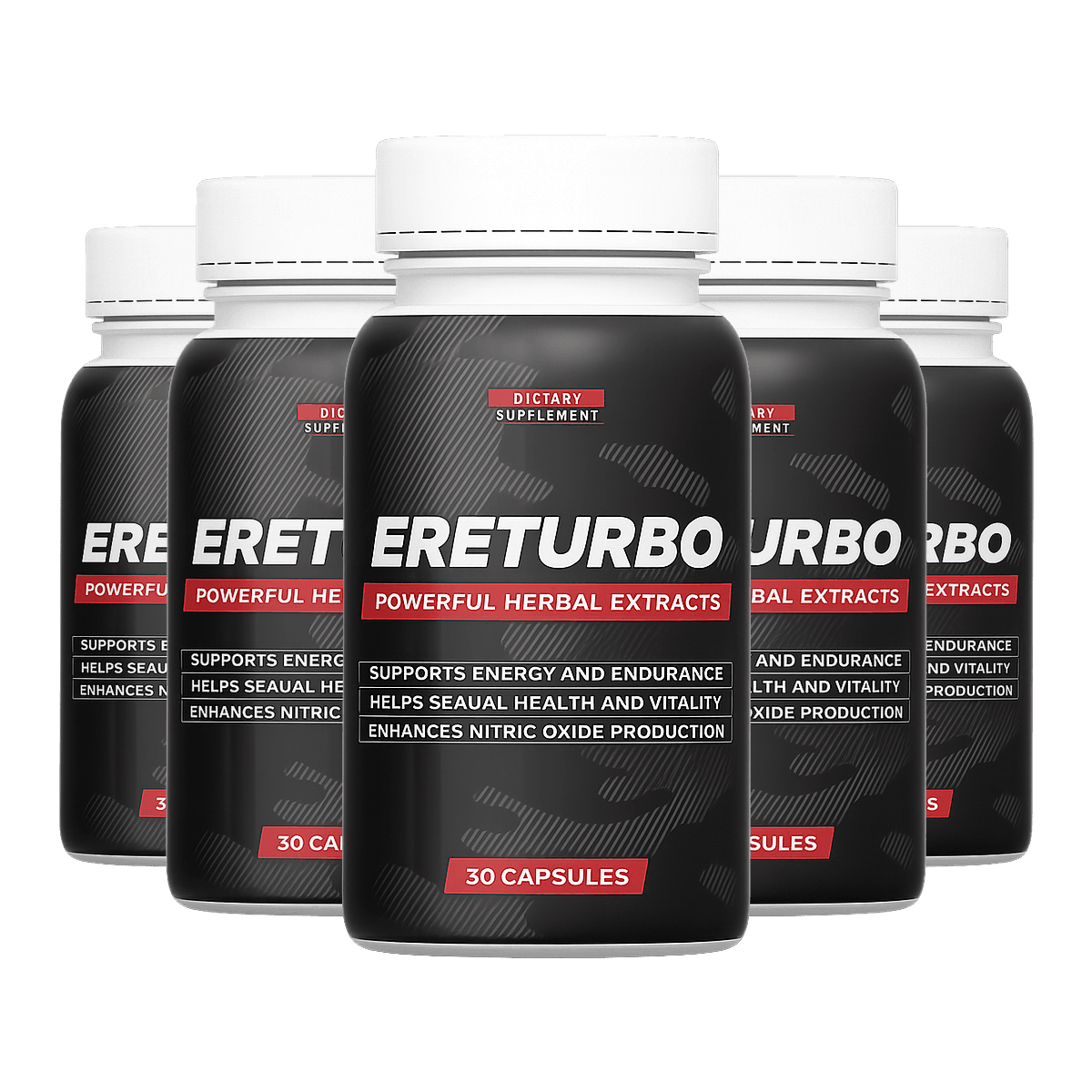
EreTurbo. Also styled as Air Turbo throughout the transcript. Is an oral dietary supplement sold in capsule form, positioned as a natural, permanent solution to erectile dysfunction (ED) in men over 40. The product is sold exclusively online, in three package configurations: a one-bottle kit at $89, a two-bottle kit at $69 per bottle, and a three-bottle kit at $49 per bottle (with a claimed 10% in-video discount versus the official website price). One capsule is taken daily on an empty stomach. The VSL states the product was developed in partnership with Takeda Labs, described as "the largest natural formulas laboratory in the United States," and positions itself not as a symptomatic treatment but as a curative intervention; a distinction it hammers repeatedly to differentiate from prescription PDE5 inhibitors like sildenafil.
In market terms, EreTurbo occupies the crowded category of nutraceutical ED supplements, a space that has expanded significantly as men seek alternatives to prescription medications and their associated costs, side-effect profiles, and the psychological friction of obtaining them through a physician. The product's stated target user is a man aged 40 to 80 who has already tried blue pills, pumps, or hormone therapy and found them unsatisfactory, a buyer who has, in the language of Eugene Schwartz, reached market sophistication stage four or five: deeply aware of the problem, deeply aware of existing solutions, and now looking for a new mechanism rather than a new brand. The VSL is calibrated precisely for that buyer.
The category the product claims to belong to, "the first and only FDA-approved natural formula that truly combats ED", is a significant claim that warrants scrutiny. The FDA does not approve dietary supplements the way it approves pharmaceutical drugs; it regulates them under DSHEA (the Dietary Supplement Health and Education Act of 1994), which does not require pre-market approval of efficacy. The phrase "FDA approved" applied to a supplement is, at minimum, a category error, and in many contexts would constitute a regulatory violation. That framing appears multiple times in the VSL and is one of its most legally fraught assertions.
The Problem It Targets
Erectile dysfunction is a genuinely widespread and undertreated condition, and the VSL is shrewd enough to open on real epidemiology even if it embellishes around the edges. The Massachusetts Male Aging Study, one of the most cited longitudinal investigations in men's sexual health, found that approximately 52% of men between 40 and 70 experience some degree of ED, with complete ED affecting around 10% of that group and the prevalence increasing with age. The NIH has estimated that by 2025, over 322 million men worldwide will be affected. These are not manufactured statistics, the condition is real, its prevalence is real, and the emotional consequences the VSL dramatizes (relationship strain, diminished self-esteem, withdrawal from intimacy) are well-documented in the clinical psychology literature on sexual dysfunction.
What makes ED a commercially potent target in direct-response marketing specifically is the shame architecture that surrounds it. Unlike, say, joint pain or blood pressure management, erectile dysfunction carries a layer of masculine identity threat that amplifies willingness to seek private, non-physician-mediated solutions. Men who might readily discuss cholesterol with their doctor frequently decline to bring up ED, a pattern documented in surveys published in the Journal of Sexual Medicine, and that gap between prevalence and physician consultation is precisely the market the EreTurbo VSL is designed to fill. The product reaches the man who will not pick up the phone and call his urologist, but will watch a thirty-minute video on his phone at 11 p.m.
The VSL's framing of the problem departs from the clinical literature in one key respect: it identifies cholesterol plaques in the penile arteries as the singular root cause of ED in all men, at all ages, under all conditions. This is an oversimplification of what medical science actually understands about erectile dysfunction. ED is recognized as a multifactorial condition with vascular, neurological, hormonal, psychological, and drug-induced etiologies, often in combination. Vascular disease, including atherosclerosis of the cavernosal arteries, is indeed one of the most common organic causes of ED, and this is established medicine. But to claim it is the universal mechanism, and that clearing it with a supplement will restore function in "any man, at any age, in any condition". Including men with type 2 diabetes, cardiovascular disease, and advanced age. Is a significant extrapolation that no peer-reviewed body of evidence currently supports.
The VSL's most emotionally powerful problem-framing device is the story of Uncle Stephen; a composite figure of masculine humiliation whose wife publicly screams his impotence at a company party while he catches her dancing with another man. This is not epidemiology; it is a carefully engineered shame trigger designed to prime the viewer's threat response before any product claims are made. The problem is framed not as a physiological condition but as an existential crisis of masculine identity, which primes the purchase as an act of self-reclamation rather than a consumer transaction.
Curious how other VSLs in this niche structure their pitch? Keep reading, the Hooks and Ad Angles section breaks down every rhetorical device deployed before the first product claim is made.
How EreTurbo Works
The mechanism the VSL proposes is built on a partially legitimate foundation stretched to cover claims it cannot scientifically support. The core premise, that erections depend on arterial blood flow to the corpus cavernosum, and that vascular compromise (including atherosclerosis of the penile arteries) is a common cause of ED, is consistent with established urology. The American Urological Association acknowledges that vascular ED is among the most prevalent organic subtypes. So far, the VSL is on defensible ground.
The logical leap comes in the specific claim that "thick, hardened cholesterol plaques" in the penile arteries are the universal and exclusive cause of ED across the entire male population, and that a daily oral supplement can "remove 100% of the cholesterol plaques" from those arteries in a 30-to-90-day period. The VSL attributes this mechanism to a 2018 study by "Dr. Richard Blake from Ohio University" involving 30,000 men with ED, a study that, as of the time of this analysis, does not appear in any searchable peer-reviewed database under those parameters. The inability to locate this citation does not prove it was fabricated, but it raises significant questions about independent verifiability, and the pattern of citing a single unverifiable study to anchor a sweeping mechanistic claim is a well-documented feature of supplement marketing that warrants caution.
The analogy the VSL uses, blood unable to flow through a clogged pipe, is intuitive and mechanically plausible as a simplified model of penile vascular disease. It also neatly explains Viagra's mechanism (temporary vasodilation creates small gaps around the plaques) while simultaneously positioning that mechanism as inadequate. This is a sophisticated piece of comparative framing: it does not deny that prescription drugs work, but reframes their action as a workaround rather than a solution, which makes the EreTurbo claim of "permanent" plaque removal sound not just superior but categorically different. In Schwartz's terminology, this is a Stage 5 market sophistication move, acknowledging and then transcending the dominant existing solution rather than competing with it directly.
The claim of a 92% improvement in erection firmness in the product's proprietary 30-day trial of 1,250 men is presented as definitive clinical validation. Methodologically, a 30-day single-study result funded by the product's own company. Described as a "third-party lab" without naming it. Would be considered preliminary evidence at best in the peer-reviewed literature. The absence of a named journal, named investigators (other than the fictional Dr. Caldwell), a registered trial number, or a published results paper makes independent assessment impossible. That does not mean the trial did not occur; it means the consumer has no mechanism to verify it.
Key Ingredients and Components
The VSL is notably opaque about ingredient specifics; a common tactic in supplement marketing that protects proprietary formulations while making them impossible to independently evaluate. The product is described as containing eight artery-cleansing ingredients and four additional blood-flow-boosting ingredients, with a patented extraction method. The ingredients are described as sourced from "remote areas of Asia, India, and South America" and validated against research from Harvard, Stanford, and Oxford, though no specific studies or ingredient names are provided during the pitch.
Based on the mechanism claimed (arterial plaque reduction and blood flow augmentation for erectile function), ingredients commonly found in supplements making similar claims in this category include the following. This list represents what is typical for products of this type and is not a confirmed disclosure from the manufacturer:
- L-Arginine, A semi-essential amino acid that serves as a precursor to nitric oxide, a vasodilator. There is peer-reviewed evidence supporting its modest role in improving blood flow; a 1999 study by Chen et al. in BJU International found improvement in mild-to-moderate ED with L-arginine supplementation, though effect sizes were smaller than those claimed in the VSL.
- Tongkat Ali (Eurycoma longifolia), A Southeast Asian root extract traditionally used for male vitality. A 2012 pilot study published in Evidence-Based Complementary and Alternative Medicine by Tambi et al. found improvements in testosterone levels and sexual well-being in a small cohort; the evidence base remains limited.
- Horny Goat Weed (Epimedium), Contains icariin, a compound that acts as a mild PDE5 inhibitor, the same class of mechanism as Viagra, though less potent. The irony of including a compound with a Viagra-like mechanism in a product that markets itself as the anti-Viagra is notable.
- Ginkgo Biloba, Studied for its effects on peripheral circulation. The evidence for its specific role in ED is mixed; a small 1998 study in the Journal of Sex and Marital Therapy by Cohen & Bartlik suggested benefit in antidepressant-induced sexual dysfunction, but broader ED evidence is inconclusive.
- Panax Ginseng, Among the better-studied herbal ingredients in this category. A meta-analysis published in the British Journal of Clinical Pharmacology (2008) by Jang et al. found statistically significant improvement in erectile function across seven trials, though authors noted methodological limitations.
- Niacin (Vitamin B3). A 2011 study in the Journal of Sexual Medicine by Ng et al. found that niacin supplementation improved erectile function in men with moderate-to-severe ED and concurrent dyslipidemia. Which is at least directionally consistent with the plaque-clearance framing, though the mechanism involves lipid management rather than direct arterial cleaning.
- Zinc; Essential for testosterone production; deficiency is correlated with lower androgen levels, and supplementation in deficient men has been shown to restore normal testosterone. The NIH Office of Dietary Supplements maintains accessible fact sheets on zinc's role in male reproductive health at ods.od.nih.gov.
The gap between what these individual ingredients can plausibly accomplish, modest improvements in blood flow, nitric oxide signaling, or hormonal balance, and the VSL's claim of "100% cholesterol plaque removal" and a guaranteed 92% improvement in erection firmness is substantial. Each of these components has some degree of biological plausibility, but the distance between a modest individual effect and the aggregate promise of permanent ED reversal is where the marketing claim separates from the scientific literature.
Hooks and Ad Angles
The opening hook of the EreTurbo VSL, "Today on Shark Tank, urologist Dr. Julia Caldwell showcases her male potency formula that keeps men hard for hours", is a textbook pattern interrupt operating simultaneously on three registers. First, it invokes a recognized media property (Shark Tank) that carries institutional trust and implies ABC network editorial vetting. Second, it front-loads the word "Shark Tank" before the product is named, meaning the first cognitive anchor the viewer sets is not "supplement" but "validated business investment." Third, it introduces an authority figure (a Stanford-Yale-Harvard urologist) within the same sentence as the product claim, collapsing the typically sequential trust-building sequence into a single opening statement.
This is not an accidental construction. It reflects what Schwartz would call a sophisticated awareness of the target audience's cynicism: a man who has already seen dozens of ED supplement ads will skip past a headline that reads "New Supplement Cures ED", but he may pause on what appears to be a Shark Tank clip, because the frame itself implies external validation. The hook functions as a credibility borrowed from context rather than earned through content, which makes it persuasively effective and ethically questionable in equal measure. The fabricated media format means every authority signal that follows, the investors' questions, the clinical trial data, the deal offer, inherits the false legitimacy of the fictional frame.
Secondary hooks observed throughout the VSL:
- The Uncle Stephen public humiliation scene. A narrative shock designed to activate masculine shame and identity threat before any product claims are introduced
- "92% improvement in erection thickness and firmness". A specific, quantified clinical result that functions as a social proof anchor
- "150,000 men have already broken free from blue pills"; a scale claim that activates Cialdini's social proof by implying mass adoption
- The two-path binary close, "Path 1" (continued impotence, divorce, humiliation) vs. "Path 2" (restored virility, satisfied wife, rekindled marriage)
- The 81-year-old testimonial claiming 60-minute erections after years of no morning wood, an extreme-case proof designed to preempt the "I'm too far gone" objection
Ad headline variations for Meta or YouTube media buyers:
- "A Stanford urologist appeared on Shark Tank with a formula that clears penile blockages, here's what the sharks said"
- "At 81, he hadn't seen morning wood in years. 12 days later, everything changed."
- "Why your blue pill stops working: the cholesterol blockage your doctor never mentioned"
- "150,000 men quit Viagra for this $49 formula. Is it real?"
- "The Shark Tank ED pitch every urologist is talking about, and the ingredient list behind it"
Psychological Triggers and Persuasion Tactics
The EreTurbo VSL does not deploy persuasion tactics sequentially or in isolation, it stacks them in a compound architecture where each layer reinforces the next. The Shark Tank frame establishes authority and social proof simultaneously. The Uncle Stephen story activates shame and loss aversion before the product is introduced, ensuring the viewer's emotional state is primed for a rescue narrative. The clinical trial data arrives after the emotional prime, meaning skeptical faculties are partially suppressed by the time numbers are presented. The price walk-down comes only after the binary close has reframed inaction as psychologically costly. This is not the structure of an informational pitch, it is the structure of a carefully sequenced emotional state machine, engineered to move a specific buyer from defensive skepticism to motivated purchase.
Schwartz's concept of the "mechanism" pitch, where the seller offers not a product but a proprietary biological explanation that makes the product feel inevitable. Is fully operative here. Once the viewer accepts the cholesterol-plaque narrative as the true cause of their ED, every competing solution (blue pills, pumps, hormone therapy) is automatically disqualified, and EreTurbo becomes the only logical next step. The mechanism is the moat.
Specific tactics deployed:
- Fabricated social proof via simulated media appearance (Cialdini's authority + social proof, Influence, 1984): The entire Shark Tank frame borrows the credibility of a nationally recognized investment program. Investors' skeptical questions. A standard feature of the show; are included to make the simulation more realistic, while the final deal with "Lori" provides the climactic authority validation.
- Epiphany bridge / origin story (Brunson, Expert Secrets, 2017): Uncle Stephen's breakdown in Dr. Caldwell's office functions as the emotional catalyst that transforms the narrator from a conventional physician into a crusading researcher. This structure makes the product feel like the product of personal sacrifice and moral commitment rather than commercial development.
- Loss aversion and masculine identity threat (Kahneman & Tversky, prospect theory, 1979): The specific scene of a wife screaming "he is impotent" to a room full of party guests is designed to make the emotional cost of inaction feel vividly concrete, more painful than the cost of purchase.
- False enemy framing / pharmaceutical villain (Schwartz's Stage 4-5 mechanism shift): Pharmaceutical companies are explicitly characterized as "corrupt industries" that profit by treating symptoms rather than causes, positioning the supplement seller as a moral outsider and the buyer as a knowing rebel against a corrupt system.
- Anchoring and price ladder walk-down (Thaler & Sunstein, Nudge, 2008): The $500-per-bottle anchor is established through customer testimony before the actual price is revealed, making the $49 final price feel like a windfall despite no external benchmark validating the $500 figure.
- Two-path binary close (Kennedy, The Ultimate Sales Letter; Halbert's mail-order copy): Path 1 is described in viscerally negative terms, "soft as a worm," divorce, humiliation, while Path 2 is described in aspirational terms. The structure collapses the decision into a binary that eliminates equivocation.
- Reciprocity via problem-solving education (Cialdini's reciprocity principle): The detailed explanation of penile vascular mechanics, delivered in accessible language, positions the seller as giving the buyer something valuable (understanding) before asking for money, creating a felt obligation to continue engaging.
Want to see how these tactics compare across 50+ VSLs in the men's health and supplement category? That is exactly what Intel Services is built to show you.
Scientific and Authority Signals
The authority architecture of the EreTurbo VSL is unusually elaborate, even by the standards of the supplement industry's more sophisticated operators. Dr. Julia Caldwell's credentials, Stanford MD, Yale postgraduate, Harvard PhD, Forbes recognition, two bestselling books, represent what might be called a credential cascade: each qualification amplifies the others, and the cumulative effect is designed to make fact-checking feel unnecessary. In practice, Dr. Caldwell does not appear to exist as a verifiable public figure in any searchable database of licensed physicians, Stanford medical alumni, or urological society membership rosters. The name and biography appear to be fabricated for the VSL.
Dr. Richard Blake's 2018 study from Ohio University, the central scientific citation that establishes the cholesterol-plaque mechanism. Presents a similar verification problem. A study of this scale (30,000 subjects) would be an extraordinarily significant contribution to urology literature and would be expected to appear in the National Library of Medicine's PubMed database, which indexes virtually all credible peer-reviewed medical research. No such paper appears to exist under those search parameters. The citation may be a complete fabrication, a heavily embellished version of a real but smaller study, or a misattribution. But in any case, it cannot be independently verified, which means the mechanism the entire product rests on lacks a confirmable scientific foundation.
The authority borrowed from "Harvard, Stanford, and Oxford" as validators of the ingredients is similarly ambiguous. These institutions are invoked in the same breath as the word "scientifically proven," but the VSL never names a specific study, author, journal, or publication year associated with any of these institutions. This is borrowed authority in its purest form: real institution names attached to unspecified claims in a way that implies endorsement without providing any verifiable link.
The Shark Tank deal itself; including the named investor "Lori" and the other named and unnamed Sharks, constitutes, if the appearance is unauthorized, a potential violation of the intellectual property and likeness rights of the show's production company and its cast members. Shark Tank has been cited in numerous FTC enforcement actions as a format impersonated by supplement marketers. The FTC has taken action against operators who use such simulated appearances to deceive consumers, categorizing them as deceptive trade practices under Section 5 of the FTC Act. This is not a peripheral detail, it is the primary credibility mechanism of the VSL, and its apparent fabrication should significantly inform a prospective buyer's assessment of all other claims in the letter.
The Offer, Pricing, and Risk Reversal
The offer mechanics in the EreTurbo VSL follow the direct-response supplement playbook closely and competently. The three-tiered kit structure, one, two, and three bottles, is designed to position the three-bottle option as the highest-value and most medically rational choice, which it does explicitly: "About 96% of our customers are able to eliminate their sexual problems with the three-bottle kit." This framing uses an invented success-rate statistic to make purchasing three bottles feel like clinical protocol rather than upselling. The pricing ladder ($89, $69, $49 per bottle) creates a genuine volume incentive, but the in-video "exclusive" pricing, a 10% discount saving $60 versus the official website, is a standard artificial urgency mechanism with no independently verifiable basis for the claim.
The price anchor is the VSL's most theatrically constructed element. The $500-per-bottle figure is introduced through customer testimony ("many people have said they would pay up to $500"), not through a comparison to a real market equivalent. Which means the anchor is entirely rhetorical. Comparing against blue pills ($10 each) and surgeries ("tens of thousands") is more grounded, but those comparisons involve categorically different interventions rather than true category equivalents. A fair comparison would benchmark EreTurbo against comparable supplement competitors in the ED nutraceutical space, which retail in the $30–$70 per bottle range. A benchmark that would make the $49 price appear less dramatic.
The 60-day unconditional money-back guarantee is, in principle, a meaningful risk-reversal instrument. The language is unusually permissive; "even if you just don't like the color of the bottle", which signals genuine confidence or, at minimum, a commitment to low refund friction. For a skeptical buyer, this guarantee reduces the financial risk of trial. Whether the guarantee is honored reliably in practice depends on the specific company and fulfillment infrastructure, which cannot be verified from the VSL alone. The discreet packaging and billing name commitments are standard in this category and reflect an accurate reading of the target audience's privacy concerns.
Who This Is For (and Who It Isn't)
The ideal buyer profile for EreTurbo, based on the VSL's psychographic targeting, is a man between 45 and 70 who has experienced ED for at least a year, has tried one or more pharmaceutical interventions without satisfactory results, is in a long-term relationship where sexual performance has become a source of tension, and carries meaningful shame around the condition, enough to have avoided discussing it openly with his physician. He is likely in a lower-to-middle income bracket (the pricing and the emphasis on cost relative to Viagra suggest he is price-sensitive) and is a regular consumer of online video content. The Shark Tank framing also suggests a target who has some baseline trust in mainstream media validation as a credibility heuristic.
For this buyer, EreTurbo's appeal is coherent: it offers a private, affordable, physician-adjacent solution that promises permanence rather than dependence, requires no prescription, and arrives in discreet packaging. If the product contains effective doses of ingredients with peer-reviewed evidence for modest vascular or hormonal support, which is plausible, if unconfirmed, some users may experience genuine improvement, particularly those whose ED has a significant psychosomatic or mild vascular component.
Readers who should approach with significant caution include men with severe cardiovascular disease, uncontrolled diabetes, or neurological conditions causing ED, not because a supplement could harm them per se, but because these conditions require physician-managed care that a supplement cannot replace, and the VSL's claim that EreTurbo is safe and effective "even" for these populations misrepresents the complexity of the underlying medicine. Men who are currently taking nitrate medications, anticoagulants, or antihypertensives should also consult a physician before adding any supplement with vasodilatory ingredients. And any buyer who is weighing this product primarily on the basis of the Shark Tank appearance, the FDA approval claim, or the Dr. Caldwell credentials should understand that none of these authority signals appear to be verifiable.
Still weighing the decision? The Frequently Asked Questions section below addresses the most common concerns directly, including the scam question.
Frequently Asked Questions
Q: Is EreTurbo a scam?
A: The product itself, a capsule supplement, likely exists, and some buyers may experience modest improvements from its ingredients. However, the VSL contains multiple fabricated authority signals: a simulated Shark Tank appearance, an unverifiable lead scientist (Dr. Julia Caldwell), an unverifiable clinical study (Dr. Richard Blake, Ohio University, 2018), and an FDA approval claim that does not apply to dietary supplements in the way it is presented. Whether the product delivers on its specific promises of permanent plaque removal and guaranteed erection restoration is not independently verifiable. Buyer caution is warranted.
Q: Does EreTurbo really work for erectile dysfunction?
A: The ingredients commonly found in supplements of this type. Including L-Arginine, Panax Ginseng, and Niacin. Have modest, peer-reviewed evidence supporting improvement in mild-to-moderate ED, particularly where vascular function is a contributing factor. The VSL's specific claim of 92% improvement or permanent arterial plaque clearance is not supported by independently verifiable published research. Results, if any, are likely to be more modest than advertised.
Q: Are there any side effects from taking EreTurbo?
A: The VSL repeatedly states there are no side effects. In reality, all active supplements carry some potential for interaction or adverse effect depending on the individual's health status and concurrent medications. Vasodilatory ingredients like L-Arginine or Ginkgo Biloba can interact with blood pressure medications. Men with cardiovascular conditions or those on prescription drugs should consult a physician before use, despite the VSL's claim to the contrary.
Q: Is EreTurbo really FDA approved?
A: Almost certainly not in the sense the VSL implies. The FDA does not approve dietary supplements for efficacy the way it approves pharmaceutical drugs. Under DSHEA, supplements can be sold without pre-market efficacy review. Claiming "FDA approved" for a supplement is at minimum a misleading use of regulatory language and may constitute a deceptive trade practice under FTC guidelines.
Q: Was EreTurbo actually on Shark Tank?
A: There is no verifiable record of a product called EreTurbo or Air Turbo appearing on Shark Tank. The VSL format; including the set, panel dynamics, and investor interactions, is consistent with simulated or unauthorized recreations of the show that the FTC has previously cited in enforcement actions against supplement marketers. This does not mean the product is ineffective, but it does mean the primary credibility mechanism of the VSL is fabricated.
Q: How long does EreTurbo take to work?
A: The VSL claims users feel increased energy and libido in the first week, spontaneous erections by weeks two to three, and full ED resolution with three months of use. These timelines are specific but unverified by independent research. Individual variation in response to supplement ingredients is significant, and men with severe organic ED are unlikely to achieve the results described in the testimonials.
Q: What are the actual ingredients in EreTurbo?
A: The VSL does not disclose the specific ingredient names, citing a patented formulation. It describes eight artery-cleansing ingredients and four blood-flow-boosting ingredients sourced from Asia, India, and South America. Buyers should request a full label before purchasing and cross-reference ingredients against any medications they currently take.
Q: How much does EreTurbo cost and is there a refund policy?
A: Pricing is $49 per bottle in the three-bottle kit (in-video price), $69 per bottle for two bottles, and $89 for one bottle. The VSL describes a 60-day unconditional money-back guarantee, contactable by phone or email. Whether this guarantee is reliably honored in practice should be researched through independent customer reviews on third-party platforms before purchase.
Final Take
The EreTurbo VSL is a technically proficient piece of direct-response marketing that reveals something important about the current state of the men's supplement category: the bar for persuasive architecture has risen significantly, even as the verifiability of the underlying claims has not. A decade ago, an ED supplement VSL might have opened with a talking head in front of a stock-photo laboratory. This one opens on what appears to be a Shark Tank set, deploys a fully realized character arc (the compassionate urologist, the humiliated uncle, the four-year research quest), cites specific institutional names and clinical trials, and closes with a layered offer structure that would be recognizable in any sophisticated direct-response course. The craft is real. The foundation it rests on is not.
The strongest elements of the VSL, the mechanism explanation, the comparative positioning against blue pills, the binary close, are well-executed marketing that would likely perform competently even if attached to a product with modest, honest efficacy claims. The weakest elements are the fabricated authority signals: the Shark Tank appearance, Dr. Caldwell's unverifiable credentials, Dr. Blake's unverifiable study, and the FDA approval claim. These are not minor embellishments, they are load-bearing walls of the persuasive structure. Remove them, and the VSL collapses to a supplement with some plausible ingredients and unverified claims of extraordinary efficacy.
For a prospective buyer, the calculus looks like this: the 60-day guarantee does reduce financial risk meaningfully, and some of the ingredients likely in the formulation have real (if modest) peer-reviewed support for mild vascular ED. If you are a relatively healthy man with mild-to-moderate ED, no contraindicated medications, and realistic expectations of modest improvement rather than guaranteed permanent cure, the product may be worth a cautious trial. If you are being drawn to purchase primarily because of the Shark Tank appearance, the FDA approval claim, or the specific statistics (92% improvement, 100% plaque removal), those signals should not be trusted as stated.
What the EreTurbo VSL ultimately documents is the state of a market where buyer sophistication has forced sellers to build increasingly elaborate persuasive architectures, and where the gap between marketing sophistication and scientific transparency remains very wide. That gap is where consumer harm tends to live.
This breakdown is part of Intel Services, our ongoing library of VSL and ad-copy analyses. If you're researching similar products in the men's health and supplement space, keep reading.
Disclaimer: This article is for research and educational purposes only. It is not medical, legal, or financial advice, and it is not affiliated with the product or its makers. Always consult a qualified professional before making health or financial decisions.
Source-backed reader context
Additional Reviews & Reported Experiences
These statements were presented in the product's sales transcript. Daily Intel did not independently verify the speakers, purchase status, or reported outcomes, and the statements are not used in Product aggregateRating.
Male customer (age unspecified)
Date not stated
feared divorce due to ED; now satisfies wife every night and relationship is stronger than ever
Wife testimonial
Date not stated
purchased EreTurbo for husband (56); he now achieves instant erections and gives her multiple climaxes
81-year-old male
Date not stated
no morning wood for years; now rock hard for 60 minutes every night, feels like his 20s
56-year-old diabetic male
Date not stated
effects visible on day one; tool feels bigger, more libido, stamina, and energy
Comments(0)
No comments yet. Members, start the conversation below.
Related reads
- DISreviews
VitalVigor Review and Ads Breakdown
VitalVigor is promoted through a highly aggressive male-performance VSL aimed at men dealing with erectile dysfunction concerns, weak erections, low confidence, shame around penis size, and fear th…
Read - DISreviews
Vigorox Prime Review and Ads Breakdown
Vigorox Prime is sold through one of the most aggressive erectile dysfunction VSL angles in the men's health space: the so-called baking soda trick. The pitch is not subtle. It opens with explicit …
Read - DISreviews
Vick Trick - Strong Flow Review and Ads Breakdown
Vick Trick - Strong Flow is promoted through a hard-hitting prostate VSL aimed at men dealing with weak urinary flow, frequent nighttime urination, urgency, embarrassment, and fear of conventional …
Read