Free Sugar Pro Review and Ads Breakdown
The ad opens with a voice that millions of Americans recognize instantly, Tom Hanks, or at least an actor performing that register of gentle, trustworthy authority, announcing that "every single …
8,226+
Videos & Ads
+50-100
Fresh Daily
$29.90
Per Month
Full Access
12.5 TB database · 72+ niches · 26 min read
Introduction
The ad opens with a voice that millions of Americans recognize instantly, Tom Hanks, or at least an actor performing that register of gentle, trustworthy authority, announcing that "every single day, you might be making your diabetes worse." Within thirty seconds, the viewer has been told that their medication is feeding a microscopic parasite eating their pancreas alive, that the pharmaceutical industry has buried the cure for decades, and that a Nobel Prize-nominated Johns Hopkins endocrinologist is about to give them a three-ingredient home recipe that reverses Type 2 diabetes in fourteen days. This is the opening architecture of the Free Sugar Pro Video Sales Letter, and it is, by any measure, one of the most aggressively constructed pitches in the contemporary health supplement market.
Free Sugar Pro is a liquid tincture sold as a blood sugar support supplement. Its VSL runs well over thirty minutes and deploys an unusual combination of celebrity impersonation, medical authority theater, conspiracy framing, and vivid emotional storytelling to sell bottles at $49 to $79 each. The pitch is aimed squarely at American adults living with Type 2 diabetes or pre-diabetes, a population the CDC estimates at over 38 million diagnosed diabetics and another 98 million pre-diabetics in the United States alone. That is a large, frightened, financially strained audience that has been told by mainstream medicine to manage their condition indefinitely, not cure it. The VSL knows this, and it builds its entire persuasive structure on the gap between that clinical reality and the desperate wish for a permanent solution.
The question this analysis investigates is not simply whether Free Sugar Pro works, though that question matters and is addressed directly, but how this sales letter works: what rhetorical machinery it uses, which psychological triggers it pulls, how it handles (and distorts) scientific evidence, and what a prospective buyer should understand before making a decision. The VSL is sophisticated enough to deserve a careful reading, and the audience it targets is vulnerable enough to require one.
What Is Free Sugar Pro?
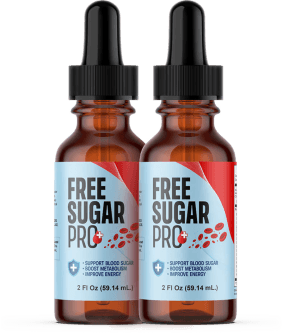
Free Sugar Pro is marketed as the "world's only dual action formula" for Type 2 diabetes: a liquid tincture delivered via dropper, taken once each morning before breakfast. The product is manufactured by a company called Cicada Labs, described in the VSL as a "cutting-edge natural supplement lab" based in Scranton, Pennsylvania. The format. Liquid tincture rather than capsule. Is a deliberate differentiator; the VSL argues that liquid delivery allows for "maximum absorption and bioavailability," a claim that has some biochemical basis for certain compounds but is applied here as a blanket superiority argument without formulation-specific evidence.
The product positions itself not as a blood sugar manager; a category crowded with berberine capsules, chromium supplements, and cinnamon extracts, but as a diabetes eliminator. This is a meaningful category distinction from a marketing standpoint: it rejects the chronic-disease management frame that defines every competitor and the entire pharmaceutical diabetes category, and instead occupies the cure frame. That positioning is also what makes the product's claims legally and scientifically contentious, since the FDA prohibits dietary supplements from claiming to treat, cure, or prevent any disease, and "reverses Type 2 diabetes" is precisely such a claim, repeated dozens of times throughout the letter.
The stated target user is any adult with Type 2 diabetes or pre-diabetes, regardless of age, gender, duration of diagnosis, or medication history. The VSL explicitly claims the formula works whether "you've been diabetic for 20 years or 20 days" and that it is safe alongside all existing medications, a claim that warrants particular scrutiny given that some of its active ingredients (berberine, notably) have documented interactions with metformin and other glucose-lowering drugs.
The Problem It Targets
Type 2 diabetes is one of the most commercially significant chronic conditions in the United States, and its epidemiological profile makes it unusually fertile ground for supplement marketing. According to the CDC's National Diabetes Statistics Report, approximately 11.6% of the U.S. population has diagnosed diabetes, with Type 2 accounting for roughly 90-95% of cases. The American Diabetes Association estimates that the total economic cost of diagnosed diabetes in the U.S. exceeds $327 billion annually, including direct medical costs and lost productivity. The VSL's claim that the average diabetic spends $16,750 per year managing the condition is drawn from ADA data and is, unusually for this letter, a figure that corresponds to real published estimates.
What makes this population particularly susceptible to a pitch like Free Sugar Pro's is not ignorance but exhaustion. The clinical management of Type 2 diabetes is demanding, often demoralizing, and for many patients, produces incomplete results despite genuine adherence. Patients who restrict carbohydrates, exercise regularly, and take their metformin faithfully may still see A1C levels that their endocrinologist considers acceptable but that feel to the patient like continued failure. The VSL reads this experience precisely, "your wife was doing everything right and still getting worse", and reframes it not as a patient compliance problem but as a structural flaw in conventional treatment. That reframing is emotionally resonant because, for many patients, it is partially true: current pharmacological management of Type 2 diabetes does not address all underlying drivers for all patients, and disease progression occurs in a meaningful subset even under guideline-directed care.
The VSL then extends this legitimate observation into a maximalist conspiratorial claim: that the reason conventional treatment fails is not complexity or biological heterogeneity, but deliberate suppression of a parasite-killing cure by an industry that profits from chronic dependency. This is the persuasive pivot on which the entire letter turns. By converting a real and widely felt grievance, that diabetes management is expensive, burdensome, and incomplete, into evidence of a cover-up, the VSL forecloses rational skepticism. Any doubt the viewer feels is recast as the result of pharmaceutical conditioning rather than reasonable evaluation of extraordinary claims.
The framing also draws on genuine public distrust of the pharmaceutical industry, which has been eroded by high-profile scandals including opioid litigation, insulin pricing controversies, and documented cases of physicians receiving industry payments. According to Gallup's annual Confidence in Institutions survey, the pharmaceutical industry consistently ranks among the least trusted U.S. industries. The VSL is not manufacturing distrust from nothing, it is amplifying a real cultural current and directing it toward a purchasing decision.
Curious how other VSLs in this niche structure their pitch? Keep reading. The Hooks and Ad Angles section breaks down the specific rhetorical architecture behind every major claim above.
How Free Sugar Pro Works
The VSL's claimed mechanism centers on a scientific construct it calls the "diabetic parasite". Specifically, a fluke named Eurytrema pancreaticum; which it positions as the root cause of Type 2 diabetes in all sufferers. According to the letter, this parasite burrows into the pancreas, devours insulin, destroys beta cells (the insulin-producing cells of the islets of Langerhans), and suppresses GLP-1 (glucagon-like peptide-1) production, leaving the patient metabolically defenseless. Free Sugar Pro's formula, the VSL argues, kills this parasite, regenerates the destroyed beta cells, and restores natural GLP-1 output, effectively reversing the disease at its biological root rather than managing its downstream symptoms.
It is important to assess this mechanism claim with precision, because it contains a real biological entity embedded in a fabricated causal framework. Eurytrema pancreaticum is a real trematode (fluke) parasite that primarily infects the pancreatic ducts of cattle, sheep, and other ruminants. It has been documented in veterinary parasitology literature for over a century. Rare human cases of eurytrematosis have been reported, predominantly in parts of China and Japan among people with heavy exposure to intermediate hosts (grasshoppers and snails). However, there is no peer-reviewed clinical evidence establishing Eurytrema pancreaticum as a cause of Type 2 diabetes in the general American population, no CDC or NIH epidemiological data linking this parasite to the U.S. diabetes epidemic, and no published Cambridge study matching the description given in the VSL. The "100 sibling pairs" study cited as the foundational evidence for this mechanism does not appear in any accessible scientific database under this description.
GLP-1, by contrast, is a thoroughly established and clinically important hormone. GLP-1 receptor agonists, including semaglutide (Ozempic, Wegovy) and tirzepatide (Mounjaro), are among the most effective and extensively studied diabetes and obesity treatments in modern medicine. The VSL correctly identifies that GLP-1 stimulates insulin secretion, inhibits glucagon, slows gastric emptying, and reduces appetite. Where it departs from established science is in claiming that Eurytrema pancreaticum is the mechanism by which GLP-1 production is suppressed in Type 2 diabetics, and that a liquid tincture can restore GLP-1 to pharmaceutical levels naturally. Cinnamon extract does have some evidence for modest glucose-lowering effects, but the claim that it triggers GLP-1 production equivalent to a $15,000-per-year injectable biologic is a substantial extrapolation from the available literature.
The four-phase protocol described, eliminate parasite, restore beta cells, stabilize blood sugar, build protective barrier, follows a logical narrative arc that mirrors the structure of genuine clinical treatment protocols. This structural mimicry is itself a persuasion tactic: by using the language of phased clinical intervention, the VSL borrows the authority of evidence-based medicine without providing the evidence.
Want to see how these tactics compare across 50+ VSLs in the health supplement space? That's exactly what Intel Services is built to show you.
Key Ingredients and Components
The Free Sugar Pro formula contains a combination of well-researched metabolic compounds and probiotic strains. The VSL presents four as primary "parasite killers" and lists several additional ingredients. Here is what the independent literature says about each.
Berberine HCl, An isoquinoline alkaloid extracted from several plants, including barberry and goldenseal. Berberine has a substantial body of clinical evidence for blood glucose lowering; a 2008 meta-analysis published in Metabolism found effects comparable to metformin in some Type 2 diabetic populations. The VSL claims it "eliminates Eurytrema pancreaticum", a claim with no supporting literature. Its legitimate glucose-lowering effects operate through AMPK activation and gut microbiome modulation, not parasite elimination. Notably, berberine interacts with metformin and can cause hypoglycemia; patients on diabetes medications should consult a physician before use.
Alpha Lipoic Acid (ALA). A naturally occurring antioxidant compound with genuine evidence for reducing oxidative stress in diabetic neuropathy. A 2011 review in Diabetes/Metabolism Research and Reviews found ALA supplementation modestly improved insulin sensitivity. The VSL's claim that it "regenerates insulin-producing beta cells" is an extrapolation beyond current evidence; beta cell regeneration in humans remains an active area of research with no confirmed oral supplement achieving it reliably.
Cinnamon Bark Extract. Multiple small clinical trials have examined cinnamon's effect on fasting blood glucose with mixed results. A 2003 study in Diabetes Care (Khan et al.) found reductions in fasting blood glucose with 1-6 grams daily of cinnamon in Type 2 diabetics. The VSL's claim that pharmaceutical-grade cinnamon bark triggers GLP-1 production equivalent to Ozempic is not supported by published evidence and represents a significant overstatement of the available data.
Resveratrol; A polyphenol found in red grapes and wine. The VSL attributes a specific Harvard finding that resveratrol "slashes insulin resistance by 64% in 30 days." While resveratrol has been studied for metabolic benefits, results in human clinical trials have been inconsistent, and the specific 64% figure cited without a named study or authors cannot be verified in accessible literature.
Turmeric Extract (Curcumin), Well-documented anti-inflammatory and antioxidant properties; some evidence for modest improvements in insulin sensitivity. Generally recognized as safe.
Mangosteen, A tropical fruit with antioxidant xanthone compounds. Limited human clinical data for blood sugar management specifically.
Phytobacterium breve and Akkermansia muciniphila, Two probiotic strains with genuine emerging research. Akkermansia muciniphila in particular has attracted significant scientific attention; a 2019 study in Nature Medicine (Plovier et al. / Depommier et al.) found that pasteurized A. muciniphila improved several metabolic markers in overweight humans. The VSL's framing of these as the "skinny bacteria found in naturally lean people" is an oversimplification but is grounded in real microbiome research.
Hooks and Ad Angles
The VSL's opening hook, "You don't realize it, but every single day, you might be making your diabetes worse", operates as a pattern interrupt in the classic copywriting tradition: it disrupts the viewer's default assumption (that following doctor's orders is the correct path) and creates immediate cognitive dissonance. The modal hedge ("might be") gives the claim just enough deniability to survive legal scrutiny while the surrounding context, meds that feed parasites, doctors who are wrong, removes any functional ambiguity. This is a textbook Eugene Schwartz Stage 4 or 5 market sophistication move: an audience that has seen every "lower your blood sugar naturally" pitch now requires a new mechanism to re-engage. The parasite theory provides exactly that mechanism. Something the viewer has genuinely never heard, framed as suppressed knowledge, which simultaneously explains past failure and promises future success.
The celebrity impersonation gambit. Opening with a voice performing as Tom Hanks; is a high-risk, high-reward tactic that exploits the authority halo of a universally trusted public figure before transitioning to a fictional medical expert. The real persuasive work is done by "Dr. Robert Stevens," whose Johns Hopkins affiliation and Nobel nomination serve as credential anchors that most viewers will not verify. The Disney World collapse scene, wife fainting in line for Rapunzel while the granddaughter screams "grandma is dying", is a masterclass in emotional specificity: the more sensory detail a testimonial contains, the more the brain processes it as episodic memory rather than marketing copy, increasing believability through a mechanism cognitive scientists sometimes call the narrative transportation effect.
Secondary hooks observed in the VSL:
- "Why do some people eat donuts every day and never get diabetes?" (curiosity gap + identity threat)
- "Your meds are literally feeding the parasite" (betrayal frame / false enemy)
- "Hidden studies buried deep by the industry show these drugs increase pancreatic cancer by over 300%" (fear escalation + conspiracy)
- "This is your one shot, at any moment this video could be deleted" (manufactured scarcity + urgency)
- "99.2% of our customers completely reverse their Type 2 diabetes" (social proof anchor)
Ad headline variations for Meta or YouTube testing:
- "The Parasite Your Doctor Never Tested You For (And Why Your Meds May Be Making It Worse)"
- "Why 12,000 Americans Threw Their Insulin in the Trash, And What They Used Instead"
- "Tom Hanks Reversed Diabetes. Here's the 3-Ingredient Morning Ritual He Credits."
- "Big Pharma Deleted This Video 4 Times. Watch Before It's Gone."
- "If You Answered Yes to Any of These 3 Questions, Your Pancreas May Be Under Attack"
Psychological Triggers and Persuasion Tactics
The persuasive architecture of this VSL is unusually sophisticated for the supplement category. Rather than deploying its psychological triggers in parallel, listing reasons to buy simultaneously, the letter stacks them in a deliberate sequence: fear is established first (parasite is destroying you right now), then authority is introduced to validate the fear (Johns Hopkins doctor confirms it), then false enemy redirects anger toward Big Pharma (making resistance feel like complicity), then social proof demonstrates safety in numbers (12,000 ex-diabetics), then scarcity compresses the decision window. This is a compound stacking structure that Cialdini's framework would recognize as maximally effective because each trigger conditions the viewer to accept the next one, fear makes authority more credible, authority makes conspiracy more believable, conspiracy makes social proof more meaningful.
The guarantee structure deserves separate analysis. The 60-day full-refund promise is positioned not merely as consumer protection but as proof of efficacy. "I offer this guarantee because I know it works." This inverts the normal risk calculus: rather than the guarantee reducing purchase risk, it is used as evidence that the seller has already absorbed all risk on the buyer's behalf, making hesitation seem irrational. This is a sophisticated deployment of what Jay Abraham calls risk reversal, where the guarantee becomes a selling argument rather than a safety net.
Pattern Interrupt + Curiosity Gap (Schwartz, market sophistication theory): The parasite mechanism is presented as suppressed knowledge, making the viewer feel they are receiving exclusive access to a truth withheld from ordinary patients. The specific line "what 99% of doctors do privately when their own blood sugar spikes" is designed to create the sensation of insider information.
Loss Aversion (Kahneman & Tversky, Prospect Theory): Vivid worst-case scenarios. Amputation, blindness, recognizing a spouse's face, dying before grandchildren graduate; are deployed not once but repeatedly throughout the letter. The final CTA section lists these consequences in accelerating sequence, exploiting the finding that losses are psychologically weighted approximately twice as heavily as equivalent gains.
Epiphany Bridge (Brunson): The Disney World collapse is the emotional pivot of the letter. By locating the discovery moment at "the worst day of my life," surrounded by family love and the specific imagery of a granddaughter screaming, the VSL converts a product origin story into a trauma narrative that activates protective instincts in the viewer.
False Consensus / Social Proof (Cialdini): The progression from 2,000 volunteers to 6,000 clinical participants to 8,000 helped to 12,000 "former diabetics" creates the impression of a rapidly growing mass movement, exploiting the cognitive tendency to follow the behavior of large groups.
Artificial Scarcity (Cialdini's Scarcity principle): Bottle counts ("312 remaining"), time pressure ("sold out within 2 hours"), and external threat ("Big Pharma could delete this page") create manufactured urgency that compresses rational deliberation. Crucially, the count changes within the same letter (312 bottles, then 350 bottles), a continuity error that reveals the scarcity as rhetorical rather than real.
Decoy Pricing / Price Anchoring (Ariely, Predictably Irrational): The three-tier package structure ($79 / $69 / $49) is engineered so the 6-bottle option dominates the other two on cost-per-bottle, making it feel like the obvious rational choice. The prior anchoring at $10,000 and $5,000 makes $49 feel almost negligible by contrast.
Identity Threat and In-Group Formation (Godin, Tribes): The "ex-diabetic revolution" framing offers the buyer not just a product but membership in a group of people who "proved their doctors wrong." The viewer is invited to join a tribe defined by independence from the medical establishment, making purchase an act of identity expression rather than mere consumption.
Want to see how these tactics compare across 50+ VSLs in the health supplement space? That's exactly what Intel Services is built to show you.
Scientific and Authority Signals
The authority architecture of this VSL operates on three distinct levels that deserve separate evaluation. The first is celebrity authority: the Tom Hanks impersonation is not an endorsement, the real Tom Hanks has publicly discussed his Type 2 diabetes diagnosis and has not, to any public record, endorsed Free Sugar Pro. Using a celebrity's name and likeness in a sales context without consent raises significant legal and ethical questions, and the FTC has taken enforcement action against marketers using fabricated celebrity testimonials. This is, unambiguously, fabricated authority.
The second level is institutional authority: "Dr. Robert Stevens" is described as a board-certified endocrinologist and senior researcher at Johns Hopkins Institute of Medicine. Johns Hopkins is a real and prestigious institution; "Johns Hopkins Institute of Medicine" as a specific named division is not a standard Johns Hopkins institutional designation, and no publicly accessible faculty or researcher directory at Johns Hopkins lists a Dr. Robert Stevens in endocrinology. The Nobel Prize nomination claim is unverifiable by design, Nobel nominations are kept confidential for fifty years under Nobel Foundation rules, making the claim impossible to refute while sounding impressive. This is borrowed authority: a real institution's prestige is invoked to imply endorsement it has not given.
The third level is study authority: the VSL cites several real scientific phenomena (GLP-1 biology, berberine's glucose effects, Akkermansia muciniphila research) and several fabricated or unverifiable studies. The "University of Cambridge study on 100 sibling pairs" identifying Eurytrema pancreaticum as the differentiating factor between diabetic and healthy siblings does not correspond to any study in the Cambridge University research database or in PubMed under relevant search terms. The WHO "alarm" about diabetes medications increasing cancer risk by "over 300%" does not match any published WHO advisory. The Stanford study on pesticides creating "perfect breeding grounds for parasites" is cited without authors, journal, or year, making verification impossible. Berberine's effects on blood glucose are supported by genuine literature; the claim that berberine eliminates a specific pancreatic parasite is not.
The overall authority profile of this VSL is a mixture of real scientific phenomena, borrowed institutional prestige, and fabricated specific claims, a combination that is particularly difficult for a non-specialist to disentangle because the real elements lend credibility to the fabricated ones.
The Offer, Pricing, and Risk Reversal
The pricing architecture of Free Sugar Pro is designed around a stacked value frame that moves from the absurd ($10,000 "could charge") to the credible ($16,750 annual diabetes costs from the ADA) to the anchor ($276/month for separate supplements) before landing on $49 per bottle for the 6-bottle flagship package. This is a textbook contrast principle application: by the time the $49 figure appears, it has been preceded by so many larger numbers that it triggers genuine relief rather than rational evaluation. The comparison to a "gas station coffee" ($1.50/day) then converts a $294 lump-sum purchase into a trivial daily increment, a reframing technique well documented in behavioral economics literature on payment decoupling.
The bonus item, Aurora, an AI diabetes coaching tool described as having lifetime value of $2,000/month, is structured as a digital good with near-zero marginal cost, meaning it inflates perceived value significantly without increasing product cost. The claim that buyers will be "among the first 1,000 people on Earth" to access this technology adds scarcity and exclusivity framing to what is effectively a chatbot add-on. Whether Aurora is a genuine AI tool or a scripted FAQ interface is not verifiable from the VSL alone.
The 60-day money-back guarantee is meaningfully structured in that it commits to a refund by email with no stated restocking fee, which is a real consumer protection. However, the guarantee's practical utility is limited by the VSL's simultaneous claim that the website may disappear at any moment due to Big Pharma suppression, a claim that, if believed, would discourage a buyer from relying on the guarantee at all. This creates a subtle tension: the guarantee reduces purchase anxiety while the suppression narrative removes the safety net the guarantee provides, nudging buyers toward larger purchases "before it's too late."
Who This Is For (and Who It Isn't)
The buyer most likely to find value in Free Sugar Pro. Setting aside its more extraordinary claims. Is an adult with Type 2 diabetes or pre-diabetes who has been managing the condition for several years, feels frustrated with the partial results of conventional treatment, is actively skeptical of pharmaceutical pricing and industry incentives, and is willing to try an adjunctive supplement. Several of Free Sugar Pro's listed ingredients (berberine, alpha lipoic acid, cinnamon extract, Akkermansia muciniphila) have genuine, if modest, evidence bases for blood sugar support, and a buyer using this product alongside; not instead of, their existing care plan might see some benefit from these compounds. The 60-day refund guarantee reduces financial downside meaningfully for this profile.
The buyer who should approach this product with significant caution is anyone considering using Free Sugar Pro as a replacement for prescribed diabetes medication, anyone who takes the parasite narrative literally and uses it to refuse medical evaluation, or anyone in a vulnerable financial situation being pushed toward the $294 six-bottle purchase by urgency and scarcity messaging. The VSL explicitly discourages ongoing pharmaceutical treatment and frames medication as dangerous (the "300% pancreatic cancer" claim), advice that, if followed by a patient with poorly controlled diabetes, could have serious medical consequences. Patients currently on metformin, semaglutide, or insulin should discuss any new supplement with their prescribing physician before use, specifically because berberine has documented pharmacokinetic interactions with metformin.
Senior citizens on fixed incomes, recently diagnosed patients who are frightened and under-informed, and patients who have experienced genuine frustration with incomplete treatment responses are the demographic profiles most targeted by this letter and most deserving of a careful read before purchase.
Frequently Asked Questions
Q: Is Free Sugar Pro a scam?
A: The product contains several ingredients with genuine evidence for modest blood sugar support, berberine and ALA in particular have real clinical literature behind them. However, the VSL makes numerous claims that are not supported by verifiable evidence, including the central "diabetic parasite" mechanism, the celebrity testimonial, and the stated Johns Hopkins affiliation. Buyers should treat the product as a supplement with plausible but limited benefits, not as a verified diabetes cure, and should purchase only with the 60-day guarantee as a safety net.
Q: Does Free Sugar Pro really work for Type 2 diabetes?
A: Some of its ingredients, berberine, cinnamon extract, alpha lipoic acid, have peer-reviewed evidence for modest improvements in fasting glucose and insulin sensitivity when used as part of a broader management plan. The claim that it "reverses" or "cures" Type 2 diabetes permanently is not supported by any published independent clinical trial. Realistic expectations involve incremental improvement, not elimination of the disease.
Q: Is Free Sugar Pro safe to take with metformin or other diabetes medications?
A: Berberine, a key ingredient, has documented interactions with metformin, both compounds lower blood glucose through overlapping mechanisms, and combining them without medical supervision can cause hypoglycemia. Anyone currently on diabetes medication should consult their physician before adding Free Sugar Pro or any berberine-containing supplement.
Q: Are there side effects from Free Sugar Pro?
A: The VSL claims the product is side-effect free, but berberine commonly causes gastrointestinal side effects including nausea, constipation, and diarrhea, particularly at higher doses. Alpha lipoic acid can occasionally cause skin rashes or hypoglycemia. The product is not recommended during pregnancy. "No side effects" is a marketing claim, not a pharmacological fact.
Q: What is Eurytrema pancreaticum and does it actually cause Type 2 diabetes?
A: Eurytrema pancreaticum is a real parasitic fluke documented in veterinary literature as a cause of pancreatic disease in cattle and other ruminants. Rare human infections have been reported in specific geographic regions of Asia. There is no peer-reviewed scientific evidence establishing this parasite as a significant cause of Type 2 diabetes in the general American population, and no published study matching the Cambridge sibling-pairs research described in the VSL has been independently verified.
Q: Is the Tom Hanks testimonial in the Free Sugar Pro ad real?
A: Tom Hanks has publicly discussed a Type 2 diabetes diagnosis; that detail is real. However, there is no public record of him endorsing Free Sugar Pro or any product called the "Glucose Reset Ritual." The VSL appears to use his name and a voice performing his cadence without documented authorization, a practice the FTC has designated as a deceptive marketing tactic.
Q: How much does Free Sugar Pro cost, and is there a guarantee?
A: At time of analysis, pricing is $79/bottle for a 2-bottle supply, $69/bottle for 3 bottles (free shipping), and $49/bottle for 6 bottles. A 60-day money-back guarantee is offered, requiring only an email to initiate a refund. The guarantee is a real consumer protection, though the VSL's own scarcity warnings about website availability create practical uncertainty about whether it would be exercisable after a period of time.
Q: Who is Dr. Robert Stevens, and is his Johns Hopkins affiliation real?
A: "Dr. Robert Stevens" is the primary authority figure in the VSL, described as a board-certified endocrinologist and senior researcher at Johns Hopkins Institute of Medicine. No faculty member matching this name and description appears in publicly accessible Johns Hopkins research directories. His Nobel Prize nomination cannot be independently verified, by design. Nobel nominations are confidential for fifty years. The affiliation should be treated as unverified until confirmed by an independent source.
Final Take
The Free Sugar Pro VSL is, from a craft standpoint, one of the more architecturally sophisticated pitches in the direct-response supplement category. It correctly reads its target audience. Exhausted, financially strained, institutionally skeptical; and builds a persuasive structure calibrated precisely to that profile. The celebrity opening, the epiphany bridge, the conspiracy villain, the compound scarcity, the stacked social proof: each element is doing specific psychological work, and the sequencing is deliberate rather than haphazard. For a media buyer or a student of direct-response copywriting, the VSL is a genuinely instructive text on how to move a sophisticated, burned-out audience.
For the prospective buyer, the picture is more complicated. Several of Free Sugar Pro's listed ingredients have real, peer-reviewed evidence for modest metabolic benefits. Berberine in particular is one of the most studied natural compounds for blood glucose management, with a safety profile comparable to low-dose metformin in some studies. A product built around berberine, alpha lipoic acid, cinnamon extract, and Akkermansia muciniphila is not, on its face, without value. The problem is that the VSL does not sell these ingredients on their actual, incremental merits, it sells them on a fabricated parasite mechanism, celebrity impersonation, unverifiable institutional claims, and cure promises that the available science does not support and that the FDA would prohibit in a regulated drug context.
The gap between what the ingredients can plausibly do and what the sales letter claims they do is the central issue for any serious buyer. If the product were sold as a berberine-based blood sugar support supplement with modest clinical evidence and a 60-day guarantee, it would be a relatively unremarkable entry in a crowded category. It is sold instead as the suppressed cure for a parasitic epidemic, endorsed by a Hollywood icon and a Nobel-nominated endocrinologist, available for the next two hours before Big Pharma deletes it forever. That discrepancy, between a real but modest product and an extraordinary but unverifiable pitch, is what this analysis is designed to make visible.
If you are researching this supplement, the most actionable guidance is this: consult your prescribing physician before adding any berberine-containing product to your regimen, do not use it as a replacement for prescribed diabetes medication, engage the 60-day guarantee as your financial safety net, and evaluate any results against your own fasting glucose and A1C data rather than against the VSL's promised outcomes. The ingredients are not nothing. The claims are not real.
This breakdown is part of Intel Services, our ongoing library of VSL and ad-copy analyses. If you're researching similar products or want to understand how health supplement marketing works across the category, keep reading.
Disclaimer: This article is for research and educational purposes only. It is not medical, legal, or financial advice, and it is not affiliated with the product or its makers. Always consult a qualified professional before making health or financial decisions.
Source-backed reader context
Additional Reviews & Reported Experiences
These statements were presented in the product's sales transcript. Daily Intel did not independently verify the speakers, purchase status, or reported outcomes, and the statements are not used in Product aggregateRating.
Pamela from Texas
Date not stated
glucose dropped from over 300 to 94 within six weeks
Adam from Illinois
Date not stated
glucose stays below 100, A1C stabilized at 5.5%, eating cheeseburgers and ice cream
Anonymous participant
Date not stated
lost 24 pounds, A1C now 5.5%, doctor declared them officially non-diabetic
Anonymous after 8 years with Type 2
Date not stated
ate ice cream, apple pie, and pizza at daughter's birthday — glucose stayed below 100, A1C 5.6%
Dr. Stevens' wife Sarah
Date not stated
A1C dropped to 5.5%, fasting glucose hit 90, lost 32 pounds, threw insulin in the trash after 6 months
Comments(0)
No comments yet. Members, start the conversation below.
Related reads
 reviews
Jocko Greens Review: Does One Scoop Match the Evidence?
Jocko Greens is a one-scoop powder with approximately 30 calories and 9 billion colony-forming units of probiotics per serving. Jocko Fuel also confirms ashwagandha extract and makes a digestive-support claim. The harder question is whether the available research matches this specific formula. It does not match closely enough to establish a finished-product outcome.
Read reviews
NooCube Review: Does the 250 mg Bacopa Dose Match the Research?
NooCube is one of the few nootropics that prints a milligram number next to an ingredient instead of hiding it in a blend. This review takes that one number, 250 mg Bacopa monnieri, and checks it against a real trial that used 300 mg in a very different population, then shows exactly where the comparison breaks down.
Read reviews
Olly Goodbye Stress Review: Label Claims vs. Evidence
OLLY Goodbye Stress combines GABA, L-theanine, and lemon balm extract in a Berry Verbena gummy aimed at occasional stress, not sleep. Here's what the label discloses, what a real L-theanine trial found, and exactly where the evidence stops.
Read