GlpBalance VSL and Ads Analysis: What the Sales Pitch Really Says
Somewhere in the middle of a lengthy video sales letter for a supplement called GlpBalance, a woman describing herself as Rebel Wilson delivers a line that is worth stopping on: "I only had my real intimate relationship after I lost the weight." It is a moment of genuine…
8,226+
Videos & Ads
+50-100
Fresh Daily
$29.90
Per Month
Full Access
12.5 TB database · 72+ niches · 28 min read
Introduction
Somewhere in the middle of a lengthy video sales letter for a supplement called GlpBalance, a woman describing herself as Rebel Wilson delivers a line that is worth stopping on: "I only had my real intimate relationship after I lost the weight." It is a moment of genuine emotional exposure, or a very convincing simulation of one, and it arrives precisely when a viewer who has been watching for fifteen minutes is most likely to feel seen, exhausted by their own struggle, and ready to believe anything. That is not an accident. The entire architecture of this VSL is engineered around emotional saturation: build empathy to its breaking point, then introduce a product as the only credible exit. The product in question, GlpBalance, is a dietary supplement in capsule form that claims to naturally replicate the hormonal effects of injectable GLP-1 drugs like Ozempic and Mounjaro. Understanding what the pitch actually says, as distinct from what it proves, is the purpose of this analysis.
The VSL runs well over forty minutes in its complete form and positions itself as a revelation suppressed by pharmaceutical interests. It opens with a listicle-style tease ("five foods that make any woman over 40 burn fat like bariatric surgery"), transitions into a celebrity origin story, builds a pseudo-scientific case for a hormonal mechanism, stages a conspiracy reveal, and closes with an offer structured around manufactured scarcity. This sequence is not improvised. It follows a recognizable direct-response copywriting architecture, Problem-Agitate-Solution with an extended narrative bridge, executed at a level of detail that suggests professional production. For a consumer researching GlpBalance before purchasing, the central question is whether the science behind the claims is real, whether the authority figures invoked are legitimate, and whether the persuasion mechanics deployed are honest. This piece addresses each of those questions directly.
What makes this VSL particularly worth studying is its timing. It appears in a moment when injectable GLP-1 receptor agonists have genuinely transformed public understanding of obesity biology, Ozempic and Mounjaro are real drugs, the science of GLP-1 and GIP hormones is real, and the public appetite for a cheaper, safer alternative is enormous and legitimate. The VSL exploits that legitimacy by grafting a real scientific conversation onto claims that are, at minimum, wildly extrapolated and, in several cases, straightforwardly fabricated. Separating the real from the invented is where the analytical work of this piece begins.
The question this analysis investigates is this: does the persuasive structure of the GlpBalance VSL hold up to scrutiny when the scientific claims, authority signals, and offer mechanics are examined against what is independently verifiable, and what does the answer reveal about how the supplement market is engaging a newly sophisticated, GLP-1-aware consumer?
What Is GlpBalance?
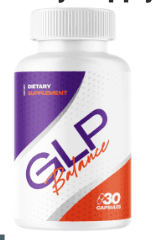
GlpBalance is an oral dietary supplement sold in capsule form, positioned as a natural alternative to injectable GLP-1 receptor agonist drugs. Its market category is weight loss supplementation, with a specific subcategory framing around hormonal metabolism support, a positioning that deliberately mirrors the clinical language of semaglutide (Ozempic) and tirzepatide (Mounjaro). The product is manufactured, according to the VSL, in a U.S.-based FDA-registered and GMP-certified facility through a partnership with a Japanese company called Notori Labs. It is sold exclusively through a dedicated sales page, not available on Amazon, GNC, or retail channels, at price points ranging from $49 to $79 per bottle depending on kit size.
The stated target user is women over 35, specifically those who have experienced repeated failure with conventional dieting and exercise, who are curious about GLP-1 drugs but are deterred by their cost (cited as $2,000 per month for Mounjaro) or side-effect profile. The product's market positioning is essentially parasitic on the GLP-1 drug conversation: it borrows the clinical vocabulary of that conversation (GLP-1, GIP, satiety hormones, tirzepatide mechanism) while arguing that it delivers equivalent or superior outcomes without the risks or expense. The VSL's named creator is "Dr. Gundry," who is presented as the founder of GundryMD and author of The Plant Paradox, a real person with a real public profile, a detail that functions as the entire credibility foundation of the pitch.
The formula is said to contain five core ingredients: pink salt (as a source of potassium and magnesium), red pepper (capsaicin), Japanese green tea extract, hydrolyzed collagen with acerola vitamin C, and turmeric combined with piperine. These ingredients are framed not as generic supplements but as pharmaceutical-grade compounds processed to precise therapeutic proportions through proprietary Japanese absorption technology, a claim that cannot be independently verified from the VSL alone but that is central to differentiating the product from cheaper imitations the script pre-emptively dismisses.
The Problem It Targets
The VSL's problem framing is anchored in a real and serious public health reality. According to the World Health Organization, global obesity rates have nearly tripled since 1975, and data from the CDC shows that approximately 42 percent of U.S. adults currently meet the clinical definition of obesity. The National Institutes of Health have documented the metabolic role of incretin hormones, including GLP-1 and GIP, in appetite regulation and glucose metabolism, and the clinical success of tirzepatide (which targets both receptors) is well established in the peer-reviewed literature, including trials published in The New England Journal of Medicine. The VSL cites a statistic from a 2022 Science Direct publication on quintupling obesity rates since the 1970s, a figure that is broadly consistent with published trend data even if the precise multiplier is difficult to verify without the specific citation.
Where the problem framing departs from evidence is in its causal explanation. The VSL argues that the obesity epidemic is driven primarily by the "almost complete disappearance" of GLP-1 and GIP from most Americans' bodies, a hormonal deficiency caused by ultra-processed food additives that "block" natural incretin production. This framing is a significant overstatement. GLP-1 and GIP are produced by intestinal L-cells and K-cells in response to food intake; they are not absent in people with obesity. The clinical literature, including work published in Diabetes Care and Endocrinology, indicates that people with obesity may have attenuated GLP-1 responses to meals and impaired sensitivity to the hormone's satiety signals, but this is different from the "shutdown" narrative the VSL deploys. Describing incretin biology as a simple binary switch that has been turned off by food industry toxins is a rhetorical simplification that would not survive peer review.
The commercial opportunity the VSL is exploiting is nevertheless genuine. Millions of Americans are aware of Ozempic and Mounjaro from media coverage, have been told by their doctors they are not candidates, cannot afford the drugs, or are frightened by widely publicized side effects including thyroid tumor warnings, severe nausea, and the cosmetic condition colloquially called "Ozempic face." The VSL maps its product directly onto those anxieties, positioning GlpBalance as the version of GLP-1 activation that is available to ordinary people, natural, affordable, and without the side-effect burden. That positioning is commercially shrewd because it requires no clinical evidence of equivalence; it simply needs to feel plausible to someone who has read about the drugs but not the mechanism.
How GlpBalance Works
The claimed mechanism of GlpBalance is built around a core proposition: that specific compounds in pink salt (potassium and magnesium) and red pepper (capsaicin) can, when combined in precise proportions, stimulate the body's own production of GLP-1 and GIP hormones at levels sufficient to replicate the fat-burning and satiety effects of injectable tirzepatide. The VSL cites a research origin story, a 2020 Stanford-associated study of a gastric ulcer patient who lost twelve pounds in twelve days while consuming a pink salt and red pepper protocol, and argues this study was subsequently cited in the development of Mounjaro, implying that pharmaceutical companies have known for years that a natural alternative exists.
There is published science supporting the directional claims about individual ingredients, though the degree of effect claimed in the VSL is dramatically exaggerated. Capsaicin, the active compound in chili peppers, has been studied for its effects on energy expenditure and appetite. Research published in the journal Appetite and in the European Journal of Nutrition has found that capsaicin can modestly increase GLP-1 secretion in the short term and may reduce caloric intake at subsequent meals, effects that are real but measured in single-digit percentage increments, not the "mimicking Mounjaro" equivalence the VSL implies. Similarly, magnesium has been associated with improved insulin sensitivity in populations with deficiency, and potassium plays roles in cellular signaling, but claims that these minerals increase GIP levels by "182%" and "144%" respectively are stated without citation to any verifiable source.
The clinical reality of GLP-1 drug effects involves receptor agonism, a drug molecule binding to and activating the GLP-1 receptor directly, at pharmacological concentrations that food-derived compounds simply cannot replicate through dietary supplementation. The VSL's mechanism sidesteps this distinction entirely by reframing the question: rather than activating the receptor (what drugs do), it claims to restore natural hormone production (what the body does). This is a more defensible claim in principle, because stimulating endogenous GLP-1 secretion is biologically possible through dietary and lifestyle means, but the magnitude of effect required to produce 20+ pound weight loss in 15 days is orders of magnitude beyond what any published study on capsaicin, magnesium, or green tea extract has demonstrated. The gap between "this ingredient has measurable effects on GLP-1 signaling" and "this capsule replicates Mounjaro" is vast, and the VSL works hard to keep the reader from noticing it.
Curious how other VSLs in this niche structure their pitch? Keep reading, the hooks analysis and persuasion section below decode every major move this script makes.
Key Ingredients and Components
The VSL introduces five ingredients sequentially, framing each as a necessary component of a complete hormonal response. The introductory paragraph to the ingredient section explicitly warns that purchasing the individual ingredients at a grocery store will not work, a classic inoculation tactic that pre-empts the rational consumer's most obvious cost-saving behavior and redirects them toward the proprietary product. With that frame established, here is what the ingredients are and what the independent literature actually says about them:
Potassium and magnesium (from pink salt): The VSL claims these minerals act as neurotransmitters in the gut, stimulating GIP production by 182% and 144% respectively. Magnesium deficiency is common in Western diets and has been linked to impaired insulin signaling (NIH Office of Dietary Supplements). Potassium is essential for nerve and muscle function. Neither mineral is established in peer-reviewed literature as a primary stimulator of GIP secretion at the levels the VSL claims; the specific percentage figures are uncited and unverifiable.
Capsaicin (from red pepper): The active alkaloid in chili peppers. A 2012 meta-analysis in Appetite by Whiting, Derbyshire, and Tiwari found modest reductions in appetite and small increases in energy expenditure. A 2018 study in the Journal of Nutritional Biochemistry found capsaicin exposure increased GLP-1 secretion in rodent models. Human evidence for GLP-1 amplification exists but is limited and modest in magnitude. The claim that capsaicin "directly increases GLP-1 production" has a scientific basis; the claim that it replicates Mounjaro does not.
Japanese green tea extract (EGCG and catechins): Well-studied for modest metabolic effects. A 2009 meta-analysis in the International Journal of Obesity found green tea catechins produced small but statistically significant reductions in body weight. The claim of reference to the American Journal of Clinical Nutrition showing "women lost twice as much belly fat" is plausible in general terms, studies in that journal have examined green tea's metabolic effects, but the specific framing cannot be verified without a direct citation.
Type 1 hydrolyzed collagen with vitamin C from acerola: Hydrolyzed collagen supplementation has some peer-reviewed support for skin elasticity outcomes. A 2014 study in Skin Pharmacology and Physiology (Proksch et al.) found oral collagen peptides improved skin elasticity. Vitamin C is essential for collagen synthesis. The claim that a JAMA study showed collagen and elastin production increasing "up to six times" after 280 pounds of weight loss is highly specific and unverifiable; no JAMA study matching this description is publicly identifiable.
Turmeric with piperine: Curcumin (turmeric's active compound) has well-documented anti-inflammatory properties. The 2000% bioavailability enhancement from piperine is genuinely established, the landmark study by Shoba et al. (1998) in Planta Medica found piperine increased curcumin serum levels by 2000% in human subjects. This is one of the few specific citations in the VSL that maps onto real published science. The connection between gut inflammation reduction via curcumin and long-term GLP-1 hormone preservation is biologically plausible but not proven at the dose levels that would be achievable in a single daily capsule.
Hooks and Ad Angles
The VSL opens with what direct-response professionals would classify as a curiosity gap hook layered onto a pattern interrupt: "Today I'm going to reveal the five foods that make any woman over 40 burn so much fat it will look like she had bariatric surgery." The structure here is precise, it sets a category expectation (a listicle about food), immediately attaches an extreme outcome (bariatric surgery-level fat loss), and specifies an identity (women over 40) that activates inclusion or exclusion in the first sentence. The "last food is the most powerful" structure is a classic open loop, creating anticipation that keeps the viewer through four ingredients before the real pitch begins. This is textbook Eugene Schwartz stage-4 market sophistication writing: the audience has seen every direct pitch ("lose weight fast"), so the entry point is indirect, a helpful list, that conceals the sales mechanism until emotional investment is established.
The transition from the listicle opener to the celebrity narrative is where the hook architecture becomes more sophisticated. The script pivots to "I know because I was the one who took care of their weight loss process", an authority claim and social proof bomb delivered in a single sentence, immediately followed by a compressed promise ("lose at least 30 pounds of pure fat before Christmas") and a reframe of everything the viewer just heard. The effect is a nested open loop: the viewer is simultaneously waiting to hear the recipe AND waiting to understand the Rebel Wilson connection AND waiting for the promised gift at the end. Multiple unresolved threads run in parallel, making it psychologically difficult to exit the video without feeling the loops will close.
Secondary hooks observed in the VSL:
- "It felt like I was taking Ozempic every day but without any side effects", the Ozempic comparison hook, triggering drug-aware curiosity
- "My belly got completely flat in just 10 days and I had to stop", the excess-result hook, creating a sense of almost dangerous efficacy
- "The pharmaceutical industry has been manipulating this market for years", the conspiracy hook, activating distrust of established alternatives
- "A study cited in the development of Mounjaro proved this was possible, and they hid it", the suppressed-knowledge hook, elevating the viewer into a position of privileged information
- "With just one cup a day, you might need to replace your entire wardrobe in less than a week", the lifestyle consequence hook, anchoring to aspiration rather than fear
Testable ad headline variations for Meta or YouTube media buyers:
- "Doctors Hate This: The $3 Kitchen Ingredient That Mimics a $2,000 Mounjaro Injection"
- "Why Women Over 40 Are Dropping 20 Lbs in 15 Days, Without Changing What They Eat"
- "Rebel Wilson Lost 77 Pounds Using This. Here's the Recipe They Don't Want You to See."
- "Your GLP-1 Hormones Turned Off at 35. This Simple Morning Trick Turns Them Back On."
- "I Tried the Homemade GLP-1 for 30 Days. Here's What Actually Happened."
Psychological Triggers and Persuasion Tactics
The persuasive architecture of this VSL is not a simple list of tricks applied in sequence, it is a stacked compound structure in which each new psychological layer is introduced only after a prior one has been fully activated. The script opens with curiosity and identity inclusion (the listicle hook), layers social proof via celebrity name-dropping, builds authority through Dr. Gundry's credentials, saturates the viewer with emotional empathy through Rebel Wilson's extended narrative, introduces the science mechanism as a revelation, reveals the conspiracy as the climax, and only then presents the product and the offer. This sequencing is deliberate: by the time price is mentioned, the viewer's resistance has been progressively dismantled across seven distinct persuasive layers. Cialdini would recognize the architecture immediately; Schwartz would call it advanced-stage market writing for an audience that has been burned before and requires both emotional and intellectual permission to act.
The emotional core of the VSL, Rebel Wilson's first-person narrative covering roughly fifteen minutes of the script, functions as what Russell Brunson calls an epiphany bridge: the speaker describes a struggle that precisely mirrors the viewer's own experience (tried everything, doctors dismissed her, felt shame, gained weight despite effort), then walks through the moment of discovery that changed everything. The viewer is not sold to in this section; they are invited to identify. By the time the product appears, they have already emotionally committed to the outcome the product promises.
Specific tactics deployed:
Social proof at scale (Cialdini): Celebrity testimonials from Rebel Wilson, Kelly Clarkson, and Selena Gomez combined with user numbers (114,000+ customers, 121,300 users worldwide) create a sense of a mass movement already underway, reducing the perceived risk of being an early or isolated adopter.
False enemy / tribal identity (Godin's tribes): The pharmaceutical industry is named as the villain suppressing the discovery. This move creates an in-group of enlightened, empowered viewers and an out-group of corrupt corporate interests, a structure that simultaneously validates the viewer's past failures ("it wasn't your fault") and elevates purchase into an act of resistance.
Loss aversion (Kahneman & Tversky): The VSL quantifies the cost of inaction with specificity, $239,000 spent over a lifetime on failed diets, elevated risk of diabetes, Alzheimer's, and heart attack, framing non-purchase as the risky choice rather than the safe default. This inverts the conventional consumer calculation.
Authority stacking (Cialdini): Dr. Gundry's credentials are listed in a dense sequence: 35 years of clinical experience, New York Times bestselling books, TV appearances, celebrity clients including the Clintons. The saturation of authority signals functions as a halo effect, any one credential would be scrutinized; a rapid pile of eight or ten creates an impression of unchallengeable expertise.
Artificial scarcity (Cialdini): The 72-bottle figure, 200,000-person waitlist, and real-time viewer count (37,942 watching) are deployed in the closing sequence to simulate a countdown clock without displaying one, creating urgency through social mathematics rather than a timer.
Endowment effect via risk reversal (Thaler): The 60-day guarantee is framed as "I'm not asking for a yes, just a maybe", a reframe that converts the purchase decision from a commitment to a trial, effectively lowering the psychological cost of buying to zero while preserving the full revenue of the transaction.
Cognitive dissonance pre-emption (Festinger): The VSL repeatedly addresses the viewer's likely objection ("but I've used pink salt and red pepper before and never lost weight") before it can fully form, explaining the failure as a dosage and purity problem that only the proprietary formula solves. This technique neutralizes rational resistance by incorporating it into the narrative.
Want to see how these tactics compare across 50+ VSLs in the health and wellness category? That's exactly what Intel Services is built to show you.
Scientific and Authority Signals
The authority structure of this VSL rests almost entirely on the real public profile of Dr. Steven Gundry, a genuine cardiologist, author of The Plant Paradox, and founder of GundryMD, whose books have appeared on the New York Times bestseller list and who has made documented television appearances. This is a legitimately credentialed individual with a real clinical and media profile. However, the VSL's use of Dr. Gundry's identity raises immediate concerns. The script attributes to him direct personal involvement in Rebel Wilson's weight loss, a research partnership with Dr. Gabrielle Lyon, and the development of the GlpBalance formula, claims that cannot be independently corroborated and that may represent unauthorized use of his name and likeness, a pattern documented in multiple FTC actions against supplement VSLs that impersonate credentialed public figures.
Dr. Gabrielle Lyon is also a real person, a physician who specializes in muscle-centric medicine and has published a bestselling book, but the VSL's description of her as "a world authority in reversing obesity" and a co-developer of the GlpBalance formula is impossible to verify and is inconsistent with her publicly documented research focus. The study citations in the VSL fall into three categories: real science referenced in ways that are broadly accurate but imprecise (the JAMA literature on GLP-1, the Planta Medica piperine study by Shoba et al.), plausible citations that cannot be confirmed without full bibliographic data (the American Journal of Clinical Nutrition green tea reference, the Science Direct obesity study), and claims that are highly specific but appear to have no identifiable source (the 42-year-old gastric ulcer patient study "from Stanford" in 2020, the JAMA study showing 2800-pound collagen impact, the claim that this research was "cited in the development of Mounjaro"). The gastric ulcer origin story, in particular, has the structure of a fabricated narrative: the clinical specificity (day four, four pounds; day eight, nine pounds; day twelve, twelve pounds) follows a pattern too clean to be typical of a published case study.
The invocation of Robert F. Kennedy Jr. at a "2025 press conference" discussing GLP-1 hormones is a credibility borrowing technique, attaching a prominent political name to the product's scientific frame without claiming endorsement. Similarly, the claim that the Today Show suppressed a segment about the formula after pharmaceutical industry legal pressure, and that this led to Hoda Kotb's departure, is an extraordinary assertion deployed without any evidence, a pure conspiracy narrative inserted at the moment when scientific scrutiny of the product's claims would be most likely. Taken together, the authority architecture of this VSL is a mixture of real credentials (Dr. Gundry's public profile), borrowed legitimacy (real studies referenced with imprecise or unverifiable claims), and fabricated or unverifiable narrative (the Stanford study, the Today Show suppression, the Rebel Wilson involvement).
The Offer, Pricing, and Risk Reversal
The GlpBalance offer is structured as a classic tiered discount with decoy pricing and bonus stacking. The anchor price of $700 per bottle, described as what people offered on the black market, is not a legitimate retail comparison and functions purely as a psychological anchor, making the $49 actual price appear almost implausibly generous. The $150 "original price" for a single bottle is described but never explained, functioning as a second anchor. The three kit options ($79 for one bottle, $69 per bottle for three, $49 per bottle for six) follow the standard direct-response supplement pricing ladder, designed to funnel buyers toward the highest-ticket option through a combination of price-per-unit savings and the framing that the six-bottle kit represents a "complete treatment" rather than an excess purchase.
The bonus stack, five digital guides, a Bloomingdale's gift card for the first ten buyers, a $1,000 Sephora gift card giveaway, and a Santorini vacation giveaway for six-bottle purchasers, is a textbook value stacking move designed to shift the buyer's mental accounting from "is this supplement worth $49?" to "what is the total package worth?" The bonuses are presented with aspirational imagery ("wearing that fitted dress on a Greek island") that connects the purchase to identity and lifestyle far beyond fat loss. Whether the vacation giveaway and gift cards constitute legitimate offers or are marketing theater is impossible to determine from the VSL alone, but their presence dramatically inflates the stated value-to-price ratio.
The 60-day money-back guarantee is the most straightforwardly legitimate component of the offer. A 60-day no-questions-asked refund is a standard and enforceable consumer protection, and its inclusion does genuinely reduce financial risk for the buyer. The framing, "I'm not asking for a yes, just a maybe", is rhetorically sophisticated, converting a guarantee into an emotional permission slip for purchase. The scarcity mechanism (72 bottles, hand-crafted annual batches, 200,000-person waitlist) is almost certainly artificial: real annual-batch production constraints would be incompatible with a claimed customer base of 114,000 users and consistent media appearances generating new demand.
Who This Is For (and Who It Isn't)
The ideal buyer for GlpBalance, as the VSL constructs them, is a woman between 40 and 60 who has a meaningful amount of weight to lose (30+ pounds), has tried multiple diets and supplements without sustained success, has heard about Ozempic or Mounjaro through media coverage and is intrigued but deterred by cost or medical access, and is experiencing the emotional weight of weight-related shame at a moment when it has become acute, before a wedding, after a health scare, after a particularly difficult experience with clothing or body image. This person is not a skeptical researcher; she is someone who needs to believe something will work and is actively looking for permission to try one more thing. The VSL's empathy mechanics, particularly the Rebel Wilson narrative, are calibrated precisely to this emotional state.
If you are researching GlpBalance as a careful buyer, there are several categories of reader who should approach with significant caution. Anyone who expects the product to deliver the specific results promised, 77 pounds in 68 days, 40 pounds in 32 days, or any of the other celebrity-scale outcomes, is likely to be disappointed, because those claims are built on testimonials that cannot be independently verified and mechanisms that are biologically implausible at supplement dosages. Anyone who has an underlying medical condition, is taking medications that interact with GLP-1 signaling (including actual GLP-1 drugs), or has a history of eating disorders should consult a physician before purchasing any product that claims to alter satiety hormone levels. And anyone who is primarily drawn by the celebrity endorsements should be aware that the involvement of Rebel Wilson, Kelly Clarkson, and Selena Gomez in this product is asserted in the VSL but has no publicly verifiable confirmation, a pattern consistent with fabricated or misappropriated testimonials.
For buyers who are simply looking for a daily supplement with ingredients that have some published science behind them and a 60-day refund protection, GlpBalance's core ingredients (capsaicin, EGCG, curcumin/piperine, collagen) are not inherently dangerous for most healthy adults. The question is not safety so much as value: whether the specific formulation justifies the price compared to purchasing the constituent ingredients in standardized forms from established supplement brands.
Researching other supplements that use GLP-1 hormone framing in their marketing? Intel Services has analyzed dozens of VSLs in this category, keep reading to see how the patterns compare.
Frequently Asked Questions
Q: Is GlpBalance a scam?
A: GlpBalance is a real product with purchasable capsules containing ingredients that have some published scientific support for modest metabolic effects. However, several claims in its VSL, including celebrity endorsements, specific pound-loss outcomes, and the Mounjaro-equivalent mechanism, are unverifiable or biologically implausible at supplement doses. The 60-day money-back guarantee provides some consumer protection, but buyers should calibrate expectations against independent evidence rather than VSL testimonials.
Q: Does GlpBalance really work for weight loss?
A: The individual ingredients, capsaicin, EGCG from green tea, curcumin with piperine, have demonstrated modest, real effects on metabolism and appetite in peer-reviewed studies. However, the specific outcomes promised in the VSL (20+ pounds in 15 days, replication of Mounjaro effects) are not supported by published clinical evidence for any oral supplement. Results, if any, are likely to be significantly more modest than advertised.
Q: Are there any side effects of GlpBalance?
A: For most healthy adults, the stated ingredients are well-tolerated. Capsaicin can cause gastrointestinal irritation in sensitive individuals. High-dose curcumin may interact with blood-thinning medications. The product should not be taken as a substitute for physician-prescribed GLP-1 medications without medical consultation, and anyone with thyroid, liver, or kidney conditions should seek medical advice first.
Q: Is GlpBalance safe to take?
A: The ingredients listed are generally recognized as safe at typical supplement doses. The product is manufactured in a claimed FDA-registered, GMP-certified facility, which is a standard industry credential indicating quality controls are in place. Independent third-party testing results are not publicly available for review.
Q: How does GlpBalance compare to Ozempic or Mounjaro?
A: Ozempic (semaglutide) and Mounjaro (tirzepatide) are pharmaceutical-grade receptor agonists that bind directly to GLP-1 and GIP receptors at clinical concentrations, with outcomes validated in large randomized controlled trials published in The New England Journal of Medicine. GlpBalance contains food-derived compounds that may modestly stimulate GLP-1 secretion through dietary mechanisms. The two are not clinically equivalent, and the VSL's claim that GlpBalance "replicates Mounjaro" is not supported by comparative clinical evidence.
Q: Did Rebel Wilson actually use GlpBalance to lose weight?
A: Rebel Wilson has publicly discussed significant weight loss and has referenced working with health professionals. However, her specific involvement with GlpBalance or Dr. Gundry's formula as described in the VSL is not independently confirmed by any public statement from Wilson herself, her verified social media accounts, or credible media reporting. The VSL's use of her name and first-person narrative is a serious credibility concern.
Q: What is the GlpBalance 60-day money-back guarantee?
A: The VSL offers a full refund within 60 days of purchase for any reason, with no questions asked, via email contact with the support team. This is a standard direct-response supplement guarantee and provides meaningful consumer protection if honored. Buyers should retain order confirmation and correspondence in case a refund is needed.
Q: Who is behind GlpBalance, is it really Dr. Gundry's product?
A: Dr. Steven Gundry is a real physician and supplement entrepreneur with an established brand (GundryMD). Whether this specific product is officially authorized by and associated with his brand, or whether his name and likeness are being used without permission in this VSL, is not verifiable from the VSL itself. Consumers should verify the product's actual corporate affiliation before purchasing, as the FTC has documented numerous supplement VSLs that misappropriate the identities of credentialed public figures.
Final Take
The GlpBalance VSL is a technically accomplished piece of direct-response copywriting that operates at the intersection of a genuinely important scientific conversation and a target audience experiencing genuine distress. The GLP-1 hormone story is real, the public appetite for accessible alternatives to expensive injectables is real, and the emotional weight of repeated diet failure is real. The VSL's sophistication lies in its ability to use all three of those realities as load-bearing structures for claims that are, in significant part, either unverifiable or false. The celebrity testimonials cannot be confirmed. The Stanford gastric ulcer study appears to be invented. The claim that this supplement replicates Mounjaro outcomes is not supported by any published clinical evidence. And the scarcity mechanics, 72 bottles, once-a-year production, 200,000 people waiting, are the standard furniture of artificial urgency in the supplement category.
What the VSL does well, from a craft perspective, is sequence. Each section arrives at the right psychological moment: the empathy comes before the science, the conspiracy comes before the product reveal, the guarantee comes after the price. The Rebel Wilson narrative is extended to a length that most copywriters would consider excessive, and that is precisely why it works, because it forces the viewer to emotionally commit over time rather than make a snap judgment. The ingredient science is presented with enough real terminology (L-cells, capsaicin, EGCG, piperine, curcumin) to feel credible to a non-specialist while being sufficiently imprecise to avoid falsifiability. This is not accidental; it is the work of writers who understand how to operate at the edge of plausibility.
For the consumer actively researching this product, the honest summary is this: the ingredients in GlpBalance have modest, real metabolic effects supported by legitimate published science. The specific outcomes promised, and the mechanism by which they are promised, are not supported by that same science. The 60-day guarantee provides the best available consumer protection given the uncertainty. And the persuasion architecture of the VSL, however impressive, is not a substitute for clinical evidence of the product's claimed effects. A consumer who purchases GlpBalance should do so with realistic expectations about the magnitude of possible outcomes, not the extraordinary results the script presents as typical.
This breakdown is part of Intel Services, our ongoing library of VSL and ad-copy analyses. If you're researching similar products in the GLP-1 supplement or weight-loss category, keep reading, the pattern recognition across VSLs in this niche is where the most useful consumer intelligence lives.
Disclaimer: This article is for research and educational purposes only. It is not medical, legal, or financial advice, and it is not affiliated with the product or its makers. Always consult a qualified professional before making health or financial decisions.
Comments(0)
No comments yet. Members, start the conversation below.
Related reads
- DISreviews
Zepjaro Caps Review and Ads Breakdown
This Zepjaro Caps review is based only on the provided sales presentation and ad transcript. That matters because the VSL does not read like a conventional supplement explanation. It does not open …
Read - DISreviews
Zawadafit Review and Ads Breakdown
This Zawadafit review is based only on the supplied video sales letter transcript. That matters because the presentation is not a standard supplement pitch with a label, capsule count, ingredient p…
Read - DISreviews
Wegovy Natural Review and Ads Breakdown
Wegovy Natural is built around one of the strongest weight-loss hooks in the current supplement and VSL market: what if you could get the effects people associate with Wegovy, Ozempic, and other GL…
Read