King Mode Turbo Gummy Review and Ads Breakdown: A Research-First Look
The upsell page is one of the most revealing artifacts in digital direct-response marketing. It appears at a uniquely vulnerable moment, after the buyer has already committed, credit card entered, order processing, and it exploits that momentum with a studied precision that most…
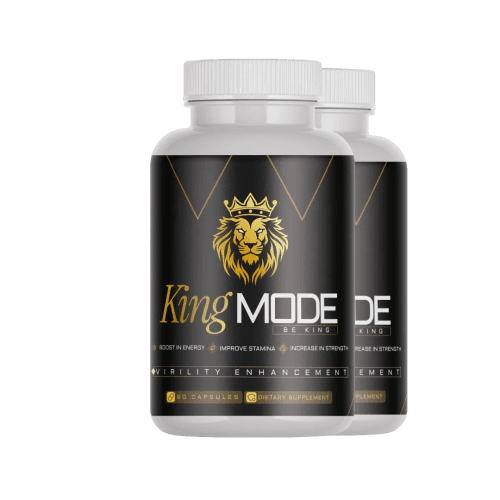
8,226+
Videos & Ads
+50-100
Fresh Daily
$29.90
Per Month
Full Access
12.5 TB database · 72+ niches · 27 min read
Introduction
The upsell page is one of the most revealing artifacts in digital direct-response marketing. It appears at a uniquely vulnerable moment, after the buyer has already committed, credit card entered, order processing, and it exploits that momentum with a studied precision that most consumers never consciously register. King Mode Turbo Gummy arrives in exactly this context: a chewable male enhancement supplement pitched to men who have just purchased the base King Mode product, presented through a video sales letter that wastes no time establishing both the aspiration ("rock hard like you were back in your 20s") and the threat ("don't click away from this page, that could mess things up"). The combination of technological hostage-taking and masculine fantasy is not accidental. It is architectural.
The male enhancement supplement market is vast, crowded, and largely unregulated at the claims level. According to the NIH National Center for Complementary and Integrative Health, sexual health supplements represent one of the top-selling categories of dietary products in the United States, despite a persistent gap between marketing language and clinical evidence. King Mode Turbo Gummy does not enter this market timidly. It promises erections "like a teenager again," a potential increase in penis size, hours of stamina, and a restored masculine identity, all from a flavored gummy that dissolves through the lining of your mouth. Whether any of those promises survive contact with the scientific record is a central question this analysis addresses.
What makes this particular VSL worth studying is not that it is especially unusual, but that it is unusually well-assembled from a copywriting standpoint. Every major persuasion lever, scarcity, identity threat, villain framing, aspirational projection, risk reversal, is present and deployed in a logical sequence. The script follows a recognizable architecture: Problem-Agitate-Solution with a stacked urgency close, written for a buyer who already believes in the product category (they bought King Mode) but needs a reason to buy more right now. That narrowed audience allows the copy to skip the education phase and go straight to desire amplification. Understanding how that works is the purpose of this piece.
The question driving this analysis is not simply whether King Mode Turbo Gummy works, that determination requires clinical evidence the VSL does not provide. The more useful question is: what does this pitch assume about its buyer, what psychological mechanisms does it engage, and where does the gap between claim and evidence become wide enough to matter to a consumer making a real purchasing decision?
What Is King Mode Turbo Gummy?
King Mode Turbo Gummy is a chewable dietary supplement positioned as a performance-stacking upsell to the King Mode male enhancement product. Its format, a flavored gummy rather than a capsule or tablet, is a deliberate departure from the standard supplement form factor, and the VSL makes the delivery mechanism central to its differentiation claim: the gummies are said to absorb through the mucosal lining of the mouth, bypassing first-pass digestion and entering the bloodstream faster than swallowed capsules. This buccal or sublingual absorption framing gives the product a pseudo-pharmacological identity that separates it, at least rhetorically, from the broader gummy vitamin category.
The product is sold exclusively through a post-purchase funnel page, meaning it is not independently advertised to cold audiences but is instead presented only to buyers already in the King Mode ecosystem. This positions Turbo Gummy firmly as an upsell or "order bump" in direct-response terminology, a product whose conversion rate depends almost entirely on the momentum and identity commitment of the original purchase. The stated target user is men over 45 experiencing age-related decline in sexual function: lower testosterone, reduced erection quality, diminished libido, and the compounding psychological effects of those changes on self-image and relationships. The product is sold in single bottles at $49 (down from a claimed retail price of $240) or as a 3-bottle pack for $147 with free shipping.
The brand presents itself as a natural, science-backed alternative to pharmaceutical options like Viagra, with "zero side effects" cited repeatedly. No manufacturer name, clinical team, or regulatory filing is referenced in the VSL, which is typical for this category of direct-to-consumer supplement. The product's ingredient list is not disclosed in the transcript, a meaningful omission discussed in the Key Ingredients section below.
The Problem It Targets
The condition King Mode Turbo Gummy targets, erectile dysfunction and broader male sexual performance decline, is among the most prevalent and commercially significant health concerns in middle-aged men. The Cleveland Clinic estimates that erectile dysfunction affects approximately 40% of men by age 40, with prevalence increasing roughly 10 percentage points per decade thereafter. The Massachusetts Male Aging Study, one of the most cited longitudinal datasets in urology, found that 52% of men between 40 and 70 reported some degree of erectile dysfunction, ranging from minimal to complete. These are not fringe statistics, they describe the lived experience of tens of millions of men in the core demographic this VSL addresses.
What makes the condition so commercially potent is not merely its prevalence but its psychological weight. Sexual performance is deeply entangled with masculine identity in the cultural frameworks most men over 45 were raised inside. A decline in erectile function is rarely experienced as a neutral physiological event; it tends to arrive with shame, self-doubt, and anxiety about relationship dynamics, precisely the emotional levers the VSL presses when it invokes "the disappointed look on your partner's face" and the risk of "coming up short in bed." The Journal of Sexual Medicine has published extensive work on the psychosocial comorbidities of erectile dysfunction, noting that the condition correlates strongly with depression and relationship dissatisfaction, which themselves create feedback loops that worsen the underlying physiology.
The VSL frames the cause of this decline through the lens of "toxin accumulation", a mechanism that is popular in direct-response health copy but sits at the speculative fringe of mainstream medicine. The claim that unspecified toxins drag down testosterone and impair blood flow draws loosely from real endocrinology (environmental endocrine disruptors such as phthalates and BPA do have measurable effects on testosterone in some studies, per research published in journals including Environmental Health Perspectives) but the VSL extends this into a general toxin narrative without specifying what toxins, at what levels, in what population, or through what pathway. That extrapolation is where legitimate science shades into marketing hypothesis.
The commercial opportunity is real and enormous. IBISWorld and Grand View Research both report that the global male sexual wellness supplement market is valued in the billions of dollars, growing driven by aging demographics, rising awareness, and the persistent stigma around seeking clinical care for sexual dysfunction. King Mode Turbo Gummy is entering a market where the buyer is already persuaded of the category, the hard work of category creation is done. The VSL's sole job is to convince a man who just spent money on King Mode that he should spend more, right now, before the moment passes.
Curious how the persuasion architecture here compares to other male enhancement VSLs? Section 7 maps every psychological mechanism in detail.
How King Mode Turbo Gummy Works
The mechanism claim at the center of the King Mode Turbo Gummy pitch is buccal absorption, the idea that by dissolving through the mucosal lining of the mouth rather than passing through the gastrointestinal tract and liver, the active ingredients reach the bloodstream faster and at higher effective concentrations. This is a real pharmacological concept with legitimate applications: nitroglycerin for angina, buprenorphine for opioid dependency, and some testosterone therapies are delivered sublingually or buccally precisely because the first-pass hepatic metabolism that follows oral ingestion would reduce their bioavailability. The VSL leverages this genuine science as a credibility anchor without specifying which of the gummy's ingredients actually benefit from buccal delivery, a distinction that matters enormously, since most herbal compounds commonly found in male enhancement supplements are not meaningfully degraded by first-pass metabolism in the first place.
The second mechanism claim involves "flushing out toxins" that are said to suppress erection quality and testosterone. As noted in the previous section, this framing borrows loosely from real environmental endocrinology but applies it in a non-specific, maximally inclusive way. No threshold toxin load is defined, no biomarker is identified, and no detoxification pathway is named. The claim functions rhetorically, it gives the buyer a comprehensible story about why their body is underperforming, but it does not constitute a mechanistic hypothesis in any clinically testable sense. The "toxin" frame is a staple of alternative health marketing precisely because it is unfalsifiable at the consumer level: you cannot test your own toxin burden, which means you also cannot disprove the claim that clearing it would help you.
The third claim, that the gummies may "add a couple of inches to your size", deserves direct attention because it represents the most aggressive reach in the entire script. No dietary supplement has been shown in peer-reviewed clinical trials to increase penile length or girth in adults. The anatomical structures involved (ligaments, tunica albuginea, smooth muscle) are not responsive to nutritional inputs in ways that would produce dimensional change. This claim, delivered almost as a parenthetical in the VSL, would likely attract regulatory scrutiny from the FTC if presented in written advertising, as it constitutes an implied structure/function claim well beyond what current evidence supports.
What the formulation may plausibly do, assuming it contains ingredients like L-arginine, citrulline, ginseng, or similar compounds common to this category, is support nitric oxide production and vascular dilation, which can improve erectile quality in men whose dysfunction is primarily vascular rather than neurological or hormonal. That is a legitimate and research-supported outcome. The gap between "supports healthy blood flow" and "rock hard like a teenager with a bigger penis in minutes" is where the scientific credibility of the VSL breaks down most visibly.
Key Ingredients / Components
One of the most significant limitations of the King Mode Turbo Gummy VSL is its complete failure to name a single ingredient. The formulation is described only in categories, "ancient ingredients," "natural compounds backed by science," "exotic ingredients from remote parts of the United Arab Emirates", without any specificity. This is unusual even by the standards of the male enhancement supplement category, where most VSLs name at least several hero ingredients to facilitate credibility-building and keyword-based discoverability. The absence here means consumers cannot independently verify efficacy claims, check for drug interactions, or confirm whether the "higher concentration" claim has any basis.
Based on common formulations in this category and the mechanism claims made in the VSL, the following ingredients are plausibly present, though none are confirmed by the transcript:
L-Arginine, An amino acid precursor to nitric oxide, which relaxes blood vessel walls and increases blood flow to erectile tissue. A meta-analysis published in the Journal of Sexual Medicine (Rhim et al., 2019) found L-arginine supplementation significantly improved erectile function scores versus placebo in men with mild-to-moderate ED. Effective doses in clinical trials typically range from 1,500-5,000 mg/day.
L-Citrulline, Often more bioavailable than L-arginine, citrulline is converted to arginine in the kidneys, sustaining nitric oxide production over a longer window. Research published in Urology (Cormio et al., 2011) showed that 1.5g/day of citrulline malate improved erection hardness scores in men with mild erectile dysfunction.
Panax Ginseng (Korean Red Ginseng), Among the most studied botanical compounds for erectile function. A systematic review in the British Journal of Clinical Pharmacology found evidence supporting its use for ED, though effect sizes were modest and study quality varied. The proposed mechanism involves ginsenosides promoting nitric oxide synthesis and protecting against oxidative stress.
Tribulus Terrestris, Widely marketed as a testosterone booster; the evidence base is significantly weaker than the marketing claims suggest. Multiple randomized controlled trials, including a review in the Journal of Dietary Supplements, found no significant effect on testosterone levels in healthy men.
Maca Root (Lepidium meyenii), A Peruvian plant with some evidence supporting its effect on libido and subjective sexual satisfaction, independent of testosterone levels. A 2010 review in BMC Complementary and Alternative Medicine noted modest improvements in sexual desire in small trials.
Zinc, An essential mineral with a well-established role in testosterone synthesis. Deficiency is common in older men and correlates with lower testosterone levels; supplementation in deficient individuals can restore normal testosterone, per NIH data. This is one of the strongest evidence-based inclusions for this category.
Hooks and Ad Angles
The VSL opens with a page-captivity gambit before it delivers any product claim: "your order's processing right now, don't click away, because that could mess things up." This functions as a pattern interrupt (Cialdini, 2006), a disruption of the viewer's expected post-purchase behavior (closing the tab, checking email), but it layers in something more specific: it implies technological consequence to leaving. The viewer is not just asked to stay; they are told that leaving may break their existing order. This is a manufactured compliance trap, and it is effective precisely because it exploits the small residual anxiety of any online checkout process. The actual framing of the hook as a reward for staying ("get ready for something that's going to totally supercharge your sex life") arrives only after the exit is psychologically blocked.
The broader hook architecture operates at what Eugene Schwartz would call a Stage 4 or Stage 5 market awareness level, an audience that has already bought a solution and is being asked to upgrade it. This narrows the job of the opening dramatically: there is no need to create category belief, diagnose the problem, or establish that a solution exists. The viewer has demonstrated all three by completing a purchase. The copy therefore skips directly to desire amplification, which is why the aspirational imagery, partners with "that sparkle in her eyes," feeling "like a freaking superhero", dominates rather than educational content. Schwartz's framework predicts exactly this structure: the most sophisticated market segments respond not to features or mechanisms but to identity resonance, and this VSL is almost entirely built on identity resonance.
Secondary hooks observed in the VSL:
- "Every guy over 45 who's tried King Mode is shocked at how fast it works"
- "These gummies get absorbed right through the lining of your mouth... in minutes"
- "It might even add a couple of inches to your size"
- "Less than $1.70 a day, cheaper than a coffee and way less than a single Viagra pill"
- "Don't let your masculinity slip away"
Ad headline variations for Meta or YouTube testing:
- "Men Over 45: Why Chewing This Before Bed Is Changing Everything"
- "The Gummy That Works Faster Than a Pill, And Doesn't Cost $70 a Pop"
- "Doctors Won't Tell You About This Absorption Trick (But Your Body Will Thank You)"
- "He Thought His Best Years Were Behind Him. Then He Tried This."
- "Why 10,000 Men Are Swapping Their Supplements for This One Gummy"
Psychological Triggers and Persuasion Tactics
The persuasive architecture of the King Mode Turbo Gummy VSL is best understood as a stacked sequence rather than a parallel array of triggers. Rather than deploying several persuasion mechanisms simultaneously and hoping one lands, the script moves through a deliberate progression: first trapping attention (page captivity), then building desire through identity aspiration, then introducing the product as the vehicle for that identity, then compressing the decision window with scarcity, and finally neutralizing residual hesitation with risk reversal. This is not accidental ordering. It maps closely onto the classical AIDA framework (Attention → Interest → Desire → Action) with a modern loss-aversion close grafted onto the back end. What distinguishes it is the identity-first rather than problem-first framing, the VSL sells the man you want to be before it sells the problem you're trying to escape, which reflects a sophisticated understanding of how male buyers in this category actually respond.
The scarcity architecture deserves particular attention because it is unusually layered. Most supplement VSLs invoke a single scarcity signal, "limited stock" or "offer expires tonight." This script stacks four distinct scarcity rationales: exotic ingredient sourcing from the UAE, global supply chain disruptions in 2025, near-depletion of current stock, a 4-6 month projected restock window, and a 3-bottle-per-customer cap. Each individual claim might be dismissible; combined, they create a cumulative sense of genuine resource constraint that is difficult to mentally counter in real time. Behavioral economists Worchel, Lee, and Adewole (1975) demonstrated that scarcity increases perceived value even when the scarce object is otherwise identical to an abundant one, a finding this VSL applies with unusual thoroughness.
Commitment and Consistency (Cialdini): The viewer has just purchased King Mode. The VSL opens by validating that decision, then frames the Turbo Gummy as the logical completion of that commitment. Refusing it now feels inconsistent with the identity the buyer just paid to inhabit.
Loss Aversion (Kahneman & Tversky): "Don't let your masculinity slip away" and "avoid the embarrassment of coming up short" are framed as losses to be prevented, not gains to be achieved. Loss-aversion research consistently shows that the psychological weight of a loss is roughly twice that of an equivalent gain, making fear-of-loss framing systematically more powerful than aspiration framing alone.
False Enemy / Villain Frame (Brunson's epiphany bridge structure): Viagra is constructed as an expensive, risky, temporary pharmaceutical intervention, the enemy that the natural gummy defeats. This creates a simple moral and practical binary that positions the buyer as savvy rather than desperate.
Identity Projection (Godin's tribes): "Real men again," "absolute beast in bed," "the man your partner dreams about", each phrase offers the buyer membership in an aspirational identity group. The purchase becomes an initiation rite rather than a transaction.
Artificial Urgency Stacking (Cialdini's Scarcity + Supply Chain Narrative): As detailed above, five distinct scarcity signals are layered to create a compressed decision window that discourages comparison shopping or reflection.
Risk Reversal (Thaler's endowment effect neutralized): The 60-day money-back guarantee is introduced after urgency has already primed action. At this point in the sequence, the guarantee functions not as a primary motivator but as a last objection-handler, removing the final psychological barrier for buyers already emotionally committed.
Page Captivity (Attention Economics): The implied technological threat of leaving ("could mess things up") is a manufactured compliance mechanism that has no basis in how payment processing actually works. Its sole function is to extend dwell time on the upsell page.
Want to see how these persuasion mechanics compare across 50+ male enhancement and health VSLs? That's exactly the kind of comparative work Intel Services is built to show you.
Scientific and Authority Signals
The King Mode Turbo Gummy VSL presents an almost complete absence of named authority, no doctors, no researchers, no institutions, no published studies are cited by name or reference. The authority signals that do appear are entirely categorical: "backed by science," "natural ingredients," "studies show that consistently taking these ingredients is the key to explosive results." These phrases function as borrowed authority, they invoke the general credibility of science without attributing any specific claim to any specific source. A buyer listening at normal attention will register "science says this works" without noticing that no science has been named.
This approach is common in the direct-to-consumer supplement space but is worth naming precisely because it contrasts sharply with how authority is supposed to function in product claims. The FTC's guidance on health and wellness advertising, available at ftc.gov, requires that claims be substantiated by competent and reliable scientific evidence, which means randomized controlled trials or systematic reviews in peer-reviewed journals, not unnamed "studies." The VSL's authority architecture would be difficult to defend under direct FTC scrutiny if any specific clinical claim were isolated and examined.
The Viagra comparison is the one moment where a named external reference point appears, and it is used purely for price anchoring and villain framing rather than clinical comparison. The price of Viagra ($70 per pill, $1,000+ for a box) is directionally accurate in the U.S. cash-pay market as of recent years, which lends the comparison a veneer of factual grounding. But the clinical comparison, that the gummy delivers comparable or superior results without the side effects, is stated as a given rather than demonstrated. Phosphodiesterase-5 inhibitors like sildenafil (Viagra) have a well-documented, FDA-reviewed efficacy and safety profile; King Mode Turbo Gummy has none of that infrastructure.
The geographic authority signal, "exotic ingredients from remote parts of the United Arab Emirates", is a classic "secret source" authority frame common to this genre. It implies that the ingredients are rare, powerful, and inaccessible through normal channels, which both justifies the price and creates a sense of exclusive access. Whether any of the actual ingredients originate in the UAE, and whether UAE origin is pharmacologically meaningful for any of them, cannot be assessed from the information the VSL provides. It is almost certainly a narrative embellishment rather than a supply-chain fact.
The Offer, Pricing, and Risk Reversal
The offer mechanics of the King Mode Turbo Gummy upsell are well-constructed by direct-response standards. The price anchor of $240 per bottle is introduced before the actual offer price, establishing a reference point that makes $49 feel like a near-steal, an 80% discount that triggers Thaler's transaction utility effect (the pleasure of getting a deal, independent of whether the item's absolute value is worth it). Whether $240 was ever a real market price for this product is impossible to verify; in the upsell context, such anchors are frequently hypothetical "retail" prices that the product has never actually been sold at.
The comparison to Viagra, "less than $1.70 a day... Viagra runs you $70 per pill and comes with risky side effects", functions as a second-tier anchor, this time against a known pharmaceutical benchmark. This is a rhetorically strong move because it benchmarks the product against something the buyer already has negative feelings about (expensive, embarrassing to obtain, side-effect-laden). The 3-bottle pack at $147 brings the per-bottle cost to $49, which the VSL presents as the obvious unit-economics choice given the scarcity framing: if stock is gone for 4-6 months, buying three bottles is only rational. The free shipping and priority delivery bonus on the 3-bottle pack add perceived value at near-zero marginal cost to the seller.
The 60-day money-back guarantee is a standard risk-reversal mechanism in this category. Its functional value to the consumer is real, assuming the company honors it, which requires consumer diligence to verify independently, but its psychological function in the pitch is to remove the last objection after urgency has already activated forward momentum. The guarantee is placed at the end of the offer section, not at the beginning, which is the correct structural placement: leading with a guarantee reduces the urgency signal, so it is deliberately sequenced after scarcity has done its work.
Who This Is For (and Who It Isn't)
The ideal buyer for King Mode Turbo Gummy is a man in his late 40s to 60s who has already self-identified as experiencing sexual performance decline, is not in active clinical care for the condition, is motivated more by identity and relationship anxiety than by clinical curiosity, and is predisposed to believe in natural supplement solutions over pharmaceutical ones. He has just spent money on King Mode, which means he has already made a category bet, he believes a supplement can meaningfully address his sexual health concerns. The upsell pitch requires almost no additional category conversion; it only needs to convince him that more is better and that right now is the time. The flavored gummy format also appeals to buyers who have supplement fatigue from swallowing capsules, and the discreet portability claim, "pop one anywhere and no one's going to know", resonates with men for whom the social privacy of managing this issue is part of the appeal.
Consumers who should approach this product with significant caution include men who are taking medications that interact with nitric oxide pathways, particularly nitrates for cardiovascular conditions, where combining them with compounds that also dilate blood vessels can produce dangerous drops in blood pressure. Men with diagnosed hormonal disorders, prostate conditions, or vascular disease should consult a urologist before adding any sexual health supplement, because the symptoms being addressed may require medical intervention that a gummy cannot provide and may delay. Men whose erectile dysfunction has a psychological rather than physiological primary cause (performance anxiety, relationship stress, depression) are unlikely to benefit from any supplement, however well-formulated, because the mechanism does not address the underlying driver.
Finally, buyers who require ingredient transparency before purchasing should be aware that the VSL provides none. If knowing what you are putting in your body, in what doses, from what sources, is a baseline requirement for you, King Mode Turbo Gummy's marketing materials do not currently support that due diligence from the transcript alone. Seeking the full supplement facts panel before purchase is strongly advisable.
For a direct comparison of how leading VSLs in the men's health space handle ingredient transparency and authority building, Intel Services has that analysis ready.
Frequently Asked Questions
Q: Is King Mode Turbo Gummy a scam?
A: The product itself, a chewable male enhancement supplement, represents a real category with some evidence-based ingredients. However, the VSL makes several claims (particularly around size increase and comparison to pharmaceutical efficacy) that significantly exceed what the available evidence supports. The complete absence of named ingredients, cited studies, or identifiable manufacturer details limits the ability to independently evaluate it. Buyers should treat the marketing claims skeptically and verify the refund policy before purchasing.
Q: What are the ingredients in King Mode Turbo Gummy?
A: The VSL does not name any specific ingredients, describing them only as "natural," "ancient," and sourced from the UAE. Common ingredients in this supplement category include L-arginine, L-citrulline, Panax ginseng, maca root, zinc, and Tribulus terrestris. Potential buyers should request the full supplement facts panel from the seller before purchasing to verify what they are consuming and at what doses.
Q: Does King Mode Turbo Gummy really work for erectile dysfunction?
A: If the formulation contains clinically validated ingredients at evidence-based doses, such as L-citrulline or Panax ginseng, there is plausible biological support for modest improvements in erection quality, particularly in men with mild vascular-related ED. The VSL's more extreme claims (teenager-level erections, added inches) are not supported by any published clinical evidence for any dietary supplement.
Q: Are there any side effects from King Mode Turbo Gummy?
A: The VSL claims "zero side effects," which is a marketing statement rather than a pharmacological one. Most herbal male enhancement ingredients are well-tolerated at standard doses in healthy men, but interactions with nitrate medications, blood pressure drugs, and blood thinners are a genuine concern. Men with cardiovascular conditions should consult a physician before using any supplement in this category.
Q: How fast does King Mode Turbo Gummy work?
A: The VSL claims effects are felt "in minutes" due to buccal absorption. While sublingual and buccal delivery can increase the onset speed of some compounds, the claim of minutes-to-erection from a gummy supplement is not supported by clinical pharmacokinetic data for herbal ingredients. Dietary supplements in this category typically require consistent daily use over several weeks to show measurable effects.
Q: Is it safe to take King Mode Turbo Gummy with other supplements or medications?
A: Without a disclosed ingredient list, this question cannot be definitively answered. As a general rule, supplements containing nitric oxide precursors (L-arginine, citrulline) should not be combined with nitrate medications. Anyone on a daily medication regimen should consult a pharmacist or physician before adding any undisclosed-ingredient supplement.
Q: What is the refund policy for King Mode Turbo Gummy?
A: The VSL states a 60-day money-back guarantee with no questions asked. Whether this is honored in practice requires independent verification, consumers should review third-party complaint databases such as the Better Business Bureau and Trustpilot before purchasing, as refund policy adherence varies widely in the direct-to-consumer supplement space.
Q: How does King Mode Turbo Gummy compare to Viagra?
A: Sildenafil (Viagra) is an FDA-approved phosphodiesterase-5 inhibitor with a well-documented efficacy profile; in clinical trials, approximately 70% of men with erectile dysfunction report improved erections. King Mode Turbo Gummy has no comparable clinical trial data. The VSL's comparison is primarily economic and risk-framing rather than clinical, Viagra is more expensive and has documented cardiovascular contraindications, while the gummy's actual efficacy profile remains unverified by independent research.
Final Take
The King Mode Turbo Gummy VSL is a technically accomplished piece of direct-response copy that reveals more about the current state of the male enhancement supplement market than about its product. The absence of ingredient disclosure, named researchers, or cited studies is not an oversight, it is a deliberate strategy that keeps the product's claims in a space where they cannot be definitively falsified by the consumer at the point of purchase. This is a rational choice for the marketer and a problematic one for the buyer. The most aggressive claims in the script, added inches, teenage-level erections in minutes, results superior to pharmaceutical ED treatments, exist in a regulatory gray zone that the FTC has historically struggled to police at scale in the supplement category.
What the VSL does well, and what makes it worth studying, is its psychological precision. The page-captivity opener, the identity-first framing, the stacked scarcity architecture, the Viagra villain, and the perfectly sequenced risk reversal all reflect a writer who understands their audience's emotional landscape with real sophistication. The buyer this VSL is written for is not gullible, they are a man in a vulnerable emotional state who has already made a rational category bet and is being met exactly where they are, in the language they already use internally about their own masculinity. That is not manipulation in the cartoonish sense; it is advanced empathy weaponized for conversion.
For consumers actively researching this product, the most important due diligence steps are: obtaining the full ingredient list and comparing doses against published clinical thresholds; verifying the refund policy through independent reviews; and consulting a physician if erectile dysfunction is persistent, since it can be an early indicator of cardiovascular disease (a connection thoroughly documented in the Journal of the American College of Cardiology). A supplement may support healthy vascular function at the margins, but it is not a substitute for clinical evaluation of an underlying condition.
The broader lesson this VSL offers is a clean case study in how direct-response marketing adapts to a sophisticated, skeptical audience: not by providing more evidence, but by providing more identity. When buyers have seen enough claims to dismiss them, the most effective pitch bypasses the rational evaluation layer entirely and speaks directly to who they want to be. King Mode Turbo Gummy does this with more technical skill than most. That skill deserves acknowledgment, and scrutiny.
This breakdown is part of Intel Services, our ongoing library of VSL and ad-copy analyses. If you're researching similar products in the men's health or wellness space, keep reading, the patterns that appear here reappear across the category in instructive ways.
Disclaimer: This article is for research and educational purposes only. It is not medical, legal, or financial advice, and it is not affiliated with the product or its makers. Always consult a qualified professional before making health or financial decisions.
Source-backed reader context
Additional Reviews & Reported Experiences
These statements were presented in the product's sales transcript. Daily Intel did not independently verify the speakers, purchase status, or reported outcomes, and the statements are not used in Product aggregateRating.
Generic claim
Date not stated
'Every guy over 45 who's tried King Mode is shocked at how fast it works
Anecdotal framing
Date not stated
'I keep hearing from guys who love King Mode but still want more
Comments(0)
No comments yet. Members, start the conversation below.
Related reads
- DISreviews
Viagra Brasileiro Review and Ads Breakdown
Viagra Brasileiro is marketed through one of the most aggressive erectile dysfunction VSLs in the male enhancement space. The presentation does not open with a calm explanation of sexual health. It…
Read  reviews
Mind Lab Pro Review: Does the 30-Day Study Match v4?
Mind Lab Pro v4 lists exact amounts for 11 ingredients and contains no caffeine or stimulants, according to its official page. A 30-day finished-product study reported favorable memory findings, but its abstract does not identify v4 or disclose the tested form or dose.
Read reviews
Life Extension Two-Per-Day Multivitamin Review: Evidence Limits
Life Extension Two-Per-Day is a 120-capsule multivitamin displayed as a 60-day supply. Its identity and dated prices are verified, but the supplied evidence does not reproduce the complete quantitative Supplement Facts panel or include a trial of the finished product. Research involving another multivitamin cannot prove that these capsules improve memory or deliver Life Extension’s broader health-support claims.
Read