LipoVit Review and Ads Breakdown: A Research-First Look
Somewhere in the middle of a long video presentation for a weight loss supplement called LipoVit, a doctor named Ethan Lancaster describes watching his wife's dress tear apart at a wedding receptio…
8,226+
Videos & Ads
+50-100
Fresh Daily
$29.90
Per Month
Full Access
12.5 TB database · 72+ niches · 28 min read
Somewhere in the middle of a long video presentation for a weight loss supplement called LipoVit, a doctor named Ethan Lancaster describes watching his wife's dress tear apart at a wedding reception while she sobbed into his shoulder. The scene is rendered in granular emotional detail. The worn-out sneakers she wore for fasted morning walks, the dry chicken salads she forced down at night, the scale that never moved. By the time the product is finally named, viewers have spent upward of twenty minutes inside a grief narrative about a marriage nearly destroyed by obesity. This is not incidental. The story is the architecture. The supplement is almost secondary to the persuasive structure surrounding it. Understanding why that structure works. And what it reveals about both the product and the market it targets; is what this analysis sets out to do.
The product in question, LipoVit, is a chewable weight loss gummy that claims to address the root cause of fat accumulation not through calorie restriction or exercise, but by restoring the liver's ability to produce a molecule called choline. The VSL (Video Sales Letter) presenting it runs well over forty minutes and follows a recognizable but expertly executed direct-response format: establish a forbidden truth, introduce a sympathetic protagonist whose suffering mirrors the viewer's own, reveal a hidden mechanism that explains all previous failure, then present the product as the uniquely positioned solution. The execution here is more polished than average, deploying multiple layers of social proof, institutional authority, manufactured scarcity, and emotional transportation in a sequence that is worth examining closely.
What makes this particular VSL worth studying is the degree to which it anticipates and disarms buyer skepticism at each stage. The opening frames the problem as biological rather than behavioral, a move that simultaneously validates the viewer's history of failure and positions the product as the first intervention that actually addresses the correct variable. The choline mechanism, the University of Toronto study, the Italian supermodel backstory: each element functions as a specific answer to a specific objection a weight-loss-weary consumer would likely raise. Whether those answers are scientifically sound is a separate, important question. The central question this piece investigates is this: what does the LipoVit VSL actually claim, how does it try to prove those claims, and how should a prospective buyer evaluate the product and the pitch on their own terms?
What Is LipoVit?
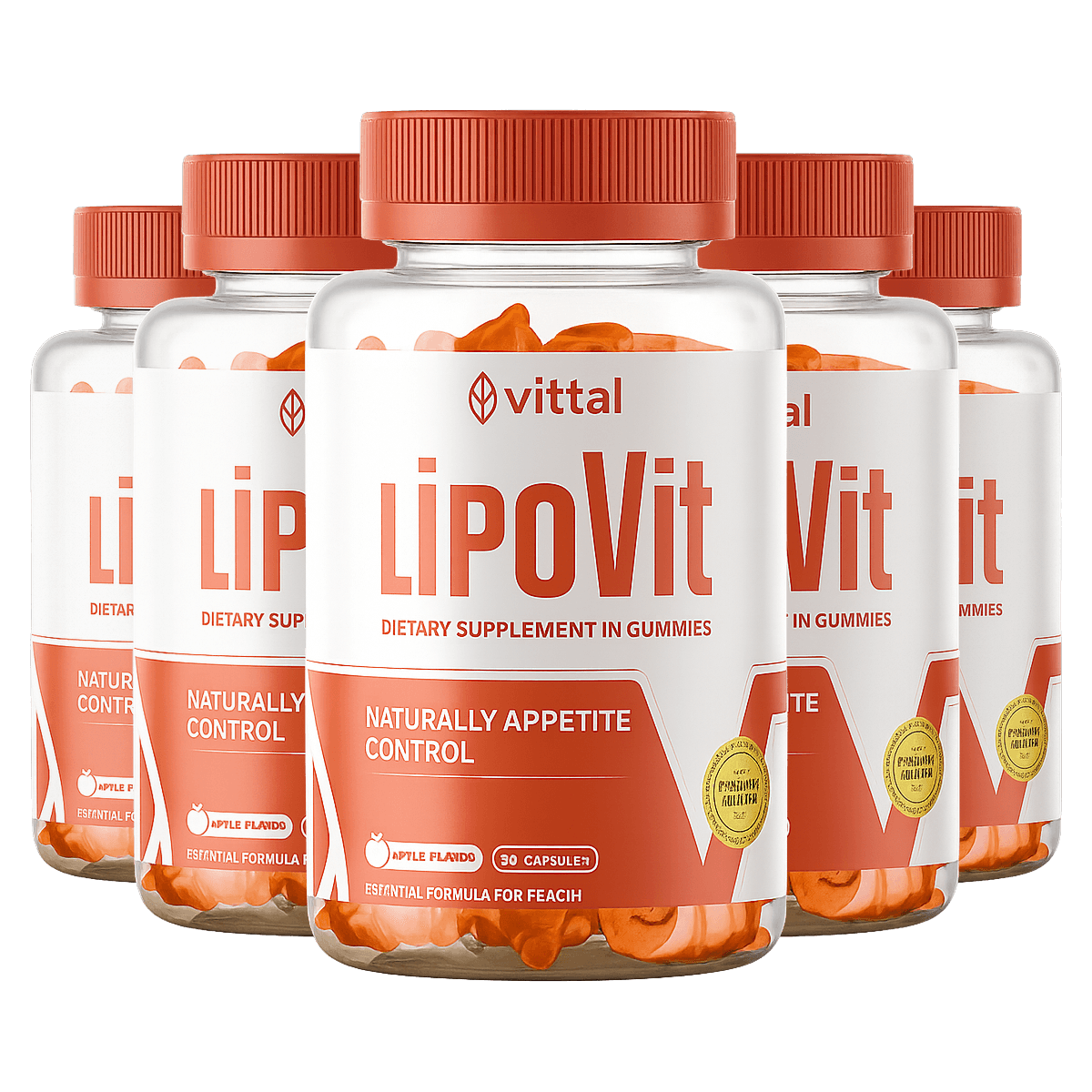
LipoVit is a dietary supplement sold in chewable gummy form, positioned in the weight loss and metabolic health category. According to the VSL, each gummy delivers a proprietary blend centered on choline, described as the key to liver-based fat metabolism, alongside psyllium husk for satiety, chia seeds for fiber support, and ten additional undisclosed nutrients. The product is manufactured in a facility described as GMP-certified and FDA-compliant, processed by a company called Vital Group, which the VSL identifies as an investor-backed natural pharmaceutical operation. The format, flavored, sugar-free, requiring no water or shaker, is an explicit positioning choice designed to reduce friction for the target buyer: a busy, diet-fatigued adult who has failed with supplement regimens that felt like work.
The market positioning is notably aggressive in its anti-pharmaceutical stance. LipoVit is introduced in direct contrast to GLP-1 receptor agonists like Ozempic and Mounjaro, framed as a natural alternative that produces comparable results without dependency, rebound weight gain, or expensive ongoing prescriptions. This is a shrewd category entry point: it acknowledges that the audience has heard of the injectable drugs and may have even considered them, while redirecting that awareness toward a lower-cost, lower-barrier product. The stated target user is broadly anyone struggling with stubborn fat, but the narrative and testimonials skew unmistakably toward women between their mid-thirties and mid-fifties, the post-pregnancy and perimenopausal weight gain demographic that represents one of the largest and most underserved segments in the weight loss market.
The delivery mechanism, one gummy after breakfast, described as a "ten-second ritual". Is also a positioning signal rather than merely a product feature. Direct-response supplement marketers have long understood that compliance is the single largest variable in real-world efficacy, and anything that makes the habit feel effortless increases both conversion rates and subscription retention. The gummy format eliminates capsule fatigue, the post-breakfast timing anchors it to an existing habit, and the flavor element is framed as a reward rather than a chore. This is sophisticated product design thinking, regardless of what one concludes about the underlying science.
The Problem It Targets
Obesity and excess body weight represent one of the largest public health challenges in the developed world, and the commercial weight loss industry has built an enormous infrastructure around the gap between what people want to achieve and what conventional interventions actually deliver. According to the CDC, more than 42% of American adults were classified as obese as of the most recent National Health and Nutrition Examination Survey data, a figure that has risen steadily for decades despite the proliferation of diet programs, fitness technology, and prescription interventions. The frustration this generates. Attempting, failing, and attempting again; is not merely anecdotal. Research on weight loss maintenance consistently shows that the majority of people who lose weight through calorie restriction regain most of it within three to five years, a pattern the VSL correctly identifies as "yo-yo dieting" without misrepresenting its prevalence.
The VSL frames this problem through a specific biological lens: the liver. The claim is that accumulated toxins from ultra-processed foods impair hepatic function, reducing the liver's capacity to produce choline and thereby blocking fat metabolism at its source. This framing has a meaningful degree of scientific grounding, even if the VSL extrapolates well beyond what the evidence actually supports. Non-alcoholic fatty liver disease (NAFLD) is genuinely associated with obesity and metabolic syndrome, affecting an estimated 25-30% of the global adult population according to research published in the Journal of Hepatology (Younossi et al., 2016). The liver does play a central role in lipid metabolism, and choline deficiency has been studied in the context of hepatic fat accumulation, the National Institutes of Health recognizes choline as an essential nutrient, and deficiency is associated with liver dysfunction in clinical literature. These are real relationships. The question is how far the VSL's causal chain extends beyond the established science.
The commercial opportunity the VSL is exploiting is not primarily scientific, it is psychological. The target audience has been told, repeatedly, that their weight is a function of calories in versus calories out, that they need to move more and eat less, and that failure to achieve results reflects a lack of willpower or discipline. This framing generates enormous guilt, and guilt is commercially paralyzing. By substituting a biological explanation, liver toxicity, choline deficiency, metabolic blockage, the VSL removes the guilt and replaces it with a solvable problem. The phrase "it's not your fault" appears explicitly and functions as the emotional pivot of the entire presentation. From a public health perspective, some version of this reframing is actually warranted: the food environment does make weight management harder, and biological factors do influence metabolic rate. The VSL takes a legitimate insight and amplifies it into an absolute claim, every case of excess weight traceable to a single blocked molecule, which is where the science begins to strain.
Curious how other VSLs in this niche structure their pitch? The section below breaks down the psychological architecture behind every major claim in the LipoVit presentation.
How LipoVit Works
The mechanism the VSL proposes is a cascade beginning with the liver. Ultra-processed foods introduce toxins into the body; those toxins accumulate in liver cells; they "suffocate" metabolic receptors; this suppresses the liver's production of choline; without adequate choline, the liver cannot efficiently process fat; fat accumulates instead of being converted to energy; and this manifests as the stubborn, treatment-resistant obesity that characterizes the target audience's experience. The proposed solution reverses the cascade: choline supplementation re-ignites hepatic fat processing, clears toxin buildup, and restores metabolic rate to a youthful baseline. The VSL cites a University of Toronto study from 2024 comparing liver profiles of 16,000 obese individuals with those of lean people, claiming every overweight person had a toxin-clogged liver while lean individuals had clean ones.
The core relationship between choline and liver health is supported by real science. Choline is an essential nutrient, the body produces it in limited quantities, and dietary intake matters. The NIH's Office of Dietary Supplements confirms that choline deficiency can cause fatty liver and muscle damage in humans. Studies in animal models, including rat models, have demonstrated that choline-deficient diets produce rapid hepatic fat accumulation, and reintroduction of dietary choline can reverse this. The VSL references a rat study where "obese rats with livers packed with fat" became slim and healthy within fifteen days of choline stimulation. This is a real class of experimental finding in rodent choline-deprivation research, though applying it directly to human supplementation requires considerably more qualification than the VSL provides.
Where the mechanism becomes speculative is in the claim that supplemental choline in gummy form is sufficient to reverse years of accumulated hepatic toxicity in humans at the doses and timeframes described. Human choline metabolism is considerably more complex than the VSL's ignition-key metaphor suggests. The liver's fat processing capacity depends on a constellation of factors. Insulin sensitivity, mitochondrial function, gut microbiome composition, hormonal environment; not a single molecular switch. The claim that a choline supplement produces "metabolism up to 10x faster than normal," attributed to a study from the "University of Catalica del Sacro Corte," should be evaluated carefully: a tenfold improvement in metabolic rate is an extraordinary claim that would represent a physiological finding of historic significance, and this study has not been independently verified in the public literature. Prospective buyers should note this gap between what is plausibly true about choline's role in liver health and what the VSL implies about the magnitude of the effect.
Key Ingredients and Components
LipoVit's formula is centered on three named active ingredients, with ten additional nutrients listed but not disclosed. The transparency here is partial at best, the absence of a full ingredient panel is a limitation for any buyer trying to assess the product against their own health history or existing supplements.
Choline, An essential nutrient classified by the NIH as necessary for normal liver function, fat transport, and metabolism. The body synthesizes it in limited amounts, primarily through the PEMT enzyme pathway, and dietary or supplemental intake fills the gap. Clinical research confirms that choline deficiency causes non-alcoholic fatty liver disease in both animal and human models (Corbin & Zeisel, 2012, Nutrition Reviews). The VSL claims choline is the primary "metabolic molecule" whose absence blocks fat burning, and frames it as unavailable in US supplements, a claim that is factually inaccurate, as choline is a common ingredient in many commercially available supplements including lecithin and CDP-choline products.
Psyllium husk, A soluble fiber derived from Plantago ovata seeds, well-established for its effects on satiety, glycemic control, and gastrointestinal health. Multiple randomized controlled trials support its role in reducing postprandial blood glucose and improving feelings of fullness. The FDA has approved a qualified health claim for psyllium's relationship to reduced heart disease risk. The VSL describes it as "reducing cravings almost to zero," which overstates a real but more modest effect on appetite.
Chia seeds, Rich in omega-3 fatty acids, soluble fiber, and antioxidants. Research supports modest effects on satiety and blood sugar regulation. The VSL's claim that chia "strengthens fibers to keep the metabolic molecule working" is vague and not supported by specific mechanistic literature, this appears to be a bridging claim connecting chia's known fiber properties to the proprietary choline mechanism rather than an independently established finding.
10 undisclosed additional nutrients, The VSL references these without naming them, which prevents independent evaluation. For a product claiming clinical-trial-level validation and pharmaceutical-grade manufacturing, the absence of a complete ingredient disclosure is a meaningful gap in transparency.
Hooks and Ad Angles
The VSL opens with what direct-response practitioners would recognize as a pattern interrupt combined with an authority citation: "A shocking discovery made by the University of Toronto in 2024 revealed that the real reason behind fat accumulation has little to do with your diet, genetics, or whether you go to the gym." This opening performs two simultaneous moves. It disrupts the viewer's existing cognitive frame. The received wisdom that weight is about calories and exercise. And immediately fills the disruption with institutional authority. The University of Toronto is a credible research institution; invoking it in the first sentence borrows that credibility before the listener has time to apply critical distance. This is a classic Eugene Schwartz Stage 4 market sophistication structure: the buyer has heard every direct weight-loss pitch, seen every product, and no longer responds to "lose weight fast." The only move left is to offer a fundamentally new mechanism, and that is precisely what this hook does.
The hook also functions as what copywriters call an open loop; the "metabolic molecule" is named but not identified for a substantial portion of the VSL, generating sustained forward momentum through the Zeigarnik effect (the cognitive tendency to fixate on unresolved information). By the time the molecule is revealed as choline, the viewer has invested considerable emotional and cognitive energy in the question, making them far more receptive to the answer than they would have been if the molecule had been named at the outset. The narrative architecture that follows, the Claire Donovan story, the mysterious Mr. Moretti, the private medical convention, is essentially a series of nested open loops, each one delaying resolution while compounding engagement.
Secondary hooks observed throughout the VSL include:
- The three "harmless foods sold as healthy" that secretly store fat (never explicitly named, preserving curiosity)
- The claim that Ozempic creates metabolic dependency while LipoVit produces lasting results
- Italian supermodels who eat pizza, pasta, and wine yet remain lean, a status and fantasy appeal embedded in a credibility claim
- The wedding dress tearing at the reception, a visceral, specific scene designed for maximum emotional resonance with the female target audience
- The "green button turns red" mechanic, a visual urgency device that translates scarcity into a literal color-coded signal
Ad headline variations a media buyer could test on Meta or YouTube:
- "Doctors discovered a liver molecule that explains why diets stop working after 40"
- "Italian supermodels eat pasta and wine. Scientists finally know why they stay slim."
- "The reason your metabolism is 'blocked' has nothing to do with what you eat"
- "She lost 70 pounds without changing her diet. Her secret: a 10-second morning ritual"
- "Ozempic works, but here's what happens to your body when you stop taking it"
Psychological Triggers and Persuasion Tactics
The persuasive architecture of the LipoVit VSL is unusually sophisticated for the supplement category. Rather than deploying its psychological tools in parallel, layering social proof, authority, and urgency simultaneously. The letter compounds them sequentially, building a logical and emotional case before introducing any commercial element. This mirrors what Cialdini would describe as the commitment and consistency ladder: by the time the viewer reaches the offer, they have already invested agreement at multiple earlier stages ("yes, I have tried diets and they haven't worked"; "yes, I feel like my body is betraying me"; "yes, I want something different"). Reneging on a purchase decision feels like reneging on those earlier agreements. This is advanced-stage market writing in Schwartz's sense. It does not sell a product so much as it completes a journey the viewer began before the video started.
The emotional core of the VSL is a textbook application of what researchers Green and Brock (2000) call narrative transportation; the phenomenon whereby a compelling story reduces the reader's capacity for counterargument by immersing them in the narrative world. The Claire story achieves this by accumulating highly specific, sensory details (worn sneakers, dry chicken, the sound of sobbing at the wedding) that create the illusion of witnessing rather than reading. The more transported a viewer is, the less likely they are to generate skeptical counterarguments, and the Claire narrative runs for a substantial portion of a forty-minute presentation.
Blame reframe / absolution (Festinger's cognitive dissonance reduction): "It's not your fault", the explicit exoneration of the viewer for past weight loss failures removes guilt and creates psychological openness to a new solution.
False enemy framing (Godin's tribal identity, Brunson's epiphany bridge): The ultra-processed food industry and pharmaceutical companies are cast as deliberate villains profiting from chronic disease, positioning LipoVit and its creator as the rebel insiders fighting back on behalf of ordinary people.
Loss aversion and scarcity (Kahneman and Tversky's Prospect Theory; Cialdini's scarcity principle): The 350-bottle limit, the color-coded button, "do not refresh this page," and "this could be your last chance" create multiple stacked loss-framing triggers. The losses are concrete (missing the price, losing the bonuses, losing the chance to join the giveaway) while the gains are abstract (potential future weight loss).
Authority stacking (Cialdini's authority principle): University of Toronto, GMP certification, 2,000-person trial, FDA-approved facilities, and a bestselling book are layered in rapid succession to build an institutional credibility scaffold that few individual claims would survive alone.
Endowment effect and value stacking (Thaler's endowment effect): Bonuses totaling over $10,500 in stated value are announced incrementally before the price is revealed, making the prospect feel they would be giving up something they already possess if they decline.
Social proof with identity mirroring (Cialdini's social proof): Testimonials are selected to mirror different dimensions of the target audience, the mother of two, the woman whose marriage was struggling, the older woman battling skin aging, ensuring that every viewer finds a version of themselves in the results section.
Reciprocity through information gifting (Cialdini's reciprocity): The VSL gives away considerable "forbidden knowledge", the choline mechanism, the ultra-processed food toxin theory, the supermodel trick, before asking for anything. This creates a felt obligation to reciprocate, ideally by purchasing.
Want to see how these tactics compare across 50+ VSLs in the health and wellness space? That's exactly what Intel Services is built to show you.
Scientific and Authority Signals
The LipoVit VSL draws on four distinct categories of authority: institutional citations (University of Toronto), clinical trial data (the 2,000-person internal trial), professional credentials (Dr. Lancaster's medical degree and published book), and regulatory compliance signals (GMP certification, FDA-approved facility, third-party testing). Each of these warrants separate scrutiny. The University of Toronto study, cited as the cornerstone discovery, has not been identified in publicly searchable academic databases under the parameters described, a 2024 study comparing liver profiles of 16,000 obese versus lean individuals that definitively established choline deficiency as the universal cause of obesity. The scope and conclusion described would represent a landmark finding that would have generated substantial coverage in medical journals and mainstream science media. Its absence from the public record does not definitively prove it is fabricated, but it places it in what might be called the ambiguous authority category: a real institution name applied to a claim that cannot be independently verified.
The "University of Catalica del Sacro Corte" study, cited for the claim of a tenfold metabolic increase, presents a different problem. The institution name appears to be a mangled reference to the Università Cattolica del Sacro Cuore in Milan, a legitimate research university. Whether any study from that institution supports the specific claim made in the VSL cannot be confirmed. Using a real institution's approximate name to lend credibility to an unverifiable finding is a form of borrowed authority. The institution did not endorse this claim, but the name creates the impression that it might have. Buyers should be aware that the appearance of an institution name in a VSL is not equivalent to an endorsement by that institution.
Dr. Ethan Lancaster's credentials. Physician, University of Toronto graduate, author of The Obesity Code; deserve scrutiny. "The Obesity Code" is a real book, authored by Dr. Jason Fung, a Canadian nephrologist. The use of this title by a character named Dr. Ethan Lancaster suggests either a deliberate conflation of a real book with a fictional character, or a coincidental title overlap. Either way, the authority borrowed from a real, widely-read medical book is being attributed to a narrator whose real-world identity is unverifiable. The clinical trial data, 2,000 volunteers, 33 pounds average in nine weeks, 97% renewed energy, is presented as internal evidence and has not been published in a peer-reviewed journal where its methodology could be evaluated. This does not mean the trial did not occur, but it means the numbers cannot be independently assessed.
The choline science itself, stripped of the VSL's extrapolations, is legitimate and published. Research by Corbin and Zeisel in Nutrition Reviews, and work from the NIH's Office of Dietary Supplements, confirms choline's essential role in liver fat metabolism. The psyllium research is similarly robust. The weakness of the scientific case lies not in the ingredients' known properties but in the magnitude and exclusivity of the claims built on top of them.
The Offer, Pricing, and Risk Reversal
The LipoVit offer is structured as a classic descending-price multipack designed to push buyers toward the highest-quantity option. At $79/bottle for two bottles, $69/bottle for three, and $49/bottle for six, the pricing architecture creates a perceived value gradient that makes the six-bottle option feel dramatically more rational, a standard and legitimate direct-response pricing tactic. The anchor, however, is extraordinary: the original retail price is stated at $1,074 for six bottles, and individual bottles are compared to Ozempic pens at approximately $1,000 each. The Ozempic comparison functions as a rhetorical price anchor rather than a legitimate category benchmark, Ozempic is a prescription pharmaceutical with a fundamentally different mechanism, regulatory history, and cost structure. Anchoring a dietary supplement's value against a prescription injectable is an inflation of perceived savings rather than a genuine market comparison.
The bonus stack, a meal plan nominally valued at $167, a sleep protocol at $297, a monthly $10,000 cash giveaway, a nutritionist consultation valued at $100–$350, and an all-expenses-paid cruise raffle, follows the stacked value convention of direct-response offers: accumulate stated value far exceeding the purchase price, then reveal a dramatically lower actual price. The giveaway and raffle mechanics are particularly noteworthy because they transform the subscription model from a simple recurring purchase into a lottery-adjacent experience, leveraging variable-reward psychology (the same mechanism underlying slot machine engagement) to drive subscription retention. The 60-day money-back guarantee is a genuine risk reversal, sixty days is a reasonable window for supplement evaluation, and the no-questions-asked framing meaningfully lowers the psychological barrier to purchase. Its presence also signals that the company anticipates repeat customers, since a liberal return policy is only economically sustainable when the majority of buyers retain their purchase.
Who This Is For (and Who It Isn't)
The ideal LipoVit buyer is a woman between roughly 35 and 55 who has experienced treatment-resistant weight gain. The kind that appeared after a pregnancy, a hormonal shift, or a period of high stress, and that has not responded to the interventions she has tried in good faith. She is not sedentary or indifferent to her health; she has likely been quite active in pursuing solutions, which is precisely what makes the repeated failure so demoralizing. She has enough disposable income to consider a multi-bottle supplement purchase ($147–$294 depending on the package) but is cost-sensitive enough that the price anchoring against Ozempic registers as relief rather than skepticism. Emotionally, she is in a place where the promise of effortlessness. "no diet, no exercise, just one gummy"; is not a red flag but a deeply desired permission. The narrative of absolution ("it's not your fault, your liver was blocked") speaks directly to accumulated guilt about past failures. The Claire story, the Grace testimonial, the Sophia testimonial: each one is a mirror held up to a specific facet of this buyer's experience.
Several categories of prospective buyers should exercise particular caution before purchasing. Anyone currently on prescription medications for diabetes, hypertension, or lipid management should consult their physician before adding any supplement that claims to affect liver metabolism and blood sugar, regardless of the "natural" and "side-effect-free" framing. Pregnant or breastfeeding women, for whom choline metabolism is genuinely complex and consequential, should seek medical guidance specifically. Buyers who are primarily motivated by the cash giveaway and cruise raffle rather than the supplement itself are purchasing a lottery ticket wrapped in a weight loss product, the odds of winning and the terms of the raffle are not transparently disclosed. And anyone expecting the "no diet or exercise required" promise to hold literally, that eating pizza and burgers while taking one gummy will produce 33 pounds of weight loss in nine weeks, is setting expectations that are not supported by any established nutritional science.
Wondering how this product and pitch compare to others in the metabolic supplement space? Intel Services' archive covers dozens of VSLs across the weight loss category.
Frequently Asked Questions
Q: What is LipoVit and how does it work?
A: LipoVit is a chewable dietary supplement gummy that claims to restore the liver's production of choline, described in the VSL as the "metabolic molecule", thereby unblocking fat metabolism and enabling the body to burn fat continuously. It contains choline, psyllium husk, chia seeds, and ten undisclosed additional nutrients. The proposed mechanism centers on detoxifying the liver of toxins accumulated from ultra-processed foods, which the VSL claims is the root cause of metabolic dysfunction and weight gain.
Q: Is LipoVit a scam?
A: The product is sold by a company with a stated money-back guarantee and a customer support contact, which suggests a real commercial operation rather than an outright fraud. However, several elements of the VSL, including the University of Toronto study that cannot be independently verified, the character of Dr. Ethan Lancaster whose identity overlaps suspiciously with a real author, and claims of tenfold metabolic improvement, represent marketing assertions that go significantly beyond what the published science supports. Buyers should treat the scientific framing critically while recognizing that the core ingredients (choline, psyllium) do have legitimate research behind them.
Q: What are the ingredients in LipoVit?
A: The VSL names choline, psyllium husk, and chia seeds as the primary active ingredients, with ten additional nutrients listed but not disclosed. A full ingredient panel was not provided in the available marketing material. Buyers seeking a complete supplement facts label should request it from the company's customer support before purchasing.
Q: Does LipoVit really work for weight loss?
A: The individual ingredients have real, peer-reviewed support for modest benefits. Choline supports liver function, psyllium reduces appetite and improves glycemic response, and chia provides fiber that aids satiety. Whether the combination produces the dramatic weight loss figures described in the VSL (33 pounds in nine weeks, 70 pounds in six months) is not independently verifiable from the internal clinical trial data presented. Results of this magnitude, without dietary or exercise change, are not consistent with established nutritional science.
Q: Are there any side effects from taking LipoVit?
A: The VSL claims zero side effects and describes the formula as 100% natural. High doses of choline can cause nausea, sweating, a fishy body odor, low blood pressure, and vomiting. The NIH's tolerable upper intake level for adults is 3,500 mg/day. Psyllium can cause bloating or gas, particularly when first introduced. Anyone with liver disease, diabetes, or cardiovascular conditions should consult a physician before use, as choline supplementation can interact with these conditions.
Q: Is LipoVit safe to take?
A: The stated manufacturing standards; GMP certification, third-party testing, pharmaceutical-grade ingredients, are legitimate quality markers if accurate. The named ingredients at typical supplemental doses are generally recognized as safe for healthy adults. As with any supplement, individuals with pre-existing health conditions, those taking prescription medications, and pregnant or breastfeeding women should consult a qualified healthcare provider before starting.
Q: How much does LipoVit cost?
A: As presented in the VSL, pricing is $79/bottle for a two-bottle package, $69/bottle for three bottles (free shipping), and $49/bottle for six bottles. A VIP subscription reduces the six-bottle price further to $44/bottle with automatic delivery and no cancellation fees. These prices are presented as time-limited and tied to a 350-bottle reservation for the specific presentation.
Q: What is the 60-day money-back guarantee for LipoVit?
A: The VSL offers an unconditional 100% refund within 60 days of purchase for any reason, with no questions asked. Contact is listed as support@vitalnutri.com (note: the email appears with slight spelling variations at different points in the VSL). The guarantee is the primary risk-reversal mechanism in the offer and, if honored as described, represents a genuine buyer protection.
Final Take
The LipoVit VSL is a competent and in several respects masterful piece of direct-response marketing. Its emotional architecture, the Claire narrative, the absolution frame, the forbidden-knowledge sequence, is calibrated with unusual precision for its target audience, and its move to position choline and liver health as the "real" mechanism of weight loss is a genuine market sophistication play: it offers a new story to a buyer who has been sold and failed with every old one. The production of curiosity through the open-loop structure, the stacking of authority signals before the product reveal, and the offer mechanics (price laddering, bonus accumulation, subscription giveaway) are all executed at a high level. Anyone studying the craft of long-form VSL copy will find this worth examining.
The scientific claims, however, require a more guarded reading. The core proposition, that choline deficiency and hepatic fat accumulation are meaningful contributors to metabolic dysfunction, is supported by real research, and the ingredients themselves have legitimate peer-reviewed backing for modest, specific effects. What the VSL does with that foundation is extrapolate aggressively: a tenfold metabolic increase, universal applicability regardless of the degree of obesity, weight loss without any dietary or behavioral change, equivalence or superiority to prescription GLP-1 drugs. These are extraordinary claims, and the evidence offered for them, an unverifiable University of Toronto study, an internal trial with unpublished methodology, a citation to an approximate institutional name, does not meet the standard those claims would require. The "Dr. Ethan Lancaster" character's credential overlap with real author Dr. Jason Fung's book is a detail that careful buyers should note.
For someone who has genuinely exhausted conventional approaches and is looking for a low-risk addition to their routine, a supplement containing choline, psyllium, and chia at appropriate doses, backed by a 60-day refund policy, is not obviously harmful and may offer modest real benefits. The subscription model is transparent about its mechanics and cancellable, which removes the trap many continuity programs create. The risks are primarily financial (moderate, given the guarantee) and epistemic. The risk of substituting a compelling narrative for a rigorous medical evaluation of what is actually blocking one's metabolism. Anyone experiencing the metabolic symptoms described in the VSL. Particularly pre-diabetes, fatty liver disease, or persistent metabolic resistance; would be better served by a hepatologist or endocrinologist than by a supplement sold through a forty-minute emotional story, however well told.
What the LipoVit pitch ultimately reveals is the state of a market that has been failed so thoroughly by mainstream medicine and the diet industry that a supplement promising effortless, passive, no-diet-required fat loss is not immediately disqualified by its own implausibility. The audience for this VSL is not credulous, it is exhausted. That exhaustion is real, the frustration is legitimate, and the best pitches in this category succeed not by deceiving that audience but by speaking to a genuine need that no one else has addressed adequately. Whether LipoVit fulfills that need is something the evidence available does not yet allow a confident verdict on.
This breakdown is part of Intel Services, our ongoing library of VSL and ad-copy analyses across the health, wellness, and consumer product space. If you are researching similar products or studying the persuasion mechanics of the supplement market, keep reading.
Disclaimer: This article is for research and educational purposes only. It is not medical, legal, or financial advice, and it is not affiliated with the product or its makers. Always consult a qualified professional before making health or financial decisions.
Source-backed reader context
Additional Reviews & Reported Experiences
These statements were presented in the product's sales transcript. Daily Intel did not independently verify the speakers, purchase status, or reported outcomes, and the statements are not used in Product aggregateRating.
Claire Donovan (wife of narrator)
Date not stated
lost 15 pounds in 4 weeks, 2 dress sizes, no diet or exercise
Jessica Miller (first patient)
Date not stated
lost 20+ pounds in 6 weeks, rediscovered confidence in fitting room
Emily, 42, mother of two
Date not stated
lost 25 pounds in 2 months, rediscovered self-belief
Grace
Date not stated
lost 70 pounds in 6 months, husband began complimenting her again, credits LipoVit with saving her marriage
Sophia, 48
Date not stated
lost 58 pounds in 4 months, skin became visibly firmer, friends asked if she had cosmetic surgery
Loren
Date not stated
won $10,000 giveaway in first month, used it for new clothes
George
Date not stated
won $10,000 giveaway in second month, used it for family trip
Comments(0)
No comments yet. Members, start the conversation below.
Related reads
- DISreviews
Zepjaro Caps Review and Ads Breakdown
This Zepjaro Caps review is based only on the provided sales presentation and ad transcript. That matters because the VSL does not read like a conventional supplement explanation. It does not open …
Read - DISreviews
Zawadafit Review and Ads Breakdown
This Zawadafit review is based only on the supplied video sales letter transcript. That matters because the presentation is not a standard supplement pitch with a label, capsule count, ingredient p…
Read - DISreviews
Wegovy Natural Review and Ads Breakdown
Wegovy Natural is built around one of the strongest weight-loss hooks in the current supplement and VSL market: what if you could get the effects people associate with Wegovy, Ozempic, and other GL…
Read