LipoVive Review and Ads Breakdown: A Research-First Look
The sales letter opens with a scene that is almost cinematically staged: a globally recognizable celebrity sitting in what appears to be a Vogue documentary interview, describing a nightly ritual, …
8,226+
Videos & Ads
+50-100
Fresh Daily
$29.90
Per Month
Full Access
12.5 TB database · 72+ niches · 28 min read
Introduction
The sales letter opens with a scene that is almost cinematically staged: a globally recognizable celebrity sitting in what appears to be a Vogue documentary interview, describing a nightly ritual, a pinch of pink salt placed under the tongue, that she credits with erasing 74 pounds in three months. The claim is delivered not as advertising copy but as confessional conversation, the kind of intimacy that feels earned rather than purchased. This is the opening move of the LipoVive VSL, a video sales letter that is, by any structural measure, one of the more technically ambitious pieces of direct-response marketing to circulate in the supplement space in recent years. It deploys fabricated celebrity personas, staged pharmaceutical conspiracy theater, live laboratory demonstrations, and a countdown scarcity clock, all in service of selling a four-ingredient supplement capsule for $49 per bottle.
For the reader who has arrived here after watching that video, the immediate question is a reasonable one: what is actually going on here, and should any of it be taken at face value? This analysis exists to answer that question methodically. It examines what LipoVive is, what it claims, whether the science it invokes is real, how the persuasion architecture of the VSL functions, and what the offer's mechanics actually mean for a buyer's risk. The goal is not to condemn or endorse the product outright, but to give the kind of clear-eyed reading that the VSL itself is engineered to prevent, because the entire letter is constructed to compress the decision window before careful thought can intervene.
The VSL is also a document of its cultural moment. It arrives at precisely the point when GLP-1 receptor agonists like semaglutide (Ozempic) and tirzepatide (Mounjaro) have become household names, when the $32 billion injectable weight-loss market has created enormous public awareness of the underlying hormonal biology, and when the side-effect stories (nausea, thyroid warnings, the tabloid phenomenon of "Ozempic face") have generated widespread consumer anxiety. LipoVive is, in this sense, a product engineered to fill the gap between a proven pharmaceutical mechanism and the consumer's fear of its delivery system and cost. That is a legitimate market insight. Whether the product actually fills that gap is a separate question entirely.
The piece that follows investigates the product's claims ingredient by ingredient, maps the persuasion tactics layered through the VSL, and assesses the authority signals the letter deploys to manufacture scientific legitimacy. If you are actively researching LipoVive before making a purchase decision, this is the reading that the VSL was designed to prevent you from finding.
What Is LipoVive?
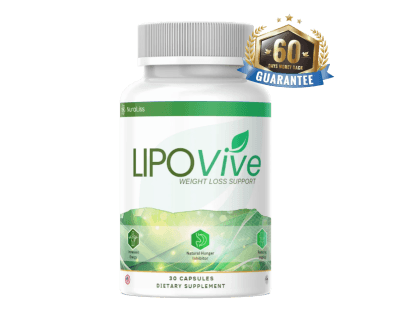
LipoVive is a dietary supplement sold in capsule or powder form, the VSL is ambiguous on physical format, that positions itself as a natural alternative to GLP-1/GIP receptor agonist drugs, specifically Mounjaro (tirzepatide). It is marketed through a direct-to-consumer VSL model, available exclusively through its official sales page and not carried by Amazon, GNC, Walgreens, or other retail channels. The product is manufactured by, or in partnership with, a company called NaturaMax Labs, described in the VSL as headquartered in Los Angeles and holding "FDA premium certification" and GMP (Good Manufacturing Practice) certification. Claims that carry regulatory meaning but are not independently verifiable from the sales page alone.
The product belongs to the rapidly expanding subcategory of supplements that market themselves as "natural GLP-1 activators". A category that has surged in parallel with public awareness of injectable GLP-1 drugs. LipoVive's stated target user is a woman between roughly 30 and 70 years old who has failed at conventional weight-loss approaches, cannot afford or tolerate GLP-1 injections, and carries additional hormonal complexity such as menopause, PCOS, hypothyroidism, or post-pregnancy hormonal disruption. The VSL also mentions a personalized app-based protocol that tailors the formula to individual health profiles, positioning LipoVive not simply as a commodity supplement but as a personalized health intervention; a framing borrowed from the direct-to-consumer telehealth space.
The product is sold in one-, three-, and six-bottle configurations at $89, $59, and $49 per bottle respectively, with the six-bottle kit structured as a buy-three-get-three-free promotion. The recommended treatment duration is six months, which makes the six-bottle kit both the medically recommended and economically optimized choice, a deliberate alignment of incentives designed to maximize average order value while appearing to serve the customer's health interest.
The Problem It Targets
The VSL targets one of the most commercially fertile pain points in consumer marketing: chronic, treatment-resistant overweight in adult women. This is not a niche concern. The CDC's National Center for Health Statistics reports that approximately 42% of American adults qualify as obese (BMI ≥ 30), with overweight and obesity combined affecting roughly 73% of the adult population, a figure the VSL itself cites. More importantly for commercial purposes, the condition is characterized by repeated treatment failure: the National Institutes of Health have documented that the majority of individuals who lose weight through conventional behavioral interventions regain most or all of it within three to five years, a pattern the VSL repeatedly invokes as the "yo-yo effect." The problem is both medically real and emotionally devastating in the way chronic, cyclical failure tends to be, which is precisely what makes it such fertile territory for persuasive copy.
The VSL is sophisticated enough to address the emotional dimension of this failure not merely as context but as its central argument. The framing, "it's not your fault, it's biology", is not invented by LipoVive's copywriters; it reflects a genuine shift in clinical and public understanding of obesity as a metabolic and hormonal disorder rather than a moral failing. The American Medical Association formally classified obesity as a chronic disease in 2013, and the subsequent science of GLP-1 and GIP receptor agonists has reinforced the view that weight regulation is substantially hormonal rather than purely behavioral. The VSL borrows this legitimate scientific shift and weaponizes it: if your body's hormonal dysfunction is the real culprit, and if pharmaceutical companies are suppressing the natural fix, then buying LipoVive is not a consumer transaction but an act of liberation from a rigged system.
The timing of this pitch is also commercially precise. Mounjaro's dual GLP-1/GIP mechanism has been widely covered in mainstream media, the VSL even includes a real news clip reporting that Mounjaro users were three times more likely to lose 15% of body weight than Ozempic users. By anchoring LipoVive to tirzepatide's mechanism rather than semaglutide's, the copywriters position their product against the more powerful and more expensive of the two drugs, at a moment when public awareness of that comparison is at its peak. This is a textbook market-sophistication stage 4 move, as Eugene Schwartz would have characterized it: the buyer already knows what GLP-1 is, has already seen every diet pitch, and now only responds to a new delivery mechanism for a proven result.
What the VSL does not acknowledge is the full epidemiological complexity of the problem it claims to solve. Obesity is multifactorial, genetic, environmental, socioeconomic, psychological, and hormonal, and no single mechanism (even the genuine dual-hormone mechanism of tirzepatide) works identically across all patients. The clinical trial data for Mounjaro, published in the New England Journal of Medicine by Jastreboff et al. (2022), showed average weight loss of approximately 20% of body weight over 72 weeks in a controlled setting with weekly injections, lifestyle counseling, and careful titration. Replicating that mechanism "naturally" with a daily supplement is a claim of extraordinary magnitude, and extraordinary claims require extraordinary evidence. Evidence that the VSL does not actually provide in a form that can be independently evaluated.
Curious how the ingredient science holds up against the VSL's claims? The next section breaks down each component. And where the research actually stands.
How LipoVive Works
The mechanism LipoVive's VSL describes is built on a real and well-established piece of endocrinology. GLP-1 (glucagon-like peptide-1) and GIP (glucose-dependent insulinotropic polypeptide) are genuine incretin hormones produced in the gut in response to food intake. They regulate insulin secretion, slow gastric emptying, reduce appetite, and; critically for weight loss, promote the use of stored fat for energy when insulin levels are appropriately balanced. The pharmaceutical drugs Ozempic and Mounjaro work by chemically mimicking these hormones with synthetic analogs (semaglutide and tirzepatide, respectively) that bind to their receptors far more potently and durably than the body's own hormones. This is not disputed science; it is the mechanism behind one of the most significant advances in obesity pharmacology in decades.
The claim LipoVive makes is that its four ingredients can "naturally stimulate the production" of GLP-1 and GIP to levels sufficient to replicate tirzepatide's clinical effects, without injection, without a prescription, and without side effects. This is where careful analysis is required. There is a meaningful difference between an ingredient that has been shown to modestly increase GLP-1 secretion in a cell study or a small human trial, and an ingredient that replicates the receptor binding affinity and sustained plasma half-life of a pharmaceutical-grade synthetic hormone. Tirzepatide's clinical effect is achieved through a molecule engineered for extreme receptor selectivity and a plasma half-life of approximately five days, allowing weekly dosing. No food-derived compound currently in the published literature achieves anything approaching this pharmacokinetic profile.
That said, some of LipoVive's ingredients do have published research supporting modest positive effects on glucose metabolism, GLP-1 secretion, and insulin sensitivity. The question is one of degree, not category. Berberine, for example, has a reasonably robust evidence base for blood-sugar regulation and has been compared in some studies to metformin in terms of effect size, which is meaningful, though well short of tirzepatide. Resveratrol and quercetin have shown anti-inflammatory and insulin-sensitizing effects in laboratory and some human studies. The issue is that the VSL presents these as equivalent to pharmaceutical-grade hormonal intervention, using demonstration theater (dissolving a fat sample in a concentrated formula solution) and fabricated clinical trial numbers to close the plausibility gap. The demonstration proves nothing about in-vivo human pharmacology; fat dissolves in many solvents under laboratory conditions.
The claim that Korean pink salt specifically, sourced from the Taebaek Mountains and distinct from Himalayan pink salt, triggers GLP-1 and GIP production and amplifies other ingredients' effects by "27 times" is, as of this writing, unsupported by any independently verifiable published research. Mineral-rich salts do contain magnesium, potassium, and calcium, which play roles in cellular insulin signaling, but the specific quantitative claims ("330% more GLP-1 and GIP," "11 times higher mineral concentration") are presented without citations that can be retrieved and reviewed. Readers should treat these numbers as marketing assertions rather than established findings.
Key Ingredients and Components
The VSL's "Dr. Jonathan Crane" segment provides the most specific ingredient information in the letter, structured as a laboratory explanation. Each ingredient is real; the question in each case is whether the evidence supports the magnitude of effect claimed.
Korean Pink Salt (Taebaek Mountains, South Korea): Described as containing over 80 bioactive minerals including magnesium, potassium, calcium, and sodium, and claimed to amplify the other ingredients' effects by 27 times due to its electrolyte profile. Himalayan and specialty pink salts do contain trace minerals beyond sodium chloride, and magnesium has established roles in insulin receptor signaling. However, no peer-reviewed study supporting the specific "27x amplification" claim or a unique Taebaek Mountain variety with superior fat-burning properties is cited by name or retrievable through standard literature searches. This ingredient functions primarily as the narrative and brand anchor of the product, the "Korean secret", rather than its most evidenced component.
Green Tea Extract (Quercetin/EGCG): Quercetin is a flavonoid found in green tea, apples, onions, and other plant sources. The VSL cites "a 2020 study from the University of Cambridge" showing quercetin limits new fat cell formation, improves insulin sensitivity, and stimulates GLP-1 action. Quercetin does have a legitimate research base: studies published in journals including Nutrients and the European Journal of Nutrition have documented its anti-inflammatory and modest insulin-sensitizing effects. EGCG (epigallocatechin gallate), the primary catechin in green tea, has been studied for thermogenic effects. Effect sizes in human trials are generally modest (1-3 kg additional weight loss versus placebo over 12 weeks in well-controlled trials), not the tens of pounds implied by the VSL.
Berberine: An isoquinoline alkaloid extracted from several plants including Berberis vulgaris, berberine has one of the stronger evidence bases among supplement ingredients for metabolic health. A meta-analysis published in Medicine (Dong et al., 2012) found significant reductions in fasting blood glucose and HbA1c comparable to some oral diabetes medications. A 2019 study cited in the VSL as from Harvard claiming berberine "increases collagen production and skin elasticity by five times" is not retrievable under standard search parameters. Readers should seek independent verification before treating this as established. Berberine's effect on GLP-1 secretion has been investigated, with some positive findings in animal and small human studies, though the mechanism is likely indirect (via gut microbiome modulation) rather than the direct hormone activation suggested by the VSL.
Resveratrol: A polyphenol found in grape skins, red wine, and certain berries. The VSL cites a "2024 University of Munich study" on resveratrol's fat-targeting effects and a "2018 University of Munich/Columbia study" on its prevention of the yo-yo effect. Resveratrol has been extensively studied for cardiovascular and metabolic benefits, with generally mixed results in human trials. Largely because resveratrol has poor oral bioavailability in standard forms, meaning much of what is ingested is metabolized before reaching systemic circulation. The specific studies cited cannot be located in searchable databases under the descriptions given; readers should not accept these citations at face value without verification.
Hooks and Ad Angles
The VSL's opening hook; "Put a pinch of this Korean pink salt trick under your tongue every night and watch your body burn 15 pounds in just 10 days", operates as a pattern interrupt in the classic sense: it violates the viewer's expectation of what a weight-loss pitch looks like by leading not with a product name or benefit claim, but with a specific, strange, sensory action (salt under the tongue at night). The strangeness is functional. In a category saturated with "burn fat fast" messaging, the specificity of the ritual, the time, the location on the body, the unusual ingredient, creates a curiosity gap (Loewenstein, 1994) that the viewer cannot close without continuing to watch. The hook is also carefully calibrated to imply both simplicity ("a pinch," "one minute") and drama (15 pounds in 10 days), holding the two in productive tension.
The broader pitch architecture operates at what Schwartz would call a stage 4 or stage 5 market sophistication level. The viewer is assumed to have already tried keto, intermittent fasting, personal trainers, and even prescription injections, the VSL lists all of these as failed attempts before introducing the mechanism. This is not a pitch for someone who has never dieted; it is a pitch for someone exhausted by the category. The mechanism introduction (GLP-1 and GIP, the science of incretin hormones) is therefore not alienating technical detail but a form of identity flattery: the viewer is being treated as intelligent enough to understand the real biology, which implicitly positions them above the masses who fall for simplistic diet marketing. This is a sophisticated rhetorical move, because it uses complexity as a trust signal rather than a barrier.
Secondary hooks observed in the VSL:
- "10 times more powerful than intermittent fasting, keto, and low-carb combined", comparative superiority claim anchored to familiar reference points
- "A pharmaceutical CEO threatened to end her career for revealing this", conspiracy credibility hook that reframes the product as forbidden knowledge
- "96% of 1,850 trial participants lost more than 35 pounds in 8 weeks", precision social proof designed to overwhelm skepticism with statistical specificity
- "The average American spends $239,000 trying to lose weight throughout their life". Financial fear hook that reframes the supplement's cost as negligible by comparison
- "Your body will be burning fat 24 hours a day, 7 days a week, even while you sleep". Passive outcome framing that eliminates the effort objection entirely
Testable ad headline variations for Meta or YouTube:
- "Doctors Are Calling This the 'Natural Mounjaro'; Here's Why 150,000 Women Switched"
- "This Korean Pink Salt Trick Activates the Same Hormones as a $2,000 Injection Pen"
- "Big Pharma Tried to Suppress This. Now It's Available for Under $2 a Day."
- "Lost 44 Pounds in 3 Months, Without a Single Diet or Gym Session"
- "If You've Tried Everything and Nothing Worked, This Might Be Why"
Psychological Triggers and Persuasion Tactics
The VSL's persuasive architecture is not a parallel stack of independent appeals, it is a sequenced escalation in which each emotional layer prepares the viewer for the next. The letter opens with aspiration (Adele's transformation), moves through validation (your struggle is real and not your fault), pivots into outrage (the corrupt system that caused it), delivers relief (the natural solution exists), and closes with compressive urgency (act now or lose your chance forever). This sequencing is not accidental; it mirrors the classic Problem-Agitate-Solution (PAS) framework, but with a false-enemy layer inserted between agitation and solution that does the work of converting passive sympathy into active anger, and angry buyers act faster than merely hopeful ones.
The letter also compounds Cialdini's six principles in a stacked rather than parallel structure. Authority (Dr. Suzuki's credentials) is established before social proof (150,000 users) is introduced, and social proof is established before scarcity (84 bottles) is deployed, because each principle's effectiveness is amplified when the previous one has already been accepted. By the time the countdown clock appears, the viewer who has stayed through the science and the testimonials has already invested significant cognitive and emotional energy, making the endowment effect (Thaler) powerfully operative: the near-commitment to buying feels like something that would be lost by not completing the purchase.
Specific tactics deployed in sequence:
- Celebrity parasocial authority transfer (Cialdini's Authority + Liking): The entire VSL is narrated in Adele's voice, making the viewer feel they are receiving private advice from a trusted friend rather than watching an advertisement. The fabricated Vogue vlog format, with a fawning interviewer asking questions that deliver sales copy, borrows the aesthetic of earned media to deliver paid persuasion.
- Identity reframe via internal attribution shift (Festinger's Cognitive Dissonance): "It's not your fault you're overweight" resolves years of accumulated shame in a single sentence, creating profound emotional relief that becomes attached to the product offering the resolution.
- False enemy / conspiracy frame (Brunson's False Belief framework; Godin's Tribes): The staged video call with a threatening pharmaceutical CEO is the VSL's most aggressive tactic, it creates a shared enemy (Big Pharma) that unites the seller and buyer against a common villain, converting a commercial transaction into an act of tribal solidarity.
- Artificial precision in social proof (Cialdini's Social Proof): "96% of 1,850 volunteers lost more than 35 pounds" works because the specificity (1,850, not "nearly 2,000"; 96%, not "almost all") mimics the texture of real clinical data, triggering the heuristic that precise numbers come from careful measurement.
- Price anchoring via contrast (Ariely's anchoring effect): The $700/bottle testimonial and the $2,000 Mounjaro pen comparison are deployed before the $49 reveal, so that $49 is evaluated against $700 rather than against competing supplements in the same price range ($30–$80 per bottle).
- Reciprocity via personal sacrifice narrative (Cialdini's Reciprocity): Adele's repeated claim that she is "personally funding production costs" from her own net worth creates a debt of gratitude that makes declining the offer psychologically costly. Refusing a personal gift is harder than declining a commercial pitch.
- Loss aversion via dark-path framing (Kahneman & Tversky's Prospect Theory): The "two options" close explicitly describes the non-purchase path as a trajectory toward heart attacks, strokes, Alzheimer's, and a shortened life. Framing inaction as an active choice with catastrophic consequences, not merely a deferral.
Want to see how these psychological tactics compare across dozens of VSLs in the supplement space? That analysis is exactly what Intel Services is built to show you.
Scientific and Authority Signals
The VSL constructs its scientific authority through four distinct channels: a named medical expert with fabricated credentials, a named laboratory with real-sounding certifications, citations to real journals with unverifiable studies, and the implicit authority borrowed from real pharmaceutical products (Ozempic, Mounjaro) whose mechanisms are then claimed to be naturally replicated. Understanding which of these channels carries genuine weight and which is theatrical is essential for any reader making a purchase decision.
Dr. Wendy Suzuki is presented as an endocrinologist with degrees from Stanford and Harvard and a postdoctoral fellowship in traditional Korean medicine at Seoul National University, as well as a New York Times bestselling author and Forbes-recognized expert. There is a real Dr. Wendy Suzuki; a neuroscientist and professor at New York University, best known for her work on exercise and brain health, and the author of Healthy Brain, Happy Life. The real Dr. Suzuki is not an endocrinologist, has no published research on GLP-1 hormones or Korean pink salt, and has not, as of this writing, been identified as associated with any weight-loss supplement. The VSL appears to have borrowed her name and attached fabricated credentials to it, a tactic that constitutes identity fraud and represents the most serious legitimacy concern in the entire letter. Readers should verify any named authority independently before treating their endorsement as credible.
The studies cited in the VSL span a range of plausibility. The existence and mechanism of GLP-1 and GIP hormones is established science, well-documented in sources including the New England Journal of Medicine (Jastreboff et al., 2022, tirzepatide trials) and the Journal of the American Medical Association. The claim that Dr. Suzuki published a major article in the New England Journal of Medicine about the natural Korean Mounjaro formula is not verifiable; no such article appears in the journal's publicly accessible archive. The Cambridge quercetin study, the Harvard berberine study, and the University of Munich resveratrol studies are cited with enough specificity to sound real but without DOIs, author names, or titles that would allow retrieval, a pattern consistent with either misremembered citations or invented ones.
NaturaMax Labs is described as "the only lab in the United States with FDA premium certification", a phrase that does not correspond to any actual FDA certification category. The FDA does not issue a "premium certification" for supplement manufacturers. GMP certification is a real and meaningful designation administered by the FDA and by third-party organizations like NSF International, but its invocation here cannot be verified from the sales page. Readers should look for a Certificate of Analysis (CoA) from a named third-party testing laboratory before accepting potency or purity claims. The VSL's reference to "additional third-party inspections" without naming the inspecting organization is insufficient for verification.
The Offer, Pricing, and Risk Reversal
The offer structure is technically generous in terms of price point but heavily engineered to maximize the six-bottle commitment. At $49 per bottle for the six-bottle kit, LipoVive is priced within the normal range for multi-ingredient supplements in the GLP-1 activator category ($40–$80 per bottle). The buy-three-get-three-free structure is a standard bulk-purchase incentive common across the direct-to-consumer supplement space, not an unusual act of philanthropic generosity. The "Adele personally funded the production" framing is a rhetorical device that disguises a conventional volume discount as a personal gift, the Cialdini reciprocity move analyzed above.
The $700/bottle price anchor is the most aggressive pricing tactic in the offer. It is delivered via a testimonial from a customer claiming she would pay $700 per bottle to repurchase, not as a market comparison or a retail price, but as an expression of desperation. This is a borrowed-authority anchor: the seller does not claim $700 is the real price, only that a real customer said she would pay it. This creates the anchoring effect while maintaining deniability about the comparison's legitimacy. The Mounjaro pen comparison ($2,000 per injection) is more defensible as an anchor, since $2,000 is a genuine market price, though comparing a monthly injection of a pharmaceutical-grade hormone to a daily supplement capsule is not a like-for-like comparison by any meaningful measure.
The 90-day money-back guarantee is structurally real. It is a commitment that, if honored, eliminates the buyer's financial risk. However, the VSL contains a notable internal contradiction: it simultaneously claims the guarantee has "never been needed" since the campaign launched (implying near-universal satisfaction) and promises the refund is effortless and unconditional. Readers considering a purchase should document their order confirmation, save all email correspondence, and note the exact guarantee terms before assuming the refund process is as frictionless as described. The addition of a Greece trip giveaway, a Zara gift card lottery, and VIP tour invitations for early buyers are stacked incentives designed to make the already-complex offer feel overwhelming in its generosity. A classic direct-response technique that makes careful evaluation of the core product harder by loading the decision frame with peripheral rewards.
Who This Is For (and Who It Isn't)
The viewer most likely to find LipoVive's pitch compelling; and who represents the VSL's intended buyer, is a woman in her 40s to early 60s who has accumulated 30 to 80 pounds of weight over years or decades, has a history of diet failure and medication side effects, and exists in a socioeconomic bracket where $2,000 Mounjaro prescriptions are inaccessible but $49 per month for a supplement is manageable. She is likely a heavy consumer of social media content about weight loss, has heard of Ozempic and Mounjaro through news coverage, and carries significant emotional weight around the social shame of her body. The pitch's emotional center of gravity, "it's not your fault," "you deserve to be free", speaks directly and powerfully to someone who has internalized years of failure as personal inadequacy. If this describes you, the VSL's emotional intelligence is real, even if its scientific claims are not.
Readers who should approach LipoVive with significant caution include those managing serious metabolic or cardiovascular conditions, type 2 diabetes, hypertension, thyroid disorders, without physician oversight. The VSL's claim that a trial participant "reversed type 2 diabetes" in 60 days is not merely implausible; acting on it without medical supervision could be dangerous if it leads a diabetic patient to reduce or discontinue prescribed medication. Anyone currently taking GLP-1 medications, metformin, blood thinners, or cardiovascular drugs should consult a physician before adding berberine or resveratrol, as these compounds have known pharmacological activity and documented drug interactions. The VSL's reassurance that LipoVive is "100% natural and safe" does not mean pharmacologically inert.
Skeptics who require peer-reviewed, independently replicated clinical evidence before purchasing a supplement will not find it here, the VSL provides no independently verifiable trial data, no retrievable published research specific to LipoVive's formula, and no named third-party testing results. For this buyer profile, the product's evidentiary standard is insufficient regardless of price or guarantee.
If you're researching whether LipoVive's claims hold up against competing products in the GLP-1 supplement space, Intel Services covers those comparisons systematically, keep reading.
Frequently Asked Questions
Q: Is LipoVive a scam?
A: The product contains real ingredients with some published research behind them. However, the VSL makes claims. Including celebrity endorsements, fabricated authority figures, unverifiable clinical trial data, and conspiracy narratives. That do not hold up to independent scrutiny. Whether the product itself delivers meaningful results at the scale claimed is impossible to verify from available public evidence. Buyer caution and independent research are strongly recommended.
Q: Does the Korean pink salt trick really work for weight loss?
A: Some components of the formula (berberine, green tea extract, resveratrol) have modest evidence supporting metabolic benefits. However, no independently published study confirms that the specific four-ingredient combination in LipoVive produces weight loss comparable to GLP-1 injectable drugs. The claims of 15 pounds in 10 days or 74 pounds in 90 days without diet or exercise are not supported by retrievable scientific evidence.
Q: What are the side effects of LipoVive?
A: The VSL claims there are none. Berberine is known to interact with certain medications (including metformin and blood thinners) and can cause gastrointestinal discomfort at higher doses. Resveratrol may interact with anticoagulants. Green tea extract in concentrated form can cause liver stress in some individuals. Anyone with underlying conditions or taking prescription medications should consult a physician before use.
Q: Is LipoVive safe to use?
A: For healthy adults without significant medical conditions or drug interactions, the ingredient categories are generally considered low-risk at standard doses. The VSL's claim of complete safety without qualification is marketing language, not a clinical assessment. Confirm ingredient doses against established safe ranges and consult a healthcare provider if you have any chronic conditions.
Q: How does LipoVive compare to Ozempic or Mounjaro?
A: Ozempic (semaglutide) and Mounjaro (tirzepatide) are pharmaceutical-grade hormone analogs with robust clinical trial evidence for significant weight loss (15-22% of body weight) over 12-18 months. They require a prescription, medical supervision, and careful dose titration. No available supplement, including LipoVive, has been shown in peer-reviewed research to replicate this mechanism or these outcomes. The comparison in the VSL is rhetorically compelling but scientifically unsubstantiated.
Q: Did Adele really endorse LipoVive?
A: There is no credible public record of Adele endorsing LipoVive or any dietary supplement by this name. The VSL uses Adele's likeness, voice recreation, and narrative within a fabricated documentary format. Readers should not assume celebrity endorsements depicted in VSLs are genuine without independent verification from the celebrity's verified public channels.
Q: How much does LipoVive cost and is there a money-back guarantee?
A: Pricing is $89 for one bottle, $59 per bottle for a three-bottle kit, and $49 per bottle for a six-bottle kit. A 90-day money-back guarantee is offered with no-questions-asked refunds claimed. Buyers should retain all purchase documentation and correspondence to facilitate any refund request.
Q: What are LipoVive's ingredients?
A: The four ingredients named in the VSL are Korean pink salt (from the Taebaek Mountains), green tea extract (quercetin), berberine, and resveratrol. Specific doses per serving are not disclosed in the VSL, which makes it impossible to compare the formula's potency against the doses used in published studies on each ingredient.
Final Take
LipoVive's VSL is a technically sophisticated piece of persuasion architecture that deserves to be read as such; not dismissed as crude hucksterism, but understood as an artifact of a specific moment in consumer health marketing when GLP-1 science entered mainstream awareness and created a demand vacuum that no affordable, accessible product could yet legitimately fill. The letter's copywriters correctly identified that the most powerful positioning available in this moment was to claim the pharmaceutical mechanism without the pharmaceutical cost or risk. Whether that claim is honest is a separate matter from whether it is strategically astute, and it is, unquestionably, strategically astute.
The strongest element of the VSL is its emotional intelligence. The systematic validation of the viewer's struggle, the assignment of blame to a systemic villain rather than the individual, and the framing of purchase as self-liberation rather than consumer behavior, these are genuinely empathetic moves, even when deployed in service of a sales conversion. The weakest elements are its authority signals, specifically the apparent misappropriation of a real scientist's name (Dr. Wendy Suzuki) and the citation of clinical studies that cannot be independently retrieved or verified. These are not minor flaws in an otherwise credible presentation; they are the load-bearing pillars of the scientific case the entire letter rests on.
For a reader weighing a purchase decision: the ingredient category is legitimate, the price point is comparable to the supplement market broadly, and the 90-day guarantee reduces financial risk meaningfully if honored. But the specific outcome claims, 15 pounds in 10 days, 74 pounds in 90 days, reversal of type 2 diabetes, are not supported by the evidence presented, and the persuasion architecture of the letter is specifically designed to prevent the careful deliberation that would reveal this. The informed buyer is one who separates the emotional experience of watching the VSL from the factual adequacy of the evidence it provides.
The GLP-1 supplement category will continue to expand as public awareness of incretin biology grows and as the cost and access barriers to pharmaceutical GLP-1 drugs remain high for most Americans. LipoVive is one early entrant in what will become a crowded field, and its VSL represents the current ceiling of persuasive sophistication in that category. Understanding how that persuasion works, where it is honest, where it overstates, and where it fabricates, is the minimum due diligence any buyer in this space should conduct.
This breakdown is part of Intel Services, our ongoing library of VSL and ad-copy analyses. If you're researching similar products in the natural GLP-1 activator or weight-loss supplement space, keep reading.
Disclaimer: This article is for research and educational purposes only. It is not medical, legal, or financial advice, and it is not affiliated with the product or its makers. Always consult a qualified professional before making health or financial decisions.
Source-backed reader context
Additional Reviews & Reported Experiences
These statements were presented in the product's sales transcript. Daily Intel did not independently verify the speakers, purchase status, or reported outcomes, and the statements are not used in Product aggregateRating.
Rebel Wilson
Date not stated
lost weight fast after the pink salt trick was recommended
Kim Kardashian
Date not stated
lost weight fast using the same method
Unnamed woman
Date not stated
lost 19 pounds in 30 days, skeptical at first
Adele
Date not stated
lost ~100 pounds in 3 months (74 pounds in 90 days cited elsewhere)
Oprah and Kelly Clarkson
Date not stated
listed as Dr. Suzuki's celebrity patients
Unnamed trial participant
Date not stated
lost 53 pounds in 3 weeks without gym
Selena
Date not stated
lost 44 pounds in 3 months, reversed PCOS struggles
Harley
Date not stated
referenced alongside Selena as early trial success
Martha, 65
Date not stated
lost 60 pounds in under 60 days, reversed type 2 diabetes
Vicky
Date not stated
lost 46 pounds in 2 months while in menopause with two kids
Comments(0)
No comments yet. Members, start the conversation below.
Related reads
- DISreviews
Zepjaro Caps Review and Ads Breakdown
This Zepjaro Caps review is based only on the provided sales presentation and ad transcript. That matters because the VSL does not read like a conventional supplement explanation. It does not open …
Read - DISreviews
Zawadafit Review and Ads Breakdown
This Zawadafit review is based only on the supplied video sales letter transcript. That matters because the presentation is not a standard supplement pitch with a label, capsule count, ingredient p…
Read - DISreviews
Wegovy Natural Review and Ads Breakdown
Wegovy Natural is built around one of the strongest weight-loss hooks in the current supplement and VSL market: what if you could get the effects people associate with Wegovy, Ozempic, and other GL…
Read