MemoMeister Review and Ads Breakdown
This MemoMeister review looks only at the provided VSL and ad transcript. That matters because the presentation makes unusually strong claims about memory loss, brain bacteria, mitochondrial energy…
8,226+
Videos & Ads
+50-100
Fresh Daily
$29.90
Per Month
Full Access
12.5 TB database · 72+ niches · 25 min read
This MemoMeister review looks only at the provided VSL and ad transcript. That matters because the presentation makes unusually strong claims about memory loss, brain bacteria, mitochondrial energy, dementia, Alzheimer's, and a Japanese herbal remedy. Our job here is not to decide whether those claims are medically true. It is to analyze what the sales message says, how the offer is positioned, what ingredients are actually disclosed, and which direct-response tactics are used to move a viewer from fear to action.
The core idea behind MemoMeister is simple but aggressive: the VSL claims that the real cause of memory decline is not age, stress, or mental fatigue, but a hidden bacteria inside the brain. That bacteria is named as Porphyromonas gingivalis, described in the presentation as a memory-destroying bacteria that drains energy from the brain's mitochondria and weakens the brain's command center. According to the presentation, a Japanese-inspired herbal compound can allegedly eliminate this bacteria, restore mitochondrial energy, and bring back mental clarity.
From a direct-response perspective, this is a classic root-cause supplement VSL. The script introduces a frightening hidden enemy, rejects conventional explanations, gives the audience a new mechanism, builds authority through a doctor-narrator, adds a personal tragedy, borrows mystique from a Japanese village, attacks the pharmaceutical industry, and then positions the formula as the missing solution. For a memory offer, the emotional stakes are high: the VSL is not merely selling sharper recall. It is selling relief from the fear of becoming confused, dependent, or forgotten by loved ones.
The most important editorial point is this: the presentation's claims are claims. The transcript does not provide clinical trial data for MemoMeister, does not show a full Supplement Facts label, does not disclose exact dosages, and does not include buyer testimonials. It names several ingredients, including Bacopa monnieri, rhodiola, vitamin B1, vitamin B12, and huperzine A, but it does not provide enough detail to fully evaluate the formula. So this analysis treats MemoMeister as a marketing presentation for a memory supplement, not as proven medical evidence.
What Is MemoMeister
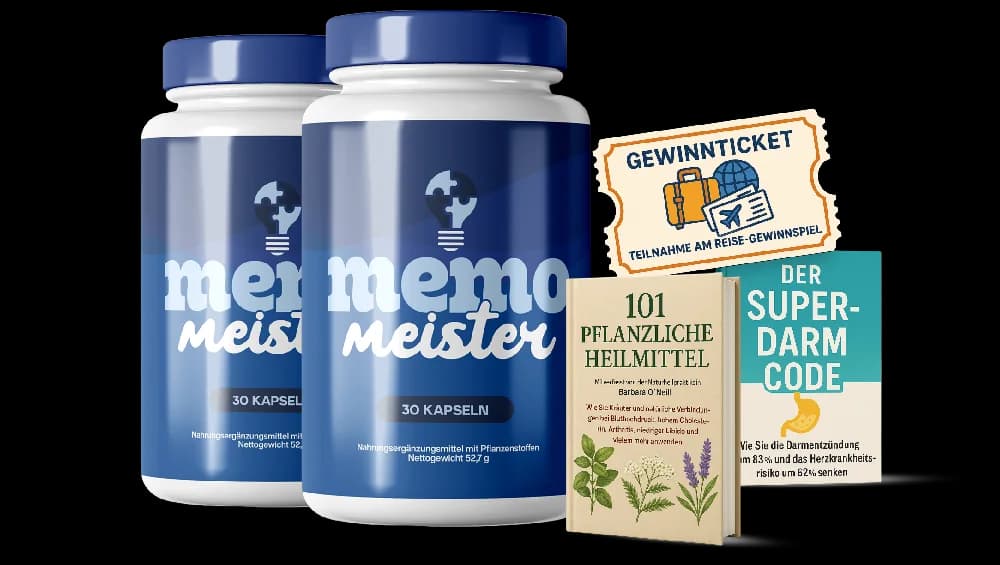
MemoMeister is positioned as a memory and cognitive support supplement built around a Japanese herbal discovery story. The transcript does not open by naming the product. Instead, it opens with a dramatic promise: the narrator says he is going to show the viewer how to throw away their aerosol, then immediately shifts into a memory-loss claim about a hidden bacteria in the brain. The product identity comes from the task context, while the VSL itself frames the solution as a traditional Japanese home remedy and an herbal mixture called Kyoku no Kaifuku, translated in the script as memory restoration.
According to the presentation, this Japanese mixture was first given to the narrator by Dr. Shinji Watanabe, described as an 88-year-old physician in Higashikawa, Japan. The VSL says the mixture consisted of local herbs, placed under the tongue and followed by warm water once daily before breakfast. Later, the narrator claims the original herbal compound was enhanced with additional cognitive-support ingredients to make results faster and more accessible.
The VSL frames MemoMeister as different from ordinary brain supplements because it allegedly does not merely stimulate the brain. Instead, the manufacturer claims it targets the supposed root cause: Porphyromonas gingivalis. The script repeatedly says other approaches, including mental exercises, diets, generic vitamins, stimulants, and medications, only mask symptoms while the bacteria keeps draining mitochondrial energy.
This gives MemoMeister a clear market position: it is not presented as a general wellness nootropic. It is presented as a root-cause memory formula for people who are frightened by lapses in recall and dissatisfied with conventional cognitive-support options. The emotional promise is not just better focus. It is the restoration of independence, identity, and confidence.
The format appears to be a supplement or herbal compound, though the transcript does not clearly state whether MemoMeister is sold as capsules, drops, powder, tablets, or another delivery format. The original Japanese remedy is described as crushed herbs placed under the tongue with warm water. The later productized formula is described as a compound made from ingredients in precise proportions, but the VSL does not provide the final consumer format.
The Problem It Targets
The problem targeted by MemoMeister is memory decline, especially the everyday symptoms that make people worry something more serious is happening. The VSL lists memory lapses, brain fog, trouble focusing, forgetting names and places, difficulty remembering familiar faces, lack of concentration, mental fatigue, confusion during daily tasks, difficulty learning new things, repeating the same stories, and anxiety caused by the feeling that the mind is no longer working as before.
The presentation does not treat these as mild annoyances. It escalates them into warning signs. According to the VSL, these symptoms can silently progress into dementia or Alzheimer's. The narrator claims that ordinary forgetfulness is the beginning of a deeper process in which the brain's mitochondria are deprived of energy and neural connections are harmed. Again, this is the presentation's claim, not a demonstrated fact inside the transcript.
A major persuasive move is that the VSL rejects the familiar explanations viewers may already believe. It says the real cause is not age, not stress, not anxiety, not lack of mental stimulation, and not simply poor diet. This is important because direct-response offers often become more compelling when they tell the viewer, in effect, that they have been trying the wrong solution because they were given the wrong diagnosis.
The script also targets a deeper fear: loss of autonomy. It says memory loss takes away people's independence, destroys quality of life, and leads to complications that may result in hospitalization or death. The narrator uses his parents' story to make this fear concrete. His parents allegedly declined to the point that they could not recognize their granddaughter, and his mother later died after an accident at home caused by her weakened condition.
That story turns the pain point from cognitive performance into family grief. MemoMeister is not being sold to people who simply want to win a memory contest. It is being sold to people who fear forgetting appointments, names, conversations, loved ones, and eventually themselves. The VSL makes the stakes emotional before it makes them nutritional.
How MemoMeister Works
The claimed mechanism behind MemoMeister centers on Porphyromonas gingivalis and mitochondrial energy. According to the presentation, this bacteria lodges inside the brain's mitochondria and drains the energy that should go to the brain's command center. The VSL identifies that command center as the prefrontal cortex, which it says is responsible for memory, decision-making, impulse control, attention, and concentration.
The manufacturer claims that when the prefrontal cortex does not receive enough energy, cognitive decline begins. In the VSL's explanation, memory weakens, mental clarity disappears, the person becomes distracted and confused, and minor forgetfulness turns into more serious lapses. The script then claims that conventional memory treatments do not remove the bacteria, which leaves the root problem untouched.
The proposed solution is to create a hostile environment for the bacteria. According to the presentation, the herbal compound strengthens the immune system, makes it harder for Porphyromonas gingivalis to survive and reproduce, gradually eliminates the bacteria, and repairs damage done to the brain over the years. Once the bacteria is removed, the VSL claims the mitochondria can send energy back to the command center and cognitive regeneration can begin.
This is the central unique mechanism of the MemoMeister VSL. Rather than saying the product simply supports focus or nourishes the brain, it claims to remove a hidden biological villain. That is a much stronger and riskier marketing claim. It gives the formula a clear reason to exist, but it also raises the standard of evidence required to substantiate it.
The transcript does not provide controlled human trials showing that MemoMeister eliminates Porphyromonas gingivalis from the brain. It does not show before-and-after scans, blood markers, cognitive testing, or published data on the finished product. It tells a story and offers a mechanism. As an editorial review, we have to separate that mechanism from proof.
The VSL also claims a rapid timeline. In the narrator's father story, the first three days showed no visible change. After seven days, his father allegedly felt less mentally tired and had less forgetfulness. By the twelfth day, his memory for names and appointments was described as clearer. After 20 days, old memories allegedly began returning. After one month, the narrator claims his father's memory was sharper than ever. This timeline is one of the strongest conversion elements in the presentation, because it makes the promised outcome feel near-term and observable.
Key Ingredients and Components
The MemoMeister ingredients disclosed in the transcript are partially specific and partially vague. The VSL names Bacopa monnieri, rhodiola, vitamin B1, vitamin B12, and huperzine A. It also refers to unspecified local herbs from Dr. Watanabe's Japanese mixture called Kyoku no Kaifuku. However, the transcript does not disclose a full Supplement Facts panel, exact dosages, extract ratios, standardization levels, inactive ingredients, capsule materials, allergen information, or manufacturing certifications.
That distinction matters. A memory supplement can sound impressive by naming familiar nootropic ingredients, but the practical value depends heavily on dose, form, quality, and safety profile. The provided transcript does not give enough information to evaluate those details.
Bacopa monnieri is described in the VSL as a natural nootropic commonly used in Ayurveda. According to the presentation, Bacopa improves cognitive function and supplies cells with the energy they need. In the broader supplement category, Bacopa is often associated with memory-support formulas, but in this review we are only analyzing the VSL's claim. The transcript does not specify whether the Bacopa is a whole herb, extract, or standardized to bacosides.
Rhodiola is described as an adaptogenic herb that helps the body cope with stress and fatigue. The VSL says it calms the cells so Bacopa can work more effectively. This is a classic stacking explanation: one ingredient is framed as the cognitive driver, while another is framed as the stress-buffering support. The transcript does not provide the species, extract ratio, rosavin content, salidroside content, or dose.
Vitamin B1 is described as essential for neurons to function optimally and transmit nerve impulses. The presentation claims it was added in precise doses alongside the plants from Dr. Watanabe's formula to help destroy the bacteria and eliminate it from the brain. The transcript does not say whether the form is thiamine hydrochloride, benfotiamine, thiamine mononitrate, or another form.
Vitamin B12 is framed as important for stimulating neural stem cells and supporting nervous system health and blood formation. The VSL claims B12 helps keep the neural structure intact and prevent memory loss. The transcript does not identify whether the formula uses methylcobalamin, cyanocobalamin, adenosylcobalamin, or hydroxocobalamin, nor does it provide dose information.
Huperzine A is presented as a key ingredient that protects neuronal cells against toxins and stress. The VSL uses a metaphor, comparing it to a greenhouse sheltering delicate plants from a storm. In the formula story, B12 and huperzine A together create an ideal environment for new neuron growth and stronger connections in the command center.
The most important ingredient gap is the Japanese herbal base. The VSL says Dr. Watanabe gave the narrator a mixture of local herbs called Kyoku no Kaifuku, but it does not name those herbs individually. Because the transcript does not disclose them, we cannot responsibly fill in the blanks. Typical memory-support formulas may contain nutrients, nootropics, adaptogens, antioxidants, or cholinergic compounds, but those would be category examples, not confirmed MemoMeister ingredients.
The VSL Hook and Story
The VSL hook is built around contradiction and alarm. The narrator says, the real cause of memory loss isn't age, stress, or mental fatigue. That sentence is the engine of the entire sales message. It tells the viewer that everything they have assumed about memory decline may be wrong, then introduces a more frightening explanation: a bacteria settling inside the brain.
From there, the story follows a familiar direct-response arc. First, the viewer is told they have been misled. Second, the narrator introduces himself as a high-authority guide. Third, he shares a personal loss. Fourth, he discovers a hidden remedy in a distant culture. Fifth, he returns home, tests it on someone he loves, and sees dramatic results. Sixth, he explains the mechanism. Seventh, he warns that powerful interests want the information suppressed.
The narrator, Daniel Gregory, is described as a 71-year-old neurologist, a 1982 Harvard graduate, and a physician with 38 years of medical practice. He says he is often invited to podcasts and lectures around the world. Those details establish authority before the product claims become too unusual. The VSL needs that authority because the mechanism is bold: a brain bacteria that can allegedly be flushed out through sweat by a home remedy.
The emotional center of the story is the narrator's parents. He says they developed painful signs of memory loss, lost awareness of who they were and who they loved, and could not recognize their granddaughter. Then, while he was in Japan, his mother suffered an accident at home and died from internal bleeding. This tragedy becomes the narrator's origin story. He returns to Japan determined to save his father and others.
The setting then shifts to Higashikawa, a quiet Japanese village described as famous for longevity and remarkable memory. The VSL mentions a 72-year-old villager who allegedly entered the Guinness Book by memorizing 70,000 digits. This detail gives the village a mythic quality: it becomes a place where memory works differently, and therefore a plausible source of the hidden answer.
The discovery figure is Dr. Shinji Watanabe, an 88-year-old naturopathic doctor. He gives the narrator Kyoku no Kaifuku, instructing that the crushed herbs be placed under the tongue followed by warm water before breakfast. The narrator is initially skeptical because of his Western medical training, but he tries it because it is described as natural and risk-free. The father then improves according to a staged timeline: seven days, twelve days, twenty days, and one month.
This story is powerful because it combines skepticism and conversion. The narrator is not presented as someone who always believed in natural remedies. He is presented as a neurologist who had to be humbled by results. That makes the product feel like a discovery rather than a pitch.
Ads Breakdown
The ad transcript uses the same core mechanism as the VSL but compresses it into a sharper interruption hook. The opening line is: If you have dementia, you should never drink warm water, and I'm going to explain why. This is a curiosity hook. It takes something ordinary, warm water, and connects it to dementia in a way that feels counterintuitive. The goal is not to educate immediately. The goal is to stop the scroll.
The ad then escalates with a population claim: out of every ten Americans, nine already show signs of memory loss. This is a broad fear hook. It makes the viewer feel that memory decline is not rare, distant, or limited to the elderly. It also says less than 1% know the real cause, which creates an insider-information frame.
The ad repeats the main villain: a 2.5 cm bacteria clinging to the brain and draining energy from the brain's mitochondria. This is more visual than the VSL's broader explanation. A viewer can picture something physically attached to the brain, stealing energy. The specificity of 2.5 cm makes the claim sound concrete, even though the ad does not provide evidence for that measurement.
The symptoms listed in the ad are practical and familiar: memory lapses, difficulty remembering names and dates, mental confusion, and trouble concentrating. Then the ad escalates to dementia and Alzheimer's. This is a fear ladder: start with everyday problems, then connect them to catastrophic outcomes.
The ad's solution promise is faster than the main VSL story. It says a recipe made from natural herbs can eliminate the bacteria in under three minutes, that within a few hours the viewer will notice mental clarity, and that after a few days memory will be 100% restored. Those are extremely strong claims. In an honest editorial review, they should be treated as marketing claims from the ad, not established outcomes.
The ad's call to action is direct: click the button below to watch. It also adds urgency by saying the viewer should watch while the video is still available because the recipe annoys people who profit from memory loss and they will try to take it down. This mirrors the VSL's suppression theme.
The main ad angles are forbidden memory remedy, hidden bacteria cause, natural herb recipe, rapid restoration, anti-pharma conspiracy, and watch-before-removed urgency. Together, these angles are designed for a cold audience that may not yet know MemoMeister but does recognize the fear of forgetfulness.
Psychological Triggers and Persuasion Tactics
The strongest psychological trigger in the MemoMeister VSL is fear of loss. The presentation does not merely say that forgetting names is inconvenient. It links forgetfulness to a future of confusion, dependency, dementia, Alzheimer's, accidents, hospitalization, and death. This uses loss aversion: the viewer is pushed to act because the cost of waiting feels severe.
The second major trigger is the hidden enemy. By naming Porphyromonas gingivalis as the villain, the VSL turns a vague problem into a target. Memory loss becomes less mysterious. The viewer is told there is something specific to remove. In direct-response marketing, that kind of mechanism can make an offer feel more credible because it provides a reason why other solutions failed.
The third trigger is authority. The narrator's claimed Harvard background, neurology career, medical lectures, podcast appearances, and decades of practice are all used to make the viewer more willing to accept a surprising claim. The VSL also adds Dr. Watanabe and the Chinese Academy of Sciences as secondary authority signals.
The fourth trigger is social proof, though the transcript's social proof is limited. It claims the treatment helped more than 18,000 families worldwide in 2025, but it does not include named customer testimonials in the provided text. It also uses the narrator's father as a case study, but that is a family story rather than third-party buyer proof.
The fifth trigger is enemy creation. The VSL positions pharmaceutical companies as profiting from memory loss by selling products that allegedly only mask symptoms. It names Prevagen, Nariva, Aricept, and Namenda as examples of expensive products or medications that people use repeatedly. The purpose is to make MemoMeister feel like an escape from a costly cycle.
The sixth trigger is scarcity and censorship. The viewer is told the video may be taken down, that websites are being removed, and that powerful people want the information silenced. This creates urgency and reactance. When people feel information is being restricted, they may value it more.
The seventh trigger is timeline specificity. The father's story is broken into milestones: no change in three days, improvement after seven days, clearer recall by day twelve, old memories returning after twenty days, and sharper memory after one month. Specific timelines make the promise feel tangible.
The eighth trigger is natural safety framing. The narrator says he tried the Japanese remedy because it was natural and risk-free. The VSL also claims the bacteria can be flushed out without side effects. However, the transcript does not provide safety testing, contraindications, medication interaction warnings, or dosage data, so viewers should not treat natural as automatically risk-free.
Scientific and Authority Signals
The MemoMeister presentation uses many scientific and medical terms: mitochondria, prefrontal cortex, neural connections, neural stem cells, neurons, toxins, free radicals, immune system, and Porphyromonas gingivalis. These terms give the VSL a biomedical tone, even though the transcript does not provide enough documentation to verify the finished product's claims.
The main scientific claim is that Porphyromonas gingivalis causes memory loss by draining mitochondrial energy in the brain. The presentation claims that this bacterial activity weakens the prefrontal cortex and causes cognitive decline. It further claims that eliminating the bacteria allows energy to return to the command center and triggers cognitive regeneration.
The authority structure has three layers. First is Daniel Gregory, the narrator, framed as a neurologist and Harvard graduate. Second is Dr. Shinji Watanabe, framed as the Japanese physician who supplies the original herbal mixture. Third is institutional reference, especially the Chinese Academy of Sciences, which the VSL says identified bacteria and parasites linked to common diseases.
But the transcript has a major evidence gap. It does not provide citations, study names, clinical trial endpoints, sample sizes, journal references, or proof that the product itself was tested. It says researchers concluded certain things, but it does not show the research. It claims discoveries were suppressed, which makes verification even harder inside the story world of the VSL.
The presentation also makes broad claims about conventional medicine and pharmaceutical companies. It says memory products create temporary relief, that Western institutions teach doctors to treat diseases rather than cure them, and that the pharmaceutical industry prefers people to remain chronically ill. These are persuasion claims. The transcript does not substantiate them with direct evidence.
From an editorial standpoint, the VSL's authority signals are strong as marketing devices but incomplete as proof. A careful buyer would want the actual MemoMeister Supplement Facts label, exact ingredient doses, safety warnings, third-party testing, clinical evidence for the finished formula, and support for the claim that the product removes Porphyromonas gingivalis from the brain.
What Real Buyers Say
The provided transcript does not include real buyer testimonials. There are no customer names, no quoted buyer reviews, no star ratings, no before-and-after interviews, and no third-party review excerpts. Because this review is grounded only in the provided transcript, we cannot invent testimonials.
What the VSL does include is a personal case story about the narrator's father. According to the narrator, his father took the Japanese herbal mixture after years of memory problems. The VSL claims that after seven days, his father felt less mentally tired and had less forgetfulness. By twelve days, he could remember names and appointments more clearly. After twenty days, old memories allegedly returned. After one month, the narrator says his father's memory was sharper than ever.
The VSL also claims that in 2025 alone, the treatment helped more than 18,000 families worldwide. That is the closest thing to broad social proof in the transcript. However, the claim is not accompanied by customer data, survey methodology, verified reviews, or independent documentation.
For a flagship review, this is a meaningful gap. Memory-support buyers often look for real-world experiences because the promised benefits are subjective: clearer thinking, better recall, less mental fatigue, and more confidence. The transcript asks viewers to rely mostly on the narrator's authority and family story rather than a body of buyer testimony.
The Offer / Pricing / Risk Reversal
The provided VSL transcript does not mention the MemoMeister price. It does not disclose single-bottle pricing, multi-bottle bundles, shipping fees, subscription terms, discounts, or payment options. It also does not mention a refund policy, money-back guarantee, trial period, or customer support process.
Instead of price, the VSL uses price anchoring against other memory products and medications. The narrator mentions Prevagen, Nariva, Aricept, and Namenda, claiming that people buy expensive products month after month without addressing the real cause. He also claims that Eli Lilly earned more than $18 billion in the first three months of 2025, using that figure to frame memory loss as a profitable disease market.
This is a common direct-response move. Before showing the actual price, the VSL makes the alternative feel expensive, repetitive, and ineffective. That way, the final product price can feel more reasonable by comparison, even if the viewer has not yet seen it.
The risk reversal is weak in the provided transcript because no guarantee is shown. The VSL does frame the remedy as natural and risk-free, but that is not the same as a formal refund guarantee or safety disclosure. It also says the formula works without side effects, but the transcript does not provide safety studies or contraindication information.
Urgency is much stronger than pricing detail. The VSL repeatedly says the video could be taken down, that the remedy upsets people who profit from memory loss, and that viewers should watch before it is too late. The ad also says to click while the video is still available. So the offer structure, at least in the provided text, leans more on censorship urgency than on transparent price presentation.
Who This Is For (and Who It Isn't)
Based on the VSL, MemoMeister is aimed at adults who are worried about memory lapses, brain fog, forgetting names, missing appointments, mental fatigue, and difficulty concentrating. It is especially written for people who feel conventional approaches have not helped and who are open to natural memory-support supplements.
It is also clearly aimed at viewers who fear cognitive decline in themselves or a loved one. The presentation repeatedly references dementia, Alzheimer's, loss of independence, and family heartbreak. Someone caring for an aging parent could easily recognize the emotional scenario the VSL describes.
MemoMeister may appeal to people who like root-cause explanations, traditional remedies, Japanese longevity stories, and formulas that combine herbs with vitamins and nootropic ingredients. The named ingredients, especially Bacopa monnieri, rhodiola, B vitamins, and huperzine A, fit the cognitive-support category.
However, this offer is not for someone looking for a transcript that proves clinical efficacy. The VSL does not provide finished-product trials, exact dosing, a complete label, or verifiable buyer testimonials. It also makes strong claims about bacteria, dementia, Alzheimer's, and 100% memory restoration that should be approached carefully.
It is also not a substitute for medical care. Anyone experiencing sudden memory changes, confusion, neurological symptoms, or suspected dementia should consult a qualified healthcare professional. The VSL's claims should not be treated as a diagnosis or treatment plan.
Finally, MemoMeister is not ideal for buyers who want full transparency before clicking through. The transcript does not reveal the price, guarantee, full ingredient list, dosage, or final format. Those details would need to be checked on the actual order page or product label before any purchase decision.
Frequently Asked Questions
What is MemoMeister?
MemoMeister is presented as a natural memory-support formula inspired by a Japanese herbal mixture called Kyoku no Kaifuku. The VSL positions it as a way to support memory, focus, mental clarity, and cognitive function by addressing an alleged bacterial root cause.
What does the MemoMeister VSL claim causes memory loss?
The VSL claims memory loss is caused by Porphyromonas gingivalis, described as a bacteria that settles in the brain, drains mitochondrial energy, and weakens the brain's command center. This is the presentation's claim; the transcript does not provide clinical proof for the finished product.
What ingredients are mentioned for MemoMeister?
The transcript mentions Bacopa monnieri, rhodiola, vitamin B1, vitamin B12, huperzine A, and unspecified Japanese herbs from the original Kyoku no Kaifuku mixture.
Does the transcript disclose the full MemoMeister formula?
No. The transcript names several ingredients but does not provide the full Supplement Facts panel, dosages, extract standardizations, inactive ingredients, serving size, or manufacturing details.
Is there scientific proof in the VSL?
The VSL uses scientific language and references researchers at the Chinese Academy of Sciences, but it does not include study titles, links, journal names, authors, clinical trial data, or product-specific research.
How much does MemoMeister cost?
The provided transcript does not mention the price of MemoMeister. It also does not disclose bundles, shipping, subscription terms, or discounts.
Are there buyer testimonials in the transcript?
No. The transcript includes a personal story about the narrator's father and claims the formula helped more than 18,000 families worldwide in 2025, but it does not include buyer testimonials.
Who is MemoMeister aimed at?
The VSL targets people experiencing forgetfulness, brain fog, poor focus, mental fatigue, and fear of cognitive decline. It is written especially for viewers worried about independence, dementia, or Alzheimer's.
Final Take
The MemoMeister VSL is a high-intensity memory supplement presentation built around a bold hidden-cause claim. It says memory loss is not primarily about age, stress, or fatigue, but about Porphyromonas gingivalis draining energy from brain mitochondria. The solution is framed as a Japanese-inspired herbal compound enhanced with Bacopa monnieri, rhodiola, vitamin B1, vitamin B12, and huperzine A.
As a piece of direct-response marketing, the VSL is carefully engineered. It uses doctor authority, personal tragedy, Japanese longevity mystique, anti-pharma conflict, rapid-result timelines, censorship urgency, and a strong root-cause mechanism. The ad creative pushes the same angles in shorter form, leading with warm water, dementia, a brain-clinging bacteria, and a recipe that may be taken down.
As an evidence package, the transcript is incomplete. It does not disclose the full formula, exact dosages, price, guarantee, or buyer testimonials. It cites scientific-sounding ideas but does not provide verifiable studies or product-specific clinical trial data. The strongest claims, especially around eliminating bacteria from the brain, restoring memory 100%, and preventing progression toward dementia or Alzheimer's, should be treated as claims from the presentation rather than established facts.
For researchers, affiliates, and media buyers, MemoMeister is a clear example of the modern supplement VSL formula: identify a terrifying hidden villain, make the viewer feel misled by conventional solutions, reveal a natural foreign remedy, and create urgency through suppression. For consumers, the practical takeaway is simpler: before considering any memory supplement, look for the complete label, real dosage information, safety warnings, independent testing, transparent pricing, and qualified medical guidance.
Disclaimer: This article is for research and educational purposes only. It is not medical, legal, or financial advice, and it is not affiliated with the product or its makers. Always consult a qualified professional before making health or financial decisions.
Comments(0)
No comments yet. Members, start the conversation below.
Related reads
- DISreviews
Toxinas Parasitas E Memória Review and Ads Breakdown
Toxinas Parasitas E Memória is built around one of the most emotionally charged promises in the supplement market: the hope of protecting memory before it disappears. The VSL does not open with a g…
Read - DISreviews
Super Nutriente Review and Ads Breakdown
Super Nutriente is promoted through a memory-focused VSL that opens with a bold claim: American scientists allegedly discovered a “super nutrient” capable of increasing production of a “memory horm…
Read - DISreviews
StaySharp FX Review and Ads Breakdown
The StaySharp FX review below is based only on the provided video sales letter transcript. That matters because this is not a lab test, medical endorsement, or customer survey. It is a research-fir…
Read