Moringaleafextract Review and Ads Breakdown
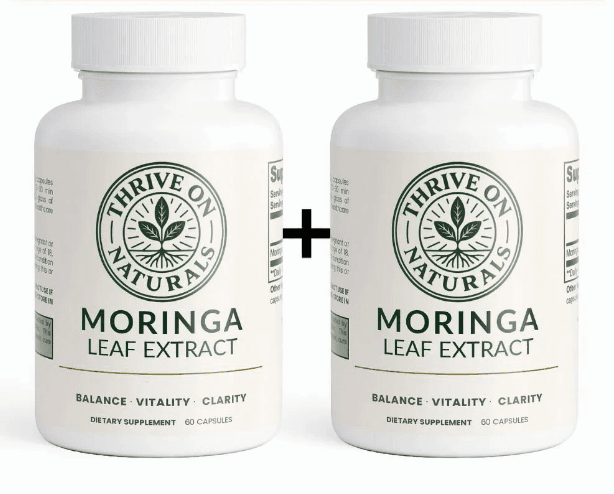
This Moringaleafextract review is based only on the provided ad transcript for Thrive on Naturals Moringa. That matters because the transcript does not give us a full sales page, label, Supplement …
8,226+
Videos & Ads
+50-100
Fresh Daily
$29.90
Per Month
Full Access
12.5 TB database · 72+ niches · 22 min read
This Moringaleafextract review is based only on the provided ad transcript for Thrive on Naturals Moringa. That matters because the transcript does not give us a full sales page, label, Supplement Facts panel, clinical citations, pricing table, guarantee terms, or long-form VSL. What it does give us is a compact but revealing direct-response ad: a personal confession about feeling unlike oneself, a reframing of the problem around stress and cortisol levels, and a simple solution positioned as two capsules a day.
The niche assigned to this offer is joint pain, but the actual transcript does not directly use the words joint pain, arthritis, cartilage, knees, hips, stiffness, or mobility. Instead, the ad uses a broader phrase: overall comfort and rest. That phrase may be intended to overlap with body comfort, but an honest reading must be clear: the presentation does not claim that Moringaleafextract treats joint pain or cures any condition. It frames moringa as a natural green superfood that can help support the body's healthy response to stress.
The ad is less about a technical supplement formula and more about identity restoration. The speaker says she did not recognize herself anymore. She describes seeing a tired face in the mirror, extra belly flab, emotional reactivity, canceled plans, and a drained, disconnected feeling. Then she says she discovered Thrive on Naturals Moringa, described as packed with vitamins, antioxidants, and amino acids. After adding it to her routine, she says she noticed improvements in overall comfort and rest, and that she started feeling calm, confident, balanced, and happy again.
From a Daily Intel review perspective, this is a soft-claim supplement ad with a strong emotional hook. It avoids disease-treatment language, leans on a single first-person story, and uses stress as the central villain. The key question is not whether the ad proves the product works. It does not. The better question is: what exactly is being claimed, what is missing, and how does the ad persuade viewers to click or buy?
What Is Moringaleafextract
Moringaleafextract is presented in the transcript as Thrive on Naturals Moringa, a moringa-based supplement described as a natural green superfood. The ad says it is packed with vitamins, antioxidants, and amino acids and is taken as two capsules a day.
The transcript does not clarify whether the product is pure moringa leaf powder, a concentrated moringa leaf extract, a blend that includes moringa, or a branded formula with additional ingredients. It also does not disclose dosage, capsule size, standardization, serving instructions, inactive ingredients, manufacturing location, third-party testing, or certification details. For a supplement review, those omissions matter.
Moringa is commonly marketed in the wellness category because moringa leaf is known as a nutrient-dense plant food. However, this review cannot assume what is in this specific product beyond what the transcript says. The ad confirms only moringa, vitamins, antioxidants, and amino acids as broad descriptors. If the full label includes other botanicals, minerals, fillers, extracts, or proprietary blends, they are not disclosed in the provided material.
The ad also positions the supplement around a lifestyle need rather than a narrow medical claim. The speaker is not introduced as a patient. No doctor appears. No study is shown. No before-and-after lab marker is reported. Instead, the product is framed as a daily support tool for people who feel physically and emotionally worn down.
That makes Moringaleafextract a supplement offer built around stress response support, comfort, rest, mood balance, and self-image. The joint-pain niche may be adjacent to the word comfort, but based on the transcript alone, the offer is not presented as a direct joint repair or pain relief product.
The Problem It Targets
The ad opens with a highly personal problem: I didn't recognize myself anymore. That is not a technical health complaint. It is an identity complaint. The speaker is saying that her body, mood, energy, and relationships no longer match how she expects to feel.
The first visual problem is appearance. She says she would look in the mirror and see a tired face and a little extra flab around my belly that would not go away, even though she was eating healthy and working out. This is an important hook because it speaks to frustration after effort. The viewer is not being positioned as lazy or careless. The ad implies the target customer is already trying.
The second problem is emotional. The speaker says it was not just her body. It was how she felt. She mentions snapping at my husband for no reason, canceling plans, and feeling drained and disconnected. These are everyday symptoms of life feeling off-track. They are not presented as a diagnosed condition, and the ad does not say they were caused by a disease.
The third problem is confusion. She says she thought maybe it was age or hormones, but then says stress was taking a toll on her. This is one of the central persuasion moves in the ad. The copy introduces a familiar explanation, then replaces it with a different explanation that the product can speak to. If the viewer has blamed age, hormones, or discipline, the ad offers another possibility: stress and cortisol levels.
For the joint pain niche, this problem framing is interesting because it avoids the more common opening about knees, hips, back pain, stiffness, or mobility. Instead, it uses a broad stress-and-comfort frame. The ad says many people experience tiredness, bloating or mood changes that may be linked to stress and cortisol levels. It does not say joint pain is linked to cortisol in the transcript, and it does not present a clinical explanation for pain.
So the problem targeted by Moringaleafextract is best described as stress-related decline in comfort, rest, mood, and self-perception, not a specific musculoskeletal condition. The word comfort leaves room for body-feel interpretation, but the transcript stays broad.
How Moringaleafextract Works
According to the presentation, Moringaleafextract works by helping support the body's healthy response to stress. That is the mechanism the ad gives us. It does not describe inflammatory pathways, cartilage support, collagen synthesis, synovial fluid, nerve signaling, or joint lubrication. It does not mention pain receptors, mobility, flexibility, or range of motion.
The ad's mechanism is simpler: stress may be taking a toll, and a moringa-based green superfood may support the body in responding to stress in a healthier way. The manufacturer claims the product is packed with vitamins, antioxidants, and amino acids, and those nutrients are used as the credibility bridge between the problem and the outcome.
This is a classic supplement claim structure. First, the ad identifies a broad modern-life problem. Second, it names a mechanism that sounds biological but remains general: stress and cortisol levels. Third, it introduces a plant-based nutritional product. Fourth, it reports a subjective improvement: better comfort and rest, plus feeling calm and balanced.
The transcript does not provide enough evidence to say the product causes those outcomes. It only tells us what the speaker says she noticed after adding it to her routine. That is anecdotal buyer-style language, not clinical proof.
The strongest claim in the ad is not that Moringaleafextract cures anything. It is that the supplement may help support the body's healthy response to stress. That is a support claim, which is common in the supplement industry. It is intentionally softer than a treatment claim. From a research-first standpoint, the distinction is important.
If a shopper is evaluating this offer for joint pain, the transcript leaves a major gap. It does not explain how the formula would support joints specifically. It does not identify confirmed joint-focused ingredients such as glucosamine, chondroitin, MSM, boswellia, turmeric, collagen, hyaluronic acid, or omega-3s. Those are typical category nutrients or compounds in joint supplements, but they are not confirmed in this transcript and should not be assumed to be in Moringaleafextract.
Key Ingredients and Components
The transcript discloses only a few ingredient-related details. The product is Thrive on Naturals Moringa, and it is described as a natural green superfood packed with vitamins, antioxidants and amino acids.
That means the confirmed ingredient or component language is:
Moringa: The named plant at the center of the product. The ad uses moringa as the hero ingredient and positions it as a green superfood.
Vitamins: The ad says the product is packed with vitamins, but it does not name which vitamins or provide amounts.
Antioxidants: The ad mentions antioxidants, but it does not identify specific antioxidant compounds or measured potency.
Amino acids: The ad says amino acids are present, but it does not list which amino acids or in what quantities.
That is the full ingredient picture from the transcript. There is no Supplement Facts panel. There is no serving-size detail beyond two capsules a day. There is no extract ratio. There is no statement about organic sourcing, non-GMO status, allergens, vegan capsules, testing, or manufacturing standards.
For a joint-pain supplement review, this is thinner than many shoppers would want. Joint comfort formulas often disclose ingredients tied to cartilage, connective tissue, inflammatory balance, or mobility. Typical category ingredients may include turmeric, boswellia, MSM, glucosamine, chondroitin, collagen, hyaluronic acid, ginger, or omega-3 fatty acids. But those are merely typical in the category. They are not disclosed in the provided Moringaleafextract transcript.
The ad appears to rely on moringa's broad nutritional image rather than a detailed joint-support formula. That can be persuasive for viewers who prefer simple plant-based supplements, but it also makes the offer harder to evaluate scientifically from the transcript alone.
The biggest missing details are dosage and standardization. When a supplement claims to be based on a botanical, informed buyers usually want to know whether it is whole leaf powder or an extract, how many milligrams are in each serving, whether active compounds are standardized, and whether the finished product is tested. None of that appears in the transcript.
The VSL Hook and Story
The story begins with a confession: I'll be honest, I didn't recognize myself anymore. That opening does a lot of work. It creates vulnerability, invites identification, and signals that the speaker is about to tell a personal story rather than deliver a medical lecture.
The next image is the mirror. The speaker sees a tired face and belly flab that would not go away. Mirror language is common in direct-response health ads because it turns an internal problem into a daily visual reminder. The viewer can imagine the exact moment: getting ready, looking at oneself, and feeling that something has changed.
Then the ad widens the problem beyond appearance. The speaker says it was not just her body. It was how she felt. She was snapping at her husband, canceling plans, and feeling drained and disconnected. This makes the problem relational and emotional. It is not merely about belly fat or tiredness. It is about becoming a version of oneself that feels unfamiliar.
The villain is then named: stress. The speaker says she thought it might be age or hormones, but stress was taking a toll on her. This reframing is important because age and hormones can feel inevitable. Stress, by contrast, can feel more manageable. Once the villain is stress, a daily support product becomes a plausible next step in the story.
Then the product enters: Thrive on Naturals Moringa. The ad calls it a natural green superfood and gives three nutrient categories: vitamins, antioxidants, and amino acids. This is enough to make the product feel health-oriented without forcing the viewer into a complex ingredient education segment.
The result is described in first-person terms. After adding it to her routine, the speaker says she noticed improvements in overall comfort and rest. Then the emotional payoff arrives: she started feeling more like herself again, calm, confident and balanced.
The final call to action is simple: Try Thrive on Naturals Moringa. The closing line repeats the transformation: it gave her back her calm, confidence, and happiness. The ad is not structured around charts or proof. It is structured around restoration.
Ads Breakdown
The ad angle for Moringaleafextract is not a classic joint-pain angle. It is a stress, cortisol, comfort, and identity angle. The creative appears designed to reach people who feel that multiple small problems are adding up: tiredness, bloating, mood changes, low energy, and a sense that they no longer feel like themselves.
The first ad hook is self-recognition loss. The line about not recognizing oneself is broad enough to apply to weight changes, aging concerns, mood changes, stress, fatigue, and comfort issues. It is emotionally direct and does not require the viewer to have a specific diagnosis.
The second hook is effort without results. The speaker says the belly flab would not go away no matter how healthy she ate or how much she worked out. This is persuasive because it validates the viewer's effort. The implied message is that the problem is not discipline; the problem may be something hidden.
The third hook is mood spillover. Snapping at a husband for no reason makes the problem concrete. It shows stress leaking into relationships. The ad is not only promising better body feel. It is promising a calmer version of daily life.
The fourth hook is age and hormones misdirection. Many viewers may already suspect age or hormones are responsible for how they feel. The ad uses that belief, then redirects attention toward stress. This creates curiosity: what if the real issue is not what I thought?
The fifth hook is cortisol-adjacent language. The transcript says many people experience tiredness, bloating, or mood changes that may be linked to stress and cortisol levels. Cortisol is a familiar buzzword in wellness marketing. The ad does not present lab tests or cite research, but the term gives the story a biological feel.
The sixth hook is natural green superfood positioning. Instead of presenting a complex formula, the ad presents moringa as a simple plant-based solution. The words natural, green, and superfood signal wellness, simplicity, and nutritional density.
The seventh hook is low-friction use. The ad says it is just two capsules a day, with no messy routines. That line is designed to remove objections from people who do not want powders, drinks, complicated meal plans, or major lifestyle changes.
The eighth hook is emotional restoration. The closing payoff is not a number on a scale or a pain score. It is calm, confidence, balance, and happiness. This is why the ad can operate across several wellness niches. It sells the feeling of returning to oneself.
For traffic, these hooks could work in social feeds where users are already seeing content about stress, hormones, cortisol, bloating, mood, fatigue, and midlife wellness. The creative likely depends on relatability more than proof. There is no hard offer stack in the transcript, no discount reveal, no countdown, and no guarantee. The ad's job is probably to generate the click through emotional identification.
Psychological Triggers and Persuasion Tactics
The strongest psychological trigger in the Moringaleafextract ad is identification. The speaker does not start with facts. She starts with a feeling: not recognizing herself. That gives the viewer a chance to say, internally, that sounds like me.
The next trigger is problem agitation. The ad stacks symptoms: tired face, belly flab, irritability, canceled plans, drained energy, disconnection. None of these is explored deeply, but together they create a picture of life being subtly degraded.
Another important tactic is misattribution correction. The speaker says she thought it was age or hormones, but it turned out stress was taking a toll. This is persuasive because it gives the viewer a new explanation. In direct-response marketing, a new explanation can be more powerful than a new ingredient because it reopens hope.
The ad also uses mechanism borrowing. It borrows credibility from stress and cortisol language without explaining a detailed biochemical pathway. The phrase stress and cortisol levels gives the ad a scientific tone, but the transcript does not cite studies or provide measurements.
The product is framed through naturalness appeal. Calling moringa a natural green superfood makes the product feel clean and accessible. This is especially useful for supplement shoppers who are wary of aggressive pharmaceutical-style claims.
There is also simplicity bias. Two capsules a day sounds easier than changing diet, exercising more, tracking macros, mixing powders, or following a complicated protocol. The line no messy routines is an objection handler.
The ad uses before-and-after identity contrast. Before: tired, bloated, reactive, disconnected. After: calm, confident, balanced, happy. The transformation is emotional rather than clinical. That makes it easy to understand but hard to verify.
Finally, the ad uses soft compliance language. It says the product helps support the body's healthy response to stress. It does not say it cures anxiety, treats depression, lowers cortisol clinically, eliminates belly fat, or heals joints. That language keeps the claim broad and supplement-like.
Scientific and Authority Signals
The transcript contains very limited scientific or authority support. No doctor, pharmacist, researcher, university, medical institution, clinical trial, journal, or study is mentioned. No authority figure endorses the product in the provided ad.
The scientific tone comes mainly from the language of stress, cortisol levels, vitamins, antioxidants, and amino acids. These terms are familiar and health-adjacent, but they are not the same as evidence for this specific product.
The ad says moringa helps support the body's healthy response to stress. It also says many people experience tiredness, bloating, or mood changes that may be linked to stress and cortisol levels. Those are broad wellness statements. They are not accompanied by citations in the transcript.
For a stronger research case, a product presentation would usually need to show the exact ingredient list, dosages, clinical evidence for the ingredients, evidence for the finished formula, safety information, and ideally third-party testing. None of that appears here.
That does not mean the product is ineffective. It means the transcript alone does not prove efficacy. A research-first review has to separate what the ad claims from what the ad demonstrates. The ad claims support for stress response and reports one subjective experience of improved comfort and rest. It does not demonstrate a verified medical outcome.
For joint pain specifically, the authority gap is even larger. The ad does not cite joint-health studies, does not mention arthritis or cartilage, and does not explain how moringa would affect joint discomfort. Any joint-pain interpretation must be cautious and clearly labeled as not directly stated in the transcript.
What Real Buyers Say
The provided transcript includes one buyer-style first-person story, not a collection of independent testimonials. The speaker says, I'll be honest, I didn't recognize myself anymore. That sentence sets the emotional frame for the entire ad.
She also says she saw this tired face and the little extra flab around my belly that would not go away, even with healthy eating and workouts. That detail positions the product for people frustrated by visible changes that do not seem to respond to ordinary effort.
The story then moves from body image to daily life. The speaker describes snapping at my husband for no reason, canceling plans, and feeling drained and disconnected. These lines are important because they make the problem more than cosmetic. The ad wants viewers to feel that stress is affecting personality, relationships, and participation in life.
After introducing Thrive on Naturals Moringa, the speaker says, After adding it to my routine, I noticed improvements in my overall comfort and rest. This is the closest the transcript comes to a product result. It is subjective, first-person, and not quantified.
The most emotionally loaded result is the line that she started feeling more like herself again: calm, confident and balanced. The final statement is even stronger emotionally: the product gave me back my calm, my confidence and honestly, my happiness.
What is missing is just as important. The transcript does not include named customers, ages, locations, star ratings, verified purchase badges, before-and-after metrics, number of bottles used, time to results, or joint-specific experiences. There are no claims like walking farther, climbing stairs, bending knees, reducing morning stiffness, or stopping pain medication.
So the real-buyer evidence in the transcript is best understood as one testimonial-style narrative. It is emotionally specific but scientifically limited.
The Offer / Pricing / Risk Reversal
The transcript does not mention the price of Moringaleafextract or Thrive on Naturals Moringa. There is no single-bottle price, multi-bottle discount, subscription price, shipping cost, retail comparison, or savings claim.
There is also no explicit price anchoring. The ad does not compare the product to expensive supplements, doctor visits, spa treatments, hormone programs, meal plans, or other alternatives. It stays focused on the personal story and the simplicity of the routine.
No bonuses are mentioned. There are no free guides, meal plans, wellness checklists, coaching calls, recipe books, or digital downloads in the transcript.
No guarantee is mentioned either. Many supplement VSLs use a money-back guarantee as risk reversal, but this specific transcript does not include one. A shopper would need to inspect the checkout page or full sales page to know whether any refund policy exists.
There is also no urgency or scarcity. The ad does not say supplies are limited, a discount is ending, bottles are selling out, or the viewer must act today. The only call to action is Try Thrive on Naturals Moringa.
This makes the ad feel more like a top-of-funnel social creative than a full VSL close. It is designed to make the viewer curious and emotionally receptive, not to answer every buying objection.
Who This Is For (and Who It Isn't)
Based on the transcript, Moringaleafextract is for people who relate to feeling tired, bloated, moody, stressed, disconnected, or unlike themselves. It may appeal to people who want a simple supplement routine and prefer plant-based wellness language such as natural green superfood.
It is also for people who are drawn to the idea that stress may be affecting their body and mood. The ad specifically speaks to those who have blamed age, hormones, diet, or workouts but still feel off.
It may be especially attractive to supplement shoppers who dislike messy routines. The two capsules a day line is built for convenience-focused buyers.
However, based on this transcript alone, it is not a well-documented choice for someone who needs a clearly explained joint-pain formula. The ad does not disclose joint-specific ingredients, joint-health studies, or joint-function outcomes. Anyone shopping specifically for knee pain, hip pain, arthritis discomfort, or mobility support would need more information than this transcript provides.
It is also not for someone seeking proven medical treatment. The ad does not claim to diagnose, treat, cure, or prevent any disease, and this review should not interpret it that way. People with persistent pain, significant mood changes, severe fatigue, or suspected hormonal or medical issues should consult a qualified professional rather than relying on an ad.
Finally, it may not be for shoppers who require full transparency before buying. The transcript lacks price, guarantee, dosage, full label, testing, and clinical evidence.
Frequently Asked Questions
What is Moringaleafextract?
Based on the transcript, Moringaleafextract is a moringa supplement presented as Thrive on Naturals Moringa. The ad calls it a natural green superfood and says it comes in a two-capsule daily routine.
What does the Moringaleafextract ad claim it supports?
The ad claims the product helps support the body's healthy response to stress. The speaker also says she noticed improvements in overall comfort and rest after adding it to her routine.
Does the transcript say Moringaleafextract treats joint pain?
No. The transcript does not directly say Moringaleafextract treats joint pain, arthritis, stiffness, inflammation, or mobility problems. The closest related phrase is overall comfort, which remains broad.
What ingredients are disclosed for Moringaleafextract?
The transcript mentions moringa, vitamins, antioxidants, and amino acids. It does not provide a complete ingredient list or dosage details.
How do you take Moringaleafextract according to the ad?
The ad says it is two capsules a day. It does not specify timing, whether to take it with food, or how long to use it.
Is a price or guarantee mentioned in the Moringaleafextract transcript?
No. The transcript does not mention price, bonuses, discounts, shipping, or a money-back guarantee.
What is the main hook used in the Moringaleafextract ad?
The main hook is a personal transformation story about not recognizing oneself anymore, then discovering that stress may be taking a toll and using moringa as part of a daily routine.
Who might be interested in Moringaleafextract based on the presentation?
The ad targets people who feel tired, bloated, emotionally reactive, drained, disconnected, stressed, or generally unlike themselves and want a simple supplement routine.
Final Take
Moringaleafextract is marketed in the transcript less like a hard joint-pain formula and more like a broad stress-response and comfort supplement. The ad's emotional center is the feeling of losing oneself: looking tired, carrying stubborn belly flab, snapping at a spouse, canceling plans, and feeling disconnected.
The product solution is Thrive on Naturals Moringa, described as a natural green superfood packed with vitamins, antioxidants, and amino acids. According to the speaker, adding it to her routine helped her notice improvements in overall comfort and rest and feel calm, confident, balanced, and happy again.
The biggest strength of the ad is relatability. It understands how people talk when they feel off but cannot identify one clear cause. The biggest weakness is lack of detail. There is no full ingredient panel, no dosage, no price, no guarantee, no studies, no authority figure, and no direct joint-pain explanation in the transcript.
For a shopper, the smart takeaway is simple: the ad makes a soft wellness claim around stress response support, not a proven medical claim. Anyone considering the product for joint pain should look for the full label, exact dosage, refund policy, and any evidence tied specifically to joint comfort before deciding.
Disclaimer: This article is for research and educational purposes only. It is not medical, legal, or financial advice, and it is not affiliated with the product or its makers. Always consult a qualified professional before making health or financial decisions.
Source-backed reader context
Additional Reviews & Reported Experiences
These statements were presented in the product's sales transcript. Daily Intel did not independently verify the speakers, purchase status, or reported outcomes, and the statements are not used in Product aggregateRating.
VSL proof excerpt 1
Date not stated
I'll be honest, I didn't recognize myself anymore.
VSL proof excerpt 2
Date not stated
I'd look in the mirror and see this tired face, the little extra flab around my belly that just wouldn't go away, no matter how healthy I ate or how much I worked out.
VSL proof excerpt 3
Date not stated
It was how I felt, snapping at my husband for no reason, canceling plans, feeling drained and disconnected.
VSL proof excerpt 4
Date not stated
I thought maybe it was just age or hormones, but it turns out stress was taking a toll on me.
VSL proof excerpt 5
Date not stated
Then I discovered Thrive on Naturals Moringa, a natural green superfood packed with vitamins, antioxidants and amino acids that help support the body's healthy response to stress.
VSL proof excerpt 6
Date not stated
After adding it to my routine, I noticed improvements in my overall comfort and rest.
VSL proof excerpt 7
Date not stated
But the best part, I started feeling more like myself again, calm, confident and balanced.
VSL proof excerpt 8
Date not stated
It gave me back my calm, my confidence and honestly, my happiness.
Comments(0)
No comments yet. Members, start the conversation below.
Related reads
- DISreviews
Zepburn Drops Review and Ads Breakdown
Zepburn Drops is promoted in the provided VSL as a weight-loss supplement offer built around a simple pink salt approach. The presentation’s core promise is direct: try a quick pink salt routine be…
Read  reviews
Zeneara Review and Ads Breakdown
This Zeneara review is intentionally narrow: it is based only on the provided ad transcript. That matters because the transcript does not contain a full video sales letter, ingredient panel, doctor…
Read- DISreviews
Vittaburn Review and Ads Breakdown
This Vittaburn review is based only on the provided VSL transcript. That matters because the presentation makes large weight-loss claims, uses medical-sounding language, and leans heavily on a dram…
Read