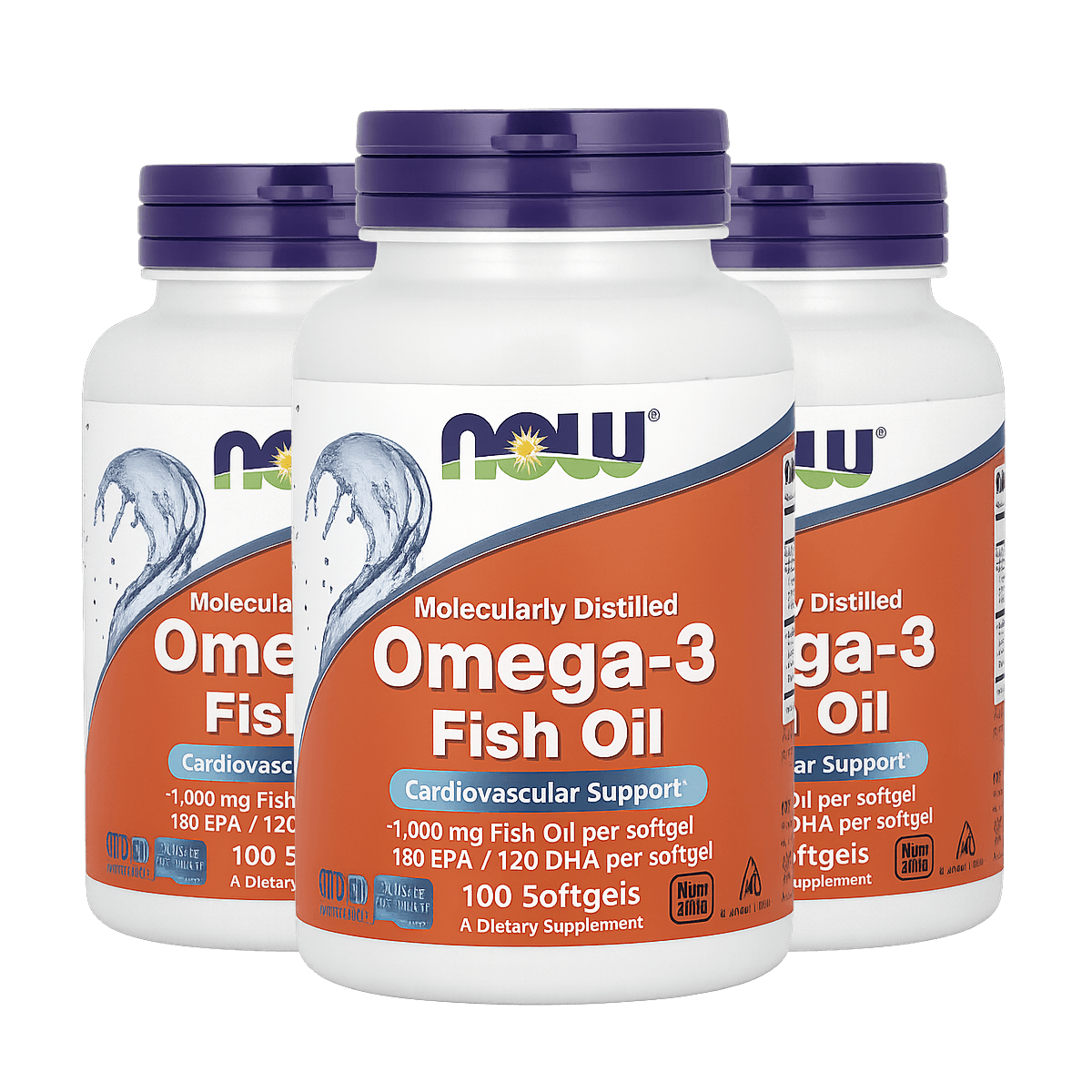
Now Omega 3 Review and Ads Breakdown
This Now Omega 3 review has an unusual starting point: the supplied sales transcript does not actually behave like a standard omega-3 or blood-pressure VSL. Although the product name supplied for t…
8,226+
Videos & Ads
+50-100
Fresh Daily
$29.90
Per Month
Full Access
12.5 TB database · 72+ niches · 24 min read
This Now Omega 3 review has an unusual starting point: the supplied sales transcript does not actually behave like a standard omega-3 or blood-pressure VSL. Although the product name supplied for this analysis is Now Omega 3 and the niche is listed as Blood Pressure, the transcript itself is overwhelmingly about memory loss, Alzheimer's, dementia, brain fog, microplastics, acetylcholine, Himalayan cedar honey, and butterfly pea flower.
That matters. A research-first review cannot assume missing facts. The transcript does not disclose a Now Omega 3 supplement facts label, does not list EPA or DHA, does not mention fish oil sourcing, does not give a dosage, does not explain a blood-pressure protocol, and does not present pricing. In fact, omega-3s are mentioned only as something the narrator says was tested and did not work during an investigation into cognitive decline.
So this article reviews the offer strictly from the transcript. The conclusion is not that Now Omega 3 works or does not work. The more precise conclusion is that the provided VSL does not substantiate a normal Now Omega 3 blood pressure supplement pitch. Instead, it uses a dramatic medical-breakthrough structure to promote a claimed natural cognitive recipe built around cedar honey and butterfly pea flower.
The VSL opens with a fake-news-style urgency frame: breaking news, a natural at-home solution, and a claimed breakthrough for the 42.5 million Americans affected by Alzheimer's dementia and cognitive decline. It then introduces a celebrity-style testimonial, a famous doctor figure, a hidden villain, and a two-ingredient mechanism. From a direct-response perspective, it is built to create fear, urgency, authority, hope, and distrust of conventional medicine.
From an editorial perspective, the most important point is simple: the transcript makes major health claims, but those claims are presented inside the sales narrative. They should be treated as claims made by the presentation, not established medical facts.
What Is Now Omega 3
Based on the supplied product name, Now Omega 3 would normally suggest an omega-3 supplement, likely positioned in the broad category of fish oil or essential fatty acids. In the supplement market, omega-3 products are often associated with heart health, triglyceride support, inflammation-related positioning, and sometimes blood-pressure support. However, those are category associations, not facts established by this transcript.
The transcript does not describe Now Omega 3 as a capsule, liquid, softgel, powder, or tincture. It does not identify the manufacturer. It does not disclose an ingredient panel. It does not say how much EPA or DHA is included. It does not mention fish source, purification, heavy-metal testing, oxidation testing, IFOS certification, enteric coating, serving size, or any of the details a serious omega-3 review would normally evaluate.
Instead, the VSL says the supposed answer is not a chip and not a new drug, but rather a beautiful blue flower combined with a powerful Himalayan honey. The narrator later identifies the blue flower as butterfly pea flower and the honey as cedar honey from an isolated Himalayan village. The script says the honey is used to flush out microplastics and the plant is used to support acetylcholine and brain regeneration.
That creates a mismatch. If the offer being reviewed is truly Now Omega 3, the transcript does not give enough product-specific information to evaluate it as an omega-3 supplement. If the transcript is the only source, then the review has to say that the VSL is primarily a memory-loss pitch, not a clear blood-pressure omega-3 pitch.
The only direct mention of omega-3s comes when the narrator says various approaches were tested in a nursing-home investigation: diets, supplements, meditation, cognitive stimulation, light, sound, frequency therapies, omega-3s, nootropics, and drugs like Namenda, Exalon, and Aricept. The narrator then says nothing worked. That means the VSL does not position omega-3 as the solution. It positions omega-3 as one of the things that allegedly failed before the two-ingredient recipe was discovered.
For a reader searching for Now Omega 3 ingredients, the honest answer is: the transcript does not provide them. Typical omega-3 supplements may contain fish oil, anchovy oil, sardine oil, mackerel oil, tuna oil, algal oil, EPA, DHA, gelatin or softgel materials, glycerin, water, and sometimes vitamin E as a preservative. But those are typical category nutrients, not confirmed ingredients for the product in this transcript.
The Problem It Targets
The listed niche is Blood Pressure, but the actual transcript targets a different emotional and medical problem: fear of cognitive decline. The VSL speaks to people who are scared by memory lapses, brain fog, forgotten names, forgotten conversations, and the possibility of becoming dependent on family members.
The presentation repeatedly frames forgetfulness as more than normal aging. The narrator says frequent memory lapses, brain fog, and difficulty remembering simple things are warning signs that the brain is starting to shut down. That is a high-fear framing. It takes common symptoms and places them inside a much more frightening story about dementia and identity loss.
The VSL's emotional center is not blood pressure, heart health, or vascular risk. It is the fear of losing the self. The script describes a mother forgetting her son, wanting to go home while already in her own house, and spending the final years of life confused and scared. This is a classic direct-response pain sequence: start with a relatable symptom, expand it into a worst-case future, and then position the offer as the thing that may prevent that future.
According to the presentation, the real villain is microplastic accumulation in the brain. The script calls microplastic a mental leech that latches onto neurons and feeds on acetylcholine, a neurotransmitter the narrator describes as critical for memory, reasoning, and learning. The brain is compared to a library, with acetylcholine as the librarian. Microplastics are then described as a plague corroding the shelves, books, and librarian.
That metaphor is vivid and memorable, which is why it works as a sales device. It gives viewers a simple explanation for a complicated condition. Instead of hearing about multifactorial neurodegeneration, genetics, vascular health, sleep, inflammation, metabolic health, medication effects, education, age, and other risk factors, the viewer gets one visible enemy: plastic particles in the brain.
The transcript also uses environmental inevitability. It says microplastics are in soil, water, air, food, old plumbing, and city pollution. It claims even organic food is not immune and that particles can be found in the brains of babies in the womb. The point is to make the viewer feel exposed no matter how carefully they live.
For a blood-pressure product, this is a strange direction. Blood-pressure VSLs often discuss arteries, nitric oxide, plaque, stress hormones, sodium, kidneys, circulation, or endothelial function. This transcript does not build that kind of case. Its problem is memory loss caused by a hidden environmental toxin, not hypertension.
How Now Omega 3 Works
The transcript does not explain how Now Omega 3 works. It does not say omega-3 lowers blood pressure, supports arterial flexibility, improves triglycerides, supports endothelial function, or modulates inflammation. It does not give a dosage or cite omega-3 research.
What it does explain is the alleged mechanism of a two-ingredient cognitive recipe. According to the presentation, the formula has two jobs. First, it must eliminate accumulated microplastics from the patient's system and cleanse the brain of a memory-destroying poison. Second, it must restore depleted acetylcholine so patients can retrieve memories, reasoning, and learning abilities.
The first ingredient is described as cedar honey from the Himalayas. The narrator says local beekeepers harvest a rare dense honey from bees that feed on a sacred lotus flower. The VSL claims lab analysis found the honey had an extremely high concentration of natural chelators. In the presentation's mechanism, those chelators bind microplastic particles and help flush them from the brain.
The second ingredient is butterfly pea flower, used as a blue tea in Malaysia. The narrator says Carmelite sisters gave the tea to children to feed their brains and to elders to keep their minds from weakening. According to the presentation, the plant is rich in antioxidants, especially anthocyanins, and may support neurogenesis, combat oxidative stress, and elevate acetylcholine levels.
The VSL then combines these into a simple daily tonic. It says nurses mixed a dose of butterfly pea extract into a spoonful of pure cedar honey every morning. The honey is described as the cleansing agent, while the plant is described as the regenerating and protective agent.
Again, these are claims from the presentation. The transcript does not provide a published paper, study title, trial registration, dose, product standardization, independent lab report, or medical monitoring details. It also does not establish that the recipe is Now Omega 3. In fact, the script's mechanism is not an omega-3 mechanism at all.
For readers evaluating Now Omega 3 for blood pressure, the absence of a blood-pressure mechanism is the key finding. The transcript cannot support conclusions about systolic pressure, diastolic pressure, medication interaction, cardiovascular risk, or expected results.
Key Ingredients and Components
The transcript does not disclose a confirmed Now Omega 3 ingredient list. That is the most important ingredient finding.
For a normal omega-3 supplement review, we would look for EPA, DHA, total fish oil amount, omega-3 concentration, serving size, capsule count, fish source, purification method, freshness, oxidation values, allergen statements, and third-party testing. None of that appears in the provided VSL.
The ingredients actually discussed are cedar honey and butterfly pea flower.
Cedar honey is described as a rare Himalayan honey harvested by local beekeepers who climb cliffs with ropes. The presentation says local legend claims the honey cleans the blood of poisons. It then claims lab analysis at Johns Hopkins School of Medicine found a high concentration of natural chelators. The alleged role of cedar honey is to bind microplastics and flush them from the brain.
Butterfly pea flower is described as the source of a blue tea given to children and elders in Malaysia. The presentation says it has antioxidants, particularly anthocyanins, and claims these compounds may help combat oxidative stress, support neurogenesis, provide neuroprotection, and elevate acetylcholine.
The VSL also mentions acetylcholine as the central neurotransmitter in its memory argument. According to the narrator, maintaining healthy acetylcholine levels is crucial for the nervous system and memory. The claimed recipe is positioned as a way to restore acetylcholine after microplastics allegedly deplete it.
Because the product name supplied is Now Omega 3, it is worth clarifying what typical omega-3 products may contain. A typical omega-3 supplement may include fish oil, EPA, DHA, gelatin softgels, glycerin, purified water, and sometimes antioxidant preservatives such as vitamin E. Some plant-based versions use algal oil. But this transcript does not confirm any of those for the offer being pitched.
That makes the VSL weak as a product-disclosure document. It is rich in story and claim language, but thin on product facts.
The VSL Hook and Story
The VSL begins as if it were a television news segment. The opening line says there is breaking news and that a natural at-home solution for memory loss is being hailed by top health officials as a definitive breakthrough. This is designed to feel urgent, public, and authoritative.
The story then quickly raises the stakes. It mentions 42.5 million Americans affected by Alzheimer's dementia and cognitive decline. It claims clinical tests confirm the discovery can prevent, stop, and reverse devastating neurological diseases and boost cognitive abilities. Those are extremely strong claims, and in an honest review they must be attributed to the presentation rather than stated as fact.
The hook becomes more specific with the phrase a beautiful blue flower combined with a powerful Himalayan honey. This is classic curiosity writing. It is visual, simple, exotic, and incomplete. The viewer is not told the full recipe immediately, which creates an open loop.
The VSL then introduces Dr. Ben Carson as the alleged discoverer. It highlights his status as a neurosurgeon, his connection to Johns Hopkins, his role in the separation of conjoined twins, and his position as chief of pediatric neurosurgery at a young age. This makes the pitch feel medically authoritative before any detailed evidence is shown.
The emotional story is built around his mother. According to the narrator, he watched her memory decline, saw her fail to recognize him in a graduation photo, and felt helpless despite his medical career. The death of his mother in November 2017 becomes the origin point for the mission.
The script also includes a religious frame. The narrator praises the Lord, references his Christian duty, and cites Genesis 50:20. This makes the mission feel moral rather than commercial. The pitch is not framed as selling a product; it is framed as sharing a truth that could save families from suffering.
The villain is introduced after the emotional setup. The script says Alzheimer's and dementia are modern conditions and claims the real problem is microplastic. This gives the viewer a hidden-cause explanation that connects modern pollution with personal memory fear.
Then the quest begins. The narrator says conventional approaches failed, including omega-3s. He searches beyond Western medicine, finds the blue zones of the mind, travels to the Himalayas, discovers cedar honey, then later finds butterfly pea flower in Malaysia. Structurally, this is a hero's journey: loss, calling, investigation, failure, ancient wisdom, discovery, and revelation.
For a VSL, this is more compelling than a straightforward ingredient lecture. For a reviewer, it also raises caution. The more dramatic the story, the more important it is to separate narrative force from evidence.
Ads Breakdown (the specific ad angles/hooks used to drive traffic to this offer)
The first ad angle is the breaking-news medical breakthrough. The transcript opens like a broadcast, not a supplement ad. This approach is designed to lower skepticism by borrowing the tone of public-interest journalism. Phrases like top health officials, clinical tests, and definitive breakthrough make the message feel bigger than a product promotion.
The second angle is the celebrity recovery story. The presentation uses a first-person account attributed to Sharon Stone. The story includes severe confusion, inability to speak clearly, forgetting names, seizures, family loss, and then improvement after three weeks of taking the mixture. This creates a dramatic before-and-after transformation.
The third angle is the famous doctor discovery. Dr. Ben Carson is positioned as the authority who found the recipe. The script stacks credentials: neurosurgeon, Johns Hopkins, first successful separation of conjoined twins, youngest chief of pediatric neurosurgery at 33. This is designed to make the viewer think, if anyone would know, he would know.
The fourth angle is the hidden toxin hook. Microplastics are framed as invisible, everywhere, and unavoidable. This makes the viewer feel that ordinary healthy living is not enough. The problem is not laziness or aging. It is exposure.
The fifth angle is the natural ancient remedy hook. Himalayan honey and Malaysian butterfly pea tea are positioned as answers found in remote or traditional settings rather than in modern pharmaceutical labs. This appeals to viewers who distrust conventional medicine or believe modern life has created modern illness.
The sixth angle is the suppressed information hook. The narrator says he does not know how long the broadcast will stay on air and claims he has received threats telling him to stay quiet. This creates urgency and reactance. Viewers may feel they need to keep watching because someone does not want them to know.
The seventh angle is the family identity fear hook. The most powerful emotional moments are not technical. They are scenes of a mother forgetting her son, a patient losing children, and a person fearing they will become a burden. The ad is selling relief from a future identity crisis.
The eighth angle is the conventional medicine failure hook. The VSL claims 99% of Alzheimer's drug attempts failed in clinical trials and mentions side effects like nausea, vomiting, and brain bleeds. It then contrasts those with a gentle natural recipe. This creates a binary: risky drugs versus simple nature.
For paid ads, the strongest likely hooks would be: blue flower memory breakthrough, doctor reveals microplastic cause of memory loss, Himalayan honey brain cleanse, Alzheimer's broadcast may be removed, and celebrity says brain fog cleared in three weeks. None of these, however, is a clear Now Omega 3 blood pressure angle.
Psychological Triggers and Persuasion Tactics
The VSL relies heavily on authority. It uses named authority, institutional authority, and implied scientific authority. Dr. Ben Carson, Johns Hopkins, Harvard neuroscientists, top health officials, and the Alzheimer's Association are all mentioned. Even when the transcript does not provide verifiable citations, the names create credibility.
It also uses fear appeal. The viewer is asked to imagine forgetting loved ones, losing independence, becoming a burden, and watching family relationships collapse. This is emotionally intense because memory is tied to identity.
The script uses narrative transportation. Instead of starting with a product label, it takes the viewer through a story: a mother declines, a son suffers, a mission begins, conventional options fail, remote wisdom appears, and a recipe is born. When viewers are absorbed in a story, they may evaluate claims less critically.
There is strong conspiracy framing. The narrator says the broadcast may be removed and that threats have been received. This makes skepticism feel like part of the suppression story. It also pressures the viewer to act before the information disappears.
The VSL uses specific numbers to create precision. It cites 42.5 million Americans, 17,000 people, 46,000 brain scans, 97% of participants, 9 out of 10 patients, 72 individuals, and 12 years of brain rejuvenation. Specific numbers feel scientific, even when the transcript does not provide enough sourcing to verify them.
Another tactic is mechanism ownership. The offer is not just another brain supplement. It claims a unique two-part mechanism: remove microplastics and restore acetylcholine. A unique mechanism helps the pitch explain why other approaches failed and why this one is different.
The VSL also uses natural purity positioning. The solution is honey and flower extract, while drugs are described as expensive, risky, and unsuccessful. This taps into a common supplement-market belief that natural products are safer or more aligned with the body. That assumption should still be evaluated carefully, because natural ingredients can have side effects, interactions, quality issues, and dosage concerns.
Finally, the transcript uses identity and duty. The narrator presents himself as a doctor, son, father, husband, and Christian. That mix makes the pitch feel personal and ethical. It is not just a scientific claim; it is framed as a moral obligation to speak.
Scientific and Authority Signals
The VSL contains many scientific-sounding signals, but it does not provide enough detail for independent verification inside the transcript.
The first major authority signal is Dr. Ben Carson. The script describes him as a neurosurgeon, Johns Hopkins professor, and the surgeon known for separating conjoined twins. His role is central: he is not merely endorsing the idea, he is positioned as the discoverer.
The second authority signal is Johns Hopkins School of Medicine. The transcript says cedar honey samples were analyzed at labs there and that results were shocking. However, it does not provide a lab report, researcher name, date, methodology, or publication.
The third authority signal is the claimed Harvard neuroscientist double-blind study in 2024. The transcript says 72 people aged 60 to 80 with memory difficulties received butterfly pea extract daily for three months and that researchers calculated their cognitive clock was turned back by 12 years. That is a striking claim, but the transcript does not provide the paper title, journal, authors, dosage, endpoints, control details, or statistical results.
The fourth authority signal is the Alzheimer's Association. The VSL says studies from the association show that 99% of attempts to create an Alzheimer's drug failed in clinical trials. Even if drug-development failure rates are high in this category, the transcript uses the point rhetorically to discredit conventional medicine and elevate the natural recipe.
The fifth signal is biological language: acetylcholine, blood-brain barrier, neurogenesis, synapses, oxidative stress, anthocyanins, and neuroprotective effect. These terms give the pitch a technical feel.
The issue is not that scientific language is automatically wrong. The issue is that this transcript does not connect the language to transparent evidence. It does not show that the claimed recipe, at a defined dose, in a defined population, produced the claimed results in a peer-reviewed setting. It also does not connect any of this to Now Omega 3 or blood pressure.
A careful reader should treat the VSL's science as sales-claimed science until verified independently.
What Real Buyers Say
The transcript does not provide a normal set of buyer reviews for Now Omega 3. It does not include verified-purchase comments, review dates, customer names, star ratings, order numbers, or before-and-after measurements.
What it does include is one long testimonial-style story attributed to Sharon Stone. In that story, the speaker says, I honestly couldn't be left alone. She says the words were in her head but she could not get them out. She says she forgot names of lifelong friends, forgot conversations and events, and eventually had seizures. She says her husband left and she lost her kids. She describes being lost, confused, scared, and alone.
The transformation comes after she is introduced to Dr. Carson and becomes one of the first patients to use his two-ingredient recipe. According to the testimonial, after three weeks of taking the mixture daily, the fog began clearing. She says, I could focus and I could organize my thoughts. I could remember. She then claims she completely reversed her condition and can enjoy life normally beside her children.
The VSL also claims broader social proof: more than 17,000 Americans allegedly experienced reversal, 97% of trial participants allegedly showed significant cognitive improvements, and 9 out of 10 dementia patients allegedly showed clear signs of reversal. These are powerful numbers, but they are not accompanied by enough documentation in the transcript to verify them.
For a supplement review, this is a thin buyer-evidence base. The script uses social proof aggressively, but it does not provide transparent customer proof specific to Now Omega 3. It provides one celebrity-style story and large numerical claims.
The Offer / Pricing / Risk Reversal
The provided transcript does not mention a price. It does not mention a bottle count, discount, subscription, shipping fee, guarantee, refund period, bonus guide, free trial, or checkout terms.
That is unusual for a complete VSL transcript, but the excerpt appears to stop before the sales close. Based only on what is provided, the offer details are missing.
The transcript does use price anchoring indirectly. It references expensive treatments and medications with side effects. It says newer drugs may involve nausea, vomiting, or even risk of brain bleeds. It also claims conventional drug development has largely failed. This makes a natural at-home recipe feel more attractive before a price is ever introduced.
The risk reversal is also mostly emotional, not commercial. The script suggests viewers can leave behind anxiety and fear of forgetting what matters most. But it does not provide a money-back guarantee or safety guarantee in the supplied text.
The urgency comes from the claim that the broadcast may not remain online and that the speaker has been threatened. That is not product scarcity, but it is information scarcity. The viewer is pushed to continue watching because access may disappear.
For anyone evaluating an actual Now Omega 3 purchase, the missing offer details are important. Before buying, a reader would need to verify the exact label, price per serving, EPA and DHA amounts, testing standards, return policy, subscription terms, and whether the product being sold is even the same thing described in the VSL.
Who This Is For (and Who It Isn't)
Based on the transcript, this VSL is aimed at people who are worried about memory loss, brain fog, Alzheimer's, dementia, and losing independence. It also targets adult children or spouses who fear watching a loved one decline.
It may appeal to people who prefer natural remedies, distrust conventional drugs, respond to physician authority, and are emotionally moved by family-centered stories. It may also appeal to people who believe modern pollution is responsible for modern chronic illness.
It is not clearly aimed at someone looking for a standard Now Omega 3 blood pressure supplement. The transcript does not discuss home blood-pressure readings, systolic or diastolic numbers, cardiovascular endpoints, sodium, arterial stiffness, nitric oxide, endothelial function, or doctor-monitored hypertension care.
It is also not a good standalone basis for anyone making decisions about Alzheimer's, dementia, seizures, medication changes, or serious neurological symptoms. The presentation makes dramatic claims, but serious cognitive symptoms need qualified medical evaluation.
People taking blood thinners, blood-pressure medication, diabetes medication, seizure medication, cognitive drugs, or multiple prescriptions should be especially cautious with supplements and natural extracts. The transcript does not provide interaction guidance.
The fairest verdict is that this VSL is for viewers susceptible to a memory-restoration breakthrough narrative. It is not a transparent omega-3 product presentation.
Frequently Asked Questions
Is the provided VSL actually about Now Omega 3?
No. The transcript does not clearly present Now Omega 3. It focuses on a claimed two-ingredient memory recipe involving cedar honey and butterfly pea flower.
Does the transcript discuss blood pressure?
Not in a meaningful way. The supplied niche is Blood Pressure, but the VSL's actual subject is cognitive decline, memory loss, dementia, microplastics, and acetylcholine.
What ingredients are disclosed in the transcript?
The disclosed ingredients are cedar honey and butterfly pea flower. The transcript does not disclose a confirmed Now Omega 3 label or omega-3 ingredient panel.
Does the presentation prove that the product reverses Alzheimer's or dementia?
No. The presentation claims reversal, but the transcript does not provide enough verifiable evidence to treat that as proven. Any claim about reversing Alzheimer's or dementia should be approached with caution and discussed with a qualified clinician.
How is omega-3 mentioned in the transcript?
Omega-3s are mentioned as one of several approaches allegedly tested before the narrator found the honey-and-flower recipe. The script says those approaches did not work.
What is the main sales hook in the VSL?
The main hook is that a famous neurosurgeon allegedly discovered a natural two-ingredient recipe that targets microplastics and restores acetylcholine to improve memory.
Are price, guarantee, or bonuses disclosed?
No. The provided transcript does not disclose price, guarantee, bonus items, refund policy, or bundle structure.
What should readers verify before buying?
Readers should verify the actual product label, dosage, manufacturer, third-party testing, clinical evidence, refund terms, and whether the studies cited are real and specific to the product.
Final Take
As a Now Omega 3 review, this transcript creates a major evidence problem: it does not actually explain Now Omega 3. It does not disclose omega-3 ingredients, does not discuss blood-pressure outcomes, and does not present a normal fish-oil mechanism.
As a VSL, however, it is a highly engineered direct-response script. It uses breaking-news urgency, celebrity-style testimony, famous doctor authority, family tragedy, hidden toxin fear, natural remedy positioning, suppression claims, and precise numerical proof points to make the viewer feel that a major medical secret has been revealed.
The central claims belong to the presentation: that microplastics are draining acetylcholine, that cedar honey can flush those particles, that butterfly pea flower can regenerate memory pathways, and that thousands of people saw cognitive reversal. The transcript does not give enough transparent sourcing to verify those claims, and it does not tie them to a disclosed Now Omega 3 product.
For readers researching Now Omega 3 ingredients or Now Omega 3 blood pressure benefits, the best answer is that this transcript is not sufficient. It is a memory-loss VSL built around honey and a blue flower, with omega-3 mentioned only as an approach that allegedly failed.
Disclaimer: This article is for research and educational purposes only. It is not medical, legal, or financial advice, and it is not affiliated with the product or its makers. Always consult a qualified professional before making health or financial decisions.
Source-backed reader context
Additional Reviews & Reported Experiences
These statements were presented in the product's sales transcript. Daily Intel did not independently verify the speakers, purchase status, or reported outcomes, and the statements are not used in Product aggregateRating.
VSL proof excerpt 1
Date not stated
The words were in my head, but I couldn't get them out.
VSL proof excerpt 2
Date not stated
I'd forget the names of friends I've known my whole life.
VSL proof excerpt 3
Date not stated
My husband couldn't handle the situation and left me.
VSL proof excerpt 4
Date not stated
I was lost, confused, and scared all the time.
VSL proof excerpt 5
Date not stated
After three weeks of taking the mixture daily, I noticed the fog in my brain was clearing.
VSL proof excerpt 6
Date not stated
I could focus and I could organize my thoughts.
VSL proof excerpt 7
Date not stated
Today, I can say I've completely reversed my condition and can enjoy life normally again beside my children.
VSL proof excerpt 8
Date not stated
But it's even better now because I know I've gained a second chance.
Comments(0)
No comments yet. Members, start the conversation below.
Related reads
- DISreviews
Zepburn Drops Review and Ads Breakdown
Zepburn Drops is promoted in the provided VSL as a weight-loss supplement offer built around a simple pink salt approach. The presentation’s core promise is direct: try a quick pink salt routine be…
Read  reviews
Zeneara Review and Ads Breakdown
This Zeneara review is intentionally narrow: it is based only on the provided ad transcript. That matters because the transcript does not contain a full video sales letter, ingredient panel, doctor…
Read- DISreviews
Vittaburn Review and Ads Breakdown
This Vittaburn review is based only on the provided VSL transcript. That matters because the presentation makes large weight-loss claims, uses medical-sounding language, and leans heavily on a dram…
Read