Pineal Guardian X Review and Ads Breakdown: A Research-First Look
The video opens with a husband standing at a beach resort in Cape Cod, reading his wedding vows to a woman who stares back at him and says, loudly, in front of their children and grandchildren: "Who are you? Get away from me." It is a scene engineered to stop a viewer…
8,226+
Videos & Ads
+50-100
Fresh Daily
$29.90
Per Month
Full Access
12.5 TB database · 72+ niches · 30 min read
The video opens with a husband standing at a beach resort in Cape Cod, reading his wedding vows to a woman who stares back at him and says, loudly, in front of their children and grandchildren: "Who are you? Get away from me." It is a scene engineered to stop a viewer mid-scroll, visceral, specific, and saturated with the kind of dread that anyone who has watched a parent or spouse disappear into dementia will recognize immediately. That scene is not accidental. It is the architectural centerpiece of the Video Sales Letter (VSL) for Pineal Guardian X, a sublingual liquid supplement marketed as a solution to Alzheimer's disease and age-related memory loss. The VSL that contains this scene runs to more than thirty minutes, cites Harvard Medical School by name at least a dozen times, and builds its case around a proposed biological mechanism, fluoride calcification of the pineal gland, that it positions as a suppressed truth the pharmaceutical industry is desperate to keep buried.
For anyone actively researching this product before buying, that combination of emotional storytelling, institutional authority citations, and conspiracy framing deserves careful analysis rather than a surface-level verdict. The question this piece investigates is not simply whether Pineal Guardian X is effective, but how the VSL constructs its argument, which parts of that argument rest on verifiable science, which parts rest on rhetorical architecture, and what a reasonably informed consumer should understand before making a decision. This is a reading of the product and its marketing as two distinct but intertwined objects.
The analysis that follows draws directly from the VSL transcript. Where scientific claims are made, they are evaluated against publicly available research. Where persuasion mechanisms are named, they are identified by their accepted terms from the copywriting and behavioral psychology literature. The goal is neither to endorse nor to dismiss the product, but to give the reader the same kind of structured, evidence-grounded assessment that the VSL itself claims to provide, but doesn't.
What Is Pineal Guardian X?
Pineal Guardian X is a sublingual liquid dietary supplement, meaning it is administered by placing drops under the tongue rather than swallowing a pill, sold primarily through a direct-response video sales letter targeting adults aged roughly 55 and older who are concerned about memory decline, brain fog, or early signs of Alzheimer's disease. The product positions itself in the crowded cognitive health supplement market, a category that IBISWorld estimated at over $3 billion annually in the United States as of 2023, with demand accelerating as the Baby Boomer cohort enters its seventies. What distinguishes Pineal Guardian X from most competitors in the nootropic and memory-support segment is not merely its formulation but its mechanism claim: the product is built around a proprietary theory about the pineal gland as the central organ of cognitive protection and fluoride as the primary agent of its destruction.
The supplement contains nine named ingredients, Lion's Mane mushroom (Yamabushitake), spirulina, moringa, tamarind, French maritime pine bark extract, chlorella, mahogany neem, ginkgo biloba, and Bacopa monnieri, each of which has some degree of published research behind it, though the strength of that evidence varies considerably across the list. The product is manufactured in what the VSL describes as an "FDA-inspected US facility," a phrase worth parsing carefully: FDA-inspected means the facility has been subject to routine manufacturing oversight, not that the product itself has been evaluated, approved, or endorsed by the FDA, which does not pre-approve dietary supplements. The delivery format, sublingual drops, is presented as a technical differentiator, with the implication that liquid absorption is faster and more bioavailable than capsule delivery, though the VSL does not cite pharmacokinetic data to support this claim.
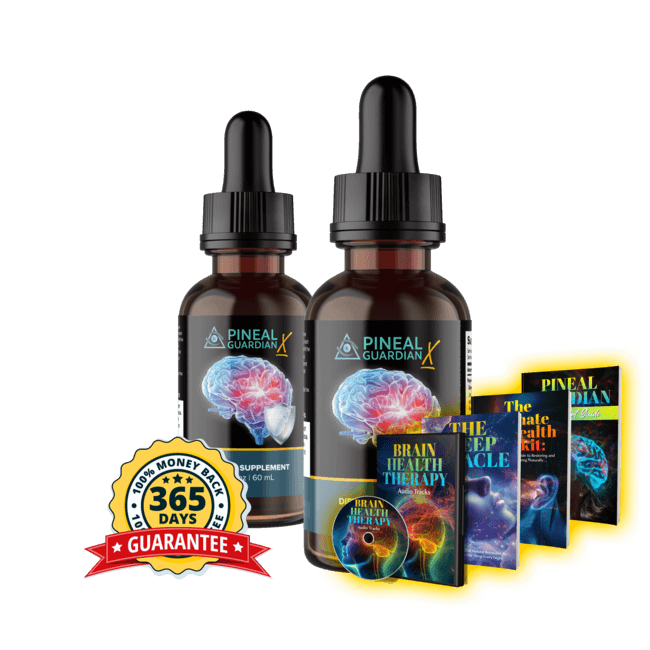
The product is sold in one-, three-, and six-bottle packages, with the six-bottle option (a 180-day supply) positioned as the flagship. Pricing sits at approximately $39 per bottle at the bundle tier. Two digital bonus guides, one on sleep, one on hearing health, are included with the six-bottle purchase, along with free shipping and a 365-day money-back guarantee. Understanding what the product is, structurally and commercially, is the necessary foundation for evaluating both the science and the sales architecture that surrounds it.
The Problem It Targets
The fear that Pineal Guardian X exploits, and "exploit" is the analytically accurate word, used without moral judgment, is one of the most prevalent and legitimate health anxieties in the developed world. Alzheimer's disease affects an estimated 6.7 million Americans aged 65 and older, according to the Alzheimer's Association's 2023 Facts and Figures report, with projections suggesting that number could reach 13 million by 2050. Globally, the World Health Organization estimates that dementia affects more than 55 million people, with nearly 10 million new cases diagnosed annually. These are not manufactured statistics; the fear the VSL is selling to is grounded in a genuine, worsening public health crisis for which conventional medicine currently offers only symptomatic management, not reversal or cure.
What makes Alzheimer's disease particularly potent as a commercial pain point, and this is important for understanding why the VSL is structured the way it is, is that it erases not just function but identity. The VSL understands this intuitively. It does not dwell on cognitive test scores or biomarkers; it dwells on the moment a wife fails to recognize her husband of four decades, on the fear of "ending up as an empty shell with no soul," on grandchildren whose names slip away. This is not incidental emotional color; it is a deliberate activation of what psychologists call existential threat, a category of fear that bypasses rational deliberation and drives action more reliably than factual argument alone. The CDC's National Center for Health Statistics does confirm that dementia and Alzheimer's disease are among the leading causes of death and disability in older Americans, and that fluoride exposure through municipal water systems is widespread, more than 200 million Americans receive fluoridated water, according to the CDC, though the VSL's use of this statistic significantly overstates the scientific consensus on fluoride's role in Alzheimer's specifically.
The VSL also targets a secondary pain that is nearly as powerful as the fear of the disease itself: the exhaustion and disappointment of having tried and failed with conventional treatments. Named prescription medications, donepezil, galantamine, rivastigmine, are listed specifically, not as strawmen but as drugs that real patients use and that do carry the side-effect profiles the VSL describes. By acknowledging the legitimate frustration with these medications, the VSL earns a kind of credibility with its audience before pivoting to its own solution. This is a classic Problem-Agitate-Solution (PAS) structure, but deployed with unusual emotional depth: the problem is named, the agitation is extended through a twenty-minute personal narrative, and the solution arrives only after the audience has been fully marinated in both the fear of the disease and the failure of existing remedies.
How Pineal Guardian X Works
The central mechanism claim of Pineal Guardian X rests on a three-part chain of reasoning. First, fluoride, present in tap water and many consumer products, accumulates in the pineal gland over decades, calcifying and hardening it. Second, this calcification suppresses the gland's production of melatonin, which the VSL characterizes not merely as a sleep hormone but as a powerful "neuroprotector" that clears brain inflammation, stimulates neurogenesis, and prevents the amyloid plaques and neurofibrillary tangles associated with Alzheimer's disease. Third, this suppression creates what the fictional Dr. Harrison calls "neural drought", a state in which the brain's natural defenses are stripped away, leaving it vulnerable to progressive neurodegeneration. The solution, accordingly, is to decalcify the pineal gland and reactivate melatonin production through a specific blend of natural compounds.
Each of these three steps contains a kernel of real science that has been selectively amplified and causally linked in ways that go beyond what the current evidence supports. Pineal gland calcification is genuinely well-documented: it is among the most commonly calcified structures in the human brain, with prevalence rates of 40-75% in adults depending on the imaging method and population studied, according to research published in the Journal of Neuroscience. Fluoride does accumulate in the pineal gland, a finding documented by Jennifer Luke in research published in Caries Research (2001), and the pineal gland does contain the highest fluoride concentration of any soft tissue in the body. Melatonin does have documented antioxidant and neuroprotective properties in laboratory and animal studies, and declining melatonin production with age is a real phenomenon. What the VSL does is take these real, isolated findings and construct a clean causal narrative, fluoride → calcification → melatonin drought → Alzheimer's, that has not been established in peer-reviewed human clinical research.
The fluoride-Alzheimer's link is the most contested piece of this chain. The VSL references a Harvard researcher named "Dr. Philippe Rangon" whose findings were allegedly suppressed; this appears to be a distorted reference to Dr. Philippe Grandjean, a Danish epidemiologist at Harvard T.H. Chan School of Public Health who co-authored a 2012 meta-analysis in Environmental Health Perspectives examining fluoride exposure and children's IQ in high-fluoride regions of China. That study has genuine scientific standing and has been widely discussed, but it studied childhood neurodevelopmental effects in populations exposed to fluoride levels far above those typical in US municipal water systems, it did not study Alzheimer's disease in aging adults, and Grandjean himself has not claimed the link the VSL attributes to him. The VSL's rendering of this research significantly expands its scope and changes its subject population. A 2020 review in JAMA Pediatrics by Green et al. did find associations between fluoride exposure and lower IQ in children, which renewed debate, but the mechanistic leap from childhood IQ effects to adult Alzheimer's reversal through a dietary supplement remains, at present, scientifically unsupported.
Curious how other VSLs in this niche structure their pitch? Keep reading, the next section maps exactly which persuasion mechanics are doing the heavy lifting throughout this letter.
Key Ingredients and Components
The formulation of Pineal Guardian X draws on a mix of ingredients with varying degrees of research support, ranging from reasonably well-studied (Lion's Mane, Bacopa monnieri, ginkgo biloba) to more speculative in the specific context claimed (moringa, tamarind, chlorella). The VSL presents the ingredient list through Dr. Harrison's fictional consultation, naming specific studies for each compound. Several of those study citations include real journal names, Journal of Neuropharmacology, Frontiers in Endocrinology, Neuroscience Letters, Neurobiology of Aging, but the specific trials described (Kyoto University, University of Hawaii pharmacology department, University of Pittsburgh CT scan study) could not be independently verified as accurately represented. This does not prove they are fabricated, but it means they should not be cited as confirmed sources of product efficacy.
Below is an assessment of each ingredient based on publicly available research, independent of the VSL's claims:
Yamabushitake (Lion's Mane mushroom, Hericium erinaceus): One of the most-researched ingredients on this list for cognitive applications. A genuine randomized controlled trial by Mori et al. (2009), published in Phytotherapy Research, found that 250 mg of dried Lion's Mane powder three times daily for 16 weeks significantly improved cognitive function scores in adults with mild cognitive impairment compared to placebo. The proposed mechanism involves stimulation of Nerve Growth Factor (NGF). The VSL's claim that it specifically targets pineal gland fluoride accumulation is not supported by the existing literature; its general neuroprotective and neurogenic properties are better documented.
Spirulina: A blue-green algae with a well-established antioxidant profile. Research published in Nutrients and other journals supports anti-inflammatory and neuroprotective effects in animal models. The tryptophan-to-melatonin pathway the VSL describes is biochemically plausible, tryptophan is indeed a precursor to serotonin and melatonin, but the clinical translation to meaningful melatonin increases in humans at standard supplement doses is not well established.
Moringa (Moringa oleifera): Contains a broad range of antioxidants and anti-inflammatory compounds. Some preliminary research supports neuroprotective effects in animal models, but robust human clinical trials specifically linking moringa to pineal gland decalcification or Alzheimer's reversal are not available in the peer-reviewed literature.
Tamarind extract: Has been studied for anti-inflammatory properties, with some animal-model evidence of neurological benefit. The VSL's citation of a Journal of Pharmacy and Technology study on Alzheimer's-related inflammation is plausible in structure; the journal exists, but the specific study as described could not be independently confirmed.
French maritime pine bark extract (Pycnogenol): Has one of the stronger evidence bases on this list. A study by Belcaro et al. (2014) in the Journal of Neurosurgical Sciences found improvements in attention and memory in students taking Pycnogenol. The VSL's claim about blood-brain barrier penetration via increased blood flow is consistent with Pycnogenol's known mechanisms, though the assertion that the pineal gland's position "outside the blood-brain barrier" makes it a direct target is a simplification of complex neuroanatomy.
Chlorella: An algae with documented heavy-metal chelation properties in animal studies; some evidence for its ability to bind and facilitate excretion of various toxins. Its application specifically to fluoride removal from the pineal gland in living humans has not been demonstrated in peer-reviewed clinical trials.
Ginkgo biloba: Among the most studied herbal compounds for cognitive support. A large randomized trial, the GEM study, published in JAMA (2008), found that ginkgo biloba did not prevent cognitive decline or Alzheimer's disease in older adults. More recent smaller studies have found modest benefits in attention and processing speed. The evidence is mixed and does not support the reversal claims the VSL makes.
Bacopa monnieri: Reasonably good evidence for improvements in memory consolidation and speed of information processing in healthy adults. A meta-analysis by Kongkeaw et al. (2014) in the Journal of Ethnopharmacology reviewed nine randomized controlled trials and found consistent improvements in cognitive test performance. This is among the better-supported ingredients for memory applications specifically.
Mahogany neem: The least-documented ingredient on the list for cognitive applications. Neem (Azadirachta indica) has a long history in Ayurvedic medicine, and some research exists on its anti-inflammatory properties, but specific studies linking it to pineal gland health or Alzheimer's prevention are not available in mainstream neuroscience literature.
Hooks and Ad Angles
The VSL opens with what is, technically, two simultaneous hooks compressed into a single sentence: "This is an urgent warning for anyone who's ever walked into a room and forgotten why." The phrase "urgent warning" is a pattern interrupt, a disruption of the viewer's ambient cognitive state through the introduction of threat salience, a mechanism Cialdini identified as one of the most reliable ways to capture attention in a distracted environment. But the second half of the hook, the walked-into-a-room detail, is doing something more sophisticated: it is a category entry point (Sharp, 2010) that activates a near-universal memory associated with cognitive anxiety. Almost every adult over fifty has experienced this moment, and naming it immediately creates the sensation that the speaker knows something personal about the viewer's life. The hook is not merely emotionally compelling; it is demographically precise.
The structural move that follows, "Harvard Medical School has just revealed a disturbing link between a toxic mineral and skyrocketing rates of Alzheimer's", compounds the pattern interrupt with an open loop (a term from screenwriting theory, widely applied in direct response by Gary Halbert and others): the "toxic mineral" is not named, creating an information gap that the viewer's brain is neurologically driven to close. This is a textbook curiosity gap, and it is well-executed. The VSL then holds the loop open for several minutes before revealing "fluoride" as the answer, by which point the viewer has been walking with the narrator through his wife's decline and is emotionally primed to receive the revelation. This is what Eugene Schwartz would recognize as a stage-4 market sophistication move: the audience for dementia supplements has seen every direct pitch, every "memory pill," every "brain booster," and so the VSL bypasses the category entirely and enters through a new mechanism framing that makes the existing solution landscape feel obsolete.
Secondary hooks observed throughout the VSL include:
- The vow-renewal scene, a visceral specificity hook that makes abstract fear concrete and personal
- "Pharmaceutical companies are desperately trying to bury this presentation", a suppression frame that creates urgency and positions the viewer as part of an informed in-group
- "49,881 men and women", a social proof hook using an odd, specific number to signal authenticity
- "The moment you begin using this, your mind will snap back to life like someone just flipped a switch", a transformation speed hook that collapses the expected timeline of recovery
- "This has nothing to do with your age, your genetics, or your overall health", a belief-busting hook that invalidates every prior explanation the viewer may have accepted for their condition
Testable ad headline variations for Meta or YouTube, based on the VSL's most effective angles:
- "The Mineral in Your Tap Water That May Be Slowly Erasing Your Memory"
- "She Didn't Recognize Her Husband of 40 Years, Then He Found This"
- "Harvard Researcher Risked His Career to Expose This, Big Pharma Is Furious"
- "Why Every Brain Supplement You've Tried Has Failed (And What Actually Works)"
- "The Real Reason Your Memory Is Fading Has Nothing to Do With Age"
Psychological Triggers and Persuasion Tactics
The persuasive architecture of the Pineal Guardian X VSL is not a scattershot collection of emotional appeals; it is a deliberately sequenced stack in which each layer of persuasion prepares the ground for the next. The letter opens with existential fear (loss of identity and recognition), moves to institutional authority (Harvard, clinical trials), pivots to personal narrative (Mark and Christine), introduces the false enemy (Big Pharma suppression), then arrives at social proof (nearly 50,000 users) before the offer is even presented. This sequencing mirrors what Cialdini would call a pre-suasion structure: by the time the product price appears, the viewer has already been moved through fear, identification with the narrator, acceptance of the mechanism, and social validation. The price and guarantee arrive into a cognitive environment that has already been prepared to say yes.
The guarantee structure itself is worth examining as a persuasion device. A 365-day, no-return-required refund policy is not merely customer service policy; it is Thaler's endowment effect deployed offensively. By explicitly saying "you don't even have to return the empty bottles," the VSL signals such extreme confidence in the product that the asymmetry of the offer feels irrational to reject, even to a skeptical viewer. The psychological effect is to make the decision to not purchase feel like the risky choice.
Specific persuasion tactics deployed throughout the VSL:
Loss aversion (Kahneman & Tversky, Prospect Theory, 1979): The nursing home scenario, "sitting and staring out the window, unable to recognize your family", is framed not as a possible outcome but as the certain destination for those who do not act. The pain of the loss is made vivid and immediate; the gain from the product is framed as the restoration of a baseline, not an improvement, which is how loss-framed messaging consistently outperforms gain-framed messaging in health contexts.
False enemy / tribal identity (Godin, Tribes, 2008): Big Pharma and the "billion-dollar memory care industry" are cast as active suppressors of a life-saving truth. This framing performs two functions simultaneously: it explains why the viewer has never heard of this before (suppression), and it bonds the viewer with Mark Thompson and Dr. Harrison as fellow members of an oppressed truth-seeking community.
Authority borrowing (Cialdini, Influence, 1984): Harvard is mentioned as an institutional authority throughout the VSL, but the actual endorsement being claimed is consistently ambiguous. The product is called "Harvard-backed" based on research that was conducted at Harvard-affiliated institutions on different populations for different purposes. This is borrowed authority, real institutions referenced in ways that imply endorsement they did not give.
Epiphany bridge (Russell Brunson, Expert Secrets, 2017): The vow-renewal scene functions as the epiphany moment in the hero's journey: the moment when the problem becomes undeniable and the search for a solution becomes existentially urgent. By placing this scene early and spending nearly fifteen minutes on the personal narrative before introducing the mechanism, the VSL ensures that the viewer has emotionally adopted Mark's frame before any scientific claim is made.
Specificity as credibility signal: The number 49,881 (not 50,000), the 97% average improvement claim, the 42% of patients showing increased pineal gland size, these hyper-specific figures are a well-documented copywriting technique (associated with Clayton Makepeace and others) in which odd, precise numbers are used to imply that they come from real data rather than marketing estimates. The effect is to make unverifiable claims feel verified.
Scarcity and urgency stacking (Cialdini, Scarcity principle): The VSL layers at least four distinct urgency triggers, limited batch availability, multi-month restock delays, pharmaceutical suppression risk, and a time-limited discount, in the closing sequence. Each trigger individually might be dismissed; stacked together, they create a cumulative sense that delay equals loss.
Cognitive dissonance exploitation (Festinger, 1957): The VSL frames every previous treatment failure, medications, supplements, diet changes, as confirmation that the viewer was addressing the wrong root cause. This reframing converts past failure into evidence for the current product's logic: "of course nothing worked, because nothing else targets fluoride in the pineal gland."
Want to see how these tactics compare across 50+ VSLs? That's exactly what Intel Services is built to show you.
Scientific and Authority Signals
The authority infrastructure of the Pineal Guardian X VSL is extensive and layered, but a careful reading reveals that almost all of it falls into the category of borrowed or ambiguous authority rather than legitimate endorsement. Harvard Medical School and the Harvard School of Public Health are mentioned by name repeatedly, and real researchers affiliated with Harvard are referenced, but neither institution has endorsed, studied, or evaluated Pineal Guardian X. The product is called "Harvard-backed" because the mechanism theory it is built on references studies conducted at or adjacent to Harvard; this is the rhetorical equivalent of a restaurant calling itself "Michelin-starred" because its chef once cooked in a city where Michelin restaurants exist.
The figure of "Dr. Harrison", introduced as a reclusive neuroscientist who led a major Berkeley research center and now practices privately near Boston, is the VSL's primary scientific authority, and he is an unverifiable character. No full name, no institutional affiliation with a searchable record, no published research is attributed to him directly. In direct-response copywriting, this composite character type is a known device: it provides the credibility of an expert figure without the verifiability of a real one. This does not automatically mean Dr. Harrison is entirely fictional, some supplement VSLs do involve real but anonymized consultants, but the lack of any verifiable credentials should register as a significant due-diligence flag for the consumer.
Several of the studies cited in the VSL reference real journals, Phytotherapy Research, Neurobiology of Aging, Frontiers in Endocrinology, Journal of Neuropharmacology, and some of the general findings attributed to those journals are consistent with the broader published literature. For instance, multiple published studies do support Lion's Mane mushroom's effects on mild cognitive impairment, as documented by Mori et al. (2009) in Phytotherapy Research. Similarly, Bacopa monnieri's effects on memory consolidation have been supported in meta-analyses, including Kongkeaw et al. (2014) in the Journal of Ethnopharmacology. However, the specific trials described in the VSL, particularly the Kyoto University pineal gland CT scan study, the University of Hawaii spirulina trial, and the University of Pittsburgh moringa study, could not be independently verified as accurately described. Citing a real journal name alongside an unverifiable study is a common technique for creating the impression of comprehensive scientific backing without requiring the audience to check.
The reference to "Dr. Philippe Rangon" from Harvard, whose fluoride neurotoxicity research was allegedly suppressed, appears to be a distortion of real work by Dr. Philippe Grandjean and colleagues, whose 2012 meta-analysis in Environmental Health Perspectives examined fluoride and childhood IQ. That paper is real and scientifically credible, but its subject population (children in high-fluoride areas of China), its outcome measure (IQ, not Alzheimer's), and its fluoride exposure levels (far above US municipal water standards) make it a poor foundation for the causal claims the VSL constructs around it. Grandjean himself has not publicly endorsed the fluoride-Alzheimer's-pineal gland framework presented here.
The Offer, Pricing, and Risk Reversal
The offer structure of Pineal Guardian X is a textbook direct-response stack, executed with above-average polish. The anchor price, $249 per bottle, is introduced early in the offer sequence as the "true value" benchmark, against which the actual $39-per-bottle (six-bottle package) price is measured. This creates an apparent saving of more than 84%, a discount magnitude specifically designed to trigger Thaler's mental accounting: the buyer frames the transaction not as "spending $234" but as "saving $1,260." Whether the $249 anchor reflects any real-world pricing, such as an actual comparable product in a clinical setting, is never established. It appears to function as a pure rhetorical anchor rather than a market-benchmarked one, which is the less defensible form of price anchoring.
The two bonus guides, The Sleep Miracle and The Ultimate Ear Health Toolkit, serve a dual function. Structurally, they increase the perceived value of the purchase without increasing its marginal cost; psychologically, they address secondary health concerns (sleep disruption, hearing loss) that are common in the same demographic the product targets, extending the emotional benefit beyond memory and creating additional reasons to purchase for buyers who are on the fence about the primary claim. Free shipping (valued at $9.95) is included as a small but psychologically meaningful additional concession, research in behavioral economics consistently shows that "free" shipping produces a disproportionate positive response relative to its actual monetary value.
The 365-day guarantee is the most aggressively pro-consumer element of the offer, and it is worth taking seriously as a trust signal. A full-year, no-return-required refund policy does shift meaningful financial risk to the seller, and it creates a genuine low-stakes entry point for skeptical buyers. The guarantee language, "you don't even have to return the empty bottles", is designed to preemptively neutralize the friction of return logistics, which research in consumer behavior shows is one of the most common reasons people do not claim refunds they are entitled to. Whether that friction-removal is an act of genuine generosity or a calculated anticipation that most buyers will not bother claiming refunds regardless is a question the consumer must answer for themselves.
Who This Is For (and Who It Isn't)
The ideal buyer for Pineal Guardian X, based on both the explicit and implicit targeting of the VSL, is an adult between 60 and 80 years old, or an adult child acting on behalf of an aging parent, who has experienced genuine, distressing memory lapses, has tried mainstream approaches (prescription medications, basic supplements, dietary changes) without satisfaction, distrusts the pharmaceutical industry at least partially, and is responsive to natural health solutions framed as suppressed alternatives to conventional medicine. This is not a narrow demographic; it describes tens of millions of Americans who are living with the anxiety of cognitive aging and have found the existing medical toolkit inadequate. For this person, the emotional resonance of the vow-renewal scene, the validation of having "tried everything," and the appeal of a natural, risk-reversed solution are genuinely compelling, and the product's ingredient list, whatever its limitations relative to the VSL's claims, does contain compounds with legitimate research support for cognitive health applications.
There is a distinct second audience the VSL targets: people without clinical memory impairment who are motivated by prevention. The FAQ section explicitly broadens the recommendation to "anyone who is even slightly concerned about their brain health," and the language of the offer, framing fluoride exposure as a universal threat, effectively positions the product for the worried-well, not just the symptomatic. For this buyer, several of the ingredients (Lion's Mane, Bacopa monnieri, pine bark extract) do have some evidence for modest cognitive maintenance in healthy adults, which means the product is not without any rational basis for a preventive use case.
Who should think carefully before purchasing: anyone expecting the product to reverse advanced or moderate Alzheimer's disease, which no dietary supplement has been clinically demonstrated to do; anyone who is already on prescription medications for cognitive conditions, without first consulting their physician (several ingredients, particularly ginkgo biloba, are known to interact with anticoagulant medications); and anyone whose primary motivation is the fluoride-pineal gland mechanism specifically, since that mechanism, while conceptually interesting, has not been validated through peer-reviewed human clinical trials as the causal pathway to Alzheimer's that the VSL presents it as.
Still weighing whether this product fits your situation? The FAQ section below addresses the most common questions, including the ones people search for but are afraid to ask directly.
Frequently Asked Questions
Q: Is Pineal Guardian X a scam?
A: The product contains real, commercially available ingredients, several of which have legitimate research support for cognitive health. However, the VSL makes claims, particularly about reversing Alzheimer's disease and fluoride-caused pineal gland calcification, that go significantly beyond what the published clinical evidence supports. Calling it a scam in the strict sense requires evidence of deliberate fraud; calling it over-claimed would be accurate based on a close reading of the science.
Q: Does Pineal Guardian X really work for memory loss?
A: Several of the core ingredients, Lion's Mane mushroom, Bacopa monnieri, and French maritime pine bark extract, have published evidence supporting modest improvements in memory and cognitive function in aging adults. Whether the specific formulation, doses, and delivery mechanism of Pineal Guardian X produce the dramatic results described in the VSL cannot be determined without independent clinical trials of the product as formulated.
Q: Are there any side effects of Pineal Guardian X?
A: The individual ingredients are generally considered low-risk at typical supplement doses. However, ginkgo biloba can interact with blood-thinning medications (including aspirin and warfarin), and Lion's Mane has been associated with allergic reactions in rare cases. Bacopa monnieri can cause gastrointestinal discomfort in some individuals. Anyone taking prescription medications should consult a physician before starting this or any new supplement.
Q: Is it safe for seniors with existing health conditions?
A: The sublingual liquid format and natural ingredient profile make it physically accessible for most older adults, but "natural" does not mean universally safe. Seniors with cardiovascular conditions, those on anticoagulant or antiplatelet therapy, and those with autoimmune conditions should get medical clearance before use.
Q: Is fluoride really linked to Alzheimer's disease?
A: The science is genuinely preliminary and contested. Fluoride does accumulate in the pineal gland (Luke, Caries Research, 2001), and some research, including Grandjean et al.'s 2012 meta-analysis in Environmental Health Perspectives, has linked high-level fluoride exposure to neurodevelopmental effects in children. The direct causal link between typical US fluoride exposure, pineal gland calcification, and adult Alzheimer's disease has not been established in peer-reviewed clinical research. The VSL significantly overstates the scientific consensus on this specific question.
Q: How long does Pineal Guardian X take to work?
A: The VSL describes Christine noticing improvements by day 7 and full transformation by day 30, while also recommending a minimum of 180 days for full effect. Most research on Lion's Mane and Bacopa monnieri shows meaningful cognitive effects emerging after 8-16 weeks of consistent use. Single-digit-day transformations as described in the testimonials are not consistent with the known pharmacological timelines of the cited ingredients.
Q: What is the refund policy, and is it honored?
A: The VSL offers a 365-day, no-questions-asked, no-return-required money-back guarantee. This is an unusually generous policy for the supplement category. Independent consumer review platforms carry mixed feedback about direct-response supplement companies in general regarding guarantee fulfillment; prospective buyers should retain their order confirmation and payment records as a precaution.
Q: How does Pineal Guardian X compare to other memory supplements?
A: Several of the individual ingredients, particularly Lion's Mane and Bacopa monnieri, are available as standalone supplements from established brands at comparable or lower per-dose costs with more transparent dosage disclosure. The unique value proposition of Pineal Guardian X is its proprietary combination and the specific fluoride-pineal gland mechanism framing; neither the combination nor the mechanism claim has been independently validated against competing formulations.
Final Take
The Pineal Guardian X VSL is, from a craft perspective, one of the more sophisticated examples of direct-response copywriting in the cognitive health category. It deploys a genuine epidemiological fear (Alzheimer's disease), a real but selectively applied scientific concept (pineal gland calcification and melatonin), a fully realized protagonist and emotional story arc, and a layered persuasion sequence that would be recognizable to anyone trained in behavioral economics or advanced copywriting. The result is a letter that feels less like an advertisement than like a documentary, and that quality, more than any single claim within it, is what demands the closest scrutiny from a prospective buyer.
The honest assessment of the product itself is more nuanced than either a full endorsement or a flat dismissal. The ingredient list is not fraudulent; several components have legitimate, peer-reviewed backing for cognitive applications, and the sublingual delivery format is a reasonable pharmaceutical approach. What is not supported by the existing evidence is the magnitude of the claims, "permanently reverse Alzheimer's," "97% improvement in memory recall," "flush toxic fluoride from your brain", or the specific causal mechanism, which extrapolates from real but fragmentary science into a clean, sellable story that the data does not yet tell. The gap between "these ingredients have neuroprotective properties" and "this product reverses Alzheimer's disease" is not a small gap; it is the distance between plausible and proven, and that distance matters considerably when the buyer is a frightened 70-year-old or the child of one.
The VSL also demonstrates something important about where the cognitive health supplement market has arrived in terms of buyer sophistication. The traditional "boost your brain" pitch no longer works at scale for an audience that has been exposed to dozens of similar products. Pineal Guardian X responds to this market maturity by going deeper into mechanism, a stage-4 Schwartz move, and by embedding the mechanism claim in a conspiracy narrative that pre-explains why previous products failed. This is not a new technique in health direct response, but it is being executed here with a level of narrative craft that sets it above the category average, which is precisely why it warrants careful analysis rather than reflexive dismissal.
For the reader who has made it to this point: if you are researching this product for yourself or a loved one dealing with genuine cognitive decline, the most defensible path is to discuss the specific ingredients, particularly Lion's Mane, Bacopa monnieri, and pine bark extract, with a physician who is familiar with the supplement literature, rather than purchasing on the basis of the VSL's mechanism claims alone. The emotional case this letter makes is powerful and, in its acknowledgment of real fear and real frustration, not entirely dishonest. The scientific case is a different matter.
This breakdown is part of Intel Services, our ongoing library of VSL and ad-copy analyses. If you're researching similar products in the cognitive health, memory support, or anti-aging supplement categories, keep reading.
Disclaimer: This article is for research and educational purposes only. It is not medical, legal, or financial advice, and it is not affiliated with the product or its makers. Always consult a qualified professional before making health or financial decisions.
Comments(0)
No comments yet. Members, start the conversation below.
Related reads
 reviews
Mind Lab Pro Review: Does the 30-Day Study Match v4?
Mind Lab Pro v4 lists exact amounts for 11 ingredients and contains no caffeine or stimulants, according to its official page. A 30-day finished-product study reported favorable memory findings, but its abstract does not identify v4 or disclose the tested form or dose.
Read reviews
Life Extension Two-Per-Day Multivitamin Review: Evidence Limits
Life Extension Two-Per-Day is a 120-capsule multivitamin displayed as a 60-day supply. Its identity and dated prices are verified, but the supplied evidence does not reproduce the complete quantitative Supplement Facts panel or include a trial of the finished product. Research involving another multivitamin cannot prove that these capsules improve memory or deliver Life Extension’s broader health-support claims.
Read reviews
Ritual Essential for Women 50+ Review: Label, Study Fit, and Verdict
Ritual Essential for Women 50+ is an iron-free capsule multivitamin positioned by Ritual for women after menopause. Its verified label lists 100 micrograms of vitamin K2 as menaquinone-7. The supplied study did not test this finished product, and the packet provides no exact price.
Read