Prevagen Review: Marketing Analysis of Memory-Loss Claims
The VSL opens on a small domestic failure: keys misplaced, appointments missed, a sentence abandoned midstream because the right word will not arrive. Prevagen enters this frame not as an ordinary memory supplement, but as the implied answer to a fear already made intimate. For…
8,226+
Videos & Ads
+50-100
Fresh Daily
$29.90
Per Month
Full Access
12.5 TB database · 72+ niches · 30 min read
The VSL opens on a small domestic failure: keys misplaced, appointments missed, a sentence abandoned midstream because the right word will not arrive. Prevagen enters this frame not as an ordinary memory supplement, but as the implied answer to a fear already made intimate. For a Prevagen review, that opening matters because the sales argument begins before the product is fully visible. The script asks, “What happened to that sharp memory,” then quickly converts forgetfulness into a possible “warning sign” of decline. This is classic PAS: agitate the symptom, enlarge the threat, then prepare the rescue. The implication is blunt. The buyer is not being sold sharper recall first; they are being sold relief from the thought that ordinary lapses may be the beginning of dependence.
The narrator, Christopher Euler, presents himself as a brain-health and anti-aging researcher whose authority is fused with a family crisis. He claims his mother’s decline led him from helplessness to discovery, including the moment she allegedly failed to recognize him and reached for a garden fork. The VSL then widens the story into an epiphany bridge, Brunson’s term for using personal revelation to move the audience from skepticism to belief. Its promised mechanism is not merely “memory support,” but a “deep brain cleanse” against “brain-leaching toxins” found in “the air you breathe.” This creates a false enemy with unusual efficiency. Aging, genetics, fish oil, nootropics, and pharmaceuticals are displaced; toxins become the hidden villain. For older adults worried about names, dates, conversations, and independence, that villain gives fear a shape.
The sales architecture is built from familiar persuasion theory, but its emotional sequencing is unusually compressed. The hook follows AIDA almost mechanically: attention through memory loss, interest through Harvard and Oxford references, desire through “razor-sharp memory,” and action through the instruction to “watch this video all the way through.” Cialdini appears in the authority stack of universities, doctors, journals, and unnamed elite physicians. Kahneman is present in the loss framing: the script dwells less on what buyers might gain than on what they might lose. Schwartz would recognize the market sophistication problem, because the VSL must explain why common solutions have disappointed people before offering a new mechanism. Kennedy’s education-first logic also appears, as the pitch poses as an investigation before it becomes an offer.
This analysis is therefore not a clinical judgment on efficacy, nor a consumer-health recommendation. It is a close reading of the sales architecture: how the VSL names pain, assigns blame, borrows credibility, opens loops, and reframes the buying decision for a memory-anxious audience. The useful audience includes affiliate marketers, copywriters, compliance reviewers, and operators studying brain-health offers in a crowded supplement category. Festinger’s cognitive dissonance theory is especially relevant because the script pressures viewers to reconcile two beliefs: that their forgetfulness may be serious, and that ignoring the presentation could be irresponsible. The central question is not simply whether the promise sounds persuasive. It is: how does this VSL turn everyday forgetting into a purchase-worthy threat?
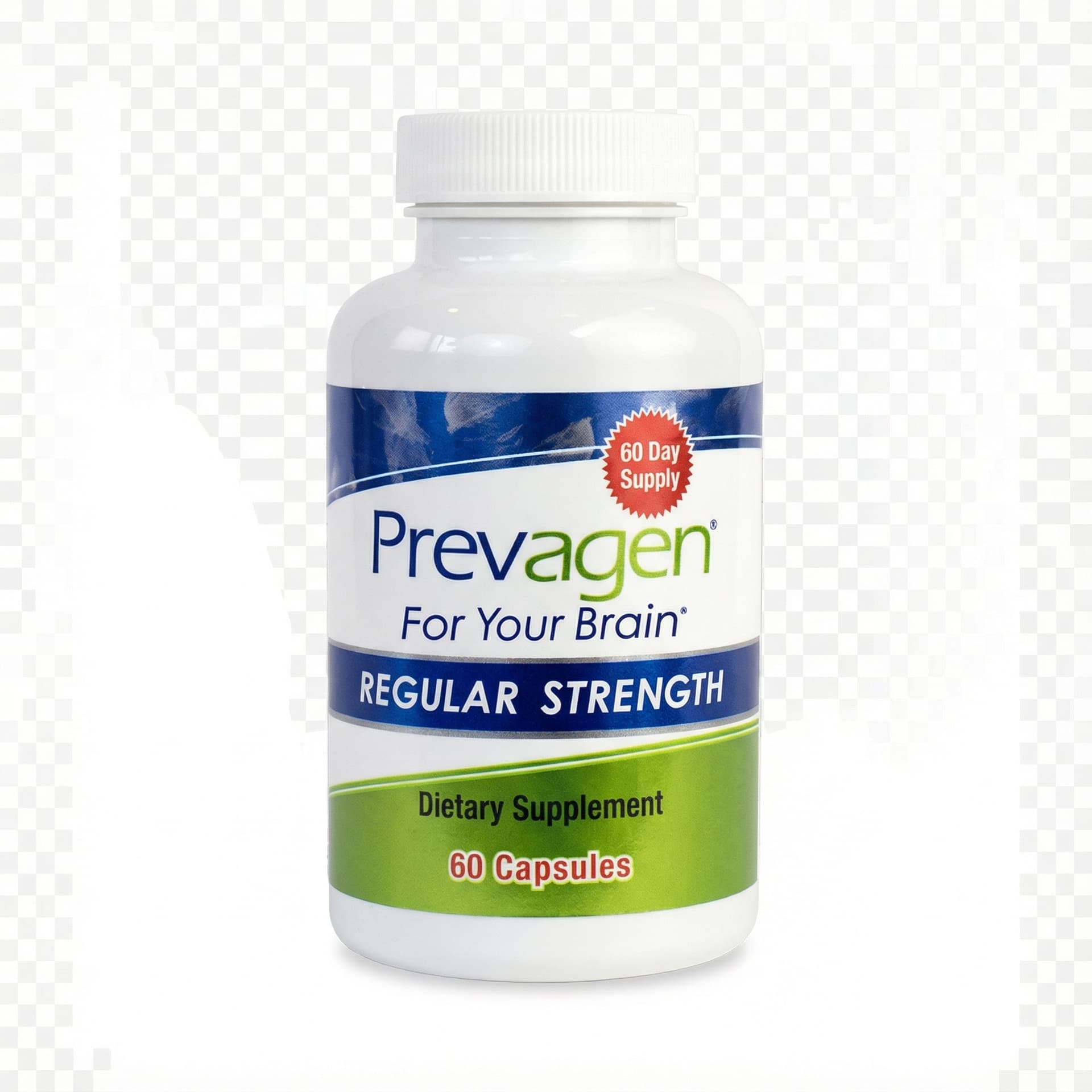
What Is Prevagen?
Prevagen is positioned in this VSL as an oral memory and brain-health supplement, but its selling frame is less conventional nootropic than rescue narrative. The product sits in the Health & Wellness category, aimed at older adults who notice “forget where you left your keys,” missed appointments, lost words, or names slipping away. Its format is simple: a daily supplement built around a claimed “weird medicinal salmon recipe,” described as distinct from fish oil, omega-3, and ordinary brain boosters. The VSL uses PAS aggressively, turning mild forgetfulness into a possible “warning sign of something far more serious.” That choice reflects Kahneman’s loss aversion more than standard benefit advertising. The implication is clear: Prevagen is not sold as optimization for ambitious biohackers, but as protection against decline, dependency, and family disconnection.
The target user is likely 55+, skewing toward retirees or near-retirees who still see themselves as independent, socially competent, and responsible to family. Gender is broad, though the maternal testimonial gives the pitch a caregiving and family-memory emotional center. Psychographically, the buyer is skeptical of pharmaceuticals but not anti-science; the VSL therefore borrows institutional authority from Harvard, Oxford Neuroscientists, Alzheimer’s Research and Therapy, and an unnamed neurologist. Cialdini would recognize the authority stacking, while Festinger would note how the script resolves cognitive dissonance: the viewer can distrust “Big Pharma” while still feeling medically validated. Christopher Euler is presented as the creator-authority, a brain health and anti-aging researcher with “over two decades” of experience, “hundreds of scientific articles,” and books reaching 68,000 people. The claim is not modest. It says users may regain “razor-sharp memory of someone half your age.”
By Schwartz’s market sophistication model, the VSL operates in a later-stage memory-supplement market where simple claims like “supports recall” are no longer enough. The pitch needs a new mechanism, so it introduces “brain-leaching toxins” as the false enemy and the salmon recipe as the epiphany bridge from fear to control. Its listed components include Japanese Alpine Ginkgo biloba, HydroPure Bacopa Moneri Leaf Extract, phosphatidylserine extracted from salmon, and salmon-associated nutrients in claimed “exact dosages.” The broader trend is toxin anxiety: air, water, food, microplastics, PFAs, heavy metals, and hidden exposure. The VSL intensifies this with claims that over 200 million Americans are exposed daily and that 98% of memory-loss drugs fail in clinical trials. In market terms, Prevagen is sold as a natural, anti-pharma, research-coded memory intervention for people who fear normal aging may not be normal at all.
The Problem It Targets
Prevagen targets forgetfulness less as a symptom than as an identity threat: the competent adult who “could remember dates, names, faces” now faces the humiliation of misplaced keys, stalled conversations, and family disconnection. The VSL’s PAS structure is unusually blunt. It agitates ordinary lapses into a staircase toward “forgetting the faces of your own sons,” then positions the supplement narrative as rescue. Kahneman’s loss aversion explains the force of that move: preserving independence feels more urgent than gaining marginal mental sharpness. The deeper diagnostic claim is not simply that memory is weakening, but that the viewer has been misled about why. That distinction matters commercially because it converts a common, ambiguous complaint into a named enemy with a purchasable answer.
The script’s AIDA engine depends on exoneration. Attention comes through the pattern interrupt of a “weird medicinal salmon recipe,” interest through “brain-leaching toxins,” desire through “razor-sharp memory,” and action through the instruction to “watch this video all the way through.” The viewer is not careless, old, or genetically unlucky. The viewer is contaminated. This is the false enemy at work in Brunson’s sense: aging, genetics, fish oil, and conventional drugs are displaced by toxins that “slither up into your brain.” Festinger would recognize the relief this offers to cognitive dissonance; people who fear decline but resist the label of decline receive a morally cleaner explanation. The implication is a larger addressable market than diagnosed dementia patients, because the offer speaks to anyone with anxiety around normal cognitive friction.
The VSL borrows from real science at the point where public fear is already justified. The WHO reports that 57 million people were living with dementia worldwide in 2021, with nearly 10 million new cases each year, and that dementia cost economies US$1.3 trillion in 2019 (WHO). Those numbers make memory a mass-market concern, not a niche wellness worry. Cialdini’s authority principle is then layered through Harvard, Oxford, neurologists, journals, and named doctors, even when the causal chain moves beyond what those references can bear. Air pollution, metabolic disease, and social isolation do appear in legitimate dementia-risk discussions; the VSL stretches that terrain into a detox story. Schwartz’s paradox of choice also helps explain the appeal: amid nootropics, drugs, fish oil, and lifestyle advice, a single villain simplifies the buying decision.
The cultural timing is favorable because aging consumers now live inside a contradiction: they are told dementia is not inevitable, yet they see few easy, immediate ways to reduce risk. Kennedy’s education-based marketing frame lets the VSL present itself as a briefing rather than a pitch, while the open loop around the “5-question quiz” delays skepticism long enough to build narrative momentum. The mother’s garden-fork episode functions as Brunson’s epiphany bridge, moving the claim from abstract science to family horror. It is melodramatic. It is also precise. The commercial opportunity sits in that gap between medical uncertainty and daily dread, where a supplement can sell not only memory support, but absolution from blame and a plan against dependency.
How Prevagen Works
Prevagen is presented less as a memory supplement than as a causal reversal system: find the hidden contaminant, purge it, recover recall. The VSL’s mechanism begins with PAS, moving from “forget where you left your keys” to “forgetting the faces of your own sons,” then recoding ordinary lapses as evidence of “brain-leaching toxins.” In AIDA terms, attention comes from the opening memory contrast, interest from the toxin theory, desire from “razor-sharp memory,” and action from the instruction to “watch this video.” The proposed pathway is vivid: toxins enter through “air you breathe,” water, and food, attach to neurons and synapses, then “suck away your memories.” That is a powerful pattern interrupt. It turns a familiar aging complaint into a contamination story, which Cialdini would recognize as authority plus scarcity working under fear.
Scientifically, the VSL mixes established concerns with speculative biological claims. There is legitimate research linking air pollution, heavy metals, poor metabolic health, inflammation, and sleep disruption to cognitive risk, usually at population scale and over long exposure periods. That does not prove a household “breeding ground” of toxins is actively leeching autobiographical memory from synapses in the mechanical way the script implies. The “deep brain cleanse” claim sits far beyond ordinary evidence. Ginkgo, bacopa, and phosphatidylserine have been studied for cognition, but effects, when found, are typically modest, domain-specific, and dependent on dose, duration, study quality, and baseline impairment. The VSL’s false enemy is therefore doing heavy work: aging, genetics, fish oil, nootropics, and drugs are dismissed so the “weird medicinal salmon recipe” can appear uniquely explanatory.
The numerical claims are rhetorically efficient but analytically thin. Saying 200 million Americans are exposed daily sounds enormous, yet that is roughly a majority of the country; exposure to environmental contaminants is not the same as clinically meaningful brain injury, nor does it establish that one supplement removes the risk. The 98% of memory loss drugs fail claim also needs careful parsing. Drug-development failure rates can be high in Alzheimer’s research, but failed pharmaceutical trials do not automatically validate an oral supplement or a salmon-derived mechanism. Kahneman’s loss aversion explains why these figures work: the audience is asked to weigh uncertain evidence against catastrophic images of dependence and “24-7 care.” Schwartz’s paradox of choice is also reduced by the script, because one villain and one remedy replace a confusing field of diagnoses, lifestyle interventions, and clinical uncertainty.
The fairest reading is that the VSL translates real anxieties and partial science into an overdetermined sales mechanism. Its epiphany bridge follows Brunson’s model: Christopher’s mother declines, medicine disappoints, a hidden cause appears, and the family story makes the solution emotionally legible. Kennedy’s education-based selling is visible in the promised quiz, toxin lesson, and supplement debunking, while Festinger’s cognitive dissonance is resolved by telling viewers their failed attempts failed for the wrong reason. The implication for buyers is straightforward: treat the mechanism as marketing until independently verified. A plausible memory-support product may still be worth considering for some consumers, but claims of flushing toxins, restoring youthlike cognition, or outperforming “someone half your age” demand stronger evidence than the VSL provides.
Curious how other VSLs in this niche structure their pitch? Keep reading - the psychological triggers section breaks down the architecture behind every claim above.
Key Ingredients and Components
Prevagen is framed less as a supplement than as a forensic answer to cognitive dread: ordinary lapses become evidence of “brain-leaching toxins,” and the formula becomes the investigative payoff. The VSL’s formulation story follows PAS with unusual discipline: forgetting keys, names, and appointments is the problem; “something far more serious” is the agitation; the “weird medicinal salmon recipe” is the solution. Its false enemy is not age but contamination, Big Pharma, and the consumer’s prior belief that decline is inevitable. Cialdini’s authority stacking appears in the Harvard, Oxford, neurologist, and journal references, while Kahneman’s loss aversion supplies the emotional pressure. The implication is clear. The ingredients are sold as a precision blend, but the evidence base is uneven.
The formulation process is presented as a Brunson-style epiphany bridge: a mother’s crisis, failed conventional care, a hidden mechanism, then a natural recipe “backed by neuroscience.” That sequence also borrows from AIDA and Kennedy’s education-based selling, because the VSL keeps an open loop around what the toxins are, why nootropics fail, and how the recipe supposedly performs a “deep brain cleanse.” Schwartz would recognize the sophistication: the prospect is problem-aware, solution-skeptical, and primed for a new mechanism. Festinger’s cognitive dissonance is managed by making prior supplement failures logical, not embarrassing. The claim that 98% of memory loss drugs fail intensifies that reframe. The commercial risk is that “exact dosages” and exotic sourcing sound scientific before they are actually verifiable.
Japanese Alpine Ginkgo biloba (Ginkgo biloba) - Ginkgo is a tree-leaf extract commonly marketed for circulation and cognition. The VSL positions it as mountain-harvested and part of a toxin-flushing memory protocol, not merely another “brain boosting” herb. Independent evidence is mixed: the Cochrane Database of Systematic Reviews has found limited or uncertain cognitive benefit depending on population and endpoint, with stronger claims generally unsupported in healthy adults. The “Japanese Alpine” sourcing claim is not a recognized clinical category in major research databases. Judgment: ambiguous for cognition, unverifiable for the sourcing claim.
HydroPure Bacopa Monnieri Leaf Extract (Bacopa monnieri) - Bacopa is an Ayurvedic botanical studied for memory, attention, and learning. The VSL’s claim rests on extraction purity, saying it uses “only pure water” to preserve actives. Trials and reviews in the Journal of Ethnopharmacology, Phytotherapy Research, and the British Journal of Clinical Pharmacology suggest possible modest memory effects after chronic use, but results vary by extract standardization, dose, and study quality. “HydroPure” is a branded process claim, not a widely indexed clinical ingredient identity. Judgment: modest evidence for standardized Bacopa, unverifiable for HydroPure specifically.
Phosphatidylserine (phosphatidylserine) - Phosphatidylserine is a phospholipid involved in neuronal cell membranes and signaling. The VSL gives it a proprietary aura by saying it is “specifically extracted from salmon,” folding it into the recipe’s pattern interrupt. Independent research is cautious: Nutritional Neuroscience reported no clear cognitive benefit in an age-associated memory impairment trial of soy-derived phosphatidylserine, while regulatory language around dementia-risk claims has historically been qualified and preliminary. Salmon-derived phosphatidylserine is not a well-established clinical category. Judgment: ambiguous.
Salmon (Salmo salar and related species) - Salmon is a nutrient-dense food associated with protein, vitamin D, selenium, and marine fats. The VSL insists the recipe has “nothing to do with Omega-3,” making salmon a theatrical mechanism rather than the familiar fish-oil story. Independent nutrition research supports broader dietary patterns including fish, but not a specific “medicinal salmon recipe” that flushes toxins from synapses. No major clinical database validates that named recipe as a standardized intervention. Judgment: strong as food, unverifiable as the VSL’s memory mechanism.
Hooks and Ad Angles
Prevagen opens with a question that functions less as inquiry than diagnosis: “What happened to that sharp memory” converts a private irritation into an unresolved threat. The line creates a curiosity gap in Loewenstein’s sense, because the viewer is made aware of missing information about a problem already felt in daily life. It also acts as a pattern interrupt, refusing the familiar supplement promise of better focus and instead staging a before-and-after identity contrast between the viewer’s younger self and present uncertainty. The hook’s evidence is ordinary: keys, names, dates, appointments, and the lost “train of thought.” Its interpretation is more aggressive. Forgetfulness is no longer benign aging; it is a clue in a larger causal story, which gives the VSL permission to escalate from inconvenience to fear.
The hook performs several jobs at once. It opens an open loop, frames aging as the false enemy, and prepares the later toxin explanation as an epiphany bridge rather than a sales claim. Cialdini’s social proof appears quickly when the script says “thousands Americans are defeating these toxins,” shifting the viewer from isolated worry to implied mass adoption. Schwartz’s breakthrough-advertising logic is visible in the sophistication of the market: the audience has likely heard of fish oil, nootropics, and memory drugs, so the VSL must invalidate those categories before presenting the “weird medicinal salmon recipe.” This is classic PAS with a scientific costume: name the pain, agitate the consequence, then introduce a hidden mechanism. The implication is clear for buyers: the ad is not selling memory support first; it is selling a new explanation for why prior solutions failed.
“The forgetfulness you’re experiencing today” (turns mild lapses into diagnostic evidence)
“warning sign of something far more serious” (moves the hook from inconvenience to risk)
“brain-leaching toxins” (creates a vivid enemy and a proprietary problem frame)
“air you breathe, the water you drink” (broadens exposure until avoidance feels impossible)
“5-question quiz developed by Oxford Neuroscientists” (adds interactivity, authority, and self-assessment)
Forgetting Names May Not Be Aging. This VSL Says It’s Something Else.
The Strange Memory Hook Behind Prevagen’s Brain-Health Pitch
Why This Ad Blames “Brain-Leaching Toxins” for Forgetfulness
A Salmon Recipe, a Memory Scare, and a Powerful Open Loop
The Prevagen VSL Turns Lost Keys Into a Bigger Brain-Health Story
Psychological Triggers and Persuasion Tactics
Prevagen builds its persuasive architecture as a compounding system: each fear claim makes the next proof device feel more necessary, and each proof device makes the promised rescue feel more plausible. The load-bearing frame is an epiphany bridge wrapped in a late-life hero’s journey, where Christopher Euler moves from family crisis to forbidden insight after his mother’s “terrifying memory lapse.” The script opens with ordinary lapses, then escalates them into existential threat: “forgetting the faces of your own sons.” That is classic PAS, but intensified through an open loop about “brain-leaching toxins” and a “weird medicinal salmon recipe.” The interpretation is clear. The VSL is not merely selling memory support; it is selling a new causal model. If the viewer accepts the villain, the product becomes the logical next step.
The sequence also borrows heavily from AIDA: attention through “sharp memory,” interest through toxins, desire through independence, and action through the warning to “watch this video all the way through.” Cialdini’s authority principle appears in the stacked references to Harvard, Oxford neuroscientists, a neurologist, and clinical failure rates, while Kahneman’s loss aversion gives those citations emotional force. The most consequential claim is “over 200 million Americans” exposed daily, because it converts a private symptom into a mass contamination story. Schwartz would recognize the mechanism as market sophistication: conventional explanations are dismissed, then replaced with a more specific secret. The implication for buyers is uncomfortable but effective. The VSL asks them to decide whether forgetfulness is aging, or evidence of an enemy already inside the home.
Fault transfer (Festinger, A Theory of Cognitive Dissonance, 1957): The script moves blame away from the viewer’s body and choices, placing it on “the air you breathe” and “the water you drink.” This reduces shame while preserving urgency, resolving dissonance between self-image and decline.
False enemy (Brunson, Expert Secrets, 2017): The VSL names Big Pharma, failed drugs, and aging myths as obstacles, then positions the recipe outside that corrupted system. “Big pharma can’t patent it” gives the pitch a populist logic.
Authority borrowing (Cialdini, Influence, 1984): Harvard, Oxford, a neurologist, and medical journals are invoked to dignify claims that would otherwise sound extravagant. The “98% of memory loss drugs fail” statistic functions as both proof and indictment.
Loss aversion (Kahneman and Tversky, Prospect Theory, 1979): The most vivid stakes are not better recall, but losing family recognition, independence, and home life. “24-7 care in a nursing home” makes inaction feel costlier than purchase.
Specificity as credibility (Kennedy, No B.S. Marketing, 1990s): The “5-question quiz,” named ingredients, and “exact dosages” create the texture of precision. Specificity substitutes for demonstrated evidence by making the mechanism feel inspected.
Scarcity stacking (Cialdini, Influence, 1984): Suppression, viral spread, and industry threat combine into informational scarcity. The viewer is told the presentation may be “taken down quickly,” turning attention itself into a scarce asset.
Endowment effect (Kahneman, Knetsch, and Thaler, 1990): The copy asks viewers to imagine keeping stories, names, and family memories “for decades to come.” Once those memories feel owned again, losing the promised future becomes psychologically painful.
Want to see how these tactics compare across 50+ VSLs? That is exactly what Daily Intel Service is built to show you.
Scientific and Authority Signals
Prevagen borrows the costume of science more than it demonstrates scientific continuity. The central narrator, Christopher Euler, is presented as a “brain health and anti-aging researcher” with “over two decades” of experience, hundreds of articles, and three books reaching 68,000 people worldwide. That is credential theater, not credential verification. In Cialdini’s terms, the VSL activates authority stacking: Harvard, Oxford neuroscientists, a neurologist, a named journal, and named doctors appear in rapid sequence before any claim is pinned to a searchable citation. The technique works because viewers process institutional labels as cognitive shortcuts, especially under fear. Kahneman would call this System 1 fluency: “Harvard University” feels like evidence before evidence has been inspected.
The institutional citations look plausibly borrowed, but weakly traceable. Alzheimer’s Research & Therapy is a real peer-reviewed journal, and Alzheimer’s drug-development failure rates have been widely discussed in the literature, including estimates near 99.6% in older analyses of Alzheimer’s trials. But the VSL’s “98% of memory loss drugs fail” claim is not presented with author, year, title, or DOI, which turns a defensible general theme into a floating proof object. The Harvard toxin claim is more problematic. Air pollution, heavy metals, PFAS, and other exposures have been studied in relation to cognition, but the transcript’s leap to “brain-leaching toxins” that “suck away your memories” is a dramatized mechanism, not a recognizable biomedical construct. This is authority laundering: real domains are used to bless an invented causal story.
The named-study layer is the weakest part of the authority architecture. Searches for “Dr. Bergeg Weck” and the cited Journal of Exposure Science and Environmental Epidemiology connection do not surface as a clean PubMed-verifiable reference, making that claim ambiguous at best and possibly fabricated. “Dr. Richard Jones” is too generic to validate without a title or institution; as used here, it functions as borrowed specificity rather than accountable sourcing. The Oxford “5-question quiz” also reads as a proof device, not a traceable neuropsychological instrument. Brunson would recognize the structure as an epiphany bridge: the mother’s crisis creates emotional necessity, then the scientific references arrive as the ladder out. Festinger’s dissonance theory helps explain the appeal, because the viewer can reject “normal aging” while preserving hope and agency.
The overall authority signal should be judged as plausibly borrowed rather than plainly legitimate. Some categories referenced by the VSL are real: pollution research, Alzheimer’s drug failures, cognitive testing, and supplement ingredients such as ginkgo, bacopa, and phosphatidylserine. Yet the sales argument binds them through false enemy construction, making Big Pharma, aging fatalism, and “fish oil, omega-3, and nootropics” the obstacles to revelation. Schwartz would note the escalation of desire from symptom relief to identity restoration: a “razor-sharp memory” and independence “for the rest of your life.” Kennedy’s education-first sales logic is also visible, but the lesson is engineered around an open loop, not disclosure. The implication for buyers is simple: treat the science as promotional scaffolding until each study, author, and clinical claim is independently verified.
The Offer, Pricing, and Risk Reversal
Prevagen’s offer architecture, at least in the analyzed VSL segment, is notable for delaying commercial specifics while building a phantom price anchor around medical decline. The script does not disclose a bottle price, bundle ladder, or explicit target SKU; instead, it frames the alternative as “24-7 care in a nursing home,” failed drugs, and “hundreds, if not thousands of dollars” in monthly costs. This is classic price anchoring without price disclosure: the viewer is taught to compare the supplement not against other memory products, but against institutional care, prescriptions, and lost independence. Kahneman’s loss aversion explains why this works; the economic threat is inseparable from the emotional threat. Kennedy would recognize the sequence as direct-response pre-selling, where value is established before the cash register appears. The likely target SKU is therefore the continuity-friendly core bottle or multi-bottle memory-support package, but the VSL has not yet surfaced the transaction.
The risk reversal is similarly deferred. No formal money-back guarantee appears in the provided material, which means the VSL must carry trust through authority, testimonials, and narrative proof rather than explicit refund mechanics. That absence matters because older buyers considering a memory supplement often need a bridge between fear and purchase; Cialdini’s authority and social proof compensate by citing Harvard, Oxford, and “thousands Americans are defeating these toxins.” The script also uses PAS aggressively: agitation intensifies from keys and appointments to “forgetting the faces of your own sons,” then the solution is teased as a “weird medicinal salmon recipe.” Brunson’s epiphany bridge appears in the mother’s crisis story, while Festinger’s cognitive dissonance is resolved by positioning non-purchase as acceptance of the “dangerous misconception” that aging is the cause. Without a stated guarantee, perceived safety comes from identity alignment: prudent people finish the video.
The bonus structure is also mostly implied rather than enumerated. There are no named PDF bonuses, protocol add-ons, or stack values in the extract, but the VSL creates value stacking through informational assets: the “5-question quiz,” the toxin explanation, the failed-supplement critique, and the promised recipe reveal. Schwartz would classify this as market sophistication management; the pitch does not simply offer a pill, it offers a new causal model. The open loop is deliberate: viewers are told they will learn “where they come from” and why fish oil fails, but not yet given the complete mechanism. That turns education into inventory. The commercial offer can then feel like the natural continuation of the lesson rather than a separate sales event.
Who This Is For (and Who It Isn't)
Prevagen is aimed at older adults, roughly 55 to 80, who are still independent but newly anxious about everyday recall failures. The VSL speaks to people who forget “important dates, names, and appointments,” then converts embarrassment into threat through loss aversion, the Kahneman frame in which avoiding decline feels more urgent than gaining improvement. This buyer is likely middle-income to affluent, health-literate enough to buy supplements, and skeptical of prescriptions yet still responsive to medical authority. Gender is broad, but the emotional center skews toward grandparents, spouses, and adult children worried about recognition, conversation, and dignity. The pitch fits someone who fears becoming “24-7 care in a nursing home” more than someone casually comparing nootropics. Cialdini’s authority principle is everywhere.
The secondary audience is the adult child or spouse who sees a loved one slipping and wants a non-prescription intervention before the situation feels clinical. Here the VSL uses PAS and AIDA with unusual force: it agitates missed appointments, isolation, and family fear, then offers the “weird medicinal salmon recipe” as an epiphany bridge in Brunson’s sense. Kennedy would recognize the education-first posture, while Schwartz would note the market sophistication: fish oil, omega-3, drugs, and nootropics are named as failed alternatives before the new mechanism appears. If you are buying for yourself, the profile is emotionally specific: scared, embarrassed, still hopeful, and willing to accept a false enemy narrative around toxins and Big Pharma. Festinger’s cognitive dissonance helps explain why the offer reassures buyers who distrust “normal aging” explanations.
You should not buy this expecting dementia treatment, diagnosis, or reversal of serious cognitive disease. The VSL’s claim of “over 200 million Americans” exposed to toxins is rhetorically useful, but it does not substitute for medical evaluation, especially with rapid memory changes, confusion, personality shifts, or safety incidents. Be cautious if you take blood thinners, antiplatelet drugs, NSAIDs, seizure medications, sedatives, antidepressants, diabetes drugs, or thyroid medication, because ginkgo and bacopa may interact with those categories. Avoid it without medical advice if you are pregnant, preparing for surgery, have a bleeding disorder, seizure history, fish allergy, or complex medication stack. This is not for buyers seeking guaranteed restoration, “someone half your age” cognition, or a replacement for neurological care.
This analysis is part of Daily Intel Service, our ongoing library of VSL and ad-copy breakdowns. If you are researching similar products in this niche, keep reading.
Frequently Asked Questions
Q: Does Prevagen really work for memory loss?
A: The VSL presents effectiveness through PAS, moving from “forget where you left your keys” to the fear of deeper decline, then offering a rescue mechanism. Its proof is mostly narrative: testimonials, the mother’s recovery story, and claims of a “razor-sharp memory.” In Kahneman’s terms, the pitch sells against loss more than it proves gain.
Q: Is Prevagen a scam or legit?
A: The script does not position Prevagen as ordinary memory support; it frames the offer as suppressed knowledge that Big Pharma wants hidden. That is a classic false enemy structure, close to what Kennedy and Brunson describe in direct-response selling. The implication is not automatic fraud, but the burden of proof rises when a VSL claims “taken down quickly” without clear sourcing.
Q: What are the ingredients in Prevagen?
A: The VSL names Japanese Alpine Ginkgo biloba, HydroPure Bacopa Moneri Leaf Extract, phosphatidylserine, and salmon-derived nutrients. The ingredient story functions as an AIDA device: attention through the “weird medicinal salmon recipe,” interest through exotic sourcing, desire through sharper recall, and action through continued viewing.
Q: What are Prevagen side effects?
A: The transcript provided does not give a meaningful side-effect discussion. That omission matters because the VSL repeatedly invokes authority while leaving safety detail comparatively thin. Schwartz would read this as market sophistication management: the message spends more time intensifying desire than resolving clinical objections.
Q: How is Prevagen supposed to work?
A: The claimed mechanism is a “deep brain cleanse” that flushes “brain-leaching toxins” from synapses and neurons. The VSL rejects aging, genetics, fish oil, omega-3, nootropics, and drugs as incomplete explanations. This creates an open loop: if the viewer accepts the toxin premise, the recipe becomes the missing answer.
Q: Is Prevagen safe for seniors?
A: The VSL targets seniors by linking memory lapses to independence, family recognition, and fear of “24-7 care.” Yet safety is argued indirectly through naturalness and anti-pharmaceutical contrast, not through a clear risk profile. Cialdini’s authority principle appears in the references to Harvard, Oxford, and journals, but cited institutions are not the same as product-specific safety evidence.
Q: How much does Prevagen cost?
A: The analyzed VSL does not state a price, guarantee, bonus stack, or scarcity-based discount. Instead, it uses economic anchoring by claiming the solution can save “hundreds, if not thousands” in medical costs. The absence of price keeps the buying decision suspended until the viewer has absorbed the fear, authority, and rescue narrative.
Q: What doctors or studies support Prevagen?
A: The VSL stacks Harvard University, Oxford Neuroscientists, Alzheimer’s Research and Therapy, a neurologist, Dr. Richard Jones, and the Journal of Exposure Science and Environmental Epidemiology. It also cites 98% drug failure and 200 million exposed Americans, which gives the pitch statistical force. Festinger would note the tension created when viewers distrust drugs yet still crave scientific legitimacy.
Final Take
Prevagen is best understood as a fear-to-relief VSL, not a conventional supplement presentation. Its strongest marketing asset is PAS, moving from “forget where you left your keys” to “forgetting the faces of your own sons,” then offering the “weird medicinal salmon recipe” as the release valve. The script’s emotional logic is recognizably Kahneman: losses loom larger than gains, so independence, family recognition, and nursing-home avoidance carry more force than abstract brain health. Cialdini’s authority principle is layered through Harvard, Oxford, a neurologist, and journals, while Brunson’s epiphany bridge appears in Christopher Euler’s maternal rescue narrative. The implication is clear. The VSL sells urgency before it sells ingredients.
Its scientific architecture is more ambitious than it is disciplined. The VSL assembles toxins, synapses, microplastics, memory drugs, salmon-derived phosphatidylserine, ginkgo, and bacopa into one causal story, then labels competing explanations a “dangerous misconception.” That is a classic false enemy move in Kennedy-style direct response: aging, genetics, fish oil, nootropics, and Big Pharma are pushed aside so the hidden mechanism can monopolize attention. Some elements are credible in isolation. Environmental exposure, cognitive decline anxiety, and the commercial limits of drug development are real subjects of research. But the bridge from those broad concerns to “brain-leaching toxins” and a proprietary oral formula is rhetorically stronger than evidentially shown in the VSL.
The message also uses AIDA with unusual neatness. Attention comes from the pattern interrupt, “What happened to that sharp memory,” and the grotesque toxin imagery keeps the open loop alive. Interest is sustained by the promise to reveal “where they come from,” why familiar supplements fail, and whether a 5-question quiz can detect the threat. Desire is built through social proof: “my brain is sharp again,” “gone back in time,” and conversational confidence restored. Action is softened into continued viewing, not immediate purchase, which makes the pitch feel educational while still advancing Festinger’s cognitive dissonance pressure: if the viewer is worried, ignoring the video begins to feel irresponsible.
For a reader making a buying decision, the prudent stance is neither automatic dismissal nor uncritical belief. The VSL is skillful marketing: emotionally precise, narratively coherent, and tuned to Schwartz’s insight that mature markets respond to mechanism, specificity, and disbelief management. It acknowledges legitimate fears around memory loss and includes ingredients with histories in brain-health supplementation. Yet its strongest claims require evidence beyond the sales narrative, especially when ordinary forgetfulness is framed as a possible path to catastrophic decline. A cautious buyer would separate the product’s clinical evidence from the VSL’s dramatic architecture, speak with a qualified clinician, and compare claims against independent data. For more examples of how offers like this are constructed, Daily Intel Service functions as our ongoing library of VSL analyses.
Disclaimer: This article is for research and educational purposes only. It is not medical, legal, or financial advice, and it is not affiliated with the product or its makers. Always consult a qualified professional before making health or financial decisions.
Source-backed reader context
Additional Reported Experience
These statements were presented in the product's sales transcript. Daily Intel did not independently verify the speakers, purchase status, or reported outcomes, and the statements are not used in Product aggregateRating.
Mother
Date not stated
Started using the formula every morning, felt more energy within the first few weeks, then clearer thinking, better conversations, and resumed watering plants and feeding the dog
Comments(0)
No comments yet. Members, start the conversation below.
Related reads
 reviews
Olly Goodbye Stress Review: Label Claims vs. Evidence
OLLY Goodbye Stress combines GABA, L-theanine, and lemon balm extract in a Berry Verbena gummy aimed at occasional stress, not sleep. Here's what the label discloses, what a real L-theanine trial found, and exactly where the evidence stops.
Read reviews
Jocko Greens Review: Does One Scoop Match the Evidence?
Jocko Greens is a one-scoop powder with approximately 30 calories and 9 billion colony-forming units of probiotics per serving. Jocko Fuel also confirms ashwagandha extract and makes a digestive-support claim. The harder question is whether the available research matches this specific formula. It does not match closely enough to establish a finished-product outcome.
Read reviews
NooCube Review: Does the 250 mg Bacopa Dose Match the Research?
NooCube is one of the few nootropics that prints a milligram number next to an ingredient instead of hiding it in a blend. This review takes that one number, 250 mg Bacopa monnieri, and checks it against a real trial that used 300 mg in a very different population, then shows exactly where the comparison breaks down.
Read