Sightfresh Review and Ads Breakdown: A Research-First Look
Somewhere between a dinner party anecdote and a whispered secret from a retired ophthalmology consultant, a supplement called Sightfresh stakes its entire sales argument on a single, evocative image: a World War II fighter pilot squinting through a cockpit window, his vision…
8,226+
Videos & Ads
+50-100
Fresh Daily
$29.90
Per Month
Full Access
12.5 TB database · 72+ niches · 27 min read
Somewhere between a dinner party anecdote and a whispered secret from a retired ophthalmology consultant, a supplement called Sightfresh stakes its entire sales argument on a single, evocative image: a World War II fighter pilot squinting through a cockpit window, his vision sharpened not by technology but by a berry. It is a beautifully constructed premise, historically plausible enough to feel credible, exotic enough to feel like a discovery, and emotionally calibrated to land precisely on the anxiety that millions of adults over 40 carry with them every time they squint at a restaurant menu or fumble for their glasses at night. The video sales letter (VSL) for Sightfresh, the subject of this analysis, is a compact but sophisticated piece of direct-response copy that rewards careful reading far beyond its surface simplicity.
This breakdown examines Sightfresh as both a product proposition and a marketing artifact. The VSL is short, roughly a minute and a half of narrated copy, but it packs in a credential transfer, a personal transformation story, a historical legitimacy frame, and a low-friction micro-commitment CTA, all before asking for a single dollar. Understanding how that architecture works, what the underlying ingredient science actually says, and where the pitch's claims are on solid ground versus where they stretch, is the question this analysis sets out to answer. Whether you are a consumer researching before buying or a marketer studying how VSLs in the health supplement niche operate, there is something here worth examining carefully.
The broader context matters too. The vision supplement category has expanded substantially over the past decade, driven by rising rates of screen-related eye strain, an aging population increasingly resistant to surgery, and growing consumer appetite for nutraceutical alternatives to pharmaceutical interventions. According to the World Health Organization, at least 2.2 billion people worldwide live with some form of vision impairment, and conditions like age-related macular degeneration and presbyopia (the gradual loss of near-focus that typically begins in the mid-40s) remain among the most common age-related health complaints. Into this anxious, large, and underserved market, Sightfresh drops its WWII berry narrative like a stone into still water.
The central question is not whether bilberry extract, the ingredient the VSL almost certainly refers to, has any scientific basis. It does, in limited ways, and that limited reality is worth understanding precisely. The sharper question is how the VSL uses that kernel of real science, what it adds to it, what it implies without stating, and what a thoughtful buyer should weigh before clicking that link below.
What Is Sightfresh?
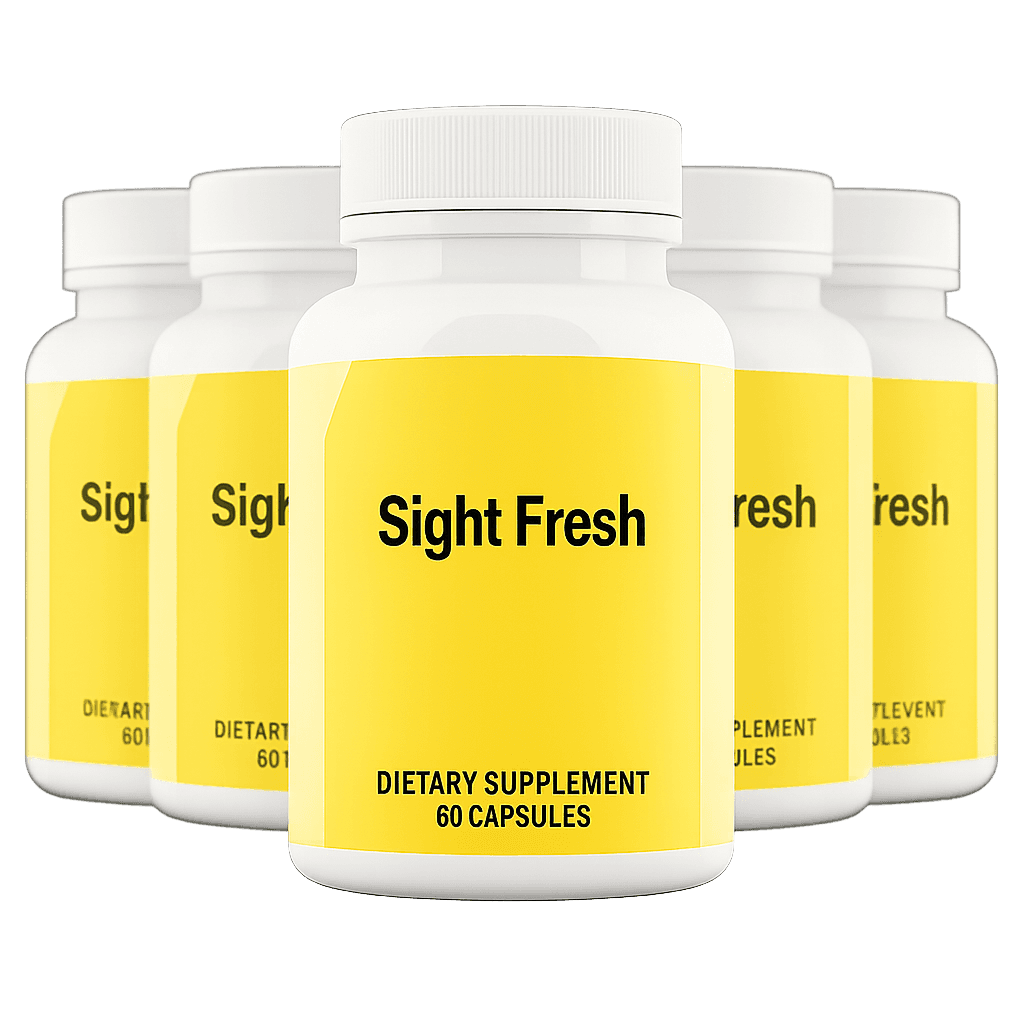
Sightfresh is a vision support supplement, almost certainly in capsule or softgel format, positioned as a daily oral treatment for age-related vision decline. The VSL does not display a product bottle, list a formal ingredient panel, or name the specific botanical, an omission that is itself a marketing decision, preserving the sense of proprietary discovery while the "free presentation" funnel handles the hard sell. Based on the historical narrative deployed in the copy (WWII pilots using a berry to improve night vision), the core active ingredient is almost certainly bilberry extract (Vaccinium myrtillus), a European shrub whose anthocyanin content has been studied for effects on visual acuity and retinal function since the mid-twentieth century.
The product sits squarely within the natural vision supplement subcategory, competing with established SKUs that combine bilberry with lutein, zeaxanthin, astaxanthin, and zinc, ingredients that populate everything from store-brand eye vitamins to premium ophthalmology-adjacent brands. Sightfresh's market positioning, however, is not built around an ingredient stack; it is built around a story. The WWII pilot narrative, the credentialed insider who reveals it, and the nine-day transformation timeline collectively position the product as a discovered secret rather than another supplement on a shelf. This is a classic Schwartz Stage 4 market sophistication move: in a mature category where buyers have seen every ingredient claim, the only differentiator that still commands attention is a genuinely new mechanism story, or the convincing appearance of one.
The stated target user is an adult over 40 experiencing some combination of blurry vision, eye strain, reduced night vision, or faded color perception. The VSL's narrator models this user explicitly, sharing a first-person account of the exact symptoms before describing the resolution. This demographic is large, health-conscious, and increasingly skeptical of pharmaceutical interventions, making them particularly receptive to a natural-origin narrative with institutional credibility attached.
The Problem It Targets
Age-related vision decline is not a manufactured anxiety, it is a documented, nearly universal physiological process. Presbyopia, the stiffening of the eye's crystalline lens that reduces its ability to focus on near objects, affects virtually everyone by their mid-to-late forties; the American Academy of Ophthalmology estimates that presbyopia impacts more than 1.8 billion people globally. Beyond presbyopia, conditions like age-related macular degeneration (AMD), cataracts, and diabetic retinopathy affect tens of millions of Americans alone, and subclinical symptoms, the kind the VSL targets, like general visual fatigue, reduced contrast sensitivity, and slower dark adaptation, are even more widespread and far less likely to prompt a clinical visit.
What makes this a commercially potent problem is precisely its normalization. Most people experiencing early-stage vision decline are not frightened enough to seek surgery, are mildly frustrated by the cost and aesthetics of glasses, and have not been offered a compelling middle path by the medical system. The supplement aisle offers options, but the sheer volume of products, most marketed through flat ingredient lists and generic packaging, creates its own form of decision fatigue. The Sightfresh VSL exploits this gap with surgical precision: it does not present itself as a supplement, it presents itself as an insider's discovery that the mainstream ophthalmology world has somehow overlooked despite the fact that it comes, the narrator implies, straight from inside that world.
The VSL's framing of the problem also carries a subtle but important rhetorical move: it front-loads the statistic that vision decline "sometimes starts decades earlier" than people expect, expanding the eligible audience well below age 40. This is a standard Problem-Agitate-Solution (PAS) architecture move, broadening the problem space widens the addressable market and introduces urgency for younger buyers who had not yet conceptualized themselves as the target. The agitation is gentle but effective: the narrator does not describe blindness or dramatic loss, but instead names the quiet, daily indignities, the eye strain, the dull colors, the squinting at street signs, that any adult can recognize from their own experience.
It is worth noting, for accuracy, that the NIH's National Eye Institute and the Age-Related Eye Disease Study (AREDS, published across multiple waves since 2001) have established evidence-based supplementation protocols for AMD specifically, centered on high-dose antioxidants and zinc. The AREDS2 formula, lutein, zeaxanthin, vitamin C, vitamin E, and zinc, is the most rigorously validated nutritional intervention for vision in the literature. Sightfresh does not position itself against or alongside AREDS2; it operates in the softer territory of general visual wellness, where the regulatory and evidentiary bar is lower and the narrative can do more work.
Curious how the ingredient science behind this claim holds up? Section 5 breaks down what the research actually says about the key botanicals involved.
How Sightfresh Works
The mechanism the VSL proposes is elegantly simple: a specific berry, used by WWII Royal Air Force pilots to improve night vision, contains compounds that "actually help restore eyesight." The berry in question is almost certainly bilberry (Vaccinium myrtillus), and the historical connection is real. During World War II, RAF pilots were reportedly given bilberry jam before night missions, a practice that entered popular legend and contributed to the surge of scientific interest in the fruit's anthocyanin content in the decades that followed. Whether the operational benefit was real or a wartime folk belief is still debated by historians of military medicine, but the story has genuine roots, which is precisely what makes it an effective narrative anchor.
The proposed biological mechanism runs through anthocyanins, the flavonoid pigments that give bilberries (and blueberries, blackcurrants, and similar fruits) their deep color. In laboratory settings, anthocyanins have demonstrated antioxidant properties, and some cell-culture and animal studies suggest they may support rhodopsin regeneration, the process by which the eye's rod cells replenish their light-sensitive pigment after exposure to bright light, which is central to dark adaptation and night vision. A handful of clinical trials in humans have reported modest improvements in visual acuity, contrast sensitivity, and dark adaptation time with bilberry extract supplementation. These effects are real but modest, typically observed over weeks to months, and more consistent in populations with pre-existing visual deficiency than in healthy adults with normal vision.
The VSL's claim that results appear "as little as nine days" compresses a literature that is considerably more equivocal. Most peer-reviewed studies on bilberry and vision use supplementation periods of four to twelve weeks, with primary endpoints around dark adaptation speed or contrast sensitivity rather than the broader "crystal clear vision" the narrator describes. The claim that the supplement can "restore eyesight", implying reversal of structural decline, is where the VSL steps most clearly beyond what the published evidence supports. Antioxidant supplementation can plausibly support retinal health and reduce oxidative stress in eye tissue; it does not repair the structural changes of presbyopia, nor does the literature support claims of dramatic acuity restoration in adults without a diagnosed deficiency.
None of this makes Sightfresh's core ingredient implausible as a general vision wellness supplement. It makes the specific outcome claims, nine days, crystal-clear vision, restored eyesight, more aspirational than evidence-based. A careful buyer should hold those specific timelines loosely while recognizing that the underlying botanical has a legitimate, if modest, research history.
Key Ingredients / Components
Because the VSL does not disclose a full ingredient panel, this section draws on the historical narrative and standard formulation conventions for the vision supplement category. The following are the ingredients most likely present in a product built around the WWII pilot berry story, along with the evidence base for each.
Bilberry Extract (Vaccinium myrtillus): The central active ingredient implied by the entire WWII narrative. Bilberry is rich in anthocyanins, particularly delphinidin and cyanidin glycosides, that have demonstrated antioxidant activity in retinal tissue. A 2012 review in the Journal of Nutrition (Canter & Ernst) examined multiple randomized trials and found mixed but directionally positive results for bilberry on visual acuity and dark adaptation. The effect size in most trials is modest, and results in healthy adults with normal vision are less consistent than in patients with diagnosed visual fatigue or retinal disease. Dose standardization matters significantly: most studies use extracts standardized to 25% anthocyanins at 160-480 mg daily.
Lutein and Zeaxanthin: These carotenoids are the most evidence-backed vision supplements in the literature. Lutein and zeaxanthin concentrate in the macular region of the retina, where they function as a biological filter for high-energy blue light and as antioxidants. The AREDS2 study (National Eye Institute, 2013) found that supplementation with 10 mg lutein and 2 mg zeaxanthin daily was associated with reduced progression of intermediate AMD. Many vision supplement formulas include both alongside bilberry for a layered antioxidant approach.
Zinc: An essential mineral concentrated in the retina and choroid, zinc plays a role in vitamin A metabolism and is required for rhodopsin synthesis, directly connecting it to the night-vision claim central to the VSL. The AREDS formula includes 80 mg zinc oxide as one of its primary components. Zinc deficiency is associated with impaired night vision; supplementation in deficient populations has demonstrated measurable improvement.
Vitamin A (or Beta-Carotene): Rhodopsin, the photopigment responsible for low-light vision in rod cells, is synthesized from Vitamin A. A deficiency in Vitamin A is the leading cause of preventable blindness worldwide (WHO). Many vision supplements include beta-carotene as a precursor, though AREDS2 replaced beta-carotene with lutein/zeaxanthin after finding a lung cancer risk signal in smokers.
Astaxanthin: A keto-carotenoid found in microalgae and salmon, astaxanthin has attracted research interest for its capacity to cross the blood-retinal barrier and its strong antioxidant activity, estimated at up to 550 times that of Vitamin E in some assays. A 2012 study in Nutrients by Nagaki et al. found that 12 mg daily improved visual acuity and reduced eye strain in adults with computer-related visual fatigue. It is a plausible addition to a premium vision formula targeting the eye-strain complaint the VSL names.
Hooks and Ad Angles
The Sightfresh VSL opens with a line that functions as a pattern interrupt: "I get constantly asked about that simple trick I use for crystal clear vision." In fewer than fifteen words, the copy accomplishes three things simultaneously. It inverts the normal direct-response opener (which would lead with the problem); instead of beginning with pain, it begins with social demand, the implication that an answer already exists and is being sought by many. It centers the narrator as the possessor of desirable knowledge, casting the listener as someone who has just joined a much larger group of curious people. And it frames the forthcoming information as a trick, a word that connotes insider access and simplicity, both of which are highly converting in the health supplement niche. The line reads casually, but its structure is precise.
This is, in the vocabulary of Eugene Schwartz's Breakthrough Advertising, a move calibrated for an audience at market sophistication Stage 4 or 5, consumers who have already seen every straightforward "improve your vision" claim and have stopped responding to them. At this stage, the only pitch architecture that moves the needle introduces a genuinely new mechanism (the berry, the WWII history) or tells a story that reframes a familiar solution as a discovery. The VSL does both, braiding the mechanism and the story together so tightly that they reinforce each other: the berry is credible because of history, and the history is compelling because the berry produces measurable results. Neither strand is strong enough alone; together they create something that feels like evidence.
The conspiratorial whisper moment, when the researcher "lowered his voice", is a particularly well-crafted piece of open-loop storytelling. The physical gesture implies that what follows is suppressed or sensitive, triggering a curiosity response that is almost impossible to resist. Readers who were scanning passively are now leaning forward. This is not a coincidence of phrasing; it is a deliberate structural choice that mirrors techniques used across the highest-performing VSLs in the alternative health space.
Secondary hooks observed in the VSL:
- "A berry? Really?", the narrator voices the reader's skepticism before they can form it, then resolves it
- "By day nine I could read fine print and street signs at night with ease", a hyper-specific outcome claim that functions as proof by precision
- "Friends started asking if I got new glasses", third-party social proof embedded in a personal narrative
- "He lowered his voice and said…", the conspiratorial insider reveal that opens the curiosity loop
- "It's completely free and only takes a few seconds to watch", barrier demolition as a closing persuasion move
Ad headline variations for Meta or YouTube testing:
- "The Berry WWII Pilots Used for Perfect Night Vision (Now a Daily Supplement)"
- "Eye Doctor Consultants Are Quietly Talking About This 1940s Vision Secret"
- "Day 9: She Could Finally Read the Menu Without Squinting"
- "Forget the Glasses. This Berry Extract Is What Researchers Are Studying Now."
- "Why Does Your Vision Get Worse After 40, And What the WWII Pilots Figured Out First?"
Psychological Triggers and Persuasion Tactics
The persuasive architecture of the Sightfresh VSL is more sophisticated than its short length suggests. Rather than relying on a single dominant trigger, fear, authority, or social proof, the copy deploys these mechanisms in a stacked, sequential structure: each trigger opens a psychological door that the next trigger walks through. The script moves from social demand (everyone is asking me about this) to authority transfer (a Wilmer Eye Institute insider told me) to historical legitimacy (WWII pilots used it) to personal proof (nine days, measurable results) to social confirmation (friends noticed) to barrier removal (it's free, it's fast). Each step compounds the credibility established by the previous one, a structure that Cialdini's framework would recognize as the serial activation of multiple heuristics to produce a cumulative persuasive force greater than any individual element.
What is particularly notable is the VSL's use of inoculation against skepticism, a technique derived from William McGuire's inoculation theory in social psychology, which holds that preemptively acknowledging and then countering an objection is more effective than ignoring it. The line "A berry? Really?" is not a throwaway moment of casual self-doubt; it is a precisely placed neutralization of the most predictable consumer resistance point. By voicing the objection in the narrator's own skeptical voice before the reader can form it, the copy short-circuits the resistance loop and reframes doubt as something the narrator has already processed on the reader's behalf.
Social proof as opener (Cialdini, Social Proof): "I get constantly asked about…" implies mass consensus before any claim is made. The reader arrives already positioned as part of a large, curious audience, reducing the sense of being sold to.
Authority transfer via institutional halo (Thorndike, Halo Effect; Cialdini, Authority): The Wilmer Eye Institute is named twice without the institute ever endorsing the product. The name alone transfers the institution's credibility to the supplement through associative inference, a technique sometimes called borrowed authority in direct-response copywriting.
Insider/secret knowledge framing (Cialdini, Scarcity; forbidden knowledge archetype): The researcher "lowering his voice" positions the berry information as suppressed, rare, or withheld from mainstream channels. Perceived scarcity of information inflates its perceived value.
Inoculation via narrator skepticism (McGuire, Inoculation Theory; Festinger, Cognitive Dissonance): "A berry? Really?" voices and then dissolves the reader's anticipated objection through first-person resolution, reducing the cognitive dissonance between the reader's skepticism and the purchase desire.
Specificity anchoring for credibility (Kahneman, Availability Heuristic; direct-response specificity principle): "By day three" and "by day nine" are not round numbers. Specific timelines feel like the product of memory rather than marketing, and the brain's availability heuristic treats specific, vivid claims as more likely to be true than general ones.
Historical legitimacy as proxy for clinical proof (Schwartz, New Mechanism; narrative credibility transfer): Anchoring the berry in WWII military use implies decades of real-world validation, effectively bypassing the demand for clinical trial data by substituting a historical narrative that carries its own form of social proof.
Low-friction micro-commitment CTA (Cialdini, Commitment and Consistency; Fogg Behavior Model): "Completely free and only takes a few seconds" minimizes the activation energy required for the next step. Fogg's Behavior Model holds that behavior occurs when motivation, ability, and a prompt align; by reducing the ability barrier to near zero, this CTA engineers the first commitment that consistency bias will then carry forward.
Want to see how these tactics compare across 50+ VSLs in the health supplement space? That's exactly what Intel Services is built to show you.
Scientific and Authority Signals
The authority architecture of the Sightfresh VSL rests almost entirely on a single institutional name: the Wilmer Eye Institute at Johns Hopkins Medicine, one of the genuinely prestigious ophthalmology centers in the world, consistently ranked among the top programs nationally by U.S. News & World Report. The name is used twice, once to credential the narrator's dinner-party contact ("he'd spent years consulting for the Wilmer Eye Institute") and once in the closing claim ("researchers from the Wilmer Eye Institute have released a short presentation"). Both uses are carefully worded to imply association without making a falsifiable statement of endorsement. The institute did not, to any publicly verifiable record, release a presentation about a WWII vision berry supplement.
This technique, real institution, real prestige, implied endorsement that was never given, is what direct-response researchers classify as borrowed authority. It is among the most common and most legally precarious tactics in the health supplement VSL playbook. It differs from fabricated authority (invented names, fictional studies) in that the underlying institution is real and the unnamed consultant could theoretically exist, but it shares with fabrication the core effect of creating a false impression of institutional backing. The FTC's guidelines on endorsements and testimonials explicitly address implied institutional endorsements; the degree to which this VSL's phrasing crosses a legal line depends on the precise claims made in the linked "free presentation," which this analysis cannot evaluate from the transcript alone.
The scientific citation structure is similarly constructed of real foundations and unverifiable superstructure. The WWII bilberry-and-RAF-pilots narrative is documented in the historical literature, though its actual efficacy is disputed (see: Mayou, 1995, Transactions of the Ophthalmological Society; and Canter & Ernst, 2004, Survey of Ophthalmology). Modern studies on bilberry anthocyanins and visual function do exist, primarily in Japanese and European clinical literature, researchers like Yao Naoki, Canter PH, and Ernst E have published peer-reviewed work on the topic, and the findings are cautiously positive for specific visual fatigue outcomes, less so for the dramatic "restore eyesight" framing the VSL uses. The specific studies the VSL references are unnamed and unlinked, making independent verification impossible.
For a reader performing due diligence: the most credible place to evaluate the bilberry evidence base is the Cochrane Database of Systematic Reviews and PubMed (pubmed.ncbi.nlm.nih.gov), where searches for "bilberry visual acuity" or "Vaccinium myrtillus ophthalmology" return the relevant literature. The AREDS and AREDS2 studies, the gold standard in nutritional ophthalmology, are freely accessible via the National Eye Institute's website (nei.nih.gov). None of these resources validate the specific outcome claims or the nine-day timeline the VSL promotes, though they do support the broader plausibility of antioxidant supplementation for visual health maintenance.
The Offer, Pricing, and Risk Reversal
The Sightfresh VSL, as transcribed, contains no visible price point, no bonus stack, and no stated guarantee. This is not an oversight, it is a deliberate funnel architecture decision. The CTA directs the viewer to a "free presentation" rather than a purchase page, meaning this VSL functions as the top-of-funnel awareness and pre-qualification layer of a multi-step sales process. The actual offer structure, pricing, discount anchoring, and risk-reversal language almost certainly live in the next video (the "free presentation") or on a checkout page downstream. This two-step approach is common in the health supplement VSL category when the product is priced at a premium ($49-$97 per bottle is standard for this niche) and the seller wants to build more credibility before asking for the sale.
The one offer-mechanic element visible in this transcript is the low-friction CTA as a risk-reversal surrogate: "completely free and only takes a few seconds to watch" functions not as a money-back guarantee but as an effort-back guarantee. The viewer is promised that the cost of the next step, in time and attention, is negligible, which serves the same psychological function as a purchase guarantee: it removes the fear of loss associated with the commitment. Cialdini's principle of commitment and consistency then does its work: a viewer who clicks and watches the presentation has already invested slightly more identity capital in the product, making them marginally more likely to convert on the purchase page.
Without access to the downstream funnel, a full pricing and guarantee analysis is not possible from this transcript alone. What can be said is that the absence of pricing information in the top-funnel VSL is a strong indicator that the product is sold at a price point where pre-qualification and trust-building are commercially necessary before the ask.
Who This Is For (and Who It Isn't)
The ideal Sightfresh buyer, as constructed by this VSL, is an adult between roughly 40 and 65 who has noticed a gradual decline in visual sharpness and is experiencing at least one of the specific complaints named in the copy: eye strain from screens, difficulty reading fine print, reduced night vision, or a sense that colors are less vivid than they once were. This person has probably tried over-the-counter reading glasses and found them helpful but unsatisfying. They are health-conscious but not necessarily natural-product ideologues, they are open to a supplement but want a reason to believe it is different from the dozens of other vision vitamins on the shelf. The WWII story, the institutional name-drop, and the personal transformation narrative are each calibrated to give this person that reason. The ideal buyer is also digitally active enough to follow a link from a short video but not scientifically sophisticated enough to interrogate the specific claims, a demographic that describes a very large portion of the aging wellness consumer market.
The product is probably not the right fit for someone with a diagnosed progressive eye condition, AMD, glaucoma, diabetic retinopathy, or cataracts, who should be working with an ophthalmologist and following protocols like AREDS2 that have actual clinical trial backing. It is also not the right fit for someone who has already tried bilberry or lutein/zeaxanthin supplements and seen no benefit, since the ingredient profile almost certainly overlaps substantially. And any buyer with a history of significant health events, medication use, or known nutrient sensitivities should consult a clinician before adding any new supplement, including this one, not because bilberry is particularly dangerous (it has a strong safety record at standard doses), but because responsible supplementation practice requires knowing what is already in the system.
If you're evaluating multiple supplements in this category and want a structured comparison, Intel Services maintains ongoing analyses of the most active VSLs in the vision and eye health niche, browse the library to see how Sightfresh's claims stack up against its competitors.
Frequently Asked Questions
Q: Is Sightfresh a scam?
A: Based on the VSL transcript alone, there is no definitive evidence that Sightfresh is fraudulent. The core ingredient it implies, bilberry extract, has a legitimate (if modest) research history in vision support. However, several claims in the VSL, particularly the nine-day restoration timeline and the implied Wilmer Eye Institute endorsement, go beyond what the published evidence supports. Buyers should evaluate the full offer page, check for a verifiable company address and customer service contact, and verify return policy terms before purchasing.
Q: What is the WWII berry that Sightfresh is based on?
A: The VSL almost certainly refers to bilberry (Vaccinium myrtillus), a European fruit whose use by RAF pilots during World War II became a widely circulated story in mid-century military and medical circles. While the historical claim is real in the sense that it circulated and was taken seriously, controlled research on whether the wartime benefit was genuine has produced mixed results. Modern studies on bilberry anthocyanins do show some support for visual acuity and dark adaptation, though effects are generally modest.
Q: Does Sightfresh really work?
A: The ingredients likely present in Sightfresh have biological plausibility as vision-support supplements, particularly for reducing oxidative stress in retinal tissue and supporting dark adaptation. Whether they produce the specific, dramatic results described in the VSL, crystal clear vision in nine days, is not supported by current clinical literature. Most supplement research shows gradual, modest benefits over weeks to months, not days.
Q: Are there side effects to taking Sightfresh?
A: Bilberry extract is generally considered safe at standard doses (160-480 mg daily of 25% anthocyanin extract), with no serious side effects reported in most clinical studies. High doses may interact with blood-thinning medications. As with any supplement, individuals who are pregnant, nursing, taking prescription medications, or managing a chronic condition should consult a physician before use.
Q: Is Sightfresh really endorsed by the Wilmer Eye Institute?
A: The VSL references the Wilmer Eye Institute (part of Johns Hopkins Medicine) in ways that imply association, but no public record confirms that the institute has endorsed, reviewed, or been involved with this product. The framing in the VSL uses the institutional name to transfer credibility without making a direct, verifiable endorsement claim, a common tactic in direct-response health marketing.
Q: How long does Sightfresh take to work?
A: The VSL claims noticeable changes by day three and significant improvement by day nine. These timelines are more aggressive than those used in published bilberry research, which typically runs four to twelve weeks. Individual results will vary based on baseline eye health, age, diet, and other factors. It is reasonable to expect, if the product contains evidence-backed ingredients at effective doses, that any benefit would emerge over weeks rather than days.
Q: Is Sightfresh safe for people over 60?
A: Bilberry and related antioxidant supplements have been studied in older adult populations and have a generally favorable safety profile. However, adults over 60 are more likely to be on medications, particularly anticoagulants, antiplatelet drugs, or diabetes medications, that can interact with botanical supplements. A brief conversation with a primary care physician or pharmacist before starting any new supplement is advisable.
Q: Where can I find independent research on the ingredients in Sightfresh?
A: PubMed (pubmed.ncbi.nlm.nih.gov) is the most accessible database of peer-reviewed research on bilberry, lutein, zeaxanthin, and other vision-support ingredients. The National Eye Institute's AREDS and AREDS2 studies are available at nei.nih.gov and represent the strongest clinical evidence base in nutritional ophthalmology.
Final Take
The Sightfresh VSL is a well-crafted example of what happens when a category matures past the point where ingredient claims alone can drive conversion. By the time a supplement buyer has been exposed to dozens of "supports eye health" pitches, only two things cut through: a genuinely new mechanism story, or a narrative so personally resonant and institutionally credible that it feels less like advertising and more like a conversation they needed to have. The Sightfresh script attempts both, and it largely succeeds, the WWII pilot story is memorable, the Wilmer Eye Institute reference is trust-building for a certain kind of buyer, and the nine-day timeline creates a specific, testable expectation that converts curiosity into action.
The VSL's structural weaknesses are concentrated in its authority claims. The Wilmer Eye Institute reference is borrowed authority, technically accurate in that the institution is real, but misleading in its implied endorsement framing. The "researchers from the Wilmer Eye Institute have released a short presentation" line is the closest the copy comes to an outright false claim, and it is the element most likely to create legal exposure for the advertiser and disappointed expectations for buyers who take it literally. The nine-day timeline is similarly aspirational rather than evidence-based; bilberry anthocyanins work on a longer timeline in the published literature, and buyers expecting dramatic week-one results may disengage before any genuine benefit has time to accumulate.
On the product science itself: bilberry extract is not a fantasy ingredient. There is a genuine, if modest, research foundation supporting its use for visual fatigue, dark adaptation, and antioxidant protection in retinal tissue. Combined with lutein, zeaxanthin, and zinc at evidence-informed doses, a well-formulated vision supplement can make a legitimate (if incremental) contribution to eye health maintenance. Whether Sightfresh specifically delivers that formulation at those doses cannot be determined from the VSL alone, the absence of a disclosed ingredient panel is a material gap that interested buyers should fill before purchasing, by requesting a Certificate of Analysis or at minimum reviewing the supplement facts panel on the product page.
For marketers studying this transcript, the more instructive takeaway is structural: the VSL demonstrates that in the current health supplement environment, a single, well-chosen historical narrative can do more persuasive work than a complete ingredient deck, a celebrity endorser, or a wall of before-and-after photos. The WWII pilot story is the product's real differentiator, not the formulation. That is a sophisticated editorial choice, and it is also a reminder that marketing infrastructure and product quality are not the same thing. A buyer deserves to know the difference.
This breakdown is part of Intel Services, our ongoing library of VSL and ad-copy analyses across the health, wellness, and consumer product categories. If you are researching similar vision supplements or want to understand how top-performing sales scripts in this niche are built, keep reading.
Disclaimer: This article is for research and educational purposes only. It is not medical, legal, or financial advice, and it is not affiliated with the product or its makers. Always consult a qualified professional before making health or financial decisions.
Source-backed reader context
Additional Reported Experience
These statements were presented in the product's sales transcript. Daily Intel did not independently verify the speakers, purchase status, or reported outcomes, and the statements are not used in Product aggregateRating.
Narrator's own before/after story
Date not stated
less eye strain by day 3, reading fine print and night street signs clearly by day 9
Comments(0)
No comments yet. Members, start the conversation below.
Related reads
 reviews
Mind Lab Pro Review: Does the 30-Day Study Match v4?
Mind Lab Pro v4 lists exact amounts for 11 ingredients and contains no caffeine or stimulants, according to its official page. A 30-day finished-product study reported favorable memory findings, but its abstract does not identify v4 or disclose the tested form or dose.
Read reviews
Life Extension Two-Per-Day Multivitamin Review: Evidence Limits
Life Extension Two-Per-Day is a 120-capsule multivitamin displayed as a 60-day supply. Its identity and dated prices are verified, but the supplied evidence does not reproduce the complete quantitative Supplement Facts panel or include a trial of the finished product. Research involving another multivitamin cannot prove that these capsules improve memory or deliver Life Extension’s broader health-support claims.
Read reviews
Ritual Essential for Women 50+ Review: Label, Study Fit, and Verdict
Ritual Essential for Women 50+ is an iron-free capsule multivitamin positioned by Ritual for women after menopause. Its verified label lists 100 micrograms of vitamin K2 as menaquinone-7. The supplied study did not test this finished product, and the packet provides no exact price.
Read