StemCellRenew Review and Ads Breakdown: A Research-First Look
The video opens not with a product claim but with a scene designed to land like a punch: a 68-year-old woman named Dorothy, unable to dress herself, watching her daughter's face cycle through pity, frustration, and quiet resignation. Before a single supplement ingredient is…
8,226+
Videos & Ads
+50-100
Fresh Daily
$29.90
Per Month
Full Access
12.5 TB database · 72+ niches · 27 min read
The video opens not with a product claim but with a scene designed to land like a punch: a 68-year-old woman named Dorothy, unable to dress herself, watching her daughter's face cycle through pity, frustration, and quiet resignation. Before a single supplement ingredient is named, the viewer has already been made to feel the specific, private humiliation of physical dependence. That is not an accident. The opening of the StemCellRenew Video Sales Letter is a textbook deployment of emotional priming, a technique that establishes the stakes of a decision before the rational mind has had a chance to engage its defenses. The VSL is long, dense with scientific-sounding language, and structured with considerable craft. It deserves the kind of close reading that cuts through the emotional machinery to ask what the product actually is, what its ingredients actually do, and whether the persuasive architecture surrounding it reflects legitimate science or something more theatrical.
StemCellRenew is an oral dietary supplement sold direct-to-consumer, primarily targeting adults over 60 who are experiencing the physical and cognitive symptoms of aging. Its central claim, that a proprietary blend of nine natural ingredients can "reactivate" dormant stem cells in the human body, effectively reversing cellular aging, is presented with an unusual volume of research citations, named authority figures, and institutional references. Whether those citations hold up under scrutiny, and whether the product's mechanism is biologically coherent, is precisely what this analysis investigates. The VSL running behind StemCellRenew is one of the more sophisticated examples of the anti-aging supplement genre, and understanding how it works, both as a persuasive document and as a product claim, is useful for anyone actively researching this purchase.
The question at the center of this piece is not simply "does StemCellRenew work," though that matters. It is: what does the gap between the VSL's claims and the available science actually reveal, about the product, about the anti-aging supplement market, and about the assumptions the pitch makes about its audience?
What Is StemCellRenew?
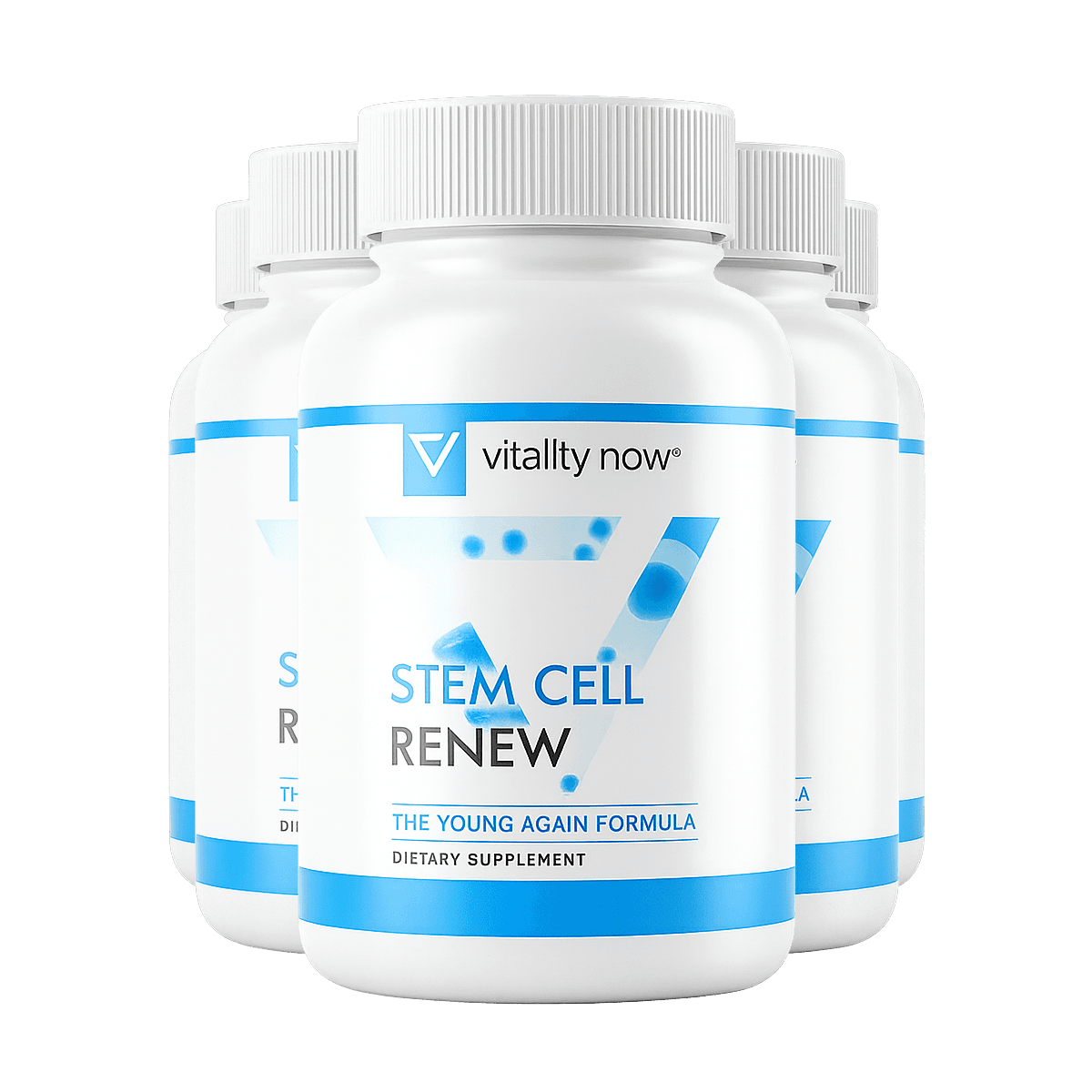
StemCellRenew is a daily oral supplement, taken as two capsules per day, that positions itself within the anti-aging and cellular health category. The product is sold exclusively through a direct-response website, no retail distribution is mentioned, and is offered in single-bottle, three-bottle, and six-bottle packages. Its formulation is described as containing nine natural ingredients, five of which are named in the VSL: resveratrol, Biovin (a branded full-spectrum French grape extract), vitamin D3, lyceum (goji berry) extract, and CoQ10. The remaining four are not disclosed in the sales presentation.
The product's stated target user is adults over 50, with particularly strong messaging directed at women over 65. The VSL frames the product not as a conventional supplement but as an accessible alternative to clinical stem cell therapy, the kind of treatment, it repeatedly notes, that costs $100,000 or more annually and is currently available only to wealthy celebrities and professional athletes. This positioning is deliberate: it simultaneously invokes a high-status treatment category to elevate perceived value, then uses price contrast to make StemCellRenew appear an extraordinary bargain. The spokesperson, who identifies himself as "Dr. Sam Walters, former NASA physician," presents the product as the culmination of decades of research into cellular regeneration, formulated specifically to bring a clinical-grade intervention within reach of ordinary consumers.
The supplement category StemCellRenew occupies is crowded, competitive, and subject to Federal Trade Commission and FDA oversight on health claims. Direct-to-consumer anti-aging supplements occupy a legally significant grey zone: they cannot legally claim to diagnose, treat, cure, or prevent any disease, yet the VSL makes sweeping assertions about reversing aging, regenerating organs, and replicating the effects of clinical stem cell procedures. That tension is worth holding in mind throughout the rest of this analysis.
The Problem It Targets
The problem StemCellRenew targets is the experience of accelerated physical and cognitive decline in older adults, and the emotional correlates of that decline, particularly the fear of losing independence. The VSL personalizes this through Dorothy's story, but the problem itself is epidemiologically real. According to the CDC, approximately 18% of U.S. adults aged 65 and older report significant difficulty with physical functioning, and the WHO estimates that the global population of people over 60 will more than double between 2015 and 2050. The commercial opportunity embedded in that demographic shift is enormous, which is precisely why the anti-aging supplement market is projected to grow into the hundreds of billions of dollars globally over the next decade.
What makes this VSL's problem framing particularly effective is that it does not stop at the physical. The loss of physical independence carries a specific emotional signature, shame, fear of becoming a burden, the sense of watching one's identity erode, that the script names with precision. The phrase "the burden you swore you'd never become" is not medical language; it is the internal monologue of the exact person the VSL is written for. This is a technique often called identity threat framing: it locates the pain not in the symptom (stiff joints) but in the self-concept the symptom violates (the capable, independent woman). Pain framed this way is harder to rationalize away, because it touches something more fundamental than physical discomfort.
The VSL introduces its proprietary explanatory framework through what it calls "aging cell syndrome" and "stem cell collapse", terms that do not appear in peer-reviewed medical literature under those names, but that map loosely onto legitimate research areas. Scientists do study the declining number and functional quality of adult stem cells as a component of biological aging. A 2009 study published in Cell by Amy Wagers and colleagues at Harvard demonstrated that the regenerative capacity of aged muscle stem cells could be partially restored under certain conditions, and subsequent research has confirmed that stem cell exhaustion is recognized as one of the hallmarks of aging (López-Otín et al., "The Hallmarks of Aging," Cell, 2013). The VSL borrows the real science of stem cell senescence and re-labels it with proprietary terminology, a standard move in supplement marketing that makes legitimate research feel product-specific.
The claim that "by age 65, a full 90% of your stem cells are gone," attributed in the VSL to a Dr. Monte Slater, is not sourced to any published study. The specific decline rates of various stem cell populations vary considerably by tissue type, age, and measurement methodology; a single, clean, universally applicable percentage of this kind does not appear in the indexed scientific literature. Readers should treat it as a rhetorical anchor, a vivid number that conveys urgency, rather than a citable biological fact.
Curious how other VSLs in this anti-aging niche structure their pitch? The hooks and ad angles section below breaks down every major persuasion move in this script.
How StemCellRenew Works
The mechanism claim at the heart of StemCellRenew is built on a real but selectively interpreted piece of scientific research. Arizona State University researchers, including Kenro Kusumi PhD, did conduct studies on the genetic basis of tail regeneration in lizards, finding that cartilage-formation genes controlled by stem cells are active in lizards but not in mice. The VSL cites this accurately and correctly quotes Kusumi's observation that lizards and humans share many common genes. What it does next, however, is a substantial extrapolation: it concludes that because humans share genetic architecture with lizards, humans possess a dormant "cellular regeneration switch" that can be pharmacologically activated by consuming specific nutrients in specific combinations. That leap is not supported by the lizard research itself, which concerned gene expression in a specific developmental context (tail regrowth) in a non-mammalian species.
The underlying biology of stem cell activation is genuinely complex. Stem cell niche signaling, the chemical and mechanical environment that regulates whether stem cells remain quiescent, proliferate, or differentiate, is an active and legitimate area of research. Certain compounds, including some with antioxidant or anti-inflammatory properties, have been shown in laboratory and animal models to influence stem cell behavior in tissue-specific ways. The VSL is not inventing stem cell science wholesale; it is selectively amplifying preclinical and early-stage findings to support a claim that is far larger than the evidence base supports. The assertion that a daily oral capsule can cause the human body to "grow a new brain, heart, lungs, pancreas, or knee joint", stated almost verbatim in the transcript, has no clinical evidence behind it and would represent a medical miracle if true.
The University of South Florida study cited in the VSL, described as showing that specific natural ingredients, taken in combination, can "dramatically boost stem cell production in a few weeks", is not identifiable with certainty from the information provided. The VSL says it was published in the journal Stem Cells and Development, but names neither authors nor a year, making independent verification impossible from the transcript alone. Even if such a study exists and its findings are accurately represented, a single study demonstrating a measurable change in a specific stem cell population in a specific tissue does not constitute proof that the full range of claimed benefits (joint repair, cognitive restoration, organ regeneration) will follow in human clinical use.
What is plausible is a more modest version of the claim: that the named ingredients have antioxidant, anti-inflammatory, and in some cases neuroprotective properties that may support cellular health and slow certain markers of biological aging. That is a meaningful benefit if true, but it is categorically different from activating a dormant genetic regeneration switch.
Key Ingredients and Components
The VSL discloses five of nine total ingredients. The four undisclosed components represent a meaningful gap in the formulation transparency a consumer would want before purchasing. Of the five named ingredients, the evidence base ranges from genuinely promising (resveratrol, CoQ10) to plausible but more limited (goji berry extract, vitamin D3) to branded-proprietary-without-independent-verification (Biovin).
Resveratrol is a polyphenol found in red grapes, berries, and certain other plants. It has been studied extensively, and the VSL's citations are not fabricated, a 2013 study in Nature Neuroscience (Bhanu Bhanu et al.) did find that resveratrol promoted hippocampal neurogenesis and improved spatial learning in aging rodents. The VSL's claim that lower doses are more effective than higher ones has some support in the literature, as resveratrol shows a non-linear dose-response in certain cell models. However, human clinical trials have shown inconsistent results, and bioavailability of oral resveratrol remains a significant pharmacological challenge. The European Food Safety Authority has not approved health claims for resveratrol.
Biovin is a branded grape extract manufactured in France by Micro Ingredient Inc. / Cyvex Nutrition and is a legitimate commercial ingredient used in some supplement formulations. The VSL attributes specific stem cell production data to a study conducted in Basel, Switzerland, but no specific citation (authors, journal, year) is given, making independent review impossible. Its polyphenol content is real; the specific stem cell promotion claims require independent corroboration.
Vitamin D3 (cholecalciferol) has well-documented roles in musculoskeletal health, immune regulation, and neuromuscular function. The claim that it "enhances stem cell transformation into muscle cells" has some basis in cell biology research, vitamin D receptor signaling does play a role in myogenic differentiation. A 2014 paper in Stem Cells and Development (Girgis et al.) examined vitamin D's role in stem cell-related processes. Vitamin D deficiency is common in adults over 65, and supplementation has been shown to reduce fracture risk in deficient populations (NEJM, Dawson-Hughes et al.).
Lyceum barbarum extract (goji berry) contains polysaccharides (LBP) that have shown immunomodulatory and neuroprotective effects in preclinical studies. The Journal of Translational Medicine citation in the VSL likely refers to a study examining LBP's effect on hematopoietic stem cell mobilization, that research is real and the effect is measurable, though primarily in animal models. Human data on goji berry extract and meaningful stem cell outcomes is limited.
CoQ10 (ubiquinone) is an endogenous antioxidant and mitochondrial cofactor with a well-established role in cardiovascular health. The Oxidative Medicine and Cellular Longevity and Stem Cells and Development citations referenced in the VSL describe real research directions. CoQ10's ability to reduce oxidative stress in stem cell niches is biologically plausible, and human trials have supported its use in heart failure and some neurodegenerative conditions. It is one of the more scientifically grounded ingredients in the formula.
Hooks and Ad Angles
The opening hook, "At 68, Dorothy's worst nightmare came true. She had to ask her daughter to help her get dressed", functions as a pattern interrupt in the classic direct-response sense: it bypasses the viewer's product-evaluation filter by leading with a scene rather than a claim. Before the viewer knows what is being sold, they are already processing the emotional content of the story. This is a structurally sophisticated opening because it forces identification before skepticism. A viewer who has worried about her own aging, or who has watched a parent decline, does not evaluate Dorothy's story for truthfulness, she feels it. The skeptic's objection arrives a moment too late, after the emotional hook has already set.
Within the copywriting tradition, this opening belongs to what Eugene Schwartz called stage four or five market sophistication, a market where buyers have heard every direct claim and no longer respond to simple promises. At this level, the seller cannot open with "this supplement helps your joints" because the audience has seen a thousand such promises and discounts them reflexively. Instead, the effective approach is to open with a story that articulates the problem in the audience's own emotional vocabulary, then introduce a new mechanism that explains why previous solutions failed. The VSL executes this precisely: Dorothy's conventional treatments have failed, the mechanism is new (stem cell collapse), and StemCellRenew targets that mechanism specifically.
The lizard-tail regeneration angle functions as what Russell Brunson would call a "new opportunity" frame, rather than positioning StemCellRenew as a better joint supplement, the VSL positions it as the entry point into an entirely new category of intervention. The product is not competing with glucosamine; it is competing with $100,000 clinical procedures. That is a more persuasive comparison because the savings feel extraordinary rather than marginal.
Secondary hooks observed in the VSL:
- "The medical establishment doesn't want you to know this", conspiracy framing that reframes suppression as proof of efficacy
- "22 Nobel Prize winners backed this science", authority transfer through large, verifiable-sounding numbers
- "This is the most significant breakthrough since the polio vaccine", magnitude anchor that dwarfs category competitors
- "Thousands of people are experiencing a transformation right now as you watch this", real-time social proof creating FOMO
- "You'll probably want to know why you haven't heard of this before", anticipatory objection handling that disarms the viewer's main skeptical question
Ad headline variations for Meta / YouTube testing:
- "NASA Physician Reveals the $39 Capsule That Rivals $100K Stem Cell Treatments"
- "Scientists Found a Regeneration Switch in Lizard DNA. Humans Have It Too."
- "90% of Your Stem Cells Are Gone by 65. This Formula Targets What's Left."
- "Why Dorothy Went From Needing Help Dressing to Cooking Thanksgiving for 15"
- "The Anti-Aging Treatment Celebrities Pay $100,000 For, Now Available for Pennies"
Psychological Triggers and Persuasion Tactics
The persuasive architecture of the StemCellRenew VSL is not a scattershot collection of tactics; it is a sequenced stack, designed to dismantle objections in the order a skeptical viewer is likely to raise them. It begins with emotional immersion (Dorothy's story), then validates the emotional experience with pseudo-scientific explanation (aging cell syndrome, stem cell collapse), then introduces authority to pre-empt intellectual skepticism (NASA, Harvard, Nobel Prize winners), then neutralizes the conspiracy-of-silence objection (Big Pharma suppression), and finally resolves all remaining purchase risk with a 180-day guarantee. Each layer of persuasion addresses a specific barrier that, if left standing, would prevent conversion. This sequencing is what Cialdini would recognize as commitment escalation, by the time the price is revealed, the viewer has already agreed to multiple smaller propositions and is cognitively predisposed to continue agreeing.
The single most intellectually interesting tactic in the script is the false enemy construction. Big Pharma and the long-term care industry are framed not merely as profit-motivated but as actively malevolent, suppressing a cure to protect revenue from dependent patients. This does two things simultaneously: it explains why the viewer has not heard of this solution before (a preemptive answer to the most common skeptical objection), and it creates in-group solidarity between the viewer and Dr. Walters, who is positioned as a whistleblower risking professional retaliation. The technique is borrowed from political persuasion, where identifying a shared enemy is one of the fastest known paths to group cohesion. In a commercial context, it is powerful because it redirects the viewer's natural skepticism outward, toward Big Pharma, rather than inward, toward the product.
Loss aversion framing (Kahneman & Tversky): Dorothy's loss of independence is introduced before any product. The brain processes loss as roughly twice as powerful a motivator as equivalent gain, and the VSL front-loads its entire emotional case on what is being lost, not what can be gained.
Authority stacking (Cialdini's authority principle): NASA, Harvard, Stanford, Albert Einstein College of Medicine, and 22 Nobel Prize winners are invoked in rapid succession, creating an overwhelming impression of institutional backing without requiring any single citation to bear close scrutiny.
Social proof via aspirational contrast (Cialdini's social proof + Festinger's social comparison): Tiger Woods, Jack Nicklaus, and unnamed celebrities establish proof of concept at the high end, then the VSL pivots to accessibility, creating the sensation of joining an elite group without paying elite prices.
Epiphany bridge (Brunson's narrative framework): Dr. Walters narrates his own journey from skeptic to believer, mirroring the audience's psychological state and resolving their objections through his personal experience rather than through external argument alone.
False scarcity (Cialdini's scarcity principle): The 3-month manufacturing window, perpetual near-stockout status, and threat of Big Pharma removing the video all compress the decision window artificially. None of these constraints can be independently verified.
Anticipated regret / future self projection (Kahneman's remembering self; Bezos regret minimization): The close explicitly asks the viewer to imagine a future sleepless night regretting inaction, manufacturing anticipated regret as a purchase trigger before the purchase decision is even made.
Risk elimination via guarantee (Thaler's endowment effect): The 180-day money-back guarantee is framed as the logical conclusion of Dr. Walters' confidence. By absorbing all perceived financial risk, it removes the final structural barrier to purchase. Whether the refund process is straightforward in practice is a question the VSL does not address.
Want to see how these persuasion tactics compare across 50+ VSLs in the anti-aging space? That's exactly what Intel Services is built to show you.
Scientific and Authority Signals
The authority architecture of the StemCellRenew VSL is extensive, and it varies considerably in legitimacy. The most credible signal is the citation of Kenro Kusumi PhD and the Arizona State lizard-tail regeneration research, which is a real and published scientific program. The VSL accurately represents Kusumi's observation that lizards and humans share a large portion of their genome, though, as noted above, it then extrapolates far beyond what the research supports. The reference to California's Proposition 71, which did pass in 2004 and did allocate $3 billion to stem cell research with support from a coalition of prominent figures, is accurate, though the VSL implies the 22 Nobel laureates specifically endorsed this product's mechanism, which they did not.
The institutional name-drops, Harvard, Stanford, UCLA, Albert Einstein College of Medicine, are what might be called borrowed authority: real institutions, real research programs, but referenced in ways that imply endorsement of StemCellRenew specifically rather than of the broad scientific field those institutions study. Harvard did not endorse StemCellRenew. Stanford researchers working on neural stem cells are not validating this supplement's formula. The references gesture at the institutions' credibility without claiming a specific endorsement, which keeps the language technically defensible while creating a strong false impression in the listener.
"Dr. Sam Walters" presents the most significant authority ambiguity in the VSL. The script establishes him as a former NASA physician who developed nutritional formulas for astronauts. No corroborating public record, publication record, or institutional affiliation for a "Dr. Sam Walters" in this specific role is easily verified. This does not prove the persona is fabricated, but in the direct-response supplement industry, spokesperson personas are sometimes constructed rather than biographical. A consumer researching this product would be well advised to search for Dr. Walters' NASA record independently. "Dr. Monte Slater, MD," described as a former Navy physician and stem cell pioneer, presents a similar verification challenge.
The studies cited with journal names, Nature, Stem Cells and Development, Cellular Physiology and Biochemistry, Oxidative Medicine and Cellular Longevity, Journal of Translational Medicine, are real journals. The specific studies described may exist in forms broadly consistent with the descriptions given, but the VSL provides insufficient citation detail (no authors, no years for most, no DOIs) to allow direct verification. Several of the described findings concern animal or cell-culture studies, a category of research that routinely fails to translate into equivalent human clinical outcomes. Resveratrol, for example, has been studied extensively in humans since 2010, and while the preclinical results were compelling, large-scale human randomized controlled trials have shown more modest and inconsistent effects (Tome-Carneiro et al., Molecular Nutrition & Food Research, 2013).
The Offer, Pricing, and Risk Reversal
The offer structure follows a textbook price anchoring and stacked discount sequence. The VSL opens the pricing section with a reference to a $197 "board-recommended" retail price, briefly touches a $129 intermediate point, then lands on $69 for a single bottle and $39 per bottle for a six-bottle package with free shipping. The $197 anchor functions rhetorically here, there is no evidence it reflects a real alternative market price for this specific product, and the "board of directors" framing is likely a narrative device rather than a business reality. Its function is purely to make $69 feel like a bargain and $39 feel extraordinary. Compared to the frequently cited $100,000 celebrity treatment, the psychological savings are even more dramatic, though that comparison is between a pharmaceutical clinical procedure and an oral supplement, which are not remotely equivalent interventions.
The 180-day money-back guarantee is genuinely unusual in its length, most supplement guarantees run 30 to 90 days, and it does represent a meaningful risk-reduction tool for the consumer. The guarantee is described as covering "every single penny back... less shipping," which is an honest disclosure of the one cost the buyer absorbs. Whether the company honors this guarantee in practice depends on customer service execution that cannot be evaluated from the VSL alone. Consumer review sites are a useful secondary data point for any prospective buyer evaluating this specific question.
The urgency framing, limited stock, three-month manufacturing cycles, threat of Big Pharma suppression removing the video, is classic manufactured scarcity. None of these constraints are independently verifiable, and the "this video may be taken down" tactic is a well-documented conversion mechanism in the direct-response supplement space rather than a genuine security concern. Savvy buyers should discount this urgency framing entirely and make the decision on the merits of the product and offer.
Who This Is For (and Who It Isn't)
The ideal buyer for StemCellRenew, as the VSL constructs her, is a woman between 60 and 75 who is experiencing real physical decline, joint pain, fatigue, memory lapses, and who carries a specific emotional burden around independence and the fear of becoming a problem for her family. She is not a habitual supplement user who reads labels carefully; she is someone who has probably tried conventional medical channels and found them insufficient or too expensive. She responds to authority figures and scientific language even when the citations are incomplete, because the language feels more credible than nothing. She is cost-conscious but willing to spend on health if the perceived value is strong and the risk is eliminated by a guarantee. The six-bottle offer at $39 per bottle, with free shipping and a 180-day guarantee, is structured almost perfectly for this buyer profile: the commitment is substantial enough to signal seriousness, but the guarantee removes the financial sting.
The product is considerably less well-matched to buyers who are looking for a clinically validated intervention for a specific diagnosed condition, buyers who require full ingredient transparency before purchasing (four of nine ingredients remain undisclosed), or buyers who are already taking pharmaceutical anticoagulants or immunosuppressants (resveratrol has known drug interaction risks at higher doses). Anyone currently managing a serious chronic condition, cardiovascular disease, type 2 diabetes, autoimmune disorders, should consult a physician before adding any new supplement, particularly one making claims this broad about systemic cellular effects.
Buyers who are comfortable with the established evidence base for individual ingredients like resveratrol, vitamin D3, and CoQ10, and who are looking for a combination formula with a long guarantee window, may find the offer structurally reasonable. The key is to evaluate it as a supplement with plausible ingredient-level benefits, not as a clinical stem cell therapy, which it is not.
For a comparative breakdown of how similar anti-aging VSLs position their mechanisms and structure their offers, Intel Services has you covered.
Frequently Asked Questions
Q: Is StemCellRenew a scam?
A: The product contains named, real ingredients, resveratrol, CoQ10, vitamin D3, goji berry extract, that have legitimate scientific literature behind them. The primary concern is not that the product is fraudulent in the conventional sense, but that the VSL makes claims (regrowing organs, replicating $100,000 stem cell therapies) that are vastly larger than what the ingredient evidence supports. A consumer who buys it as an antioxidant-rich aging-support supplement and not as a clinical stem cell procedure is setting more realistic expectations.
Q: What are the ingredients in StemCellRenew?
A: The VSL discloses five of nine total ingredients: resveratrol, Biovin (full-spectrum French grape extract), vitamin D3, lyceum/goji berry extract (LBP), and CoQ10. The remaining four ingredients are not named in the sales presentation, which is a transparency gap worth noting before purchasing.
Q: Does StemCellRenew really work for joint pain?
A: There is preliminary evidence that resveratrol and CoQ10 may support joint and connective tissue health through anti-inflammatory mechanisms, but the human clinical evidence for these specific ingredients producing the dramatic joint restoration described in the VSL is limited. Results described in testimonials (Dorothy cooking Thanksgiving dinner in 10 weeks) are anecdotal and cannot be generalized.
Q: Are there any side effects of StemCellRenew?
A: The individual ingredients at typical supplement doses are generally regarded as safe for healthy adults. Resveratrol at higher doses can interact with blood-thinning medications (warfarin, aspirin), and vitamin D3 can accumulate to toxic levels with excessive supplementation. People taking prescription medications or managing chronic conditions should consult a healthcare provider before use.
Q: How long does it take to see results from StemCellRenew?
A: The VSL recommends a minimum of 30 days, with optimal results after three to six months of consistent use. This timeline recommendation has a legitimate basis in how antioxidant and anti-inflammatory compounds typically accumulate and take effect, though the specific "cellular rejuvenation" outcomes described are not time-stamped by any clinical evidence.
Q: Is StemCellRenew safe for people over 65?
A: The core ingredients have reasonable safety profiles for most older adults, but people over 65 are more likely to be on multiple medications, and supplement-drug interactions are a genuine concern. The "safe for everyone" implication in the VSL is not a substitute for individual medical advice.
Q: What is the refund policy for StemCellRenew?
A: The VSL advertises a 180-day 100% money-back guarantee, minus shipping costs. This is an unusually long window and represents a genuine consumer protection tool if the company honors it consistently. Prospective buyers are advised to check third-party review platforms for reports on the ease or difficulty of the refund process.
Q: Can natural supplements actually boost stem cell production?
A: Some natural compounds, including resveratrol, certain polyphenols, and NAD+ precursors, have shown measurable effects on stem cell behavior in cell culture and animal studies. Whether these effects translate meaningfully to human clinical outcomes at the doses in an oral supplement remains an active and unresolved research question. The broad claim that a capsule can trigger systemic organ regeneration is not supported by current human evidence.
Final Take
The StemCellRenew VSL is one of the more technically accomplished scripts in the anti-aging supplement space. It earns that assessment not because its claims are well-supported by science, several are not, but because the persuasive architecture is built with genuine care. The opening narrative is emotionally precise. The mechanism claim (the stem cell switch, the lizard analogy) is novel enough to feel like a genuine discovery, while being close enough to real science to survive casual scrutiny. The authority stack is broad and fast-moving, designed to overwhelm rather than invite verification. And the offer mechanics, deep discount, long guarantee, manufactured scarcity, are executed competently. Anyone studying how a high-converting supplement VSL is constructed would find this transcript instructive.
The product itself presents a more complicated picture. At the ingredient level, StemCellRenew is a multi-component antioxidant and cellular-health formula containing compounds with real, if limited, scientific support. Resveratrol, CoQ10, and vitamin D3 are not pseudoscientific ingredients; they are studied, used in legitimate clinical research, and have plausible mechanisms for supporting cellular health in aging adults. The issue is the magnitude of the claims layered onto those ingredients: that they can activate a lizard-like regeneration switch, replicate $100,000 clinical stem cell therapies, and allow the body to "grow a new brain, heart, lungs, pancreas, or knee joint." The distance between what the science supports and what the VSL asserts is very large, and consumers deserve to know where that distance lies.
The VSL also raises structural transparency concerns that matter for trust. Four of nine ingredients are not disclosed. The primary spokesperson's NASA credentials cannot be independently verified from public record. The studies cited are either incompletely referenced (no authors, years, or DOIs for most) or describe animal and cell-culture findings that the VSL presents as directly applicable to human outcomes. These are not trivial gaps for a product asking consumers to commit $234 for a six-bottle supply based on a health transformation claim.
For a consumer researching this product, the most useful frame is this: evaluate it as an antioxidant support supplement with plausible but unproven benefits in the cellular health space, not as a clinical intervention. The 180-day guarantee makes experimentation financially low-risk. The undisclosed ingredients, the unverifiable spokesperson, and the outsized mechanism claims are reasons to approach it with eyes open rather than reasons to dismiss it outright. The gap between the marketing and the science is wide, but that gap is an industry-wide condition, not unique to this product.
This breakdown is part of Intel Services, our ongoing library of VSL and ad-copy analyses. If you're researching similar products in the anti-aging and cellular health space, keep reading.
Disclaimer: This article is for research and educational purposes only. It is not medical, legal, or financial advice, and it is not affiliated with the product or its makers. Always consult a qualified professional before making health or financial decisions.
Source-backed reader context
Additional Reviews & Reported Experiences
These statements were presented in the product's sales transcript. Daily Intel did not independently verify the speakers, purchase status, or reported outcomes, and the statements are not used in Product aggregateRating.
Dorothy (age 68)
Date not stated
went from needing help getting dressed to hosting Thanksgiving dinner for 15 and doing all the cooking, 10 weeks after starting StemCellRenew
Sunday
Date not stated
'The effect is unmistakably instantaneous. I feel like I've waited all my life for this product. I feel young all over again.
Nicole
Date not stated
'I noticed it gave me consistent energy on day one. Overall I feel great... If you're on the fence, I definitely recommend trying these.
Carmela
Date not stated
'My skin looks smoother and I've been using less makeup. My hair looks so shiny and it looks healthier.
Christopher
Date not stated
'It made me look younger and it made my skin more radiant. It even gave me more natural energy.
Comments(0)
No comments yet. Members, start the conversation below.
Related reads
 reviews
Mind Lab Pro Review: Does the 30-Day Study Match v4?
Mind Lab Pro v4 lists exact amounts for 11 ingredients and contains no caffeine or stimulants, according to its official page. A 30-day finished-product study reported favorable memory findings, but its abstract does not identify v4 or disclose the tested form or dose.
Read reviews
Life Extension Two-Per-Day Multivitamin Review: Evidence Limits
Life Extension Two-Per-Day is a 120-capsule multivitamin displayed as a 60-day supply. Its identity and dated prices are verified, but the supplied evidence does not reproduce the complete quantitative Supplement Facts panel or include a trial of the finished product. Research involving another multivitamin cannot prove that these capsules improve memory or deliver Life Extension’s broader health-support claims.
Read reviews
Ritual Essential for Women 50+ Review: Label, Study Fit, and Verdict
Ritual Essential for Women 50+ is an iron-free capsule multivitamin positioned by Ritual for women after menopause. Its verified label lists 100 micrograms of vitamin K2 as menaquinone-7. The supplied study did not test this finished product, and the packet provides no exact price.
Read