Sweet Restore Joint Support VSL and Ads Analysis: What the Sales Pitch Really Says
The video opens with a breaking-news chyron, a solemn voiceover, and the apparent presence of a sitting cabinet secretary announcing a "shocking discovery" in joint health. Within thirty seconds, the viewer has been told that 92 million Americans suffer from joint pain, that…
8,226+
Videos & Ads
+50-100
Fresh Daily
$29.90
Per Month
Full Access
12.5 TB database · 72+ niches · 26 min read
The video opens with a breaking-news chyron, a solemn voiceover, and the apparent presence of a sitting cabinet secretary announcing a "shocking discovery" in joint health. Within thirty seconds, the viewer has been told that 92 million Americans suffer from joint pain, that modern medicine is a conspiracy to keep them sick, and that a naturopath named Dr. Barbara O'Neill has found the cure. This is not a subtle sales letter. Sweet Restore Joint Support announces itself through one of the most structurally aggressive VSLs currently circulating in the health supplement space, a production that weaponizes fake authority, manufactured urgency, and clinical-sounding statistics into a remarkably compressed persuasion engine. Understanding how it works, and whether its underlying product claims have any merit, is the task this piece takes up.
The VSL belongs to a mature and well-documented genre: the "conspiracy cure" health letter, a format with roots in direct-mail copywriting that has migrated online with considerable effectiveness. Its core architecture has not changed much since the 1990s. A credible-sounding narrator identifies a suppressed truth, names a corporate villain, walks through a personal crisis story, reveals a simple natural mechanism, and closes with a time-pressured offer. What has changed is the production quality, the specificity of the fear language, and the brazenness of the authority signals, in this case, the wholesale fabrication of a celebrity endorsement from a real, named public official. The analytical question worth asking is not merely whether the product is legitimate, but why this specific VSL is built the way it is, what it reveals about the audience it targets, and where the science it invokes actually stands.
For a reader who arrived here after watching the video and feeling uncertain, uncertain whether the claims are real, whether the product is safe, whether the "Guava Method" is a genuine discovery or a marketing construct, this piece is written as a structured examination of both the pitch and the product. It works through the mechanism claims, the ingredients, the persuasion architecture, and the authority signals in sequence, drawing on what is publicly available in the scientific literature and what is observable about the copy itself. The goal is not to tell the reader what to buy. The goal is to give them the analytical tools to decide for themselves.
What Is Sweet Restore Joint Support?
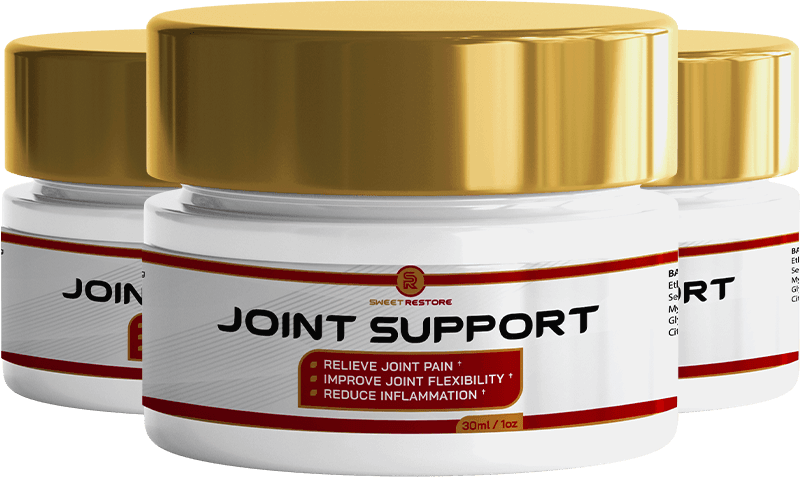
Sweet Restore Joint Support is an oral dietary supplement, sold in bottle form, positioned as a natural, drug-free solution for chronic joint pain, arthritis, and related mobility limitations. The product is marketed primarily through a long-form video sales letter that runs approximately fifteen to twenty minutes and targets adults over fifty experiencing moderate to severe joint deterioration, though testimonials within the VSL extend the stated avatar to include adults as young as thirty-four. The supplement sits in the highly competitive joint health subcategory of the broader nutraceutical market, a space currently valued at over $12 billion globally and growing, according to market research firm Grand View Research.
The product's central positioning claim is that it works by correcting a potassium deficiency that the VSL asserts is the true, suppressed root cause of joint degeneration, a mechanism the script calls the "Guava Method," named after one of its two hero ingredients. This positions Sweet Restore not as a conventional glucosamine-chondroitin joint supplement (the dominant category framing) but as a category-creating product offering a distinct and allegedly superior mechanism. In Eugene Schwartz's framework of market sophistication, this is a Stage 4 or Stage 5 move: an audience that has already been exposed to dozens of joint supplements requires not a bigger benefit claim but an entirely new mechanism to re-engage their attention.
The product is priced at $39 for a single bottle in the VSL's limited-time offer, with a stated retail price of $95 and a claimed production cost of $2,000. No subscription model, bundle pricing, or bonuses are mentioned in the transcript, which is notable by category standards. The absence of a money-back guarantee, standard in virtually every supplement VSL, is a significant structural omission that will be examined in the offer analysis section.
The Problem It Targets
The problem framing in this VSL is built on a foundation of real epidemiological concern, selectively amplified and distorted for persuasive effect. Arthritis and chronic joint pain are genuine public health issues at scale: the CDC estimates that approximately 53 million American adults have been diagnosed with some form of arthritis, and the condition is among the leading causes of work disability in the United States. The VSL's figure of "92 million Americans" suffering from joint pain likely refers to the broader category of musculoskeletal pain, which encompasses lower back pain, tendinopathy, and related conditions beyond arthritis diagnosis, a conflation that inflates the number while remaining technically defensible. The core commercial opportunity is real; the statistical framing is optimistic.
What the VSL does with this real problem is instructive. Rather than positioning joint pain as a manageable chronic condition, which is the clinical consensus, the script frames it as an active, accelerating catastrophe. The "rust on metal" metaphor, the wheelchair-as-statistical-reality claim, and the repeated amputation imagery transform a condition that millions manage with physical therapy, appropriate medication, and lifestyle adjustment into an emergency requiring immediate intervention. The "78% of people with joint pain lose mobility within five years" statistic appears without citation or source, and no peer-reviewed literature known to this analysis supports that specific figure as stated. The National Institutes of Health and the Arthritis Foundation both describe a far more heterogeneous progression trajectory, many patients stabilize, improve, or manage well with appropriate care.
The conspiracy layer of the problem framing, the claim that pharmaceutical companies and physicians are actively suppressing joint cures to maintain painkiller revenue, is a well-worn rhetorical move that serves a precise function in the persuasion architecture. By characterizing mainstream medicine as the cause of the problem rather than the imperfect response to it, the VSL performs two operations simultaneously: it pre-emptively discredits skepticism ("your doctor has been brainwashed"), and it creates an information asymmetry in which the viewer must rely entirely on the VSL's own framework to evaluate the claims. This is not a conspiracy theory that invites scrutiny. It is a conspiracy theory designed to foreclose it. The statistic that "in 2023 alone, painkiller sales exceeded $1 billion" is almost certainly an undercount, the US opioid and NSAID market is substantially larger, and is deployed not for accuracy but to make the villain's motive feel concrete and verifiable.
That said, the underlying concern about NSAID overuse is not without scientific grounding. Research published in journals including Annals of the Rheumatic Diseases has documented that long-term NSAID use carries risks including gastrointestinal bleeding, cardiovascular events, and, in some studies, adverse effects on cartilage repair. The VSL takes this legitimate caution and amplifies it into an existential threat, a rhetorical strategy that borrows credibility from real science while abandoning its proportionality.
How Sweet Restore Joint Support Works
The claimed mechanism of Sweet Restore centers on what the VSL presents as a groundbreaking discovery: that joint pain is fundamentally caused not by wear and tear, genetic predisposition, or inflammation, the standard biomedical account, but by a systemic potassium deficiency that degrades cartilage. This discovery is attributed to a research session at MIT on February 20, 2017, conducted by Dr. O'Neill and an unnamed team, with the implication that the finding was then validated by Harvard Medical School, Stanford, and Johns Hopkins. The precision of the date functions as an authenticity signal, a technique rooted in what psychologists call the "illusion of explanatory depth," where specific-sounding details create a sense of scientific rigor without providing verifiable evidence.
The potassium-cartilage connection is worth examining against what is actually known. Potassium is an essential electrolyte with well-documented roles in nerve function, muscle contraction, and cardiovascular health. Some research has examined electrolyte imbalances in patients with rheumatoid arthritis and other autoimmune joint conditions, and synovial fluid composition, the lubricating fluid in joints, does include electrolytes including potassium. However, no published literature known to this analysis establishes potassium deficiency as the primary or root cause of osteoarthritis or general joint degradation in the way the VSL claims. The dominant scientific models for osteoarthritis involve mechanical loading, inflammatory cytokine activity (particularly interleukin-1 and TNF-alpha), chondrocyte dysfunction, and genetic susceptibility, a multifactorial picture that cannot be reduced to a single mineral deficiency.
The two-step mechanism, guava pulp extract stimulates potassium production, spirulina flushes painkiller toxins to allow absorption, is internally logical as a narrative but unverified as biochemistry. The claim that "potassium breaks down too fast to remain in a form your body can absorb" from standard supplements is not consistent with the pharmacological literature; potassium supplementation is well-established and effective for the conditions where deficiency is documented, such as hypokalemia. The specific claim that guava pulp extract "reboots potassium production" as a biological process does not correspond to any known metabolic pathway in the published literature, and no peer-reviewed study establishing this mechanism was cited in the VSL or is, to this analysis's knowledge, available.
What should be said honestly is this: both guava and spirulina have been studied for their health properties, and some of that research is genuinely interesting. The mechanism the VSL attributes to them in the context of joint pain, however, is a creative extrapolation, not a validated finding, and the claim of a 100% cure rate across 1,571 patients is extraordinary by any scientific standard. Extraordinary claims require extraordinary evidence, and none of the institutional validators named (Harvard, Stanford, Johns Hopkins) are cited with specific study titles, publication dates, or author names.
Curious how other VSLs in this niche structure their pitch? Keep reading, Section 7 breaks down the psychology behind every claim above.
Key Ingredients and Components
The VSL names two primary active ingredients and references twelve additional unnamed components. Based on what is publicly available in nutritional science and phytochemistry, the following represents a fair-minded assessment of each named ingredient:
Guava pulp extract, Derived from Psidium guajava, guava is a tropical fruit with a genuine nutritional profile including vitamin C, quercetin, lycopene, and dietary fiber. Several studies, including work published in Nutrition Journal and the Journal of Ethnopharmacology, have examined guava's anti-inflammatory properties, primarily attributed to its quercetin and polyphenol content. Some animal and in vitro research suggests anti-inflammatory effects on joint tissue. However, the specific claim that guava pulp extract "reboots potassium production" in the joints is not supported by any mechanism identified in the literature to this analysis's knowledge. The ingredient has nutritional legitimacy; the specific mechanism the VSL attributes to it does not.
Spirulina algae, Arthrospira platensis, or spirulina, is a blue-green algae with one of the better-documented supplementation profiles in the functional food space. It is rich in phycocyanin, gamma-linolenic acid, and protein. A 2016 randomized controlled trial published in Phytotherapy Research (Selmi et al.) examined spirulina's effects on inflammatory markers and found modest reductions in TNF-alpha and IL-6 in subjects with metabolic syndrome. Some research suggests potential benefit for inflammation-associated conditions. The claim that spirulina specifically "flushes toxic chemical buildup from NSAIDs" is a dramatization, the liver and kidneys handle NSAID metabolism, and no specific spirulina-mediated NSAID clearance pathway has been established in the literature.
12 additional unnamed natural components, The VSL references these collectively without naming, dosing, or characterizing them. Without this information, independent evaluation is not possible. In supplement marketing, this omission sometimes indicates a proprietary blend structured to protect a formula; it also prevents the consumer from assessing ingredient interactions, dosing adequacy, or contraindications.
Hooks and Ad Angles
The VSL's opening hook is constructed with professional precision: a news-broadcast format, a recognizable name (Robert Kennedy Jr. introduced as a sitting US Health Secretary), and an immediate statistical claim delivered in the cadence of an official announcement. The exact opening, "Breaking news in joint health", is a pattern interrupt in the classical direct-response sense: it hijacks the viewer's news-watching schema and borrows the cognitive authority that schema carries. The deployment of a real public figure's name and title as an apparent endorser, without any actual endorsement, is arguably the most aggressive authority-borrowing move in the letter. It operates at what Eugene Schwartz would identify as a Stage 5 market sophistication level, a move beyond features, benefits, or even mechanism, straight into identity and institutional authority, because the target audience has already dismissed every conventional pitch.
What makes this hook structurally interesting, and ethically alarming in equal measure, is how quickly the baton passes from Kennedy to Dr. O'Neill. Kennedy disappears from the narrative almost immediately; his function was purely to open the loop and establish that this is an "official" revelation. O'Neill then takes over as the personal narrator, deploying what Russell Brunson's copywriting canon calls the epiphany bridge, a story structure in which the narrator shares the exact moment their worldview broke open, inviting the viewer to re-live that moment and adopt the new belief as their own. The February 13, 2017 hospital scene, the pale husband, the gray San Antonio sky, the looming amputation, is a set piece constructed to maximize emotional identification with the viewer's own fears.
Secondary hooks observed throughout the VSL:
- "Every second you take NSAIDs, seven joint pain patients die"
- "Your joints are breaking down right now, this process won't stop on its own"
- "1,571 out of 1,571 patients cured, a 100% success rate"
- "Big Pharma will shut this down, watch before it disappears"
- "In just 17 days, complete freedom from joint pain forever"
Ad headline variations a media buyer could test on Meta or YouTube:
- "The MIT Potassium Discovery That Joint Surgeons Don't Want You to See"
- "Why Your Joint Pain Is Getting Worse Despite Taking NSAIDs, And What to Do Instead"
- "34-Year-Old Went From Barely Walking to Running in 17 Days. Here's How."
- "Doctor Shares the One Deficiency Destroying 92 Million American Joints"
- "This Guava Extract Restored Full Mobility in 17 Days, Without Surgery or Painkillers"
Psychological Triggers and Persuasion Tactics
The persuasive architecture of this VSL is not a scattershot collection of tricks. It is a deliberately sequenced stack in which each layer of psychological leverage is laid before the next, so that by the time the price is revealed, the viewer has been moved through fear, anger, hope, identification, and social proof in a precise order. The sequence maps closely to what direct-response marketers call the Problem-Agitate-Solution (PAS) framework, but this letter extends that structure with a conspiracy layer between the Agitation and Solution phases, a move that performs a second function: it converts the viewer's existing frustration with the medical system into directed anger at a named villain, and then channels that anger toward the product purchase as an act of defiance. This is Festinger's cognitive dissonance engineered into a commercial outcome.
The authority architecture, in particular, reveals a letter that understands its audience's skepticism deeply. The target viewer, likely an older American who has been disappointed by previous treatments, has developed resistance to traditional doctor-based authority. The VSL's response is to simultaneously invoke institutional names (MIT, Harvard, Stanford, Johns Hopkins) and discredit the institutions those names belong to. This apparent contradiction dissolves under analysis: the letter is not using institutional authority to validate the mainstream; it is using the prestige signal of those names while the narrative frame positions all institutions as corrupt. The viewer gets the credibility halo without the accountability that real citation would require.
False authority endorsement (Cialdini's Authority principle): Robert Kennedy Jr. is introduced as a sitting US Health Secretary delivering a formal announcement, a fabricated framing that borrows governmental legitimacy before a single product claim has been made. The intended effect is to neutralize the viewer's initial skepticism reflex by activating the deeply conditioned deference to official sources.
Loss aversion amplification (Kahneman & Tversky's Prospect Theory): The amputation countdown, "14 days to say goodbye", and the wheelchair-as-statistical-reality framing transform inaction into a vivid, concrete loss. Research consistently shows that loss framing outperforms gain framing in motivating action; this VSL applies that principle at every stage of the problem section.
False enemy framing / in-group signaling (Godin's Tribes; Festinger's cognitive dissonance): The viewer is invited into an in-group of people who "know the truth" that Big Pharma suppresses. This performs two functions: it pre-empts skepticism of the product's claims (skeptics are unwitting agents of the villain) and it makes the purchase an act of tribal belonging rather than a commercial transaction.
Epiphany bridge narrative (Brunson's storytelling architecture): The San Antonio hospital scene and the 14-day countdown are constructed to let the viewer inhabit the narrator's emotional state, terror, helplessness, and then miraculous discovery, so that the product's mechanism arrives not as a sales claim but as a personally experienced revelation.
Social proof stacking across demographic avatars (Cialdini's Social Proof): Six testimonials are sequenced to cover the primary buyer segments: older woman (grandkids), young professional male, military veteran, caregiver, new mother, grandfather. Each story maps a specific avatar's fear and resolves it in seventeen days. The breadth of avatar coverage is deliberate: no viewer should be able to say "that's not my situation."
Three-tier price anchoring (Thaler's mental accounting; Tversky & Kahneman's anchoring effect): The $2,000 production cost → $95 retail → $39 limited-time ladder is designed to make $39 feel essentially free. The $2,000 anchor is implausible for a supplement but functions purely as a psychological reference point; by the time $39 is named, it carries almost no resistance.
Artificial scarcity and time pressure (Cialdini's Scarcity principle): The simultaneous deployment of a ten-minute countdown and a "355 bottles available nationwide" constraint creates what behavioral economists call a dual scarcity frame, time-limited and quantity-limited simultaneously, designed to collapse the deliberative phase of the purchase decision.
Want to see how these tactics compare across 50+ VSLs? That's exactly what Intel Services is built to show you.
Scientific and Authority Signals
The authority infrastructure of this VSL deserves careful, granular examination because it operates on two distinct tracks simultaneously, a pattern that is characteristic of sophisticated health misinformation rather than simple fraud. On the first track, real institutional names are invoked: MIT, Harvard Medical School, Stanford, Johns Hopkins. On the second track, none of these institutions are cited for a specific study, author, publication year, or journal. The names function as prestige signals divorced from accountability, a technique that borrowed authority without granting the viewer any means of verification. A reader who attempts to find the February 20, 2017 MIT study on potassium and joint pain will not find it in PubMed or any accessible academic database, because no such published study is known to exist.
The figure of Dr. Barbara O'Neill is worth examining separately. There is a real person named Barbara O'Neill who has been active in naturopathic and alternative health circles, particularly in Australia, where she was banned from providing health services by the Health Care Complaints Commission of New South Wales in 2019 following findings that she provided misleading health advice on topics including cancer treatment and infant nutrition. Whether the "Dr. Barbara O'Neill" in this VSL is the same person, a fictitious character borrowing that name, or a persona constructed around it cannot be determined from the transcript alone. What can be said is that the title "Dr." as used in this VSL implies a medical or research doctorate, and the character's credentials are never specified, verified, or independently confirmable from the script.
The testimonials presented as social proof are unverifiable. They are unnamed, undated, and unaccompanied by before-and-after documentation. The claim that "1,571 out of 1,571 patients were cured", a 100% success rate, is statistically implausible for any intervention in any disease area and would, if real, represent one of the most significant clinical findings in the history of rheumatology. No peer-reviewed publication bearing those results has been identified. The attribution of validation to "Herman and Lee, Harvard Medical School" is cited without journal name, publication year, or DOI, a citation format that provides the appearance of academic sourcing while containing none of its substance.
To be balanced: the ingredients themselves, guava extract and spirulina, are real, commercially available compounds with genuine research interest. Some studies on spirulina's anti-inflammatory properties, including work by Selmi et al. published in Phytotherapy Research (2016), represent legitimate science. That legitimate research exists in the vicinity of these ingredients does not, however, validate the specific mechanism, dosage, or outcome claims made in this VSL.
The Offer, Pricing, and Risk Reversal
The offer structure of this VSL is built around one of the most aggressive price-anchoring sequences observed in health supplement marketing. The progression from a stated $2,000 production cost through a $95 retail price to a $39 limited-time offer creates what Thaler would recognize as a mental accounting distortion: the viewer's reference point is set so high that $39 registers not as the actual price of a $39 product but as an exceptional gift. The $2,000 production cost claim is almost certainly not a reflection of actual manufacturing economics for a supplement at scale, typical supplement production at contract manufacturing facilities runs between $3 and $15 per bottle for standard natural ingredient formulations, but it functions as a rhetorical anchor, not an accounting disclosure.
The urgency and scarcity mechanics are deployed simultaneously and with unusual specificity. A ten-minute countdown clock and a stated inventory of exactly 355 bottles "sold at cost" are presented as hard constraints on the offer. In the VSL economy, these constraints are rarely, if ever, technically binding, the same letter typically continues to run with the same countdown and inventory figures indefinitely, but their psychological function is to prevent the viewer from pausing, researching, or comparing alternatives. The combination of time pressure and scarcity is what Cialdini's research identifies as a dual depletion frame, and its effect on conversion rates is well-documented in the direct-response literature.
The most structurally notable aspect of the offer is what it omits: there is no money-back guarantee mentioned anywhere in the transcript. In the supplement VSL space, a thirty-day or sixty-day satisfaction guarantee is so standard as to be nearly universal, its absence here is either an oversight or a deliberate choice. Given the product's extraordinary efficacy claims, the absence of a guarantee is a meaningful signal to prospective buyers and represents a significant deviation from the risk-reversal norms that define the category.
Who This Is For (and Who It Isn't)
The ideal viewer for this VSL is a specific and identifiable profile: an American adult between fifty-five and seventy-five, living with diagnosed or self-diagnosed arthritis or chronic joint pain, who has tried mainstream medical approaches, NSAIDs, physical therapy, possibly a cortisone injection or two, without achieving the relief they wanted. They are likely skeptical of pharmaceutical companies based on personal experience or media coverage of the opioid crisis. They have probably purchased at least one supplement or alternative treatment in the past. The fear of disability, loss of independence, and being a burden to family members is active and not abstract for this person. They are exactly the audience for whom the amputation narrative, the grandchildren imagery, and the conspiracy-against-the-patient framing are maximally resonant.
A secondary avatar is also visible in the testimonials: adults in their thirties experiencing early-onset joint pain, possibly from athletic activity or workplace strain, who feel the particular indignity of physical limitation at a young age. The newlywed narrative and the young professional's "I felt 80 at 34" line are precisely calibrated for this segment.
Readers who should approach with significant caution include anyone currently under medical supervision for joint conditions, particularly those managing autoimmune arthritis (rheumatoid arthritis, psoriatic arthritis) with disease-modifying drugs, because the VSL's recommendation to abandon pharmaceutical treatment in favor of a supplement could, in those cases, lead to real clinical harm. Readers who value verifiable scientific sourcing before making health decisions, readers who are comfortable with and responding well to existing treatments, and anyone for whom a $39 purchase represents a financial strain should weigh the absence of a money-back guarantee carefully before proceeding.
If you're researching similar products across the joint health and pain supplement category, the library at Intel Services documents dozens of comparable VSL structures, with the same analytical lens applied throughout.
Frequently Asked Questions
Q: Is Sweet Restore Joint Support a scam?
A: The product contains real ingredients, guava extract and spirulina, with some legitimate research behind their anti-inflammatory properties. However, the VSL makes several claims that are not supported by published science, misuses real public figures' names, and cites institutions without verifiable studies. Whether the product delivers its stated results cannot be confirmed from the VSL's own evidence base, and the absence of a money-back guarantee is a notable risk flag for buyers.
Q: Does Sweet Restore Joint Support really work for joint pain?
A: The specific mechanism claimed, potassium deficiency as the root cause of joint pain, corrected by guava extract and spirulina, is not established in the peer-reviewed literature. Some research supports anti-inflammatory properties of spirulina and guava polyphenols, but the VSL's claims of a 100% cure rate in 1,571 patients in 17 days are extraordinary and unverifiable. Results consistent with that level of efficacy have not been published in any indexed scientific journal to this analysis's knowledge.
Q: What are the ingredients in Sweet Restore Joint Support?
A: The VSL names two primary active ingredients: guava pulp extract and spirulina algae. It also references twelve additional natural components without naming them. Without a full ingredient list and dosage disclosure, independent evaluation of the complete formula is not possible.
Q: Are there side effects from Sweet Restore Joint Support?
A: The VSL claims "no side effects," contrasting this with the adverse effects of NSAIDs. Spirulina is generally considered safe at typical supplement doses but can cause mild gastrointestinal symptoms and is not recommended for people with autoimmune conditions or phenylketonuria. Guava extract is well-tolerated in food amounts. However, without a full ingredient list and dosage disclosure, a complete safety assessment is not possible. Anyone on medication or managing a diagnosed condition should consult a physician before using this or any supplement.
Q: Is it safe to use Sweet Restore instead of NSAIDs or prescription medication?
A: The VSL strongly encourages replacing NSAIDs and pharmaceutical treatment with this supplement. For many forms of inflammatory arthritis managed with disease-modifying medications, discontinuing prescribed treatment without medical supervision carries real clinical risk. This substitution decision should always be made in consultation with a qualified healthcare provider, not based on a supplement sales letter.
Q: Who is Dr. Barbara O'Neill and is she a real doctor?
A: There is a real person named Barbara O'Neill associated with alternative and naturopathic health, who was banned from providing health services in New South Wales, Australia in 2019 by the Health Care Complaints Commission. The "Dr." title as used in this VSL is not substantiated by a specified medical or scientific credential, and the character's stated biography, including the MIT research session and her role developing a formula validated by Harvard, Stanford, and Johns Hopkins, cannot be independently verified from the transcript.
Q: What is the Guava Method and does the science support it?
A: The Guava Method is the VSL's proprietary label for a two-ingredient protocol combining guava pulp extract and spirulina, claimed to correct joint-damaging potassium deficiency. While both ingredients have been studied for health properties, the specific mechanism, guava "reboots potassium production" in joints while spirulina clears NSAID toxicity to enable absorption, does not correspond to any identified published biochemical pathway. The method appears to be a marketing construct rather than a documented scientific protocol.
Q: What is the return policy or money-back guarantee for Sweet Restore?
A: No money-back guarantee is mentioned anywhere in the VSL transcript analyzed here. This is an unusual omission for the supplement category, where thirty-day to sixty-day guarantees are standard. Prospective buyers should verify the refund policy directly on the product's checkout page before purchasing.
Final Take
This VSL is, in technical terms, a highly competent piece of direct-response copywriting applied to a product whose efficacy claims have no verifiable scientific support. That combination, professional persuasion architecture layered over unsubstantiated claims, is worth naming precisely because it is common in the health supplement space and because it preys on a population that is genuinely suffering. The people this letter targets are not naive or foolish. They are people in pain who have been disappointed by the medical system's real limitations and are looking for an alternative that actually works. That authentic need is what the VSL's conspiracy framing exploits: it takes a legitimate frustration with pharmaceutical over-reliance and NSAID side effects and redirects it toward a product that offers no verifiable evidence of the outcomes it promises.
The letter's two most serious structural problems are the fabricated authority opening, using Robert Kennedy Jr.'s name and title as an endorser without any actual endorsement, and the absence of a money-back guarantee on a product making extraordinary clinical claims. The first is an ethical and potentially legal issue; it represents a consumer protection violation regardless of the product's merits. The second is a financial risk flag that prospective buyers should weigh carefully. A seller confident in a product's efficacy typically has an economic incentive to offer a guarantee; its absence here inverts that logic in a direction that does not favor the buyer.
To be fair, the ingredients themselves are not worthless. Spirulina has a real research profile, and guava polyphenols have shown anti-inflammatory activity in some studies. A supplement combining these ingredients could, in principle, offer modest anti-inflammatory benefits as part of a broader joint health regimen, the kind of effect that is reasonable, not miraculous, and consistent with the ingredient science as it actually exists. The problem is not that the product uses these ingredients. The problem is the distance between what the ingredients can plausibly do and what the VSL promises they will do in seventeen days, without exception, for every user.
This breakdown is part of Intel Services, our ongoing library of VSL and ad-copy analyses. If you're researching similar products in the joint health, arthritis, or pain supplement space, the full archive applies this same analytical framework to dozens of comparable pitches, so you can see not just one letter in isolation but the patterns that define the category.
Disclaimer: This article is for research and educational purposes only. It is not medical, legal, or financial advice, and it is not affiliated with the product or its makers. Always consult a qualified professional before making health or financial decisions.
Source-backed reader context
Additional Reviews & Reported Experiences
These statements were presented in the product's sales transcript. Daily Intel did not independently verify the speakers, purchase status, or reported outcomes, and the statements are not used in Product aggregateRating.
Unnamed woman
Date not stated
regained full mobility in 17 days, now bakes with grandkids and chases them in the backyard
34-year-old male newlywed
Date not stated
joint pain and migraines resolved in 17 days, resumed running, booked a hiking trip with wife
62-year-old retired Marine
Date not stated
went from near-amputation to gym and veteran hiking group in 17 days
Unnamed caregiver
Date not stated
joint pain eased in two weeks, can now care for elderly parents without pain
New mother
Date not stated
knee and elbow spasms gone in under three weeks, fully active with her baby
Unnamed male
Date not stated
leg numbness gone by day 9, completely pain-free by day 17, plays with grandkids
Comments(0)
No comments yet. Members, start the conversation below.
Related reads
 reviews
Mind Lab Pro Review: Does the 30-Day Study Match v4?
Mind Lab Pro v4 lists exact amounts for 11 ingredients and contains no caffeine or stimulants, according to its official page. A 30-day finished-product study reported favorable memory findings, but its abstract does not identify v4 or disclose the tested form or dose.
Read reviews
Life Extension Two-Per-Day Multivitamin Review: Evidence Limits
Life Extension Two-Per-Day is a 120-capsule multivitamin displayed as a 60-day supply. Its identity and dated prices are verified, but the supplied evidence does not reproduce the complete quantitative Supplement Facts panel or include a trial of the finished product. Research involving another multivitamin cannot prove that these capsules improve memory or deliver Life Extension’s broader health-support claims.
Read reviews
Ritual Essential for Women 50+ Review: Label, Study Fit, and Verdict
Ritual Essential for Women 50+ is an iron-free capsule multivitamin positioned by Ritual for women after menopause. Its verified label lists 100 micrograms of vitamin K2 as menaquinone-7. The supplied study did not test this finished product, and the packet provides no exact price.
Read