Uroflow Review and Ads Breakdown: A Research-First Look
The video opens with a claim so bold it stops most viewers cold: Tom Hanks, one of Hollywood's most recognizable faces, suffered from an enlarged prostate for seven years, and then cured it with a natural home remedy. Within the first thirty seconds, a supplement called Uroflow…
8,226+
Videos & Ads
+50-100
Fresh Daily
$29.90
Per Month
Full Access
12.5 TB database · 72+ niches · 25 min read
The video opens with a claim so bold it stops most viewers cold: Tom Hanks, one of Hollywood's most recognizable faces, suffered from an enlarged prostate for seven years, and then cured it with a natural home remedy. Within the first thirty seconds, a supplement called Uroflow has borrowed the credibility of a celebrity, invoked the implicit threat of a chronic medical condition affecting tens of millions of men, and positioned itself against the entire pharmaceutical industry. This is not accidental. It is a textbook opening for a Video Sales Letter (VSL) operating in the health supplement space, and it is worth reading carefully, not because every claim it makes is true, but because the structure of the pitch reveals a great deal about how modern supplement marketing works, who it targets, and what prospective buyers should understand before reaching for a credit card.
This analysis treats the Uroflow VSL as a primary text, the way a media critic treats a film or a policy analyst treats a legislative brief. The goal is not to reflexively condemn or to endorse, but to examine what is being claimed, what the evidence base actually supports, and what rhetorical machinery is operating beneath the surface of what sounds, to a first-time viewer, like a straightforward medical presentation. If you are researching Uroflow before buying, or if you are a marketer studying how high-converting supplement VSLs are built, what follows is a systematic account of both.
The question this piece investigates is a layered one: Does the Uroflow VSL make claims that hold up under scrutiny, and does the persuasive architecture it employs serve the buyer's interests or primarily the seller's?
What Is Uroflow?
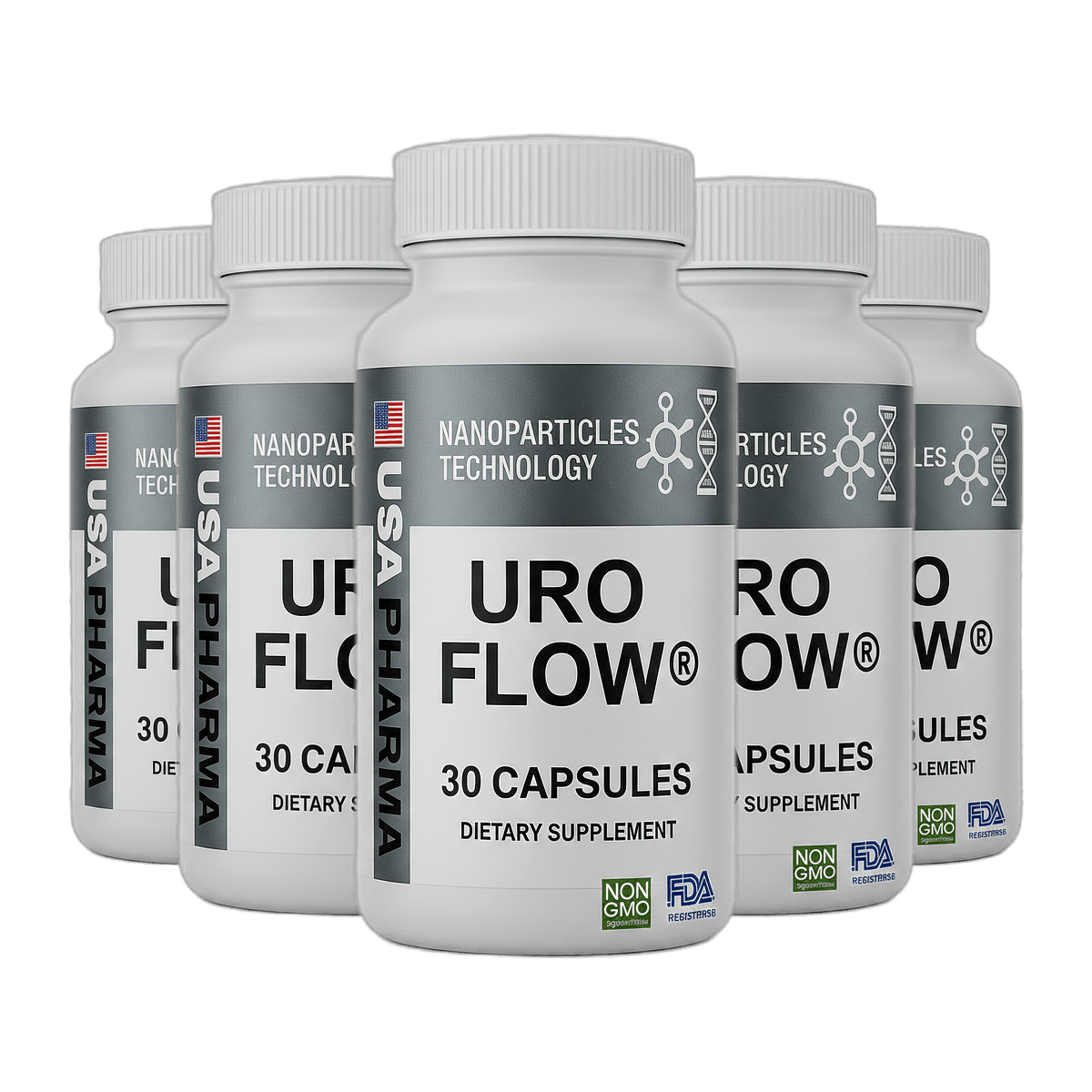
Uroflow (also rendered as "Euroflow" in portions of the transcript, suggesting the VSL may have been adapted from a non-English original) is a dietary supplement marketed for men experiencing benign prostatic hyperplasia (BPH), the clinical term for an enlarged prostate. The product is delivered as an oral capsule, with the recommended dose of one capsule taken nightly. Its active ingredient profile is built around two botanically sourced compounds: pumpkin seed oil and flower pollen extract. The manufacturer frames it as "the world's first and only 100% natural solution" combining these two ingredients specifically for BPH, a positioning claim that functions more as marketing differentiation than as a verifiable regulatory category.
The product is aimed squarely at American men aged 45 and older, particularly those already experiencing BPH symptoms: weak urine stream, incomplete bladder emptying, nighttime urination (nocturia), and associated sexual dysfunction. The VSL positions Uroflow not as a symptom manager, a category it explicitly contrasts with prescription drugs, but as a root-cause reversal agent capable of physically reducing prostate size to what the narrator describes as its natural "walnut" shape. This is a significant clinical claim, and one that regulatory agencies like the FDA require rigorous trial evidence to support before it can appear on product labeling. Whether that standard is met is a central question this analysis addresses.
The product is sold online through a direct-response funnel, with pricing structured across single-bottle and multi-bottle packages, the latter carrying meaningful discounts and free shipping. There are no retail pharmacy listings or distribution through licensed medical channels mentioned in the VSL, a distribution pattern common to supplement products that operate outside the clinical trial and peer review infrastructure required of pharmaceutical drugs.
The Problem It Targets
The condition Uroflow targets, benign prostatic hyperplasia, is genuinely widespread, and the VSL's epidemiological framing is broadly consistent with established medical literature. According to the National Institutes of Health (NIH), BPH affects approximately 50% of men between the ages of 51 and 60, rising to more than 90% of men in their eighties. The American Urological Association estimates that roughly 14 million men in the United States have symptomatic BPH, making it one of the most common conditions in men's health and one of the largest addressable markets in the supplement industry. The VSL cites these figures, with some rounding, and does so accurately enough that a viewer with no prior knowledge of the condition would receive a broadly correct picture of how prevalent the problem is.
Where the framing diverges from clinical literature is in its characterization of causation. The VSL insists, repeatedly and emphatically, that the real cause of BPH "isn't related to aging, genetics, or lifestyle", a claim that is, by the consensus of urological science, incorrect. The Mayo Clinic and the American Urological Association both recognize advancing age as the single strongest risk factor for BPH, with hormonal changes, including the accumulation of dihydrotestosterone (DHT), understood as one biological mechanism among several. Genetics and metabolic factors, including obesity and type 2 diabetes, are also established correlates. The VSL's insistence that these factors are myths propagated by the pharmaceutical industry to keep men "hostage" is a rhetorical move, not a scientific one: it functions to discredit conventional medicine and position the product as uniquely truth-telling, but it misrepresents the actual state of urological research.
The VSL's escalation of consequences, from weak stream to blood in urine to kidney failure to emergency surgery, is medically accurate in the sense that untreated severe BPH can lead to these outcomes, but the progression is presented in a way designed to maximize fear rather than provide proportionate clinical context. Acute urinary retention and hematuria are real but relatively infrequent complications of BPH; most men with mild to moderate BPH manage well with watchful waiting, lifestyle changes, and, if needed, well-tolerated medications. The VSL frames these extreme outcomes as near-inevitable consequences of not acting immediately, which is a classic fear escalation structure rather than evidence-based patient education.
As a commercial opportunity, BPH represents a market that is genuinely underserved by patient satisfaction: studies consistently show that many men on alpha-blockers and 5-alpha reductase inhibitors (the standard pharmaceutical treatments) discontinue therapy due to side effects, inadequate symptom relief, or cost. This dissatisfaction creates a real opening for natural alternatives, and it is one that Uroflow, and dozens of competing supplement products, actively exploit.
Curious how other VSLs in this niche structure their pitch? Keep reading, Section 7 breaks down the psychology behind every claim above.
How Uroflow Works
The VSL's mechanistic explanation centers on DHT, dihydrotestosterone, a potent androgen produced when testosterone is converted by the enzyme 5-alpha reductase. The claim that DHT accumulates in the prostate and drives cellular overgrowth is consistent with established endocrinology: this is, in fact, the same pathway targeted by the pharmaceutical drugs finasteride and dutasteride (5-alpha reductase inhibitors), which the VSL simultaneously attacks as dangerous and ineffective. The VSL invokes a Harvard University finding that men who underwent childhood orchiectomy (castration) do not develop BPH in old age, which is a real and long-established clinical observation that does support the DHT-dependence model of prostate growth. So far, the mechanistic framing holds up.
Where the mechanism becomes speculative is in the claim that pumpkin seed oil and flower pollen extract can inhibit DHT accumulation sufficiently to physically reduce a significantly enlarged prostate to its "ideal size" within weeks. The VSL's language, "restores the ideal size," "completely reversing its swelling," "returns to the size of a walnut", is absolute, and it implies a degree of clinical efficacy that the published evidence for these ingredients does not fully support at the level of certainty being projected. Pumpkin seed oil does contain phytosterols, zinc, and fatty acids that have shown some activity in BPH-related pathways in small and moderate studies. Flower pollen extract (most commonly studied under the brand name Cernilton) has a more developed research base, including randomized controlled trials showing improvements in subjective urinary symptoms and modest reductions in prostate volume. But "modest improvements in urinary symptoms in small trials" is meaningfully different from "92% of men experienced complete reversal of prostate swelling", the claim the VSL attributes to a Johns Hopkins study.
The 5-alpha reductase inhibitors the VSL dismisses are, by the available clinical evidence, actually effective at reducing prostate volume over 12-24 months in men with significantly enlarged prostates, a fact the VSL omits entirely. Their side effect profile, including sexual dysfunction and the much-discussed post-finasteride syndrome, is real and clinically recognized, and the VSL's criticism on this point has legitimate grounding. The dishonesty lies not in criticizing pharmaceutical side effects but in implying that the natural alternative has an equivalent or superior evidence base, which is not currently established in peer-reviewed literature at the level of confidence the VSL conveys.
Key Ingredients and Components
The formulation Uroflow presents is a two-ingredient system, which the VSL frames as deliberate simplicity, the product of years of research distilling the most effective compounds available. The framing is elegant: rather than an overwhelming list of botanicals that many supplement buyers have learned to distrust, two named ingredients with specific mechanisms are offered. Whether those mechanisms are as strong as claimed is another matter.
Pumpkin seed oil is a cold-pressed oil derived from Cucurbita pepo seeds, used in traditional medicine across Europe and Asia for urinary and prostate conditions. The VSL attributes its efficacy to phytosterols (particularly beta-sitosterol), zinc content, and phytochemicals that inhibit DHT. A 2014 randomized, double-blind, placebo-controlled study published in Nutrition Research and Practice (Hong et al.) found that pumpkin seed oil supplementation over 12 weeks improved urinary symptom scores in men with BPH, though prostate volume reduction was modest. The VSL's claim that a Stanford University study of 5,000+ men in 2019 demonstrated low zinc levels in BPH patients is plausible in direction, zinc deficiency has been associated with prostate pathology, but the specific study citation should be verified independently, as the VSL does not provide enough detail to locate it.
Flower pollen extract (commonly Cernilton, derived from Secale cereale pollen) is the more researched of the two ingredients. A Cochrane systematic review (MacDonald et al., 2000) found evidence that Cernilton improved overall urinary symptoms and self-rated symptoms compared to placebo, though the authors noted the trials were small and short-term. A 2019 systematic review in Evidence-Based Complementary and Alternative Medicine supported modest benefits for lower urinary tract symptoms. The VSL's claim, attributed to a Johns Hopkins University study, that pollen extract is "4x more effective than finasteride" and that 92% of men experienced "complete" prostate size reversal in 12 weeks is not consistent with any publicly available peer-reviewed literature at that effect size. These figures should be treated as marketing claims rather than verified findings unless the original study is independently located and reviewed.
Hooks and Ad Angles
The VSL's opening gambit is one of the more audacious in the supplement category. The hook, "Tom Hanks, one of Hollywood's biggest stars, battled an enlarged prostate for over seven years", operates as a pattern interrupt at multiple levels simultaneously. The viewer expecting a medical presentation receives instead what sounds like a celebrity news item, triggering a curiosity loop before any product has been named. Tom Hanks has, in fact, publicly discussed type 2 diabetes and other health issues over the years, giving the claim a surface plausibility that a less-known name would not carry. The name is deployed not as a verified endorsement, the VSL does not include footage or a direct quote from the actor, and there is no credible public record of Hanks endorsing any prostate supplement, but as what marketers call a borrowed credibility transfer: associating the product with a figure who commands trust before the product has earned any of its own.
The secondary hook structure the VSL deploys follows what Eugene Schwartz would recognize as a Stage 4 market sophistication approach. Men with BPH in this demographic have typically been on medication for years, have heard dozens of supplement pitches, and have developed resistance to direct claims. The VSL's response is to offer a new mechanism (DHT inhibition via natural phytochemicals), a new villain (the pharmaceutical industry rather than the disease), and a conspiracy frame that makes the viewer feel they are receiving suppressed insider knowledge. This is a sophisticated bypass of buyer skepticism: instead of arguing that the product is better than competitors, the pitch argues that the entire competitive landscape, including conventional medicine, is fraudulent. Skepticism is thus re-routed from the product to the establishment.
Secondary hooks observed in the VSL:
- "Rich multi-millionaire men already know this mixture, they just don't want you to."
- "Since my video went live, they've tried to ban it several times."
- "Your prostate drug works like a nasal decongestant, temporary relief, then you plug up again."
- "What I'm about to present may be shocking, but it's your right to know the truth."
- "I bet you have this ingredient in your kitchen right now."
Ad headline variations a media buyer could test on Meta or YouTube:
- "The Nightly Ritual 14,574 Men Are Using to Empty Their Bladder Completely Again"
- "Harvard Researchers Found the Real Cause of BPH, Your Urologist Won't Tell You"
- "This Kitchen Ingredient Shrinks an Enlarged Prostate. Here's Exactly How."
- "The Side Effect Your Prostate Pill Causes That No One Mentions (Study of 55,000 Men)"
- "One Capsule Before Bed. No Prescription. No Surgery. See What Happened."
Psychological Triggers and Persuasion Tactics
The Uroflow VSL is architecturally sophisticated in a specific way: it does not deploy its persuasion triggers in parallel but in a deliberate sequence that mirrors the stages of a high-resistance buyer's decision process. The letter opens with authority (celebrity borrowing, then expert credentials), moves through fear escalation (consequence stacking from weak stream to kidney failure), pivots to indignation (pharmaceutical conspiracy), introduces hope through mechanism (DHT-inhibition science), validates through social proof (testimonial cascade), and closes through risk transfer (60-day guarantee and price anchoring). This is a Problem-Agitate-Solution structure nested inside a conspiracy revelation frame, a combination that is particularly effective with older male consumers who have a history of institutional distrust and medication frustration.
The specific tactic set deserves close reading because each element targets a different cognitive vulnerability:
Celebrity false endorsement (Cialdini's Authority): Tom Hanks is named in the first sentence without any supporting evidence of his actual involvement. The authority transfer happens before the viewer has time to question its legitimacy, and the VSL never returns to verify the claim, it has already served its purpose of establishing a trust baseline.
Conspiracy framing / false enemy (Godin's Tribes model): By positioning the pharmaceutical industry as a unified, malevolent actor suppressing natural cures, the VSL creates a strong tribal identity for the viewer: those who "know the truth" versus those kept in ignorance. This framing inoculates against skepticism, any doubt the viewer feels is pre-attributed to pharmaceutical influence rather than to legitimate critical thinking.
Fear escalation and consequence stacking (Kahneman and Tversky's loss aversion): The VSL moves through a carefully ordered sequence of increasingly severe outcomes, weak stream, nocturia, dripping, hematuria, acute urinary retention, kidney failure, emergency surgery, exploiting the finding that losses are weighted approximately twice as heavily as equivalent gains in human decision-making. The prospect of blood in urine is not presented as a rare outlier but as a probable destination if action is not taken immediately.
Testimonial cascade with identity mirroring (Cialdini's Social Proof): The five testimonials are not generic; each one mirrors a specific segment of the likely audience, the man on meds for 15 years, the man who considered adult diapers, the man whose doctor said surgery was inevitable. This is sophisticated segmentation delivered through narrative rather than ad targeting.
Price anchoring and stepdown framing (Thaler's anchoring effect): The sequence of $300, then $150, then $79 is a textbook three-step anchor descent. The viewer's reference point is established at $300, making $79 feel like an exceptional rescue from an exorbitant price, even though the $300 figure has no independent market grounding and appears to be constructed specifically to serve the contrast.
Scarcity and urgency theater (Cialdini's Scarcity): The claim that the video has been "banned several times," that the buy button will "automatically disappear" when stock runs out, and that "if you leave this page it may never appear for you again" are standard urgency mechanisms designed to suppress the deliberation that might lead a buyer to seek independent information before purchasing.
Risk reversal as reciprocity trigger (Cialdini's Reciprocity and Thaler's endowment effect): The 60-day guarantee is framed explicitly as a "gift for having watched this far", a reciprocity frame that positions the guarantee not as a standard consumer protection tool but as a personal gesture from the expert, psychologically increasing the buyer's felt obligation to reciprocate with a purchase.
Want to see how these tactics compare across 50+ VSLs? That's exactly what Intel Services is built to show you.
Scientific and Authority Signals
The VSL deploys a dense array of institutional name-drops, Harvard, Stanford, Princeton, Johns Hopkins, the American Urological Association, the British Medical Journal, the FDA, in a pattern that warrants careful disaggregation. Some of these references are what might be called legitimately borrowed: the observation that men who underwent childhood orchiectomy do not develop BPH in old age is a real and well-documented clinical finding, consistent with Harvard endocrinology research on DHT's role in prostate growth. The 2013 American Urological Association reference to a study linking BPH drug use with erectile dysfunction rates above 60% is directionally consistent with published literature on finasteride's sexual side effect profile, though the specific study citation cannot be verified from the VSL alone. The British Medical Journal study associating 5-alpha reductase inhibitors with a 35% increased diabetes risk references a real area of pharmacovigilance research, a 2011 study by Moreira et al. published in the BMJ did examine metabolic risks in BPH patients, though the specific 35% figure requires independent verification.
The more problematic citations are those attributed to Princeton and Johns Hopkins. The claim that "researchers at Princeton University are certain that pumpkin seed oil is the ideal treatment for reversing prostate swelling" does not correspond to any published Princeton research accessible in major academic databases. Princeton is not a medical school in the traditional sense and does not maintain a clinical urology program of the kind that would produce BPH treatment trials. Similarly, the Johns Hopkins findings cited, 92% of men achieving complete prostate reversal, 400% urinary flow improvement, and the 4x superiority over finasteride, exceed what any published pollen extract trial has demonstrated, and no such study is currently indexed in PubMed or the Cochrane Library under Johns Hopkins authorship with these effect sizes. These citations appear to be what researchers in misinformation studies call fabricated or laundered authority: real institutional names attached to claims those institutions have not made.
Dr. James Fontana, the narrator and claimed product creator, describes himself as a graduate of the National University of Health Sciences in Lombard, Illinois, a real institution that offers naturopathic and chiropractic programs. His credentials as a "naturopath" are real in the sense that the degree program exists; however, naturopathic practitioners are not licensed to practice medicine in all U.S. states, and "applied naturopathy" is not a specialty recognized by the American Board of Medical Specialties. The VSL's framing of Dr. Fontana as a peer of Harvard and Stanford researchers overstates his institutional standing considerably. The Tom Hanks opening, meanwhile, constitutes what the Federal Trade Commission would likely classify as a deceptive testimonial or endorsement, a fabricated or unauthorized celebrity association designed to generate implied credibility.
The Offer, Pricing, and Risk Reversal
The offer structure in the Uroflow VSL follows a well-established direct-response template. A single bottle, a two-month supply at one capsule nightly, is priced at $79. Multi-bottle packages (three and six bottles) carry progressively larger discounts, with the six-bottle package offered at $294, a per-bottle price of $49. Free shipping is bundled into the three- and six-bottle packages. The pricing anchoring sequence, $300 dropped to $150 dropped to $79, is a price ladder descent, a technique documented extensively in behavioral economics literature, most notably by Daniel Kahneman's work on reference-point dependence: once a high anchor is established, the final price is judged relative to that anchor rather than against the actual market value of competing supplements, which for similar botanical formulations typically range from $25 to $60 per bottle.
The scarcity mechanics deployed, "today only," "buy button disappears when stock runs out," "if you leave this page it may never appear for you again", are standard urgency triggers whose authenticity is difficult to verify but whose function is transparent: they are designed to prevent the deliberation window that might lead a buyer to consult a physician, read independent reviews, or compare competing products. For a product making significant clinical claims, the suppression of this deliberation window is a meaningful consumer concern. The 60-day money-back guarantee, conversely, is a genuine risk-reversal mechanism that reduces the financial downside of a purchase, though its practical accessibility depends on the responsiveness of the claimed 24-hour support team, which is not independently verifiable from the VSL alone.
Who This Is For (and Who It Isn't)
The Uroflow VSL is most precisely calibrated for men in their fifties to seventies who have been managing BPH symptoms for at least several years, have tried or are currently taking prescription medications, and are experiencing either inadequate symptom relief or intolerable side effects. This buyer has a high pain threshold for marketing content, he has watched many health videos, but also a high frustration threshold with conventional medicine, making him receptive to the "suppressed natural cure" narrative frame. He is likely not a heavy internet researcher; he has arrived at this video through a social media ad rather than through an organic search for clinical trials, and he is making a purchase decision based primarily on emotional resonance with the testimonials and the sense that he has found something his doctor doesn't know about.
For this buyer, the pumpkin seed oil and flower pollen extract in Uroflow represent a genuinely low-risk botanical intervention with some, if more modest than claimed, supporting evidence for urinary symptom improvement. The 60-day guarantee reduces financial risk further. If the buyer's expectations are calibrated appropriately, improvement in subjective symptoms over 8-12 weeks rather than dramatic physical reversal of prostate size, there is a reasonable probability of a satisfactory outcome, and the ingredient profile carries no known serious adverse effects at typical supplemental doses.
Buyers who should approach with more caution include men who have not received a formal BPH diagnosis and are self-diagnosing based on symptoms (some of which overlap with more serious conditions including prostate cancer), men whose BPH has progressed to acute urinary retention or hematuria (who require immediate urological evaluation, not a supplement), and men who interpret "complete reversal in weeks" literally and defer medical care on that basis. The VSL's strongest liability is not its ingredient profile but its displacement effect: the persuasive energy it directs toward discrediting conventional medicine could lead some buyers to delay care they genuinely need.
This breakdown is part of Intel Services, our ongoing library of VSL and ad-copy analyses. If you're researching similar products, keep reading.
Frequently Asked Questions
Q: Is Uroflow a scam or a legitimate prostate supplement?
A: Uroflow is a real commercial product containing two botanically sourced ingredients, pumpkin seed oil and flower pollen extract, both of which have some peer-reviewed research supporting modest benefits for BPH symptoms. It is not a scam in the sense of containing no active compounds, but the VSL makes several clinical claims that significantly exceed what the available published evidence supports, and at least one celebrity association (Tom Hanks) appears to be fabricated or unauthorized. Buyers should calibrate their expectations accordingly.
Q: What are the main ingredients in Uroflow and do they really work?
A: The two active ingredients are pumpkin seed oil and flower pollen extract (similar to the commercial extract Cernilton). Both have been studied for BPH and lower urinary tract symptoms. Pumpkin seed oil showed urinary symptom score improvements in a 2014 randomized controlled trial published in Nutrition Research and Practice. Flower pollen extract has Cochrane-reviewed evidence for modest symptom improvement. Neither ingredient has been shown in peer-reviewed literature to achieve the "complete reversal" or "400% urinary flow improvement" figures cited in the VSL.
Q: Are there any side effects of taking Uroflow?
A: Pumpkin seed oil and flower pollen extract are generally well-tolerated, with no significant adverse effects documented in clinical trials at typical supplemental doses. Individuals with pollen allergies should exercise caution with pollen extract. Unlike pharmaceutical 5-alpha reductase inhibitors, neither ingredient is associated with sexual dysfunction, post-finasteride syndrome, or metabolic risks. The "no side effects" positioning in the VSL is broadly accurate for the ingredient profile, though rare individual reactions are always possible.
Q: Does Uroflow really work for BPH?
A: The evidence suggests it may produce modest improvements in urinary symptoms, particularly in subjective measures like urgency, flow sensation, and nocturia, over an 8-12 week period, consistent with what has been demonstrated for these ingredients in independent clinical studies. Whether it physically reduces prostate volume to the degree claimed in the VSL ("from tennis ball to walnut size in weeks") is not supported by the published literature at that magnitude.
Q: Is Uroflow FDA approved?
A: The VSL claims FDA registration and approval, but dietary supplements in the United States are regulated under a different framework than pharmaceutical drugs. The FDA does not approve dietary supplements for efficacy before they reach market; it regulates manufacturing standards (under Current Good Manufacturing Practice regulations) and can take action against unsafe or mislabeled products after they are sold. "FDA approved" as used in the VSL is likely a reference to manufacturing facility registration rather than clinical drug approval, a meaningful distinction the VSL elides.
Q: Can Uroflow replace my prescription prostate medication?
A: This is a decision that should be made with a licensed physician or urologist, not based on a VSL. Stopping prescription medications abruptly can lead to symptom rebound, and in men with more advanced BPH, unmanaged prostate growth carries real clinical risks. The ingredients in Uroflow may complement a broader prostate health plan, but no dietary supplement has been approved as a pharmaceutical substitute for BPH medications by any regulatory authority.
Q: How long does it take to see results with Uroflow?
A: The VSL claims symptomatic relief "in the first few days" and physical prostate size restoration within "a few weeks." Independent clinical evidence for pumpkin seed oil and pollen extract suggests symptom improvements are more typically observed over 8-12 weeks of consistent use. Expecting dramatic changes within days is likely to result in disappointment.
Q: What is the refund policy for Uroflow?
A: The VSL offers a 60-day full money-back guarantee with no stated red tape, no additional fees, and no surprise subscription charges. The accessibility of this guarantee in practice depends on the responsiveness of the product's customer support, which cannot be independently verified from the VSL content alone. Buyers should document their purchase and retain correspondence in case a refund is needed.
Final Take
The Uroflow VSL is a technically sophisticated piece of direct-response marketing operating in a category, men's prostate health supplements, that is simultaneously one of the most legitimate in terms of underlying consumer need and one of the most exploited in terms of exaggerated efficacy claims. The underlying condition is real, the market frustration with pharmaceutical side effects is real, and the ingredient evidence base is real, if considerably more modest than the VSL portrays. What the pitch does with that legitimate foundation is instructive: it takes a genuine consumer pain point, a plausible botanical solution, and a recognizable institutional villain, and it supercharges each element to a degree that a rigorous fact-checker would flag at multiple points.
The strongest elements of this VSL are its emotional architecture and its testimonial calibration. The conspiracy frame, while factually overdrawn, speaks to a real and growing consumer skepticism toward pharmaceutical marketing, a skepticism that has been, in certain respects, earned by documented examples of industry misconduct in drug pricing, clinical trial suppression, and aggressive prescribing incentives. The testimonials are well-constructed to mirror a range of buyer experiences, and the price ladder descent is executed with technical precision. The guarantee structure, while partly theatrical in its urgency framing, does represent a genuine financial risk reduction that makes trial less costly for a hesitant buyer.
The weakest elements are the fabricated or unverifiable authority signals, Tom Hanks, the Princeton and Johns Hopkins citations at implausible effect sizes, and the consequence-escalation that frames moderate BPH as an imminent path to kidney failure and the operating room for a broad audience that, statistically, will not reach those outcomes without years of negligence. These elements cross the line from persuasive but defensible marketing into misleading health communication, and they are the reason a prospective buyer should not treat the VSL's efficacy claims as medical information. The product may well be worth trying as a low-risk botanical supplement with some evidence-based rationale; it is not the miracle cure the pitch implies, and no supplement operating at this marketing intensity should be allowed to substitute for a conversation with a qualified urologist.
This breakdown is part of Intel Services, our ongoing library of VSL and ad-copy analyses. If you are researching similar products in the men's health or prostate supplement space, the pattern of claims, hooks, and authority construction you have seen here recurs across the category with remarkable consistency, understanding it once makes every subsequent pitch easier to evaluate.
Disclaimer: This article is for research and educational purposes only. It is not medical, legal, or financial advice, and it is not affiliated with the product or its makers. Always consult a qualified professional before making health or financial decisions.
Source-backed reader context
Additional Reviews & Reported Experiences
These statements were presented in the product's sales transcript. Daily Intel did not independently verify the speakers, purchase status, or reported outcomes, and the statements are not used in Product aggregateRating.
Man who had dealt with BPH for 15+ years
Date not stated
now sleeps through the night and can fully empty his bladder
Man whose doctor said reversal was impossible without surgery
Date not stated
prostate 'completely deflated', both brothers also benefited
Man who can now empty bladder completely
Date not stated
'no more leftover drops', credits Dr. James
Comments(0)
No comments yet. Members, start the conversation below.
Related reads
- DISreviews
VitalVigor Review and Ads Breakdown
VitalVigor is promoted through a highly aggressive male-performance VSL aimed at men dealing with erectile dysfunction concerns, weak erections, low confidence, shame around penis size, and fear th…
Read - DISreviews
Vigorox Prime Review and Ads Breakdown
Vigorox Prime is sold through one of the most aggressive erectile dysfunction VSL angles in the men's health space: the so-called baking soda trick. The pitch is not subtle. It opens with explicit …
Read - DISreviews
Vick Trick - Strong Flow Review and Ads Breakdown
Vick Trick - Strong Flow is promoted through a hard-hitting prostate VSL aimed at men dealing with weak urinary flow, frequent nighttime urination, urgency, embarrassment, and fear of conventional …
Read