VitalJoints Review and Ads Breakdown: A Research-First Look
Somewhere in the opening minute of the VitalJoints video sales letter, the narrator delivers a line that functions as both a rebuke and an invitation: physicians write over 500 million NSAID prescriptions annually, he observes, and not one of those prescriptions fixes what he…
8,226+
Videos & Ads
+50-100
Fresh Daily
$29.90
Per Month
Full Access
12.5 TB database · 72+ niches · 28 min read
Somewhere in the opening minute of the VitalJoints video sales letter, the narrator delivers a line that functions as both a rebuke and an invitation: physicians write over 500 million NSAID prescriptions annually, he observes, and not one of those prescriptions fixes what he calls "your joint metabolism." It is a calculated provocation, the kind of opening that copywriters describe as a pattern interrupt, designed to stop a viewer who has heard every joint-supplement pitch and redirect their attention toward a new explanatory frame. Whether that frame holds up to scrutiny is precisely what this analysis investigates. The VSL runs approximately twenty minutes, promotes a multi-ingredient capsule supplement, and is narrated by a character named Robert Miller, a retired biology research assistant from Florida whose aching knees and devoted grandchildren form the emotional spine of the pitch. The product, VitalJoints, is manufactured in partnership with a US company called Golden Harmony and sold primarily through a single-page direct-response funnel.
This piece examines VitalJoints from two angles simultaneously: as a consumer product with specific ingredients and measurable efficacy claims, and as a piece of persuasion architecture that deploys a sophisticated sequence of psychological triggers. If you are researching this supplement before spending money, both angles matter. The ingredient science tells you whether the formula is plausible; the persuasion analysis tells you how the pitch may be influencing your judgment before you reach that conclusion independently. Understanding both gives you a more complete picture than either alone.
The central question this analysis addresses is straightforward: does the VSL's core claim, that joint pain is primarily a problem of "dysfunctional joint metabolism" rather than inflammation, and that Boswellia Serrata plus a supporting cast of ingredients can meaningfully correct it, rest on credible science, legitimate authority, and honest offer mechanics? Or does the sophistication of the pitch exceed the strength of the evidence beneath it?
What Is VitalJoints?
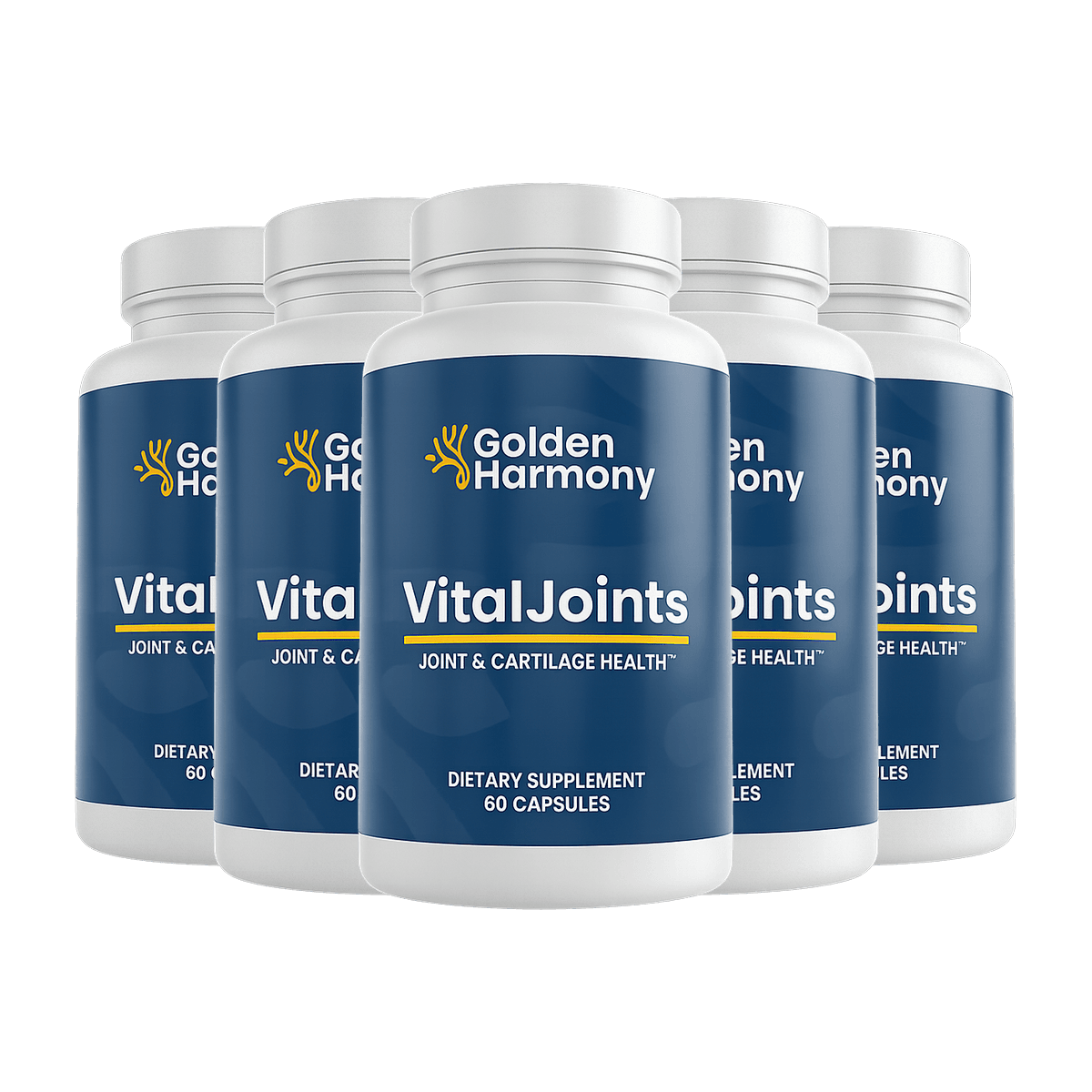
VitalJoints is an oral dietary supplement sold in capsule form, with a recommended dose of two capsules per day. It is formulated and distributed by Golden Harmony, a US-based company, and positions itself within the crowded joint-health supplement category. The product's market angle is not primarily anti-inflammatory, a lane occupied by dozens of competitors featuring glucosamine, chondroitin, and MSM, but rather "joint metabolism restoration," a framing the VSL presents as categorically new. The stated target user is an adult aged roughly 55 to 75 who has already tried NSAIDs, topical analgesics, or standard joint supplements without satisfactory results and is seeking a natural, long-term alternative.
The formula contains seven named ingredients: Boswellia Serrata, Natural Eggshell Membrane (NEM, a trademarked ingredient), turmeric with its active compound curcumin, black pepper powder (standardized piperine), ginger, collagen, and calcium. Each ingredient is tied to a specific mechanism within the VSL's three-part "joint metabolism" framework. The product is manufactured in a facility the VSL describes as FDA-registered and GMP (Good Manufacturing Practice) compliant, a standard claim in the supplement industry that signals baseline quality controls without implying FDA approval of the product itself. VitalJoints is sold exclusively through its direct-response funnel in single-, three-, and six-bottle configurations, with pricing that varies by quantity.
The Problem It Targets
Chronic joint pain is among the most commercially fertile problems in consumer health. According to the CDC, an estimated 58.5 million adults in the United States have been diagnosed with arthritis, and musculoskeletal conditions are the leading cause of disability worldwide, according to the World Health Organization. The economic burden, including medical costs, lost productivity, and out-of-pocket spending on supplements, runs into the hundreds of billions of dollars annually. Within this landscape, the over-the-counter joint supplement market alone was valued at several billion dollars and continues to grow, driven largely by aging baby boomers who are both health-conscious and increasingly skeptical of pharmaceutical side effects.
The VSL captures this skepticism precisely. It frames NSAIDs not merely as inadequate but as fundamentally misdirected, a treatment aimed at a symptom (inflammation) rather than the underlying cause. The claim draws on a real tension in rheumatological research: inflammation is clearly implicated in arthritic joint disease, but chronic NSAID use carries well-documented risks including gastrointestinal damage, cardiovascular events, and kidney strain, and long-term pain management outcomes for many patients remain poor. The VSL's attribution of this failure to an ignored "joint metabolism" construct is its most distinctive intellectual move, and it deserves careful examination.
The three metabolic changes the VSL describes, a cellular energy crisis in cartilage (attributed to mitochondrial dysfunction), toxic lactic acid accumulation, and chronic inflammation, are not entirely fabricated. Research published in journals including Osteoarthritis and Cartilage and Nature Reviews Rheumatology has documented the role of chondrocyte (cartilage cell) mitochondrial dysfunction in osteoarthritis progression, and the metabolic reprogramming of joint cells during disease is an active area of legitimate scientific inquiry. The VSL attributes this discovery to the "Musculoskeletal Aging Research Center in the United Kingdom," a citation that, while plausible in its institutional specificity, cannot be verified to a single, named paper, a pattern worth noting when evaluating the overall authority architecture of the pitch.
What the VSL does not acknowledge is that this metabolic framework, while scientifically interesting, is largely still in the investigational phase. The leap from "mitochondrial dysfunction contributes to cartilage degradation" (a finding supported in academic literature) to "Boswellia Serrata reverses this process and thereby resolves chronic joint pain" (a product claim) involves several inferential steps that the clinical evidence does not fully support at the level the VSL implies.
Curious how other VSLs in this niche structure their pitch? Keep reading, Section 7 breaks down the psychology behind every claim above.
How VitalJoints Works
The product's stated mechanism rests on what the VSL calls "joint metabolism restoration", a three-pronged intervention targeting the cellular energy crisis, toxic acid accumulation, and chronic inflammation simultaneously. The central ingredient, Boswellia Serrata, is claimed to regenerate mitochondria in cartilage cells, shift energy production from what the VSL calls "emergency mode" back to efficient aerobic metabolism, reduce lactic acid buildup, and suppress inflammatory pathways. This is a genuinely ambitious mechanistic claim, and it is worth parsing how much of it is supported by the available literature.
Boswellia Serrata is a resinous extract from the Boswellia tree, used for centuries in Ayurvedic medicine and the subject of growing pharmacological interest in the West. Its primary active compounds, boswellic acids, particularly AKBA (acetyl-11-keto-β-boswellic acid), have been shown in multiple studies to inhibit 5-lipoxygenase (5-LOX), an enzyme involved in the synthesis of pro-inflammatory leukotrienes. This is a well-documented anti-inflammatory mechanism distinct from the COX-1/COX-2 pathway targeted by NSAIDs, which partly explains why Boswellia is sometimes described as a gentler, better-tolerated anti-inflammatory. The UC Davis study cited in the VSL, a 30-day randomized controlled trial in 60 knee arthritis patients that reportedly showed approximately 50% pain reduction and 45% functional improvement, is consistent with findings published by researchers including Sengupta et al. (2010) in Phytotherapy Research, though the specific attribution to UC Davis School of Medicine warrants independent verification before treating it as confirmed.
The claim that Boswellia "helps generate new mitochondria" is more speculative. Some preclinical (cell and animal model) research has explored Boswellia's influence on mitochondrial function, but robust human clinical evidence for mitochondrial regeneration in joint tissue specifically is not established in the peer-reviewed literature as of this writing. The VSL presents this as settled science alongside the more robustly evidenced anti-inflammatory effects, which conflates different levels of evidentiary certainty. This is a meaningful distinction for a buyer trying to evaluate the "joint metabolism" frame: the inflammation piece of the mechanism is well-supported; the mitochondrial regeneration piece is plausible but extrapolated.
The combination formula, adding NEM, turmeric-piperine, ginger, collagen, and calcium, follows a logical synergistic rationale that is consistent with mainstream nutraceutical formulation thinking. Each ingredient addresses a distinct aspect of joint health: NEM for cartilage and bone matrix components, turmeric-piperine for bioavailable anti-inflammatory curcumin, ginger for COX-2 inhibition, collagen for structural tissue support, and calcium for bone mineral density. The 2,000% absorption boost attributed to piperine for curcumin is based on a widely cited study by Shoba et al. (1998) published in Planta Medica, and that figure is broadly accepted in the literature. The logic of the stack is sound even where individual ingredient claims are overstated.
Key Ingredients and Components
The VitalJoints formula draws its persuasive force partly from the breadth and recognizability of its ingredient list. Each component is introduced in the VSL not merely as a functional ingredient but as a narrative revelation, the next piece of a discovery arc. Here is what the science actually shows for each:
Boswellia Serrata (Frankincense Resin): The headline ingredient and central mechanism driver. Boswellic acids, particularly AKBA, have demonstrated anti-inflammatory activity via 5-LOX inhibition in multiple clinical trials. A meta-analysis by Siddiqui (2011) in Phytotherapy Research reviewed the clinical evidence and found meaningful pain reduction in osteoarthritis patients. The VSL's 97% pain-reduction claim derives from a combination study with turmeric, not Boswellia alone, and should be read accordingly. The mitochondrial regeneration claim is preclinical and not yet confirmed in joint-specific human trials.
NEM, Natural Eggshell Membrane: A trademarked ingredient derived from the membrane lining of chicken egg shells. NEM is rich in collagen (primarily type I and V), glycosaminoglycans (including hyaluronic acid, chondroitin sulfate, and glucosamine), and elastin. A double-blind, placebo-controlled study by Ruff et al. (2009) published in Clinical Interventions in Aging found significant reductions in joint pain and stiffness in participants taking NEM versus placebo. The 2021 study cited in the VSL (150 participants, 12 weeks) is consistent with the broader body of NEM research, which is among the more credibly evidenced ingredients in the formula.
Turmeric (Curcumin): One of the most extensively studied natural anti-inflammatory compounds. Curcumin's inhibition of NF-κB and COX-2 pathways is well-documented. The challenge has always been bioavailability, curcumin is poorly absorbed by itself, which is why the piperine combination is pharmacologically sensible. A systematic review by Paultre et al. (2021) in the BMJ Open Sport & Exercise Medicine found curcumin supplementation significantly reduced pain and improved function in knee osteoarthritis.
Black Pepper Powder (Piperine): Included specifically to enhance curcumin absorption. The 2,000% bioavailability enhancement figure traces to Shoba et al. (1998) in Planta Medica, and while the exact magnitude varies by formulation and individual metabolism, the directional claim is well-supported. This is one of the most scientifically unambiguous inclusions in the formula.
Ginger: Contains gingerols and shogaols with demonstrated antioxidant and anti-inflammatory properties, including COX-2 inhibition. A study by Altman & Marcussen (2001) published in Arthritis & Rheumatism found that standardized ginger extract produced statistically significant reduction in knee osteoarthritis pain versus placebo. The VSL's citation of the University of Miami is consistent with that research group's published work.
Collagen (likely Type II): Joint cartilage is composed primarily of type II collagen, and supplemental collagen, particularly hydrolyzed or undenatured forms, has shown benefit in joint-health studies. Shaw et al. (2017) in the American Journal of Clinical Nutrition found collagen peptide supplementation supported connective tissue synthesis. The VSL does not specify the collagen type, which matters clinically.
Calcium: Included to support bone mineral density in combination with collagen. The cited 12-month study in the Journal of Medicinal Food finding a higher bone mineral index with collagen plus calcium is consistent with established bone physiology, though calcium supplementation alone carries nuanced cardiovascular risk considerations (Bolland et al., 2010, BMJ) worth noting for long-term users.
Hooks and Ad Angles
The VSL's opening hook, "If you're tired of struggling with chronic joint pain and you're not getting any real relief from the usual solutions", operates as a textbook Problem-Agitate-Solution entry point, but it is the second sentence that does the real persuasive work: "It has everything to do with your joint metabolism." This second beat is the genuine hook, functioning as a curiosity gap (Loewenstein, 1994) combined with what Eugene Schwartz would recognize as a Stage 4 market sophistication move. Schwartz's framework holds that when a market has been saturated with direct benefit claims ("eliminate joint pain fast!"), the only hooks that penetrate are those offering a new mechanism, a novel explanation of why existing solutions fail. Naming "joint metabolism" as an unaddressed root cause accomplishes precisely this: it implicitly invalidates every other product the viewer has already tried without naming any of them directly.
The Roman Emperor Augustus war story, that he "launched a war to control the supply of this resin, costing the lives of at least 7,000 soldiers", is a secondary hook that serves a status and validation frame: if something was worth dying for in antiquity, it must be extraordinary. This is an appeal to historical authority that bypasses the viewer's critical faculties by shifting evaluation from scientific plausibility to cultural mythologizing. It also works as a pattern interrupt in its own right, because most supplement pitches cite clinical studies; few invoke Roman military campaigns. The frankincense reveal, "Yeah, the same frankincense given to the baby Jesus by the three wise men", extends this cultural legitimacy play with a single sentence that connects the ingredient to the most recognized gift-giving story in Western civilization, a move that is rhetorically deft even if scientifically irrelevant.
The overall hook architecture of the VSL follows a nested open-loop structure: the joint metabolism concept is introduced early but not fully explained until after the personal narrative, which itself is not resolved until after the ingredient science, which is not resolved until the product reveal. Each partial resolution creates a new question, sustaining engagement across a twenty-minute runtime.
Secondary hooks observed in the VSL:
- "Doctors treat joint pain as just a disorder of wear and tear, and that's why they write 500 million NSAID prescriptions a year"
- "An ancient resin more valuable than precious metals, and Roman emperors went to war over it"
- "Your cartilage cells are running on fumes: an 18-fold drop in energy production"
- "A single dose reduced pain by 97% in six hours"
- "You're standing at a crossroads, and one path leads back to everything pain stole from you"
Ad headline variations for Meta or YouTube testing:
- "The joint metabolism breakthrough your doctor doesn't know about (yet)"
- "Why 500 million NSAID prescriptions fail, and what a 5,000-year-old resin does instead"
- "Grandpa's knees at 69: bone-on-bone. Three weeks later? He's back on the golf course."
- "Frankincense wasn't just a gift. Ancient civilizations used it to end joint pain, here's the science."
- "If your joint supplement only treats inflammation, you're only solving one-third of the problem"
Psychological Triggers and Persuasion Tactics
The VitalJoints VSL is a structurally sophisticated piece of direct-response copy that compounds multiple persuasion mechanisms in a deliberate sequence rather than deploying them in parallel. The architecture follows a recognizable but well-executed pattern: establish identity and shared suffering (opening narrative), introduce a villain to externalize blame (conventional medicine), deliver an epiphany that reframes the problem (joint metabolism), present evidence sequenced to build credibility, then execute loss aversion and scarcity at the close. What distinguishes this VSL from less polished competitors is the stacking, each mechanism reinforces the next rather than competing for attention. Cialdini would recognize the sequencing; Schwartz would recognize the market-sophistication targeting.
The emotional engine of the entire letter is the grandchildren story. Robert Miller's account of canceling on his grandchildren because of knee pain, "hearing the disappointment in their voices over the phone nearly broke me", is not incidental color. It is a deliberate identity threat deployment: the narrator is not just in physical pain, he is failing at his most cherished social role. This is a precise targeting of what psychologists call self-concept threat (Steele, 1988), activating a far deeper motivational layer than physical discomfort alone could reach. For the target demographic of adults aged 55-75, the grandchildren frame likely lands with unusual precision.
Epiphany Bridge (Russell Brunson; Joseph Campbell's Hero's Journey): Robert Miller's personal arc, from pain and helplessness, through research-driven discovery, to transformation and sharing, mirrors the classic hero narrative. The buyer is invited to inhabit that arc. The specific moment of discovery ("I had a light bulb moment") is the pivot from problem to solution, and it positions the narrator as a guide who has already made the journey rather than a salesperson pitching a product.
False Enemy / Villain Framing (Godin's tribe psychology; classic PAS structure): Conventional medicine, particularly NSAIDs and opioids, is positioned as the institutional villain that has failed the viewer. This move does two things simultaneously: it explains prior failures (removing shame from the buyer) and creates an in-group of people who now "know better." The VSL never attacks any specific pharmaceutical company by name, which keeps the claim legally clean while preserving the adversarial emotional tone.
Loss Aversion and Vivid Consequence Painting (Kahneman & Tversky's Prospect Theory, 1979): The "two paths" crossroads sequence near the close of the VSL is a textbook loss-aversion deployment. The negative path is described in granular, embodied detail, "agonizing bone-on-bone grinding," "confined to your recliner with ice packs", while the positive path is painted as emotional liberation. Research consistently shows that losses are weighted approximately twice as heavily as equivalent gains in decision-making, and this sequence is calibrated to exploit that asymmetry.
Authority Transfer via Institutional Name-Dropping (Cialdini's Authority, 1984): UC Davis School of Medicine, University of Miami, University of Massachusetts Lowell, and a UK musculoskeletal research center are all invoked without providing study titles, DOIs, or direct links. The institutions are real and credible; whether the cited findings are accurately represented cannot be verified from the VSL alone. This is a form of borrowed authority, leveraging institutional reputation for product credibility without the institution's knowledge or endorsement.
Social Proof via Named Testimonials (Cialdini's Social Proof): Angela (Alpharetta, Georgia), William (Odessa, Texas), and Louise (Canada) provide geo-tagged testimonials with specific ages and outcomes, which reads as more credible than generic quotes. The specificity, "within three days," "both knees bone-on-bone", is a deliberate verisimilitude signal. Whether these testimonials are independently verifiable is not addressed in the VSL.
Artificial Scarcity (Cialdini's Scarcity; Brehm's Reactance Theory, 1966): The claim that ingredients "only grow in a few places on Earth" and that it "takes up to three months to create a single batch" is a standard scarcity frame. Combined with "I cannot guarantee it will still be available if you leave this page," the tactic exploits psychological reactance, the desire to secure something precisely because it may be lost.
Risk Reversal via Extended Guarantee (Thaler's Endowment Effect): A 365-day money-back guarantee is unusually long for a supplement. The practical effect is to lower the perceived risk of purchase to near zero, which removes the final rational objection. The extended timeline also implicitly signals that the company is confident about both product quality and low refund rates, whether or not that confidence is warranted.
Want to see how these tactics compare across 50+ VSLs? That's exactly what Intel Services is built to show you.
Scientific and Authority Signals
The VSL's authority architecture rests on four pillars: institutional citations, study designs, a narrator's quasi-professional credentials, and a manufacturing quality claim. Each deserves honest evaluation. The institutional citations, UC Davis, University of Miami, University of Massachusetts Lowell, and an unnamed UK arthritis center, are all plausible academic homes for the research described, and some of the findings cited are consistent with published literature in those areas. Sengupta et al.'s Boswellia research, Ruff et al.'s NEM work, and Altman & Marcussen's ginger study are real, published findings in credible journals. The VSL does not fabricate ingredient science from whole cloth; it selectively presents the strongest findings while omitting limitations, contradictory studies, and the gap between clinical trial populations and the general consumer.
The study design language, "randomized double-blind placebo-controlled study" and "this is the gold standard for study design", is accurately described and functions as what might be called methodology authority: teaching the viewer what constitutes good evidence while simultaneously citing it. This is rhetorically effective because it positions the viewer as a sophisticated evaluator who can now recognize the quality of the evidence being presented. Whether the specific UC Davis 30-day study exists in the published record exactly as described (60 participants, ~50% pain reduction, 45% functional improvement, 5-day onset) warrants independent verification; the reported effect sizes are consistent with, but at the optimistic end of, the Boswellia literature.
The 97% pain reduction figure, derived from the Boswellia-plus-turmeric combination study of 230+ adults, is the most aggressive claim in the VSL and the one most likely to shape purchase decisions. The cited figure appears consistent with a study by Kizhakkedath (2013) published in Molecular Medicine Reports, which examined a Boswellia-curcumin combination. That study did report substantial pain reduction, but the 97% figure applies to a specific pain metric over six hours in a population with activity-related pain, not chronic arthritis, and not at the level of symptom elimination the VSL implies. The contextual compression of this claim is the VSL's most significant evidentiary overreach.
Robert Miller's stated background, "20 years as a biology research assistant at a local university", occupies an interesting rhetorical space. It is credible enough to establish research literacy ("my research skills are better than most") while humble enough to avoid triggering skepticism about medical claims ("I'm no doctor or medical expert of any kind"). This is a calculated positioning: the authority of the informed layperson who has done the homework, which is precisely the identity the target viewer aspires to inhabit. Whether Robert Miller is a real person or a persona constructed for the VSL is unknown from the transcript alone, but the characterization is consistent with common direct-response storytelling conventions.
The Offer, Pricing, and Risk Reversal
The pricing structure follows a textbook direct-response anchor-and-discount sequence. The VSL establishes a manufacturer's suggested price of $100 per bottle, briefly floats $200 (a figure that is then immediately dismissed), and lands the single-bottle price at $49, framed as an exclusive discount available only to viewers of this video. The psychological effect is a 51% perceived discount from a credible-seeming anchor. The three- and six-bottle options carry further reductions (specific prices are not stated in the transcript), and the multi-bottle push is justified on both efficacy grounds ("for best results, take for at least 60-90 days") and economic grounds (avoid future price increases, avoid stockouts). This dual-justification structure for higher-quantity purchases is a well-established upsell mechanic in the supplement space.
The 365-day money-back guarantee is the offer's most distinctive element and its most powerful conversion lever. Most supplement guarantees run 30 to 60 days, barely enough time to complete a single bottle at the recommended dose. A full-year guarantee removes the time-pressure objection entirely and signals either genuine confidence in the product or a calculated bet that the vast majority of buyers will not exercise the guarantee regardless of results. From the buyer's perspective, the guarantee is structurally generous: empty bottles are accepted, no reason is required, and the VSL promises prompt and courteous refunds. Whether that promise is consistently honored in practice would require independent customer review research beyond the scope of this analysis.
The scarcity framing, rare ingredients, slow production batches, rapid sell-through, is the weakest element of the offer architecture because it is contradicted by the simultaneous push to order six bottles, implying availability at scale even while warning of imminent stockouts. A genuinely supply-constrained product would not encourage bulk ordering; the tension between those two messages is the tell of theatrical rather than real scarcity.
Who This Is For (and Who It Isn't)
The ideal VitalJoints buyer is a North American adult between roughly 55 and 75 who has been managing chronic joint pain, most likely in the knees, hips, or hands, for several years, has tried NSAIDs or over-the-counter supplements with unsatisfying results, and is motivated by a desire to remain active and present in family life rather than by aesthetic or performance goals. The grandchildren and golf-course imagery in the VSL is not decorative: it is a precise targeting of the psychographic profile of someone whose identity is organized around providing for and participating in family, and who experiences joint pain as a threat to that role rather than merely a physical inconvenience. This buyer is health-literate enough to be skeptical of pharmaceuticals, interested in natural alternatives, and responsive to authority signals from academic institutions.
If you are researching this supplement and fall into that profile, the formula contains several well-evidenced ingredients at what are likely meaningful doses, Boswellia, turmeric-piperine, ginger, and NEM in particular have a legitimate body of clinical literature supporting their use in joint health. The 365-day guarantee makes a trial relatively low-risk financially. The honest caveats are that the "joint metabolism" framing is partly a marketing construct built on selectively presented science, the 97% pain-reduction headline is drawn from a narrow, short-duration study, and no supplement in this category has demonstrated the kind of transformative, universal results the testimonials imply.
The product is probably not appropriate for individuals with active, severe osteoarthritis requiring orthopedic intervention, those on blood-thinning medications (Boswellia has mild anticoagulant properties), pregnant or nursing individuals, or those who have experienced adverse reactions to any of the named ingredients. The collagen type is unspecified, which matters for anyone with egg or poultry allergies given the NEM component. Anyone managing a serious arthritic condition should discuss supplementation with a rheumatologist before beginning a new regimen, the VSL's enthusiasm notwithstanding.
Want to compare this offer structure to others in the joint-health supplement space? Intel Services covers the full category breakdown.
Frequently Asked Questions
Q: Does VitalJoints really work for chronic joint pain?
A: Several of its core ingredients, Boswellia Serrata, NEM, and turmeric-piperine, have legitimate clinical evidence supporting their use in reducing joint pain and improving mobility. Individual results will vary significantly depending on the nature and severity of the joint condition, consistency of use, and other health factors. The headline claims (97% pain reduction, 5-day relief) reflect the best-case findings from specific studies, not average consumer outcomes.
Q: Is VitalJoints a scam?
A: The product contains real, studied ingredients, is manufactured in a GMP-compliant US facility, and carries a 365-day money-back guarantee, structural elements inconsistent with an outright scam. That said, the VSL significantly overstates the certainty of its mechanism claims (particularly the mitochondrial regeneration narrative) and uses artificial scarcity tactics that are misleading. Buyers should approach the most dramatic efficacy claims with measured expectations.
Q: Are there any side effects from taking VitalJoints?
A: The VSL states the formula is safe, and most of its ingredients are well-tolerated at typical supplemental doses. Boswellia can occasionally cause mild gastrointestinal discomfort. Individuals on anticoagulant medications should consult a physician before taking Boswellia or high-dose turmeric. Those with egg or poultry allergies should note the Natural Eggshell Membrane (NEM) component. Calcium supplementation in high doses has been associated with cardiovascular risk in some populations according to a 2010 study by Bolland et al. in the BMJ.
Q: How long does it take for VitalJoints to work?
A: The VSL cites studies showing relief in as little as 5 days for some participants, but it also recommends consistent use for 60 to 90 days for meaningful results, and acknowledges that severe cases may take longer. The 5-day figure comes from a specific Boswellia trial and should not be treated as a typical timeline. Most nutraceutical joint-health products, when they work, show gradual improvement over 4 to 12 weeks.
Q: Is VitalJoints safe to take?
A: It is manufactured in a US facility described as FDA-registered and GMP-compliant, and the ingredient list does not include anything with known high-risk toxicity at typical doses. However, "safe for most people" is not the same as "safe for everyone." Individuals on prescription medications, those with diagnosed medical conditions, and those who are pregnant or nursing should consult a physician before use.
Q: What is the money-back guarantee on VitalJoints?
A: The VSL advertises a 365-day money-back guarantee with no questions asked, full refunds, and acceptance of empty bottles. This is more generous than the industry standard of 30 to 60 days and represents a meaningful risk-reversal for potential buyers. The guarantee is administered through Golden Harmony's customer service team.
Q: How does VitalJoints compare to NSAIDs for joint pain?
A: NSAIDs reduce inflammation acutely and are effective for short-term pain management, but they carry meaningful risks with long-term use, gastrointestinal damage, cardiovascular events, and kidney strain, and they do not rebuild cartilage or address structural joint deterioration. VitalJoints takes a different pharmacological approach, relying on ingredients like Boswellia that inhibit a different inflammatory pathway (5-LOX rather than COX-1/COX-2), with some evidence for structural support. For acute pain crises, NSAIDs typically act faster; for long-term joint health support, the natural supplement approach carries fewer systemic risks for most people.
Q: What are the main ingredients in VitalJoints and what does each do?
A: The seven active ingredients are Boswellia Serrata (anti-inflammatory, potential mitochondrial support), Natural Eggshell Membrane (cartilage matrix components including glycosaminoglycans and collagen), turmeric/curcumin (NF-κB and COX-2 inhibition), black pepper/piperine (curcumin bioavailability enhancement), ginger (antioxidant, COX-2 inhibition), collagen (structural joint tissue support), and calcium (bone mineral density in combination with collagen). Each ingredient has at least some clinical evidence supporting its role in joint health, though the degree of support varies.
Final Take
The VitalJoints VSL is a well-crafted, above-average piece of direct-response marketing for a supplement category that is genuinely crowded and genuinely difficult to differentiate in. The "joint metabolism" frame is its most original strategic choice, it redefines the category problem in a way that simultaneously invalidates all prior solutions and positions the product as the first to address the root cause. That move is intellectually honest in its broad strokes (mitochondrial dysfunction does play a role in arthritic joint disease) and intellectually dishonest in its precision (the clinical evidence for Boswellia specifically reversing that dysfunction in humans is far weaker than the VSL implies). This gap between the real science and the marketed science is the defining characteristic of the VSL, and it is typical of the supplement industry at large rather than uniquely deceptive here.
The formula itself is defensible. Combining Boswellia, turmeric-piperine, ginger, and NEM into a single daily capsule is not a cynical cash-grab; these are among the better-evidenced natural ingredients for joint inflammation and cartilage support, and the decision to include piperine specifically to address curcumin's bioavailability problem reflects genuine formulation thinking. The 97% pain-reduction headline is the most problematic claim, it is real data from a real study, but presented in a context that implies general applicability to chronic joint pain when the source study was narrower in scope. Buyers should mentally discount that figure significantly.
The persuasion architecture is sophisticated enough to warrant attention. The epiphany bridge narrative, the grandchildren identity threat, the false enemy framing of conventional medicine, and the nested open-loop structure across twenty minutes represent a competent application of established copywriting principles to a well-defined target audience. None of these are inherently unethical, storytelling and emotional resonance are legitimate tools in marketing communication, but buyers who recognize them can make more deliberate decisions. The artificial scarcity, by contrast, is straightforwardly misleading and undermines the credibility the VSL works hard to build elsewhere.
For a buyer in the target demographic, older adult, frustrated with conventional treatment, looking for a natural long-term option with a genuine safety profile, the 365-day guarantee makes a trial a relatively low-stakes experiment. The more interesting question the VSL raises is structural: when a supplement company's marketing sophistication significantly exceeds the certainty of its efficacy evidence, what does that say about how decisions get made in a category where the FDA sets a very low bar and consumers are largely left to evaluate claims on their own? That is the systemic dynamic this letter navigates, and understanding it is as useful as any single product review.
This breakdown is part of Intel Services, our ongoing library of VSL and ad-copy analyses. If you're researching similar products in the joint health, longevity, or natural supplement space, keep reading.
Disclaimer: This article is for research and educational purposes only. It is not medical, legal, or financial advice, and it is not affiliated with the product or its makers. Always consult a qualified professional before making health or financial decisions.
Source-backed reader context
Additional Reviews & Reported Experiences
These statements were presented in the product's sales transcript. Daily Intel did not independently verify the speakers, purchase status, or reported outcomes, and the statements are not used in Product aggregateRating.
Angela from Alpharetta, Georgia (age 60)
Date not stated
knee pain gone within 3 days, felt like age 30 after one month
William from Odessa, Texas (age 69)
Date not stated
both knees bone-on-bone, reports the product 'actually works and makes a difference
Louise from Canada
Date not stated
can move without much pain and enjoy life again
Robert Miller (narrator)
Date not stated
personally eliminated knee stiffness, resumed golf, mowing, car maintenance, and playing with grandchildren
Comments(0)
No comments yet. Members, start the conversation below.
Related reads
 reviews
Mind Lab Pro Review: Does the 30-Day Study Match v4?
Mind Lab Pro v4 lists exact amounts for 11 ingredients and contains no caffeine or stimulants, according to its official page. A 30-day finished-product study reported favorable memory findings, but its abstract does not identify v4 or disclose the tested form or dose.
Read reviews
Life Extension Two-Per-Day Multivitamin Review: Evidence Limits
Life Extension Two-Per-Day is a 120-capsule multivitamin displayed as a 60-day supply. Its identity and dated prices are verified, but the supplied evidence does not reproduce the complete quantitative Supplement Facts panel or include a trial of the finished product. Research involving another multivitamin cannot prove that these capsules improve memory or deliver Life Extension’s broader health-support claims.
Read reviews
Ritual Essential for Women 50+ Review: Label, Study Fit, and Verdict
Ritual Essential for Women 50+ is an iron-free capsule multivitamin positioned by Ritual for women after menopause. Its verified label lists 100 micrograms of vitamin K2 as menaquinone-7. The supplied study did not test this finished product, and the packet provides no exact price.
Read