ZenCortex VSL and Ads Analysis: What the Tinnitus Sales Pitch Really Says
The video opens not with a product pitch but with a chorus of relief. Voice after voice declares that the ringing has stopped, that sleep has returned, that life is recognizable again. It is a calculated opening move, testimonial-first, product-second, designed to place the…
8,226+
Videos & Ads
+50-100
Fresh Daily
$29.90
Per Month
Full Access
12.5 TB database · 72+ niches · 29 min read
The video opens not with a product pitch but with a chorus of relief. Voice after voice declares that the ringing has stopped, that sleep has returned, that life is recognizable again. It is a calculated opening move, testimonial-first, product-second, designed to place the listener inside a community of the cured before a single claim about the supplement itself has been made. The product in question is ZenCortex, a liquid dietary supplement sold primarily through a long-form Video Sales Letter that runs well past twenty minutes and deploys nearly every known mechanism of direct-response persuasion. Understanding how this pitch works, what it claims, and how those claims hold up against publicly available science is the task this analysis undertakes.
ZenCortex enters a market defined by suffering and medical frustration. Tinnitus, the perception of sound without an external source, affects an estimated 50 million Americans according to the American Tinnitus Association, and roughly 15 million of those experience symptoms severe enough to interfere with daily functioning. For most of them, mainstream medicine offers management strategies rather than cures: sound therapy, cognitive behavioral therapy, masking devices, and, occasionally, medication to address the anxiety and depression tinnitus causes secondarily. The absence of a definitive pharmaceutical cure creates the exact commercial vacuum that supplements like ZenCortex move into. The VSL is sophisticated enough to know this vacuum and exploit it with precision.
The narrator, introduced as Jonathan Miller, a "retired medical nutritionist and chemistry professor", builds a personal narrative that functions simultaneously as credibility scaffold and emotional mirror. His story of sudden-onset tinnitus, medical dismissal, domestic crisis, and eventual self-directed cure is structured as a classic epiphany bridge: the seller recounts their own moment of revelation in enough emotional detail that the listener projects their own experience onto it, and belief transfers along with sympathy. The pitch asks a specific question that this analysis is designed to answer: does the science embedded in this VSL hold up under scrutiny, and does the persuasive architecture reveal anything meaningful about the market it is targeting?
What Is ZenCortex?
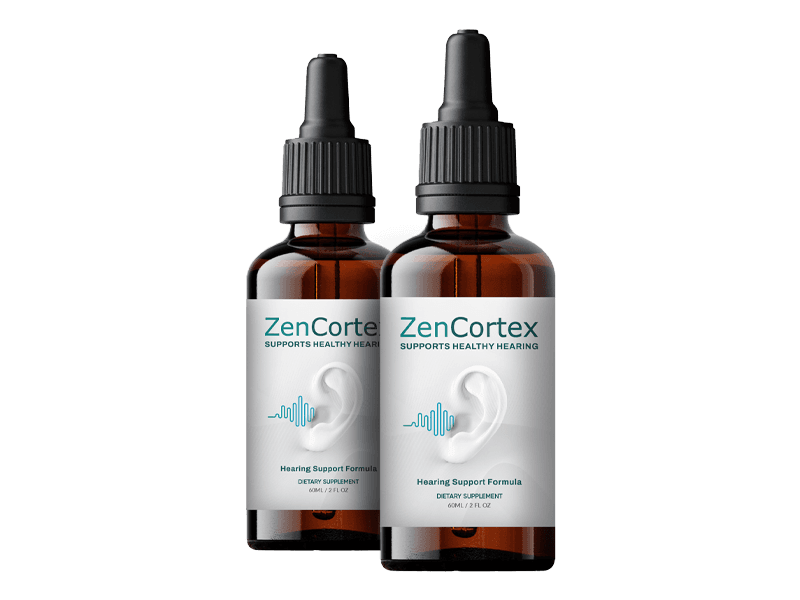
ZenCortex is a liquid dietary supplement delivered in dropper bottles, with a recommended dosage of two droppers, approximately ten drops, taken each morning. It is positioned as the only supplement that addresses what the VSL calls the "root cause" of tinnitus: the deterioration and death of cochlear support cells, which in turn disrupts the signal pathway between the inner ear and the auditory cortex of the brain. The product is manufactured, according to the VSL, in an FDA-registered facility in the United States, uses third-party laboratory testing, and is formulated without fillers, artificial preservatives, or synthetic ingredients. Its retail price, as presented in the sales letter, is $69 for a single bottle, dropping to $49 per bottle for a six-bottle bundle at $294 total.
The product occupies a crowded subcategory of the health supplement market, hearing support and cognitive function, but differentiates itself through several layers of narrative and formulation claims. Rather than positioning itself as a general ear-health supplement, ZenCortex anchors its identity in a specific neurological mechanism (cochlear cell regeneration via neuroplasticity), a specific origin story (the recovered journal of a deceased Chinese researcher), and a specific liquid delivery format that the VSL argues is superior to capsules for bioavailability. These three differentiators are all rhetorical constructions as much as they are product facts, a distinction that matters when evaluating the pitch.
The target user, as the VSL constructs them, is an adult between roughly 45 and 70 years old, experiencing chronic tinnitus lasting months or years, who has already consulted at least one physician and been told there is nothing to be done. This person is not a first-time supplement buyer exploring the space; they are a frustrated, repeat seeker who has tried ginseng tea, perhaps acupuncture, possibly anti-anxiety medication, and found all of it insufficient. The VSL explicitly acknowledges and dismisses these prior attempts, which is a market sophistication stage 4 move in Eugene Schwartz's framework, the pitch is calibrated for a buyer who has seen every direct claim and can only be moved by a new and plausible mechanism.
The Problem It Targets
Tinnitus is a genuinely debilitating condition, and the VSL is correct to treat it with emotional gravity. The American Tinnitus Association estimates that 50 million Americans experience some form of tinnitus, with approximately 2 million reporting severe, debilitating cases. The condition is not merely annoying; chronic tinnitus is strongly associated with anxiety disorders, clinical depression, sleep disorders, and reduced cognitive performance, according to research published in journals including JAMA Otolaryngology-Head & Neck Surgery. The VSL's claim that the ringing causes cascading psychological damage, stress, anger, isolation, memory impairment, is consistent with what the literature documents, even if the VSL overstates the causal chain.
Where the VSL departs from established science is in its framing of the relationship between tinnitus and dementia. The claim that "people with hearing loss are up to five times more likely to develop Alzheimer's or dementia" has a basis in epidemiological research, a widely cited study by Dr. Frank Lin at Johns Hopkins did find elevated dementia risk among adults with hearing impairment, but the VSL imports this correlation as evidence for ZenCortex's specific mechanism without acknowledging that the relationship between hearing loss and cognitive decline is complex, multifactorial, and not yet fully understood. The implication that fixing the cochlear cells will therefore prevent Alzheimer's is a significant extrapolation from the available data.
The commercial opportunity the VSL exploits is real and well-documented. Because there is currently no FDA-approved drug that cures tinnitus, patients are left navigating a landscape of partial solutions: hearing aids, sound masking devices, tinnitus retraining therapy, and cognitive behavioral approaches. This treatment gap drives significant consumer demand for alternative remedies. The global tinnitus treatment market was valued at over $730 million in 2023 according to market research firm Grand View Research, with a projected annual growth rate above 5%, driven largely by an aging global population and an unmet clinical need. ZenCortex is one among dozens of supplements competing for this spending.
The VSL frames the problem not just as a medical failure but as an institutional conspiracy, doctors who "shrug their shoulders," Big Pharma actively suppressing cures to protect revenue streams, and a government (the Chinese Communist Party, in this telling) that classified the key research as a state secret. This framing does real psychological work: it transforms the listener's prior experience of medical failure from a neutral fact into evidence of a rigged system, which makes the narrator's outsider discovery feel both more credible and more urgent. It is a false enemy narrative, and it is deployed here with considerable technical skill.
Curious how other VSLs in this niche structure their pitch? Keep reading, the Hooks and Ad Angles and Psychological Triggers sections break down the mechanics behind every major claim above.
How ZenCortex Works
The claimed mechanism of ZenCortex centers on neuroplasticity, the brain's capacity to reorganize and form new neural connections, applied specifically to the cochlear support cells of the inner ear. The VSL argues that tinnitus originates not in the ear itself but in the auditory cortex of the brain, where degraded or dead cochlear cells produce scrambled electrical signals that the brain interprets as sound. The formula, the pitch claims, supplies the nutrients these cells have been deprived of, enabling the growth of new support cells, the repair of broken auditory neural circuits, and ultimately the restoration of clean sound processing. The claimed progression follows four named stages: ear clearing, hearing improvement, resolution of secondary health issues, and finally measurable strengthening of overall brain function.
Neuroplasticity is a legitimate and well-established concept in neuroscience. The brain does retain the capacity to reorganize itself in response to experience, injury, and intervention, this is not disputed science. What is disputed, and where the VSL overreaches significantly, is the claim that a commercially available oral supplement can direct this process specifically toward cochlear support cell regeneration in ways that reverse chronic tinnitus. The cochlear hair cells, often confused with the "support cells" the VSL references, are indeed largely non-regenerative in mammals, which is a genuine and active area of hearing research. However, the research into cochlear regeneration is at a cellular and genetic level, primarily involving gene therapy and stem cell approaches in controlled laboratory settings, not nutritional supplementation. The claim that herbal compounds in a liquid dropper can trigger measurable cochlear cell regrowth in adult humans has no published clinical support in peer-reviewed literature.
The mechanism narrative borrows legitimately from real science, the role of inflammation in tinnitus pathology, the connection between auditory cortex activity and perceived ringing, the documented association between hearing loss and cognitive decline, and then extrapolates far beyond what that science actually demonstrates. This is a common persuasive structure in supplement VSLs: establish genuine scientific grounding, build credibility with the listener, and then extend the chain of implication to reach the product's claims. The listener who has absorbed the legitimate portions of the explanation often does not register when the extrapolation begins. It is worth being direct: no peer-reviewed clinical trial has demonstrated that ZenCortex or its ingredient combination reverses tinnitus or regenerates cochlear cells in humans.
That said, several individual ingredients in the formula do have independent evidence of benefit for inflammation, circulation, and neurological function, benefits that could plausibly contribute to symptom reduction in some users, even if not through the specific mechanism the VSL describes. The honest evaluation is that the ingredients are more defensible than the mechanism claim, and the mechanism claim is considerably more defensible than the "100% efficiency rate with 40,000 test subjects" assertion, which has no verifiable external documentation.
Key Ingredients and Components
The VSL names eleven ingredients, describing them as a subset of a more complex proprietary formula. The framing positions each ingredient as performing a specific function within the four-stage regeneration process. Here is what is publicly known about the core components:
Ginseng (Panax ginseng): One of the most studied herbal adaptogens in the world. The VSL claims it "soothes the nervous system" and helps the auditory cortex process sounds without stress. Research published in the Journal of Ginseng Research supports anti-inflammatory and neuroprotective effects, and some small studies suggest ginsenosides may have a protective role in auditory function, though large-scale tinnitus trials are absent.
Astragalus (Astragalus membranaceus): A staple of traditional Chinese medicine with documented immunomodulatory and anti-inflammatory properties. The VSL claims it strengthens the eardrum and enables cochlear support cell production. While astragalus polysaccharides have shown some neuroprotective effects in animal studies, direct evidence for cochlear cell production in humans is not established.
Maca (Lepidium meyenii): An Andean root vegetable with reasonable evidence for reducing fatigue and supporting mood regulation. The VSL's claim of a "15% improvement in memory and learning" references Dr. Xu's fictional journal rather than peer-reviewed literature. Some animal studies have shown cognitive benefit; human clinical data is limited and inconclusive.
Guarana (Paullinia cupana): A natural caffeine source with documented effects on alertness, focus, and short-term cognitive performance. The VSL frames it as getting "oxygen to your ears" and clearing free radicals. The antioxidant properties of guarana extract are reasonably supported; the ear-oxygenation claim is a metaphorical stretch.
Gymnema Sylvestre: Best known in research for blood sugar regulation, not hearing. The VSL credits it with anti-inflammatory and immune-stimulating properties to prevent tinnitus recurrence. Its anti-inflammatory activity is documented, though no tinnitus-specific research exists.
African Mango (Irvingia gabonensis): Studied primarily for weight management and metabolic health. The VSL cites it for improving circulation, plausibly relevant to tinnitus caused by vascular issues (pulsatile tinnitus), though the connection is indirect and not clinically proven in this context.
Coleus (Coleus forskohlii): Contains forskolin, a compound with documented effects on cellular energy metabolism via cyclic AMP activation. The VSL's claim that it helps cells "grow back and stay young" is a loose interpretation of cellular energy research. Some ear-drop formulations using forskolin have been studied for sudden hearing loss, making this one of the more scientifically adjacent ingredients in the list.
Green Tea Extract, GABA, and Vitis Vinifera (Grape Extract): Grouped together in the VSL as "critical for reversing neurodegeneration." All three have credible antioxidant and neuroprotective profiles in the literature. GABA's ability to cross the blood-brain barrier in supplemental oral form is debated. Grape seed extract (OPCs) has shown promise in protecting cochlear cells from oxidative damage in animal models, this is arguably the most defensible ingredient-level claim in the entire formulation.
Hooks and Ad Angles
The VSL's opening hook, delivered in a warm, relieved female voice, is not a product claim at all. It is a before-and-after testimony compressed to a single breath: "I don't hear any metallic sounds anymore and I can't remember the last time I had such good sleep." This functions as a pattern interrupt: where the listener expects an advertisement to open with a product name or a bold claim, they instead hear the emotional endpoint of someone else's recovery. The cognitive effect is immediate identification rather than defensive skepticism. The listener who has spent years failing to sleep through the ringing is not evaluating a product; they are hearing a version of themselves who got better.
The transition from testimonial collage to narrator introduction is equally deliberate. Jonathan Miller opens by naming his credentials before his product, a move that signals awareness of the listener's sophistication, this is an audience that has been burned by snake oil before and needs an authority anchor before they will invest attention. The hook he uses to create forward momentum is what copywriters call an open loop: "I have mind-blowing news for you" combined with "I'll show you in four minutes" creates an information gap that the listener feels compelled to close. The promise of a specific time commitment ("four minutes") is itself a micro-commitment technique, once the listener agrees mentally to give four minutes, the sunk-cost effect inclines them to continue past that point.
The conspiracy layer, Big Pharma suppressing the cure, the University of Texas stonewalling the narrator's phone call, the Chinese government classifying the research as a state secret, functions as a contrarian frame, one of the most powerful structures in health copywriting. By the time the listener reaches the offer section, they have been primed to interpret any external skepticism (from doctors, from news media, from regulatory bodies) as further confirmation of the conspiracy rather than as evidence against the product. It is a closed epistemic loop, and it is constructed with considerable craft.
Secondary hooks observed in the VSL:
- "Tinnitus will spread to the entire nervous system", escalation of stakes to motivate urgency
- "Only the elite have had access to the most skilled doctors", status and exclusivity framing
- "He lived to the ripe old age of 102, so his brain was clearly fortified", anecdotal longevity as proof of formula efficacy
- "Some people are still wary of ZenCortex precisely because it's too cheap", preemptive price objection handled by inverting the logic of skepticism
- "I'll make you a once in a lifetime offer", classic direct-response scarcity language
Ad headline variations for Meta or YouTube testing:
- "Doctors Said There Was No Cure. Then I Found This Forgotten Formula."
- "The Real Reason Your Ears Won't Stop Ringing (It's Not What You Think)"
- "10 Drops Every Morning: What 40,000 Tinnitus Sufferers Discovered"
- "Hearing Specialist Reveals the Brain Problem Behind Ear Ringing"
- "Before You Buy Another Hearing Aid, Watch This"
Psychological Triggers and Persuasion Tactics
The persuasive architecture of this VSL is not a simple list of emotional appeals applied in parallel, it is a stacked sequence in which each layer prepares the listener for the next. The VSL opens with social proof (testimonials), moves to authority establishment (credentials and named collaborators), builds the problem through personal narrative (the epiphany bridge), introduces the mechanism through borrowed scientific credibility (neuroplasticity, cochlear cells, confocal laser microscopy), deepens stakes through fear of consequence (dementia, total hearing loss), introduces the villain (Big Pharma), and only then presents the solution and offer. This sequencing mirrors what Cialdini would recognize as commitment and consistency architecture: by the time the offer appears, the listener has already mentally committed to the reality of the problem and the plausibility of the solution, making the purchase a logical completion of a journey they have been on for twenty minutes.
The shift in Jonathan Miller's self-description partway through the VSL, from "former tinnitus expert with medical training" to "retired medical nutritionist and chemistry professor", is worth noting as a signal of either careless scripting or deliberate credential fluidity, both of which are common in this category of persuasion content. The vagueness serves a function: different credentials resonate with different listeners, and a credential that is broad enough to imply authority without being specific enough to be fact-checked is more durable than a narrow, verifiable one.
False enemy / tribal identity (Cialdini, in-group dynamics; Godin's Tribes framework): The narrator explicitly positions the listener as a member of a suppressed community, tinnitus sufferers abandoned by doctors and targeted by corporate interests, and positions ZenCortex as the insider solution that "only the elite" previously accessed. This tribal framing makes purchasing feel like an act of solidarity and self-rescue rather than a commercial transaction.
Loss aversion (Kahneman & Tversky's Prospect Theory, 1979): The VSL frames inaction not as a neutral choice but as a decision to accept dementia, deafness, and brain deterioration. "We all know how unlikely" improvement on its own is, the narrator says, directly foreclosing the listener's hope of improvement without purchasing.
Epiphany bridge (Brunson, Expert Secrets, 2017): The detailed scene of Miller screaming on his knees while his daughter shook with fear is the emotional apex of the VSL and its most carefully constructed moment. It exists not to inform but to transfer feeling, the listener who has frightened a loved one with their frustration does not evaluate this scene; they relive their own version of it.
Authority by association (Cialdini's Authority principle): The in vivo confocal laser microscope is a real instrument used in real ophthalmological and corneal research. Its inclusion in the narrative, cited accurately in its original domain before being extended to auditory neuroscience, gives the listener a moment of genuine recognition that anchors subsequent claims.
Artificial scarcity (Cialdini's Scarcity principle; FOMO): The claim that each batch takes six months to produce, combined with Big Pharma's legal threats and the risk of the website being taken down, creates a time-compressed decision environment. The listener is nudged toward buying more bottles than needed as insurance against supply disruption, and the tiered pricing reinforces this by rewarding the six-bottle purchase with the steepest discount.
Social proof at specificity scale: The figure of 40,000 beta testers provides crowd validation, but the named testimonial, Charlie M., 58, Kentucky, provides the specificity that makes social proof believable. Research in persuasion (Slovic, 1987, "the identifiable victim effect") consistently shows that a single named person with demographic detail is more persuasive than statistical aggregates, and the VSL deploys both in deliberate combination.
Risk reversal via guarantee (Thaler's Endowment Effect): The 60-day money-back guarantee is presented as removing all risk from the purchase. Behaviorally, guarantees work by reducing the perceived cost of regret, the listener mentally models a scenario where they try the product and it fails, and the guarantee makes that scenario financially safe. Whether the guarantee is easily honored in practice is a separate question the VSL does not address.
Want to see how these tactics compare across 50+ VSLs in the health supplement space? That's exactly what Intel Services is built to show you.
Scientific and Authority Signals
The VSL constructs its scientific credibility through three distinct layers, each of which warrants separate evaluation. The first layer is the invocation of legitimate scientific concepts: neuroplasticity is a Nobel Prize-adjacent concept (the 2000 Nobel Prize in Physiology or Medicine was awarded to Eric Kandel, Arvid Carlsson, and Paul Greengard for work on signal transduction in the nervous system, closely related to synaptic plasticity), cochlear hair cells are real anatomical structures whose non-regenerative nature in mammals is a genuine research challenge, and the confocal laser microscope is a real instrument with real applications in corneal biology. These legitimate anchors do real work: they give the listener a foundation of recognizable truth on which the subsequent, less verifiable claims can rest.
The second layer consists of named authority figures whose credentials are difficult to verify. Dr. James Rashi, described as a neurologist with fifteen years of research and a neuro-rehabilitation specialty, is presented without institutional affiliation, publication record, or any detail that would allow independent verification. Dr. Cheng Shu (also referred to as Dr. Xu and Dr. Hsu, the name changes three times in the transcript, a detail that suggests the character was invented or loosely assembled) is conveniently deceased, his research classified by a government and never published, and his formula available only through the narrator's account of a handwritten journal. This is a structurally unfalsifiable authority claim: there is no way to check the research because the researcher is dead, the government took the papers, and the only surviving copy is an unpublished private journal.
The University of Texas citation, "scientists at the University of Texas proved that tinnitus can be cured in rats by stimulating the brain with certain substances", is the VSL's one attempt at citing a verifiable institutional source. Research on vagus nerve stimulation and tinnitus has indeed been conducted at UT Dallas, and a 2011 study published in Nature by Michael Kilgard and colleagues did demonstrate tinnitus elimination in rats via paired vagus nerve stimulation and sound therapy. However, that study involved direct neural stimulation, not oral supplementation, and the VSL's implication that this research validates ZenCortex's ingredient mechanism is a significant misrepresentation. The University's reported refusal to share details is deployed to suggest suppression rather than acknowledge the straightforward reason: the research does not say what the VSL implies it says.
The authority architecture of this VSL, taken as a whole, is best described as borrowed legitimacy: real scientific concepts and one real institutional citation are used to create an atmosphere of credibility that then extends to claims, the formula, the 40,000 test subjects, the 100% efficiency rate, that have no verifiable external validation. This is a recognized pattern in supplement marketing and is a meaningful red flag for readers who are genuinely researching their options.
The Offer, Pricing, and Risk Reversal
The pricing structure of ZenCortex follows a textbook anchor-discount-urgency sequence. The opening anchor, $580 per bottle, suggested by the fictional Dr. James, functions as a reference price that makes every subsequent number feel like a windfall. The real-world comparator (hearing aids, doctor visits, prescription medication) is invoked but not quantified, which allows the listener's imagination to fill in a suitably large number. The anchor of $580 is then discounted to $179 as a possible "future price," which is itself then discounted to $69 for single-bottle buyers and $49 per bottle for the six-bottle package. This three-step descent, from $580 to $179 to $69, trains the listener's perception of value through repeated contrast effects rather than through any genuine benchmarking against market comparables. A three-month supply of major competitor hearing supplements typically retails between $60 and $180, making the $69 single-bottle price not dramatically below market at all, though it reads as extraordinary by the time the listener reaches the offer.
The 60-day money-back guarantee is structurally meaningful. A 60-day window is long enough for the recommended three-bottle course to show results, which means the guarantee is not a theatrical gesture, it does in principle allow a full trial before the refund window closes. Whether refunds are honored promptly and without friction is a customer service question rather than a marketing analysis question, but the guarantee's terms as stated are among the more defensible elements of the offer. The urgency claims, Big Pharma litigation, six-month production cycles, imminent website shutdown, are standard direct-response scarcity mechanisms with no verifiable substance. They function as behavioral nudges toward immediate purchase and should be evaluated as such rather than as factual disclosures.
The recommendation to buy six bottles (totaling $294) is framed around the idea that the brain's damage is unknowable in advance, so "to be on the safe side" the full course is advisable. This is a rational-sounding argument for the highest-value purchase option, and it is deployed after the listener has already been primed with fear of incomplete treatment leaving residual cognitive damage. The bundle pricing creates a perceived-value structure where the six-bottle option feels not just economical but medically responsible, a conflation of commercial incentive and health guidance that the listener may not consciously disentangle.
Who This Is For (and Who It Isn't)
The person most likely to find ZenCortex compelling is someone who has been living with chronic, persistent tinnitus for at least six to twelve months, has consulted a physician and been told that no treatment is available, and has already spent money on alternative remedies that produced minimal results. This person is not credulous, they are exhausted. The VSL is calibrated precisely for exhaustion rather than naivety: it acknowledges prior failed treatments, validates the frustration of being dismissed by doctors, and frames the formula as the answer that medical gatekeepers were motivated to withhold. For someone in that emotional state, the pitch's claim of a 100% success rate in 40,000 people is not evaluated as a statistic; it is absorbed as confirmation of what they desperately want to believe.
If you are in that position and considering a purchase, the most useful framing is this: the individual ingredients in ZenCortex have reasonable, if modest, evidence for anti-inflammatory, antioxidant, and neuroprotective effects that could plausibly contribute to reduced tinnitus severity in some users, particularly those whose tinnitus has a vascular or inflammation-related component. The liquid dropper format has a marginal bioavailability advantage over hard capsules for certain compounds. The 60-day guarantee provides a meaningful window to assess personal response. None of this is the same as endorsing the VSL's mechanism claims, the 40,000-person trial, or the cochlear cell regeneration narrative, none of which can be independently verified.
Readers who should approach with particular caution include those with tinnitus caused by a structural or medication-related origin (acoustic neuroma, drug ototoxicity, Meniere's disease), for whom herbal supplementation is unlikely to be relevant and for whom delaying diagnosis could have consequences. Anyone currently taking anticoagulants, diabetes medication, or blood pressure drugs should consult a physician before adding these ingredients, ginseng, astragalus, coleus (forskolin), and African mango all have documented interactions with these drug classes. The VSL's promise of zero side effects is not a clinically meaningful guarantee for a multi-ingredient botanical product taken by a medically diverse population.
If you found this breakdown useful, the Final Take section below synthesizes what this VSL reveals about the broader supplement category, and what it means for buyers doing their homework.
Frequently Asked Questions
Q: Is ZenCortex a scam, or does it actually work for tinnitus?
A: ZenCortex is a real commercial product with purchasable inventory and a stated money-back guarantee, so it is not a scam in the sense of taking money and delivering nothing. Whether it "works" depends on the standard of evidence applied: the VSL's claims of cochlear cell regeneration and a 100% success rate are not supported by published clinical trials, but some ingredients have anti-inflammatory and neuroprotective properties that may reduce symptom severity for some users. Independent, peer-reviewed evidence for the specific formula does not exist in the public domain.
Q: What are the main ingredients in ZenCortex and what does each one do?
A: The disclosed ingredients include ginseng, astragalus, maca, guarana, gymnema sylvestre, African mango, coleus forskohlii, green tea extract, GABA, and Vitis vinifera (grape extract). Each has some evidence for anti-inflammatory, antioxidant, or neuroprotective effects. The Key Ingredients section above covers the evidence base for each individually.
Q: Are there any side effects to taking ZenCortex drops?
A: The VSL claims no side effects, but this is not a clinically meaningful statement for a botanical formula. Ginseng can cause headaches, insomnia, and digestive upset in some users. Coleus forskohlii (forskolin) can lower blood pressure. Guarana contains caffeine, which is relevant for caffeine-sensitive individuals. Users taking blood thinners, diabetes drugs, or antihypertensives should consult a physician before use, as several ingredients have documented interactions with these medications.
Q: How long does it take for ZenCortex to reduce ringing in the ears?
A: The VSL claims results begin within the first week and become significant by day 20-30, with the best outcomes after a full six-month course. These timelines are drawn from the narrator's personal anecdote and unverified pilot data, not from published clinical research. Individual responses to botanical supplements vary widely, and anyone expecting results within a specific window should factor this into their decision.
Q: Is ZenCortex safe to use alongside other medications?
A: This question cannot be answered definitively without knowing a user's specific medications and health status. Several ingredients, particularly ginseng, coleus, astragalus, and African mango, have known interactions with anticoagulants, blood pressure medications, and blood sugar regulators. A pharmacist or physician consultation before use is advisable for anyone with a chronic health condition or active medication regimen.
Q: How does the ZenCortex 60-day money-back guarantee work?
A: According to the VSL, customers who are unsatisfied for any reason within 60 days of purchase can contact customer service by phone or email to receive a full refund within 48 hours, with no questions asked. The stated terms are reasonable; the practical experience of redeeming the guarantee is not assessed in this analysis and would depend on the company's customer service processes at the time of purchase.
Q: What is the difference between the one-bottle and six-bottle ZenCortex packages?
A: A single bottle is priced at $69 and contains enough for one month at the recommended two-dropper daily dose. The six-bottle package is priced at $294 ($49 per bottle), representing a 29% discount and covering the full six-month course the VSL recommends for permanent results. The VSL recommends the six-bottle option on the basis that shorter courses may not produce lasting cochlear cell regeneration, a claim that should be weighed as a sales argument as much as a medical recommendation.
Q: Is the science behind cochlear cell regeneration in ZenCortex legitimate?
A: The general concept of cochlear cell regeneration is a real and active area of hearing research, primarily pursued through gene therapy and stem cell approaches in laboratory settings. The idea that an oral botanical supplement can direct this process in adult humans is not currently supported by published peer-reviewed clinical trials. The VSL borrows the vocabulary of legitimate regenerative neuroscience and applies it to supplement claims in a way that outpaces the existing evidence base.
Final Take
ZenCortex is a technically proficient example of a specific genre of supplement marketing: the suppressed-discovery VSL, in which a personal cure narrative, a dead foreign genius, a corporate villain, and a proprietary mechanism combine to create a self-contained persuasive ecosystem that preemptively answers every objection. The craft here is real. The testimony-first opening, the authority credential stacking, the epiphany bridge, the false enemy narrative, and the stacked offer sequence all function as a coherent system rather than a collection of individual tactics. For analysts studying direct-response copy, this VSL is close to a textbook example of stage-4 market sophistication writing, a pitch that can only succeed with an audience that has already heard and rejected every simpler claim.
The product itself sits in murkier territory. Several of its ingredients have legitimate, if modest, evidence for the kinds of systemic effects, anti-inflammation, antioxidant protection, neuroprotection, that could plausibly reduce tinnitus severity in a subset of users. The liquid delivery format is a defensible differentiation. The manufacturing claims (FDA-registered facility, third-party testing) are standard and verifiable in principle. What is not defensible is the mechanism claim: the specific assertion that this formula regrows cochlear support cells through neuroplasticity, producing a 100% cure rate across 40,000 subjects, is not supported by any published, peer-reviewed evidence that can be independently examined. The 59-person pilot study described in the VSL is presented with none of the methodological details, randomization, blinding, outcome measurement, follow-up duration, that would allow any meaningful scientific evaluation.
The strongest argument for cautious consideration, rather than dismissal, is the 60-day guarantee applied to a product that takes three to four weeks to show initial effects. This creates a real, not theatrical, evaluation window. The strongest argument for skepticism is the unfalsifiable authority structure, a deceased researcher, a classified journal, a suppressed study, which is precisely the kind of evidentiary architecture that cannot be checked. Sophisticated buyers evaluating supplements in the tinnitus category are better served by looking for products whose ingredient dosages are disclosed fully, whose clinical evidence links directly to published trials, and whose authority claims can be verified through public records. ZenCortex, by design, makes most of these checks impossible.
This breakdown is part of Intel Services, our ongoing library of VSL and ad-copy analyses across health, wellness, finance, and consumer products. If you are researching tinnitus supplements, hearing support formulas, or the persuasion mechanics of direct-response health marketing, keep reading, the library covers dozens of adjacent products in comparable depth.
Disclaimer: This article is for research and educational purposes only. It is not medical, legal, or financial advice, and it is not affiliated with the product or its makers. Always consult a qualified professional before making health or financial decisions.
Source-backed reader context
Additional Reviews & Reported Experiences
These statements were presented in the product's sales transcript. Daily Intel did not independently verify the speakers, purchase status, or reported outcomes, and the statements are not used in Product aggregateRating.
Multiple unnamed testimonials at the opening
Date not stated
'I no longer have ringing in my ears,' 'I sleep like a baby,' 'I no longer have hearing issues, buzzing, or ringing
Unnamed participant
Date not stated
whistling went away in days, initially disbelieving
Comments(0)
No comments yet. Members, start the conversation below.
Related reads
 reviews
Mind Lab Pro Review: Does the 30-Day Study Match v4?
Mind Lab Pro v4 lists exact amounts for 11 ingredients and contains no caffeine or stimulants, according to its official page. A 30-day finished-product study reported favorable memory findings, but its abstract does not identify v4 or disclose the tested form or dose.
Read reviews
Life Extension Two-Per-Day Multivitamin Review: Evidence Limits
Life Extension Two-Per-Day is a 120-capsule multivitamin displayed as a 60-day supply. Its identity and dated prices are verified, but the supplied evidence does not reproduce the complete quantitative Supplement Facts panel or include a trial of the finished product. Research involving another multivitamin cannot prove that these capsules improve memory or deliver Life Extension’s broader health-support claims.
Read reviews
Ritual Essential for Women 50+ Review: Label, Study Fit, and Verdict
Ritual Essential for Women 50+ is an iron-free capsule multivitamin positioned by Ritual for women after menopause. Its verified label lists 100 micrograms of vitamin K2 as menaquinone-7. The supplied study did not test this finished product, and the packet provides no exact price.
Read