BurnFlux Review: A Forensic Look at the Gelatin Trick VSL
A detailed BurnFlux review for affiliates and copywriters, unpacking the gelatin trick pitch, celebrity claims, GLP-1 angle, proof gaps, and compliance risk.
8,226+
Videos & Ads
+50-100
Fresh Daily
$29.90
Per Month
Full Access
12.5 TB database · 72+ niches · 23 min read
Introduction - A VSL Built on Speed, Celebrity, and a Cube of Gelatin
The BurnFlux VSL opens with a line designed to do several jobs at once: "Do this 30 second gelatin trick right after dinner, let your body burn fat while you sleep, and in just 60 days watch up to 70 pounds disappear like it was never there." That sentence is not casual copy. It compresses novelty, ease, sleep-time effortlessness, a precise time frame, and an extreme result into a single promise. Before the viewer has any context, BurnFlux has already moved the frame away from normal weight management and into the territory of a hidden shortcut.
The transcript then escalates quickly. Rebel Wilson is invoked as having lost 77 pounds in 68 days by eating gelatin every day. Dwayne Johnson is named as another celebrity example. Ozempic and Mounjaro are used as comparison anchors, but the pitch tries to claim an advantage: the feeling of a daily Ozempic shot with zero side effects and faster fat burning. From a copywriting standpoint, this is aggressive positioning. The VSL is not selling a modest appetite support product. It is selling the idea that a common household ingredient, prepared in a special way, can mimic the most culturally visible weight loss drugs while avoiding their perceived downsides.
That is why BurnFlux is worth reviewing carefully. The transcript is rich with mechanisms and proof objects, but those proof objects are uneven. It offers exact numbers, such as 121,300 users, 20 pounds every 15 days, 40 pounds in 45 days, and 26 pregnancy pounds in 15 days. It also leans on a named doctor figure, "Dr. Mark," a functional medicine identity, social screenshots, dramatic wardrobe claims, and a tutorial tease promising the method in under two minutes. Those elements make the pitch feel busy and specific. Specificity, however, is not the same as substantiation.
For affiliates, this VSL has obvious commercial appeal: a simple ritual, broad demographic reach, celebrity adjacency, and a high-urgency hook that can pull curiosity clicks. For copywriters, it is a useful study in modern weight loss persuasion: GLP-1 language translated into kitchen-counter simplicity. For compliance-minded operators, it also raises major questions. The claims are not merely enthusiastic. Many are extraordinary, including near-pound-per-day losses without diet or exercise, body-area fat targeting, and celebrity-linked transformations that are not evidenced inside the transcript excerpt.
This BurnFlux review treats the VSL as a sales asset, not as a confirmed clinical record. The goal is to separate what the pitch says, why it may persuade, where it overreaches, and what a responsible affiliate or copywriter should verify before putting paid traffic behind it.
What BurnFlux Is
Based on the transcript, BurnFlux is presented as a weight loss solution centered on a "gelatin trick." The core ritual appears simple: prepare gelatin with several additional ingredients, consume one cube daily, and allow the body to enter what the VSL describes as automatic fat burning. The copy alternates between doing the trick "right after dinner" and doing it "every morning," which is a meaningful internal inconsistency. A VSL can survive a small wording drift, but timing matters when the mechanism is supposedly precise. If the hormone release depends on first contact with the gut, the pitch should be disciplined about when and how the product is used.
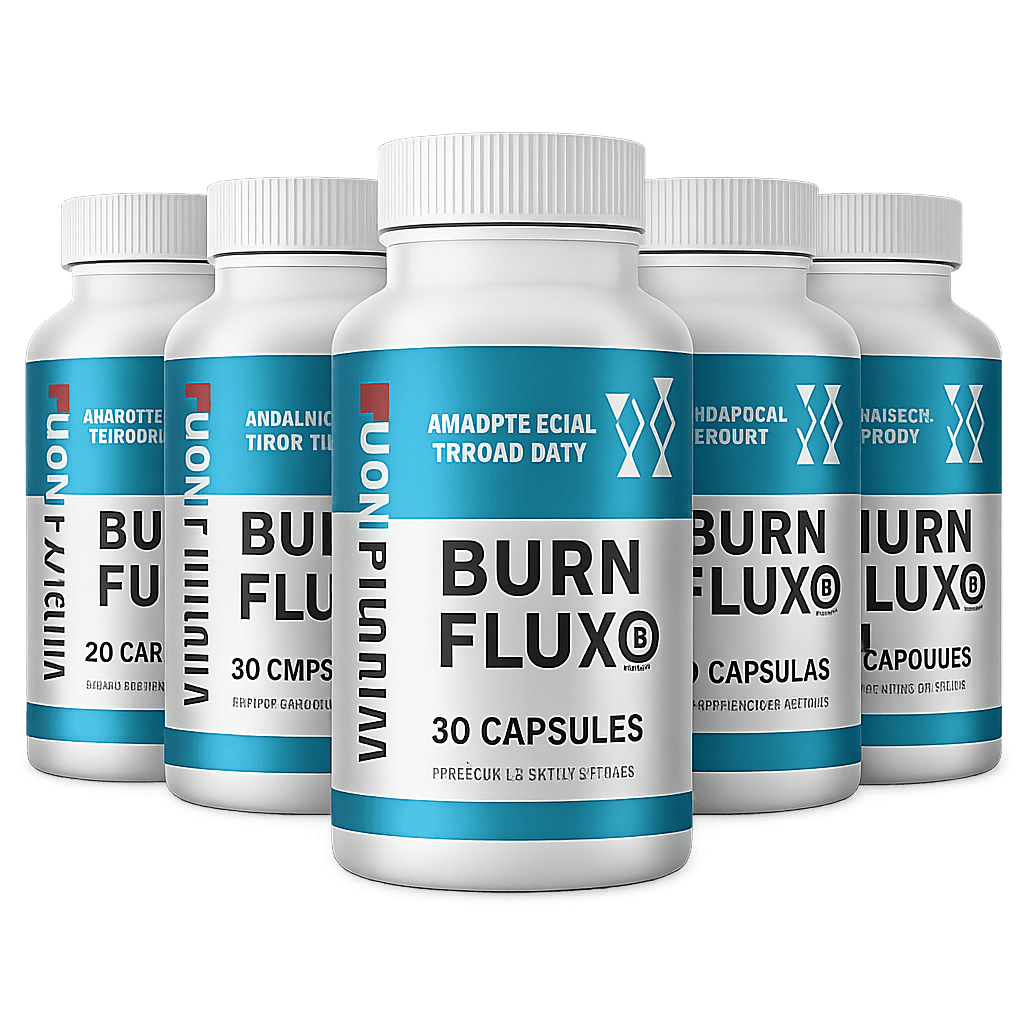
BurnFlux is not described in the excerpt as a conventional bottled capsule, powder, or ready-made supplement, although the name suggests a commercial product behind the education sequence. The VSL sells the viewer on a method first. It withholds the complete recipe, repeatedly promising that the viewer will soon learn how to do it at home in under two minutes. That makes the front end feel like an editorial discovery or home remedy reveal rather than a standard ecommerce product demonstration. This is a common VSL structure: lead with a strange ritual, attach it to a biological mechanism, then convert the viewer to a product, guide, kit, or proprietary formulation later in the funnel.
The most visible product identity is therefore not a label; it is the promise cluster. BurnFlux equals gelatin, satiety hormones, effortless appetite suppression, sleep-time fat burning, and rapid visible slimming without routine change. The copy says one cube every morning was "the big secret." It frames the method as delicious, basic, and almost too powerful, with one testimonial claiming a user had to stop after her belly went flat and even her underwear started slipping off. The product is wrapped in the aesthetics of a home hack, but the claims are pharmaceutical in scale.
For affiliates, that distinction matters. If BurnFlux is ultimately a supplement, the front-end VSL is using the language of a food ritual to lower resistance before the offer is revealed. If it is an information product, the value depends on the recipe and protocol being credible enough to justify payment. If it is a hybrid, with a recipe plus proprietary ingredients, the marketer needs a clear bridge between the household gelatin story and the paid product being sold. Without that bridge, consumers may feel the pitch promised a kitchen trick and then switched to a product sale.
The cleanest way to describe BurnFlux is this: a weight loss VSL positioning a gelatin-based daily ritual as a natural GLP-1-style appetite and fat-burning trigger. That positioning is commercially potent, but it demands unusually strong proof because it borrows credibility from drug-class science while promising results far beyond what a simple food intervention would normally support.
The Problem It Targets
BurnFlux targets more than excess weight. It targets weight loss fatigue. The viewer is assumed to be someone who has tried dieting, been told to exercise, watched celebrities transform, and felt that mainstream advice has failed them. The VSL repeatedly tells the audience they do not need to diet, do strenuous exercise, undergo surgery, count calories, or live like prisoners. That language is not accidental. It positions conventional weight management as punishment and BurnFlux as liberation.
The emotional problem is shame. The transcript names the moment when every outfit, every photo, and every mirror check feels like a punch to the chest. It describes jeans that used to squeeze, a belly that looks flatter by day three, a face that slims down, a neck that becomes sculpted, and the ability to wear a bikini without hiding. These are not abstract health outcomes. They are social and identity outcomes. The pitch is selling relief from embarrassment, regained desirability, and the feeling that the body is obeying again.
The demographic signal is broad but tilted toward women, especially women who feel stuck after pregnancy, aging, or repeated diet failure. The transcript references women losing pregnancy weight, getting their glow back, losing weight after 50, and moving from a size large to a medium. It says the method has helped men and women ages 25 to 80, but the testimonial language is heavily coded around female body-image pressure: underwear slipping, breasts feeling firmer, skin looking smoother, curves, bones showing, and men finding the speaker desirable. That gives the VSL emotional specificity, but it also increases ethical pressure. The copy is operating in a vulnerable category.
The functional problem is appetite. BurnFlux argues that viewers are not failing because of willpower. Instead, their satiety hormones are described as lying dormant. The product's job is to awaken them so appetite disappears and stored fat becomes fuel. This reframing is powerful because it removes blame. The viewer is not weak; the body has a hidden switch that has not been activated. That can be compassionate when done carefully. In this script, however, it becomes a bridge to extreme certainty: once the switch is activated, fat supposedly burns from the belly, arms, and thighs all day and all night.
The VSL also targets skepticism around prescription drugs. Ozempic and Mounjaro have become shorthand for dramatic modern weight loss, but many consumers worry about injections, access, cost, side effects, muscle loss, or rebound weight. BurnFlux enters that conversation by promising the cultural benefit of a GLP-1 drug without the drug. That is a strong market insight. The question is whether the product can legitimately support that comparison.
So the real problem BurnFlux targets is a mix of physical frustration, emotional urgency, and distrust of conventional options. It tells the viewer: you are not lazy, dieting is unnecessary, drugs are risky, and your body can be switched into fat-burning mode with one simple cube. That is a compelling frame, but it is also a frame that needs careful evidence because it encourages people to expect very rapid change without behavioral tradeoffs.
How It Works - The Proposed Mechanism
The proposed BurnFlux mechanism is built around gut hormone activation. The VSL claims that when gelatin is prepared the right way, its first contact with the gut triggers an immediate release of two powerful satiety hormones. Although the transcript does not name them in that line, the comparison to Ozempic and Mounjaro strongly points toward GLP-1 and related appetite hormones such as PYY. The pitch says these are the same hormones synthetic drugs try to replicate, causing appetite to disappear, the body to believe it is full, and stored fat from the belly, arms, and thighs to be burned continuously.
That mechanism has a kernel of plausibility but a large promotional leap. It is true that nutrients can influence satiety signaling. Protein can increase fullness, and some studies have examined gelatin or collagen-related proteins for effects on appetite hormones. A PubMed-indexed study on hydrolyzed gelatin found that a 20 gram gelatin meal could raise GLP-1 in subjects, followed by increased insulin, and suggested possible use for satiety in calorie-controlled diets. That is not the same as saying one cube of gelatin can mimic a GLP-1 medication, erase appetite, or create 20 pounds of fat loss in 15 days.
The VSL's biggest mechanism problem is scale. Pharmaceutical GLP-1 receptor agonists are designed, dosed, and studied to produce sustained receptor effects under medical supervision. A food ingredient that nudges post-meal gut peptides is not equivalent to a drug that changes appetite signaling over time at pharmacologic potency. The transcript tries to collapse that distinction by saying the gelatin trick feels like Ozempic with zero side effects. Feeling full after a gelatin-rich food and receiving a prescribed GLP-1 medication are not interchangeable events.
The second issue is the claim of site-specific fat burning. The transcript says stored fat from the belly, arms, and thighs begins to burn. It also describes belly flattening by day three and a sculpted neck soon after. Weight loss can change measurements and appearance, and early water loss can alter how clothing fits. But the idea that a gelatin cube directs fat loss from named body regions is unsupported by the mechanism presented. Fat loss is systemic. Hormones, genetics, total energy balance, fluid shifts, and lean mass all shape how visible changes appear.
The third issue is energy math. If appetite decreases enough for someone to eat substantially fewer calories, weight loss can follow. The transcript, however, insists people eat burgers, pasta, sweets, and everything that made them happy while still losing at extreme rates. That undercuts the mechanism. Appetite suppression matters because it can reduce intake. If intake does not change and activity does not change, the VSL must explain where the energy deficit comes from. "Swapping fat for pure fuel" sounds scientific, but it does not replace the need for a plausible calorie deficit.
The fair reading is this: BurnFlux borrows a real biological category, satiety signaling, then amplifies it into an automatic metabolism hack. The mechanism is rhetorically strong because it gives the viewer a reason to believe the result can happen without willpower. Scientifically, the evidence would need to show the exact BurnFlux formulation, dose, timing, adherence, and outcomes in controlled human trials before the VSL's claims could be treated as credible.
Key Ingredients & Components
The transcript gives one named ingredient clearly: gelatin. It also says one testimonial lost 40 pounds using "nothing but gelatin and three other ingredients." The other ingredients are not disclosed in the excerpt. That absence matters because the VSL's proof burden cannot be evaluated ingredient by ingredient. Affiliates should not assume the formula is safe, compliant, or evidence-based until they have the full Supplement Facts panel, dose amounts, contraindication language, and any available testing documentation.
Gelatin itself is not exotic. It is a protein derived from collagen and commonly used to create gels in foods and supplements. In the BurnFlux pitch, gelatin performs three roles. First, it provides novelty through contradiction: a familiar dessert-like ingredient becomes a fat-loss secret. Second, it supplies texture and ritual: the one-cube format makes the behavior feel concrete and easy to remember. Third, it gives the copy a plausible bridge to satiety hormones because protein digestion and amino acids can interact with gut signaling.
The cube format is one of the smarter components of the pitch. "One cube" is easier to visualize than a scoop, capsule stack, or complex meal plan. It also creates a built-in adherence image: make it once, eat one daily, repeat. For VSL conversion, that matters. The viewer can imagine success before seeing the offer. The ritual sounds small enough to try and unusual enough to be worth hearing about. The danger is that the ritual's simplicity is used to support claims that are anything but modest.
The timing component is less clean. The opening says to do the trick right after dinner and burn fat while sleeping. Later the script says it is done every morning. Testimonials also refer to the morning ritual. This should be tightened before any serious affiliate campaign. A viewer may not consciously flag the inconsistency, but regulators, reviewers, and skeptical buyers may. More importantly, if the product owner claims timing is central to hormone activation, contradictory timing weakens the biological story.
The "three other ingredients" are a strategic tease, but they are also a due diligence hole. Depending on what they are, they could materially change the product's risk profile. Fiber, amino acids, caffeine, laxative-like botanicals, diuretics, or sweeteners would all create different safety and claim issues. A product that uses stimulant or diuretic effects while marketing itself as a gelatin hormone trick would deserve a very different review than a simple protein-gel recipe.
There are also non-ingredient components: the doctor persona, the celebrity references, the testimonials, the before-and-after narrative, and the promised demonstration. In this VSL, those components do as much selling as the formula. The named ingredient creates curiosity, but the proof theater creates urgency. A responsible affiliate should therefore evaluate BurnFlux on two levels: what is physically in the product, and what claims are being made around it. The transcript provides much more of the second than the first.
Persuasion Hooks & Ad Psychology
BurnFlux uses a dense stack of persuasion hooks, and the first is the "strange simple trick." Gelatin is ordinary, which makes the result claim feel more surprising. The method takes 30 seconds, which lowers friction. The phrase "right after dinner" or "every morning" attaches the behavior to an existing routine. That is strong direct-response construction: novelty plus ease plus a precise moment of action.
The second hook is forbidden simplicity. The script keeps telling viewers they will not have to diet, exercise hard, undergo surgery, or count calories. This is not merely convenience copy. It is a rebellion against the viewer's accumulated frustration. By saying the method "defies everything doctors had been telling" Rebel Wilson, the VSL positions BurnFlux as a hidden workaround to mainstream advice. That can pull attention, but it is risky when the actual claims involve medical-style outcomes.
The third hook is celebrity transfer. Rebel Wilson, Dwayne Johnson, Kelly Clarkson, Dr. Oz, and a doctor figure named Dr. Mark are woven into the pitch. Some names are used as alleged examples, others as media-context anchors. The transcript does not provide documentation that these celebrities used BurnFlux, endorsed the gelatin trick, or had any relationship with the product. For copywriters, this is a major red flag. Celebrity adjacency can create credibility even when the wording stops short of a formal endorsement. If the claims are not documented, affiliates inherit reputational and platform risk.
The fourth hook is numeric precision. The VSL says 77 pounds in 68 days, 15 to 30 pounds in 30 days, 121,300 users, 20 pounds every 15 days, 40 pounds in 45 days, 26 pounds in 15 days, and 40 pounds in 38 days. Numbers make a pitch feel measured. They also invite scrutiny. The more specific the claim, the more important it is to show how it was verified. Were these self-reported? Clinically measured? Typical? Exceptional? Was there a calorie-controlled program? Were medications involved? The transcript does not answer those questions.
The fifth hook is embodied proof. Instead of saying "improved body composition," the VSL talks about underwear slipping off, jeans loosening, a neck becoming sculpted, smoother skin, firmer breasts, and bikini confidence. This kind of copy translates weight loss into lived experience. It is emotionally efficient because the viewer can imagine the result without needing a chart. But it can also blur the line between possible aesthetic changes and unsupported physiological claims.
The sixth hook is danger inversion. The pitch says the method is natural and has zero side effects, but then implies it is so powerful that some users had to stop because they were shrinking too fast. That creates a thrilling paradox: safe but almost too effective. It is one of the most common tactics in aggressive health VSLs. It makes restraint sound like proof of potency. A careful reviewer should treat that not as evidence, but as persuasion.
The Psychology Behind The Pitch
The deeper psychology of BurnFlux is control restoration. The viewer is not just asked to believe in gelatin. They are asked to believe that their body has a secret switch and that someone has finally found it. That is emotionally potent because weight gain often feels chaotic: appetite feels louder, clothes stop fitting, photos become painful, and advice becomes repetitive. A "switch" narrative turns the body from an enemy into a machine with one missing instruction.
The pitch also uses the fantasy of permission. Many weight loss offers ask for restriction first and reward later. BurnFlux reverses that order. It says viewers can eat burgers, pasta, sweets, and everything that makes them happy while losing weight. That promise speaks directly to people who fear another period of deprivation. It also creates a strong objection-killer: if the viewer's biggest resistance is giving up comfort foods, the VSL says no sacrifice is required.
Another psychological layer is identity reversal. The testimonial arc moves from shame to desirability: from the "cute chubby girl" to someone men desire, from hiding in clothes to wearing a bikini, from post-pregnancy embarrassment to glow. This is not health education; it is transformation theater. That does not make it ineffective. In direct response, the buyer often purchases the future self more than the mechanism. But ethical copy must be careful when it dramatizes desirability as the central reward, especially for an audience already primed by shame.
The VSL also uses social contagion. It says the trick is breaking out of the celebrity world and has helped over 121,300 men and women across the U.S. and Canada. The viewer is led to feel late to a movement. The testimonials pile up so quickly that skepticism has little room to breathe. Each story is a new proof object, even if none is independently documented in the excerpt. This is cumulative persuasion: one claim may feel unbelievable, but ten claims can create the impression that something must be happening.
There is also a subtle anti-establishment mood. The doctor figure practices functional medicine and goes to the root cause. Mainstream doctors are implied to have been wrong or limited. Synthetic drugs are described as risky. Diets and workouts are portrayed as punishment. The solution is natural, simple, and hidden in plain sight. That frame is common because it offers emotional relief: the viewer's past failure was not personal failure; it was bad information.
For copywriters, the lesson is not simply "use more proof." The lesson is that BurnFlux sells by sequencing psychological relief before factual detail. It first removes blame, then offers a mechanism, then gives celebrity and testimonial validation, then promises a fast demonstration. That sequence can convert, but it can also magnify disappointment if the product cannot deliver. The stronger the emotional promise, the more important the underlying proof becomes.
What The Science Says
The scientific context around BurnFlux is mixed: there is a plausible appetite-satiety conversation around protein and gut peptides, but the VSL's weight loss claims go far beyond the evidence presented. Gelatin can be part of a diet. Protein can influence fullness. Gut hormones such as GLP-1 and PYY do participate in appetite regulation. But none of that automatically validates claims of 15 to 30 pounds in 30 days, 70 pounds in 60 days, or near-pound-per-day fat loss without diet or exercise.
A relevant PubMed-indexed study, Oral ingestion of a hydrolyzed gelatin meal in subjects with normal weight and in obese patients, reported that 20 grams of flavored and sweetened gelatin produced a rise in plasma GLP-1 followed by increased insulin. The authors discussed possible satiety applications in calorie-controlled diets. This gives the BurnFlux script a small scientific foothold: gelatin is not biologically inert, and gut peptide responses are real. But the study does not show that gelatin produces dramatic long-term weight loss, replaces GLP-1 medications, or works while people eat anything they want.
The CDC's current public guidance on weight loss is much more conservative. Its Steps for Losing Weight guidance says people who lose weight gradually and steadily, about 1 to 2 pounds per week, are more likely to keep it off than people who lose weight quickly. BurnFlux's transcript repeatedly advertises rates far above that: 20 pounds every 15 days, 40 pounds in 38 days, and 77 pounds in 68 days. Some early scale changes can reflect water, glycogen, digestive contents, or measurement variability, but claims of that magnitude should be treated as exceptional unless supported by controlled data.
The NIH Office of Dietary Supplements also provides useful context in its Dietary Supplements for Weight Loss fact sheet. The larger point is that weight loss supplements vary widely in evidence and safety, and people with conditions such as high blood pressure, diabetes, liver disease, or heart disease should be especially cautious. BurnFlux's audience includes adults up to age 80, according to the transcript. That age range makes medical caution more important, not less.
The Ozempic comparison deserves special scrutiny. GLP-1 drugs are not merely appetite vibes. They are regulated medications with studied dosing, known adverse effects, contraindications, and clinical trial data. A gelatin-based ritual may increase fullness for some people, especially if it displaces higher-calorie snacks or increases protein intake. That is not equivalent to a drug-like metabolic override. The phrase "zero side effects" is also too broad. Even ordinary food ingredients can cause digestive discomfort, allergic concerns, medication interactions through accompanying ingredients, or problems for people with specific dietary restrictions.
The scientific verdict is therefore narrow. A gelatin-centered snack may support fullness in some contexts. Protein-rich foods can be useful within a structured eating pattern. But BurnFlux's strongest claims, automatic fat burning, targeted belly-arm-thigh fat loss, celebrity-scale transformations, and eating anything while losing extreme amounts, are not supported by the evidence shown in the transcript. Those claims require product-specific human trials, not analogy.
Offer Structure & Urgency Mechanics
The excerpt does not reveal the final checkout page, pricing, guarantee, upsells, or subscription terms, but it clearly shows the offer architecture being built. BurnFlux begins as a free reveal: stay with me, and in two minutes you will learn the method at home. That promise keeps the viewer watching because the immediate object is not yet a purchase; it is the secret. The eventual sale can then be framed as a shortcut to the already-desired result.
The VSL uses curiosity delay aggressively. The viewer is told several times that the method is about to be shown, yet the script continues with celebrity examples, testimonials, mechanism, and emotional transformation. This is classic retention copy. The reveal is always close enough to feel worth waiting for. For affiliates buying traffic, that can improve watch time, but it can also create frustration if the VSL overpromises the timing. If the script says "in just two minutes" and the viewer waits much longer, trust can erode.
Urgency is not expressed only as scarcity. It is expressed as body-time loss. The VSL says if the viewer has not tried it yet, they are wasting time. It says before-and-after changes could appear just days from now. It says one cube could require a new wardrobe within a week. This creates a fear of delayed transformation rather than a fear of missing inventory. The viewer is made to feel that every day without the trick is another day trapped in the old body.
The pitch also uses "warning" urgency. One testimonial says she had to stop because her belly went flat and underwear started slipping. The script says to use it wisely. This is not a safety disclosure in any meaningful sense; it functions as reverse psychology. By pretending to caution the viewer about excessive success, the copy intensifies desire. A legitimate offer should not rely on mock warnings as a substitute for real usage guidance, contraindications, and expected-result disclosures.
Another offer mechanic is the no-change promise. The VSL repeats that users do not need to alter their routine. This widens the buyer pool because it removes the usual objections around time, food, and discipline. But it also makes the claim harder to substantiate. If a product promises substantial weight loss without diet or exercise, the proof needs to be unusually strong and clearly typical. Otherwise, the offer may attract clicks while creating refund risk, compliance risk, and negative reviews.
For affiliates, the missing details to request are straightforward: final product format, price, recurring billing terms, refund window, average order value, upsell flow, prohibited claims, approved advertorials, proof files, and compliance guidance. The VSL's front-end energy is strong, but the commercial quality of the offer cannot be judged from the hook alone. A high-converting script with weak substantiation can become expensive quickly when ad platforms, processors, or customers start scrutinizing the claims.
Social Proof & Authority Claims
BurnFlux leans heavily on authority, but the authority stack is more theatrical than documented in the transcript. The named doctor figure, Dr. Mark, is presented as a functional medicine practitioner who goes to the root cause and has created impossible natural weight loss cases. The copy says these cases made headlines and references Dr. Oz and Kelly Clarkson. It also implies that celebrities such as Rebel Wilson and Dwayne Johnson benefited from the gelatin method. None of those claims are substantiated within the excerpt.
This is the single largest risk area in the VSL. Celebrity names are powerful because they shortcut proof. The viewer may not need a clinical trial if they believe a famous person used the same method. But celebrity weight loss stories are also frequently misappropriated in diet advertising. A responsible affiliate should require explicit documentation before repeating or implying any celebrity connection. That means source links, authorized endorsements, image rights, and exact language approved by counsel. Without that, the safer editorial stance is to say the VSL invokes these names, not that the product is endorsed by them.
The testimonial proof also needs scrutiny. The transcript includes dramatic claims: 11 pounds in 10 days, 40 pounds in 45 days, 26 pounds after pregnancy in 15 days, 40 pounds in 38 days, and nearly a pound a day after age 50. Those stories are specific and emotionally vivid, but the excerpt does not provide baseline weights, medical status, diet records, medication use, exercise changes, measurement method, or whether results are typical. In weight loss marketing, testimonials can mislead when they present exceptional outcomes as expected.
The VSL tries to make testimonials feel credible through conversational imperfection. Phrases like "I don't know what you discovered Dr. Mark" and "this feels like a miracle" imitate user-generated speech. That can make the stories feel less scripted. Yet several testimonials are narratively polished and closely aligned with the script's mechanism: fullness on day one, belly changes by day three, curves and skin by day 30. That symmetry can be persuasive, but it should also prompt verification.
The "121,300 men and women" claim is another authority device. Large user counts create safety through popularity. But the number is oddly precise, and the transcript does not explain how it was counted. Does it mean purchasers, viewers, email subscribers, recipe downloaders, or verified users who completed the protocol? Were they in the U.S. and Canada only? How many achieved the advertised results? A precise number without a methodology is still an assertion.
There is a legitimate way to use social proof in this category: show verified purchasers, disclose typical outcomes, separate exceptional stories from average results, avoid unauthorized celebrity implications, and present the expert's credentials transparently. BurnFlux, as shown in the excerpt, uses social proof as momentum. That may lift response, but it leaves serious unanswered questions for anyone who has to stand behind the traffic.
FAQ & Common Objections
The most important objection is simple: can gelatin really cause the kind of weight loss BurnFlux claims? Based on the transcript alone, the answer should be cautious. Gelatin may support fullness for some people, especially at meaningful protein doses and when used inside a lower-calorie pattern. The transcript does not show evidence that one cube can reliably produce 15 to 30 pounds of loss in 30 days without dietary change.
- Is BurnFlux the same as Ozempic? No. The VSL compares the experience to Ozempic and Mounjaro, but a gelatin ritual is not the same as a prescribed GLP-1 medication. Food-related satiety signaling and pharmaceutical receptor agonism are different levels of intervention.
- Are the celebrity claims verified? Not in the excerpt. The VSL names Rebel Wilson, Dwayne Johnson, Kelly Clarkson, and Dr. Oz-related media context. Affiliates should treat those as claims requiring documentation before repeating them in ads or advertorials.
- Does the transcript reveal the full formula? No. It names gelatin and mentions three other ingredients, but it does not identify them. That makes safety and efficacy impossible to fully evaluate from the excerpt alone.
- Is the timing after dinner or in the morning? The VSL uses both. That inconsistency should be clarified because the ritual's timing is part of the claimed mechanism.
- Can someone lose 70 pounds in 60 days? Some people can lose large amounts under medical supervision or extreme circumstances, but the VSL presents this as a home gelatin trick outcome. That is an extraordinary claim and should require extraordinary evidence.
- Is "zero side effects" a safe claim? It is too absolute. Even common ingredients can cause issues for some users, and unknown additional ingredients could change the risk profile.
- Can BurnFlux target belly, arm, and thigh fat? The transcript claims fat from those areas is burned, but it does not provide evidence for targeted fat loss. Most fat loss occurs systemically, with visible changes varying by person.
- What should affiliates ask for before promoting? Ask for the product label, proof of claims, testimonial releases, typical-results data, celebrity documentation, refund metrics, compliance rules, and platform-approved copy.
A buyer's objection will usually sound emotional rather than scientific: "I have tried everything, so why not this?" That is exactly the state the VSL is designed to meet. A fair answer is that a simple protein-based ritual may be harmless or helpful for some people, but the most aggressive BurnFlux promises should not be accepted without proof. People with diabetes, heart disease, kidney disease, pregnancy, eating disorder history, medication use, or major weight-loss goals should talk with a qualified clinician before relying on a supplement or extreme diet claim.
For copywriters, the useful lesson is that objections are handled before they are named. No time? It takes 30 seconds. Hate diets? Eat what you want. Fear drugs? This is natural. Skeptical? Celebrities and 121,300 users did it. Want proof fast? Day three belly changes. The VSL is structurally strong at objection handling. Its weakness is that many answers are asserted rather than evidenced.
Final Take - Balanced Verdict
BurnFlux is a potent VSL concept with a risky claims profile. As a piece of direct-response writing, it understands the weight loss market very well. It taps into GLP-1 awareness, diet fatigue, celebrity transformation culture, and the appeal of tiny daily rituals. The gelatin cube is memorable. The mechanism is easy to repeat. The testimonials are emotionally vivid. The promise of burning fat while sleeping without changing routine is almost engineered for curiosity clicks.
But the same qualities that make BurnFlux commercially attractive also create the biggest concerns. The transcript does not merely suggest appetite support. It promises extreme, fast, effortless transformation: up to 70 pounds in 60 days, 20 pounds every 15 days, large pregnancy-weight losses in two weeks, and visible reshaping within days. It also invokes major celebrities and prescription drug comparisons without showing documentation in the excerpt. Those are not minor embellishments. They are central sales claims.
The fairest scientific position is that gelatin and protein-related satiety are worth discussing, but BurnFlux's VSL leaps from "may influence fullness" to "automatic fat burn" with insufficient support. If the company has controlled human data on the exact formulation, it should put that evidence forward plainly. If it does not, affiliates should be careful about repeating the strongest claims. The safest promotional angle would be appetite support, ritual simplicity, and education around satiety, not drug equivalence or celebrity-scale outcomes.
For affiliates, BurnFlux may look attractive because the hook is broad and the emotional drivers are obvious. Before sending traffic, review the funnel all the way through. Check whether the final page uses recurring billing, whether the testimonials have releases, whether the doctor credentials are verifiable, whether celebrity references are legally supported, and whether the network provides approved claims. A payout is not enough to offset processor issues, account bans, chargebacks, or brand damage.
For copywriters, BurnFlux is a useful study in both craft and caution. The opening is specific. The mechanism is accessible. The proof stack is layered. The identity transformation is clear. Yet the script would be stronger and more defensible if it narrowed the promise, cleaned up timing inconsistencies, replaced celebrity implication with documented proof, and clearly separated typical outcomes from exceptional stories.
Final verdict: BurnFlux is compelling as a VSL artifact but not fully convincing as an evidence-based weight loss claim from the transcript provided. The gelatin-satiety angle has a plausible biological foothold, but the promised speed, certainty, and effortlessness are unsupported. Treat it as an aggressive weight loss funnel requiring serious due diligence, not as a proven shortcut to dramatic fat loss.
Source-backed reader context
Additional Reviews & Reported Experiences
These statements were presented in the product's sales transcript. Daily Intel did not independently verify the speakers, purchase status, or reported outcomes, and the statements are not used in Product aggregateRating.
VSL proof excerpt 1
Date not stated
Something so basic flipped a switch in my body and melted the obesity off effortlessly.
VSL proof excerpt 2
Date not stated
My belly went flat in just 10 days, and I had to stop.
VSL proof excerpt 3
Date not stated
It's been 10 days since I started doing my little gelatin trick every morning and I've already lost 11 pounds.
VSL proof excerpt 4
Date not stated
I don't know what you discovered Dr. Mark, but this feels like a miracle.
VSL proof excerpt 5
Date not stated
I lost 40 pounds in just 45 days using nothing but gelatin and three other ingredients.
VSL proof excerpt 6
Date not stated
I lost the 26 pounds I gained during pregnancy in just 15 days.
VSL proof excerpt 7
Date not stated
I lost 40 pounds in just 38 days and I got my glow back.
VSL proof excerpt 8
Date not stated
On the first day, I woke up with insane energy and such a strong feeling of fullness that I literally forgot about food.
VSL proof excerpt 9
Date not stated
I had discovered my body's secret switch for automatic fat burning.
VSL proof excerpt 10
Date not stated
I went from the cute chubby girl to someone men actually desired so fast I could barely believe it myself.
Comments(0)
No comments yet. Members, start the conversation below.
Related reads
- DISvsl reviews
GlucoRevie Review: Inside the VSL's Weight-Loss Pitch
A close editorial review of the GlucoRevie VSL, from its RFK Jr. and Barbara O'Neill authority framing to the unsupported 17-day weight-loss promise.
Read - DISvsl reviews
Make America Slim Again Review: Purple Honey VSL Breakdown
A detailed Daily Intel style review of the Make America Slim Again VSL: purple honey, the enzyme story, social proof, scientific plausibility, and compliance concerns.
Read - DISvsl reviews
Gelatina Sculpt Review: A Hard Look at the Viral Gelatin VSL
A detailed Gelatina Sculpt review analyzing the gelatin-cube VSL, its celebrity hooks, GLP-1 framing, proof gaps, offer mechanics, and compliance risk.
Read