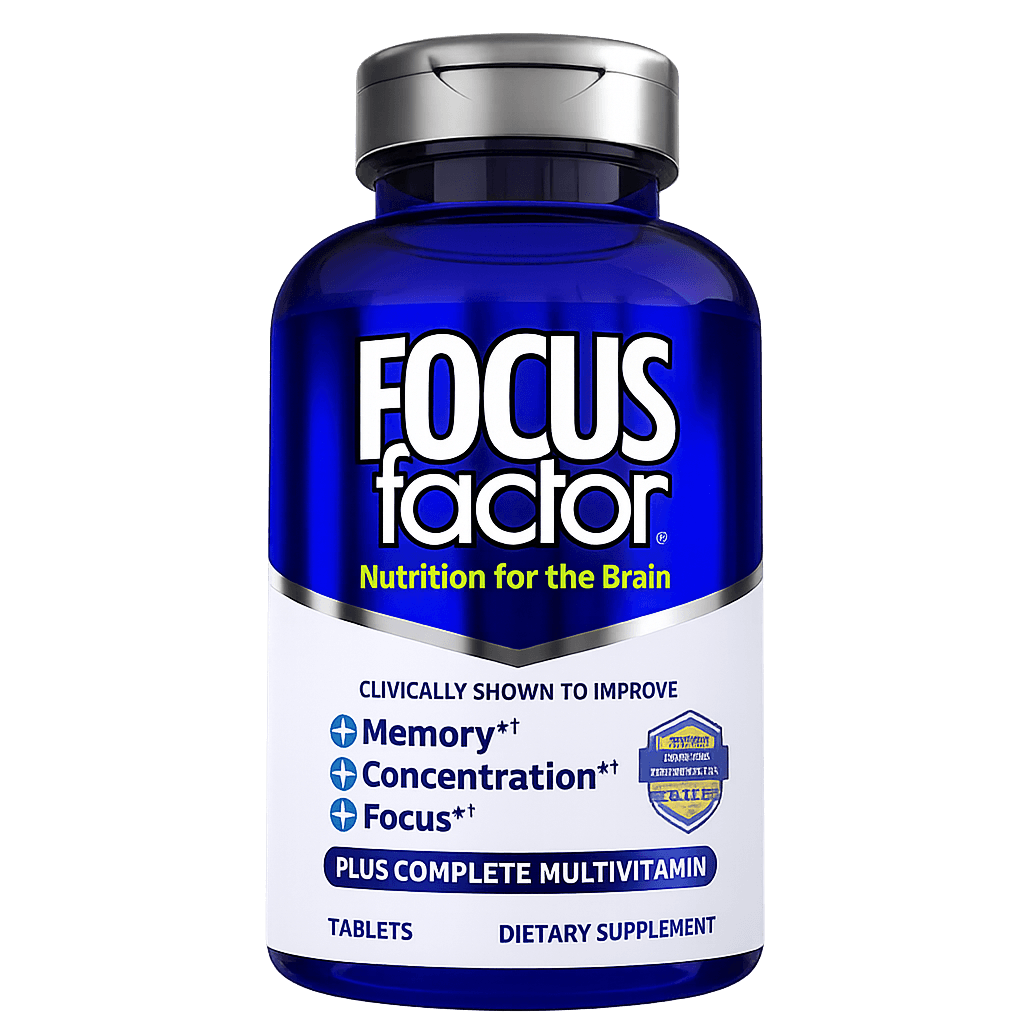
Focusfactor VSL Review: Propolis Memory Pitch Analyzed
A close editorial review of the Focusfactor VSL, including its dementia fear hook, propolis mechanism, proof gaps, urgency tactics, and affiliate compliance risks.
8,226+
Videos & Ads
+50-100
Fresh Daily
$29.90
Per Month
Full Access
12.5 TB database · 72+ niches · 27 min read
1. Introduction — A Family Crisis Hook Built Around One Drop
The Focusfactor VSL opens with a line that does not ease the viewer into a supplement discussion. It throws them directly into a family emergency: a mother with rapidly advancing dementia has just been placed in assisted living, no longer recognizing anyone in the family, including the narrator. That is not a casual memory-lapse setup. It is a high-intensity caregiving scene, and the copy chooses the most emotionally loaded version of the memory category: institutional care, loss of identity, a devastated adult child, and the fear that time has already run out.
What makes this pitch worth reviewing is the speed of the promised reversal. The narrator says that, after a nurse gave the mother a drop of homemade concentrated propolis extract in juice, the mother recognized and named the family instantly. In the same breath, the VSL frames the intervention as simple, natural, non-pharmaceutical, centuries old, and already changing more than 12,000 lives. The promise is not merely sharper focus or normal cognitive support. The story implies a dramatic turnaround in someone described as having advanced dementia.
For copywriters and affiliates, that is the central tension. The creative is powerful because it borrows the emotional weight of dementia and the credibility of a caregiver setting, then resolves the fear through a tiny, accessible action. But the same qualities that make the opening compelling also create serious evidence and compliance questions. A claim that someone with severe dementia went from not recognizing their only child to naming every family member after a drop of propolis is an extraordinary therapeutic claim. If the product is sold as a supplement or natural recipe, the marketer must be very careful about language that suggests diagnosis, treatment, cure, mitigation, or reversal of disease.
The VSL excerpt also has a notable naming disconnect. The product is called Focusfactor, yet the narrative device centers on a homemade propolis extract rather than on a labeled formula, dose, clinical protocol, or recognizable branded offer. That can work as curiosity-driven front-end copy: the viewer clicks to learn the hidden recipe or product behind the story. It can also create confusion. Is Focusfactor a finished supplement? A guide? A propolis tincture? A memory protocol? The review has to judge the ad on what it actually says, not what the offer page may later clarify.
As a sales letter, the excerpt is engineered for immediate response. It uses a traumatic before-state, a miraculous after-state, a sympathetic messenger, a humble ingredient, and a deadline-style command to click before it is too late. As health communication, it leaves out crucial context: dementia has many causes, assisted-living decisions are complex, propolis is not an established dementia treatment, and sudden recognition changes should be discussed with a clinician rather than treated as proof of a home remedy.
This review approaches Focusfactor as a VSL asset, not as a medical recommendation. The goal is to unpack what the pitch is doing, where it is persuasive, where it overreaches, what affiliates should verify before promoting it, and how a more defensible version could preserve the human story without implying that a bee-derived extract can reverse dementia overnight.
2. What Focusfactor Is
Based on the provided transcript, Focusfactor is presented less as a conventional nootropic brand and more as a memory-restoration discovery built around propolis extract. The name suggests attention, concentration, and cognitive performance, but the story in the excerpt does not focus on healthy adults wanting better productivity. It focuses on a person with rapidly advancing dementia in assisted living. That positioning matters because it moves the offer from the broad wellness category into a disease-adjacent territory where claims need far more support.
The VSL does not describe a standard product format. It does not say capsule, liquid dropper, powder, subscription bottle, dosage chart, or physician-developed formula. Instead, the central object is a drop of homemade concentrated propolis extract mixed into juice by a kind nurse. This gives Focusfactor a folk-remedy feel. The word homemade softens the pitch and makes the solution seem accessible, intimate, and less commercial. The nurse character adds implied practical authority, even though the copy does not give her credentials, training, facility policy, or clinical rationale.
For an affiliate reading this as a campaign asset, Focusfactor appears to be a direct-response offer using a natural-ingredient lead. The buyer is likely being sold either a propolis-based memory supplement, a recipe, or a protocol that claims to support mental clarity. The excerpt itself does not establish whether the product is manufactured under supplement quality standards, whether it lists standardized propolis compounds, or whether the final sales page includes required supplement disclaimers. Those omissions should be treated as due-diligence items, not harmless details.
The phrase this simple trick was not a pill or a medication does important work. It distances the offer from drugs while keeping the perceived benefit in drug-like territory. The implication is that the viewer may get a significant cognitive result without prescription treatment, without a doctor visit, and without the emotional burden of accepting dementia as progressive. This is a classic natural-alternative frame: medicine is absent, nature is rediscovered, and the audience is invited to believe that an overlooked ingredient has been hiding in plain sight.
That frame can be useful when selling general cognitive-support products, but it becomes risky when the story specifically invokes dementia. In the United States, dietary supplements can generally make structure/function claims such as supporting memory or mental clarity when properly substantiated and labeled. They cannot lawfully be marketed as treatments or cures for Alzheimer’s disease or dementia. The FDA explains that structure/function claims for supplements require substantiation and a disclaimer, and they may not explicitly or implicitly link the claimed effect to a disease state. The Focusfactor excerpt gets close to that boundary because the emotional proof story is not about everyday forgetfulness; it is about a diagnosed-sounding dementia crisis.
So what is Focusfactor in practical terms? It is a memory VSL concept selling hope through propolis. Its strongest commercial angle is the contrast between a tiny natural drop and a devastating caregiving problem. Its weakest product angle is specificity. A serious affiliate would want to see the actual label, supplement facts, dosing, contraindications, guarantee, trial terms, refund policy, clinical references, and compliance review before sending paid traffic. Without those details, the product identity is mostly narrative, and narrative alone is not enough in a medically sensitive category.
3. The Problem It Targets
The problem Focusfactor targets is not framed as occasional distraction. It is framed as memory loss severe enough to fracture family recognition and force assisted-living placement. The narrator’s mother no longer recognizes anyone in the family, not even the narrator, her only child. That detail is designed to make the problem concrete. The viewer is not asked to imagine misplacing keys; they are asked to imagine being erased from a parent’s mind.
This is a much sharper emotional problem than most brain-health ads use. Many memory offers target embarrassment: forgetting names, walking into a room and forgetting why, losing conversational confidence, or worrying about age-related decline. Focusfactor uses loss, guilt, and urgency. The assisted-living decision introduces a second layer of pain: the adult child has not only watched cognitive decline but has had to admit that home care is no longer enough. That is an extremely resonant fear for caregivers, especially those who feel they should be doing more.
The transcript also compresses several distinct conditions under the umbrella of memory loss. It mentions memory loss in the opening sentence and then says the mother has rapidly advancing dementia. Those are not interchangeable in a clinical sense. Memory complaints can come from sleep deprivation, medications, depression, vitamin deficiencies, thyroid problems, infections, dehydration, stress, normal aging, mild cognitive impairment, Alzheimer’s disease, vascular dementia, Lewy body dementia, and other causes. Dementia is a syndrome involving impairment that interferes with daily life, and Alzheimer’s disease is one common cause. A responsible sales message would not blur those categories casually.
The ad’s choice of advanced dementia is commercially powerful because it sets a very low hope baseline. If the viewer believes the mother was beyond recognition and then suddenly clear-headed, almost any viewer with milder symptoms can imagine an even better chance. That is a persuasion shortcut: prove the product in an extreme case, and the audience infers it should work for ordinary forgetfulness. The problem is that the extreme case is exactly where proof standards should be highest.
The VSL also targets the problem of helplessness. Assisted living is depicted as the point where the family has exhausted conventional options. Then the discovery comes from inside that same care environment, through a nurse who offers a natural intervention. That resolves helplessness by suggesting there is still something the family can do. For affiliates, this is why the angle can convert: the prospect is not only buying a cognitive product; they are buying agency at a moment when the official path feels slow, expensive, or emotionally defeated.
But the severity of the targeted problem also raises ethical questions. People dealing with dementia are often vulnerable to exaggerated hope because the disease affects identity, family roles, finances, and future planning. The CDC notes that Alzheimer’s disease is progressive and irreversible, and that people concerned about symptoms should talk to a health care provider to evaluate causes and treatment options. A pitch that appears to offer rapid reversal should therefore be handled with care. The copy can talk about supporting mental clarity, healthy aging, or antioxidant pathways, but it should not imply that a single ingredient can undo advanced neurodegeneration.
In short, Focusfactor targets one of the most emotionally charged problems in the health market: the fear of losing a loved one before they are physically gone. That gives the VSL real emotional force. It also means every claim, testimonial, and affiliate bridge page needs stricter scrutiny than a typical focus or productivity offer would require.
4. How It Works: The Proposed Mechanism
The proposed mechanism in the excerpt is intentionally simple: one drop of concentrated propolis extract, mixed into juice, helps restore mental clarity. The copy does not name a biochemical pathway. It does not discuss amyloid, tau, neuroinflammation, acetylcholine, cerebral blood flow, oxidative stress, mitochondrial function, or synaptic signaling. Instead, it relies on a familiar natural-remedy logic: propolis has been used for centuries, therefore a concentrated form may unlock a powerful effect modern medicine has overlooked.
Propolis itself is a resinous material bees make from plant compounds and use in hive construction and defense. Because it contains complex mixtures of polyphenols, flavonoids, phenolic acids, and other bioactive compounds, it is frequently discussed in preclinical literature for antioxidant, anti-inflammatory, antimicrobial, and immune-related effects. Those properties make it plausible as a general wellness ingredient. Plausibility, however, is not proof that a drop can reverse dementia symptoms.
The Focusfactor pitch seems to imply a rescue mechanism rather than a gradual support mechanism. The mother is described as unable to recognize family, then suddenly able to name everyone instantly. That suggests an acute cognitive switch. For such a claim to be scientifically persuasive, the VSL would need to explain why the symptom changed so quickly and rule out confounders. Was the mother experiencing delirium, medication side effects, dehydration, infection, poor sleep, sensory impairment, or a fluctuating dementia pattern? Was there a formal diagnosis? Was the improvement sustained? Was it measured by a clinician? None of that is provided in the excerpt.
That absence matters because dementia symptoms can fluctuate. Some people have clearer periods and worse periods, especially when illness, fatigue, medication changes, mood, hydration, or environment affect cognition. A moving anecdote can be emotionally true to the narrator while still being medically weak as evidence. The VSL converts that single before-and-after moment into a product mechanism without giving the viewer enough information to evaluate causality.
If the brand wanted to create a more defensible mechanism section, it could position propolis as a source of antioxidant compounds that may support healthy brain aging as part of a broader lifestyle routine. It could discuss oxidative stress and inflammation as areas of active research, while saying plainly that dementia treatment claims are not established. That would be less sensational, but it would also be more durable for affiliates who care about ad account longevity, platform review, and regulatory exposure.
The phrase homemade concentrated propolis extract also raises quality-control questions. Concentration is not automatically better. Different propolis samples vary dramatically depending on geography, plant sources, extraction method, solvent, standardization, contaminants, and dosage. A drop of one extract is not equivalent to a drop of another. Without standardization, the mechanism becomes impossible to evaluate. The viewer is left with a magical unit of action: a drop.
As a piece of copy, the drop is excellent. It makes the action feel small, low friction, and almost secret. As a health claim, it is vague. A serious review has to separate those two facts. Focusfactor’s mechanism is persuasive because it is concrete enough to visualize but loose enough to avoid technical burden. That looseness is also the weakness. The pitch proposes a natural clarity effect but does not substantiate the leap from antioxidant-rich bee resin to immediate recognition recovery in advanced dementia.
5. Key Ingredients & Components
The only explicit ingredient in the excerpt is propolis extract. That is important because many memory supplements rely on long ingredient stacks: B vitamins, phosphatidylserine, bacopa, ginkgo, huperzine A, citicoline, caffeine, omega-3s, or herbal blends. Focusfactor, as shown here, is built around a single hero ingredient. The benefit of that choice is memorability. The risk is that the entire claim load rests on propolis.
Propolis is often marketed as bee glue, a natural resin bees create from plant exudates, waxes, and enzymes. Its composition is not fixed. Brazilian green propolis, poplar-type propolis, red propolis, and other regional types can contain different dominant compounds. This matters for evidence. A study using one standardized Brazilian green propolis extract cannot automatically validate every homemade tincture or every commercial propolis drop. The transcript does not identify the type, concentration, extraction solvent, standardizing marker, or dose.
The word concentrated carries a strong perceived-value signal. It suggests potency, efficiency, and a hidden active principle. In direct-response health copy, concentration often functions as a shortcut for strength: the ordinary ingredient becomes special because it has been intensified. But concentration also creates unanswered safety questions. More concentrated extracts may contain more active compounds, more allergens, more solvent residue if poorly produced, or more variability from batch to batch. Natural does not equal harmless, especially for people with allergies, asthma, bleeding disorders, complex medication schedules, or frailty.
The delivery method is juice. That detail is not accidental. Juice makes the act feel caring and domestic. It avoids the resistance many older adults may have to swallowing another pill. It also makes the intervention seem gentle enough to happen in a nursing environment. But from an analytical perspective, juice does not validate the ingredient. It simply lowers the viewer’s guard. A drop hidden in juice can also raise consent and care-setting concerns if the person receiving it has cognitive impairment. Any real-world use in dementia care should involve appropriate medical oversight, caregiver consent, and facility policy compliance.
The nurse is another component, even though she is not an ingredient. She is part of the product architecture in the VSL. The kind nurse supplies trust, compassion, and implied authority. Viewers may hear the story as if a medical insider discovered something that formal medicine ignores. Yet the copy does not say the nurse was authorized to administer supplements, that a physician approved it, or that the patient’s medications and allergies were reviewed. For compliance-minded affiliates, that is a red flag because implied authority can carry the same persuasive burden as explicit claims.
The section also hints at a non-pill, non-medication identity. That may appeal to supplement-resistant viewers, but it can be confusing if the final offer is actually a supplement bottle. If Focusfactor is sold as capsules but the lead promises a drop of homemade extract, the landing experience must reconcile that gap. If it does not, refund pressure and trust friction can rise. Buyers may feel they clicked for a simple recipe and were routed into a conventional supplement funnel.
In ingredient terms, Focusfactor is clean and focused. In evidence terms, it is under-specified. The VSL’s propolis component has enough real-world scientific interest to justify cautious discussion of brain-aging support, but not enough in this transcript to justify instant dementia-reversal implications. The missing details are the details that matter: exact propolis source, dose, standardization, manufacturing controls, safety warnings, contraindications, and the actual finished-product facts panel.
6. Persuasion Hooks & Ad Psychology
The Focusfactor VSL uses a compressed set of high-conversion hooks. The first is shock: Oh my god, this is a must-hear story. That phrasing signals urgency before the viewer knows the product. It tells the audience to suspend casual browsing and treat the next seconds as important. This is a common social-feed tactic, but here it is paired with a medical fear, which gives it extra force.
The second hook is the caregiving confession. The narrator had to place her mother in assisted living. That detail creates moral tension. Adult children often feel guilt when home care is no longer possible, even when assisted living is the safest option. The VSL taps that guilt without naming it directly. The listener is pulled into the narrator’s pain and invited to share the relief when the mother improves.
The third hook is identity restoration. The mother does not merely feel a little sharper. She names each family member instantly. Recognition is one of the most emotionally meaningful forms of memory because it confirms that the person is still connected to the family system. From a copy perspective, that is far stronger than saying she remembered where she put her glasses. The pitch sells the return of a relationship.
The fourth hook is the humble secret. A drop of homemade propolis extract feels almost too small to be threatening. The copy says it is not a pill or medication, which positions it outside the viewer’s usual skepticism toward drugs, side effects, and medical bureaucracy. The word trick makes it feel like practical insider knowledge rather than a formal treatment. Tricks are clickable because they imply asymmetry: someone knows something simple that most people do not.
The fifth hook is ancient validation. Used for centuries is not clinical evidence, but it is emotionally persuasive. It suggests continuity, safety, and rediscovery. In natural health marketing, centuries-old use often fills the proof gap between laboratory science and consumer trust. The problem is that traditional use may justify further research, but it does not prove efficacy for a serious condition like dementia.
The sixth hook is social proof: already changing over 12,000 lives. This number adds scale to the anecdote. The VSL moves from one mother to thousands of people. But it does not define changed, document the count, explain whether those are customers, viewers, testimonials, clinical participants, or informal claims, or disclose how outcomes were measured. Specific numbers feel credible even when their basis is unclear.
The seventh hook is scarcity: click before it is too late. This is not tied to inventory, price, enrollment, or a real deadline. It is tied to disease progression and regret. That kind of urgency can be effective, but it is also ethically sensitive. When someone fears cognitive decline, before it is too late can sound like a warning that delay may cost a loved one their mind. Affiliates should be cautious with this phrasing because it intensifies pressure in a vulnerable category.
Overall, the persuasion architecture is strong. It moves from crisis to discovery to proof to action in very few lines. The weakness is not craft; it is substantiation. The more emotionally charged the hook, the more carefully the marketer must support or soften the claim. Focusfactor’s excerpt chooses maximum emotional leverage, which makes it memorable but also exposes the campaign to skepticism from educated buyers, ad platforms, and regulators.
7. The Psychology Behind The Pitch
The deeper psychology of the Focusfactor pitch is built around reversal of helplessness. Dementia is terrifying partly because it feels one-directional. Families watch abilities disappear, and many interventions feel limited, slow, expensive, or uncertain. The VSL interrupts that emotional script by presenting a sudden reversal: the mother who could not recognize anyone now names everyone. The viewer experiences a small emotional rescue before any product details appear.
The copy also activates what behavioral marketers call narrative transportation. The audience is not given a claim first; they are given a scene. There is a mother, an only child, assisted living, a nurse, juice, and a moment of recognition. These specifics allow the viewer to simulate the story. Once someone is inside the narrative, they may evaluate the claim less like a scientific proposition and more like a human testimony. That is why the story can feel persuasive even without data.
Another psychological layer is authority by proximity. The nurse is not introduced as a researcher or physician, yet her role near vulnerable patients gives her implied credibility. In many households, nurses are perceived as practical, compassionate, and less commercially motivated than doctors or pharmaceutical companies. The phrase one of the kind nurses there started giving her a drop makes the intervention feel like care rather than marketing. That is clever copy, but it should not be mistaken for clinical endorsement.
The VSL also uses the naturalness heuristic. If something is pure, natural, old, and not a medication, many consumers perceive it as safer and more trustworthy. This heuristic is especially strong when conventional options feel frightening or inadequate. But it can distort risk perception. Natural substances can cause allergic reactions, interact with medications, or vary in composition. Propolis in particular may be relevant for people with bee-product allergies or those taking blood thinners, depending on the preparation and individual health status.
There is also a fear-of-regret mechanism. The final line tells viewers to listen now before it is too late. The implied future regret is painful: if you do not click, and your loved one declines, you may wonder whether you missed the thing that could have helped. This is one of the strongest urgency triggers in health copy, and it requires restraint. Used carefully, urgency can encourage people to educate themselves. Used aggressively, it can exploit anxiety.
The pitch also benefits from compression bias. The story implies a simple cause-and-effect chain: propolis drop, recognition returns. Human minds are attracted to clean explanations, especially under stress. But real cognitive decline is rarely that clean. Dementia care involves diagnosis, medication review, sleep, hydration, sensory support, caregiver routines, safety planning, and sometimes FDA-approved medications that may slow decline or ease symptoms. A single-ingredient story can be emotionally satisfying while leaving out the messy reality.
Finally, the copy sells identity preservation. The mother says she feels more clear-headed than she has ever felt in her life. That phrase expands the claim beyond restoring lost recognition. It implies a new peak state. For caregivers, that is not just symptom relief; it is a fantasy of getting the person back, perhaps better than before. This is why the VSL can be powerful and also why it needs a skeptical reading. The best copy often touches real emotional truth. The responsible version makes sure the promise does not outrun the proof.
8. What The Science Says
The scientific context is mixed in a very specific way: propolis is a legitimate subject of biomedical research, but the Focusfactor transcript makes a claim that is much stronger than the available evidence supports. That distinction matters. A skeptical review should not dismiss propolis as imaginary, but it also should not let preclinical plausibility stand in for dementia-treatment proof.
There is research interest in propolis because it contains diverse plant-derived compounds, including polyphenols and flavonoids, and because some extracts show antioxidant and anti-inflammatory activity in laboratory or animal models. A PubMed-indexed randomized trial of Brazilian green propolis in older adults living at high altitude reported on 60 participants who received propolis or placebo for 24 months. That is relevant because it is human research in an older population, not merely a cell-culture claim. But the scale, population, product type, and context are narrow. It does not establish that any propolis drop reverses advanced dementia, nor does it support an instant family-recognition effect.
The CDC’s Alzheimer’s overview is a useful counterweight to the VSL’s emotional leap. The CDC describes dementia as loss of memory, problem-solving, and thinking abilities that interferes with daily life, and describes Alzheimer’s disease as progressive and irreversible. It also advises people with symptoms to talk to a health care provider because some symptoms may relate to more treatable conditions. That last point is essential. If someone has abrupt changes in recognition or clarity, the answer is not to infer a supplement cure; it is to consider medical evaluation, especially because delirium, infection, medication effects, sleep disruption, dehydration, depression, and metabolic problems can affect cognition.
The regulatory science context is also important. The FDA’s guidance on food and dietary supplement label claims distinguishes health claims, nutrient content claims, and structure/function claims. For dietary supplements, structure/function claims may describe support for normal body structure or function, but they require substantiation and a disclaimer stating that the FDA has not evaluated the claim and that the product is not intended to diagnose, treat, cure, or prevent disease. The FDA also says structure/function claims may not explicitly or implicitly link the claimed effect to a disease state. A VSL that narrates dramatic improvement in dementia risks creating exactly that implied link, even if it avoids saying cure.
Scientifically, the biggest gap in the transcript is causality. One anecdote cannot show that propolis caused the observed change. It does not include baseline testing, diagnosis confirmation, dose, duration, adverse-event monitoring, medication review, follow-up, or comparison with placebo. It does not say whether the mother’s apparent recognition lasted for minutes, hours, weeks, or months. It does not say whether a clinician assessed her. For a severe neurodegenerative claim, those omissions are not minor.
There is also a dosing and standardization problem. Propolis products vary widely. A concentrated homemade extract may differ substantially from a standardized Brazilian green propolis product used in a study. Without standardization, the ingredient name alone is too broad to support a specific claim. Even with standardization, cognitive outcomes require controlled trials, meaningful endpoints, and replication.
The fair scientific verdict is this: propolis may have compounds worth studying for oxidative stress, inflammation, and healthy aging, and limited human research makes it a plausible supplement ingredient for cautious investigation. The Focusfactor VSL, however, implies a rapid dementia reversal that is not supported by the cited public-health and research context. Affiliates should treat any claim that a natural drop helped an advanced-dementia patient suddenly recognize family as testimonial-style anecdote requiring verification, qualification, and likely legal review before promotion.
9. Offer Structure & Urgency Mechanics
The excerpt does not reveal price, guarantee, order form, upsells, shipping terms, continuity billing, or bottle count. That means the offer structure must be inferred from the VSL mechanics rather than from a checkout page. What we can see is a front-end click driver built around curiosity and urgency. The viewer is told the link is below, the button should be clicked, and they should listen now before it is too late. That suggests the immediate conversion goal is not necessarily purchase; it may be to move the prospect from a short social ad into a longer VSL or advertorial.
The first offer mechanic is information withholding. The ad names propolis, but it still says click the button and listen now. That means the full value is not merely the ingredient; it is the recipe, concentration method, product source, or story details behind the ingredient. This is a common bridge: reveal enough to create credibility, hold back enough to create the click. It can work, but if the next page simply repeats the same miracle story without adding specificity, viewers may feel manipulated.
The second mechanic is low-friction perceived use. A drop in juice sounds easy, inexpensive, and noninvasive. Before price is introduced, the mental cost is tiny. That matters because the target audience may be caregivers already overwhelmed by appointments, medications, facility logistics, and emotional fatigue. The smaller the action feels, the easier the click becomes.
The third mechanic is time pressure through disease progression. Before it is too late is not tied to a promotional deadline. It is tied to fear that memory loss will worsen. This is more potent than a coupon countdown because it connects delay with irreversible loss. But it is also the most sensitive part of the offer. In dementia-related copy, urgency should be informational, not coercive. A more responsible version would say something like: learn what the ingredient is, review the evidence, and speak with a qualified professional if memory symptoms are affecting daily life. That would reduce pressure while keeping action.
The fourth mechanic is numerical social proof: more than 12,000 lives. Numbers in VSLs can serve as offer scaffolding when the product details are still absent. They reassure the viewer that others have tried this, that the story is not isolated, and that the solution is gaining momentum. But the number needs a definition. Are these customers? Email subscribers? Video viewers? People who downloaded a recipe? Testimonials? Repeat buyers? If the number is vague, affiliates should avoid repeating it as an outcome claim.
The fifth mechanic is natural scarcity. The copy says this natural recipe is already changing lives. Recipe language can imply availability outside the usual supplement supply chain, which may make the viewer feel they are getting access to something suppressed, overlooked, or quietly passed around. The excerpt does not make an explicit conspiracy claim, which is a point in its favor, but the emotional shape is similar: a simple natural answer exists, and the viewer should act before missing it.
From an affiliate perspective, the missing commercial details are crucial. A strong VSL can still produce poor economics if the offer has a weak average order value, unclear billing, high refund rates, aggressive upsells, or compliance issues that lead to platform bans. Before promoting Focusfactor, affiliates should inspect the full funnel: ad claims, bridge page, VSL, order page, disclaimers, checkout clarity, recurring billing disclosures, refund handling, and customer support. The urgency mechanics may generate clicks, but the offer’s long-term value depends on trust after the click.
10. Social Proof & Authority Claims
The Focusfactor excerpt uses two main forms of proof: a personal testimonial and a large-number claim. The testimonial is the mother’s recovery scene. The number is the statement that the natural recipe is already changing over 12,000 lives. There is also implied authority through the nurse and implied historical authority through the claim that propolis has been used for centuries. Together, these proof elements create an impression of credibility without presenting verifiable evidence in the excerpt.
The testimonial is vivid, but it is not documented. We do not know the mother’s age, diagnosis, clinical stage, medications, baseline cognitive testing, duration of symptoms, or whether the improvement was observed by anyone other than the narrator. We do not know whether the family recognition occurred once or repeatedly. We do not know whether the mother had dementia confirmed by a specialist or whether the term was used informally. That matters because health testimonials can be persuasive even when they are atypical, misattributed, or incomplete.
The line she even said she feels more clear-headed than she has ever felt in her life adds emotional proof but also increases skepticism. A person described as having rapidly advancing dementia and recent inability to recognize family is suddenly reporting peak lifetime clarity. That is such a dramatic contrast that a careful viewer may question whether the ad is dramatized. If the brand has substantiation, it should be surfaced carefully. If it does not, the claim should be softened.
The 12,000 lives claim is specific enough to sound measured but vague enough to leave room for interpretation. Changing lives could mean purchases, downloads, survey responses, testimonials, or subjective reports. In health marketing, vague transformation numbers can be risky because consumers may infer that 12,000 people experienced meaningful memory improvement. If the brand cannot document that, affiliates should not treat the number as clinical proof. A safer formulation would identify the metric precisely, such as 12,000 customers served, if that is true, or avoid the number entirely.
The nurse functions as authority by role. A nurse in an assisted-living setting is a trusted figure, and the phrase kind nurse emphasizes benevolence. But the VSL does not say the nurse recommended Focusfactor as part of an approved care plan. It says she started giving the mother a drop. That creates a quiet implication of medical legitimacy while avoiding direct endorsement language. Compliance reviewers often look at net impression, not just literal wording. The net impression here is that a care professional knew about an effective natural intervention for dementia.
The centuries-old use claim is another authority bridge. It borrows from tradition rather than clinical research. Traditional use can make an ingredient culturally familiar, but it does not validate a disease claim. Many substances have long histories of use for purposes later shown to be ineffective, unsafe, or simply unproven. For propolis, the more defensible statement is that it has a history of use and contains compounds under study, not that its history proves memory-restoration effects.
Strong proof in this category would look different. It would include randomized human studies on the specific extract, transparent dosage, safety data, adverse-event reporting, clinically meaningful cognitive endpoints, and clear separation between general support claims and disease treatment. The Focusfactor excerpt instead uses proof by story, role, number, and tradition. That is effective sales psychology. It is not enough, by itself, for a high-stakes cognitive health claim.
11. FAQ & Common Objections
Is Focusfactor claiming to cure dementia? The excerpt does not use the word cure, but the story implies a dramatic reversal in a person described as having rapidly advancing dementia. From a consumer’s perspective, the net impression may be that propolis can restore recognition and clear-headedness. That is much stronger than a general memory-support claim and should be treated as unsupported unless the brand has rigorous evidence.
Is propolis a real ingredient or just a made-up hook? Propolis is real. Bees produce it from plant materials, and it has been studied for various biological activities. The issue is not whether propolis exists. The issue is whether the specific Focusfactor claim follows from the evidence. A real ingredient can still be used in an exaggerated pitch.
Does the transcript provide enough product detail? No. It does not reveal the formula, exact dose, propolis type, concentration, extraction method, supplement facts, safety warnings, or whether Focusfactor is a liquid, capsule, recipe, or broader protocol. For affiliates, that is not enough to evaluate compliance or customer fit.
Why is the assisted-living scene so persuasive? It puts the viewer at the point of maximum emotional pain. Assisted living implies that the family has run out of options at home. When the nurse introduces a simple natural action inside that setting, the solution feels like a last-minute rescue. That is powerful, but it also increases the responsibility to avoid overstating results.
What is the biggest scientific objection? The biggest objection is causality. A single anecdote cannot prove that one drop of propolis caused a sudden cognitive improvement. The story lacks diagnosis confirmation, objective testing, duration, dosing, comparison group, and follow-up. It also does not account for fluctuating cognition or reversible contributors to confusion.
Can affiliates promote this angle safely? Only with careful review. Affiliates should avoid saying or implying that Focusfactor treats, reverses, prevents, or cures dementia, Alzheimer’s disease, or memory loss caused by disease. Safer language would focus on general cognitive support, antioxidant support, or healthy aging if the product has substantiation and proper disclaimers. Paid ads should be reviewed against platform rules and applicable law.
What should consumers do if a loved one has symptoms like the mother in the VSL? They should talk with a health care provider. Severe memory loss, confusion, sudden changes in recognition, or decline that affects daily life deserves medical evaluation. Some causes of cognitive symptoms are treatable, and diagnosed dementia care should be managed with professional guidance.
Is natural always safer than medication? No. Natural ingredients can cause side effects, allergic reactions, and interactions. Propolis may be a concern for people sensitive to bee products or certain plant resins, and anyone with complex medical issues should ask a clinician before using concentrated extracts. The VSL’s not a medication frame lowers perceived risk, but it does not remove real-world safety questions.
What proof would make the VSL more credible? The strongest proof would be clinical data on the exact finished product, not just propolis generally. The brand would need transparent methods, standardized ingredient details, measured cognitive endpoints, safety monitoring, and realistic claims. Testimonials should be typical, documented, and clearly qualified.
What is the main copywriting lesson? The excerpt shows how one concrete caregiving story can outperform abstract benefit language. It sells recognition, relief, and agency rather than generic focus. The lesson for ethical copywriters is to keep the specificity while adjusting the claim strength to match the evidence.
12. Final Take: Strong Story, Weak Proof, High Compliance Risk
The Focusfactor VSL is a sharp piece of emotional direct-response copy. It knows exactly which scene will stop the scroll: a daughter placing her mother in assisted living because dementia has become too advanced for home care. It knows which moment will create hope: the mother suddenly recognizes and names the family after receiving a drop of propolis extract. It knows which words lower resistance: homemade, natural, not a pill, not a medication, used for centuries. And it knows how to push action: click below, listen now, before it is too late.
As persuasion, the excerpt is highly efficient. It turns a complex health category into a simple story with a visible before-and-after. It avoids technical clutter. It gives the viewer a hero ingredient, a compassionate authority figure, a social-proof number, and a reason to keep watching. For affiliates who study hooks, this is the kind of opening that explains why health VSLs still lean so heavily on narrative. A statistic about cognitive decline may inform the viewer, but a mother naming her family again moves the viewer.
As evidence, the pitch is far less convincing. The transcript does not substantiate the central implication that propolis can rapidly restore recognition in advanced dementia. It does not provide the product label, dose, trial data, diagnosis details, or follow-up. It does not separate ordinary memory support from disease-related cognitive impairment. It uses a testimonial-style miracle moment where the claim level is closer to treatment than wellness support. That gap is the core issue.
The scientific context supports caution. Propolis contains compounds that may be biologically active and worth studying, and limited human research exists in cognitive contexts. But limited research is not the same as proof of dementia reversal. Public-health sources describe Alzheimer’s disease as progressive and advise medical evaluation for symptoms. FDA claim rules also make clear that supplements cannot be marketed as diagnosing, treating, curing, or preventing disease. A VSL does not escape that concern merely by telling a story instead of making a formal label claim.
For affiliates, the verdict is conditional. Focusfactor may be promotable if the full funnel uses compliant language, the product has transparent manufacturing and safety information, the claims are narrowed to support rather than disease treatment, and the sales page does not overpromise. The current excerpt, however, is aggressive. Running it as-is against cold traffic could attract scrutiny from ad platforms, skeptical buyers, and regulators, especially because it centers dementia and assisted living.
For copywriters, the lesson is not to avoid emotion. The strongest health copy usually begins with a human problem rather than a molecule. The lesson is to calibrate the promise. A better version of this VSL could keep the caregiving empathy, the propolis curiosity, and the desire for clarity while removing the implication that one drop reversed severe dementia. It could say the story prompted the family to investigate propolis and brain-health support, then invite viewers to review the research and discuss serious symptoms with a professional.
My balanced verdict: Focusfactor has a compelling hook and a marketable ingredient story, but the excerpt overreaches on proof. It is useful as a case study in emotional VSL construction and risky as a literal health claim. Affiliates should demand substantiation before promoting it, and consumers should treat the dementia-reversal implication as unsupported until proven by rigorous evidence on the actual product.
Comments(0)
No comments yet. Members, start the conversation below.
Related reads
- vsl reviews
Focusfactor Review: Inside the Propolis Memory VSL
A skeptical Daily Intel review of the Focusfactor propolis memory VSL, its assisted-living story, urgency tactics, evidence gaps, and affiliate risk points.
Read - vsl reviews
Focusfactor Review: The Propolis Dementia VSL Under the Microscope
Focusfactor's VSL turns a dementia caregiving crisis into a propolis discovery story. This review breaks down the claim, the psychology, and the evidence gaps.
Read - DISvsl reviews
Ritual Auditivo Review: A Close Reading of the Memory VSL
A skeptical, copy-aware review of the Ritual Auditivo VSL, from its zombie-cell mechanism and Nobel authority hook to the evidence gaps behind its 8-second audio ritual.
Read