Gelatin Trick - BurnSlim Review: A Forensic VSL Breakdown
This review breaks down BurnSlim's gelatin trick VSL: the celebrity authority stack, rapid-loss promises, ingredient logic, proof gaps, and compliance concerns affiliates should understand.
8,226+
Videos & Ads
+50-100
Fresh Daily
$29.90
Per Month
Full Access
12.5 TB database · 72+ niches · 23 min read
1. Introduction
The Gelatin Trick - BurnSlim VSL opens in the most aggressive possible lane: not with a product, not with a doctor, and not with a formulation, but with a young mother saying pregnancy put 28 pounds on her body and that she lost it before her baby turned three months old. From there, the script immediately escalates. It says this is exactly what someone would do to lose between 21 and 25 pounds in two weeks, then translates that into at least 1.5 pounds per day and reassures the viewer that this pace is totally doable. That is the first thing affiliates and copywriters need to understand about this promotion. The promise is not framed as modest support, appetite control, or a healthier routine. It is framed as a dramatic shortcut that beats the normal rules of dieting.
The second thing to notice is how fast the VSL stacks borrowed credibility. Within the first few minutes, the viewer hears references to Valerie Bertinelli, Adele, social media virality, Dr. Jennifer Ashton, Harvard, Johns Hopkins, women in their 50s and 60s, Kelly Clarkson, Rebel Wilson, and Megyn Kelly. That is not casual name-dropping. It is the organizing device of the whole pitch. The transcript uses celebrity transformation, medical authority, postpartum emotion, and institutional science as if they all point to the same conclusion: gelatin, lemon, and apple cider vinegar supposedly trigger a fat-burning process that melts unwanted body fat without medication, workouts, injections, or giving up pizza and hot chocolate.
As a piece of direct response craft, the VSL is not lazy. It knows its audience. It speaks to women over 35, mothers, frustrated dieters, people who feel bloated and tired, and viewers who are skeptical of costly injections. It creates an enemy in failed dieting and expensive medical interventions. It also creates urgency through withholding: the recipe is allegedly hidden, reposted, leaked, and available only if the viewer stays to the end for a special gift. The pacing is built to keep a cold viewer watching by constantly promising that the next reveal will explain the real secret.
But as a health offer, the red flags are substantial. The claimed pace of weight loss is far outside ordinary public-health guidance. The celebrity and doctor claims would need strong documentation before any affiliate should touch the campaign. The claimed scientific support is stated in sweeping institutional language but, in the transcript provided, no study title, author, endpoint, dose, or publication is supplied. Daily Intel's view is straightforward: this is a high-intensity VSL with commercially useful lessons in attention, identification, and proof layering, but the claims as presented need serious substantiation before they can be considered safe, compliant, or reliable.
2. What Gelatin Trick - BurnSlim Is
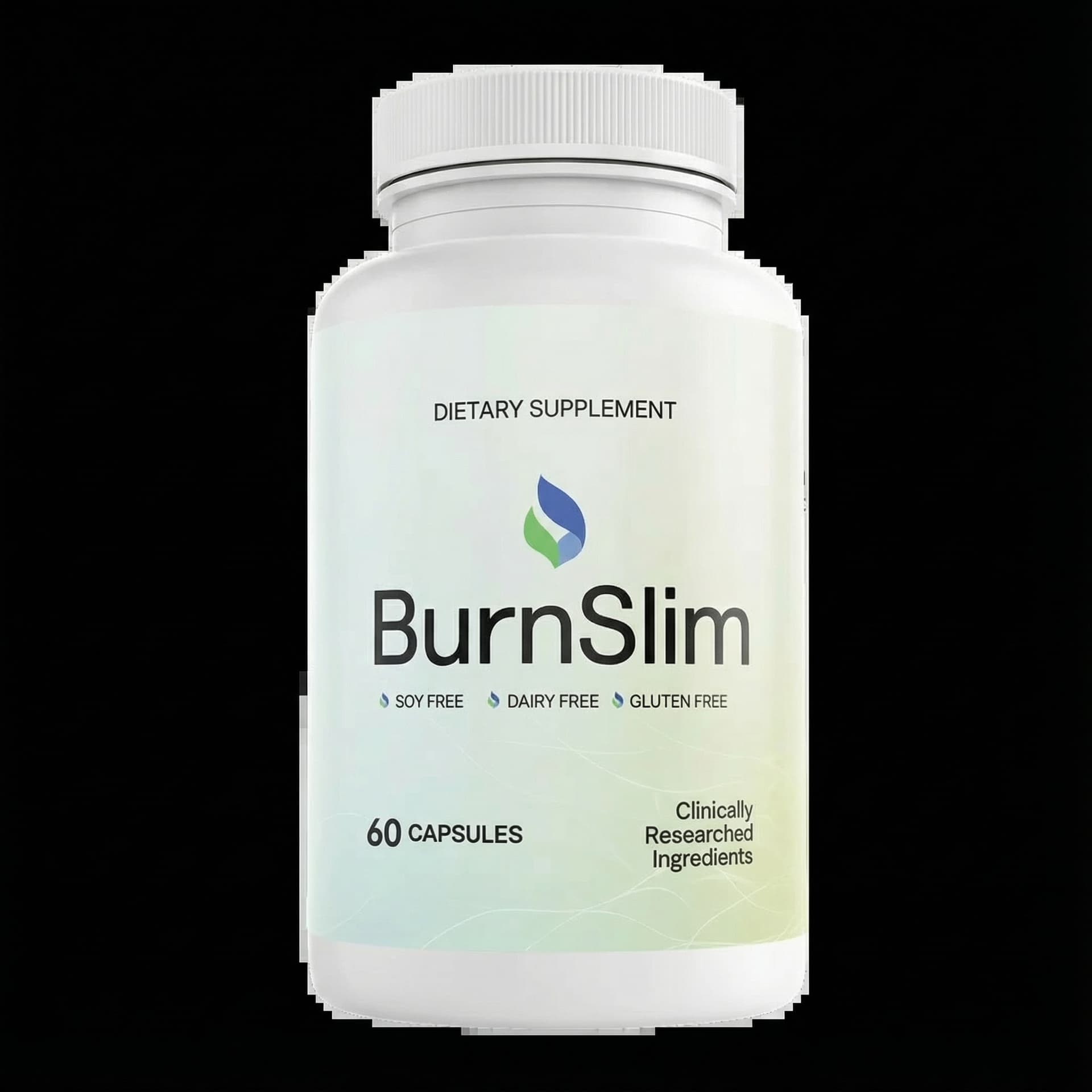
Gelatin Trick - BurnSlim appears to be positioned less as a conventional supplement and more as a bridge between a viral home recipe and a monetized weight-loss solution. The transcript repeatedly calls the method a gelatin trick, a gelatin recipe, and bariatric gelatin. It describes a simple mixture of gelatin, lemon, and apple cider vinegar, then surrounds that mixture with a broader BurnSlim promise: rapid fat loss, hormonal balance, metabolic improvement, and celebrity-level transformation. The product identity is intentionally slippery. At the top of the pitch, the viewer is not being sold a bottle. The viewer is being invited into a secret recipe that allegedly went viral and was missed by people who did not see the original video.
That structure matters. A recipe-first VSL lowers resistance. A viewer may distrust diet pills, but a kitchen trick sounds harmless, familiar, and cheap. Gelatin is something many people associate with desserts, collagen, joint support, or old-fashioned home food. Lemon and apple cider vinegar already live in folk-health culture. By starting with household ingredients, the script makes the mechanism feel accessible before any commercial offer arrives. Then the term bariatric gelatin quietly raises the perceived medical grade of the concept. Bariatric is a powerful word because it evokes obesity medicine and weight-loss surgery, even though the transcript does not define what makes this gelatin bariatric or how it differs from ordinary gelatin.
The VSL also frames BurnSlim as an alternative to three categories viewers may already distrust: diets, injections, and complicated exercise plans. The phrase no meds, workouts, or injections is repeated in substance across the excerpt. The viewer is told they can continue eating pizza and drinking hot chocolate, which is not a nutritional detail so much as a psychological release valve. It tells the audience that success will not require becoming a different person.
For affiliates, the practical takeaway is that the offer is probably selling transformation before product facts. The transcript does not provide the final supplement facts panel, dose, manufacturer, refund terms, clinical evidence, or safety limitations. It sells a story: a doctor discovers a dismissed kitchen method, sees research from prestigious institutions, shares it with celebrities, and now reveals it to ordinary women. That story may be commercially effective, but it also means due diligence cannot stop at the VSL. Anyone promoting it would need to verify the actual BurnSlim formulation, label claims, order flow, billing practices, refund policy, fulfillment entity, testimonial rights, and substantiation file. Without that backend evidence, Gelatin Trick - BurnSlim is best analyzed as a persuasive campaign, not as a proven weight-loss protocol.
3. The Problem It Targets
The obvious problem in the VSL is weight loss, but the deeper problem is loss of control. The script does not merely say viewers want to be thinner. It says they have already tried to be disciplined and still failed. That is why the Kelly Clarkson segment, whether authorized or not, is so central to the persuasion. In the transcript, Kelly is made to say she woke up at 5 a.m. to work out, ate healthy, avoided sweets, stayed away from fast food, barely drank, and still watched the scale go up. That is the emotional core of the pitch: the audience is not lazy, weak, or uninformed. The audience is stuck because the usual rules have allegedly betrayed them.
The VSL narrows that frustration to a specific demographic: women over 35 and mothers. This is a smart and familiar health-copy move. Women in this age range may be dealing with postpartum changes, perimenopause, sleep disruption, stress, medication changes, thyroid concerns, insulin resistance, or simply years of failed diet attempts. The transcript names bloating, tiredness, and feeling stuck, which are broad enough for many viewers to recognize themselves. It also says the trick works faster for women over 35 and moms, which turns a demographic anxiety into an advantage. Instead of telling older women they are harder to help, the VSL says they are exactly the people for whom the secret works best.
The pitch also targets resentment. Injections are presented as expensive, unpleasant, and inferior. Diets are treated as incompatible with real life. Workouts are implied to be burdensome or ineffective. Doctors are portrayed ambivalently: some charge a fortune and fail, while Dr. Ashton is positioned as the rare insider who reveals the simple answer. That creates a useful contrast for direct response. The audience does not need more willpower; they need the one missing mechanism that experts and celebrities supposedly already know.
There is also a body-image problem under the medical language. The opening uses bikini pictures, clothes no longer fitting, mirror approval, and celebrity transformations. The viewer is not only promised better biomarkers. She is promised a visible before-and-after that other people will notice. That matters because the VSL is selling speed. A slow, clinically sensible 5% weight reduction would not support the same fantasy. The offer needs the viewer to believe that a dramatic visual change can happen in days or weeks.
This is where the pitch becomes most vulnerable. The emotional problem is real: many people do struggle with weight despite effort, and women in midlife are often underserved by simplistic diet advice. But the VSL turns that valid frustration into an extreme claim. The more compassionate version of this message would acknowledge complex physiology and encourage medical guidance. The BurnSlim version suggests a gelatin-based trick can bypass the hard parts. That is the central tension of the whole campaign.
4. How It Works: The Proposed Mechanism
The proposed mechanism is deliberately vivid but scientifically underdeveloped. The transcript says the gelatin trick will trigger a fat burn process inside the body that quickly sheds unwanted body fat. It also claims Dr. Ashton has spent her career helping patients improve metabolic health, balance hormones, reduce body fat, and restore the body to a better state. Those phrases create the impression of a biological pathway, but the VSL excerpt does not actually identify one. It does not explain whether gelatin is supposed to affect GLP-1, insulin sensitivity, gastric emptying, appetite hormones, bile acids, gut microbiota, thermogenesis, water retention, or calorie intake. It simply moves from ingredient to outcome.
That vagueness is not accidental. A precise mechanism invites precise scrutiny. If the script claimed that gelatin increases satiety and helps some people eat fewer calories, the promise would become modest and conditional. Instead, it uses language such as melt fat, trigger fat burn, clinically proven, and lose 16 pounds in 10 days. These phrases suggest direct physiological action without requiring the viewer to understand or verify the pathway. For a cold audience, that can feel more exciting than a careful explanation. For compliance, it is a problem.
The most plausible benign explanation is appetite management. Gelatin is a protein-derived gelling agent. A gelatin drink or gel could add volume and texture before meals, and protein can contribute to fullness. Apple cider vinegar may slightly affect post-meal glucose response or appetite for some people, although evidence is inconsistent and usually modest. Lemon mostly contributes flavor and acidity. None of that supports the claim that a person can keep eating freely and lose 1.5 pounds per day of body fat. At most, the ingredients could be part of a lower-calorie routine if they replace higher-calorie foods or make it easier to eat less.
The VSL does not present it that way. It repeatedly separates the method from diet and exercise. The viewer is told not to worry about pizza or hot chocolate and is reassured that the method works without medication, workouts, injections, or crazy diets. The mechanism is therefore not positioned as behavioral support. It is positioned as metabolic override. That is a much larger claim.
Another issue is the use of bariatric language. Bariatric care is a serious medical field involving structured treatment, monitoring, and sometimes surgery or prescription medication. Calling a gelatin mixture bariatric gelatin borrows that seriousness, but the transcript does not define a clinically recognized product category. If BurnSlim uses that phrase in paid media, the advertiser should be prepared to show exactly what it means and why consumers would not reasonably infer medical endorsement or surgical-level efficacy.
In short, the mechanism as stated is more copy device than proof. It gives the audience a reason to believe without supplying a testable explanation. That is effective storytelling, but it is not enough for a weight-loss claim of this magnitude.
5. Key Ingredients & Components
The named recipe components are gelatin, lemon, and apple cider vinegar. On the surface, that triad is familiar and low-friction. Gelatin gives the trick its novelty and texture. Lemon gives it freshness and a wellness cue. Apple cider vinegar gives it a long history in weight-loss folklore. Together they sound like something a viewer could make in a kitchen, which is exactly the point. The ingredients are ordinary enough to feel safe, but unusual enough in combination to feel like a discovery.
Gelatin is the hero ingredient in the script. It is repeated as the trick, the recipe, and the bariatric gelatin. In practical terms, gelatin is derived from collagen and forms a gel when prepared correctly. It can make a drink or food feel more substantial. That may help explain why gelatin is a believable anchor for a satiety story. But the VSL does not stop at satiety. It implies rapid fat melting, celebrity transformations, and clothing-size changes so dramatic that viewers may need to stop using it. Those are not ingredient claims; they are outcome claims, and outcome claims require evidence.
Lemon functions mostly as a credibility garnish. It makes the recipe sound clean, bright, and detox-adjacent without requiring the script to use the word detox. Lemon water is a common wellness ritual, so adding lemon helps viewers map the unfamiliar gelatin idea onto something they already recognize. But lemon juice does not create a known pathway for losing 21 to 25 pounds in two weeks. It can make an acidic drink more palatable; it cannot carry the promise.
Apple cider vinegar is the most research-adjacent ingredient because there are human studies on vinegar and metabolic markers. But even favorable findings are not a license for this pitch. The available evidence generally concerns small to moderate changes over weeks, often with diet context, not dramatic daily fat loss while eating without restraint. Vinegar can also irritate the throat or stomach and may be inappropriate for some people depending on medical conditions, dental concerns, or medications. A responsible VSL would acknowledge those limits. This transcript does not.
There are also non-ingredient components that matter just as much: the celebrity references, the doctor identity, the institutions named, the before-and-after imagery implied by bikini pictures and clothes not fitting, and the special gift withheld until the end. In this VSL, proof is treated like an ingredient. Harvard, Johns Hopkins, ABC News, Kelly Clarkson, Adele, and Rebel Wilson are mixed into the formula to make the recipe feel validated. That is why the offer must be judged on two levels: what the physical ingredients can plausibly do, and what the proof ingredients are being used to imply.
- Most plausible ingredient benefit: possible fullness support if the preparation displaces calories.
- Most exaggerated ingredient promise: rapid fat melting without diet, exercise, medication, or meaningful behavior change.
- Most important due diligence gap: the actual BurnSlim formulation and dose are not established in the excerpt.
6. Persuasion Hooks & Ad Psychology
The VSL's biggest hook is numerical specificity. It does not merely promise fast weight loss. It says 28 pounds after pregnancy, 21 to 25 pounds in two weeks, 1.5 pounds per day, 31 pounds in 21 days, 16 pounds in 10 days, 54 pounds in three months, and over 60 pounds for Kelly Clarkson. Specific numbers make a claim feel witnessed rather than invented. They also give the viewer a mental calculator. If she stays through the video, she is not just learning about a supplement; she is imagining what date on the calendar might correspond to a new body.
The second hook is social leakage. The transcript says the trick is going viral, that celebrities leaked it, that many people missed the original video, and that the speaker decided to share it again. That framing makes the viewer feel late but lucky. She is not watching an ad; she is catching a second chance. This is a common VSL move because it creates urgency without needing a coupon timer. The information itself is treated as scarce.
The third hook is permission. The line about pizza and hot chocolate is more than a casual aside. It neutralizes the main objection to weight loss: deprivation. Most health offers promise a better body but demand a worse daily life. This pitch promises both the better body and the familiar pleasures. In direct response terms, that is powerful. In compliance terms, it is dangerous because the FTC has long treated substantial weight loss regardless of food intake as a classic false-claim pattern when not properly substantiated.
The fourth hook is the skeptical expert conversion. The doctor figure says she thought the gelatin trick was a joke until seeing research from Harvard and Johns Hopkins. This is an efficient persuasion pattern because the pitch borrows the audience's skepticism and then resolves it. The viewer thinks, If even the doctor doubted it and became convinced, maybe I can believe it too. But the script does not name the research, which means the conversion story works emotionally while leaving the evidentiary burden unmet.
The fifth hook is celebrity confession. The Kelly Clarkson section is written like a backstage monologue: public smiles, private tears, cruel comments, disciplined routines, failed doctors, and finally the breakthrough. This converts a mass-market celebrity into a stand-in for the viewer. The audience is invited to think that if a wealthy, famous, highly scrutinized person could not solve the problem through ordinary channels, then their own failure is not shameful.
For copywriters, the lesson is not to copy the claims. The lesson is to study the architecture: visible result, named audience, failed alternatives, skeptical authority, secret mechanism, social proof, and delayed reveal. Those elements can be used responsibly. Here, they are attached to promises that require far more proof than the transcript provides.
7. The Psychology Behind The Pitch
The psychological engine of this VSL is absolution. Many weight-loss ads shame the viewer indirectly by implying she has not tried hard enough. This script does the opposite. It says the viewer may have tried everything, done the workouts, eaten carefully, avoided sweets, paid doctors, and still failed. That is emotionally intelligent copy because it removes defensiveness. The viewer does not have to confess laziness to keep watching. She can keep her self-respect and accept the premise that the missing piece was hidden from her.
That absolution is paired with identity targeting. Women over 35 and moms are told the method works faster for them. This is a clever inversion of a common fear. Many women believe age, hormones, childbirth, stress, or menopause make weight loss harder. The VSL turns those markers into a reason for optimism. It says the audience's perceived disadvantage is actually the best-fit profile. That is one of the strongest pieces of positioning in the script, and it explains why the promotion may have strong click-through even among skeptical viewers.
The pitch also uses parasocial trust. When a viewer hears names like Kelly Clarkson, Adele, Valerie Bertinelli, Rebel Wilson, and Megyn Kelly, she does not process them as anonymous case studies. She has years of impressions, interviews, songs, shows, headlines, and social media moments attached to those people. The VSL tries to import all of that familiarity into BurnSlim. A celebrity claim collapses distance. Instead of asking whether a random testimonial is credible, the viewer is invited to feel that a known person has already vetted the answer.
Another psychological lever is anti-complexity. Weight management is biologically and behaviorally complex, but the VSL offers a single recipe. That simplicity is comforting. The viewer does not have to think about protein intake, sleep, calorie density, medications, insulin resistance, strength training, emotional eating, or medical evaluation. She only has to learn the trick. This is where simplicity becomes a double-edged sword. It improves comprehension, but it can flatten reality into a promise the product cannot keep.
The script also creates a moral contrast between insiders and outsiders. The alleged insiders are celebrities, Dr. Ashton, and institutions such as Harvard and Johns Hopkins. The outsiders are everyday women who missed the original video or wasted money on injections. The VSL positions itself as the bridge between the two worlds. The viewer is being let in.
Finally, the pacing creates commitment. The line that every second determines how many pounds the viewer will lose is not rational; it is behavioral. It makes leaving the video feel costly. That is an attention-retention tactic dressed as health urgency. It may improve watch time, but it also shows how heavily the pitch relies on pressure rather than transparent evidence.
8. What The Science Says
The science does not support the VSL's most dramatic claims as stated. The CDC's weight-loss guidance emphasizes gradual, steady loss of about 1 to 2 pounds per week and warns that unrealistic goals, including 20 pounds in two weeks, can be discouraging. That does not mean nobody ever sees a rapid drop on a scale. Early weight changes can include water, glycogen, digestive contents, and shifts from lower sodium or lower carbohydrate intake. But the VSL is not selling a nuanced scale-weight discussion. It is implying rapid body-fat loss at roughly 1.5 pounds per day while keeping favorite foods. That is an extraordinary claim.
Apple cider vinegar has some human research, but the evidence is not strong enough to justify the BurnSlim-style promise. A PubMed-indexed systematic review on apple vinegar concluded that, because high-quality evidence was inadequate, firm conclusions about health effects could not be made. More recent analyses have explored possible modest short-term effects, but modest adjunctive support over weeks is very different from 16 pounds in 10 days or 54 pounds in three months without meaningful lifestyle change. Even if vinegar helps some people with appetite or metabolic markers, it does not suspend energy balance.
Gelatin is more plausible as a satiety aid than as a fat-burning switch. A gelatin-based preload could make a person feel fuller, especially if it replaces a snack or precedes a lower-calorie meal. Protein and volume can matter. But the VSL does not frame the recipe as a practical way to reduce intake. It says the method triggers a fat burn process and works without dieting. That is the leap where the science falls away. Lemon is even weaker as a weight-loss driver. It can improve flavor, provide acidity, and make a drink feel fresher, but it has no credible evidence base for dramatic fat loss.
The VSL also invokes Harvard and Johns Hopkins without giving a citation. That is a classic proof aura: named institutions are used to create confidence while the viewer is not shown the underlying study. For a legitimate health claim, the advertiser should be able to produce study titles, researchers, publication dates, dosages, subject populations, endpoints, adverse-event reporting, and relevance to the exact product being sold. Without that chain, the institutional references are unsupported.
The FTC's Gut Check guidance is especially relevant because the transcript contains several patterns regulators have historically treated as suspect: substantial weight loss without diet or exercise, weight loss no matter what the consumer eats, and results that appear broadly available to all users. The scientific issue and the advertising issue point in the same direction. A gelatin, lemon, and vinegar routine may be low-cost and may help some users feel more structured, but the VSL's headline outcomes are not established by the evidence presented.
9. Offer Structure & Urgency Mechanics
The excerpt does not show the full checkout sequence, so we cannot responsibly evaluate the final price stack, upsells, subscription terms, or refund performance. But the VSL gives enough signals to understand the offer structure. It begins as a free recipe reveal, builds authority and desire, then promises a special and exclusive gift that the viewer must stay until the end to receive. That is classic long-form sequencing: educate just enough to create curiosity, withhold the operational detail, and make the final section feel like access rather than purchase.
The urgency is not primarily a countdown timer. It is narrative urgency. The recipe is described as viral, leaked, missed, shared again, and tied to celebrity transformations that the media supposedly does not want viewers to know. The viewer is made to feel that the information has a short shelf life. If she leaves, she may not find the original video again. If she stays, every second supposedly affects how many pounds she will lose in the coming days. That is a strong retention device, but it is also manipulative when attached to health outcomes.
The VSL also uses gift mechanics to defer scrutiny. When a speaker says an exclusive gift is coming, the viewer postpones judgment. She may ignore missing details about dosage, product safety, or evidence because the next reveal promises to resolve the uncertainty. For affiliates, this is important when reviewing EPC numbers. A high-converting VSL may be converting through delayed disclosure and pressure, not through a clear product-market fit. That can produce refunds, chargebacks, ad-account risk, and brand damage later.
The likely offer ladder is built around problem escalation. First, the viewer is shown the desired result: rapid loss after pregnancy or after midlife weight gain. Second, she is told ordinary solutions fail: diets, doctors, injections, workouts. Third, she is told the gelatin recipe is simple but powerful. Fourth, she is introduced to authority and celebrities. Fifth, she is kept watching for the exact recipe, special gift, or product path. By the time a bottle, guide, or bundle appears, the audience has already accepted the emotional premise.
What is missing is the responsible counterweight. A compliant offer would place clear limitations near the claims: typical results, the need for calorie control, who should avoid the ingredients, whether testimonials are compensated or dramatized, and whether celebrity references are authorized. The transcript instead leans into maximal certainty. Phrases such as works for everyone, clinically proven, and no yo-yo weight gain are broad claims. If they appear in paid media or affiliate presell pages, they should be backed by competent and reliable scientific evidence specific to BurnSlim or removed.
As offer design, the sequence is commercially sophisticated. As health marketing, the urgency mechanics increase risk because they pressure viewers before the product facts are visible.
10. Social Proof & Authority Claims
The social proof in this VSL is unusually dense. Instead of relying on one testimonial type, it layers five categories: celebrity names, doctor identity, institutional research, demographic proof from women in their 50s and 60s, and personal before-and-after-style claims. Each category reinforces the others. Celebrity stories create aspiration. Doctor credentials create permission. Harvard and Johns Hopkins create scientific seriousness. Older women create audience relevance. Bikini pictures and loose clothing create visual proof. The result is a proof wall that can feel overwhelming to a viewer, even if each individual brick remains unverified.
The doctor authority is especially central. The transcript identifies Dr. Jennifer Ashton as a board-certified OB-GYN, Columbia graduate, and ABC News chief medical correspondent, then has her claim more than 20 years of experience helping patients with metabolic health, weight loss, and hormones. That credential stack is designed to answer the viewer's internal objection: Is this just another internet trick? The answer supplied by the VSL is no, because a credentialed physician allegedly believes it. But an advertiser cannot simply borrow a real doctor's public identity and place claims in her mouth. The promoter needs authorization, accurate titles at the time the ad runs, and substantiation for the exact claims made.
The celebrity claims are even more sensitive. The transcript says the trick went viral after Valerie Bertinelli and Adele leaked it, then later claims the same gift was given to Rebel Wilson, Kelly Clarkson, and Megyn Kelly. It also includes a first-person Kelly Clarkson testimonial-style segment. Those are high-value endorsements if true and high-risk misrepresentations if not. The FTC has warned that fake celebrity endorsements, including doctored audio or video, are used to sell weight-loss products. For an affiliate, the due diligence standard should be simple: no written rights, no run.
There is also a mismatch between fame and evidence. A celebrity's weight change does not prove a product caused it. Public figures may use medical care, diet changes, walking, training, surgery, medication, stress changes, or private interventions they do not fully disclose. Even a genuine testimonial would not establish typical consumer results. The transcript tries to make celebrity transformation transferable to the viewer, but that transfer requires proof.
The institutional claims have the same problem. Harvard and Johns Hopkins are invoked as confirming everything, yet no paper is named in the excerpt. That is not enough. If a VSL uses elite institutions, it should connect them to specific research and explain relevance to the actual formula. Otherwise, the institutions function as borrowed prestige.
From a copy standpoint, the authority stack is potent. From a compliance standpoint, it is the section most likely to create trouble. The stronger the borrowed names, the stronger the documentation needs to be.
11. FAQ & Common Objections
Does the gelatin trick actually burn fat? The transcript does not prove that it does. Gelatin may help some people feel fuller if used as part of a lower-calorie routine, but the VSL's stronger claim is that it triggers a fat-burning process that rapidly sheds unwanted body fat. That mechanism is not demonstrated in the excerpt.
Is losing 21 to 25 pounds in two weeks realistic? It is not a responsible general promise. Some people can see rapid scale movement under extreme conditions, but public-health guidance points toward slower, steadier loss for sustainability. A claim of 1.5 pounds per day should be treated as extraordinary and should require extraordinary evidence.
Can someone keep eating pizza and drinking hot chocolate? The VSL uses those foods to remove fear of deprivation. In real physiology, energy intake still matters. If those foods fit within an overall calorie deficit, weight loss may occur. If they add surplus calories, a gelatin drink does not override that surplus.
Is apple cider vinegar proven for weight loss? Evidence is mixed and generally modest. Some studies suggest possible short-term effects on weight or metabolic markers, while systematic reviews have emphasized limitations in research quality. It should not be presented as a stand-alone solution for dramatic weight loss.
Is this safe for postpartum women or women over 35? The transcript speaks directly to mothers and women over 35, but it does not provide medical screening guidance. Postpartum women, people with diabetes, gastrointestinal conditions, eating-disorder history, dental enamel concerns, kidney disease, or medication interactions should seek professional advice before using acidic vinegar routines or aggressive weight-loss protocols.
Are the celebrity endorsements reliable? Not based on the excerpt alone. The VSL uses many famous names and a first-person celebrity-style monologue. Affiliates should demand written proof of authorization and should not assume a voiceover, edited clip, or testimonial segment is genuine.
What should copywriters learn from this VSL? The positioning is worth studying: it identifies a frustrated subgroup, validates their effort, creates a simple mechanism, contrasts against failed alternatives, and delays the reveal. The claims themselves should not be copied unless they can be substantiated.
Would Daily Intel recommend promoting it? Not on the transcript alone. The VSL needs documentation for its medical, scientific, celebrity, and typical-results claims. Without that, the campaign carries material compliance and reputation risk.
- Best objection handling: it anticipates diet fatigue and injection skepticism.
- Weakest objection handling: it does not adequately address safety, typical results, or proof.
- Affiliate action item: request substantiation before buying traffic.
12. Final Take
Gelatin Trick - BurnSlim is a sharp, emotionally calibrated VSL built around a simple promise: a household recipe can unlock fast, visible weight loss for women who feel failed by diets, doctors, and injections. As direct response writing, it has several strengths. The opening is immediate. The audience is specific. The emotional pain is recognizable. The script uses skepticism, celebrity familiarity, institutional prestige, and a delayed reveal to keep viewers engaged. It understands that many weight-loss buyers are not looking for another lecture about discipline. They want an explanation that preserves their dignity and gives them a concrete next step.
That is the charitable read. The critical read is that the VSL repeatedly crosses from persuasion into claims that are not supported by the evidence shown in the transcript. Losing 21 to 25 pounds in two weeks, dropping 1.5 pounds per day, melting fat without diet or workouts, working for everyone, and producing celebrity-level transformations are not casual marketing lines. They are objective health and performance claims. They require competent evidence. The transcript offers names and confidence, but not the underlying proof.
The celebrity and doctor elements are the biggest business risk. If the endorsements are authorized and accurately represented, the advertiser should have documentation. If they are not, affiliates could be participating in a misleading campaign even if they never write the claims themselves. The same applies to the Harvard and Johns Hopkins references. Prestigious names cannot be used as atmosphere. They need to connect to specific research that supports the actual claim consumers are hearing.
For copywriters, the best lesson is structural, not literal. The VSL shows how to dramatize a problem, validate a frustrated audience, and make a mechanism feel simple. Those skills are valuable. But the safer and more durable version of this campaign would reduce the promise, define the mechanism, show real formulation details, disclose typical results, remove unauthorized celebrity implications, and position the product as support for a broader weight-management plan rather than a no-effort fat-loss trigger.
For affiliates, Daily Intel would treat Gelatin Trick - BurnSlim as a do-not-run until proven offer. Before sending traffic, ask for the substantiation file, testimonial releases, celebrity authorization, current medical-title verification, product label, adverse-event policy, refund metrics, and compliant claims guide. If those materials are missing, the EPC is not the real number. The real number includes chargebacks, account bans, legal exposure, and audience trust.
Final verdict: the VSL is commercially sophisticated but evidentially weak as presented. It may teach useful lessons about attention and emotional positioning, but its central weight-loss claims should be treated as unsupported unless the advertiser can produce strong, product-specific proof.
Source-backed reader context
Additional Reviews & Reported Experiences
These statements were presented in the product's sales transcript. Daily Intel did not independently verify the speakers, purchase status, or reported outcomes, and the statements are not used in Product aggregateRating.
VSL proof excerpt 1
Date not stated
When I say I lost 61 pounds just by doing a simple trick with gelatin once a day, no one believes me.
VSL proof excerpt 2
Date not stated
But in just two and a half months, without dieting, eating everything I wanted, without exercising, and without taking any medication, I lost 61 pounds using just this simple and delicious gelatin trick every morning.
VSL proof excerpt 3
Date not stated
My belly flattened in just 10 days and I had to stop.
VSL proof excerpt 4
Date not stated
It's been 10 days since I started doing my little gelatin trick every morning and I've already lost 12 pounds.
VSL proof excerpt 5
Date not stated
I don't know what you've discovered, Dr. Jen, but it seems like a miracle.
VSL proof excerpt 6
Date not stated
I lost 31 pounds in just 45 days using only gelatin and three other ingredients.
VSL proof excerpt 7
Date not stated
I used to feel uncomfortable even at red carpet events carrying all that extra weight.
VSL proof excerpt 8
Date not stated
But with just a few ingredients, I did the gelatin trick every morning and lost the 25 pounds I had gained after filming Cats in just 38 days.
VSL proof excerpt 9
Date not stated
I finally regained my confidence and my sparkle.
VSL proof excerpt 10
Date not stated
On the first day, I woke up with insane energy and a feeling of satiety so strong that I literally forgot about food.
Comments(0)
No comments yet. Members, start the conversation below.
Related reads
- DISvsl reviews
Gelatin Trick - Burn Peak Review: A Deep VSL Breakdown
A close editorial analysis of the Gelatin Trick - Burn Peak VSL, including its belly-fat demo, GLP-1 framing, authority claims, social proof, science gaps, and affiliate risk.
Read - DISvsl reviews
Saltburn Review: Pink Salt Weight Loss VSL Analysis
A close editorial review of the Saltburn pink salt VSL, covering its mechanism claims, celebrity-style proof, GLP-1 comparisons, science gaps, and affiliate risk.
Read - DISvsl reviews
Gelatin Protocol Review: A Deep VSL Breakdown for Affiliates
A close editorial review of the Spanish-language Gelatin Protocol VSL, including its celebrity-driven hooks, weight-loss claims, urgency devices, and evidence gaps.
Read