NervoVive Review: Prêmio Nobel que Elimina a Dor Ciática VSL
A Daily Intel breakdown of the NervoVive sciatica VSL, including its authority cues, acid-blood mechanism, ingredient reveal, proof gaps, and affiliate risk.
8,226+
Videos & Ads
+50-100
Fresh Daily
$29.90
Per Month
Full Access
12.5 TB database · 72+ niches · 21 min read
Introduction
The Prêmio Nobel que Elimina a Dor Ciática - NervoVive VSL does not begin like a supplement ad. It begins like a health segment. A host talks directly about sciatica as a huge pain in the butt, then widens the pain map to the back, legs, and lower body. That opening matters. It uses plain language before it uses mystery. The viewer is not being asked to understand a formula yet; they are being asked to recognize their own body in a familiar complaint.
The first credible object in the scene is not a bottle. It is a physical therapist, Peggy Brill, presented as someone who has actually treated the host. The VSL has her perform small, observable tests: walking on the heels, walking on the tippy toes, bending forward, bending backward, and standing on one leg while she watches hip drop and balance. For a sciatica sufferer, this is disarming. It feels practical. It feels like clinic-room triage. It also lets the script borrow the authority of movement assessment before the pitch changes direction.
That turn comes quickly. After the gait and balance checks, the video moves to a no pill pain solution and a seven second quick relief ritual built around breakfast foods: pineapple, banana, coconut milk, and three unnamed homemade ingredients. The copy says Harvard, Cambridge, and thousands of studies support a new discovery that can strengthen nerves. It then brings in Teresa, a viewer with sciatica, who describes moderate pain becoming severe burning and aching from the lower back through the buttock and down the leg. After the ritual, she says she can walk and live her life.
Then the VSL leaves the modest world of movement tests and enters a much larger story: frayed cords, toxic metabolism, acidic blood, abnormal cells feeding on nerves, doctors who ignore the real cause, pharmaceutical-industry corruption, amputation, wheelchairs, and a doctor who supposedly found the natural ritual that cleanses the body and activates a nerve-rebuilding supernutrient. This is the core tension of the ad. The front end is concrete and credible. The mechanism is dramatic and weakly supported.
For affiliates and copywriters, NervoVive is worth studying because it shows how a pitch can move from a legitimate pain pattern into a sweeping hidden-cause narrative. The copy is emotionally precise about sciatica. It understands the misery of burning, tingling, cramping, and losing trust in ordinary treatments. But its most aggressive claims require evidence the transcript does not provide. This review treats the VSL as a persuasion asset, not as medical advice, and separates what is commercially strong from what is scientifically and legally fragile.
What Prêmio Nobel que Elimina a Dor Ciática - NervoVive Is
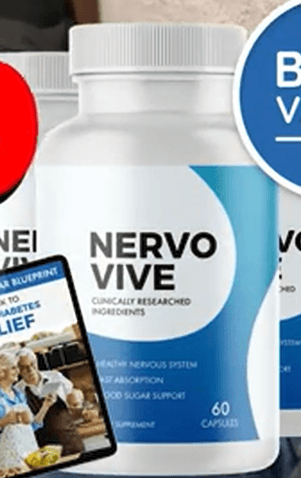
Based on the transcript, Prêmio Nobel que Elimina a Dor Ciática - NervoVive is best understood as a direct-response health VSL for a natural sciatica or nerve-pain offer. The product name uses a Portuguese Nobel Prize frame, while the video excerpt uses an English-language health-show format. That blend is revealing: the campaign wants to feel both globally prestigious and domestically familiar. It is not merely selling relief. It is selling the idea that the viewer has stumbled onto a suppressed discovery that mainstream care missed.
The VSL initially presents the solution as a no pill pain solution, which is unusual if the downstream offer is NervoVive as a supplement. The excerpt itself does not show a bottle label, dosage panel, certificate of analysis, or complete ingredient list. Instead, the first tangible solution is a homemade ritual involving common foods. This is a classic bridge device. The viewer is invited into the pitch through something low-friction and kitchen-based before being introduced to the larger mechanism and, presumably, the paid offer.
The product positioning is therefore not just nerve support. It is a whole explanatory system. The viewer is told that sciatica may not be caused by old age, tight muscles, spinal disorders, bulging discs, disc degeneration, or spinal stenosis. Those familiar explanations are repositioned as incomplete or misleading. In their place, the VSL offers toxins, acid in the blood, abnormal cells, and nerve damage resembling a frayed rope. NervoVive appears to occupy the role of the natural answer to that hidden cause.
That structure is more important than the product category. The pitch is not saying, in a cautious supplement way, that certain nutrients may support normal nerve function. It is saying the viewer's pain may come from a neglected metabolic danger and that a simple ritual can restore nerve health. The difference is not semantic. One is a structure-function support claim. The other moves toward disease treatment language: stop burning, fix acidic blood, rebuild nerves, prevent progression, avoid amputation, and escape the wheelchair scenario.
In Daily Intel terms, NervoVive is a high-emotion, high-risk health funnel. Its strongest assets are the opening demonstration, the plain-spoken pain language, and the sense that relief can start at home. Its weakest asset is transparency. The excerpt asks for trust before showing enough detail to evaluate the claim. No named clinical trial is provided. The referenced Harvard and Cambridge support remains vague. The supernutrient is not identified. The three additional homemade ingredients are withheld. If an affiliate is considering this offer, those omissions should be treated as due diligence triggers, not as harmless suspense.
The Problem It Targets
The VSL targets sciatica first, but it does not stay inside sciatica. It opens with the host saying almost half of viewers will experience it at some point, while the therapist says 85 to 90 percent of people have sciatica at some point in life. Those are not small framing choices. They turn a specific pain syndrome into an almost universal future threat. Anyone watching with back or leg pain is encouraged to see themselves as part of the audience.
The symptoms are described vividly and repeatedly. Teresa's pain starts moderate, then becomes a severe burn and intense aching from the lower back to the right side of the buttock and down the leg. Later, the narrator lists tingling, wriggling, burning, and cramping. The phrase searing pain in the back, hips, buttocks, and legs keeps the pain geography broad. This is commercially smart because sciatica sufferers often have mixed symptoms and do not always know whether their pain is disc-related, muscular, nerve-root-related, or something else.
The emotional problem is just as important as the physical one. Teresa says she does not like medications and is more of a naturalist. The pitch uses that sentence to select its ideal prospect: someone in pain, skeptical of drugs, and interested in an at-home solution that does not feel like another prescription. The host reinforces this by calling the answer a no pill pain solution. That phrase lowers resistance among viewers who have tried medication, fear side effects, or feel ignored by conventional care.
After establishing sciatica, the VSL broadens into neuropathy. It warns that ignoring the problem can let it spread throughout the body, moving from burning in the hand, legs, or back to generalized neuropathy. Then it invokes diabetes, amputation, and life in a wheelchair. This is the most consequential expansion in the script. Sciatica, diabetic neuropathy, and generalized neuropathy can overlap in the lived experience of nerve pain, but they are not interchangeable conditions. The pitch benefits from blending them because the fear becomes bigger than back-and-leg pain.
For copywriters, the problem stack is clear: pain, failed solutions, mistrust, hidden cause, catastrophic future. The viewer is not only suffering now; they are told they may be on a path toward dependency. The VSL's commercial leverage comes from making ordinary sciatica feel like an early warning sign of systemic nerve collapse. That is a powerful hook, but it needs evidence. Without a clear diagnostic boundary, the pitch risks turning every form of nerve discomfort into a single sales problem. That may convert, but it also creates medical and compliance exposure.
How It Works
The proposed mechanism in the NervoVive VSL has several layers. First, the viewer is told that the solution activates a supernutrient. Second, the supernutrient supposedly strengthens nerves and helps stabilize the lower back. Third, the deeper cause is described as toxins spreading through the metabolism and creating high levels of acid in the body. Fourth, acidic blood allegedly creates the perfect environment for abnormal cells that feed off nerves. Finally, the ritual is said to fix the acidic blood, cleanse the body, and activate a nerve-rebuilding process.
As persuasion, this mechanism is dramatic. It gives the viewer a villain, a visual, and a reversal. The villain is not a disc, age, tight muscle, or spinal stenosis. The visual is the frayed cord that explains why the sciatic nerve hurts. The reversal is that doctors have been looking in the wrong place. Instead of treating the spine or muscles, the VSL says the real answer is metabolic cleansing and nutrient activation.
The problem is coherence. Sciatica is usually described clinically as pain caused by irritation, compression, or injury involving the sciatic nerve or related nerve roots. The transcript acknowledges familiar structural causes such as bulging disc, degeneration, and spinal stenosis, but then suggests they may be distractions. It does not show how acidic blood would selectively create classic one-sided sciatic pain from the lower back into the buttock and leg. It also does not explain how a breakfast ritual would reverse nerve injury within hours, or why the same mechanism would cover both sciatica and diabetic neuropathy.
The abnormal-cells language is especially concerning. The phrase is vague enough to sound biological without committing to a defined pathology. Are these inflammatory cells, cancer cells, immune cells, or something else? The VSL says they feed off nerves and hijack nerves through the bloodstream, but no named disease process is supplied. This is pseudo-specific copy: it has the texture of science, but not the accountability of a testable claim.
The acid-blood claim also does heavy emotional work. Acidic blood sounds urgent, systemic, and dangerous. In real medicine, meaningful blood acid-base problems are not casual wellness states; they are clinical conditions evaluated with lab testing and treated according to cause. The VSL uses acid as a metaphor for internal corruption and as a mechanism for pain. Those are very different things. If the product intends to claim that it corrects blood acidity, the burden of proof is high.
For affiliates, the safest reading is this: the VSL's mechanism is a sales narrative, not a demonstrated model. Its job is to make natural relief feel necessary and novel. Before repeating it in ads, emails, or advertorials, an affiliate would need documentation for each material claim: the supernutrient's identity, the dose, the biological pathway, the outcome measures, the time frame, and controlled human evidence in sciatica patients.
Key Ingredients & Components
The excerpt names only three food items clearly: pineapple, banana, and coconut milk. It also refers to three other homemade ingredients, but does not identify them. That withholding is not accidental. It creates an open loop. The viewer is told the answer is ordinary enough to come from breakfast, but incomplete enough that they must keep watching to write down the recipe. This is ingredient curiosity as retention strategy.
Pineapple, banana, and coconut milk are smart choices visually and psychologically. Pineapple suggests tropical brightness and, for some viewers, a vague association with enzymes. Banana suggests potassium, softness, and daily safety. Coconut milk suggests creaminess, natural fats, and a wellness aesthetic. None of those associations proves a sciatica benefit, but they make the solution feel non-threatening. The ad is not asking the viewer to imagine a harsh medical procedure. It is asking them to imagine a morning ritual.
The VSL also uses the phrase supernutrient rather than naming a compound. That lets the pitch sound scientific while preserving mystery. The line about Harvard, Cambridge, and thousands of studies reinforces that mystery with institutional shine. But without naming the nutrient, the studies, the dose, or the form, the claim cannot be evaluated. A real ingredient analysis needs more than a prestige cue. It needs a label, standardization data, pharmacology, safety notes, and human outcomes that match the condition being targeted.
There is another component hidden in plain sight: movement assessment. The opening heel-walk, toe-walk, toe-touch, back-bend, and single-leg balance checks are not ingredients, but they function as proof props. They show the viewer a body-based frame before the recipe appears. That sequence helps the ritual feel connected to mobility and stability, even though the transcript does not demonstrate a causal bridge between eating the ingredients and changing those movement tests.
If the downstream NervoVive offer is a capsule or supplement, the gap becomes sharper. The transcript's promise is no pill relief, but a supplement funnel may ultimately sell pills or capsules. That is not automatically disqualifying, but it must be handled transparently. Affiliates should confirm whether NervoVive is sold as a dietary supplement, what its official supplement facts panel lists, whether the formula matches the ritual story, and whether the product page makes disease-treatment claims.
The cleanest editorial conclusion is that the VSL's named components are not enough to support the promise. They are enough to create accessibility and curiosity. They are not enough to establish that the product eliminates sciatic pain, repairs nerves, corrects blood acidity, or prevents neuropathy progression. This is a strong setup for attention, but a weak foundation for substantiation.
Persuasion Hooks & Ad Psychology
The NervoVive VSL uses a layered hook stack rather than relying on a single big promise. The first hook is recognition: sciatica is painful in the butt, back, legs, and lower body. The second hook is authority: a renowned physical therapist appears beside the host and runs quick functional checks. The third hook is speed: the solution is called a seven second quick relief ritual. The fourth hook is naturalness: pineapple, banana, coconut milk, and homemade ingredients stand in contrast to pills, injections, and procedures.
The most effective part of the opening is that it lets the viewer nod before it asks the viewer to believe. Heel walking and toe walking are simple enough to understand. Standing on one leg is visually obvious. Watching for hip drop and balance gives the therapist something professional to observe. These details make the scene feel grounded. A weaker VSL would have opened with the conspiracy. This one earns several minutes of credibility first.
From there, the script introduces higher-voltage hooks:
- Institutional borrowing: Harvard, Cambridge, American scientists, and the Nobel Prize frame make the discovery feel larger than the seller.
- Hidden enemy: Toxins, acidic blood, and abnormal cells give pain a secret cause that ordinary doctors allegedly miss.
- Before-and-after identity: Teresa moves from unbearable pain to walking and living her life, turning relief into restored personhood.
- Anti-pharma tension: Doctors are described as corrupted by a pharmaceutical industry mafia, which directs anger away from the pitch and toward an outside enemy.
- Catastrophe prevention: Amputation and wheelchair dependence turn a pain offer into a survival and independence offer.
For copywriters, the lesson is not to copy the claims. The lesson is the sequencing. The VSL moves from observable reality to personal story to hidden mechanism to urgent consequence. That sequence is why the pitch can carry such heavy claims without feeling abrupt to a distressed viewer. By the time acid blood appears, the viewer has already accepted the host, the therapist, the movement checks, the breakfast foods, and Teresa's story.
The compliance problem is that persuasion density can outrun proof. A hook like no pill relief is attractive but must match the offer. A hook like thousands of studies is useful only if those studies directly support the advertised claim. A hook like doctors ignore this is risky if it discourages care. And a hook like amputation is highly charged when the entry problem is sciatica. The VSL is built to lower skepticism, but the claims it makes should raise it.
The Psychology Behind The Pitch
The psychology of this VSL is rooted in agency. Sciatica often makes people feel betrayed by their own body. A person who cannot sit, stand, walk, sleep, or bend normally becomes highly receptive to any explanation that makes the pain feel solvable. The transcript understands this. It does not talk first about biomarkers or molecular pathways. It talks about getting back on your game and not getting on your nerves. The language restores a sense of motion before the product appears.
Teresa's role is central because she speaks for the viewer who wants natural relief without sounding extreme. She says the pain became unbearable, but also that she does not like medications and is more of a naturalist. That sentence solves a targeting problem. The pitch is not only for people in pain; it is for people who suspect conventional medicine has not respected their preferences. Once that identity is established, a homemade ritual feels aligned with who they already are.
The VSL also uses diagnostic helplessness. It suggests that doctors repeat pills and injections, send patients around in circles, and may even make nerves worse. This creates a psychological opening for the hidden-cause reveal. If the viewer has tried stretches, therapies, medications, or injections without lasting relief, the script gives that disappointment an explanation: those methods failed because they were aimed at the wrong cause.
The acid-blood mechanism works psychologically because it is both frightening and cleansing-friendly. A bulging disc sounds mechanical and difficult. Acidic blood sounds systemic but purifiable. A frayed nerve sounds damaged, but a supernutrient sounds restorative. This is why the mechanism does not need to be scientifically precise to be persuasive. It gives the viewer an action path: cleanse, activate, rebuild.
Fear of dependency is the final pressure point. The VSL's wheelchair and amputation warnings are not casual exaggerations; they are autonomy threats. For older viewers, diabetics, and chronic pain sufferers, losing mobility can be more frightening than pain itself. The pitch uses that fear to make immediate viewing feel protective. Watch the next three minutes, write down the recipe, act before the condition spreads.
For affiliates, this psychology is useful and dangerous. It shows how to connect a product to the emotional reality of chronic pain: frustration, fear, mistrust, and the longing for self-directed relief. But it also shows how easy it is to cross from empathy into exploitation. A responsible version of this angle would validate pain, encourage appropriate evaluation, and position nutrition or supplementation as support. The transcript instead leans toward cure, reversal, and medical distrust. That may drive conversions in the short term, but it increases refund risk, platform risk, and regulatory risk.
What The Science Says
The scientific baseline is much more conservative than the VSL. MedlinePlus, a service of the U.S. National Library of Medicine, describes sciatica as a symptom involving the sciatic nerve, with pain, weakness, numbness, or tingling that can extend from the lower back down the leg. It lists causes such as a ruptured disc, spinal stenosis, injury, and cases where no clear cause is found. That framing is important because it treats sciatica as a symptom pattern, not as a single metabolic disease.
The NervoVive VSL acknowledges some of those familiar causes, including bulging disc, degeneration, and spinal stenosis, but then suggests the real culprit may be acidic blood and toxicity. The transcript does not provide clinical evidence that acidic blood is a common hidden cause of sciatica. It also does not provide a diagnostic test showing Teresa had acidic blood, abnormal cells feeding on nerves, or a correctable supernutrient deficiency. Without those details, the mechanism remains an assertion.
It is fair for the VSL to say that standard sciatica treatment can be imperfect. Clinical evidence is not a magic wand. An NCBI Bookshelf evidence review on pharmacological management of sciatica discusses uncertainty and limitations around several drug approaches. Many patients do cycle through medications, therapy, injections, and time without getting fast or complete relief. That frustration is real. But a gap in conventional treatment does not validate a new claim automatically. A natural product still needs controlled evidence of its own.
The strongest evidence-friendly version of the NervoVive pitch would be modest: certain nutrients and botanicals may support general nerve health, inflammation balance, sleep, or comfort, and some people may find supportive routines useful alongside professional care. The transcript goes far beyond that. It claims rapid relief, nerve restoration, body cleansing, correction of acidic blood, and avoidance of severe outcomes. Those are extraordinary claims, especially when tied to sciatica, neuropathy, diabetes, amputation, and wheelchair dependence in the same narrative arc.
Regulatory context matters here. The FTC Health Products Compliance Guidance says health-related advertising claims should be truthful, not misleading, and supported by competent and reliable scientific evidence. For an affiliate, that means testimonials, doctor imagery, prestige institutions, and natural-food visuals do not replace substantiation. If the ad implies that NervoVive treats, cures, mitigates, or prevents a disease, the evidentiary burden rises sharply.
The VSL also needs a clearer safety posture. Sciatica can involve red flags such as progressive weakness, numbness in critical areas, loss of bladder or bowel control, fever, trauma, cancer history, or severe worsening. A pitch that frames doctors as corrupt and ordinary treatments as harmful risks delaying evaluation for people who need it. The evidence-based position is simple: supportive nutrition may be discussed, but severe or persistent nerve symptoms deserve medical assessment. The transcript's hidden-cause story does not meet the standard needed to replace that.
Offer Structure & Urgency Mechanics
The excerpt does not reveal the full commercial offer: no price, guarantee, package stack, continuity terms, bonus titles, shipping details, or refund policy appear in the provided text. That absence should be noted because many VSL reviews overreach by assuming the offer mechanics from similar funnels. What the excerpt does reveal is the pre-offer architecture. NervoVive builds urgency before it builds the cart.
The first urgency device is time compression. The ritual is called seven seconds. The viewer is told that in the next three minutes they will watch the video that transformed Teresa's life. They are told to watch carefully and write down the recipe. Later, the promised relief is connected to the next few hours. These time cues are not the same as a countdown timer, but they serve a similar purpose. They make continued attention feel immediately valuable.
The second urgency device is diagnostic escalation. The VSL says the problem can spread throughout the body and move from a simple burning sensation to generalized neuropathy. The viewer is warned that a doctor may eventually say the word amputation, or that they may spend life in a wheelchair. This changes the offer from relief to prevention. The prospect is not simply deciding whether to try a natural remedy; they are deciding whether inaction is dangerous.
The third device is revelation sequencing. The script repeatedly withholds. The supernutrient is not named. The three additional ingredients are not named. The doctor who freed the narrator is delayed. The exact relationship between the frayed cord, acidic blood, and the ritual is stretched over the next segment. This is classic VSL retention design. Every answer becomes a doorway to the next answer.
The fourth device is opposition. Pills, injections, back stretches, therapies, and procedures are grouped as approaches that may fail or even worsen pain. The pitch does not have to prove its offer first; it first weakens the viewer's confidence in alternatives. That can be powerful with audiences who feel failed by care. It is also risky if it implies that viewers should stop prescribed treatment or avoid diagnosis.
For affiliates, the missing commercial details are not minor. Before promoting the offer, they should review the checkout flow, refund terms, upsells, subscription language, average order value, allowed claims, and compliance guide. The VSL's urgency mechanics are strong enough to convert, but they create pressure around medical decisions. That means the backend needs to be unusually clean. If the page later adds scarcity, limited stock, or aggressive upsells on top of the existing fear, the overall funnel could become much harder to defend.
Social Proof & Authority Claims
The VSL uses three types of authority: named practitioner authority, institutional authority, and testimonial authority. The named practitioner is Peggy Brill, introduced as a renowned physical therapist and someone taking care of the host. The authority here is not only her title. It is her behavior. She watches gait, toe walking, heel walking, spinal motion, and single-leg balance. Those actions make her look like a clinician rather than a spokesperson.
The testimonial authority comes from Teresa. She is positioned as one of the host's viewers, which is a useful choice. She is not a celebrity and not a lab subject. She sounds like the target buyer: severe pain, natural preferences, frustration, then improved walking. Her line, now I can walk, I can live my life, is emotionally efficient. It converts product benefit into daily identity. The viewer is not being sold lower pain scores; they are being sold the return of normal life.
Institutional authority is layered over both. Harvard, Cambridge, thousands of studies, American scientists, a Nobel Prize frame in the product naming, and an unnamed doctor who freed the narrator all appear as credibility accelerants. This is where the pitch becomes vulnerable. Institution names are not evidence by themselves. If a campaign says Harvard or Cambridge, it should be able to identify the researcher, paper, finding, relevance, and whether the study involved the actual product or mechanism. The transcript does not do that.
The same issue applies to the doctor character. The narrator says this man found a simple natural ritual after months of uncertain diagnoses from doctors corrupted by the pharmaceutical industry mafia. That is a powerful story beat, but it asks for a lot. Who is the doctor? What are his credentials? What was the diagnosis? What tests were run? Was the improvement measured? Was there follow-up? Was the doctor financially connected to the product? The excerpt does not answer those questions.
Social proof in health advertising should be handled with particular care because pain is variable. Sciatica symptoms can fluctuate, improve over time, or respond to many simultaneous changes. A single before-and-after demonstration cannot establish causation. If Teresa's result is real, it is still a testimonial, not a clinical trial. The pitch should disclose whether results are typical and avoid implying that most viewers can expect the same rapid change.
From a copy perspective, the authority stack is skillful. From an evidence perspective, it is underdocumented. Affiliates should ask for substantiation files before using the testimonial, the therapist segment, the Nobel framing, or the university references. If those files do not exist, the safer move is to write around general nerve-support positioning and avoid repeating the VSL's strongest medical claims.
FAQ & Common Objections
The most useful way to evaluate this VSL is through the objections a careful viewer, affiliate manager, or compliance reviewer would raise. The transcript answers some emotional objections well, but it leaves several factual objections open.
- Is this actually a Nobel Prize discovery? The provided excerpt does not identify a Nobel Prize, a Nobel laureate, a paper, or a specific discovery tied to NervoVive. The product name borrows Nobel authority, but the transcript's support is vague: Harvard, Cambridge, thousands of studies, and American scientists.
- Can pineapple, banana, and coconut milk eliminate sciatica? The transcript does not provide evidence that those foods, alone or with three unnamed ingredients, can eliminate sciatic pain. They function as accessible ritual ingredients, not as proven disease treatment in the excerpt.
- Is the acid-blood explanation credible? The VSL states that acidic blood and toxins create an environment for abnormal cells that feed on nerves. It does not provide lab data, a defined disease process, or human sciatica studies showing this mechanism.
- Does the VSL fairly describe conventional care? It is fair to acknowledge that pills, injections, stretches, and therapy do not help everyone. It is not fair to broadly imply that doctors ignore the real cause, that treatment commonly damages nerves, or that medical care is mainly driven by a pharmaceutical mafia without strong evidence.
- Is NervoVive a no pill solution? The excerpt uses no pill language, but the product name suggests a commercial offer that may be separate from the homemade ritual. Affiliates should verify the actual product form before using no pill claims.
- Are the testimonials enough? No. Teresa's story is emotionally persuasive, but testimonial evidence cannot establish typical results, causation, safety, or durability. It should be treated as anecdotal unless supported by controlled data.
- What should affiliates verify before promoting? They should request the official ingredient label, claim substantiation, clinical references, testimonial releases, typical-results disclosures, refund terms, allowed ad copy, prohibited claims, and any regulatory review. The acid-blood, nerve-rebuilding, amputation, and wheelchair claims deserve special scrutiny.
- Who should avoid relying on this pitch alone? Anyone with severe, worsening, or persistent symptoms, new weakness, numbness, bladder or bowel changes, fever, trauma, diabetes complications, or unexplained neurological symptoms should seek professional evaluation rather than treating the VSL as a diagnostic guide.
The common thread is that the pitch is built for belief before verification. That is normal in direct response, but health offers require a higher bar. A viewer can find the ritual interesting and still ask for evidence. An affiliate can admire the opening and still reject unsupported claims. A copywriter can learn from the structure without copying the risk.
Final Take
Prêmio Nobel que Elimina a Dor Ciática - NervoVive is a persuasive VSL with a strong front end and a problematic scientific core. The opening is specific, tactile, and audience-aware. Heel walking, toe walking, bending, and one-leg balance give the pitch a grounded physical therapy feel. Teresa's symptom story is believable in texture: burning, aching, lower back, buttock, leg, medication reluctance, and the desire to walk normally again. Those choices show real understanding of the market.
The trouble starts when the ad expands from sciatica relief into a sweeping hidden-cause narrative. Acidic blood, toxins, abnormal cells feeding off nerves, body cleansing, nerve rebuilding, amputation, and wheelchair dependence are far bigger claims than the evidence shown in the transcript can support. The VSL uses prestigious institutions and medical frustration to make that leap feel reasonable, but it does not provide the details a serious reviewer would need: named studies, product-specific trials, measured outcomes, diagnostic criteria, dose, safety data, or typical results.
For copywriters, the asset is worth studying for structure. It opens with everyday language, proves relevance visually, introduces a simple ritual, places a relatable testimonial before the heavy mechanism, and uses open loops to maintain attention. The pain language is concrete. The transition from symptom to solution is smooth. The emotional target is clear: people who want natural relief and feel let down by standard care.
For affiliates, the verdict is more cautious. This is a high-conversion angle on paper, but also a high-compliance-risk angle. The safest promotional path would avoid disease-cure language, avoid repeating the acid-blood mechanism unless substantiated, avoid implying that sciatica leads to amputation, and avoid discouraging medical care. Affiliates should ask the vendor for claim support before running paid traffic, especially on platforms sensitive to health misinformation.
For consumers, the balanced view is straightforward. The VSL may contain useful reminders that sciatica is real, painful, and sometimes frustrating to treat. It may also encourage gentle movement awareness and interest in supportive nutrition. But it should not be treated as proof that a fruit ritual or supplement can eliminate sciatic pain, rebuild nerves, or correct a hidden blood-acid problem. Persistent or severe nerve symptoms deserve proper evaluation.
Daily Intel's bottom line: NervoVive's VSL is emotionally sharp and commercially sophisticated, but its strongest medical claims are unsupported in the provided transcript. The opening earns attention. The mechanism spends that trust too aggressively. As a study in direct-response pacing, it is useful. As a health claim, it needs much more evidence before affiliates should repeat it.
Source-backed reader context
Additional Reviews & Reported Experiences
These statements were presented in the product's sales transcript. Daily Intel did not independently verify the speakers, purchase status, or reported outcomes, and the statements are not used in Product aggregateRating.
VSL proof excerpt 1
Date not stated
Before it's unbearable, I remember the pain started out moderate and then slowly turned.
VSL proof excerpt 2
Date not stated
This helped me give up opioids and all the drugs I was taking to relieve the needles in my feet in just 10 days.
VSL proof excerpt 3
Date not stated
Before every morning, my calf had ripping muscle spasms that felt like I was being stabbed.
VSL proof excerpt 4
Date not stated
During filming, I could barely stand and fell several times backstage due to sciatica.
VSL proof excerpt 5
Date not stated
The only thing that kept me standing was faith in God and the seven second relief ritual that my makeup artist gave me.
VSL proof excerpt 6
Date not stated
I know that my sciatica has been torturing me for months and a few weeks ago I could barely stand.
VSL proof excerpt 7
Date not stated
Today, thanks to Dr. Aaron, I was able to come here and it's been very very special for me.
VSL proof excerpt 8
Date not stated
I remember going to other doctors and just thinking about how to resolve this quickly.
VSL proof excerpt 9
Date not stated
I don't know about other people's experiences, but no doctor before Dr. Aaron gave me so much attention.
VSL proof excerpt 10
Date not stated
I never thought I'd say this, but neuropathy almost ruined my marriage.
Comments(0)
No comments yet. Members, start the conversation below.
Related reads
- DISvsl reviews
Mix de Ervas Naturais Review: Diabetes VSL Analysis
A grounded review of the Mix de Ervas Naturais VSL, from its parasite-driven diabetes story to the science, social proof, offer pressure, and compliance risks.
Read - DISvsl reviews
Placa Nervosa Review: Inside the Nerve Plaque VSL
A skeptical, copy-focused review of the Placa Nervosa VSL, from its nerve plaque mechanism and authority claims to the science, offer pressure, and affiliate risks.
Read - DISvsl reviews
Protocolo de Autocura da Visão - Visium Max Review
A skeptical, copy-focused review of the Visium Max vision VSL, including its celebrity hooks, stem-cell claims, blueberry mechanism, proof gaps, and affiliate risk.
Read