BellyFlush Review and Ads Breakdown: A Research-First Look
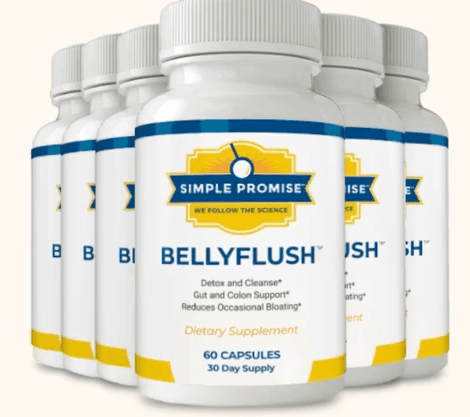
Somewhere in the overlap between genuine suffering and savvy direct-response marketing sits a product like BellyFlush, a gut-cleanse capsule supplement sold by Simple Promise, a US-based natural h…
8,226+
Videos & Ads
+50-100
Fresh Daily
$29.90
Per Month
Full Access
12.5 TB database · 72+ niches · 30 min read
Somewhere in the overlap between genuine suffering and savvy direct-response marketing sits a product like BellyFlush; a gut-cleanse capsule supplement sold by Simple Promise, a US-based natural health company. The video sales letter (VSL) promoting it opens not with a product pitch but with a list of increasingly desperate home remedies: prune juice simmered with butter, olive oil shots, Epsom salt cocktails, and the infamous accidental laxative effect of sugar-free gummy bears. It is a disarming move, funny, self-aware, and immediately familiar to anyone who has spent time in the chronic-constipation demographic. The humor dissolves the reader's defenses before the pitch has technically begun. That opening sequence is also a precise piece of copywriting craft, and understanding how it works tells you a great deal about who this product is targeting and why the persuasion architecture is built the way it is.
The VSL runs for roughly twenty-five to thirty minutes and follows a classic epiphany bridge structure, popularized in direct-response circles by Russell Brunson: a relatable avatar (Jennifer, a grandmother in her 60s) experiences a humiliating problem, fails at every conventional solution, encounters a credentialed expert who reveals a hidden mechanism, tries the resulting product, and achieves a life-transforming outcome. The product itself, two capsules taken each morning, is positioned not as another fiber supplement or laxative but as a solution to an entirely different underlying problem: the drying out of the body's gut mucosa, which the VSL calls the "slippery gut gel." Whether that framing holds up to scrutiny is one of the questions this analysis will examine. The other questions are equally important: who made this product, what is actually in it, how credible is the science cited, and what persuasion mechanics are being deployed to convert a skeptical buyer who has already failed with dozens of similar products?
The digestive health supplement market is enormous and growing. The global digestive health supplement industry was valued at over $10 billion in 2023 according to market research firm Grand View Research, and chronic constipation affects an estimated 16% of adults worldwide, rising to roughly 33% in adults over 60 according to data published by the American Gastroenterological Association. That demographic, older adults, disproportionately women, who have cycled through fiber supplements and laxatives without lasting relief, is the exact avatar this VSL addresses with surgical specificity. The product did not create that market. It identified a pain point with a well-documented history of therapeutic failure and positioned itself as the first explanation that makes the failure make sense.
This piece examines BellyFlush as both a product and a piece of marketing engineering. The goal is not to endorse or condemn it but to give a researcher, someone actively deciding whether to buy, an honest, informed reading of what the VSL claims, what the ingredients can plausibly do, and where the sales architecture leans harder on emotion than on evidence.
What Is BellyFlush?
BellyFlush is an oral capsule supplement manufactured by Simple Promise, a US-based natural health brand that operates in the digestive health, weight management, and general wellness supplement space. The product is delivered in standard capsule form, with a serving size of two capsules taken within fifteen minutes of waking. Its market positioning sits at the intersection of gut-cleanse and digestive-comfort supplements. A category that includes products like Metamucil, MiraLAX, and a broad range of herbal bowel-support formulas sold through direct-response channels. What distinguishes BellyFlush's positioning, at least rhetorically, is its explicit rejection of the fiber-and-hydration paradigm that dominates conventional digestive advice.
The product is sold primarily through a VSL-gated sales funnel rather than through retail channels, which places it firmly in the direct-to-consumer supplement space where longer-form storytelling, emotional resonance, and risk-reversal guarantees (rather than shelf presence) drive conversion. Simple Promise is a real company with a verifiable web presence and an established portfolio of supplements; the brand is not anonymous, which matters when evaluating the credibility of the product's quality claims. The VSL states that every bottle is manufactured in an FDA-inspected US facility, and that ingredients are tested for purity. Standard language in the responsible supplement space, though "FDA-inspected" means the facility has been subject to regulatory review, not that the product itself is FDA-approved or FDA-endorsed, a distinction worth noting.
The stated target user is an adult; skewing toward women in their 50s and 60s, who experiences chronic constipation, uncomfortable bloating, persistent gas, and the associated energy depletion and social anxiety that these conditions generate over time. The product is pitched as a 180-day commitment for long-term gut restoration, not a one-time cleanse, which both increases the average order value and positions BellyFlush as a lifestyle supplement rather than a temporary intervention.
The Problem It Targets
Chronic constipation is a condition that is simultaneously ubiquitous and underserved by conventional medicine. According to the National Institute of Diabetes and Digestive and Kidney Diseases (NIDDK), approximately 16 out of every 100 adults in the United States experience symptoms of constipation, and that figure climbs to 33 out of 100 for adults over 60. Women are disproportionately affected at nearly every age group. The condition is defined clinically by fewer than three bowel movements per week, straining, hard or lumpy stools, and a sensation of incomplete evacuation, but its real-world impact extends well beyond those diagnostic criteria into social withdrawal, chronic discomfort, sleep disruption, and a documented negative effect on quality of life comparable to other chronic conditions.
The VSL is astute in identifying what makes this pain point commercially potent: the cycle of therapeutic failure. The average constipation sufferer has already tried fiber supplements, over-the-counter laxatives, dietary modifications, and probiotics before they encounter an ad like this one. This is what direct-response copywriters call a Stage 4 or Stage 5 market sophistication problem, a concept articulated by Eugene Schwartz in his 1966 work Breakthrough Advertising. At these stages, the market has heard every direct product claim and every mechanism promise, and is deeply skeptical of all of them. The only move that works is to introduce a genuinely new mechanism, something that explains why everything else failed, and then position the new product as the first solution built around that mechanism. The "slippery gut gel" narrative is precisely this move.
The VSL also accurately identifies the frustration many patients feel with medical consultations for functional digestive disorders. Research published in the American Journal of Gastroenterology has documented that patients with functional constipation frequently report feeling dismissed by physicians, receiving generic advice (increase fiber, drink water, exercise more) that does not address their specific physiology, and being offered laxative prescriptions that create dependency rather than resolution. The VSL weaponizes this documented grievance effectively, Jennifer's doctor scenes, where she is told her symptoms might be "all in her head," will land with particular force on the target demographic because they describe a real and widely shared experience. That authenticity of grievance, embedded inside a commercial pitch, is one of the reasons this VSL structure is so effective.
What the VSL does not address, and what the literature does, is that chronic constipation has multiple subtypes with different underlying causes. Slow-transit constipation, dyssynergic defecation, irritable bowel syndrome with constipation (IBS-C), and constipation secondary to medications or other conditions all have distinct mechanistic profiles. A single-formula supplement addressing one mechanism (gut mucosa depletion) cannot plausibly resolve all of these, and the VSL's implicit claim that it can is an overreach that a careful reader should notice.
Curious how other VSLs in this niche structure their pitch? Keep reading. The section below breaks down the psychology behind every claim above.
How BellyFlush Works
The central mechanism claim in the BellyFlush VSL is built around a substance the narrator calls "slippery gut gel". The technical term for this is gut mucosa or intestinal mucus, a real and well-documented physiological structure. The intestinal mucus layer is produced by goblet cells lining the gut epithelium and serves multiple critical functions: it lubricates the passage of intestinal contents, protects the epithelial lining from mechanical and chemical damage, acts as a barrier against pathogens, and supports the composition of the gut microbiome. Research published in journals including Gut and Nature Reviews Gastroenterology & Hepatology has established that the integrity of the mucus layer is genuinely important for digestive health, and that disruptions to mucus production or composition are associated with inflammatory bowel conditions including ulcerative colitis and Crohn's disease.
The VSL's claim that mucus layer depletion causes common constipation is where the science becomes more speculative. The established research connects mucus layer disruption most strongly to inflammatory bowel disease and infection-related gut pathology; not to the functional constipation that Jennifer describes. The assertion that food-grade emulsifiers (polysorbate 60, carrageenan, lecithin, and others) deplete gut mucosa is an area of active scientific inquiry with some legitimate supporting research, a 2015 study by Chassaing et al., published in Nature, found that common emulsifiers promoted low-grade intestinal inflammation and altered microbiome composition in mice, but extrapolating from mouse models to the claim that emulsifiers are "moisture vampires" drying out human colons in a way that causes constipation in the general population is a substantial leap that the VSL presents as settled fact.
The "Nobel Prize discovery" the VSL references is almost certainly an allusion to the 2021 Nobel Prize in Physiology or Medicine, awarded to David Julius and Ardem Patapoutian for their discovery of receptors for temperature and touch, including receptors relevant to gut sensation. This is real science, and the gut-sensing mechanisms these researchers identified are genuinely relevant to understanding visceral sensation and gut function. However, the VSL's use of this Nobel Prize to validate the specific claim that these sensors "control how much gut mucosa your body makes" is an interpretive stretch; the research was about mechanosensory and thermosensory receptors, not goblet cell mucus secretion. It is borrowed authority, real science deployed in ways that imply a more direct endorsement of the product's mechanism than the research actually provides.
The two-action protocol the VSL describes, simultaneously restoring gut mucosa and physically clearing stuck waste, is mechanistically coherent in principle. Several of the ingredients in BellyFlush (marshmallow root, slippery elm, aloe) do have meaningful mucilaginous properties with some independent research support. Others (Cascara Sagrada, senna) are known stimulant laxatives with well-established effects on colonic motility. The combination of mucilage-based gut coating agents with stimulant laxatives is not unprecedented in herbal medicine. Whether the specific formulation achieves the dramatic results described, 5 to 10 pounds of waste expelled in days, without cramping. Is impossible to evaluate without clinical trial data for the specific product, which the VSL does not provide.
Key Ingredients and Components
The BellyFlush formulation draws from a wide range of botanical and mineral ingredients, some with robust traditional use histories and genuine modern research support, and others that are more peripheral. The following inventory covers what the VSL discloses:
Marshmallow root extract (Althaea officinalis): The plant's root contains mucilage polysaccharides that form a gel-like coating when hydrated. This property has been studied for soothing irritated mucous membranes throughout the gastrointestinal tract. A review published in Complementary Medicine Research (Deters et al., 2010) found that marshmallow root extract demonstrated protective effects on gastric mucosa in cell and animal models. Evidence in humans for constipation specifically is limited, but the mucilage mechanism is biologically plausible for the gut-coating claim.
Licorice root extract (Glycyrrhiza glabra or G. uralensis): Deglycyrrhizinated licorice (DGL) has been studied for its protective effects on the gastric and intestinal lining, with some clinical evidence supporting its use for dyspepsia and peptic ulcer. The VSL cites a study showing reduced harmful gut bacteria after two weeks; research by Pastorino et al. (2018) in Phytotherapy Research supports antimicrobial and anti-inflammatory properties. The fat-burning claim extrapolated from licorice research is real. Some studies have found modest effects on body composition; but the effect size is small and not the mechanism by which BellyFlush claims to work.
Slippery elm bark (Ulmus rubra): A well-documented traditional remedy with strong mucilage content. A study published in the Journal of Alternative and Complementary Medicine (Langmead et al., 2002) found that slippery elm demonstrated antioxidant activity and some protective effects on the gut lining. The VSL cites a bowel-movement frequency improvement study from a mixture containing slippery elm; this likely refers to research by Hawrelak & Myers (2010) involving an herbal bowel formula, which showed meaningful symptomatic improvements. This is one of the better-evidenced ingredients in the formula.
Cascara Sagrada bark (Frangula purshiana): A stimulant laxative containing anthraquinone glycosides (cascarosides) that stimulate colonic contractions. Cascara has well-established laxative efficacy and was formerly an FDA-approved over-the-counter laxative ingredient before the FDA withdrew that status in 2002 due to insufficient safety data for long-term use. It is effective for acute constipation relief, but the FDA's safety concern is relevant context the VSL omits.
Bentonite clay: An absorbent aluminium phyllosilicate clay with a documented ability to bind toxins, heavy metals, and some pathogens in the gut. Some small human studies have explored its use in mycotoxin adsorption. The Chernobyl reference the VSL makes is theatrical but technically grounded, clays were used in environmental remediation. Human gut safety data for oral consumption at supplement doses is generally favorable in the short term, with limited long-term data.
Fennel seed (Foeniculum vulgare): Traditional carminative herb with well-documented antispasmodic and gas-reducing properties. Research supports its use for reducing intestinal gas and cramping (Alexandrovich et al., 2003, Alternative Therapies in Health and Medicine).
Aloe extract (Aloe vera): The VSL cites a study showing a 41% reduction in bloating and a 92.8% reduction in abdominal pain, figures that appear consistent with a clinical study by Hutchings et al. published in the International Journal of Clinical Practice examining aloe vera for IBS symptoms. Aloe latex (the yellow fraction near the skin) is a stimulant laxative; aloe gel (the inner leaf) has gentler anti-inflammatory properties. The distinction between these fractions matters for safety, particularly with long-term use.
Senna extract, cayenne pepper fruit, milk thistle seed, Triphala extract: These ingredients receive brief mentions in the VSL as metabolism boosters, gut-healing agents, and toxin fighters. Senna is a potent stimulant laxative with good short-term evidence; long-term daily use raises the same anthraquinone-dependency concerns as Cascara. Triphala is an Ayurvedic formula with genuine research supporting mild laxative and antioxidant effects (Baliga et al., 2012, Journal of Experimental Therapeutics & Oncology).
Hooks and Ad Angles
The VSL's opening hook, "a surprising secret, tucked away behind the movie theater snack counter, scientifically proven to flush out five to ten pounds of hidden waste", is a sophisticated piece of pattern-interrupt writing. The phrase does three things simultaneously: it signals novelty ("surprising secret"), it locates the solution in an unexpected domestic context (movie theater snack counter, a reference to marshmallows that will only be explained several minutes later), and it deploys a specific numerical claim (5 to 10 pounds) that converts an abstract promise into a concrete, visualizable outcome. The delayed explanation of what the snack-counter secret actually is functions as a curiosity gap, a technique extensively studied in the information-gap theory of curiosity developed by George Loewenstein (1994), in which partial disclosure of information creates a psychologically uncomfortable state that motivates continued attention to close the gap. The viewer does not know what the snack is, and that unknowing is the mechanism that keeps them watching.
The subsequent "what's the weirdest thing you've done" segment is a rhetorical move from a different tradition, it borrows the voice of a friend rather than a marketer, deploying what communication researchers call homophily (the tendency to trust sources perceived as similar to oneself) to prime the reader for Jennifer's personal story. This is a classic Eugene Schwartz Stage 4-5 market sophistication structure: the copy does not lead with a product claim, because the audience has heard every product claim. Instead it leads with identification, with the exhausted, embarrassed person who has already tried everything. And only introduces the product mechanism after that identification is firmly established. The VSL's macro architecture can be described as PAS (Problem-Agitate-Solve) nested inside an epiphany bridge narrative, with authority signals (Del Pizzo, Nobel Prize, named studies) layered in during the solution phase to transition the reader's emotional engagement into rational justification.
Secondary hooks observed in the VSL:
- "Your gut doesn't care about one more supplement. There's a single switch you're missing"
- "The Nobel Prize-winning discovery that explains why you can't go"
- "Ancient Egyptian pharaohs ate this candy to stay regular"
- "Emulsifiers are hiding in 7 out of 10 grocery store aisles; and they're drying out your colon"
- "She missed her grandson's birthday song, here's what finally helped"
Ad headline variations for Meta or YouTube testing:
- "I Tried 23 Constipation Remedies. Only One Actually Worked, Here's Why"
- "Doctors Said It Was All in My Head. I Lost 7 Pounds in One Week Without Dieting."
- "The Gut Ingredient Hiding in Your Movie Theater Popcorn Bag"
- "Why Eating More Fiber Might Be Making Your Constipation Worse"
- "The Sacred Bark Native Americans Used for Centuries to Stay Regular"
Psychological Triggers and Persuasion Tactics
The persuasive architecture of the BellyFlush VSL is more sophisticated than a typical supplement pitch. Rather than stacking authority signals, testimonials, and urgency in parallel, the blunt instrument of lower-tier direct response, this letter sequences them in a deliberate psychological progression. The first ten minutes are entirely devoted to empathy and identification, with no product mention at all. The middle third introduces authority and mechanism, converting emotional openness into intellectual engagement. Only the final third introduces the offer, by which point the reader's objections have been progressively addressed rather than frontally overcome. This is what Cialdini would recognize as commitment and consistency played long, small agreements (yes, I've tried fiber; yes, I've been dismissed by doctors) accumulate until the larger agreement (yes, I will buy this product) feels like a natural continuation of the reader's own established position rather than an externally imposed decision.
The emotional engine of the VSL is a single scene, Jennifer missing her grandson's birthday song while straining in a bathroom, which functions as what screenwriters call the inciting incident and what direct-response writers call the core story moment. The scene's power comes not from the physical symptom but from the relational loss: the birthday song, the little voice asking "Grammy, did you go to heaven?" These details are either genuine or very carefully crafted to feel genuine, and the distinction may not matter to a reader who is living a version of the same story.
Specific persuasion tactics deployed:
Pattern interrupt (Cialdini, 2006): The gross-out home-remedy list at the opening disrupts the expected supplement-ad script, captures attention through surprise and laughter, and establishes the VSL's tone as self-aware rather than promotional.
New mechanism framing (Schwartz, Breakthrough Advertising, 1966): "Slippery gut gel" depletion is introduced as the real cause of constipation. Positioning every failed prior remedy as addressing the wrong problem, and making BellyFlush the only logical solution.
False enemy construction (Donald Miller, Building a StoryBrand, 2017): Food companies (emulsifiers), mainstream medicine (dismissive doctors), and conventional supplements (fiber, water) are unified into a single villain coalition responsible for the reader's suffering.
Loss aversion amplification (Kahneman & Tversky, prospect theory, 1979): The VSL escalates from "you feel bloated" to "stuck poop rots like garbage" to "this can lead to cancer". Each frame making the perceived cost of inaction larger than the cost of purchase.
Social proof with demographic specificity (Cialdini, social proof): Named testimonials with ages and states (Lucille M., 67, Florida) alongside precise numerical results (7 pounds, 1 inch, 7 bathroom visits) deploy the specificity-as-credibility heuristic documented in persuasion research by Aaker and colleagues.
Risk reversal through extreme guarantee (Jay Abraham, risk-reversal principle; Thaler's endowment effect): The 365-day empty-bottle refund policy structurally eliminates the purchase risk objection; the reader can mentally take possession of the product and its promised outcome before committing financial resources.
Scarcity and urgency (Cialdini's scarcity principle): Stock depletion language and time-limited discount framing activate loss aversion at the point of purchase, discouraging the delay that kills conversion.
Want to see how these tactics compare across 50+ VSLs in the gut-health niche? That's exactly what Intel Services is built to show you.
Scientific and Authority Signals
The BellyFlush VSL deploys authority across several registers, and it is worth distinguishing between them carefully. The most prominent authority figure is Alex Del Pizzo, described as a researcher who has spent years perfecting this formula and has worked with "thousands of people." He is introduced at a private health gathering, described with memorable physical detail ("dark hair that made him look like some kind of mad scientist"), and positioned as simultaneously credentialed and personable, the expert who actually listens. No institutional affiliation, academic title, published paper authorship, or verifiable credential is provided for Del Pizzo. This does not mean he does not exist, but it means his authority cannot be independently verified, and the VSL's design depends on the reader accepting him as legitimate based on narrative performance rather than credential documentation. This is borrowed authority at best, he feels like an expert because the story treats him as one.
The referenced Nobel Prize is real: the 2021 Nobel Prize in Physiology or Medicine was awarded to David Julius and Ardem Patapoutian for discoveries of receptors for temperature and touch. The citation is legitimate as far as the prize itself goes. The interpretive leap, that this research directly explains why gut mucosa dries out and causes constipation, is not supported by the Nobel Committee's citations or by the primary research of either laureate. The VSL takes a genuinely important scientific discovery and repurposes it as an implied endorsement of a specific product mechanism. That is a meaningful misrepresentation of what the research established.
The emulsifier research is on stronger footing. The 2015 Chassaing et al. study in Nature is a real and frequently cited paper showing that dietary emulsifiers (polysorbate 80 and carboxymethylcellulose) altered microbiome composition and promoted intestinal inflammation in mouse models; follow-up human research from the same group has added nuance to these findings. The VSL's presentation of this research is directionally accurate, though it overstates both the certainty and the magnitude of the effect in humans, and it conflates several different classes of emulsifiers under a single "moisture vampire" metaphor that obscures important distinctions.
The Cascara and aloe clinical study citations are plausible, research matching the described effect sizes does exist in the herbal medicine literature, but since the VSL does not name specific papers, authors, or journals, independent verification is difficult. The marshmallow root and slippery elm citations are consistent with the peer-reviewed literature as described. The overall picture is a VSL that uses real science competently in some places and extrapolates aggressively in others, which places it in the middle tier of scientific credibility for this category, above products that invent studies wholesale, below products with actual clinical trial data for the specific formulation.
The Offer, Pricing, and Risk Reversal
The BellyFlush offer is structured around a classic price anchor and stack. The VSL establishes a reference price of $99 per bottle (described as the main site price), then reveals the VSL-exclusive price of $33 per bottle for the six-bottle package. A nominal 66% discount that reduces the per-day cost to approximately $1.10, benchmarked explicitly against "a cheap cup of coffee." The $99 anchor is almost certainly a rhetorical anchor rather than a genuine retail price comparison; most competitive gut-cleanse supplements in this category retail between $30 and $60 per bottle at single-bottle pricing, which makes $99 an inflated baseline designed to make $33 feel dramatically discounted rather than merely competitive. The "cup of coffee" reframe is a standard price minimization tactic that works by shifting the comparison frame from absolute cost to opportunity cost.
The bonus stack. Three digital guides valued at a combined $117; adds perceived value without increasing the company's marginal cost, a standard direct-response technique. The guides themselves (fermented foods guide, gut health recipe plan, anti-inflammatory cookbook) are genuinely complementary to the product's use case, which gives the bonus stack functional plausibility beyond pure optics. Whether their stated retail values ($29, $59, $29) reflect actual market prices for comparable digital guides is unclear, but the framing creates a sense of receiving far more value than the monetary exchange reflects.
The 365-day empty-bottle money-back guarantee is the offer's most distinctive element, and it is worth taking seriously as a risk-reversal mechanism rather than dismissing it as marketing theater. Simple Promise is a real company with a verifiable customer service operation, which means the guarantee has at least some enforcement probability behind it. The VSL explicitly acknowledges the logical tension, "I said it takes 180 days, so it would be dishonest to offer less than a 180-day guarantee", which is a self-aware move that builds credibility by anticipating the objection rather than ignoring it. For a buyer on the fence, the combination of an empty-bottle guarantee and a verifiable brand name does meaningfully reduce purchase risk compared to anonymous dropshipped supplements with no refund policy.
Who This Is For (and Who It Isn't)
The ideal buyer for BellyFlush is a woman between 50 and 70 years old who has experienced chronic constipation and bloating for years, has already tried fiber supplements, OTC laxatives, dietary changes, and probiotic products without lasting improvement, and has reached a point of therapeutic fatigue where she is actively searching for an explanation, not just another solution. She is likely comfortable with online shopping, motivated by quality-of-life concerns (social confidence, physical comfort, energy levels) rather than vanity metrics alone, and has a high tolerance for personal storytelling in marketing because she has learned to distrust clinical-sounding pitches that overpromise and underdeliver. The VSL's grandchildren and birthday party imagery is not accidental, it is precisely calibrated to her emotional landscape. Men in a similar demographic, particularly those with a pot-belly they have attributed to fat rather than bloat, represent a secondary but real buyer segment (represented in the VSL by the Martin T. testimonial).
This product is probably not the right fit for buyers with diagnosed gastrointestinal conditions such as Crohn's disease, ulcerative colitis, IBS with diarrhea, or any condition involving intestinal strictures or diverticulitis. Several of BellyFlush's ingredients, most notably Cascara Sagrada and senna, both stimulant laxatives, carry real contraindications for these populations, and the VSL's blanket positioning of the formula as "completely natural and totally safe" is not a substitute for individual medical evaluation. Pregnant or breastfeeding individuals, people on medications that interact with anthraquinone laxatives (including some cardiac medications and diuretics), and people who have been advised to avoid stimulant laxatives by a physician should consult their doctor before using this product regardless of the marketing narrative.
If you are researching this supplement specifically because you have already tried multiple gut-health products and are wondering whether BellyFlush offers something genuinely different, the honest answer is: somewhat. The mucilaginous ingredient profile (marshmallow root, slippery elm) represents a coherent and underexplored alternative to fiber-only approaches, and the combination with Cascara and senna provides a mechanism for the immediate relief the VSL describes. The dramatic outcomes (7 pounds in one week, visible belly flattening by day two) are almost certainly real for a subset of users, primarily because stimulant laxatives produce rapid, significant evacuation, especially in people who have been severely backed up for extended periods. The 180-day restoration narrative is harder to validate, and the marketing's implicit claim that gut mucosa depletion is the universal cause of constipation is an oversimplification of a clinically complex condition.
If you've made it this far, you're doing the kind of due diligence most buyers skip. The FAQ section below answers the questions people actually type into Google before purchasing.
Frequently Asked Questions
Q: Is BellyFlush a scam?
A: BellyFlush is a real product manufactured by Simple Promise, a verifiable US-based supplement company. The ingredients it lists are real botanical and mineral compounds with documented traditional use. The VSL's more dramatic claims. 5 to 10 pounds of expelled waste in days, gut mucosa restoration. Are not supported by published clinical trials on this specific formulation, but that is true of most supplements. Whether the product delivers meaningful relief will vary by individual, and the 365-day money-back guarantee provides a genuine safety net.
Q: What are the ingredients in BellyFlush?
A: The VSL discloses the following ingredients: marshmallow root extract, licorice root extract, slippery elm bark, Cascara Sagrada bark, bentonite clay, fennel seed, aloe extract, cayenne pepper fruit, milk thistle seed, Triphala extract, and senna extract. Several of these (marshmallow root, slippery elm, aloe) are mucilage-producing agents that may support gut lining comfort; others (Cascara, senna) are stimulant laxatives with well-established short-term efficacy.
Q: Does BellyFlush really work for constipation?
A: Many of the individual ingredients in BellyFlush have published research supporting their use for constipation relief, particularly Cascara Sagrada and senna (stimulant laxatives) and slippery elm and marshmallow root (mucilaginous coating agents). Short-term relief from constipation and bloating is biologically plausible given the formulation. Long-term gut restoration as described in the VSL is a broader claim that lacks clinical trial support specific to this product.
Q: Are there any side effects of taking BellyFlush?
A: The VSL itself notes that loose stools, particularly in the first few days, are expected and normal. More substantively, Cascara Sagrada and senna are stimulant laxatives that the FDA has flagged for potential risks with long-term daily use, including electrolyte imbalances and, theoretically, reduced colon muscle function with extended dependency. Individuals with inflammatory bowel disease, intestinal obstruction, or those taking cardiac medications or diuretics should consult a physician before use.
Q: Is BellyFlush safe to take every day?
A: The VSL recommends daily use for a minimum of 180 days. Short-term daily use of the mucilaginous ingredients (marshmallow root, slippery elm, aloe gel) is generally considered safe. Daily long-term use of stimulant laxatives (Cascara, senna) is an area of legitimate medical caution. Anyone considering extended daily use should discuss it with a qualified healthcare provider, particularly if they have existing digestive conditions or take prescription medications.
Q: How long does it take for BellyFlush to work?
A: The VSL describes the first significant bowel movement occurring within two to fourteen hours of the first dose for most users, though some reviewers noted no effect on day one and significant effects on day two. The immediate effect is primarily due to stimulant laxative action (Cascara, senna). The VSL's longer-term gut-restoration claims are positioned as a 180-day process.
Q: What is the Simple Promise 365-day money-back guarantee?
A: Simple Promise offers a full refund within 365 days of purchase, including on completely used-up bottles. The refund is initiated by contacting Simple Promise's customer service team by phone or email. This is a notably long guarantee for the supplement category and meaningfully reduces purchase risk, provided the company honors it; which is more likely given that Simple Promise is a named, verifiable brand rather than an anonymous dropshipping operation.
Q: How is BellyFlush different from regular fiber supplements like Metamucil?
A: The core pitch of BellyFlush is that it takes a fundamentally different approach from fiber-based supplements. Rather than adding bulk to stool (the fiber approach), BellyFlush claims to restore the mucus lining of the intestine so that stool can pass more easily, while also using stimulant laxatives to actively propel waste through the colon. The VSL cites a study of 63 people in which removing fiber actually resolved constipation, a real but limited study whose findings do not represent mainstream gastroenterological consensus, but which reflects a genuine body of research questioning fiber's universal benefit.
Final Take
The BellyFlush VSL is a well-constructed piece of direct-response marketing operating in a category, digestive health supplements, where the gap between what buyers have been promised and what they have actually experienced is wide enough to sustain a very long story about betrayal and rescue. The letter's greatest strength is not its ingredient list or its scientific citations; it is its emotional accuracy. The experience of cycling through fiber supplements, laxatives, and medical dismissals without relief is real, documented, and widespread, and any marketer who can speak to that experience with apparent empathy before introducing a product has already cleared the highest hurdle in a skeptical market. Jennifer's story, whether constructed or genuine, is calibrated to that emotional reality with precision.
The product's weaknesses are also real. The central mechanism claim, that gut mucosa depletion is the primary cause of chronic constipation in the general population, is an oversimplification of a multifactorial condition, and the VSL's use of the 2021 Nobel Prize research to validate this mechanism is a stretch that will not survive scrutiny by anyone who reads the actual Nobel citations. Several of the ingredient citations are directionally accurate but lack the precision required for genuine scientific confidence, and the combination of stimulant laxatives (Cascara, senna) with a 180-day daily-use recommendation sits in tension with the medical caution those ingredients warrant for extended use. The dramatic short-term outcomes described in testimonials (7 pounds in days, visible belly reduction) are consistent with what stimulant laxatives can produce in severely constipated individuals, but framing this as "clearing stuck poop" rather than laxative action gives it a different character than it deserves.
Where does this leave a prospective buyer? The ingredient profile is coherent for short-term constipation relief, particularly the mucilaginous botanicals (marshmallow root, slippery elm) which represent a genuinely underexplored alternative to fiber-and-water orthodoxy. The company is verifiable, the guarantee is real, and the manufacturing claims (FDA-inspected facility, purity testing) are standard but meaningful for the supplement space. Someone who has genuinely exhausted conventional options and is looking for a herbal bowel-support formula may find this product useful, particularly in the first one to two weeks. The 180-day gut-restoration narrative is the part that merits the most skepticism, not because sustained gut health is an unworthy goal, but because the VSL's implied promise that this formula will permanently resolve chronic constipation across diverse underlying causes is a larger claim than the evidence, examined honestly, can support.
This breakdown is part of Intel Services, our ongoing library of VSL and ad-copy analyses. If you're researching similar products in the digestive health, gut cleanse, or weight management supplement space, keep reading.
Disclaimer: This article is for research and educational purposes only. It is not medical, legal, or financial advice, and it is not affiliated with the product or its makers. Always consult a qualified professional before making health or financial decisions.
Source-backed reader context
Additional Reviews & Reported Experiences
These statements were presented in the product's sales transcript. Daily Intel did not independently verify the speakers, purchase status, or reported outcomes, and the statements are not used in Product aggregateRating.
Lucille M., 67, Florida
Date not stated
'I now go like a normal person. I'm regular and it's been tremendous for my marriage. You will lose 10 pounds.
Martin T., 59, California
Date not stated
Lost an inch off his belly, went to the bathroom 7 times in 3 days, felt 20 years younger and more confident
Anonymous reviewer
Date not stated
Looked 'three months pregnant,' product emptied her out without cramping; buying another bottle
Anonymous reviewer (Day 1-6)
Date not stated
'The levy broke' on Day 2; feeling better by Day 6
Anonymous reviewer
Date not stated
First wave hit 14 hours after first serving; 'This product does what it says
Anonymous reviewer
Date not stated
Used to sit in bathroom for hours; now it's their 'favorite room
Jennifer (narrator)
Date not stated
Lost 7 pounds in one week, went from chronic constipation to daily effortless bowel movements
Comments(0)
No comments yet. Members, start the conversation below.
Related reads
 reviews
Jocko Greens Review: Does One Scoop Match the Evidence?
Jocko Greens is a one-scoop powder with approximately 30 calories and 9 billion colony-forming units of probiotics per serving. Jocko Fuel also confirms ashwagandha extract and makes a digestive-support claim. The harder question is whether the available research matches this specific formula. It does not match closely enough to establish a finished-product outcome.
Read reviews
NooCube Review: Does the 250 mg Bacopa Dose Match the Research?
NooCube is one of the few nootropics that prints a milligram number next to an ingredient instead of hiding it in a blend. This review takes that one number, 250 mg Bacopa monnieri, and checks it against a real trial that used 300 mg in a very different population, then shows exactly where the comparison breaks down.
Read reviews
Olly Goodbye Stress Review: Label Claims vs. Evidence
OLLY Goodbye Stress combines GABA, L-theanine, and lemon balm extract in a Berry Verbena gummy aimed at occasional stress, not sleep. Here's what the label discloses, what a real L-theanine trial found, and exactly where the evidence stops.
Read