Bone Health Formula Review and Ads Breakdown: A Research-First Look
The sales pitch opens not with a product claim but with a catastrophe. A 53-year-old woman steps off her back porch on a summer afternoon and fractures three bones in a single stride, no trip, no twist, no warning. Within weeks, she develops a deep vein thrombosis in her other…
8,226+
Videos & Ads
+50-100
Fresh Daily
$29.90
Per Month
Full Access
12.5 TB database · 72+ niches · 29 min read
The sales pitch opens not with a product claim but with a catastrophe. A 53-year-old woman steps off her back porch on a summer afternoon and fractures three bones in a single stride, no trip, no twist, no warning. Within weeks, she develops a deep vein thrombosis in her other leg, is placed on blood thinners to save her life, and watches months of summer pass from the couch, unable to walk. The story is told in clinical detail: the sound of snapping bone, the emergency room ultrasound, the surgeon's postponement, the cane she still uses today. Whatever one thinks of the product that follows, the narrative architecture of this Video Sales Letter (VSL) is immediately evident, fear is not being gestured at, it is being constructed, scene by scene, with the precision of a screenplay.
That product is Bone Health Formula, a nine-nutrient oral supplement developed in partnership with Pure Health Research and presented by Dr. Holly Lucille, a licensed naturopathic doctor with television credentials on The Dr. Oz Show and The Doctors. The formula targets progressive bone density loss in adults over 50, and it centers its entire pitch on a mechanism that the VSL describes as a paradigm-shifting discovery: the role of osteocyte cells, which it calls "architect cells", in regulating bone remodeling. According to the VSL, these cells have been ignored by mainstream medicine, are destroyed by free radicals beginning around age 50, and can be restored through a specific antioxidant and nutrient combination that Bone Health Formula claims to deliver.
This breakdown examines whether that mechanism is scientifically grounded, how the marketing is constructed and why it works on its intended audience, what the individual ingredients contribute, and where the claims are well-supported versus where they extend beyond the evidence. The question driving this analysis is not simply "does this product work", a question no VSL can honestly answer for any individual, but rather: what does this VSL reveal about how bone health products are sold in 2024, and how should a skeptical, research-minded consumer read both the science and the pitch?
Readers who are actively considering Bone Health Formula will find the most actionable material in the ingredients section and the scientific authority review. Those curious about the persuasive architecture, why the pitch is structured the way it is, and what psychological mechanisms it is deliberately activating, should read the hooks analysis and persuasion tactics sections carefully.
What Is Bone Health Formula?
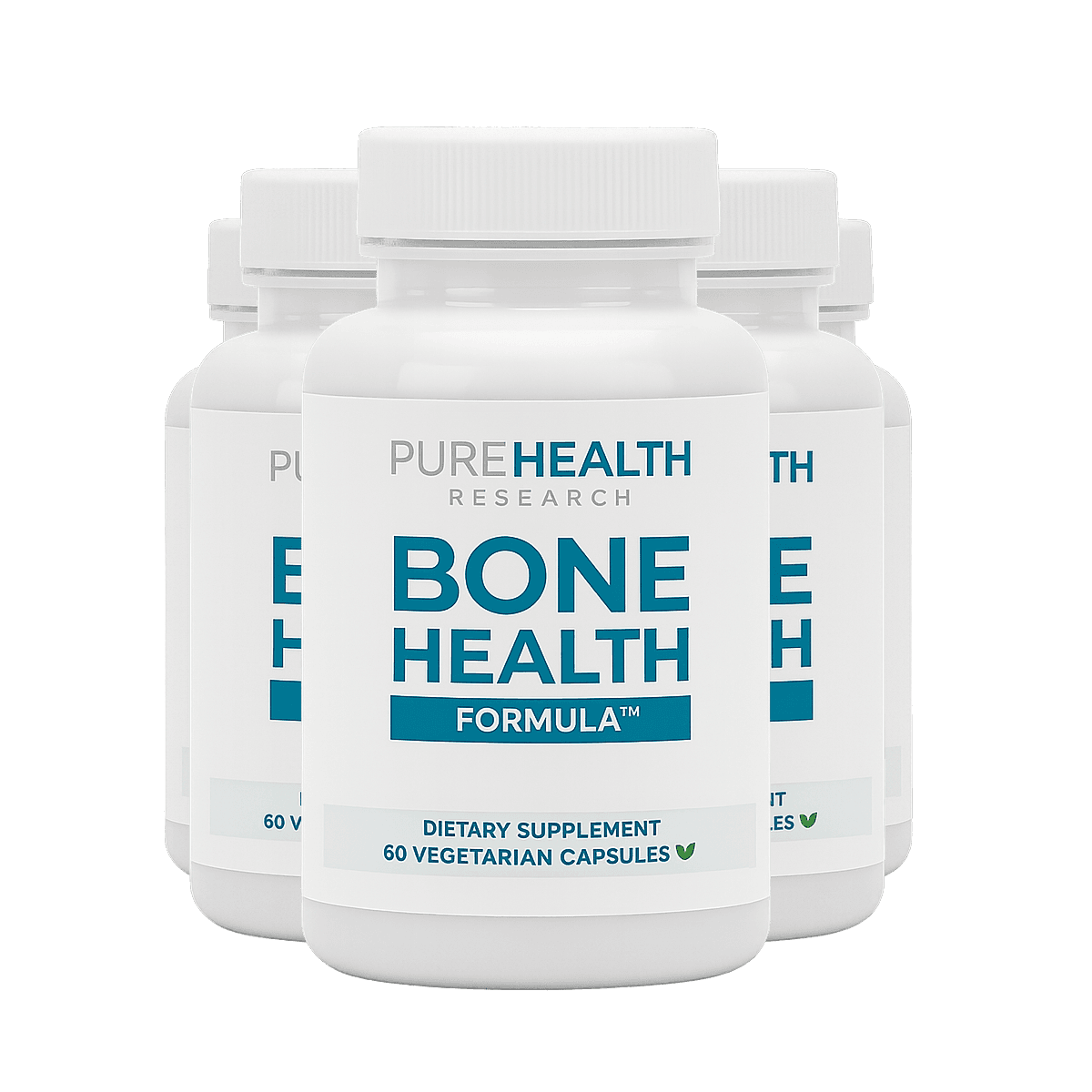
Bone Health Formula is a multi-nutrient dietary supplement manufactured and marketed by Pure Health Research, a US-based supplement company. The product comes in capsule or tablet form and is positioned as a comprehensive bone health solution for adults over 50, with a particular emphasis on post-menopausal women, the demographic most acutely affected by accelerated bone density decline. The formula contains nine active ingredients: vitamin C, a whole-food-derived calcium, vitamin D, vitamin K2 as MK-7, magnesium, zinc, copper, potassium, and manganese. Each ingredient is framed not merely as a nutritional supplement but as a functional component of a synergistic system designed around the protection of osteocyte cells.
The product occupies a crowded but commercially significant space. Bone health supplements represent a multi-billion-dollar global market, driven primarily by an aging population, rising osteoporosis rates, and growing consumer awareness of the limitations of pharmaceutical interventions like bisphosphonates. Bone Health Formula differentiates itself from commodity calcium-and-vitamin-D products by centering its marketing on the osteocyte mechanism, a framing that is scientifically grounded at its core, even if the extrapolation to supplement efficacy is more speculative. The stated retail price is $49 per bottle, with multi-bottle discounts available, and a 365-day money-back guarantee reduces the perceived purchase risk substantially.
The target user, as constructed by the VSL, is a woman in her early-to-mid 50s who considers herself health-conscious, she exercises, watches her diet, takes her calcium, and is genuinely frustrated that her bone density scans continue to decline despite her compliance. She is not a passive patient; she is an active health manager who has been failed by conventional advice and is therefore primed for a "hidden discovery" narrative that explains why her efforts haven't worked. This is a psychographically precise target, and the VSL's entire structure is built around meeting her exactly where she is.
The Problem It Targets
Osteoporosis and low bone mass are not marginal health concerns. The National Osteoporosis Foundation estimates that approximately 54 million Americans have osteoporosis or low bone density, and the condition is directly responsible for approximately two million bone fractures annually in the United States. Hip fractures, in particular, carry catastrophic consequences: the VSL's claim that women who fracture a hip are five times more likely to die within the following year is consistent with published data in the literature, and the CDC confirms that hip fracture mortality remains one of the most significant injury-related outcomes in older adults. The VSL is not exaggerating the scale of the problem, which is part of what makes its fear-based opening so effective, the stakes it describes are real.
What makes bone health a particularly rich commercial opportunity is the gap between the problem's urgency and the perceived adequacy of existing solutions. Standard clinical guidance, calcium, vitamin D, weight-bearing exercise, smoking cessation, is both correct and insufficient for many patients. Bone mineral density often continues to decline in post-menopausal women even under model compliance, because the hormonal drivers of that decline (the sharp reduction in estrogen that normally protects osteoblast activity) are not addressed by nutritional supplementation alone. The VSL exploits this gap masterfully: it doesn't deny that calcium and vitamin D matter, it reframes them as necessary but insufficient, positioning the osteocyte mechanism as the missing variable that explains every well-behaved patient's disappointing scan result.
The epidemiology of vitamin D deficiency, which the VSL cites via a Scientific American report, is also genuinely documented. Research published by the NHANES (National Health and Nutrition Examination Survey) has repeatedly found that a substantial portion of the US adult population, estimates range from 40% to over 70% depending on the threshold used, has insufficient circulating 25-hydroxyvitamin D. The VSL rounds this up to "three quarters" and attributes it to Scientific American, which is an accurate paraphrase of reporting on this research. Similarly, the 2014 study published in Menopause journal examining dairy consumption and bone loss in menopausal women is a real and widely discussed piece of research, and its conclusions are as counterintuitive as the VSL presents them. The VSL's problem framing, in short, is built on a genuine foundation, even when that foundation is selectively emphasized to maximize alarm.
What the VSL elides is the broader picture: pharmaceutical interventions like bisphosphonates, denosumab, and selective estrogen receptor modulators have substantial evidence bases for reducing fracture risk, particularly in high-risk populations. The VSL frames the choice as between conventional nutrient advice (which has failed) and Bone Health Formula (which is the real answer), systematically avoiding any mention of the pharmacological options that sit between those two poles. This is a structural omission, not technically false, but architecturally misleading for any viewer who believes they are receiving a complete picture of the solution landscape.
How Bone Health Formula Works
The core mechanism the VSL proposes is scientifically legitimate in its foundations. Osteocytes, which the VSL brands "architect cells", are the most abundant bone cells in the body and were, until relatively recently, considered largely passive. Over the past two decades, research using advances in imaging and genetic tools has dramatically revised that view. Osteocytes are now understood to be primary regulators of bone remodeling: they signal osteoblasts to build bone and osteoclasts to resorb it, they sense mechanical load (which is why weight-bearing exercise promotes bone formation), and they regulate phosphate and mineral metabolism. A 2013 review in Nature Reviews Endocrinology by Bonewald and colleagues systematically documented these functions, confirming that osteocyte dysfunction is a legitimate contributor to age-related bone loss. The VSL's claim that this discovery "sent shockwaves through the scientific community" is hyperbolic, but the underlying science is not invented.
Where the VSL moves from solid ground to more speculative territory is in its causal chain linking free radical damage to osteocyte death, and osteocyte death to the bone loss that Bone Health Formula's antioxidants can reverse. Oxidative stress does negatively affect osteocytes, this is documented in the literature, and the role of reactive oxygen species in bone aging is an active area of research. However, the VSL's framing, that free radicals are the sneaky culprit responsible for osteocyte death after 50, and that antioxidant supplementation can meaningfully regenerate these cells, is a simplification that extracts one variable from a complex, multi-factorial biological system. Osteocyte aging and death are also driven by hormonal changes (particularly estrogen decline), cellular senescence, inflammatory cytokines, and mechanical disuse, none of which antioxidants alone address.
The Indonesian gas station worker study cited to establish vitamin C's antioxidant power is real and demonstrates that vitamin C supplementation can reduce biomarkers of oxidative stress in heavily polluted environments. However, using data from people with extreme, occupational free-radical exposure to justify supplementation in aging American women involves a significant inferential leap. The dose, the population, the mechanism of oxidative stress, and the primary outcome (free radical biomarkers, not bone density) are all different. This does not mean vitamin C is useless for bone health, there is independent evidence linking vitamin C intake to bone density, including the British Journal of Nutrition review the VSL cites, but the gas station worker study is being used rhetorically to establish a level of antioxidant potency that goes well beyond its actual scope.
The "Goldilocks dose" argument for vitamin C at 90mg is grounded in real pharmacological concern: there is research suggesting that very high-dose vitamin C (gram-level doses, far above the RDA) can have pro-oxidant effects and may negatively affect certain cell types. The VSL's 90mg recommendation aligns with the US Recommended Dietary Allowance for adult women, which is a defensible position. What is less clear is whether 90mg of supplemental vitamin C, on top of whatever dietary intake the user already has, is meaningful for bone health, or whether the signal from observational studies reflects dietary vitamin C as a marker of overall diet quality rather than a direct pharmacological effect.
Curious about how the VSL's psychological architecture shapes the way these claims land, and why the narrative makes them feel more certain than the evidence warrants? The persuasion tactics section maps that territory precisely.
Key Ingredients / Components
The formulation brings together nine nutrients, each with some degree of independent evidence in the bone health literature. The quality and strength of that evidence varies considerably across the ingredient list.
Vitamin C (90mg): The primary antioxidant in the formula, presented as the key protector of osteocyte cells. The British Journal of Nutrition review (n=3,529) linking higher vitamin C intake to greater bone density in the spine and neck is a real and reasonably well-regarded piece of observational evidence, though causality remains uncertain. The 90mg dose matches the RDA, making it safe and unlikely to cause the pro-oxidant effects associated with gram-level supplementation.
Bioavailable Whole-Food Calcium: The VSL's argument that most calcium supplements are derived from limestone and marble (calcium carbonate) is accurate, calcium carbonate is the most common supplement form and is derived from rock or shell sources. Whole-food or "algae-derived" calcium (such as from Lithothamnion species) is absorbed differently and may carry additional trace minerals, though evidence that it is meaningfully superior to calcium carbonate in human bone outcomes is limited.
Vitamin D: The evidence base for vitamin D in bone health is among the most robust in the formula. The meta-analysis of eight studies covering 31,000 people showing a 30% reduction in hip fractures with calcium-plus-vitamin-D supplementation is consistent with findings from the Women's Health Initiative and multiple Cochrane reviews. The VSL's claims here are well-supported.
Vitamin K2 as MK-7 (Menaquinone-7): This is arguably the most scientifically interesting ingredient in the formula and the VSL's treatment of it is reasonably accurate. MK-7 is the longer-acting form of vitamin K2 and is the subject of multiple clinical trials. The three-year double-blind RCT in 244 postmenopausal women (Knapen et al., Osteoporosis International, 2013) showing improvements in bone mineral content and arterial elasticity is a genuine, peer-reviewed study. The Japanese cohort data on fracture reduction is drawn from observational research and meta-analyses conducted primarily in Japan, where natto (a fermented soy product rich in MK-7) is a dietary staple. The effect sizes cited (60-81% fracture reduction) come from studies with important methodological limitations and should be interpreted with caution, but K2's bone and cardiovascular relevance is not manufactured.
Magnesium: The 20-year cohort study of 2,245 middle-aged men finding that higher magnesium levels were associated with a 44% lower fracture risk is consistent with the epidemiological literature on magnesium and skeletal health. Magnesium is a cofactor in over 300 enzymatic reactions and is essential for vitamin D activation. Deficiency is genuinely common in Western populations due to processed food consumption and soil depletion, as the VSL correctly notes.
Zinc: Studies, including work published in Nutrients journal, confirm that zinc plays a role in bone matrix formation and that zinc deficiency is associated with reduced osteoblast activity. The effect size for supplementation in healthy adults with adequate zinc intake is modest but biologically plausible.
Copper: Copper is required for the activity of lysyl oxidase, an enzyme essential for collagen cross-linking, the process that gives bone its tensile strength. This is well-established biochemistry. Copper deficiency is rare in Western diets but does impair bone quality.
Potassium: The mechanism cited, potassium reducing urinary calcium excretion, is supported by research showing that dietary potassium reduces the acid load that drives calcium loss from bone. The effect is modest and works best in the context of adequate dietary potassium, not isolated supplementation.
Manganese: The combination study of manganese, zinc, copper, and calcium in post-menopausal women stopping bone loss is real, though manganese's independent contribution is difficult to isolate. It functions as a cofactor for bone matrix glycoproteins.
Hooks and Ad Angles
The VSL's opening hook, "If you're over 50 and your bone density keeps getting worse, even when you do everything right", is a technically sophisticated piece of direct response copy that operates on several levels simultaneously. Its surface function is a pattern interrupt: it names a situation the target viewer has almost certainly experienced and frames it as paradoxical (doing everything right, still getting worse), disrupting the passive viewing state and creating an immediate identification response. More precisely, it is a negative belief interruption hook, a structure identified in advanced direct response frameworks as particularly effective with Stage 4 and Stage 5 market sophistication audiences, buyers who have already tried multiple solutions, are familiar with standard category promises, and are now only responsive to a new explanation for why everything else has failed. The phrase "even when you do everything right" is doing the heaviest lifting: it validates the viewer's compliance (you were not lazy or negligent) while repositioning the problem from behavior to biology, which is both more alarming and more hopeful.
The transition from Julie's cautionary story to Dr. Lucille's expert frustration is a textbook epiphany bridge, a storytelling structure popularized in conversion copywriting where the narrator shares the moment they discovered something the audience hasn't yet found, creating the sensation of being guided by someone who was recently in the same confused state. Dr. Lucille's admission that "even the patients who religiously followed all of my recommendations saw their bone density continue to get worse" is particularly well-crafted: it converts a clinical limitation into a shared experience of failure, and then frames the osteocyte discovery as the resolution to that shared frustration. The use of Harvard's name in the same breath as this discovery is an authority transfer, implicitly suggesting institutional validation of everything that follows.
Secondary hooks observed in the VSL:
- "Your bones are like an abandoned construction site, raw materials piling up with nobody to use them"
- "90% of all calcium supplements are made from marble and limestone"
- "Women who break their hip are five times more likely to die in the next 12 months"
- "The Harvard researchers confirm this discovery is the key to rebuilding and keeping strong bones"
- "Vitamin C, but not in the way you've been told"
Ad headline variations for Meta or YouTube media buyers:
- "Harvard-confirmed: the hidden bone cell that determines if calcium actually works after 50"
- "She did everything right, calcium, exercise, vitamin D, and still fractured three bones. Here's why."
- "Why most calcium supplements are essentially ground-up rocks (and what to take instead)"
- "The one bone nutrient that cuts hip fracture risk by 77%, according to Japanese research"
- "Bone density still dropping? Doctors just found the real reason, and it's not calcium deficiency"
Psychological Triggers and Persuasion Tactics
The persuasion architecture of this VSL is not a parallel stack of independent tactics, it is a sequential compound structure in which each persuasion layer reinforces the next. The opening fear sequence (Julie's story) creates an emotional wound. The scientific discovery narrative offers an intellectual explanation that repairs the wound with the promise of agency. The visualization sequence converts that agency into emotional ownership of a future outcome. The offer structure then presents the price as the only remaining obstacle, one that the guarantee and the comparison to a latte price make trivially low. Cialdini would recognize the sequence; Schwartz would identify the stage-4 sophistication framing. Together, they create a persuasive machine that is greater than the sum of its parts.
What makes this VSL particularly effective, and worth studying carefully, is that it pairs emotional manipulation with genuinely accurate information at key moments. The calcium-from-limestone claim is real. The dairy study is real. The K2 fracture data, while observational, is substantially directionally correct. This calibrated accuracy makes the more speculative claims (free radicals as the osteocyte killer; vitamin C at 90mg as a meaningful antioxidant intervention for bone cells) much harder for the viewer to distinguish, because they are embedded in a stream of information that has been repeatedly verified by their prior knowledge.
Specific tactics deployed:
Loss aversion via catastrophic narrative (Kahneman & Tversky, 1979): Julie's story is not a summary, it is a five-minute experiential sequence with specific sensory details (the snapping sound, the dark red leg, the crutches during summertime). The level of detail activates the viewer's imagination, converting an abstract risk into a visceral anticipated loss. Loss aversion research consistently shows that the pain of a potential loss is roughly twice as motivating as the pleasure of an equivalent gain.
False enemy / solution invalidation (Schwartz, Stage 4-5 market sophistication): Calcium pills, dairy, and standard medical advice are all discredited before Bone Health Formula is introduced, creating a persuasive vacuum that only the new mechanism can fill. This is a classic Stage 4 move: when the market has already rejected basic benefit claims, you win by explaining why everything the buyer has tried has failed.
Authority borrowing from Harvard (Cialdini's authority principle): Dr. Paola Pizhevic of Harvard Medical School is cited with a direct quotation validating osteocytes as "orchestrators of bone remodeling." The quote is real science, but the framing implies Harvard endorses the product, it does not. The authority is real; the implied endorsement is rhetorical.
Open loop / curiosity gap (Loewenstein's information gap theory, 1994): The "bone superstar antioxidant" is teased across several minutes before its identity (vitamin C) is revealed. The delay is deliberate, it keeps viewers watching and creates a satisfying payoff when the answer arrives. Loewenstein's research shows that curiosity gaps are most effective when the viewer believes the missing information will be personally useful.
Future pacing / endowment effect (Thaler's endowment effect; NLP visualization): The "close your eyes" sequence explicitly asks viewers to mentally inhabit a future in which they already own the outcome, gardening with grandchildren, astonishing their doctor, dancing without pain. Once a viewer has mentally experienced that future, the psychological cost of not purchasing rises substantially because the purchase now feels like preserving something already partially owned.
Price anchoring (Ariely, Predictably Irrational, 2008): The $150 stated intended price is established before the $49 offer is revealed, making $49 feel like a rescue rather than a transaction. The further reframe to $1.63/day (less than a latte) converts the comparison from supplement-vs-supplement to supplement-vs-discretionary-spending, a frame almost impossible to argue against rationally.
Risk reversal as reciprocity trigger (Cialdini's reciprocity principle): The 365-day "Bones of Steel Guarantee" is not merely a consumer protection mechanism, it is a reciprocity trigger. By absorbing all financial risk, the company creates a felt obligation in the viewer to at least try the product, since there is no longer a rational argument against purchase based on financial exposure.
Want to see how these psychological structures compare across dozens of other health supplement VSLs? That's exactly the comparative work Intel Services is built to deliver.
Scientific and Authority Signals
The VSL's authority infrastructure rests on three pillars: a credentialed presenter (Dr. Holly Lucille), a named Harvard researcher (Dr. Paola Pizhevic), and a collection of studies cited from named journals. Assessing each requires separating what is legitimate from what is borrowed or rhetorically inflated.
Dr. Holly Lucille is a real licensed naturopathic doctor with a documented media presence, and her credentials as presented are accurate. Naturopathic medicine occupies an ambiguous position in evidence-based medicine, practitioners are licensed in many US states and complete accredited graduate programs, but the evidence base for many naturopathic interventions is thinner than for conventional medicine. Her presence adds genuine credibility for the target demographic, many of whom are familiar with integrative medicine and have sought out naturopathic practitioners for exactly the kind of chronic condition that conventional medicine has addressed inadequately. The authority is legitimate, but its scope should be understood.
The Harvard citation is the most consequential authority signal in the VSL. Dr. Paola Pizhevic is named as a Harvard Medical School researcher, and the quoted passage, about osteocytes as "orchestrators of bone remodeling and mineral homeostasis", accurately reflects the current scientific consensus on osteocyte function. This is real science, and the quote is directionally correct. However, the VSL frames this as confirmation that the osteocyte discovery is "the key to rebuilding and keeping strong bones" through supplementation, a leap from basic science to clinical intervention that the Harvard quote does not support. The authority is real; the implication is borrowed. Readers should not interpret Harvard's endorsement of osteocyte biology as Harvard's endorsement of Bone Health Formula.
The studies cited throughout the VSL range in quality from robust (the K2 RCT by Knapen et al., the calcium-plus-vitamin-D meta-analysis, the 20-year magnesium cohort) to methodologically limited (the rat bone loss study, the Indonesian gas station worker study used outside its appropriate context) to observational and therefore correlation-only (the British Journal of Nutrition vitamin C review, the dairy study from Menopause). The VSL presents all of these with equivalent rhetorical weight, which obscures meaningful differences in study design, population, and applicability. No URLs are provided in the VSL itself, and readers conducting independent verification should search by journal name and approximate population size rather than expecting direct links, the studies appear to be real but should be evaluated in their original context.
The Offer, Pricing, and Risk Reversal
The pricing structure of Bone Health Formula follows a standard direct-response playbook: a high anchor price ($150), a dramatic reduction to the actual price ($49), and a further daily-cost reframe ($1.63) that makes the purchase feel nearly free. The $150 anchor is stated as the original intended price, a claim that is unverifiable and functions purely rhetorically. Whether $150 was ever a genuine commercial intention or is simply a number chosen to make $49 feel like a bargain is unknown, but the psychological function is clear. What can be noted is that $49 per bottle is consistent with mid-tier supplement pricing in the bone health category, neither significantly above nor below category average for a multi-ingredient formula of this type.
The two bonus e-books, stated at $39.95 each ($79.90 total), are a standard direct-response stacking mechanism designed to increase the perceived value of the offer without increasing the actual cost to the company. Digital e-books have near-zero marginal cost, so the "free gift" framing inflates perceived value at no real expense. The 365-day money-back guarantee, however, is genuinely differentiated, most supplement companies offer 30 to 90-day windows, and a full year is unusual enough to function as a meaningful signal of confidence in the product. Whether the refund process is as frictionless as promised is a question answered by consumer reviews rather than by the VSL itself.
The scarcity and urgency framing, "first come, first served," "I'll be completely shocked if we have any inventory left by end of day", is a standard direct-response convention that should be treated with appropriate skepticism. For a newly launched formula by an established supplement company (Pure Health Research has an extensive existing product catalog), the likelihood of genuine, imminent stockout is low. The framing is theatrical rather than factual urgency, a mechanism designed to suppress the impulse to defer a decision that might never be revisited.
Who This Is For (and Who It Isn't)
The ideal buyer for Bone Health Formula is a woman between 50 and 70 who has received a concerning bone density scan result or has been told she is at elevated fracture risk, has already tried calcium and vitamin D supplementation, considers herself health-literate, and is motivated by both fear of dependency and the desire to remain physically active. She is likely in the early stages of osteopenia rather than severe osteoporosis, is not currently on pharmaceutical bone density medications, and is looking for a supplement that feels more targeted and scientifically grounded than a generic calcium pill. For this buyer, Bone Health Formula's ingredient profile, particularly the vitamin D, K2 as MK-7, and magnesium combination, is genuinely more sophisticated than most over-the-counter bone supplements, and the product may represent a meaningful upgrade to her current regimen.
The product is less appropriate for anyone with a diagnosed severe osteoporosis condition who requires pharmaceutical management and is using supplementation as a replacement for, rather than an adjunct to, medical care. It is also less appropriate for men, who are the lowest-priority audience for this VSL despite accounting for roughly 30% of osteoporotic fractures. Anyone with existing cardiovascular concerns should note that the formula contains calcium supplementation and should discuss this with a physician, the VSL itself raises the calcium-and-heart-health concern but then presents its own calcium as an exception, a self-serving resolution to a legitimate concern that deserves independent medical input. Buyers who are already taking individual supplements containing these nutrients (vitamin D, K2, magnesium) should calculate their total intake before adding a nine-ingredient formula to avoid inadvertent excessive dosing, particularly for fat-soluble vitamins like D and K2.
If you're comparing Bone Health Formula against other bone health VSLs and supplement offers in this category, Intel Services maintains an ongoing library of these analyses, keep reading for more.
Frequently Asked Questions
Q: Is Bone Health Formula a scam?
A: Bone Health Formula is a real commercial product with a real ingredient list and a verifiable manufacturer (Pure Health Research). The scientific claims in the VSL range from well-supported to speculative, but the core ingredients, vitamin D, K2 as MK-7, magnesium, and vitamin C, have genuine evidence for bone health in the published literature. The marketing uses aggressive fear-based and urgency tactics standard in the direct-response supplement industry, but "aggressive marketing" and "fraudulent product" are not the same category. Buyers should evaluate the ingredient profile against their specific needs rather than treating the VSL's claims as clinical guarantees.
Q: What are the ingredients in Bone Health Formula?
A: The formula contains nine nutrients: vitamin C (90mg), whole-food-derived calcium, vitamin D, vitamin K2 as MK-7 (menaquinone-7), magnesium, zinc, copper, potassium, and manganese. Exact doses for all ingredients other than vitamin C are not disclosed in the VSL and would need to be verified on the product label.
Q: Does Bone Health Formula really work for improving bone density?
A: No supplement can guarantee individual bone density outcomes, but the combination of vitamin D, calcium, K2 as MK-7, and magnesium has a meaningful evidence base for supporting bone mineral density in post-menopausal women. The clinical trial data for K2 as MK-7 is the strongest in the formula. Results depend on baseline nutritional status, severity of bone loss, and whether pharmaceutical intervention is also warranted.
Q: Are there any side effects of Bone Health Formula?
A: The ingredients in the formula are generally well-tolerated at standard doses. Vitamin C at 90mg is unlikely to cause any adverse effects. Calcium supplementation has been associated with gastrointestinal discomfort and, at high doses, with cardiovascular concerns, the form and dose in this product matter, and anyone with a history of kidney stones or cardiovascular disease should consult a physician before adding calcium supplementation. Vitamin K2 can interact with blood-thinning medications like warfarin.
Q: What is the correct dose of vitamin C for bone health?
A: The VSL's "Goldilocks" framing at 90mg aligns with the US RDA for adult women. There is research suggesting that very high doses of vitamin C (typically 1,000mg or more daily) may have pro-oxidant effects, though this is more established in cell studies than in human clinical trials. For most adults, 90-200mg daily from diet and supplementation combined is a reasonable target.
Q: Is vitamin K2 MK-7 safe for postmenopausal women?
A: MK-7 has a strong safety profile in clinical studies, including the three-year Knapen et al. trial in postmenopausal women. The primary contraindication is concurrent use of vitamin K antagonist anticoagulants (such as warfarin), where K2 supplementation can alter drug efficacy and requires medical monitoring. Women not on anticoagulant therapy can generally take MK-7 safely at doses used in clinical studies (typically 90-180mcg daily).
Q: How long does it take to see results from Bone Health Formula?
A: Bone remodeling is a slow biological process. Meaningful changes in bone mineral density, as measured by a DEXA scan, typically take 12-24 months of consistent supplementation to become detectable. Shorter-term benefits such as reduced muscle cramping (often a sign of magnesium deficiency correction) may be noticed within weeks. The VSL's 365-day guarantee implicitly acknowledges this timeline.
Q: Is it safe to take calcium supplements if I have heart concerns?
A: This is a genuinely contested area in the research. Some meta-analyses have found associations between supplemental calcium and increased cardiovascular event risk, while others have found no significant association. The VSL correctly notes this concern and argues that whole-food calcium combined with vitamin K2 reduces the risk of arterial calcification, a hypothesis supported by some research but not conclusively proven. Anyone with existing cardiovascular disease or risk factors should discuss calcium supplementation with their cardiologist before starting.
Final Take
Bone Health Formula is a more scientifically sophisticated product than most of the supplements that crowd the bone health category, and this VSL is a more carefully constructed piece of persuasive writing than most in its genre. The osteocyte mechanism it centers is real science, not invented mythology; the K2-as-MK-7 inclusion is a genuine formulation decision that reflects awareness of the current research literature; and the concern about calcium supplementation and cardiovascular risk, while used self-servingly to discredit competitors, is a real and legitimate discussion in the medical literature. A skeptical but fair reading of this product concludes that its ingredient profile is defensible and its core claims are in the neighborhood of the evidence, even if the marketing overstates certainty at nearly every turn.
The VSL itself is a study in how the direct-response supplement industry has evolved to meet an increasingly skeptical, health-literate consumer. The old model, bold headline, celebrity testimonial, 30-day guarantee, close, no longer works on the target demographic this product is pursuing. What works now is what this VSL delivers: a mechanistic story grounded in real biology, a named medical professional as narrator, a villain (free radicals, the medical establishment's ignorance) that validates the viewer's prior frustration, and a solution framed not as a supplement but as a discovery. The gap between that framing and what a supplement can actually guarantee is where the most careful reader should focus their attention.
For someone who is actively researching this product before buying: the strongest evidence supports vitamin D, K2 as MK-7, and magnesium as meaningful additions to a bone health regimen for post-menopausal women, particularly those with documented deficiencies. The weaker evidence involves the specific osteocyte-antioxidant mechanism and the claim that 90mg of supplemental vitamin C constitutes a meaningful intervention for free radical damage to bone cells. The 365-day guarantee reduces the financial risk substantially. The most prudent approach is to treat this as a multi-nutrient supplement worth trialing as an adjunct to, not replacement for, medical monitoring and any pharmaceutical bone density management that may be warranted.
This breakdown is part of Intel Services, our ongoing library of VSL and ad-copy analyses for the health, wellness, and consumer-product space. If you're researching similar products or want to understand how supplement marketing is constructed before you make a buying decision, keep reading.
Disclaimer: This article is for research and educational purposes only. It is not medical, legal, or financial advice, and it is not affiliated with the product or its makers. Always consult a qualified professional before making health or financial decisions.
Source-backed reader context
Additional Reviews & Reported Experiences
These statements were presented in the product's sales transcript. Daily Intel did not independently verify the speakers, purchase status, or reported outcomes, and the statements are not used in Product aggregateRating.
Julie (family friend, age 53)
Date not stated
fractured three bones stepping off porch, developed deep vein thrombosis, now uses a cane and reports feeling permanently changed, used as cautionary tale rather than product testimonial
Dr. Holly Lucille's clinical frustration
Date not stated
patients who followed all recommendations still saw bone density worsen, establishing the product's problem-solution frame
Comments(0)
No comments yet. Members, start the conversation below.
Related reads
 reviews
Jocko Greens Review: Does One Scoop Match the Evidence?
Jocko Greens is a one-scoop powder with approximately 30 calories and 9 billion colony-forming units of probiotics per serving. Jocko Fuel also confirms ashwagandha extract and makes a digestive-support claim. The harder question is whether the available research matches this specific formula. It does not match closely enough to establish a finished-product outcome.
Read reviews
NooCube Review: Does the 250 mg Bacopa Dose Match the Research?
NooCube is one of the few nootropics that prints a milligram number next to an ingredient instead of hiding it in a blend. This review takes that one number, 250 mg Bacopa monnieri, and checks it against a real trial that used 300 mg in a very different population, then shows exactly where the comparison breaks down.
Read reviews
Olly Goodbye Stress Review: Label Claims vs. Evidence
OLLY Goodbye Stress combines GABA, L-theanine, and lemon balm extract in a Berry Verbena gummy aimed at occasional stress, not sleep. Here's what the label discloses, what a real L-theanine trial found, and exactly where the evidence stops.
Read