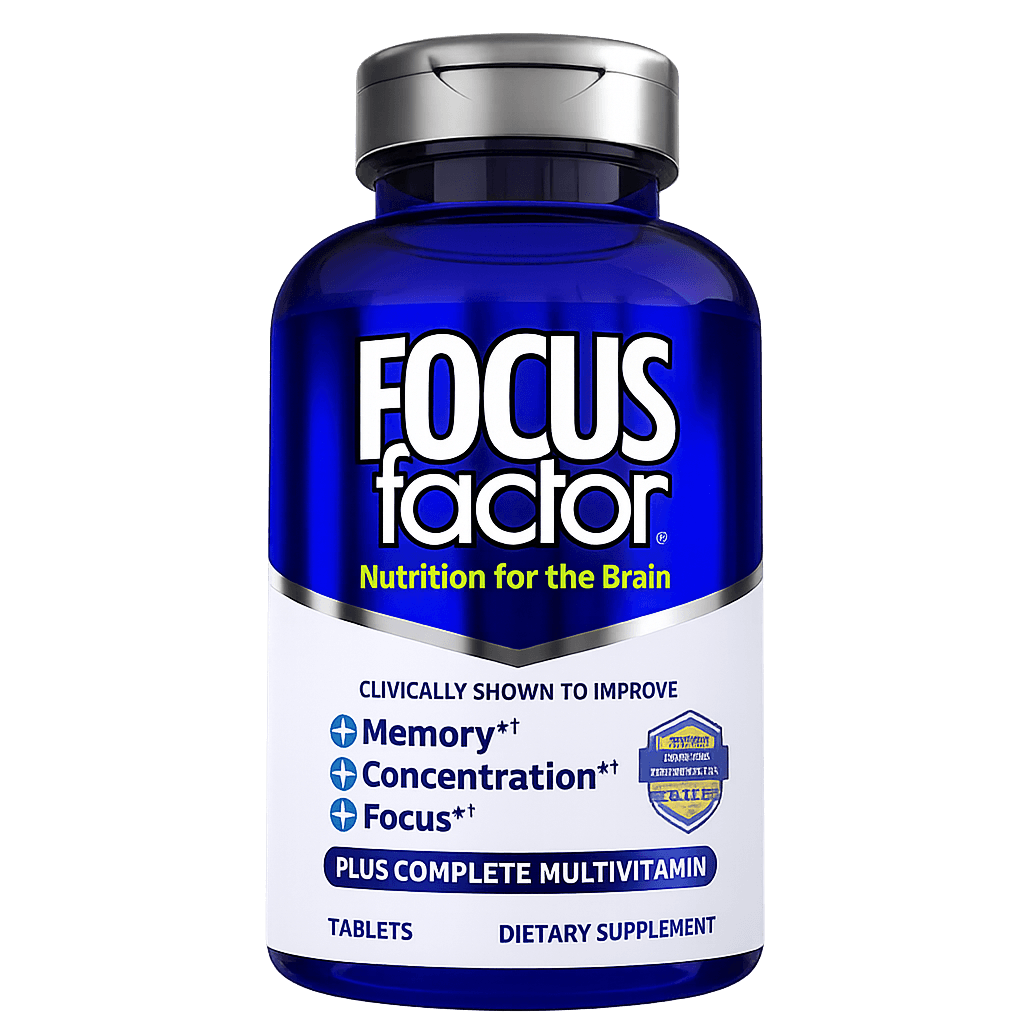
Focus Factor VSL and Ads Analysis
Few emotional registers in direct-response advertising are as powerful, or as ethically fraught, as the dementia caregiving story. The image of a parent who no longer recognizes their child is on…
8,226+
Videos & Ads
+50-100
Fresh Daily
$29.90
Per Month
Full Access
12.5 TB database · 72+ niches · 26 min read
Few emotional registers in direct-response advertising are as powerful; or as ethically fraught, as the dementia caregiving story. The image of a parent who no longer recognizes their child is one of the most universally feared scenarios in adult life, and it is precisely that fear that the Focus Factor propolis VSL deploys in its opening seconds. Before a viewer has had time to evaluate the claim, they are already inside a grief narrative: a daughter, an assisted-living facility, a mother stripped of the ability to recognize her own family. The analytical question this piece investigates is not simply whether propolis can support cognitive health, the science on that is worth examining seriously, but how a 150-word video ad builds an emotional architecture so complete that it moves a viewer from passive scrolling to a click, and whether the product beneath that architecture can bear the weight of what is promised.
The VSL promotes Focus Factor, here specifically framed around a concentrated bee propolis extract administered as drops. The pitch arrived in the form of a short social-media video, the kind designed to autoplay silently and then grab with a spoken exclamation, "Oh my god", before a viewer can scroll past. Within roughly forty-five seconds, it covers a full dramatic arc: crisis, unexpected intervention, miraculous resolution, and a call to action wrapped in manufactured urgency. That density of persuasive moves per second is characteristic of what performance marketers call a pattern interrupt hook, and the script executing it is more carefully constructed than its folksy tone implies. Understanding how it works matters whether you are a caregiver researching real options, a marketer studying the craft, or a consumer trying to decide whether to click.
This analysis works through the VSL's claims, ingredients, persuasion mechanics, and authority signals in sequence. The goal is to give the reader who is actively researching this product, or the broader category of natural cognitive supplements, an honest account of what the pitch says, what the science behind its central ingredient actually supports, and where the gap between the two is wide enough to require caution. The central question: does Focus Factor's propolis formulation represent a credible natural adjunct for cognitive health, or is the product's primary function to carry an emotionally engineered narrative to a checkout page?
What Is Focus Factor?
Focus Factor is a cognitive health supplement brand that has been present in the American market for over two decades, historically positioned as a broad-spectrum brain-health multivitamin sold in retail outlets. The VSL under analysis, however, does not represent Focus Factor's mainstream retail product. Instead, it markets a specific formulation centered on concentrated propolis extract. Bee propolis, the resinous compound honeybees use to seal and sterilize their hives. Delivered in liquid drop form. This positions the product within the fast-growing subcategory of single-hero-ingredient natural cognitive supplements, a category that has seen dramatic commercial expansion alongside mainstream awareness of conditions like Alzheimer's disease and age-related memory decline.
The format; drops mixed into juice, is a deliberate differentiation from the standard capsule supplement. The VSL explicitly notes that the remedy is "not a pill or a medication," a framing that distances the product from the pharmaceutical category while simultaneously borrowing that category's aura of therapeutic effect. The target user, as constructed by the ad, is an adult caregiver, most likely a middle-aged adult child watching a parent decline, who has exhausted or distrusts conventional medical options and is searching for something natural, accessible, and gentle enough to administer without a prescription. This is a commercially well-defined avatar: anxious, emotionally motivated, and actively searching in a state of moderate desperation.
The product's market positioning leans heavily on the "centuries-old natural ingredient" frame, which places it in the lineage of traditional medicine marketing, a lineage with both genuine ethnobotanical substance and a long history of commercial exploitation. Propolis has a real record of use in folk medicine across Eastern Europe, South America, and Asia, and it has attracted genuine interest from researchers studying its antioxidant and anti-inflammatory properties. Whether that research supports the specific claims made in this VSL is a separate question, addressed in detail in the sections that follow.
The Problem It Targets
The VSL targets one of the most statistically significant and emotionally charged health crises facing aging populations worldwide: dementia and cognitive decline. According to the World Health Organization, approximately 55 million people globally live with dementia, with nearly 10 million new cases diagnosed each year. In the United States, the Alzheimer's Association estimates that more than 6.7 million Americans aged 65 and older are living with Alzheimer's disease alone, making it the fifth-leading cause of death in that age group. These are not niche numbers, they represent a generational health burden that touches virtually every extended family in the developed world, and they create a market of caregivers whose emotional stakes are among the highest in any consumer category.
What makes dementia a particularly potent commercial target is the combination of medical inadequacy and emotional desperation that surrounds it. Current FDA-approved medications for Alzheimer's can modestly slow progression in some patients but cannot reverse the disease or restore lost memories. That therapeutic gap, well-documented in the literature and widely known to caregivers who have watched medications fail their parents, creates fertile ground for alternative and natural supplement claims. The NIH's National Institute on Aging has published extensively on the state of Alzheimer's research, consistently noting that no supplement, diet, or lifestyle intervention has yet demonstrated the ability to reverse established dementia in clinical trials, though some show modest protective associations.
The VSL frames the problem not in clinical terms but in relational ones: a mother who "no longer recognized anyone in the family, not even me, her only child." This is a precise emotional targeting choice. The fear being activated is not the abstract fear of cognitive decline but the very specific fear of relational erasure. Of ceasing to exist in the mind of someone you love. That framing is more psychologically precise than most supplement advertising, which typically gestures at "brain fog" or "memory lapses" rather than the catastrophic endpoint. By opening at the endpoint. Assisted living, total non-recognition; the VSL has compressed the normal Problem-Agitate-Solution arc into a single scene, leaving no need to agitate further because the problem is already at maximum severity.
The commercial opportunity the VSL exploits is real and significant, and that is worth acknowledging honestly. Caregivers in this situation are not gullible; they are exhausted, grieving, and rationally searching for anything that might help. The supplement industry's ability to serve that need well, or to exploit it, hinges entirely on whether the products being sold have genuine evidentiary support. That is the question this analysis pursues.
Curious how the persuasion mechanics behind this claim stack up against other VSLs in the cognitive health space? Section 7 maps every psychological trigger deployed in this ad, and names the theorist behind each one.
How Focus Factor Works
The mechanism the VSL proposes is simple: a drop of concentrated propolis extract, mixed into juice, administered to an elderly person with advanced memory loss, produces rapid and dramatic restoration of cognitive function, specifically, the ability to recognize family members and an enhanced sense of mental clarity. The implied mechanism is that propolis contains bioactive compounds capable of acting on the brain's memory systems in a meaningful and relatively immediate way. The VSL does not attempt to explain the biology, relying instead on the emotional testimony of the result, which is a common approach when the proposed mechanism would not survive plain-language scrutiny.
Bee propolis is a biologically complex substance. It is composed of roughly 50% resins and vegetable balsams, 30% waxes, 10% essential oils, 5% pollen, and 5% various organic compounds including flavonoids, phenolic acids, and terpenoids. The flavonoids, particularly chrysin, quercetin, and kaempferol, have demonstrated antioxidant and anti-inflammatory properties in laboratory settings. Some animal studies have suggested that propolis extracts may reduce markers of neuroinflammation and oxidative stress in rodent models of cognitive impairment, mechanisms that are genuinely relevant to Alzheimer's pathology. A 2021 review published in Frontiers in Pharmacology (Anjum et al.) surveyed the neuroprotective potential of propolis compounds and concluded that, while the preclinical evidence is promising, human clinical trial data remains sparse and no dosing protocol for cognitive outcomes has been established.
The distinction between preclinical promise and clinical proof is critical here, and the VSL collapses it entirely. There is a plausible biological rationale for studying propolis in the context of neuroinflammation, that is established science. There is some early-stage human research suggesting benefits in metabolic and inflammatory conditions. That is plausible but not yet well-proven for cognition. The claim that a single drop can restore recognition in a patient with "rapidly advancing dementia" within days is speculative extrapolation so far beyond the available evidence that it cannot be described as anything other than extraordinary. Extraordinary claims require extraordinary evidence, and no such evidence appears in this VSL or in the current published literature on propolis and dementia.
What the product may legitimately offer is a delivery of antioxidant and anti-inflammatory compounds that could, as part of a broader health regimen, support general brain health in people at risk of or in early stages of cognitive decline. That is a far more modest and honest claim. One that would not, it should be noted, move 12,000 units.
Key Ingredients / Components
The VSL references a single active ingredient, keeping the formula presentation minimal and the focus entirely on the hero compound. The simplicity is strategic: complex ingredient lists invite scrutiny, while a single "ancient secret" invites belief.
Concentrated Bee Propolis Extract; Propolis is a resinous mixture produced by honeybees from tree saps, botanical resins, and beeswax, used in the hive as a structural sealant and antimicrobial barrier. The VSL claims it can restore memory and cognitive clarity in advanced dementia patients. Independent research, including studies indexed on PubMed (pubmed.ncbi.nlm.nih.gov), confirms propolis contains bioactive flavonoids and phenolic acids with antioxidant properties. A study by Khalifa et al. (2021) in Biomedicine & Pharmacotherapy found neuroprotective effects in animal models of Alzheimer's, but human trials demonstrating reversal of dementia-level cognitive loss do not currently exist in the peer-reviewed literature. Propolis is generally regarded as safe for most adults, though allergic reactions, particularly in individuals with bee or honey allergies, are a documented concern.
Carrier Medium (Juice), The delivery method of drops mixed into juice is not itself a therapeutic component, but it is a meaningful product-design choice. Liquid absorption may offer a faster onset than capsules for some compounds, and the ease of mixing into an existing drink reduces the psychological barrier for caregivers administering a new supplement to a resistant or confused elderly person.
Hooks and Ad Angles
The opening line, "Oh my god, this is a must-hear story for anyone struggling with memory loss", functions as a textbook pattern interrupt, a disruption of the viewer's automated scrolling behavior through a sudden, emotionally charged exclamation. The mechanism, well-documented in attention research and popularized in direct-response copywriting since the era of Claude Hopkins, works by triggering an orienting reflex: the brain's automatic response to unexpected or emotionally significant stimuli is to pause and attend. "Oh my god" is colloquial, immediate, and tonally jarring in the context of a health ad, it sounds like a person speaking, not a marketer writing, and that authenticity illusion is precisely its function.
Beyond the pattern interrupt, the hook deploys what Eugene Schwartz, in Breakthrough Advertising, would identify as a stage-four market sophistication move. By 2024, the average social-media user browsing in the health and wellness space has seen hundreds of supplement ads making direct claims: "improves memory," "boosts focus," "reverses aging." A direct pitch no longer converts a sophisticated audience. The VSL sidesteps the direct pitch entirely, entering instead through a personal narrative that does not announce itself as advertising until the final five seconds. The viewer is not told "here is a product that helps with dementia". They are invited into someone's family crisis, and the product reveals itself only after emotional investment has been established. This is an epiphany bridge structure: the buyer arrives at the product conclusion themselves, carried there by the story, rather than being told to buy.
The choice of a caregiver narrator rather than the patient is also analytically significant. The target buyer is not the person with dementia. It is the adult child who searches "natural remedies for dementia" at 11pm after a difficult phone call with an assisted-living facility. The narrator is that buyer. The ad is a mirror.
Secondary hooks observed in the VSL:
- "She no longer recognized anyone in the family, not even me, her only child"
- "This simple trick wasn't a pill or a medication"
- "What happened today completely shocked me"
- "She even said she feels more clear-headed than she's ever felt in her life"
Ad headline variations for Meta or YouTube testing:
- "A nurse showed me this propolis trick. My mother's memory came back."
- "Doctors said nothing could help. Then one drop changed everything."
- "If your parent is in memory care, read this before you give up"
- "The centuries-old ingredient neurologists aren't talking about"
- "12,000 families tried this. Here's what actually happened."
Psychological Triggers and Persuasion Tactics
The persuasive architecture of this VSL is notable for how efficiently it stacks multiple psychological mechanisms within a very short runtime. Rather than deploying one dominant technique; authority, say, or social proof, the script builds a layered compound structure in which each mechanism reinforces the others. The grief narrative establishes emotional salience; the insider-knowledge frame converts that emotion into curiosity; the social proof number (12,000 lives) converts curiosity into social permission; and the urgency signal converts permission into action. This is not accidental sequencing. It mirrors the persuasion funnel that Cialdini describes across his research on influence: first establish liking and emotional resonance, then move to social proof, then close with scarcity.
What distinguishes this VSL from lower-sophistication examples in the same category is the almost complete absence of explicit product claims in the first 80% of the script. The product is never named directly. The mechanism is attributed to a nurse rather than a brand. The transformation testimony comes before any offer is visible. This structure reduces the viewer's defensive processing, the cognitive mode in which we evaluate claims skeptically, by keeping the content in personal-story mode for as long as possible. By the time the call to action arrives, the viewer is operating from an emotional rather than analytical frame.
- Pattern interrupt via exclamation, Cialdini's liking and attention research from Kahneman's Thinking, Fast and Slow: "Oh my god" triggers System 1 processing, bypassing critical evaluation and creating immediate emotional engagement before the rational mind can form a defensive posture.
- Loss aversion and mortality salience, Kahneman & Tversky's Prospect Theory: the scenario of a mother not recognizing her child activates the fear of irreversible loss, which research consistently shows is a more powerful motivator than equivalent potential gains. "Before it's too late" closes the loop with direct mortality framing.
- Insider knowledge / suppressed secret, Schwartz's market sophistication framework, stage four: the nurse-administered "homemade" remedy implies that effective knowledge exists outside official medicine, positioning the viewer as newly initiated into a privileged circle of knowing.
- Social proof via large-number claim, Cialdini's Social Proof principle: "already changing over 12,000 lives" provides the heuristic shortcut that if thousands of others have acted, the behavior is validated. The number is specific enough to sound researched without being verifiable.
- Identity and relational threat. Festinger's cognitive dissonance theory applied to caregiver identity: not clicking, after hearing this story, would place the viewer in the uncomfortable position of someone who knew about a potential remedy and chose not to try it. The story pre-loads guilt for inaction.
- False binary / naturalistic frame. Lakoff's framing theory: "not a pill or a medication... a pure natural ingredient" constructs a moral binary in which pharmaceutical = failed and natural = virtuous, a frame that bypasses the more accurate position that both categories contain effective and ineffective interventions.
- Vague urgency / ambiguous scarcity; Cialdini's Scarcity principle: "before it's too late" and "click now" imply impending loss of access without specifying the mechanism, which research on ambiguous threats suggests produces higher anxiety and faster action than specific, verifiable scarcity claims.
Want to see how these persuasion structures compare across other cognitive health VSLs? That analysis is exactly what Intel Services is built to deliver.
Scientific and Authority Signals
The VSL's authority architecture is built on a single, unnamed source: a "kind nurse" at the assisted-living facility who introduces the propolis remedy. This is a carefully chosen credibility vehicle. A nurse occupies an interesting position in the American health authority hierarchy, trusted more than a general public speaker, but not positioned as a prescribing authority whose claims could be fact-checked against a license or publication record. The word "kind" is doing significant work: it humanizes the source, displaces professional scrutiny with emotional warmth, and implies that the recommendation is motivated by genuine care rather than commercial interest. There is no verifiable name, no institution, no credential beyond the occupational category. By every standard of evidence evaluation, this is anonymous authority, borrowed credibility with no traceable origin.
The VSL cites no studies, no clinical trials, no institutional endorsements, and no published research. This is consistent with the FTC's ongoing concerns about the supplement industry's use of unsubstantiated testimonial claims, and it represents a significant weakness in the ad's epistemic foundation. The absence of scientific citation does not mean the underlying ingredient lacks research, as noted earlier, bee propolis has attracted legitimate scientific attention, but it does mean the specific claims made in the ad (rapid restoration of recognition in advanced dementia patients) rest entirely on the testimony of an anonymous narrator describing a single anecdotal case. Anecdote is not evidence, a principle that no amount of emotional resonance changes.
The number "12,000 lives" functions as a pseudo-authority signal, implying that a substantial body of user experience validates the product. This is a form of borrowed social authority rather than scientific authority: it does not tell the viewer that researchers have tested the product, only that other consumers have used it. The two are frequently conflated in supplement marketing, sometimes accidentally, often deliberately. A rigorous buyer should ask: 12,000 lives changed, documented how? By whom? Over what period and with what outcome measures? These questions have no answers in the VSL, which is itself informative.
For readers wanting legitimate research on propolis and neurological health, the most credible current literature is accessible through PubMed. Relevant search terms include "propolis neuroprotection," "bee propolis Alzheimer's," and "flavonoids cognitive decline." The honest summary of that literature, as of this writing, is: promising preclinical findings, very limited human trial data, no established clinical protocol for dementia treatment, and a safety profile that is generally favorable with the noted exception of bee-allergy reactions.
The Offer, Pricing, and Risk Reversal
The VSL does not disclose a price, name a specific product, or outline a guarantee, it functions purely as a click-through driver designed to move the viewer to a longer sales page or video where those offer elements will be revealed. This is a common two-step funnel structure in the supplement space: the social-media ad functions as emotional pre-qualification, ensuring that only viewers who are already emotionally engaged and motivated arrive at the offer page. By withholding the price and the formal offer mechanics, the ad avoids triggering the rational price-evaluation mode that tends to slow or stop conversions.
The urgency mechanism deployed, "click before it's too late" and "this natural recipe is already changing over 12,000 lives". Is what conversion-rate optimization practitioners call soft scarcity: an implied threat of missing out that is not grounded in a specific, verifiable constraint (limited inventory, sale ending date, number of spots). Soft scarcity is a widely used technique because it is legally safer than specific false scarcity claims and psychologically nearly as effective. The ambiguity of the threat. What exactly will be "too late" for?; leaves the viewer's imagination to fill the gap, often with a more frightening scenario than the copy itself would be allowed to state.
Without a disclosed price or guarantee structure visible in the VSL, it is not possible to evaluate the offer mechanics in full. What can be said is that the funnel architecture, maximum emotional loading in the ad, offer details withheld until the landing page, is a structure optimized for high click-through rates at the cost of potentially lower landing-page conversion, since viewers who arrive highly emotional but then encounter a hard price decision must re-engage their analytical faculties. The most successful implementations of this structure typically use a long-form VSL on the landing page to maintain the emotional frame through the price reveal.
Who This Is For (and Who It Isn't)
The buyer this VSL is designed to reach is demographically and psychographically specific: an adult, most likely female, between roughly 45 and 65 years old, with a parent or spouse experiencing noticeable cognitive decline. She searches for natural and alternative health solutions, has some distrust of pharmaceutical-only approaches to dementia care, and consumes health content on social media, Facebook and YouTube being the most probable platforms for this particular ad style. She is likely in a state of active, ongoing stress around a caregiving situation, which means her decision-making is operating under cognitive load and emotional activation. In that state, a story that mirrors her own experience and offers a simple, hopeful action is highly persuasive precisely because it requires so little cognitive effort to accept.
The product may also appeal to individuals in early-stage personal cognitive decline who are searching proactively for natural support, people in their 50s or 60s noticing increased forgetfulness who are not yet in any clinical category but are motivated to act preventively. For this sub-group, the evidence base for propolis as an antioxidant and anti-inflammatory supplement is at least plausible as a general wellness rationale, even if the dementia-reversal claims are not.
Who should approach this with significant caution: anyone whose loved one is in active, diagnosed dementia and who might delay or forgo a neurologist consultation in favor of this supplement; anyone with a bee allergy or honey allergy, given that propolis can trigger serious allergic reactions; and anyone evaluating this as a primary intervention rather than a potential adjunct. The absence of clinical trial data for the specific claim of reversing advanced dementia is not a minor caveat, it is the central fact that a careful buyer must hold onto when evaluating this purchase. The emotional architecture of the VSL is precisely engineered to make that fact feel irrelevant. It is not.
Researching cognitive health products and want to see how their marketing claims hold up against the published science? Intel Services covers this category in depth.
Frequently Asked Questions
Q: Does Focus Factor propolis really work for memory loss and dementia?
A: The current scientific evidence on bee propolis and cognitive health is promising in preclinical (animal) studies, with some early human research on its antioxidant and anti-inflammatory properties. However, no peer-reviewed clinical trial has demonstrated that propolis reverses advanced dementia or restores recognition memory as depicted in the VSL. The claims made in the ad go well beyond what the published science supports.
Q: Is the Focus Factor propolis supplement a scam?
A: That depends on the definition. Bee propolis is a real substance with genuine bioactive compounds and some research backing its antioxidant properties. The product is likely a real supplement. What is misleading is the gap between the dramatic recovery story in the VSL, a fully non-recognizing dementia patient who recovers within days, and what any propolis supplement could plausibly deliver based on available evidence. Whether that gap constitutes a "scam" is a legal and ethical judgment; what is clear is that the claims are unsubstantiated by clinical trial data.
Q: Are there side effects to taking concentrated propolis extract?
A: Propolis is generally well-tolerated by most adults. The primary documented risk is allergic reaction, which can range from mild skin irritation to, in rare cases, more serious systemic reactions in individuals with allergies to bees, honey, or bee products. People taking blood-thinning medications should consult a doctor before use, as some propolis components may have mild anticoagulant properties. Elderly individuals with multiple health conditions or medications should always discuss new supplements with their physician.
Q: Is propolis safe for elderly people with cognitive decline?
A: Propolis is not known to be broadly unsafe for elderly individuals, but the safety data in frail or medicated older populations is limited. The main concern is allergic reaction and potential interactions with medications commonly prescribed in older adults, including blood thinners and immunosuppressants. A physician or pharmacist review before starting any new supplement is strongly advisable for this population.
Q: What does the research actually say about propolis and brain health?
A: Laboratory and animal research suggests that flavonoids and phenolic acids in propolis can reduce markers of neuroinflammation and oxidative stress. Mechanisms relevant to neurodegenerative conditions. A 2021 review in Frontiers in Pharmacology (Anjum et al.) summarized the neuroprotective potential of propolis compounds and called for human clinical trials. Human trial data specifically on dementia or Alzheimer's is currently minimal, and no clinical protocol for dosing has been established.
Q: Who is the nurse in the Focus Factor VSL and is the story real?
A: The nurse is unnamed and unverifiable. The narrative is presented as a personal testimonial, but no identifying information is provided for the narrator, the nurse, or the facility. This is a standard practice in direct-response supplement advertising and does not confirm or deny that a real experience underlies the story. Viewers should evaluate it as illustrative content, not documented case evidence.
Q: How does Focus Factor compare to other memory supplements on the market?
A: The mainstream Focus Factor retail product is a broad-spectrum brain health multivitamin with ingredients including Bacopa monnieri, phosphatidylserine, and various vitamins, which have more established research backing for general cognitive support than propolis alone does for dementia reversal. The propolis-specific product in this VSL occupies a different positioning. More dramatic claims, less research transparency; than the brand's core retail line. Comparison shoppers should examine ingredient lists and research backing for each specific formulation rather than treating the brand as monolithic.
Q: Is it safe to give this supplement to a parent with Alzheimer's without telling their doctor?
A: No. Any supplement introduced to a person with Alzheimer's or advanced dementia should be disclosed to their treating physician or geriatrician. Individuals in that stage of cognitive decline are often on multiple medications, and even "natural" supplements can interact with those medications in meaningful ways. This is not a precautionary boilerplate statement, it is a practical safety requirement for that specific population.
Final Take
The Focus Factor propolis VSL is a technically proficient piece of emotional direct-response advertising. Its opening pattern interrupt, its caregiver-narrator mirror structure, its staged revelation of the product, and its layered psychological triggers, loss aversion, social proof, insider-knowledge framing, vague urgency, are assembled with the kind of craft that suggests either experienced copywriters or extensive split-testing, probably both. As an object of marketing analysis, it rewards study: it demonstrates how a very short ad can contain a complete persuasive architecture by selecting the right emotional entry point and trusting the narrative to carry the cognitive load.
As a product proposition, the situation is less clean. Bee propolis is a real ingredient with a genuine and growing body of preclinical research. The claim that it supports antioxidant and anti-inflammatory processes relevant to brain health is scientifically defensible in broad terms. The specific claim that a drop of it, mixed into juice, can restore a non-recognizing dementia patient's memory within days is not defensible by any current standard of evidence, and that is not a minor overstatement but a fundamental mismatch between marketing and science. The supplement industry's regulatory environment in the United States permits this kind of testimonial-driven claim because the product is not being sold as a treatment for a specific disease. The FTC's guidelines on substantiation for health claims require competent and reliable scientific evidence, but enforcement against individual short-form ads in this category is inconsistent at best.
The broader market context this VSL illuminates is significant. The dementia caregiving space is, in human terms, one of the most vulnerable commercial environments that exists, people in grief, exhaustion, and desperation, making decisions under emotional load with limited time for due diligence. The fact that a well-crafted short ad can move thousands of them to a checkout page is a testament not to their gullibility but to the power of narrative when it is precisely calibrated to match an existing pain. The ethical question for product makers and marketers operating in this space is whether the product being sold genuinely earns the story being told about it. In this case, the evidence suggests the story has considerably outrun the product.
For a reader who has arrived at this analysis while researching memory supplements for a parent or for themselves: propolis is worth asking a doctor about as a potential adjunct with a plausible biological rationale, not as a replacement for neurological care or as a source of the dramatic transformation depicted in the ad. The emotional resonance of the story is real; the evidentiary basis for the specific claims is not. Those are two different things, and keeping them separate is the most important work a careful consumer can do.
This breakdown is part of Intel Services, our ongoing library of VSL and ad-copy analyses. If you are researching similar products in the cognitive health or supplement space, keep reading, the patterns across this category are illuminating.
Disclaimer: This article is for research and educational purposes only. It is not medical, legal, or financial advice, and it is not affiliated with the product or its makers. Always consult a qualified professional before making health or financial decisions.
Comments(0)
No comments yet. Members, start the conversation below.
Related reads
 reviews
Mind Lab Pro Review: Does the 30-Day Study Match v4?
Mind Lab Pro v4 lists exact amounts for 11 ingredients and contains no caffeine or stimulants, according to its official page. A 30-day finished-product study reported favorable memory findings, but its abstract does not identify v4 or disclose the tested form or dose.
Read reviews
Life Extension Two-Per-Day Multivitamin Review: Evidence Limits
Life Extension Two-Per-Day is a 120-capsule multivitamin displayed as a 60-day supply. Its identity and dated prices are verified, but the supplied evidence does not reproduce the complete quantitative Supplement Facts panel or include a trial of the finished product. Research involving another multivitamin cannot prove that these capsules improve memory or deliver Life Extension’s broader health-support claims.
Read reviews
Ritual Essential for Women 50+ Review: Label, Study Fit, and Verdict
Ritual Essential for Women 50+ is an iron-free capsule multivitamin positioned by Ritual for women after menopause. Its verified label lists 100 micrograms of vitamin K2 as menaquinone-7. The supplied study did not test this finished product, and the packet provides no exact price.
Read