Glucea VSL and Ads Analysis
At 3 o'clock in the morning, a 64-year-old man in Texas reaches for the blood pressure cuff on his nightstand. The reading: 160 over 100. His medications; lisinopril, amlodipine, a diuretic, baby …
8,226+
Videos & Ads
+50-100
Fresh Daily
$29.90
Per Month
Full Access
12.5 TB database · 72+ niches · 27 min read
At 3 o'clock in the morning, a 64-year-old man in Texas reaches for the blood pressure cuff on his nightstand. The reading: 160 over 100. His medications, lisinopril, amlodipine, a diuretic, baby aspirin. Are all failing him. His grandkids are asleep in the next room, and he is quietly terrified. This is the scene that opens the Glucea Video Sales Letter, and it is constructed with a precision that deserves serious scrutiny. The imagery is not accidental. Every detail. The 3am timestamp, the nightstand cuff, the grandchildren inside; is engineered to detonate a specific cluster of fears in a specific demographic of American adults, and then offer a single, urgent exit.
The VSL does not stay with the intimate for long. Within ninety seconds it escalates to Elon Musk, a suppressed Fox News interview, a $48 billion pharmaceutical conspiracy, and a black-salt solution tested on 30,000 astronauts in orbit. It is, by any analytical standard, one of the most structurally aggressive health VSLs currently circulating in the direct-response space. It deploys celebrity impersonation, suppressed-truth framing, false government partnerships, and a price-anchor so extreme it borders on parody, all in service of a $23 supplement kit. The question this piece investigates is not simply whether Glucea works. The deeper question is what this VSL tells us about the state of health marketing in the hypertension niche, who it is built for, and how a buyer should read its claims before making any decision.
This analysis works through the VSL's structure systematically: the hook architecture, the claimed science, the ingredients, the authority figures invoked, and the offer mechanics. Where scientific claims can be evaluated against published research, they are. Where the marketing apparatus diverges from evidence, that divergence is named precisely. This is not a takedown piece, nor is it a promotional one. It is a close reading of a complex persuasive document, and readers researching Glucea before purchasing deserve that kind of reading.
What Is Glucea?
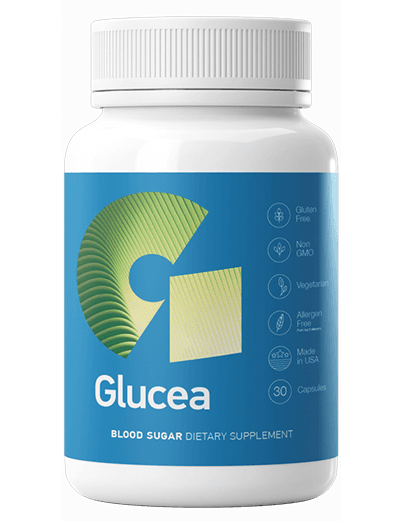
Glucea is a physical supplement kit sold through direct-response marketing channels at a stated price of $23. Based on the VSL, its central active ingredient is black salt, a mineral compound distinct from standard table salt, combined with water and an unspecified blend of natural compounds. The product is positioned as a cardiovascular protocol rather than a conventional supplement: the language throughout emphasizes a "three-week course" rather than a daily pill, and the claimed mechanism is systemic pressure restoration rather than symptomatic relief. The format appears to be a powdered or crystalline mix that the user dissolves in water, though the VSL is deliberately vague on the exact physical form of what arrives in the kit.
In market-positioning terms, Glucea occupies a category the direct-response industry calls the "suppressed cure" niche, products that are framed not as better alternatives to pharmaceuticals but as hidden replacements for them, made available only through unofficial channels. This positioning is distinct from mainstream supplement marketing and carries different regulatory and credibility implications. The stated target user is an adult, typically aged 55 to 75, who has been diagnosed with hypertension, is currently taking one or more prescription medications, and is dissatisfied with both their results and the side-effect profile of those drugs. The VSL does not position Glucea as a complement to medical treatment; it explicitly positions it as a replacement.
The brand does not have an obvious footprint on mainstream retail platforms or in peer-reviewed literature, which is consistent with the VSL's framing that the product is being distributed through a direct, off-market program. That framing is itself a persuasive device. But understanding the product's actual category is essential before evaluating any individual claim.
The Problem It Targets
Hypertension is among the most commercially significant chronic conditions in the United States, which makes it among the most heavily targeted by both pharmaceutical manufacturers and alternative-health marketers. According to the CDC, approximately 47% of American adults. Roughly 116 million people; have high blood pressure, and only about 1 in 4 of those with hypertension have it under control. The VSL cites "40 million Americans" with the condition, a figure that is conservative relative to CDC data and likely chosen because it sounds large but not implausible. The true scale of uncontrolled hypertension is, if anything, more serious than the VSL suggests.
What makes hypertension such a durable commercial opportunity, and what the VSL correctly identifies, is the genuine frustration many patients experience with current treatment. The Journal of the American Medical Association (JAMA) has published extensively on treatment-resistant hypertension, a condition in which blood pressure remains above target levels despite concurrent use of three or more antihypertensive medications at optimal doses. Estimates suggest this affects 10-15% of all hypertensive patients, and medication side effects, including dizziness, fatigue, frequent urination from diuretics, and cough from ACE inhibitors, are among the most commonly cited reasons patients reduce or discontinue treatment. The VSL's portrait of a patient juggling an ineffective "whole damn cocktail" of medications is not a fiction; it is a recognizable clinical reality for millions of people.
The VSL's framing of the problem, however, extends well beyond the clinical into the conspiratorial. The pharmaceutical industry's $7.3 billion in TV advertising is presented not as a commercial fact but as direct evidence of suppression, the implication being that networks will censor any information that threatens drug revenues. This is a false enemy frame: it takes a real structural tension (pharmaceutical companies do spend heavily on advertising, and that spending does create financial entanglements with media networks) and extrapolates from it a specific, active conspiracy to murder a particular interview about a particular product. The structural tension is real; the specific conspiracy is unverifiable and almost certainly fabricated. This distinction matters enormously for the reader trying to calibrate how much of the VSL's premise to trust.
Finally, the 84% complication statistic, "within five to seven years, 84% of people with hypertension develop irreversible complications", is deployed at least three times in the transcript. No source is provided. Published epidemiological literature does document significantly elevated risk of stroke, myocardial infarction, and end-organ damage in poorly controlled hypertension, but the specific figure of 84% in a five-to-seven-year window has no identifiable citation in major cardiology literature and should be treated as an unverified rhetorical number rather than an established data point.
Curious how other VSLs in this niche structure their pitch? Keep reading. The hooks and persuasion sections below break down exactly how this letter moves from fear to purchase.
How Glucea Works
The claimed mechanism of Glucea rests on three interconnected propositions. First, that conventional blood pressure medications fail because they mask symptoms rather than addressing the "real" cause. A breakdown in the body's natural pressure-control signaling. Second, that this signaling breakdown can be corrected by restoring proper electrolyte balance, specifically through the unique properties of black salt. Third, that this restoration process was discovered and validated through SpaceX's research into cardiovascular function in zero gravity, where fluid redistribution and baroreceptor dysfunction were observed in astronauts and then reverse-engineered into a civilian protocol.
The first proposition has a legitimate scientific core. It is true that most antihypertensive drugs; beta-blockers, calcium channel blockers, diuretics, ACE inhibitors, work through pharmacological mechanisms that modulate blood pressure without addressing underlying causes such as arterial stiffness, chronic inflammation, or autonomic nervous system dysregulation. The field of precision cardiology is genuinely interested in more mechanistic approaches to hypertension. However, the VSL's leap from "current drugs are imperfect" to "we have definitively solved the root cause" is a logical gap of significant proportions. The claim that "synthetic drugs can't reproduce the natural signal needed for counter pressure" is stated as an established fact but is not supported by any named study or researcher.
The second proposition, that black salt specifically corrects this signaling breakdown, is where the science becomes most strained. Black salt (sold as Himalayan black salt or kala namak) does contain trace minerals including iron, magnesium, and potassium in addition to sodium chloride, and there is legitimate nutritional science supporting the role of potassium in blood pressure regulation. A 2020 meta-analysis published in the Journal of Hypertension by Poorolajal et al. confirmed that potassium supplementation is associated with modest reductions in systolic blood pressure, particularly in populations with low baseline potassium intake. But the VSL's claim that black salt has properties categorically different from regular salt, that it "regulates iron levels and eases the work of the heart" in ways that normal sodium chloride does not, is not supported by any published pharmacological literature this analysis could identify. The iron content in black salt is present in trace quantities insufficient to produce meaningful physiological effects at culinary doses.
The third proposition, the SpaceX origin story, functions primarily as a narrative device. Cardiovascular research in microgravity is a genuine field, NASA and the European Space Agency have published peer-reviewed research on fluid shifts, baroreceptor unloading, and orthostatic intolerance in astronauts, but none of that research involves black salt as a therapeutic protocol, and none of it has been commercialized through a direct-to-consumer supplement kit. The "30,000 astronaut health records" cited in the VSL have no corresponding publication, database, or NASA disclosure that can be verified.
Key Ingredients and Components
The VSL's ingredient disclosure is unusually sparse for a health product, which is itself a data point. In most legitimate supplement marketing, formulation transparency is a primary credibility signal. Here, the formulation is described in broad strokes across several minutes of narrative without a single specific dose, concentration, or standardization being named. What can be reconstructed from the transcript:
Black salt. The central and most specifically named ingredient. Himalayan black salt (kala namak) is a sulfurous mineral salt used in South Asian cuisine, containing sodium chloride alongside trace iron sulfide, hydrogen sulfide, and various other sulfur compounds. The VSL claims it "regulates iron levels, eases the work of the heart, and lowers blood pressure". Properties not established in clinical pharmacology literature at the doses achievable through a dissolved salt solution. Potassium in black salt could, in theory, contribute marginally to blood pressure regulation, but the concentration present is far below that used in potassium supplementation trials showing meaningful clinical effects.
Unspecified natural compounds; the VSL refers repeatedly to "a blend of natural compounds with black salt" that "restart pressure control mechanisms, restore fluid balance, and strengthen vessels." No individual compounds are named, no concentrations are disclosed, and no third-party testing or certificate of analysis is referenced. This level of opacity makes independent evaluation of the formulation impossible.
Water, explicitly described as the delivery medium for the protocol, in a "black salt and water solution" format modeled on astronaut hydration protocols. Water is, of course, not a therapeutic ingredient in any pharmacological sense, though adequate hydration does support cardiovascular function generally.
Electrolyte balance complex (sodium-potassium), framed as the core functional mechanism. The VSL states the formula "restores sodium and potassium balance, helps the heart, and balances fluid even under strain." This is consistent with the established science of electrolyte physiology, the sodium-potassium pump is foundational to cellular function and blood pressure regulation, but whether the product's formulation actually achieves clinically meaningful electrolyte rebalancing is impossible to assess without disclosed ingredient quantities.
Hooks and Ad Angles
The opening hook of this VSL operates at what copywriting theorist Eugene Schwartz would identify as a Stage 5 market sophistication level: the audience has seen every blood pressure supplement pitch, every "doctors hate this trick" ad, and every superfood claim. A direct product pitch lands with zero impact on this buyer. The only move that works is a new mechanism delivered inside a credible frame, and the frame chosen here is the suppressed investigative broadcast. The hook, paraphrased: "Fox News was supposed to air an interview with Elon Musk about a space breakthrough, Big Pharma had it killed hours before airtime." In under thirty words, this opening simultaneously activates reactance theory (Brehm, 1966, forbidden information is inherently more desirable), invokes two of the most recognizable media brands in America (Fox News, Elon Musk), and positions the viewer as a rebel gaining access to truth the powerful want buried. It is, analytically, one of the more sophisticated cold-audience hooks deployed in this niche, and its sophistication makes it more dangerous, not less, because it is more likely to overcome the skepticism of an otherwise cautious buyer.
The hook also functions as what direct-response copywriters call an open loop. A narrative question ("what was in that interview?") that the brain physiologically resists closing until resolved. The entire first act of the VSL is structured to withhold the answer. The protocol details; while compounding the emotional pressure to keep watching. The 3am blood pressure scene, the $48 billion pharmaceutical industry stat, and the "this video keeps getting taken down" urgency cue all serve the open loop rather than the product pitch. The listener is not being sold a supplement; they are being pulled through a story that positions the supplement as the resolution of a conspiracy narrative they are now emotionally invested in.
Secondary hooks and testable ad variations observed in the VSL:
Secondary hooks from the VSL:
- "You're medicating one problem while creating three more, and in five years you'll need pills for the pills"
- "30,000 documented cases. The data is undeniable."
- "If this went through pharmacies, they'd price it at $5,000, we're offering it for $23"
- "Your heart won't wait. Two choices."
- "They banned Musk's social accounts right after he shared it"
Testable ad headline variations for Meta or YouTube:
- "Cardiologists Are Furious: The $23 Astronaut Protocol That Replaced Their $850/Year Prescriptions"
- "Fox Pulled This at 11pm. We Have the Clip. Watch Before It's Gone."
- "I Had 160/100 for 11 Years. One Week on This Protocol Changed Everything."
- "The Black Salt Solution NASA Uses in Orbit, Now Available to Americans for the First Time"
- "Why Does Big Pharma Spend $7.3 Billion on TV Ads? Because They're Terrified of This."
Psychological Triggers and Persuasion Tactics
The persuasive architecture of this VSL is unusually layered, stacking authority, loss aversion, in-group identity, and scarcity in a sequential rather than parallel structure, meaning each trigger is introduced only after the previous one has had time to settle. This is a deliberate structural choice: parallel presentation of multiple persuasion mechanisms reads as manipulation to a sophisticated audience, while sequential stacking feels more like a logical progression toward a conclusion. Cialdini would recognize the overall architecture; Schwartz would identify the market-sophistication strategy; Kahneman would note the sustained exploitation of System 1 (fast, emotional) thinking throughout, with deliberate suppression of System 2 (slow, analytical) engagement through time pressure and emotional intensity.
What makes this VSL particularly sophisticated from a persuasion engineering standpoint is the inoculation against skepticism built directly into the script. At least three times, the simulated Elon Musk character says some version of "I know this sounds too good to be true", a technique that psychologists call self-inoculation, where the seller voices the buyer's objection before the buyer can articulate it, then answers it, thereby defusing resistance. The buyer who was about to think "this sounds like a scam" hears Musk say it first, feels momentarily understood, and is more likely to accept the counter-argument that follows.
Celebrity impersonation as borrowed authority (Cialdini's Authority principle): Elon Musk's name, voice simulation, and persona are used throughout to transfer his existing public trust to the product. The audience is not evaluating Glucea, they are evaluating their trust in Elon Musk, which is pre-formed and not subject to the same scrutiny as a brand they have never encountered.
Mortality salience and terror management (Greenberg, Pyszczynski & Solomon, 1986): The recurring imagery of stroke, of dying in the garage, of "sleeping with one eye open" activates unconscious death anxiety, which Terror Management Theory predicts will make individuals more receptive to worldview-affirming solutions, in this case, a product that promises to eliminate the feared outcome entirely.
Reactance and forbidden knowledge (Brehm's Reactance Theory, 1966): The suppressed-interview frame makes the product information feel like contraband, which increases its perceived value. Information that "they" don't want you to have is automatically more credible and desirable to a listener who already distrusts institutional medicine.
False enemy / villain frame (Russell Brunson's "Expert Secrets" villain mechanism; Jungian shadow projection): By naming Big Pharma as a unified, malicious actor profiting from the audience's suffering, the VSL creates an emotionally satisfying explanation for why the listener is still sick despite following medical advice. Anger is redirected from ambiguous systemic causes toward a specific enemy. And the product becomes not just a supplement but an act of resistance.
Loss aversion (Kahneman & Tversky, Prospect Theory, 1979): The "84% complication" statistic, the "five to seven years until irreversible damage" framing, and the 3am scene all emphasize what the listener stands to lose by not acting. A far more powerful motivator than equivalent gain framing, consistent with decades of behavioral economics research.
Artificial scarcity (Cialdini's Scarcity principle; Thaler's endowment effect): "1,100 units left," "gone in under an hour," "36-month production cycle"; these constraints are presented as logistical facts rather than marketing tactics, and their function is to collapse the deliberation window that would allow a buyer to research the claims independently.
Price anchoring and the magnanimous benefactor frame (Thaler & Sunstein, anchoring heuristic): The $23 price is set against $5,000 (pharmacy), $1,600 (original program), and $850/year (medications), while the discount is attributed to a fictional government initiative. This makes the seller appear not as a commercial actor but as a public servant sacrificing profit for the greater good, one of the most effective frames in direct-response health marketing.
Want to see how these tactics compare across 50+ VSLs in the health and wellness space? That's exactly what Intel Services is built to show you.
Scientific and Authority Signals
The authority architecture of this VSL rests almost entirely on borrowed and fabricated legitimacy, a pattern that distinguishes it sharply from VSLs that at least gesture toward verifiable credentials. Elon Musk is among the most recognizable figures on earth, and his association with SpaceX gives the specific claim of space-medicine research a surface plausibility it would not otherwise have. But Musk has made no public statements about a hypertension protocol, has not conducted research in partnership with a figure named "Dr. Barbara O'Neill" on cardiovascular supplements, and has not given any interview to Laura Ingraham about blood pressure. The Fox News interview referenced in the VSL does not exist. This is not ambiguous authority borrowing, it is fabricated authority, a practice that in the United States carries significant FTC and FDA regulatory exposure.
Dr. Barbara O'Neill, named as Musk's co-developer, is a real person, an Australian naturopath who has been the subject of regulatory action in Australia. The Health Care Complaints Commission of New South Wales found her to be a risk to public health in 2019 and prohibited her from providing health services, citing advice she gave that was inconsistent with established medical science. Her inclusion in the VSL as a credentialed "heart expert" is misleading in the context of a product making clinical cardiovascular claims.
The "30,000 astronaut health records" and the "$1 billion invested over three years" are specific, impressive-sounding figures that appear in the VSL without any corresponding NASA publication, SpaceX press release, peer-reviewed journal article, or government disclosure. NASA does publish research on cardiovascular adaptation in microgravity, Dr. Charles Czeisler at Harvard Medical School has collaborated on NASA sleep and cardiovascular studies, and the Journal of Applied Physiology has published multiple papers on fluid redistribution and baroreflex function in astronauts, but none of that research points toward a black salt protocol or supports the VSL's mechanistic claims. The real science of space medicine is cited by implication; the specific claims made about it in this VSL have no traceable foundation.
The "National Access Health Initiative" described as subsidizing the $23 price point has no verifiable existence as a U.S. government program. Readers who search for this program will find no official government website, no Congressional authorization, and no HHS (Department of Health and Human Services) disclosure associated with it. Its invocation in the VSL functions to make a commercial transaction feel like a public service, borrowed governmental legitimacy for a private sale.
The Offer, Pricing, and Risk Reversal
At $23 with free shipping, the Glucea offer is engineered to eliminate price as a purchase barrier entirely. The price point is below the psychological threshold that triggers meaningful deliberation in most consumers. It is, as the VSL notes, "less than a dinner, less than a tank of gas". Which means the primary conversion obstacle is skepticism, not affordability. This is a deliberate design choice: the entire VSL is structured to neutralize skepticism through narrative immersion, leaving the frictionless price as the final nudge. The price anchoring against $5,000 (pharmacy price), $1,600 (original program price), and $850/year (annual medication cost) creates a perceived savings so extreme that the offer reads as almost implausible; and the VSL preemptively addresses that by attributing the discount to a fictional government subsidy rather than a commercial decision.
The guarantee offered, described as a personal guarantee from the simulated Elon Musk character for "real lasting relief or your money back", lacks the specificity that meaningful consumer protection requires. No timeframe is given (30-day? 60-day? 90-day?), no return process is described, and no third-party escrow or payment processor guarantee is mentioned. This contrasts with the detailed logistical specificity applied to the purchase process itself (name, phone, address, $23, delivered in 2-3 days), suggesting the guarantee is designed to provide psychological comfort rather than a procedurally real consumer protection mechanism.
The scarcity claims, 1,100 units, hourly depletion, 36-month production lead time, are classic artificial urgency, a tactic so common in direct-response health marketing that the FTC has issued specific guidance on its deceptive use. The claim that "regulators and former lobbyists" may shut the program down adds a conspiratorial urgency layer that functions to discourage the buyer from pausing to research, which is, of course, the one action most likely to prevent a purchase.
Who This Is For (and Who It Isn't)
The buyer this VSL is most precisely built for is an American adult between the ages of 58 and 72 who has been managing diagnosed hypertension for at least three years, is currently taking two or more medications with unsatisfying results, holds a baseline distrust of pharmaceutical companies and mainstream medicine, and has a media diet that includes Fox News and social platforms where health alternative content circulates. This buyer is not naive, they have lived with a serious condition long enough to feel genuinely let down by the system, but they are emotionally vulnerable in a way that this VSL is specifically designed to exploit. The combination of legitimate grievance (the healthcare system genuinely does manage rather than cure hypertension for most patients) and fabricated solution (a celebrity-endorsed space protocol that does not exist as described) is the core tension of this marketing piece.
If you are researching Glucea because you or someone you love is struggling with uncontrolled blood pressure despite medication, the most important thing this analysis can offer is this: the clinical frustration the VSL describes is real, but the authority figures invoked are fabricated, the interview does not exist, and the specific mechanism claims for black salt are not supported by published pharmacological literature. That does not mean every ingredient in the product is inert. Black salt does contain potassium, and potassium does have a modest, evidence-supported role in blood pressure management. But the gap between what is scientifically plausible and what is explicitly claimed in this VSL is enormous.
Readers who should approach this product with significant caution include anyone who is currently on prescription antihypertensive medications and is considering discontinuing them based on this VSL's claims, anyone with a history of kidney disease (for whom unmonitored electrolyte supplementation carries real risk), and anyone whose blood pressure is at a level where uncontrolled hypertension poses immediate stroke or cardiac event risk. The VSL's explicit message that users "no longer need beta blockers or diuretics" after using the protocol is, in the absence of physician supervision, a medically dangerous instruction.
This kind of layered offer analysis; pricing, guarantees, scarcity tactics, is covered across dozens of health VSLs in the Intel Services research library. Keep reading for the FAQ and final take.
Frequently Asked Questions
Q: Is Glucea a scam?
A: The product itself is a real supplement sold at $23, but the VSL used to market it makes multiple false or unverifiable claims, including a fabricated Elon Musk interview, a nonexistent Fox News broadcast, and a fictional government subsidy program. Whether the product delivers any meaningful blood pressure benefit cannot be assessed from the VSL alone, as ingredient quantities and third-party testing data are not disclosed. Consumers should apply significant skepticism to all specific claims made in the promotional video.
Q: Did Elon Musk really develop a blood pressure protocol with SpaceX?
A: No. Elon Musk has made no public statements about a hypertension protocol, has not partnered with any naturopath to develop a cardiovascular supplement, and has not given any interview to Fox News's Laura Ingraham about blood pressure. The interview depicted in the VSL is fabricated. Using a real person's name and likeness to sell a product without their authorization is a practice that has drawn FTC enforcement action in the past.
Q: Is the Fox News Elon Musk blood pressure interview real?
A: No. The interview described in the VSL, aired the prior evening, then pulled by Fox News under pharmaceutical pressure, does not exist as a real broadcast event. Fox News did not air, schedule, or pull any such interview. This fabrication is the foundational hook of the VSL's conspiracy narrative.
Q: What are the ingredients in Glucea?
A: The VSL identifies black salt and water as the primary components, alongside an unspecified "blend of natural compounds." No specific secondary ingredients, dosages, or standardization levels are disclosed. Without a full label or certificate of analysis, independent evaluation of the formulation is not possible.
Q: Does Glucea really work for high blood pressure?
A: There is limited independent evidence to evaluate. Black salt contains trace potassium, and potassium supplementation has modest, evidence-supported effects on blood pressure in some populations (per research published in the Journal of Hypertension). However, the specific claims made in the VSL, normalization within 17 hours, elimination of all medication need, root-cause reversal, are far beyond what the available nutritional science for any electrolyte supplement supports.
Q: Are there side effects from taking Glucea?
A: The VSL claims zero side effects and no dependency. In practice, any supplement that meaningfully affects electrolyte balance can pose risks for individuals with kidney disease, those on diuretics or ACE inhibitors, or anyone with a condition affecting sodium-potassium regulation. High sodium intake from salt-based supplements may also raise blood pressure in salt-sensitive individuals, the opposite of the intended effect. A physician should be consulted before introducing any new supplement to a blood pressure management regimen.
Q: Is the SpaceX astronaut blood pressure protocol real?
A: Space medicine research on cardiovascular function in microgravity is a legitimate and published scientific field. However, no NASA or SpaceX publication documents a black-salt-based blood pressure protocol, and the "30,000 astronaut health records" cited in the VSL have no corresponding public dataset or peer-reviewed study. The space-medicine framing appears to be a narrative device rather than a documented research lineage.
Q: Is it safe to stop my blood pressure medications to try Glucea?
A: Discontinuing antihypertensive medications without physician supervision is medically dangerous for most people with diagnosed hypertension. Abrupt cessation of beta-blockers, in particular, can cause rebound hypertension and increase the risk of cardiac events. The VSL's encouragement to stop medications based on its protocol should not be followed without direct consultation with a prescribing physician.
Final Take
The Glucea VSL is, in purely technical marketing terms, a sophisticated piece of persuasive engineering. Its hook is calibrated precisely to a Stage 5 market. An audience that has exhausted mainstream medical options and conventional supplement pitches and is now only reachable through a new mechanism delivered inside an emotionally resonant frame. The fabricated Fox News interview, the Elon Musk impersonation, the SpaceX origin story: these are not clumsy deceptions layered onto a weak product pitch. They are architecturally deliberate choices made by writers who understand, deeply, that a buyer who has been let down by every prior promise can only be reached through a conspiracy narrative that explains why those promises failed. The villain frame (Big Pharma), the suppressed truth hook, and the magnanimous benefactor offer ($23 subsidized by a government program) all serve the same function: they replace the buyer's analytical skepticism with an emotionally coherent story.
What this VSL reveals about the hypertension marketing niche more broadly is a category in significant tension. On one side, there is genuine, widespread patient suffering. Millions of Americans managing a serious chronic condition with imperfect tools, real medication side effects, and legitimate frustration at a healthcare system that treats chronic disease as a revenue model. On the other, there is a marketing infrastructure that has learned to harvest that frustration with increasing sophistication, deploying real epidemiological anxieties as the emotional raw material for false or unverifiable product claims. The gap between what is real in this VSL (the suffering it describes) and what is fabricated (the authority it invokes, the mechanism it claims, the interview it depicts) is the operational space in which products like Glucea are sold.
The product's core ingredient, black salt, is not without any physiological rationale; trace potassium content has modest, documented blood pressure effects in the nutritional science literature, and adequate hydration does support cardiovascular function. But between "black salt contains some potassium" and "Elon Musk's space protocol normalizes blood pressure in 17 hours across 30,000 documented cases," there is a distance that cannot be bridged by even the most generous reading of available evidence. The claim is not an extrapolation of real science; it is a fabrication decorated with the vocabulary of real science.
For anyone actively researching this product before purchasing: the $23 price point is low enough that the financial risk is minimal, but the physiological risk of discontinuing prescribed medications in favor of an unvalidated supplement is not minimal at all, particularly for anyone whose blood pressure is in a range where uncontrolled hypertension poses real short-term danger. The most consequential sentence in the entire VSL is not its hook, it is the line where Musk's character says people using this method "no longer need beta blockers or diuretics." That instruction, if followed without medical supervision, is where a marketing decision becomes a health risk. Spend the $23 on the product if you choose, but do not spend it on the idea that it replaces your physician.
This breakdown is part of Intel Services, our ongoing library of VSL and ad-copy analyses. If you are researching similar products in the cardiovascular, metabolic, or alternative health space, keep reading.
Disclaimer: This article is for research and educational purposes only. It is not medical, legal, or financial advice, and it is not affiliated with the product or its makers. Always consult a qualified professional before making health or financial decisions.
Source-backed reader context
Additional Reviews & Reported Experiences
These statements were presented in the product's sales transcript. Daily Intel did not independently verify the speakers, purchase status, or reported outcomes, and the statements are not used in Product aggregateRating.
64-year-old Texas man
Date not stated
blood pressure 160/100 for 11 years, normalized by day two, pain-free after stopping meds for two weeks
68-year-old woman
Date not stated
pressure stabilized from day one, stopped doctor follow-up, now goes fishing without fear of stroke
Person with five years of hypertension
Date not stated
feels 10 years younger, no pain, no meds, no anxiety
Unnamed user
Date not stated
blood pressure stabilized in 17 hours, completed three-week protocol, pain-free
Unnamed user
Date not stated
after one day blood pressure leveled out, feels energetic and confident, no longer considers himself a cardiovascular patient
Unnamed user
Date not stated
finished full course with zero side effects, all tests confirmed results
Comments(0)
No comments yet. Members, start the conversation below.
Related reads
 reviews
Jocko Greens Review: Does One Scoop Match the Evidence?
Jocko Greens is a one-scoop powder with approximately 30 calories and 9 billion colony-forming units of probiotics per serving. Jocko Fuel also confirms ashwagandha extract and makes a digestive-support claim. The harder question is whether the available research matches this specific formula. It does not match closely enough to establish a finished-product outcome.
Read reviews
NooCube Review: Does the 250 mg Bacopa Dose Match the Research?
NooCube is one of the few nootropics that prints a milligram number next to an ingredient instead of hiding it in a blend. This review takes that one number, 250 mg Bacopa monnieri, and checks it against a real trial that used 300 mg in a very different population, then shows exactly where the comparison breaks down.
Read reviews
Olly Goodbye Stress Review: Label Claims vs. Evidence
OLLY Goodbye Stress combines GABA, L-theanine, and lemon balm extract in a Berry Verbena gummy aimed at occasional stress, not sleep. Here's what the label discloses, what a real L-theanine trial found, and exactly where the evidence stops.
Read