Glucotonic VSL and Ads Analysis: What the Sales Pitch Really Says
Somewhere in the architecture of modern health misinformation, a video is playing on a loop. It opens with a promise that any diabetic of any age can "lock their A1C levels at 5%" in under 24 hours using a drink described as "the natural Mounjaro", a reference calculated to ride…
8,226+
Videos & Ads
+50-100
Fresh Daily
$29.90
Per Month
Full Access
12.5 TB database · 72+ niches · 27 min read
Somewhere in the architecture of modern health misinformation, a video is playing on a loop. It opens with a promise that any diabetic of any age can "lock their A1C levels at 5%" in under 24 hours using a drink described as "the natural Mounjaro", a reference calculated to ride the cultural moment of GLP-1 drugs without carrying any of their regulatory scrutiny. The speaker claims to be Bill Gates. He claims to have co-founded the American Diabetes Association, financed billions in research across Harvard, Yale, MIT, Oxford, and Johns Hopkins, and personally sued thousands of fraudsters to protect the American diabetic public. Within the first four minutes, the pitch has assembled a world in which the pharmaceutical industry is a mafia, the government is complicit, the media is suppressed, and only this video, which could be taken down at any moment, stands between the viewer and permanent freedom from type 2 diabetes. That product is Glucotonic, a sublingual liquid drop supplement presented as the culmination of five years of research and the only formula capable of reversing type 2 diabetes by targeting what the VSL calls "the four pillars" of the disease.
This analysis does not evaluate whether Glucotonic works. What it does is something arguably more useful for the person currently researching this product: it reads the VSL the way a forensic document examiner reads a contract, looking at structure, evidence, claims, and the gap between what is said and what can be verified. The Glucotonic VSL is one of the most densely constructed pieces of health marketing produced in recent years, stacking at least seven distinct persuasion mechanisms in a sequence that runs nearly forty minutes. Understanding how it works, and where it breaks down, is the central question this piece investigates.
The broader context matters here. Type 2 diabetes affects roughly 37 million Americans, according to the Centers for Disease Control and Prevention, and the market for diabetes management products, from GLP-1 pharmaceuticals to over-the-counter supplements, has become one of the most commercially active in consumer health. The Glucotonic VSL explicitly references Ozempic and Mounjaro's combined revenue approaching $90 billion annually, using those figures not to inform the buyer but to frame the pharmaceutical industry as the enemy and Glucotonic as the insurgent alternative. That framing is doing significant rhetorical work, and understanding it is the first step toward evaluating the product clearly.
What Is Glucotonic?
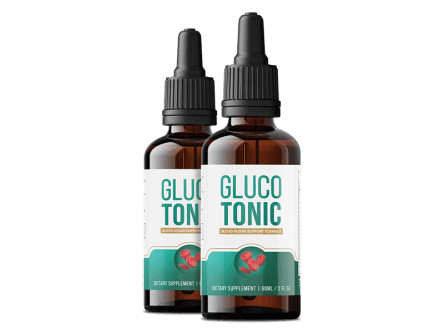
Glucotonic is marketed as a sublingual liquid drop supplement, meaning it is taken by placing drops under the tongue, designed to reverse type 2 diabetes. The VSL positions it as the commercially available form of what it calls the "green antidote," a formula developed through years of multi-university research and tested on tens of thousands of American diabetics. The product is sold in bottles, with three treatment tiers priced by the buyer's body weight: a two-bottle option for those under 40 kilograms, a three-bottle option for those under 65 kilograms, and a six-bottle option, positioned as the most complete treatment, for everyone above that threshold. The drop format is presented not as a marketing convenience but as a scientific choice: the VSL explicitly claims that capsule and powder forms were tested and discarded because sublingual delivery produced results "100 times more effective" than the alternatives.
In terms of market positioning, Glucotonic sits at the intersection of two established supplement categories: blood sugar management products (a crowded space including berberine, cinnamon extract, and alpha-lipoic acid formulas) and the newer GLP-1 mimicry category that has emerged in the wake of semaglutide's cultural dominance. The VSL consciously distances Glucotonic from both categories, however, insisting it is "not related to plants, leaves, diets, injections, or physical exercise" and that it operates through a mechanism no existing drug or supplement has addressed. The stated target user is broad: any adult with type 2 diabetes, any age, any stage of disease progression, any prior treatment history, a positioning choice that maximizes addressable audience at the cost of specificity.
The product was, according to the VSL, created by a character who introduces himself as Bill Gates, claims to be the founder of Microsoft, and asserts that he also founded the American Diabetes Association. These claims are false. Bill Gates did not create Glucotonic, did not found the ADA (which was established in 1940), and there is no public record of his involvement in any project resembling what the VSL describes. The use of his name and identity without authorization is a significant concern for any potential buyer and constitutes one of the most consequential claims in the entire presentation.
The Problem It Targets
Type 2 diabetes is a genuine public health crisis of considerable scale, and the Glucotonic VSL grounds its pitch in that reality before quickly departing from it. The CDC estimates that more than 37 million Americans have diabetes, with approximately 90-95% of cases being type 2. The condition is the seventh leading cause of death in the United States and a major driver of cardiovascular disease, kidney failure, lower-limb amputation, and vision loss. The VSL's claim that "nearly 300,000 Americans die per year" from type 2 diabetes is an inflation, the CDC attributes approximately 100,000 deaths annually directly to diabetes, though the condition contributes significantly to deaths classified under other causes, but the underlying magnitude of the problem is real and widely documented.
What the VSL does with this epidemiological reality is structurally important. It does not merely describe the problem; it assigns blame. The pharmaceutical industry is presented as having deliberately suppressed a cure in order to protect annual revenues from medications like Ozempic and Mounjaro. The figure of $76-90 billion in combined annual revenue for those drugs is roughly consistent with publicly reported figures from Novo Nordisk and Eli Lilly's financial disclosures, which gives the VSL a thin veneer of factual grounding that makes the conspiratorial framing feel more plausible. This is a rhetorical technique, grounding a fabricated argument in real data, and the Glucotonic VSL deploys it skillfully.
The specific problem the VSL identifies, that type 2 diabetes is caused primarily by excess glucagon production from the liver rather than by insufficient insulin from the pancreas, is not entirely without scientific basis, though the presentation badly distorts the underlying research. Glucagon dysregulation is a recognized contributor to type 2 diabetes pathophysiology; it is not, as the VSL claims, the single cause in "98% of cases" unknown to mainstream medicine. The GLP-1 receptor pathway, which the VSL claims is blocked by fat accumulation, is in fact the exact mechanism that drugs like semaglutide and tirzepatide target, the very drugs the VSL condemns as dangerous. This creates a scientific contradiction at the heart of the pitch that the rapid delivery of the narrative is designed to prevent the viewer from noticing.
The emotional texture of the problem framing is equally deliberate. The VSL lingers on shame, "everyone thinks diabetes is your fault", fear of death, fear of amputation, and the feeling of being "a burden" to family. These are real experiences reported by people living with type 2 diabetes, documented in quality-of-life research published in journals including Diabetes Care and the Journal of Diabetes and Its Complications. The VSL uses them not to show empathy but to prime the viewer for relief, to make the eventual appearance of Glucotonic feel like rescue rather than commerce.
Curious how the problem-framing in this VSL compares to other diabetes supplement pitches? The hooks and persuasion section below maps exactly how the emotional architecture was built.
How Glucotonic Works
The claimed mechanism of Glucotonic rests on four sequential propositions. First, that type 2 diabetes is caused primarily by the liver's overproduction of glucagon, a hormone that signals the release of stored glucose into the bloodstream. Second, that this overproduction occurs because GLP-1 receptors in the liver become "covered in fat," sending false emergency signals that trigger glucagon release. Third, that a compound called "Gurucoderito" extracted from black snake oil can increase the body's production of stem cells by 200%, and that those stem cells then dissolve the fat from the receptors and regulate glucagon back to normal levels. Fourth, that two additional compounds, "citrullinex" from Greek watermelon rind and a nitrate from Icelandic green algae, extend the compound's effects and revitalize organs damaged by diabetes.
The first proposition has partial scientific support. Glucagon dysregulation is a well-established component of type 2 diabetes pathophysiology. Research published in Diabetologia and the Journal of Clinical Investigation has documented that elevated fasting glucagon levels are common in type 2 diabetic patients and that reducing glucagon action improves glycemic control. This is, notably, part of the mechanism by which GLP-1 receptor agonists like semaglutide work, a fact the VSL obscures by condemning those drugs while quietly borrowing their mechanism as validation. The second proposition, that fat accumulation on GLP-1 receptors triggers false glucagon signaling, is a simplified and partly distorted version of real biology, but it is not entirely fabricated.
The third and fourth propositions, however, leave the terrain of established science entirely. "Gurucoderito" does not appear in any scientific literature, patent filing, or pharmacological database. It is not a recognized compound. Similarly, "citrullinex" is not a documented phytochemical; citrulline is a real amino acid found in watermelon and studied for its vasodilatory properties, but "citrullinex" as a distinct compound with claimed effects "70% more effective than losartan" has no published research support. The VSL's claim that stem cells from black snake oil can reverse diabetes in 24 hours has no basis in peer-reviewed science; the Chinese stem cell study referenced (which the VSL claims involved injecting cells from deceased donors) bears a loose resemblance to a 2024 case study published in Cell, but the methodology described in the VSL diverges substantially from the actual research. The claim that increasing "beta cell production by 200%" through a topical oil can permanently resolve glucagon dysregulation is, at present, not supported by any published clinical evidence.
Key Ingredients and Components
The VSL introduces Glucotonic's formula through a series of fictional university researchers, each presenting one ingredient with detailed but unverifiable specificity. The naming of compounds, sources, and studies creates the architecture of scientific communication without any of its substance. What follows is an assessment of each claimed ingredient against publicly available science.
Black snake oil (claimed source of "Gurucoderito"): The VSL claims this is extracted from a specific species of black snake without harming the animal and that a single milliliter can treat 3,000 patients. Snake oil has a long and discredited history in American patent medicine, and there is no peer-reviewed evidence that any snake-derived compound stimulates human stem cell production by 200% or regulates hepatic glucagon secretion. The compound name "Gurucoderito" yields zero results in PubMed, ClinicalTrials.gov, or any searchable scientific database. This ingredient, as described, does not correspond to any known bioactive substance.
Citrullinex (claimed compound from Greek yellowish watermelon rind): L-citrulline, the amino acid found in watermelon, has genuine research support as a precursor to nitric oxide and a mild vasodilator. Studies including work published in Hypertension Research (2017) have shown that citrulline supplementation can modestly reduce arterial stiffness. However, "citrullinex" as a named, isolated compound ten times more potent than standard citrulline and directly comparable to the antihypertensive drug losartan is not documented in any pharmacological literature. The seed of truth here (citrulline's vasodilatory properties) is inflated into a claim that cannot be substantiated.
Nitrate compound from Icelandic green algae: Dietary nitrates, typically derived from beets and leafy greens, have documented effects on nitric oxide synthesis and blood pressure. Research from the American Journal of Clinical Nutrition has supported modest cardiovascular benefits of nitrate-rich diets. However, the claim that this specific Icelandic algae-derived compound can "prevent kidney failure in 99% of cases" and revitalize the pancreas, liver, and kidneys simultaneously goes far beyond any evidence in the nutritional or nephrology literature.
Natural GLP-1 analog (claimed to replicate tirzepatide without side effects): The VSL claims a fourth compound that "naturally replicates" tirzepatide, the active ingredient in Mounjaro. Tirzepatide is a synthetic dual GIP/GLP-1 receptor agonist developed through a multi-billion-dollar pharmaceutical research program. The claim that an undisclosed natural compound in a $49/bottle supplement replicates its mechanism without side effects is not supported by any disclosed evidence.
Hooks and Ad Angles
The opening hook, "diabetics all over the world call this drink the natural Mounjaro because in less than 24 hours any diabetic of any age can lock their A1C levels at 5%", is a textbook example of what Eugene Schwartz described as a market-sophistication-stage-four move. By 2024, the GLP-1 drug category had achieved near-universal name recognition among the diabetic audience this VSL targets; "Ozempic" and "Mounjaro" are category shorthand for "effective but unaffordable and side-effect-laden." The hook doesn't introduce a new product so much as it attempts to inherit an existing desire, the desire for what those drugs promise, while immediately separating from their liabilities. This is a contrarian frame built on a borrowed category signal, and it is structurally sophisticated: it tells the viewer exactly what they want (the result of Mounjaro) and exactly what they want to avoid (Mounjaro's cost and side effects) in a single sentence.
The hook also deploys a curiosity gap of considerable specificity. The phrase "lock their A1C at 5%" names a metric that only someone who monitors their own diabetes management would recognize as meaningful, A1C of 5% is at the low end of the normal, non-diabetic range, which immediately signals to the target audience that the speaker understands their world. This is what direct-response copywriting calls a specificity signal: a number precise enough to feel like insider knowledge rather than marketing copy. The number "5%" is doing more than promising an outcome; it is qualifying the speaker as credible before any credentials have been shown.
The secondary hooks function as a layered architecture of fear and conspiracy, each adding a new dimension of threat to prevent disengagement:
- "A vegetable that must be avoided, it could make your next meal your last"
- "The root cause of diabetes is not sugar, the pancreas, or genetics, it is a liver hormone"
- "Ozempic causes some form of cancer in 80% of cases"
- "This video has already been taken down countless times"
- "Skeptics are always the first to die"
For media buyers testing Meta or YouTube ad creative, the following headline angles follow logically from what the VSL has demonstrated works in this niche:
- "Your doctor is prescribing you cancer, and calling it diabetes treatment"
- "The 3-ingredient drop that outlawed Ozempic in Bill Gates' household"
- "Why this diabetes video keeps getting removed from YouTube (watch before it's gone)"
- "If your A1C is above 7%, you need to see this before your next doctor visit"
- "The liver hormone your endocrinologist never mentioned, and why that matters"
Psychological Triggers and Persuasion Tactics
The Glucotonic VSL does not deploy persuasion tactics in parallel, it stacks them sequentially in a way that each mechanism reinforces the one before it. The opening authority claim (Bill Gates as narrator) establishes a credibility frame that makes every subsequent factual assertion easier to accept. The conspiracy framing (pharmaceutical mafia suppressing the cure) then provides an explanatory structure for why the viewer has never heard this information before, neutralizing the most natural skeptical question before it forms. Loss aversion and mortality salience arrive next, raising the emotional stakes until disengagement feels dangerous rather than prudent. By the time the offer is presented, the viewer has been moved through a near-complete emotional cycle: ignorance → revelation → outrage → fear → hope → decision. This is the Problem-Agitate-Solution framework extended to its maximum psychological reach, and it is executed with unusual structural discipline given the apparent production context.
What distinguishes this VSL from simpler health-supplement pitches is its use of inoculation theory (McGuire, 1964), the technique of preemptively introducing and discrediting competing counter-arguments so they arrive pre-neutralized in the viewer's mind. The extended treatment of "Yumi Takahashi" as a fraudster being hunted by Interpol and the FBI serves a specific function: it tells the viewer that scams exist in this space (true), that the viewer may have already been victimized by one (activating shame and renewed susceptibility), and that Glucotonic is the legitimate alternative (completing the inoculation). A viewer who has been told that other products are scams is, paradoxically, more rather than less likely to purchase the product that named those scams.
Authority impersonation (Cialdini's Authority principle): The narrator claims to be Bill Gates, founder of Microsoft, creating maximum credibility transfer. The claim is false but functions rhetorically as a halo effect: every subsequent scientific assertion is evaluated through the lens of "Bill Gates said this," not through independent fact-checking.
Conspiracy-as-identity frame (Godin's Tribes): Framing the pharmaceutical industry as a "mafia" and the viewer as a victim creates an in-group of "diabetics who know the truth" and an out-group of "those controlled by the system." Purchasing Glucotonic becomes an act of tribal belonging and resistance, not merely a commercial transaction.
Mortality salience (Terror Management Theory, Greenberg et al., 1986): Direct death references, "your next meal could be your last," "300,000 died last year," "skeptics are always the first to die", activate existential fear, which research consistently shows reduces analytical processing and increases impulsive, comfort-seeking behavior.
Manufactured scarcity (Cialdini's Scarcity principle): The red/green button mechanic, the 24-hour prior sellout claims, and the video takedown threat all compress the decision window. The final "one more minute" countdown at the close is the most explicit form of this tactic.
Inoculation against skepticism (McGuire's Inoculation Theory): The "Yumi Takahashi" narrative preemptively disarms the viewer's doubt by redirecting it toward a named scammer, positioning Glucotonic as the safe port in a sea of fraud.
Reciprocity framing (Cialdini's Reciprocity): The narrator repeatedly invokes personal sacrifice, burning research centers, personal threats, five years of lost sleep, billions of his own fortune invested, creating a sense of social debt in the viewer that makes the purchase feel like an appropriate response to the gift being offered.
Risk reversal theater (Thaler's Mental Accounting): The 180-day money-back guarantee "requires no forms" and is based only on the buyer's "honesty," which simultaneously reduces perceived financial risk and implies that requesting a refund would be a moral failing. This is a structurally clever manipulation of the guarantee mechanism.
Want to see how these persuasion mechanics compare across other diabetes supplement VSLs in the same traffic ecosystem? That is exactly the kind of cross-VSL pattern analysis that Intel Services documents.
Scientific and Authority Signals
The Glucotonic VSL constructs an elaborate edifice of institutional authority, Harvard, Yale, MIT, Oxford, Johns Hopkins, the University of Coimbra, the American Diabetes Association, that functions as borrowed legitimacy. None of these institutions is cited as having endorsed, tested, or approved Glucotonic in any verifiable way. The researchers named, "Jeff Oss of Yale," "Yashin Vitaliano of Harvard," "Luigi Tuini of Coimbra," an unnamed MIT director, an unnamed Johns Hopkins researcher named Steve, do not appear in the faculty directories, publication records, or research rosters of their claimed institutions based on publicly available information. The studies attributed to these researchers, a 2023 Oxford trial of 5,000 diabetics, a 2024 MIT study on citrullinex, a 2022 Johns Hopkins paper on Icelandic algae nitrates, do not appear in PubMed, ClinicalTrials.gov, or any other searchable scientific database. These are not studies with uncertain URLs that should be cited without a link; they are studies with no evidence of existence.
The invocation of Bill Gates as narrator and creator is the most consequential authority claim in the VSL, and it is straightforwardly false. Bill Gates has not created a diabetes supplement, has not founded a company called Glucotonic, and has not partnered with the American Diabetes Association in the capacity described. The ADA was founded in 1940 by a group of physicians; it is not a Gates Foundation initiative. The claim that Gates was "invited by CEOs of big industries to be part of this mafia scheme" and declined is a narrative device with no factual basis. Using a named, living public figure's identity to sell a commercial product without authorization is a practice that has been the subject of fraud investigations and legal action in multiple jurisdictions.
The VSL also references a Chinese stem cell study that bears a loose resemblance to a 2024 case report published in Cell by researchers at Shanghai Changzheng Hospital, which documented apparent type 1 diabetes remission in a single patient following autologous stem cell therapy. That study involved a fundamentally different methodology (autologous cell reprogramming, not donor cell injection as the VSL claims), a different disease (type 1, not type 2), and made no claims about reversal timelines of 24 hours. The VSL uses the existence of legitimate stem cell research as a scaffolding on which to hang entirely fabricated claims, a pattern of borrowed authority, where real science is cited in ways that imply endorsement of claims the science does not support.
The claim that Glucotonic holds "diamond certification from the FDA" and has achieved the highest rating ever granted by that agency deserves particular attention. The FDA does not issue "diamond certifications" to dietary supplements. Under the Dietary Supplement Health and Education Act of 1994 (DSHEA), dietary supplements are not approved by the FDA before sale; they are the manufacturer's responsibility to demonstrate safety, and the FDA can take action after a product is on the market if harm is documented. An FDA "diamond certification" is not a real regulatory category. This claim is fabricated.
The Offer, Pricing, and Risk Reversal
The Glucotonic pricing structure follows a well-established direct-response pattern: three tiers, with the highest-volume option offering the best per-unit price and the most bonuses, creating a funnel that steers buyers toward maximum average order value. The anchor price of $179 per bottle, presented as the "real" price, with $100 per bottle personally subsidized by the narrator, is not benchmarked to any real market comparator. The genuine comparison class for Glucotonic (dietary supplements for blood sugar management) retails in the $20-$60 per bottle range; the $179 anchor is constructed to make the $49 price point feel dramatically discounted rather than to reflect any actual cost-of-goods calculation. The VSL also notes that the first treatment cost $5 million for 10 patients, a figure so disconnected from the $49 retail price that it functions as a magnitude signal rather than a cost justification.
The bonuses, a Dexcom G7 continuous glucose monitor for the first 30 buyers of the six-bottle treatment, and a potential full refund draw for the first 10, are designed to convert price-sensitive buyers who might otherwise wait. The Dexcom G7 retails for approximately $300-$400, making it a meaningful perceived value add; whether it is actually shipped with purchases cannot be verified from the VSL alone. The draw mechanic (first 10 buyers may receive a full refund) is a lottery structure that transforms the purchase into a gamble, activating different decision-making circuitry than a straightforward purchase, a technique grounded in behavioral economics research on variable reward schedules.
The 180-day money-back guarantee is the strongest legitimate element of the offer. A six-month refund window is longer than industry standard (most direct-response supplements offer 60-90 days), and the claim that no form is required is a genuine friction reduction. However, the framing, "I just ask that you be fair with me and only ask if you are really not satisfied", is a subtle social compliance maneuver. It does not threaten consequences for requesting a refund, but it assigns moral valence to the act, making buyers who experienced modest improvement (even placebo-driven) less likely to claim one.
Who This Is For (and Who It Isn't)
The ideal buyer this VSL is built to convert is specific in ways the broad surface framing obscures. Demographically, the pitch targets adults between 50 and 80 years old with a confirmed type 2 diabetes diagnosis, likely on at least one prescription medication, and with some degree of financial concern about ongoing treatment costs. Psychographically, the pitch resonates most with buyers who have experienced real frustration with conventional treatment, people whose glucose control has been inconsistent, who have suffered side effects from prescription drugs, or who have watched a family member struggle with diabetic complications. The conspiracy framing and anti-pharmaceutical tone also appeal strongly to a segment that has generalized distrust of institutional medicine, a segment that has grown measurably since 2020 according to Gallup polling on institutional trust. For someone in this precise psychographic position, genuinely suffering, genuinely frustrated, and primed to believe that the system is withholding a solution, this VSL is constructed to feel like revelation.
The product is not well suited for anyone who requires evidence before purchase, anyone whose diabetes management is under stable medical supervision and producing acceptable results, or anyone for whom the identity of "Bill Gates" as creator is a credibility signal rather than a red flag. It is also not suitable for anyone who requires FDA-approved medications to manage diabetic complications, as the VSL explicitly encourages users to expect that they will eventually no longer need their prescriptions, a claim that could cause genuine medical harm if a buyer acts on it by discontinuing insulin or other critical medications without physician guidance. People managing type 1 diabetes, for whom insulin is not optional, are particularly poorly served by a pitch built around the premise that injections are always replaceable by a natural compound.
If you're actively researching whether Glucotonic is the right choice, the FAQ section below addresses the most common concerns, including the scam question, in direct terms.
Frequently Asked Questions
Q: Is Glucotonic a scam?
A: The VSL makes a series of verifiably false claims, including the identity of the narrator as Bill Gates, the existence of an FDA "diamond certification," and the credentials of its named researchers, that are hallmarks of fraudulent health marketing. The core ingredient "Gurucoderito" does not exist in any scientific literature. Buyers should exercise significant caution before purchasing.
Q: Does Glucotonic really reverse type 2 diabetes?
A: No peer-reviewed, independently published clinical evidence supports the claim that Glucotonic reverses type 2 diabetes. The studies cited in the VSL do not appear in searchable scientific databases. The mechanism described (black snake oil increasing stem cell production by 200%) has no documented pharmacological basis. Type 2 diabetes management is complex; consult a licensed endocrinologist before altering any treatment plan.
Q: What are the actual ingredients in Glucotonic?
A: The VSL names four ingredient categories: black snake oil (source of the fictional "Gurucoderito"), a compound called "citrullinex" from Greek watermelon rind, a nitrate from Icelandic green algae, and an unnamed natural GLP-1 analog. None of these four as specifically described correspond to documented compounds in pharmacological databases. The actual label ingredients of the physical product, if it exists, are not disclosed in the VSL.
Q: Are there side effects from taking Glucotonic?
A: The VSL claims zero side effects across all 70,000 users, which is not a plausible real-world finding for any bioactive compound. Without a verified ingredient label or clinical trial data, it is not possible to assess actual side-effect risk. Anyone taking medications for diabetes, blood pressure, or cardiovascular disease should consult a physician before adding any supplement, as interactions are possible.
Q: Is it safe to take Glucotonic alongside Metformin or Ozempic?
A: The VSL explicitly states Glucotonic can be taken alongside existing medications and that users will "naturally" phase out prescriptions as the product works. Discontinuing or reducing diabetes medications without medical supervision carries serious health risks, including dangerous blood sugar fluctuations. Do not alter a medically prescribed treatment regimen based on claims in a supplement VSL.
Q: Did Bill Gates actually create Glucotonic?
A: No. Bill Gates did not create Glucotonic, did not found the American Diabetes Association, and is not affiliated with this product in any documented way. The use of his name and identity in the VSL constitutes impersonation of a named public figure to sell a commercial product, a practice that has been the subject of legal and regulatory action in multiple countries.
Q: What is the Glucotonic money-back guarantee?
A: The VSL describes a 180-day full money-back guarantee requiring no forms, based only on the buyer's stated dissatisfaction. While a 180-day window is longer than typical for direct-response supplements, the guarantee's enforceability depends entirely on the fulfillment company behind the product. Buyers should verify the refund policy directly with the point of sale before purchasing.
Q: What is Gurucoderito and is it a real compound?
A: Gurucoderito, as described in the Glucotonic VSL, a complex organic compound found in black snake oil, capable of multiplying stem cell production and reversing type 2 diabetes, does not exist in any published scientific literature, patent database, or pharmacological registry. It appears to be a fictional compound created specifically for this marketing narrative.
Final Take
The Glucotonic VSL is not a badly made piece of health marketing, it is, by the standards of its genre, a carefully constructed one. The sequencing of emotional states, the specificity of invented numbers, the borrowed authority of real institutions, and the structural use of a named celebrity as narrator all reflect an understanding of persuasion mechanics that goes well beyond the typical supplement pitch. What makes it worth studying seriously is precisely its sophistication: this is not a naive claim that a berry cures cancer. It is a layered argument, built on a genuine scientific controversy (glucagon dysregulation in type 2 diabetes), extended through fabricated research and invented compounds, and delivered through the borrowed credibility of one of the most trusted names in American public life. The fact that the central claim, Bill Gates made this, is demonstrably false does not prevent the pitch from working on viewers for whom the emotional architecture has already been constructed.
The weakest element of the VSL is also its most revealing: the fictional compound "Gurucoderito." In a pitch that goes to extraordinary lengths to sound scientific, naming journals, citing years, providing mechanism diagrams in plain language, the decision to invent a compound name rather than build the mechanism around real (if exaggerated) science suggests that no real mechanism exists. Every legitimate nutraceutical VSL, however aggressively it extrapolates from the evidence, builds on compounds that can be searched. The fact that Gurucoderito returns zero results on PubMed is not a minor credibility gap; it is a structural failure that collapses the entire scientific frame of the presentation.
For buyers actively researching this product, the most important practical consideration is the identity fraud at the center of the pitch. The false Bill Gates identity is not a marketing exaggeration, it is the kind of claim that serious regulatory bodies, including the FTC and FDA, have historically treated as grounds for enforcement action against direct-response health products. The presence of this claim should be treated as a material fact about the trustworthiness of every other claim in the VSL. That does not mean the physical product, if it ships, contains nothing, many direct-response supplements ship bottles containing benign ingredients at low doses, but it means the buyer has no reliable basis for evaluating what they are actually purchasing.
Type 2 diabetes is a condition that does respond to lifestyle intervention, certain pharmacological treatments, and in some cases metabolic surgery, real options that carry genuine evidence behind them. The market that the Glucotonic VSL targets is one of desperate people who have often tried those options with disappointing results, which makes the emotional pitch land with force it would not have for someone whose condition is well-managed. That desperation deserves better than fabricated compounds and impersonated billionaires. This breakdown is part of Intel Services, our ongoing library of VSL and ad-copy analyses. If you're researching similar products in the diabetes supplement or health marketing space, keep reading.
Disclaimer: This article is for research and educational purposes only. It is not medical, legal, or financial advice, and it is not affiliated with the product or its makers. Always consult a qualified professional before making health or financial decisions.
Source-backed reader context
Additional Reviews & Reported Experiences
These statements were presented in the product's sales transcript. Daily Intel did not independently verify the speakers, purchase status, or reported outcomes, and the statements are not used in Product aggregateRating.
Unnamed woman
Date not stated
glucose from 287 to 134, lost 31 pounds, energy to play with grandchildren
Lon, 76 years old
Date not stated
glucose dropped from 260 to 95 sequentially, A1C at 5.5%, lost 15 kilos
Unnamed man
Date not stated
glucose from 298 to 90, metabolic health of a 40-year-old at age 61, A1C at 5%
Annie, 65 years old
Date not stated
20 years of diabetes, A1C from ~15% to 6%, previously deceived by Yumi Takahashi
Unnamed woman
Date not stated
glucose dropped 100 points in one month, lost 7 kilos, sleeping through the night
Unnamed woman
Date not stated
diabetes remission, lost 12 kilos, burning in feet and hands disappeared
Edward, 65 years old
Date not stated
A1C from 13% to 5%, no diabetes symptoms
Unnamed buyer's grandmother, 78 years old
Date not stated
glucose stable at 90 regardless of diet
Comments(0)
No comments yet. Members, start the conversation below.
Related reads
 reviews
Mind Lab Pro Review: Does the 30-Day Study Match v4?
Mind Lab Pro v4 lists exact amounts for 11 ingredients and contains no caffeine or stimulants, according to its official page. A 30-day finished-product study reported favorable memory findings, but its abstract does not identify v4 or disclose the tested form or dose.
Read reviews
Life Extension Two-Per-Day Multivitamin Review: Evidence Limits
Life Extension Two-Per-Day is a 120-capsule multivitamin displayed as a 60-day supply. Its identity and dated prices are verified, but the supplied evidence does not reproduce the complete quantitative Supplement Facts panel or include a trial of the finished product. Research involving another multivitamin cannot prove that these capsules improve memory or deliver Life Extension’s broader health-support claims.
Read reviews
Ritual Essential for Women 50+ Review: Label, Study Fit, and Verdict
Ritual Essential for Women 50+ is an iron-free capsule multivitamin positioned by Ritual for women after menopause. Its verified label lists 100 micrograms of vitamin K2 as menaquinone-7. The supplied study did not test this finished product, and the packet provides no exact price.
Read