GlycogenSupport Review and VSL Breakdown
The video opens with a woman's trembling voice: "If you're watching this, it probably means I'm no longer alive." Before a single product has been named, before any ingredient or price point has ap…
8,226+
Videos & Ads
+50-100
Fresh Daily
$29.90
Per Month
Full Access
12.5 TB database · 72+ niches · 27 min read
Introduction
The video opens with a woman's trembling voice: "If you're watching this, it probably means I'm no longer alive." Before a single product has been named, before any ingredient or price point has appeared, the viewer is already inside a story about a dead husband, a suppressed cure, and a widow's promise to the world. This is not an accident of production. It is a deliberate, architecturally precise opening that borrows from the tradition of the martyr-origin narrative, a storytelling structure where the product's legitimacy is established not through evidence but through sacrifice. The VSL for GlycogenSupport, a blood pressure supplement sold for $23 via a direct-to-consumer website, deploys this structure across fifteen-plus minutes of manufactured drama involving Elon Musk, SpaceX, a fake news-anchor host, and a black salt solution reportedly tested on 30,500 people. The gap between what is claimed and what is demonstrably real is extraordinary in scope, and precisely for that reason, the VSL is worth studying carefully.
The product at the center of this analysis is GlycogenSupport, positioned as a three-week cardiovascular protocol built around a black salt electrolyte compound and a blend of unspecified natural ingredients. The VSL presents it as the result of a billion-dollar SpaceX research program, co-developed with a natural health educator named Dr. Barbara O'Neill, and personally championed by Elon Musk as a public-access alternative to pharmaceutical blood pressure management. None of those authority attributions are verifiable, and several are almost certainly fabricated outright. Yet the persuasion architecture is sophisticated enough, and the target audience's frustration with conventional medicine is real enough. That the pitch functions at a level of emotional resonance that deserves serious analytical attention.
For a reader researching this product before purchasing, or for a media buyer, copywriter, or brand analyst studying direct-response tactics in the health supplement space, the GlycogenSupport VSL is a case study in what happens when advanced copywriting techniques are applied to a product with virtually no transparent evidentiary base. The VSL layers celebrity authority, conspiracy framing, pseudo-scientific jargon, extreme price anchoring, and artificial scarcity into a stacked sequence that moves the viewer from fear to hope to urgency in under twenty minutes. Understanding each of those layers is the project of this piece.
The central question this analysis investigates is this: what does the GlycogenSupport VSL reveal about the persuasion strategies operating in the direct-to-consumer hypertension supplement market, and how should a potential buyer. Or a competitor studying the space; read the claims being made?
What Is GlycogenSupport?
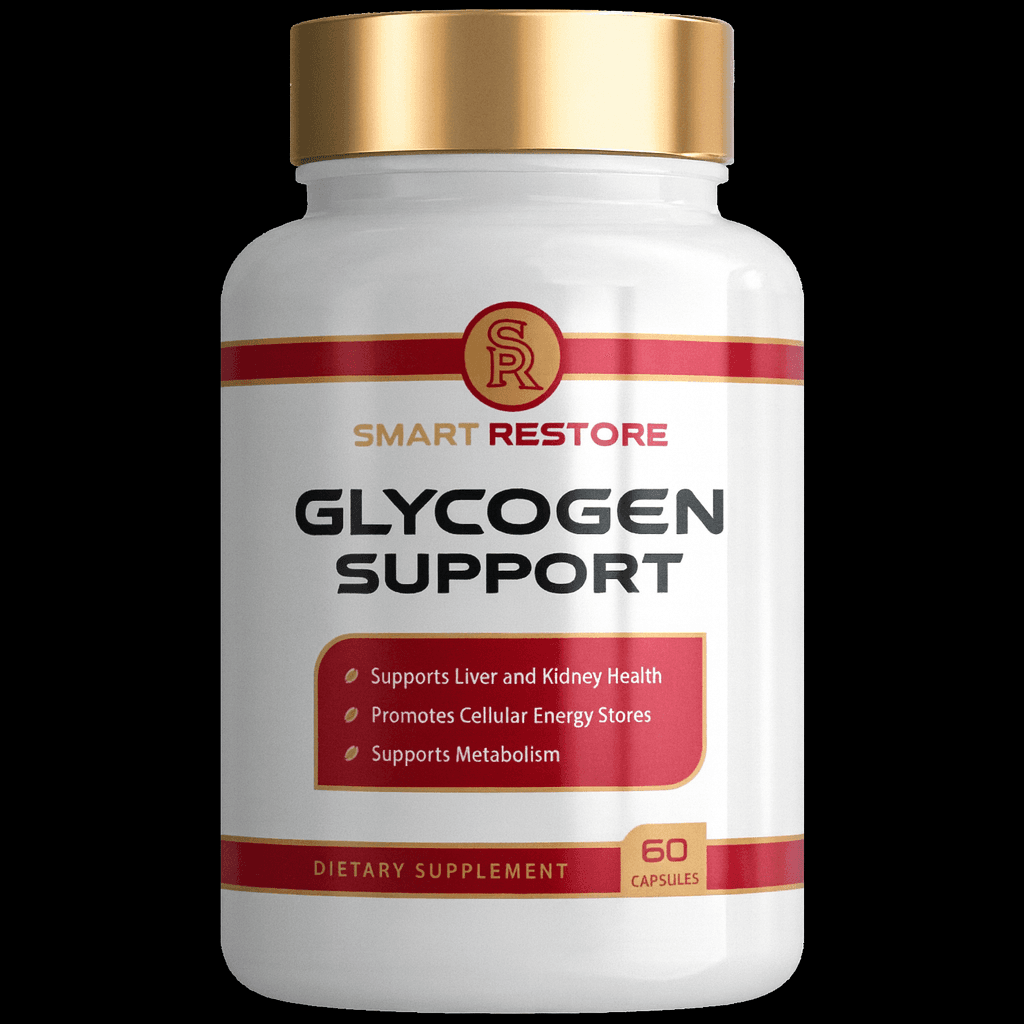
GlycogenSupport is sold as a physical supplement kit, a blood pressure support protocol intended to be followed over approximately three weeks. The product's core formulation appears to center on black salt (a mineral salt distinct from standard table salt, typically of volcanic or Himalayan origin) combined with what the VSL describes as a "blend of natural compounds" designed to restore the body's pressure-control mechanisms. Beyond black salt and a generic electrolyte framework, no specific ingredients are disclosed in the VSL transcript, which is itself a notable omission for a product making cardiovascular health claims. The format, a shipped kit rather than a subscription bottle, is presented as a single-purchase protocol, with the VSL explicitly claiming "no subscriptions" and "no off-sales."
In terms of market positioning, GlycogenSupport sits within the hypertension supplement subcategory of the broader cardiovascular health market, a space that includes dozens of competing products making similar electrolyte-balance and nitric-oxide-pathway claims. What distinguishes GlycogenSupport's positioning is not the formulation, which is vague, but the narrative frame: the product is presented as a space-derived technology, a civilian adaptation of protocols used to regulate astronauts' blood pressure on the International Space Station. This "space protocol" angle serves as the product's unique mechanism claim, borrowing credibility from NASA and SpaceX's genuine scientific reputation and applying it to a supplement with no disclosed clinical testing under that institutional umbrella.
The stated target user is American adults suffering from hypertension, particularly those aged 50 and older who are already on prescription medications and feel their condition is being managed rather than resolved. The VSL speaks directly to this group's frustration, addressing experiences of shortness of breath, chronic headaches, fear of stroke, and the psychological burden of daily pill regimens. This is an accurately identified pain set, hypertension affects approximately 47% of American adults according to the Centers for Disease Control and Prevention, and the product's positioning as a permanent exit from that cycle is its core commercial promise.
The Problem It Targets
Hypertension is one of the most prevalent chronic conditions in the developed world, and the VSL's decision to build around it reflects a calculated assessment of market size. The CDC estimates that roughly 116 million Americans have high blood pressure, and the American Heart Association notes that only about one in four hypertensive adults has the condition under adequate control. These are not manufactured statistics. The burden of cardiovascular disease is genuine, and the dissatisfaction with long-term pharmacological management is well-documented in patient experience literature. A 2020 review in the Journal of the American Medical Association found that medication adherence in hypertension patients is significantly undermined by side-effect profiles, cost, and the perception that medications manage rather than cure. The VSL is farming a very real and very large reservoir of unmet patient need.
What the pitch does with that genuine problem, however, is something distinct from accurate health communication. The VSL frames hypertension not as a complex multifactorial condition. One influenced by genetics, diet, sleep, stress, renal function, and vascular aging; but as a single-mechanism failure that has a simple single-mechanism solution. This reductionism is a classic copywriting move in the health supplement space: the problem-agitate-solution (PAS) structure works best when the problem has a single, identifiable villain, and in this case that villain is framed as the body's inability to produce "the right signals to control pressure." The claim that synthetic drugs "can't reproduce the natural signal needed for counter pressure" is not a scientifically coherent statement, it borrows the vocabulary of systems biology without referencing any specific pathway, receptor, or peer-reviewed mechanism.
The VSL's most aggressive statistical claim, that "within five to seven years, 84% of people with hypertension develop irreversible complications", is presented without citation. The figure is loosely adjacent to real epidemiological data: end-organ damage from uncontrolled hypertension (affecting the kidneys, heart, and brain) is indeed a serious long-term risk, and multi-decade cardiovascular studies such as the Framingham Heart Study have documented the cumulative damage of sustained elevated pressure. But the 84% figure, the specific five-to-seven-year window, and the word "irreversible" are presented as settled facts without any sourcing. They function rhetorically rather than evidentially, designed to maximize urgency and fear rather than inform.
The deeper commercial logic of targeting hypertension is worth naming plainly: it is a condition that patients live with for decades, one where they interact with the medical system repeatedly and often feel that the interaction is transactional rather than curative. The VSL speaks directly to that alienation, and in doing so it converts a legitimate grievance, that the healthcare system is structurally oriented toward symptom management, into an argument for an unproven product. The frustration is real; the proposed solution's evidentiary basis is not.
Curious how other VSLs in this niche structure their pitch? Keep reading, the section below breaks down the psychology behind every claim above.
How GlycogenSupport Works
The claimed mechanism rests on two interlocking ideas: first, that blood pressure dysregulation is caused by the body losing its capacity to generate the correct electrochemical signals for vascular control; and second, that a specific black salt and natural compound solution can "restart" those signals from the inside. The VSL describes this in terms of electrolyte balance. Specifically the restoration of a sodium-potassium equilibrium that the script says allows the heart to function without strain, prevents vessel inflammation, and eliminates the cytokine activity that causes vasospasm. The language here is technically adjacent to real physiology: potassium's role in blood pressure regulation is well-established, and the Dietary Approaches to Stop Hypertension (DASH) framework endorsed by the National Institutes of Health explicitly emphasizes potassium-rich diets. The NIH's own resources confirm that increasing potassium intake while reducing sodium is associated with modest reductions in blood pressure.
Where the claimed mechanism departs from established science is in the specificity and magnitude of its promises. The assertion that blood pressure will "normalize in under 17 hours" from a single salt-based intervention has no parallel in peer-reviewed cardiovascular literature. Dietary changes and electrolyte supplementation produce gradual, modest effects. Typically measured in weeks and in millimeters of mercury, not in binary before-and-after normalization. The claim that the formulation eliminates cytokine-driven vasospasm is plausible in theory (anti-inflammatory interventions can have vascular benefits) but the VSL provides no mechanism for how black salt specifically achieves this, and no peer-reviewed data is cited. The 17-hour timeline, repeated more than five times in the script, functions as a specificity heuristic; a rhetorical technique identified in persuasion research where highly specific numbers (17 rather than "less than a day") are perceived as more credible because vague claims do not typically include decimal-level precision.
The "space protocol" framing deserves particular scrutiny. SpaceX and NASA do manage astronaut cardiovascular health in orbit, fluid shifts in microgravity cause genuine blood pressure fluctuations, and electrolyte management is part of space medicine protocols. This is real. However, there is no public record of a SpaceX consumer product derived from this research, no Elon Musk press statement about a hypertension protocol, and no collaboration between SpaceX and anyone named in the VSL. The space framing is what copywriters call a borrowed authority mechanism, attaching a product's credibility to an institution's reputation without that institution's involvement or endorsement. It is sophisticated because it is unfalsifiable to a casual viewer: most people will not investigate whether SpaceX has a blood pressure supplement program.
The honest assessment is this: black salt's mineral profile (which may include potassium, magnesium, and trace elements depending on its origin) could plausibly contribute to modest blood pressure support in the context of a balanced diet, in the same way that any mineral-rich whole-food intervention might. That is a defensible, if modest, claim. The specific mechanism claims, 17-hour normalization, cytokine elimination, permanent freedom from medication, are not supported by available evidence and should not be taken at face value.
Key Ingredients and Components
The VSL discloses remarkably little about the actual formulation of GlycogenSupport. The primary named ingredient is black salt; everything else is referred to generically as "natural compounds" or "a blend." Based on the mechanism claims made in the script, the following components appear to be either stated or strongly implied.
Black salt, The primary active ingredient, presented in the VSL as a mineral compound that, unlike regular table salt, "regulates iron levels and eases the work of the heart." Black salt (kala namak or black Hawaiian salt, depending on origin) does have a different mineral profile from refined sodium chloride, with some variants containing potassium, iron sulfide, and magnesium. Research on potassium-rich salt substitutes, such as a large 2021 trial published in The New England Journal of Medicine (Neal et al.), found that salt substitutes partially replacing sodium chloride with potassium chloride reduced stroke and major cardiovascular events in high-risk populations. This is the most scientifically grounded ingredient claim in the entire VSL, though the specific product's formulation is not disclosed for independent evaluation.
Electrolyte balance blend (sodium/potassium complex), The VSL references restoring sodium-potassium balance as the core mechanism. The NIH's National Heart, Lung, and Blood Institute confirms that dietary potassium is associated with lower blood pressure, and potassium supplementation trials have shown modest but statistically significant systolic reductions. The magnitude of these effects, typically 3-5 mmHg in meta-analyses. Is real but falls far short of the "normalization in 17 hours" claim.
Anti-inflammatory compounds (unspecified). The cytokine and vasospasm claims imply the presence of anti-inflammatory botanicals such as omega-3 fatty acids, curcumin, or quercetin, all of which have some evidence base in cardiovascular literature. However, because no specific ingredients are named, independent assessment is impossible.
Vascular support agents (unspecified); References to "fortifying vessel walls" and "optimizing baroreflex" suggest possible inclusion of compounds like L-arginine (a nitric oxide precursor), beetroot extract, or magnesium, all of which have been studied in hypertension contexts. Again, without a disclosed label, this is speculative inference from the mechanism language.
Hooks and Ad Angles
The VSL's opening hook, "If you're watching this, it probably means I'm no longer alive", is one of the more audacious opening lines in the contemporary direct-response health supplement space. Its rhetorical structure is a pattern interrupt: it violates every expectation a health supplement viewer has formed from prior exposure to the category (before-and-after photos, doctor testimonials, ingredient breakdowns) and forces a cognitive re-engagement. The human brain is wired to prioritize novel, emotionally salient stimuli over familiar ones, a phenomenon well-documented in attention research, and a voice speaking from beyond the grave achieves maximal salience. The move is not original, it echoes the "dead man's letter" narrative device used in fiction and occasionally in political messaging, but its application to supplement advertising is uncommonly bold.
What follows the hook is equally calculated. The narrative pivots immediately from the widow's grief to a conspiracy involving Elon Musk, SpaceX, and a suppressed medical breakthrough, a sequence that constitutes an open loop in copywriting terms: the viewer is promised a revelation that will only arrive if they keep watching. This is a market sophistication-stage response, when a target audience has seen hundreds of supplement ads making direct benefit claims, the only pitch that cuts through is one that reframes the product as forbidden knowledge. Eugene Schwartz, in Breakthrough Advertising (1966), identified this as stage-five market awareness: the buyer is not just skeptical of the product, they are skeptical of the category, and the only solution is to make the pitch itself feel like an act of rebellion against the category's gatekeepers. The GlycogenSupport VSL is a textbook execution of that insight, however ethically problematic the specific execution may be.
Secondary hooks observed in the VSL:
- "No American has seen news this shocking since 9/11", scale-of-importance hook
- "Big Pharma banned the original video within hours", suppressed-truth hook
- "If it went through pharmacies, they'd price it at $5,000". Price shock / insider knowledge hook
- "84% of people develop irreversible complications in five to seven years". Mortality urgency hook
- "1,100 units left; all stock gone in under an hour", terminal scarcity hook
Ad headline variations for Meta or YouTube media buyers to test:
- "SpaceX researchers found a $23 black salt protocol for blood pressure, here's what they won't tell you"
- "My husband died for this: the hypertension discovery Big Pharma buried"
- "64-year-old Texan quit all blood pressure meds in one week, this is what he used"
- "Elon Musk's space team built something for astronauts, it works even better on Earth"
- "1 ingredient, 17 hours, no pills: the blood pressure protocol doctors ignore"
Psychological Triggers and Persuasion Tactics
The GlycogenSupport VSL does not deploy its persuasion triggers in parallel, it stacks them in a deliberate sequence designed to progressively close off the viewer's escape routes from conversion. The first third of the script builds emotional investment through the martyr narrative before any product is mentioned; the middle third introduces pseudo-scientific legitimacy and social proof; the final third collapses the decision window with scarcity and price anchoring. This is a sophisticated stacked persuasion architecture rather than a simple checklist of triggers, and it reflects either considerable direct-response expertise or access to a high-performing script template.
The most consequential structural choice is the fake news-interview format fronted by a persona named "Laura Ingraham." This device exploits what psychologists call the authority halo effect, the cognitive tendency to extend credibility from a recognized figure to the content they appear to endorse. By wrapping the product pitch in the visual and rhetorical grammar of a television news interview, the VSL bypasses the mental filter most viewers apply to advertising. The viewer's brain categorizes the content as journalism rather than marketing, and journalistic content receives far less skeptical scrutiny in real-time viewing.
Cialdini's Authority (Influence, 1984): Elon Musk, Laura Ingraham, Charlie Kirk, and Dr. Barbara O'Neill are all invoked as authority proxies. None have provided documented consent. Musk's name appears more than a dozen times, converting his general public trust into product-specific credibility.
Kahneman & Tversky's Loss Aversion (Prospect Theory, 1979): The 84% complication rate, repeated stroke and heart attack references, and the five-to-seven-year irreversibility claim are all framed as losses to be avoided rather than gains to be achieved, exploiting the well-documented asymmetry in how humans weight potential losses versus equivalent gains.
Cialdini's Scarcity principle: The 1,100-unit figure, the 36-month production timeline, and the one-hour depletion estimate stack three independent scarcity signals simultaneously, creating compounded urgency that is designed to make deliberation feel riskier than immediate action.
Thaler's Price Anchoring (Nudge, 2008): The sequential anchors. $5,000 pharmacy price, $1,600 original direct price, $23 program price. Function as a decoy ladder. By the time $23 is named, it has been psychologically benchmarked against a $5,000 reference point, making it feel not merely affordable but absurd to pass up.
Festinger's Cognitive Dissonance (1957) via conspiracy framing: Viewers who have taken blood pressure medications for years are invited to reframe their medical history as evidence that they have been victimized by a rigged system. This creates dissonance between their prior trust in doctors and the new conspiratorial frame; a dissonance that the product purchase offers to resolve.
Godin's Tribal Identity (Tribes, 2008): The testimonials consistently invoke regional and demographic identity, the Texas man, the 68-year-old who "goes fishing again", creating an in-group of people who "know better" than to trust Big Pharma. Buying the product becomes an act of tribal belonging.
Epiphany bridge narrative (Russell Brunson, Expert Secrets): The script follows the classic epiphany bridge structure: the hero (Elon Musk / Charlie Kirk) has a transformative discovery, encounters resistance from the establishment, and now offers the audience access to the revelation. This structure creates parasocial alignment between the viewer and the narrator's worldview.
Want to see how these tactics compare across 50+ VSLs in the health supplement space? That's exactly what Intel Services is built to show you.
Scientific and Authority Signals
The authority architecture of the GlycogenSupport VSL is worth examining with particular care because it is the section most likely to mislead a viewer who is not actively applying skepticism. The VSL invokes four named individuals, Elon Musk, Charlie Kirk, Laura Ingraham, and Dr. Barbara O'Neill, plus two institutional references (SpaceX and the "National Access Health Initiative") and two numerical research claims (30,500 test participants, $1 billion invested). A methodical assessment of each is warranted.
Elon Musk and SpaceX are real entities with genuine scientific credibility in aerospace and engineering. Their names are used in this VSL without any documented authorization and in ways that are almost certainly false, no credible press record exists of a Musk-endorsed blood pressure supplement, and SpaceX has not announced any civilian hypertension protocol. This is textbook borrowed authority: real credibility transferred to an unrelated product through false association. Charlie Kirk is a real political commentator used fictionally as a martyred researcher, and Laura Ingraham's likeness and name are used in a fake interview format, both deployments raise serious questions about identity misappropriation. Dr. Barbara O'Neill is a real figure in the natural health community, though it is worth noting that the Australian Health Practitioner Regulation Agency has previously investigated concerns about her health claims, and she holds no conventional medical degree. Her appearance in the script functions as naturalistic health credibility rather than pharmaceutical or clinical authority.
The numerical claims, 30,500 participants and $1 billion invested. Are unverifiable and internally inconsistent: an earlier line in the script cites "more than 200 simulations" while a later line references "2,100 simulations," a tenfold discrepancy that suggests the copy was assembled from multiple templates without quality control. The claim that 30,500 people were tested and that "every single person experienced noticeable relief" is statistically implausible for any real clinical trial in the history of medicine. Genuine clinical trials in cardiovascular medicine, including large-scale ones like the SPRINT trial (NEJM, 2015, Wright et al.), report outcomes with confidence intervals, adverse events, and dropout rates. Because those are features of reality, not artifacts of poor study design. The VSL's uniformly positive result is a signal of fabrication, not excellence.
The "National Access Health Initiative" cited as the subsidy program responsible for reducing the price to $23 is not a verifiable government or nonprofit entity. No such organization appears in public records, federal program databases, or health policy registries. It functions as an institutional-sounding placeholder designed to make the subsidy narrative feel official rather than promotional.
The Offer, Pricing, and Risk Reversal
The offer structure in the GlycogenSupport VSL is a compressed version of a classic direct-response price-deconstruction sequence. The opening anchor; "if this went through pharmacies, they would price it at five thousand dollars or more", establishes a reference category (pharmaceutical-grade medical treatment) whose price range is genuinely high, making the implied comparison feel grounded even though the comparison is false: pharmacies do not sell supplement kits for $5,000. The second anchor, "the protocol used to cost $1,600," introduces a price history that implies previous buyers received less favorable treatment, making the current offer feel exclusive and time-sensitive. The final price of $23 is then framed not as the product's actual market value but as a subsidized access price, with partial cost "covered by the National Access Health Initiative", a framing that converts a price point into a civic benefit.
The price-comparison benchmark against everyday expenditures, "less than a dinner, less than a tank of gas", is a well-established technique for neutralizing price resistance by substituting a lifestyle reference point for a value-for-money analysis. The reader is invited to compare $23 not against comparable supplements (many of which sell for $30–$60 per bottle) but against a discretionary dinner, making the decision feel trivially low-stakes. Combined with the free-shipping offer and the money-back guarantee, the financial risk to the buyer is genuinely low, which is worth acknowledging as a structural feature of the offer, even if the product claims are not credible.
The guarantee itself, "I personally guarantee real lasting relief or your money back", is attributed to the Elon Musk persona, which means it is an unenforceable promise from a fabricated authority. The absence of a specific time window (no "60-day" or "90-day" frame is stated in the transcript) further weakens its consumer protection value. Legitimate direct-to-consumer supplement companies typically operate under the FTC's guidelines for money-back guarantees, which require clearly stated terms. The absence of specifics here is a gap that a careful buyer should register.
Who This Is For (and Who It Isn't)
The ideal profile for a GlycogenSupport buyer, as constructed by the VSL, is an American adult between roughly 55 and 75 years old who has been managing hypertension with prescription medication for several years, feels dissatisfied with the experience, has some distrust of institutional medicine, and is emotionally responsive to narratives that explain their frustration as the result of systemic suppression rather than medical complexity. The pitch lands hardest on someone who has recently had a scare. A blood pressure spike, a doctor's warning about a possible procedure; and who is actively searching for an alternative. The testimonials are calibrated to this profile with precision: the Texas man at 64, the 68-year-old who goes fishing, the person who feared dying every night. These are not generic figures; they are psychographic mirrors.
For that audience, the product offers something genuinely valuable in emotional terms, a narrative of agency, a sense that the condition can be defeated rather than merely managed, and a peer community of people who found their way out. Whether the product itself delivers on any of that is a separate question, and one that the VSL's complete absence of transparent ingredient disclosure, peer-reviewed data, or regulatory oversight makes impossible to answer from the outside. The $23 price point and the money-back claim reduce the financial downside, but anyone currently on prescription antihypertensive medication should treat the VSL's instruction to discontinue those medications, implied throughout, and explicit in the testimonials, as potentially dangerous advice. Stopping beta blockers or diuretics without physician supervision can cause rebound hypertension, which carries real cardiovascular risk.
This product is probably not the right choice for anyone who prioritizes evidence-based healthcare, who is under active medical management for a cardiovascular condition, or who is researching a supplement to replace rather than complement a physician-supervised treatment plan. For readers in that category, the VSL is more useful as a case study in health marketing than as a purchasing guide.
These persuasion patterns appear across dozens of health supplement VSLs. Intel Services has mapped the full taxonomy, explore the library for the complete picture.
Frequently Asked Questions
Q: Is GlycogenSupport a scam?
A: The product makes several claims that are not supported by publicly available evidence, including the Elon Musk and SpaceX association, the 30,500-person trial, and the 17-hour normalization timeline. The VSL uses fabricated celebrity endorsements and false authority figures. Whether the underlying supplement has any benefit is impossible to assess without a disclosed ingredient label and third-party testing, neither of which is provided.
Q: Does GlycogenSupport really work for high blood pressure?
A: The core ingredient, black salt used as an electrolyte supplement, has a plausible but modest mechanism via potassium content, consistent with broader research on salt substitutes and blood pressure. The dramatic clinical outcomes claimed in the VSL (normalization in 17 hours, permanent freedom from medication) are not supported by the scientific literature on dietary interventions for hypertension.
Q: What are the ingredients in GlycogenSupport?
A: The VSL names only black salt as a specific ingredient. All other components are described generically as "natural compounds" or "a blend." No full ingredient panel is disclosed in the transcript, which makes independent evaluation of safety or efficacy impossible without examining the physical product label.
Q: Is GlycogenSupport safe to take with blood pressure medications?
A: No supplement should be added to or substituted for a prescription blood pressure regimen without consulting a physician. The VSL implies that users discontinued their medications, which. Particularly for beta blockers and diuretics. Can cause medically significant rebound effects. Consult a qualified healthcare provider before making any changes to cardiovascular medication.
Q: Did Elon Musk really develop a blood pressure supplement?
A: No credible press record, SpaceX announcement, or regulatory filing supports this claim. The use of Elon Musk's name and likeness in this VSL appears to be unauthorized and is a common tactic in health supplement marketing to borrow public trust from a recognized figure. Musk has publicly distanced himself from multiple health product scams that have used his image.
Q: What is the black salt blood pressure protocol?
A: The VSL describes a three-week regimen centered on a black salt and electrolyte solution, framed as an adaptation of astronaut cardiovascular management protocols. The science of potassium-rich salt substitutes has legitimate research backing (notably Neal et al., NEJM, 2021), but the specific product protocol has not been independently studied or peer reviewed.
Q: Are there side effects from GlycogenSupport?
A: The VSL claims "zero side effects" across all 30,500 test participants; a claim inconsistent with the documented side-effect profiles of virtually all dietary supplements, including potassium-containing ones, which can cause hyperkalemia (elevated blood potassium) in people with kidney disease or those taking certain medications. The absence of side-effect disclosure is a flag for careful buyers.
Q: How much does GlycogenSupport cost and is the $23 price real?
A: The VSL advertises a price of $23, framed as a subsidized rate available to the first 200 buyers. Whether this price is real, whether it reflects the product's actual cost, and whether additional charges apply at checkout cannot be confirmed from the VSL alone. The price anchoring against $5,000 and $1,600 is a rhetorical device, not a factual comparison to actual market pricing for comparable supplements.
Final Take
The GlycogenSupport VSL is, taken as a piece of copywriting craft, a high-effort production that demonstrates a sophisticated understanding of its target audience's psychological state. The martyr origin story, the fake news-interview format, the SpaceX authority borrowing, the stacked scarcity signals, each element addresses a specific resistance point in the mind of a 60-something American with a hypertension diagnosis who has been on pills for years and is running out of faith in the system managing his or her condition. That the VSL works as persuasion architecture does not mean it is honest, and the analysis here has documented multiple claims that appear to be fabricated: the Elon Musk and Charlie Kirk associations, the 30,500-person trial, the National Access Health Initiative, and the 17-hour normalization timeline all lack any verifiable foundation.
What this VSL reveals about the broader hypertension supplement market is a pattern that appears repeatedly across the category: genuine patient frustration with long-term pharmaceutical management creates a commercial opening, and that opening is filled not by products with transparent evidence bases but by products with sophisticated emotional architecture. The buyers who are most vulnerable to this pitch are also the ones most likely to have a real, unmet need, which makes the ethics of the approach worth stating plainly. A person who stops prescribed antihypertensive medication based on this VSL's implicit instructions, without medical supervision, is exposed to measurable cardiovascular risk.
For the media buyer or marketer studying this VSL, the most transferable lesson is about the relationship between market sophistication and narrative complexity. When a category reaches the point where direct benefit claims no longer convert because buyers have seen too many of them, the pitch must evolve into something that feels like forbidden access rather than advertising. The GlycogenSupport VSL is an extreme version of that evolution, extreme in its use of fabricated authority, but structurally continuous with the broader movement in health supplement direct response toward conspiracy-adjacent positioning. Studying where that line is, and what is on either side of it, is one of the more important exercises available in contemporary marketing analysis.
For a reader who arrived at this piece researching GlycogenSupport as a potential purchase: the honest summary is that the product's core ingredient has modest plausible benefit, that the specific claims made in the VSL are not supported by evidence, and that no supplement should replace physician-supervised management of cardiovascular disease. The $23 price and the money-back claim reduce the financial risk, but the physical risk of medication discontinuation is not trivial. This breakdown is part of Intel Services, an ongoing library of VSL and ad-copy analyses covering health, finance, and consumer product niches. If you are researching similar products or campaigns, keep reading.
Disclaimer: This article is for research and educational purposes only. It is not medical, legal, or financial advice, and it is not affiliated with the product or its makers. Always consult a qualified professional before making health or financial decisions.
Source-backed reader context
Additional Reviews & Reported Experiences
These statements were presented in the product's sales transcript. Daily Intel did not independently verify the speakers, purchase status, or reported outcomes, and the statements are not used in Product aggregateRating.
64-year-old Texas man
Date not stated
blood pressure dropped to normal by end of week, chest heaviness gone, stopped medication, tested clean
68-year-old patient
Date not stated
pressure stabilized from day one, skipped doctor follow-up, went fishing again, no stroke fear
Five-year hypertension sufferer
Date not stated
felt 10 years younger, no pain, no meds, no anxiety after following the method
Unnamed user
Date not stated
blood pressure stabilized in 17 hours, completed three-week protocol, now pain-free
Unnamed user
Date not stated
took three-week course, felt energetic and confident after one day, no longer identifies as a cardiovascular patient
Unnamed user
Date not stated
finished full course with zero side effects, all tests confirmed health, attributes life change to Elon Musk
Comments(0)
No comments yet. Members, start the conversation below.
Related reads
 reviews
Mind Lab Pro Review: Does the 30-Day Study Match v4?
Mind Lab Pro v4 lists exact amounts for 11 ingredients and contains no caffeine or stimulants, according to its official page. A 30-day finished-product study reported favorable memory findings, but its abstract does not identify v4 or disclose the tested form or dose.
Read reviews
Life Extension Two-Per-Day Multivitamin Review: Evidence Limits
Life Extension Two-Per-Day is a 120-capsule multivitamin displayed as a 60-day supply. Its identity and dated prices are verified, but the supplied evidence does not reproduce the complete quantitative Supplement Facts panel or include a trial of the finished product. Research involving another multivitamin cannot prove that these capsules improve memory or deliver Life Extension’s broader health-support claims.
Read reviews
Ritual Essential for Women 50+ Review: Label, Study Fit, and Verdict
Ritual Essential for Women 50+ is an iron-free capsule multivitamin positioned by Ritual for women after menopause. Its verified label lists 100 micrograms of vitamin K2 as menaquinone-7. The supplied study did not test this finished product, and the packet provides no exact price.
Read