Neutranerv Review and Ads Breakdown: A Research-First Look
The video opens with a grieving widow speaking directly to camera. Her voice is measured, her claim is extraordinary: her husband, identified as Charlie Kirk, recorded a farewell message days before he was supposedly killed for uncovering a natural cure for hypertension. Within…
8,226+
Videos & Ads
+50-100
Fresh Daily
$29.90
Per Month
Full Access
12.5 TB database · 72+ niches · 26 min read
Introduction
The video opens with a grieving widow speaking directly to camera. Her voice is measured, her claim is extraordinary: her husband, identified as Charlie Kirk, recorded a farewell message days before he was supposedly killed for uncovering a natural cure for hypertension. Within ninety seconds, the widow has handed the narrative over to Elon Musk, who appears in what is staged as a live news interview hosted by Laura Ingraham. By the time the price of $23 is revealed, down from a stated $1,600, subsidized by something called the "National Access Health Initiative", the viewer has been carried through a complete emotional arc: grief, rage at institutional villains, wonder at space-derived science, and the relief of a solution almost too affordable to believe. This is the sales letter for Neutranerv, a blood pressure supplement built around a black salt protocol, and it is one of the more architecturally ambitious VSLs circulating in the cardiovascular health niche.
What makes this particular letter worth studying is not that it is effective, though its conversion mechanics are sophisticated, but that it represents a specific and increasingly common form of health marketing that weaponizes real public figures, real anxieties, and real science vocabulary to sell a product whose actual formulation is almost entirely undisclosed. The three celebrities named, Elon Musk, Charlie Kirk, and Laura Ingraham, have no documented association with Neutranerv. The research cited, 30,500 test subjects, $1 billion invested, 2,100 simulations, has no traceable source. The "SpaceX protocol" and the "National Access Health Initiative" appear to exist only within the video itself. None of this prevents the letter from being technically brilliant as a piece of persuasion engineering.
This analysis treats the Neutranerv VSL the way a literary critic treats a primary text: with close reading, named mechanisms, and honest judgment. The goal is not to condemn the niche, blood pressure supplements occupy a legitimate and large market, but to separate what the letter claims from what the evidence supports, and to give the reader who is actively researching this product the clearest possible picture before making a decision. That means examining the marketing architecture with the same rigor applied to the ingredient science.
The central question this piece investigates is straightforward: does the Neutranerv VSL make claims, about its ingredients, its mechanism, its research base, and its celebrity backing, that can survive contact with publicly available evidence? And what does the answer reveal about the persuasion strategy at work?
What Is Neutranerv?
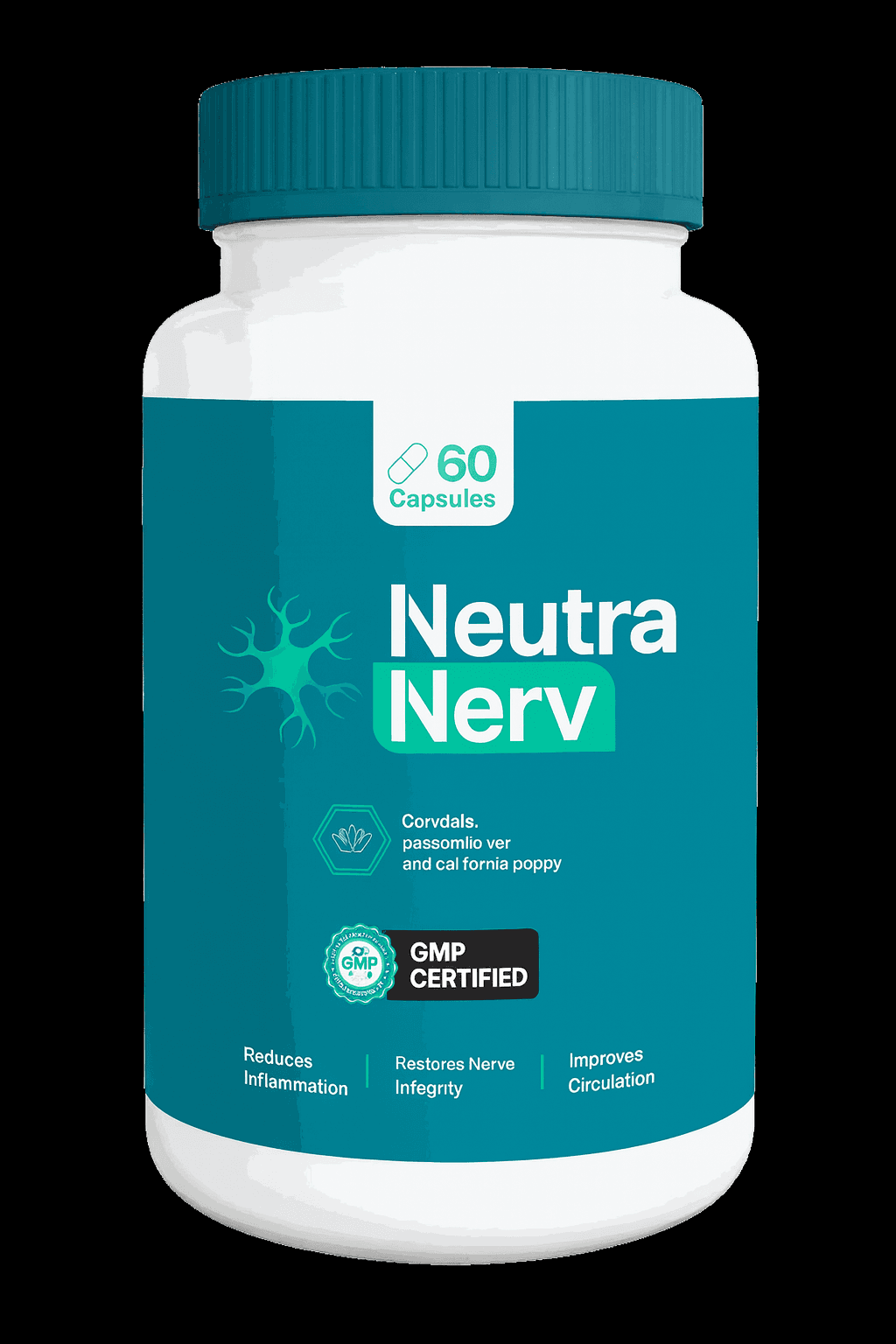
Neutranerv is positioned as a cardiovascular health protocol delivered as a physical kit, a blend of natural compounds centered on black salt (also known as Kala Namak), designed to normalize blood pressure in under 17 hours and restore full cardiovascular function within a three-week course. It is sold direct-to-consumer at $23 per unit, shipped nationally in the United States, and marketed exclusively through video sales letters of the kind analyzed here. The product sits within the broader dietary supplement category, though the VSL deliberately distances it from that classification, preferring terms like "protocol," "system," and "space engineering" to suggest a level of scientific development far above what is typically associated with over-the-counter supplements.
The stated target user is an American adult, the VSL's language skews toward the 50-to-75 age bracket, who has been diagnosed with hypertension or is experiencing symptoms such as chronic headaches, fatigue, and shortness of breath, and who has grown disillusioned with pharmaceutical management of the condition. The product is explicitly positioned against beta blockers and diuretics, and the copy repeatedly assures the audience that Neutranerv does not mask symptoms but addresses the root cause. This is a classic Problem-Agitate-Solution (PAS) frame applied at category level: the product is not just better than competing supplements, it is better than the entire medical paradigm those supplements exist within.
The format is worth noting because it matters for the buyer's evaluation. Despite the clinical language and the space-engineering provenance claimed, Neutranerv appears to be a single-purchase consumable kit, no subscription is mentioned, no clinical supervision is recommended, and the entire protocol is designed to be self-administered at home. The $23 price point and the "two to three day" shipping timeline further suggest a standard supplement fulfillment model rather than the bespoke medical protocol the letter implies.
The Problem It Targets
Hypertension is, by any epidemiological measure, a legitimate and significant public health crisis. The Centers for Disease Control and Prevention (CDC) estimates that approximately 119 million American adults, nearly half the adult population, have high blood pressure, and only about one in four of those with hypertension have it under control. Globally, the World Health Organization (WHO) identifies hypertension as the leading risk factor for cardiovascular disease and a major contributor to stroke and kidney failure. The commercial opportunity is therefore real and enormous: a population of tens of millions, many of them on lifelong medication regimens, many of them experiencing meaningful side effects, and many of them searching online for natural alternatives.
The VSL frames this problem not merely as a medical challenge but as a systemic injustice. The language shifts from clinical to conspiratorial: hypertension is described as "a rigged system," the healthcare infrastructure is said to be "built to profit, not to heal," and pharmaceutical companies are accused of actively suppressing the natural cure that Neutranerv represents. This framing, sometimes called the false enemy frame in direct-response copywriting, is particularly effective with audiences who already distrust institutional medicine, a demographic that overlaps substantially with the product's apparent target. The emotional logic runs: your frustration with your doctor is not a personal failure; it is the correct response to a corrupt system, and this product is your exit.
The specific statistic deployed most aggressively, "84% of people with hypertension develop irreversible complications within five to seven years", appears repeatedly and is never attributed to a named study, journal, or institution. This is significant. While it is well-established that uncontrolled hypertension dramatically increases the risk of cardiovascular events (a point supported by decades of literature published in journals including The Lancet and the Journal of the American College of Cardiology), the specific 84% figure and the five-to-seven-year timeline are not traceable to any publicly available epidemiological dataset. The statistic functions rhetorically, as a countdown clock that makes inaction feel like a death sentence, rather than scientifically.
What the VSL gets structurally right is the emotional texture of living with hypertension: the fear of every stressful moment, the side-effect burden of daily medication, the loss of physical confidence. These are genuine and well-documented quality-of-life dimensions of the condition (see, for example, patient-reported outcome research published by the American Heart Association). The letter earns its emotional resonance by accurately describing real suffering; the analytical problem is that it then ties that accurate description to claims that are far less accurate.
How Neutranerv Works
The mechanistic claim at the heart of Neutranerv is that the body's blood pressure problems stem from a failure to produce the "right signals" for pressure control, a breakdown in what the VSL calls the body's natural pressure-control mechanisms, and that the product's black salt and natural compound blend "restarts" those mechanisms from the inside. Specifically, the letter claims the protocol works by restoring sodium-potassium electrolyte balance, suppressing cytokines that trigger vasospasm, fortifying vessel walls, improving hydration, and optimizing what it calls the "viral reflex" (likely intended as the baroreflex, the autonomic nervous system's primary blood pressure regulation mechanism). This is a layered mechanistic claim that borrows genuine physiological vocabulary and arranges it in ways that sound coherent but do not describe any established, peer-reviewed intervention.
The kernel of plausible science here is real. Electrolyte balance, specifically the ratio of sodium to potassium, does have a meaningful relationship with blood pressure regulation. Research published in the New England Journal of Medicine and the British Medical Journal has consistently found that higher dietary potassium intake is associated with lower blood pressure, and that the ratio of sodium to potassium may matter more than absolute sodium intake. Black salt (Kala Namak), as a mineral-rich salt variant, does contain trace amounts of potassium, iron, and sulfur compounds beyond what standard table salt provides. The premise that electrolyte optimization can support cardiovascular health is therefore not fabricated, it has a legitimate scientific basis.
Where the VSL departs from evidence into speculation is in the scale and speed of the claims. Normalizing blood pressure within 17 hours through a dietary salt protocol is not supported by any peer-reviewed clinical literature. The mechanisms that govern blood pressure, renin-angiotensin-aldosterone system regulation, baroreflex sensitivity, endothelial function, arterial stiffness, respond to sustained dietary and lifestyle modification over weeks to months, not hours. The claim that the product "lowers cytokines that trigger vasospasm" gestures at real immunological research (chronic inflammation's role in hypertension is an active area of study, with work published in Hypertension journal and elsewhere), but applying that finding to a black salt beverage consumed over 17 hours is a significant extrapolation that has not been tested in any disclosed clinical setting.
The SpaceX provenance is the most rhetorically powerful element of the mechanism story and the least scientifically defensible. NASA and SpaceX do conduct research on cardiovascular adaptation to microgravity, fluid shifts in orbit do create transient blood pressure challenges for astronauts, but that body of research involves controlled medical environments, continuous monitoring, and interventions that bear no documented relationship to a consumer black salt supplement. There is no public record of a SpaceX blood pressure protocol, a collaboration between Elon Musk and Dr. Barbara O'Neill, or a study involving 30,500 civilian participants.
Curious how other VSLs in this niche structure their pitch? Keep reading, the Psychological Triggers section breaks down the mechanics behind every claim above.
Key Ingredients and Components
The VSL is conspicuously vague about formulation. The two named components are black salt and an unspecified "blend of natural compounds." Given what the letter does disclose, here is an honest assessment of the ingredient science:
Black salt (Kala Namak): A volcanic rock salt used in South Asian cooking and Ayurvedic practice, black salt contains sodium chloride, iron sulfide, hydrogen sulfide, and small amounts of potassium and magnesium. Some practitioners cite it as gentler on blood pressure than refined table salt, though clinical evidence for this claim is limited. A small number of observational studies suggest mineral-rich salt alternatives may have marginally less vasopressor effect than pure sodium chloride, but no randomized controlled trial has established that black salt consumption normalizes hypertension in a clinically meaningful way. The claim that it "regulates iron levels and eases the work of the heart" conflates trace mineral content with therapeutic dosing.
Unspecified natural compounds: The VSL refers to "a blend of natural compounds" co-developed with Dr. Barbara O'Neill but never names them. This opacity is a significant red flag for any consumer evaluating the product. Without a disclosed supplement facts panel listing ingredient identities and quantities, it is impossible to assess safety, potential drug interactions, or therapeutic plausibility. This matters particularly for people currently taking antihypertensive medications, for whom certain natural compounds (including potassium-rich supplements, licorice root, and hawthorn berry) can interact unpredictably.
Water solution protocol: The delivery mechanism described, dissolving black salt in water as a daily preparation, is consistent with an oral rehydration-style intervention. While adequate hydration does support cardiovascular function and deficient hydration can raise blood pressure (a finding from research cited by the American Journal of Hypertension), treating a clinical case of hypertension with a saline solution at home, without medical supervision, carries genuine risk, particularly for people with kidney disease or heart failure, for whom sodium load must be carefully managed.
Hooks and Ad Angles
The opening hook, "If you're watching this, it probably means I'm no longer alive", is one of the more audacious pattern interrupts in recent VSL history. A pattern interrupt (drawn from NLP and attention research, and operationalized in direct response by copywriters from Gary Halbert through to Todd Brown) works by violating the viewer's cognitive expectation of what a health supplement ad sounds like, forcing involuntary attention. A grieving widow reading a posthumous message from her murdered husband is about as far from the expected supplement-ad opening as one can get, which means the brain's salience filters do not suppress it. The move is structurally borrowed from the "dead man's letter" trope in thriller fiction and has been adapted here into what marketers sometimes call an epiphany bridge: the narrator had a revelatory experience (her husband's death-by-suppression) that the viewer is now experiencing vicariously, and the product is the resolution of that shared epiphany.
The secondary hook structure shifts register entirely, from grieving widow to Elon Musk speaking in a fictionalized news interview, which compounds the pattern interrupt with a false authority transfer. The viewer's existing trust in Musk (as a technology visionary) and in Ingraham (as a trusted media figure for the VSL's likely right-leaning target audience) is imported wholesale into a context those figures never actually endorsed. This is a market-sophistication Stage 4 move in Eugene Schwartz's framework: the audience has seen every "natural cure" pitch and every celebrity endorsement, so the VSL bypasses both by faking a news broadcast, which carries a different cognitive register than advertising. The viewer is not watching an ad; they are watching a leak.
Secondary hooks observed in the VSL:
- "No American has seen news this shocking since 9/11"
- "Big Pharma banned the original video within hours of its release"
- "If you ignore it for five to seven years, 84% of your body will be affected"
- "It used to cost $1,600, you can get it for $23 today"
- "Only 1,100 units left, we expect all stock gone in under an hour"
Ad headline variations for Meta or YouTube testing:
- "SpaceX developed a blood pressure fix. A widow says Big Pharma had it buried."
- "$23 for a 17-hour blood pressure reset? Here's what the science actually says."
- "Doctors called it normal. He called it a warning. Now his wife is telling his story."
- "The black salt protocol for hypertension: what's real, what's not"
- "Before you buy this viral $23 blood pressure kit, read this first"
Psychological Triggers and Persuasion Tactics
The persuasive architecture of this VSL is best understood not as a collection of isolated tactics but as a stacked trust-destruction and trust-rebuilding sequence. The first movement of the letter (roughly the first three minutes) systematically destroys the viewer's trust in existing authorities, conventional medicine, Big Pharma, the healthcare system, while simultaneously constructing a new authority hierarchy centered on Musk, space science, and the martyred husband. Only once the viewer's existing epistemic anchors have been loosened does the letter introduce its own knowledge claims. This sequencing matters: the same claims about black salt and 17-hour normalization would be far less persuasive if delivered to an audience still anchored to their physician's advice.
The overall structure maps onto what Cialdini would recognize as a pre-suasion architecture (Pre-Suasion, 2016), the environment of belief is prepared before the product itself is introduced. By the time Neutranerv is named, the viewer has already agreed (emotionally, if not consciously) that the medical system is corrupt, that natural solutions are suppressed, and that Elon Musk is a credible health authority. The product then arrives as the logical conclusion of premises the viewer has already accepted.
Celebrity identity theft as authority (Cialdini, 1984): Musk, Kirk, and Ingraham are impersonated without their consent. The viewer's real-world respect for these figures is redirected onto the product, creating a borrowed credibility that no amount of genuine expert citation could achieve as quickly.
Martyrdom narrative as emotional investment (Green & Brock's narrative transportation, 2000): Charlie Kirk's fictional murder creates a story the viewer inhabits emotionally. Once inside the narrative, skepticism feels like a betrayal of the martyr's sacrifice, a powerful inoculation against the viewer's own critical faculties.
Loss aversion and statistical countdown (Kahneman & Tversky's Prospect Theory, 1979): The 84% complication rate within five to seven years is deployed as a loss frame rather than a gain frame. Research consistently shows that people respond more strongly to the prospect of losing something (health, mobility, years of life) than to gaining equivalent value. The statistic makes inaction feel like choosing to lose.
False enemy / institutional villain (Tajfel & Turner's Social Identity Theory, 1979): Big Pharma is constructed as a unified, malevolent in-group whose interests are opposed to the viewer's. This creates an out-group (the viewer, alongside Musk and the letter's narrator) whose shared identity is defined by resistance to the system. Buying the product becomes an act of tribal membership, not just a commercial transaction.
Artificial scarcity and urgency (Cialdini's Scarcity principle; Thaler's endowment effect): "1,100 units remaining" and "sold out in under an hour" collapse the deliberation window. The endowment effect operates in reverse here: the viewer feels they are about to lose access to something they have already mentally possessed during the video.
Price anchoring and contrast (Tversky & Kahneman's anchoring heuristic, 1974): The sequence $5,000 → $1,600 → $23 is a textbook anchoring cascade. Each prior figure recalibrates the reference point downward, so the final price does not feel like $23 evaluated on its own merits, it feels like a $4,977 discount.
Social proof stacking (Cialdini, 1984; Bandwagon effect): Six named testimonials, a 30,500-subject trial, and the phrase "thousands are watching right now" collectively manufacture consensus. The individual viewer is implicitly shown a world in which everyone else has already decided, and decided positively.
Want to see how these tactics compare across 50+ VSLs? That's exactly what Intel Services is built to show you.
Scientific and Authority Signals
The authority architecture of this VSL deserves particular scrutiny because it is the most consequential dimension for a buyer making a health decision. Three categories of authority are deployed: real public figures used without authorization, real scientific vocabulary stripped of its evidentiary context, and unverifiable institutional claims.
Elon Musk is the load-bearing authority figure. He is not quoted from a real speech or interview; he is dramatized in a fictional broadcast, speaking lines written by the VSL's copywriter. Laura Ingraham is similarly fictionalized as the interviewer. Charlie Kirk is presented as a martyr who was murdered, a claim that is, to state the obvious, false. Dr. Barbara O'Neill is the only character in the letter who could qualify as a genuine (if controversial) expert: she is a real person who identifies as a natural health educator and has given public lectures on cardiovascular health. However, O'Neill has no medical degree, has been barred from practicing in Australia by health authorities for providing dangerous health advice, and is not an authority whose endorsement should carry clinical weight. The VSL presents her as "Dr. Barbara O'Neill" in a context that implies medical credentials she does not hold.
The research citations follow a consistent pattern: large, impressive numbers (30,500 participants, $1 billion invested, 2,100 simulations) attached to no traceable institutional affiliation, no journal name, no publication date, and no principal investigator. In the hierarchy of evidence, these citations occupy the lowest possible rung, they are assertions, not evidence. The "National Access Health Initiative," invoked to explain the subsidized $23 price, does not appear in any government database, federal registry, or public health agency record. Its function is purely rhetorical: it converts a commercial discount into a quasi-official government program, lending administrative authority to a pricing decision.
What the letter gets right, scientifically, is narrow but real. The relationship between electrolyte balance and blood pressure is established science. The role of chronic inflammation and cytokine activity in vascular disease is an active and legitimate research area (see, for example, work by Paul Ridker at Harvard on CRP and cardiovascular risk, published in the New England Journal of Medicine). The general principle that dietary modification can support blood pressure management is well-supported, the DASH diet, extensively studied by the National Heart, Lung, and Blood Institute (NHLBI), demonstrates that dietary sodium reduction and potassium increase produce measurable blood pressure reductions. None of this validates Neutranerv specifically, but it does mean the letter is not working in a complete scientific vacuum. It is working in a selective one.
The Offer, Pricing, and Risk Reversal
The offer structure is a near-perfect execution of value stacking with price anchoring. The sequence, pharmacy price of $5,000+, original protocol price of $1,600, government-subsidized price of $23, functions as a three-stage anchor cascade designed to make the final price feel not merely affordable but absurd to decline. The comparison to "less than a dinner or a tank of gas" is a classic reframing technique from direct-response copywriting: it relocates the purchase from the mental account of "health spending" (where the buyer applies scrutiny) to the mental account of "daily discretionary spending" (where the buyer applies almost none). The effect is to make $23 feel like a trivial decision rather than a health decision.
The risk reversal, a personal money-back guarantee attributed to the Elon Musk character, is theatrically rather than practically meaningful. A money-back guarantee on a $23 supplement is a standard industry practice that costs the seller relatively little in absolute terms, since the friction of actually claiming a refund (finding the contact information, initiating a dispute, waiting for resolution) is sufficient to deter a large proportion of dissatisfied customers. The guarantee's primary function is to lower the activation energy of the initial purchase, not to genuinely shift financial risk to the seller. Free shipping performs a similar role: it removes a psychologically salient friction point at checkout without materially changing the economics.
The scarcity claim, 1,100 units, expected sellout in under an hour, next production cycle potentially 36 months away, is almost certainly manufactured. Genuine supply constraints of this kind would make the subsidized $23 pricing economically incoherent: if demand vastly exceeds supply and next production is years away, the rational pricing strategy would be to raise the price, not lower it. The coexistence of extreme scarcity and extreme generosity in the same offer is a logical inconsistency that functions as an emotional intensifier precisely because the viewer is not meant to analyze it, they are meant to act on it.
Who This Is For (and Who It Isn't)
The buyer this VSL is designed to reach is a specific and real person. They are likely between 55 and 72 years old, living in a mid-sized American city or rural area, currently managing a hypertension diagnosis with one or more medications, experiencing meaningful side effects or cost burden from those medications, and holding a political and cultural identity that includes skepticism of large institutions, whether government, pharmaceutical companies, or mainstream media, and trust in figures like Elon Musk as disruptive truth-tellers. They have probably searched YouTube or Google for "natural blood pressure remedies" or "how to stop taking blood pressure pills" at least once. The VSL's Fox News visual aesthetic, its patriotic framing, and its specific choice of celebrity authorities are not accidental, they are calibrated to this person's media diet and identity framework. For this buyer, the letter lands as a confirmation of what they already suspected.
The product may appeal to a secondary buyer who is genuinely interested in electrolyte management and dietary approaches to cardiovascular health, and who is less susceptible to the conspiracy framing but is drawn by the low price point and the natural-compounds positioning. For this buyer, the $23 represents a low-stakes experiment, and the placebo and lifestyle-attention effects of a structured three-week protocol could produce genuine subjective improvement regardless of the product's specific efficacy.
Who should approach this product with serious caution, or avoid it entirely, is a more important category. Anyone currently on antihypertensive medications should not alter or discontinue those medications based on a $23 supplement and a marketing video, regardless of how compelling the narrative. Abrupt discontinuation of beta blockers, in particular, can cause rebound hypertension and carries genuine cardiovascular risk. People with kidney disease, heart failure, or electrolyte disorders face specific risks from unmonitored changes in sodium and potassium intake. And anyone who is making a health decision based primarily on the involvement of Elon Musk should note that Musk has no documented connection to this product.
If you're evaluating other supplements in this space, the Final Take section synthesizes what this VSL reveals about the broader market, and what that means for your research.
Frequently Asked Questions
Q: Is Neutranerv a scam?
A: Neutranerv uses fabricated celebrity endorsements (Elon Musk, Charlie Kirk, Laura Ingraham have no documented connection to the product), unverifiable research claims, and manufactured scarcity tactics that are standard markers of low-credibility supplement marketing. Whether the product delivers any benefit depends on its actual formulation, which is not fully disclosed in the VSL. The marketing practices, however, are deceptive by design.
Q: Does Neutranerv really work for high blood pressure?
A: No peer-reviewed clinical trial documenting Neutranerv's efficacy is publicly available. The VSL cites a 30,500-person study with 100% success rates, but this study has no traceable source, journal, or principal investigator. Dietary electrolyte modification can support blood pressure management, but the 17-hour normalization claim is not supported by established cardiovascular science.
Q: What are the ingredients in Neutranerv?
A: The VSL names black salt (Kala Namak) as the primary ingredient and refers vaguely to a "blend of natural compounds." No complete supplement facts panel is disclosed in the marketing materials reviewed. Consumers should request a full ingredient list before purchasing, particularly if they take prescription medications.
Q: Is it safe to stop blood pressure medication to use Neutranerv?
A: No. Discontinuing antihypertensive medications, particularly beta blockers, without medical supervision can cause rebound hypertension and carry serious cardiovascular risk. Any change to a medication regimen should be made under the direct guidance of a qualified physician.
Q: Did Elon Musk really create a blood pressure supplement?
A: No. There is no public record of Elon Musk developing, endorsing, or being associated with Neutranerv or any blood pressure supplement. The VSL dramatizes Musk in a fictional interview without his authorization. This is a common tactic in fraudulent health marketing and has been the subject of consumer fraud warnings from the FTC.
Q: What is the black salt protocol for hypertension?
A: Black salt (Kala Namak) is a mineral-rich salt alternative used in South Asian cooking that contains small amounts of potassium, iron, and sulfur compounds. Some practitioners suggest it may have a milder effect on blood pressure than refined table salt. However, no clinical protocol built on black salt has been validated for treating hypertension, and the "SpaceX astronaut protocol" described in the VSL has no verifiable origin.
Q: Are there side effects from Neutranerv?
A: Because the full ingredient list is not disclosed, a comprehensive side effect profile cannot be assessed. Salt-based supplements can be problematic for people with kidney disease, heart failure, or conditions requiring low-sodium diets. As with any supplement, interactions with prescription medications are possible and should be reviewed with a healthcare provider.
Q: How much does Neutranerv cost and is it worth it?
A: The VSL prices Neutranerv at $23 with free shipping, framed against anchor prices of $1,600 and $5,000. The low price point reduces financial risk, but the absence of disclosed ingredients, verifiable clinical data, and legitimate authority backing makes it difficult to assess value independently of the marketing.
Final Take
The Neutranerv VSL is not a mediocre piece of marketing, it is a technically accomplished one built on a foundation of fabricated authority. The celebrity impersonation strategy, the martyrdom opener, the SpaceX provenance narrative, the stacked anchor pricing, the countdown scarcity: each element is selected and sequenced with real craft. What the letter reveals about its market is that the hypertension supplement buyer circa 2024 is sophisticated enough to have already rejected simple "try this herb" pitches, and so the VSL escalates to a level of narrative and institutional complexity that resembles, in structure if not in substance, the kind of investigative journalism its target audience trusts. The fake news broadcast is not an accident; it is the correct format for a Stage 4 sophistication market.
The weakest element of the VSL, analytically, is also its most legally exposed: the use of real, named, living public figures in fabricated endorsement contexts. The FTC has issued guidance specifically targeting fake celebrity endorsements in health marketing, and enforcement actions in this space have increased since 2022. For the buyer, this is the single most reliable signal that the broader claims deserve skepticism: if the marketing is willing to fabricate Elon Musk's involvement, the same willingness to fabricate extends to the research citations, the participant numbers, and the institutional affiliations.
The product's underlying premise, that dietary electrolyte optimization, particularly sodium-potassium balance, can support blood pressure management, is not without scientific grounding. If Neutranerv is, at its core, a mineral supplement designed to improve electrolyte balance, it may offer some modest benefit to people whose blood pressure is partially driven by dietary imbalances. But "modest benefit from electrolyte optimization" is not the same as "17-hour reversal of clinical hypertension via space-derived protocol," and the distance between those two claims is where the consumer's money travels. Anyone researching this product should request a full supplement facts panel, consult their physician before changing any medication regimen, and treat the marketing narrative as entirely separate from the product's actual biochemical profile.
The most honest summary of what this VSL demonstrates is this: the hypertension supplement market is large enough, and the buyer's frustration with conventional medicine is real enough, that extremely aggressive marketing, including fabricated celebrity involvement and unverifiable clinical claims, can find a commercially viable audience. That is a statement about market conditions, not a product endorsement. For the reader who arrived here weighing whether to spend $23, the question worth asking is not whether the price is too high but whether the claims, stripped of Elon Musk and SpaceX and martyred husbands, would still be persuasive, and if the answer is no, that is important information.
This breakdown is part of Intel Services, our ongoing library of VSL and ad-copy analyses. If you're researching similar products in the cardiovascular health space, keep reading.
Disclaimer: This article is for research and educational purposes only. It is not medical, legal, or financial advice, and it is not affiliated with the product or its makers. Always consult a qualified professional before making health or financial decisions.
Comments(0)
No comments yet. Members, start the conversation below.
Related reads
 reviews
Mind Lab Pro Review: Does the 30-Day Study Match v4?
Mind Lab Pro v4 lists exact amounts for 11 ingredients and contains no caffeine or stimulants, according to its official page. A 30-day finished-product study reported favorable memory findings, but its abstract does not identify v4 or disclose the tested form or dose.
Read reviews
Life Extension Two-Per-Day Multivitamin Review: Evidence Limits
Life Extension Two-Per-Day is a 120-capsule multivitamin displayed as a 60-day supply. Its identity and dated prices are verified, but the supplied evidence does not reproduce the complete quantitative Supplement Facts panel or include a trial of the finished product. Research involving another multivitamin cannot prove that these capsules improve memory or deliver Life Extension’s broader health-support claims.
Read reviews
Ritual Essential for Women 50+ Review: Label, Study Fit, and Verdict
Ritual Essential for Women 50+ is an iron-free capsule multivitamin positioned by Ritual for women after menopause. Its verified label lists 100 micrograms of vitamin K2 as menaquinone-7. The supplied study did not test this finished product, and the packet provides no exact price.
Read