VitalBP Review and Ads Breakdown: A Research-First Look
The opening line of the VitalBP sales video does not mention blood pressure. It does not mention supplements. It opens, instead, with a demographic anomaly: Japanese adults smoke more heavily and consume more alcohol than their American counterparts, yet suffer dramatically…
8,226+
Videos & Ads
+50-100
Fresh Daily
$29.90
Per Month
Full Access
12.5 TB database · 72+ niches · 29 min read
The opening line of the VitalBP sales video does not mention blood pressure. It does not mention supplements. It opens, instead, with a demographic anomaly: Japanese adults smoke more heavily and consume more alcohol than their American counterparts, yet suffer dramatically lower rates of heart disease. Harvard researchers, the narrator explains, have labeled this the "Japanese Paradox", and the solution, allegedly, has been sitting unnoticed in a bowl of fermented soybeans for centuries. That framing choice is not accidental. Before a single product claim is made, the viewer's existing mental model of cardiovascular health has been unsettled, their curiosity engaged, and a foreign culture has been recruited as proof that Western medicine has been looking in the wrong place. This is a studied opening, and it deserves a studied reading.
VitalBP is a direct-to-consumer cardiovascular supplement sold exclusively online through a long-form video sales letter (VSL) narrated by a figure identified as Dr. Luis Martinez, a self-described regenerative medicine expert and board-certified lipidologist. The pitch runs well over thirty minutes and covers ground that ranges from genuine nutritional science to aggressive pharmaceutical conspiracy framing. For the consumer actively researching this product, perhaps after watching the video, perhaps after a friend or family member recommended it, the central question is not simply "does this supplement work?" The more useful question is: what is the VSL actually arguing, how does it construct its case, and how much of that case holds up under scrutiny? That is precisely the question this analysis investigates.
The piece that follows treats the VitalBP VSL as a text, something to be read closely, not merely summarized. It examines the product's ingredient claims against independent research, maps the persuasion architecture the letter deploys, and assesses the authority signals it leans on. It is not an endorsement, nor is it a dismissal. It is an honest accounting of what a sophisticated, health-motivated reader needs to know before making a decision.
What Is VitalBP?
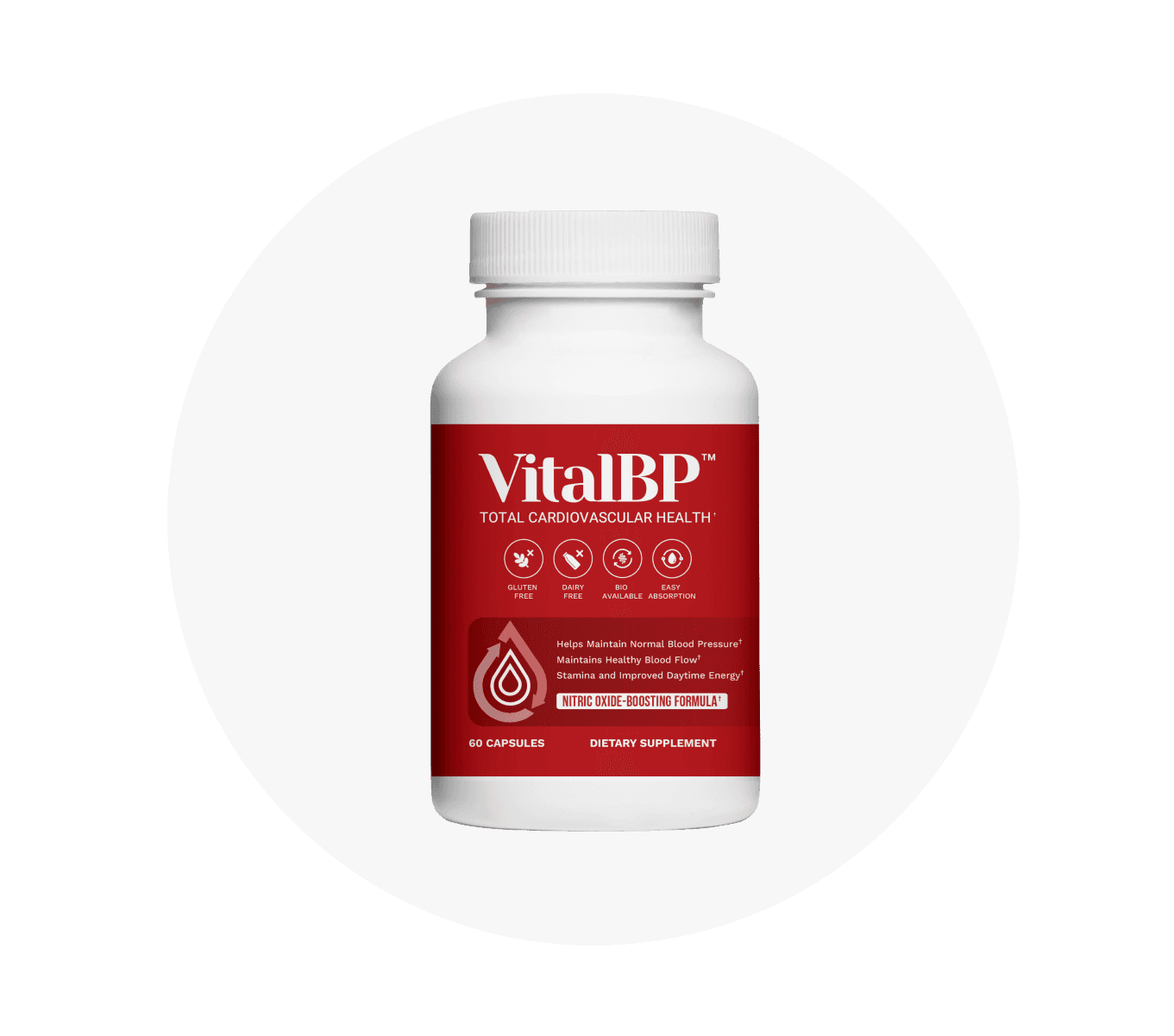
VitalBP is an oral dietary supplement formulated, according to its VSL, specifically to address arterial plaque buildup as the claimed root cause of high blood pressure, elevated cholesterol, fatigue, brain fog, and related cardiovascular symptoms. It is sold as a capsule-based product packaged within what the VSL calls a "system", the supplement itself plus a digital guide titled Blood Pressure Breakthroughs, which includes a meal plan, morning exercise recommendations, and a nitric oxide-boosting smoothie recipe. The product is positioned not as a simple blood-pressure-lowering pill but as a comprehensive cardiovascular intervention targeting the biological substrate, arterial plaque, that the VSL argues conventional medicine ignores.
The market category is well-established: cardiovascular dietary supplements represent a multi-billion-dollar segment of the US health supplement industry, populated by products ranging from fish oil capsules to red yeast rice to beetroot powder. VitalBP distinguishes itself within this category through two primary positioning choices. First, it foregrounds nattokinase, an enzyme derived from fermented soybeans, as its hero ingredient, an ingredient that remains relatively obscure in mainstream consumer awareness despite a growing body of clinical research. Second, it frames the product as a doctor-designed protocol rather than a generic supplement, using the credentials of Dr. Luis Martinez as the central trust anchor. Whether that distinction holds up is examined in the Scientific and Authority Signals section below.
The intended target user, as constructed by the VSL, is an adult between roughly 50 and 75 years old who has already been diagnosed with high blood pressure or is managing borderline readings, has tried prescription medications and found them either ineffective or side-effect-laden, and is motivated by a desire to remain independent and active for their family. The VSL explicitly reaches beyond the individual buyer, closing with an appeal to what the purchase means for one's partner, children, and grandchildren, a rhetorical expansion of the target audience without changing the product's core demographic.
The Problem It Targets
High blood pressure, clinically defined as sustained readings at or above 130/80 mmHg under current American Heart Association guidelines, affects approximately 116 million American adults, or nearly half the adult population, according to data from the Centers for Disease Control and Prevention (CDC). It is the leading modifiable risk factor for heart disease and stroke, the first and fifth leading causes of death in the United States respectively. The commercial opportunity this creates is enormous: the global antihypertensive drug market was valued above $30 billion annually in recent years, and the supplement segment targeting the same condition has grown substantially as consumers increasingly seek non-pharmaceutical options. VitalBP is entering a market with genuine, widespread demand and a consumer base that is, at minimum, partially dissatisfied with its current options.
The VSL frames the problem in a specific and strategically chosen way. Rather than positioning high blood pressure as a condition to be managed (the conventional medical framing), it positions it as a symptom, a downstream consequence of the true problem, which is arterial plaque accumulation. This reframing is rhetorically powerful because it allows the letter to simultaneously discredit existing treatments (they treat the symptom, not the cause) and justify a new mechanism (one that addresses the plaque itself). The VSL's characterization of plaque, cholesterol, calcium, and inflammatory debris accumulating in the arterial lining, narrowing blood flow, raising pressure, and starving organs of oxygen, is consistent with established cardiovascular pathophysiology. Atherosclerosis, the medical term for this process, is indeed a central driver of hypertension, heart attack, and stroke, and the scientific literature does support the idea that treating plaque accumulation is a legitimate therapeutic target.
Where the VSL begins to diverge from consensus medicine is in its characterization of conventional treatments as not merely insufficient but actively harmful. Salt restriction is presented as politically motivated rather than evidence-based; the DASH diet is dismissed as ineffective; statins and antihypertensives are described as creating dependency and arterial stiffening, with some medications linked to cancer risks. Several of the studies cited in support of these claims are real, the Boston University cohort study questioning universal salt restriction, for instance, is a legitimate piece of research that was genuinely covered by Scientific American, but the VSL extrapolates from nuanced findings to sweeping conclusions in ways that flatten genuine scientific debate. The relationship between dietary sodium and blood pressure is, in fact, heterogeneous: some individuals are salt-sensitive, others are not, and the medical consensus has evolved toward personalized rather than universal salt restriction. That is a legitimate scientific conversation. The VSL's version, that the war on salt is political propaganda, is a simplified and emotionally convenient version of that conversation.
The framing of pharmaceutical companies as deliberate suppressors of natural cures is the VSL's most aggressive narrative claim, and it warrants a sober reading. The assertion that "there's no profit in a cure" is a trope common across health marketing, and while pharmaceutical pricing and incentive structures are legitimate subjects of policy criticism, the specific claim that drug companies are aware of nattokinase's superiority and are actively suppressing it is not supported by any cited evidence in the VSL, it is an inference dressed as revelation. For the reader who is frustrated with their current treatment outcomes, this framing is emotionally resonant and politically familiar, but it should not be mistaken for documented fact.
Curious how other VSLs in this niche structure their pitch? The section below breaks down the exact psychological mechanics behind every major claim in this letter.
How VitalBP Works
The mechanism VitalBP proposes rests on a biologically coherent but substantially simplified model of cardiovascular disease. The VSL argues that modern inflammatory diets, environmental toxins, and lifestyle factors damage the endothelium, the thin cellular lining of the arterial wall, creating microscopic lesions that the body attempts to repair by depositing cholesterol, calcium, and fibrin. Over time, this repair process becomes the disease itself: the accumulation hardens into plaque, narrows the artery, elevates blood pressure, and ultimately precipitates cardiovascular events. This model is not wrong in its broad strokes. Endothelial dysfunction is indeed a recognized early stage in the atherosclerotic process, and the inflammatory cascade that drives plaque formation is well-documented in the peer-reviewed literature.
The proposed solution is a combination of ingredients designed to address distinct phases of this process: nattokinase to enzymatically dissolve fibrin (the structural protein binding plaque together), Vitamin K2 to redirect calcium away from arteries and into bone, L-citrulline to boost nitric oxide production and relax arterial walls, cacao flavonoids to stimulate endothelial repair and nitric oxide synthesis, and CoQ10 to reduce the oxidative stress that initiates endothelial damage in the first place. Each of these mechanisms has genuine biological plausibility, and several have meaningful clinical support, nattokinase in particular has attracted serious research attention in recent years.
The VSL's most specific claim, that nattokinase "reduces plaque thickness over three times more effectively than the prescription statin group", cites a 2017 clinical study and an August 2022 paper in Frontiers in Cardiovascular Medicine. The 2017 reference is plausibly a study by Ren and colleagues published in Alternative Therapies in Health and Medicine, which did compare nattokinase to simvastatin in patients with carotid atherosclerosis and reported favorable outcomes for nattokinase. That research is real, though it is a single trial with a relatively small sample, and the results have not yet been replicated at the scale required for clinical guideline changes. The Frontiers in Cardiovascular Medicine 2022 study exists as a journal, and research on nattokinase has been published there, but the specific claim of a 95% reduction in plaque thickness with a 1,000-participant sample is a striking figure that warrants independent verification before it serves as a purchasing rationale. The reader should understand that the existence of some supporting research is not the same as the existence of definitive supporting research.
Where the mechanism explanation becomes genuinely speculative is in the VSL's claim that the formula is "based on a Nobel Prize-winning discovery." This is almost certainly a reference to the 1998 Nobel Prize in Physiology or Medicine awarded to Furchgott, Ignarro, and Murad for their work on nitric oxide as a signaling molecule in the cardiovascular system. The underlying science is impeccable. But the rhetorical move, implying that a supplement formula is grounded in Nobel-level work, leverages the prestige of an awarded discovery without establishing that the specific doses and ingredient combinations in VitalBP produce the nitric oxide effects studied in academic settings. This is a form of borrowed authority, and recognizing it does not invalidate the ingredients; it simply means the reader should weigh the Nobel reference as marketing frame rather than clinical endorsement.
Key Ingredients / Components
The VitalBP formulation, as described in the VSL, comprises five to seven primary ingredients. The letter presents them sequentially, each with its own mechanism and supporting research. What follows is an ingredient-by-ingredient assessment that draws on publicly available research independent of VitalBP's marketing claims.
Nattokinase, An enzyme extracted from natto, a traditional Japanese fermented soybean food. The VSL claims it dissolves fibrin, the structural protein in arterial plaque, and cites both a 2017 head-to-head comparison with statins and a 2022 Frontiers in Cardiovascular Medicine study showing up to 95% reduction in plaque thickness. Independent research does support nattokinase's fibrinolytic activity. A study by Chang and colleagues (2008, Nutrition Research) and a more recent clinical trial (Ren et al., 2017) showed reductions in carotid intima-media thickness versus simvastatin. The evidence base is promising but not yet large-scale enough to constitute a clinical standard of care. Nattokinase may also interact with anticoagulant medications such as warfarin, the VSL correctly flags this concern.
Vitamin K2 (Menaquinone) and Vitamin D3, The VSL references the Rotterdam Study as showing 50% reduced arterial calcification and 57% reduced cardiovascular death with higher K2 intake. The Rotterdam Study (Geleijnse et al., 2004, Journal of Nutrition) is a legitimate and frequently cited prospective cohort study. K2's role in activating Matrix Gla Protein (MGP), which inhibits arterial calcification, is established in the scientific literature. The combination with D3 to optimize calcium metabolism is biologically logical. The claim that 97% of adults are K2-deficient is frequently repeated in supplement marketing; while K2 intake in Western diets is genuinely low relative to Japanese diets, the specific 97% figure should be treated with caution as its sourcing is not independently verifiable in this VSL.
Cacao flavonoids (raw cocoa extract), The VSL references nitric oxide stimulation, endothelial function improvement, and a UCSF study showing cacao doubled endothelial progenitor cell production within one month. The broader evidence base for cocoa flavanols and cardiovascular health is substantial; multiple meta-analyses have confirmed modest reductions in blood pressure (systolic by roughly 2-3 mmHg on average) and improvements in endothelial function. The UCSF stem cell study referenced is more specific and unusual; such a study does exist in the scientific literature but represents early-stage research rather than confirmed clinical protocol. The comparison to $20,000 stem cell injections is emotionally arresting but scientifically imprecise.
L-Citrulline, A naturally occurring amino acid that the body converts to L-arginine and then to nitric oxide. The VSL accurately notes that nitric oxide production declines with age and that this is mechanistically linked to rising blood pressure, declining energy, and sexual dysfunction. Multiple clinical trials have confirmed L-citrulline's ability to modestly lower blood pressure and improve arterial stiffness. The comparison to Viagra and Cialis, both of which enhance NO signaling through phosphodiesterase-5 inhibition, is mechanistically related but overstated as an equivalence.
CoQ10 (Coenzyme Q10), A lipid-soluble antioxidant naturally produced in the body and concentrated in the heart. The VSL cites a review of 14 studies showing a 44% reduced risk of dying from heart failure, and a 2021 study on oxidative stress reduction. A 2018 meta-analysis in the Journal of Human Hypertension (Ho et al.) found CoQ10 supplementation produced modest but statistically significant reductions in systolic and diastolic blood pressure. The 44% mortality reduction figure is likely drawn from research on CoQ10 as adjunctive therapy in heart failure patients, a specific clinical context that differs from general supplementation in otherwise healthy adults with hypertension.
Blueberry extract, Mentioned briefly in the Q&A section as a star ingredient. Blueberry anthocyanins have a solid evidence base for improving endothelial function and modestly reducing blood pressure. A study by Johnson and colleagues (2015, Journal of the Academy of Nutrition and Dietetics) found daily blueberry consumption over eight weeks reduced systolic blood pressure by an average of 5 mmHg in pre-hypertensive adults.
Hooks and Ad Angles
The VSL's opening hook, "Japanese adults smoke more and consume more alcohol than Americans, yet their rates of heart disease are dramatically lower", functions as a classic pattern interrupt (Cialdini, 2006): a disruption of the viewer's expected cognitive flow that elevates stimulus salience by violating a known rule. The viewer expects a blood pressure supplement to open with a symptom or a statistic about cardiovascular disease. Instead, they get a demographic contradiction that their existing knowledge cannot immediately resolve. This forces continued attention, the brain is motivated to close the open loop, and it does so before a single product claim has been made. This is a sophisticated opening in the Eugene Schwartz tradition of Stage 4 and 5 market sophistication, where a buyer who has seen every direct pitch ("lower your blood pressure naturally!") will no longer engage unless they are first given something that violates their existing beliefs.
The hook also performs a second function: it outsources credibility to Harvard before Dr. Martinez introduces himself. By the time the narrator establishes his own credentials, those credentials are being layered onto a foundation already constructed by an elite institution. This sequencing is not accidental. The Ivy League residency, the 0.6% board certification statistic, the celebrity clientele, these accumulate in the first three minutes of the video in a credential cascade that is designed to pre-empt the skepticism a viewer might otherwise feel when a doctor they've never heard of begins recommending an unconventional supplement.
Secondary hooks observed throughout the VSL:
- "The real culprit behind high blood pressure isn't salt, genetics, or age, it's arterial plaque"
- "There's no profit in a cure, if pharma fixed the root cause, they'd lose a lifelong customer"
- "Since you started watching this video, 72 Americans experienced a heart attack, 69 people suffered strokes"
- "Clinically proven to melt plaque three times more effectively than statins, without side effects or lifestyle sacrifices"
- "Forget $20,000 stem cell injections, our cacao blend boosts stem cells from within your own body"
Ad headline variations a media buyer could test on Meta or YouTube:
- "The Japanese enzyme shown to clear arterial plaque 3x better than statins (Harvard-studied)"
- "Your doctor says it's salt. New research says it's something else entirely."
- "A board-certified lipidologist reveals the one compound that reverses arterial aging"
- "Why millions of Americans stay on blood pressure meds for life, and the natural alternative they're never told about"
- "72 Americans had a heart attack while you read this. Here's the root cause no one talks about."
Psychological Triggers and Persuasion Tactics
The persuasive architecture of the VitalBP VSL is sophisticated in one particular structural sense: it stacks its psychological triggers in a deliberate sequence rather than deploying them in parallel. The letter opens with intellectual curiosity (the Japanese Paradox), then builds authority (credential cascade), then manufactures anger at the establishment (pharma villain framing), then introduces fear (mortality statistics and disease progression), then offers relief through the product, and only at the end invokes love for family as the ultimate purchase motivation. This is a layered emotional journey, credibility, then indignation, then fear, then hope, then love, and it reflects a understanding that different emotional states lower different cognitive defenses.
Cialdini would recognize every layer. Schwartz would call the overall approach a mature Stage 4 or 5 piece of market writing, one that is not selling the product directly but selling a new belief about the problem, trusting that a buyer who accepts the belief will find the product to be the only logical conclusion. The letter never says "buy VitalBP because it works." It says "plaque is the root cause, conventional medicine ignores it, here is the science that proves it, and here is the only product that addresses it." The purchase becomes the rational outcome of an argument, not a call to action.
Specific tactics deployed:
Credential stacking (Cialdini's Authority): Ivy League residency, 0.6% board certification, elite clientele, published CRP research, all front-loaded before any product claim to build a trust scaffold the viewer dismantles at their own cognitive cost.
Pattern interrupt and contrarian data (Schwartz's Stage 4-5 market sophistication): The Japanese Paradox opening violates expected health-marketing conventions, forcing re-engagement and positioning the viewer as someone about to learn something mainstream medicine doesn't want them to know.
False enemy / villain framing (Brunson's "Big Domino," Godin's tribal narrative): Pharmaceutical companies are cast as deliberate profiteers suppressing the cure, "there's no profit in a cure", a move that channels the buyer's pre-existing frustration with the healthcare system toward a named enemy and positions VitalBP as the heroic alternative.
Mortality salience and loss aversion (Kahneman & Tversky's Prospect Theory; Terror Management Theory): Real-time heart attack and stroke statistics, graphic descriptions of bypass surgery costs ($448,000), and disease progression narratives activate fear of death and financial ruin as pre-solution motivators.
Social proof via geographically specific testimonials (Cialdini's Social Proof): Linda M. from Dallas, Michael S. from Atlanta, Joan M. from New York City, the geographic specificity and detailed before/after narratives increase testimonial credibility and mirror the target avatar's own situation.
Anchoring and decoy pricing (Thaler's Anchoring; Ariely's Predictably Irrational): The price descends from $250+ retail to $99 to $59 in a staircase that makes each step feel like a rescue, and the 6-bottle option at $39/bottle functions as the intended purchase target, with the single bottle as a deliberate decoy.
Altruistic reframe / identity and legacy (Maslow's esteem and belonging needs): The VSL's closing pivot, from self-preservation to "it could be for your partner, your children, your grandchildren", reframes the purchase as an act of love, reducing ego-resistance and making declining to buy feel like a failure of duty rather than a financial decision.
Want to see how these psychological tactics compare across 50+ health supplement VSLs? That is exactly what Intel Services is built to show you.
Scientific and Authority Signals
The authority infrastructure of the VitalBP VSL rests on three pillars: the credentials of Dr. Luis Martinez, references to named academic institutions, and citations of specific studies. Each merits honest evaluation. Dr. Martinez is presented as a board-certified lipidologist who completed his residency at the University of Pennsylvania and practices in Miami. Board certification in clinical lipidology is a real credential issued by the American Board of Clinical Lipidology, and the claim that only 0.6% of US physicians hold it is consistent with publicly available data from that body. The University of Pennsylvania is an accredited Ivy League institution with a legitimate medical school. These specific credentials are checkable, and the VSL does not appear to have invented them, though independent verification of any specific individual's credentials should always be done through official licensing boards before treating them as established.
The reference to "Harvard researchers" naming the Japanese Paradox is a legitimate association: Harvard's nutrition departments have extensively studied Japanese dietary patterns and cardiovascular outcomes. However, the VSL does not name a specific Harvard researcher, a specific paper, or a specific publication date. The phrase functions as an institutional halo, real enough to survive mild scrutiny but vague enough to be difficult to fact-check. This is what marketing analysts call borrowed authority: a real institution's name is invoked in a way that implies endorsement or specific research findings that the institution itself has not delivered in the form cited. The Japanese Paradox as a concept is real and studied; whether Harvard has used that exact term in a specific published work is a different question.
Among the studies cited, several are verifiable and legitimate. The Rotterdam Study (Geleijnse et al., 2004) on Vitamin K2 and arterial calcification is a genuine and frequently cited prospective cohort study published in the Journal of Nutrition. The Scientific American coverage of the sodium debate is real. The research base on nattokinase, while not definitive at the scale the VSL implies, includes genuine peer-reviewed publications. The claim about CoQ10 and a 44% reduced risk of heart failure mortality is plausibly drawn from legitimate meta-analytic literature. Where the VSL's authority claims become genuinely ambiguous is in the 2022 Frontiers in Cardiovascular Medicine study purportedly showing 95% plaque reduction with nattokinase in over 1,000 participants, this is a striking figure that, if accurate, would represent landmark cardiovascular research. Readers researching this product are encouraged to search PubMed (pubmed.ncbi.nlm.nih.gov) for nattokinase and carotid plaque studies published in that journal in August 2022 and evaluate the original paper's methodology and sample size independently.
The cancer risk claims made against blood pressure medications, a 3.7-fold increase in breast cancer and up to 400% higher risk of aggressive skin cancer, deserve particular scrutiny. These figures are likely drawn from real observational studies linking specific calcium channel blockers to cancer risk, but the evidence in this area is mixed, several major reviews have not confirmed a causal link, and regulatory bodies including the FDA have not issued warnings consistent with those figures for the drug classes most commonly prescribed for hypertension. Presenting these figures without their methodological context, in a section designed to frighten the buyer away from prescription drugs and toward VitalBP, is a rhetorical deployment of selective evidence that a cautious reader should flag.
The Offer, Pricing, and Risk Reversal
The VitalBP offer is structured as a classic stacked value presentation with a descending price anchor and a tiered quantity model designed to push buyers toward the highest-volume purchase. The letter establishes an anchor of $250+ for a 30-day supply, then reduces to a stated retail price of $99, then reveals the "special presentation price" of $59 for a single bottle. A 6-bottle package is offered at $39 per bottle, representing $360 in stated savings plus free shipping. The framing of $59 as "less than a single restaurant meal" and "under $2 per day" are standard direct-response value reframes, benchmarking the purchase against discretionary spending rather than competing health products. The surgical cost comparisons ($70,000-$448,000 for valve and bypass procedures) are real price ranges, but their function in the letter is not informational, it is to make $59 feel categorically trivial by comparison.
The 90-day money-back guarantee is presented as unconditional and applicable even to opened bottles. This is a genuine risk reversal, and it is a more generous guarantee than many supplement competitors offer. In direct-response supplement marketing, a 90-day guarantee serves a dual purpose: it reduces purchase friction at the moment of decision, and it functions as a confidence signal that the seller expects a meaningful percentage of users to experience results within that window. The operational question is whether the guarantee is actually honored without friction, something that cannot be assessed from the VSL text alone and should be researched through independent consumer review platforms.
The scarcity and urgency framing, "this one-time special offer is good today only," "sold out multiple times since launch," "supply chain challenges", is standard direct-response copy and should be evaluated accordingly. These claims are not independently verifiable from within the sales letter, and persistent-urgency framing is a known characteristic of evergreen VSL pages where the same "today only" offer has been running for months or years. The reader who encounters this framing should not mistake rhetorical urgency for literal scarcity.
Who This Is For (and Who It Isn't)
The reader most likely to find genuine value in VitalBP is an adult in their 50s, 60s, or 70s who is managing diagnosed hypertension or borderline-high blood pressure, has been on prescription antihypertensives for at least a year, is experiencing side effects or persistent fatigue that their prescribing physician has not adequately addressed, and is motivated to take a more proactive role in their cardiovascular health. For this person, the ingredients in VitalBP, nattokinase, K2/D3, L-citrulline, CoQ10, and cacao flavonoids, each have a legitimate scientific rationale for supplementation, and the combination is not implausible as a supportive intervention. The 90-day guarantee means the financial risk of trying the product is meaningful but bounded. Anyone in this profile who chooses to try VitalBP should inform their treating physician, particularly if they are taking anticoagulants (the nattokinase-warfarin interaction is a real clinical concern flagged correctly in the VSL).
The reader who should proceed with more caution, or not purchase without a medical consultation, includes anyone who is currently experiencing acute cardiovascular symptoms (chest pain, shortness of breath, palpitations), anyone whose blood pressure is severely elevated and uncontrolled, anyone on warfarin or other anticoagulants, and anyone who is interpreting the VSL's anti-pharmaceutical framing as justification to discontinue prescribed medications. The VSL itself includes the disclaimer that no one should stop medications without consulting their physician, but this caveat is brief and comes after extensive copy designed to make pharmaceutical dependence feel shameful and dangerous. The rhetorical weight of the letter pushes harder toward supplement adoption than it does toward physician consultation.
The reader who is generally healthy, with normal blood pressure and no diagnosed cardiovascular risk factors, is not the primary audience and is unlikely to notice dramatic effects, though the ingredients are safe for general use at typical supplement doses. For this reader, VitalBP is not harmful, but the case for spending $59 to $234 is weaker than the VSL's framing suggests.
Researching how other health supplement brands make the case for natural alternatives to pharmaceuticals? Intel Services has analyzed dozens of VSLs in this category.
Frequently Asked Questions
Q: Is VitalBP a scam?
A: VitalBP is a real supplement product with documented ingredients that have genuine scientific support, particularly nattokinase, K2/D3, L-citrulline, and CoQ10. It is not a fictitious product. However, some of the marketing claims, especially the "3x more effective than statins" and "95% plaque reduction" figures, are drawn from limited or selectively cited research and should not be taken as established clinical consensus. Independent verification of specific study claims is advisable before purchase.
Q: Does VitalBP really work for high blood pressure?
A: The individual ingredients in VitalBP have demonstrated, in clinical research, modest to meaningful effects on blood pressure, arterial stiffness, and cardiovascular markers. Whether the specific combination and dosage in VitalBP produces the dramatic outcomes described in testimonials cannot be determined from the VSL alone. Results are likely to vary significantly based on the severity of the individual's cardiovascular condition, their diet, their use of other medications, and how long they take the supplement.
Q: Are there side effects from taking VitalBP?
A: The ingredients are generally well-tolerated and naturally occurring. The most significant documented safety concern is nattokinase's potential interaction with blood-thinning medications, particularly warfarin, this interaction is real and the VSL correctly flags it. Individuals on anticoagulants should consult their physician before use. For most otherwise healthy adults, the ingredients carry a low side-effect risk at typical supplement doses.
Q: Is VitalBP safe for long-term use?
A: Each of VitalBP's primary ingredients, nattokinase, K2, D3, L-citrulline, CoQ10, and cacao flavonoids, has been studied in extended use contexts with a generally favorable safety profile. No long-term safety data specific to the VitalBP combination formulation exists in the published literature, as is typical for proprietary supplement blends. Consulting a physician for periodic monitoring of blood pressure and lipid panels during extended use is prudent.
Q: Can I take VitalBP with my blood pressure medication?
A: The VSL states that VitalBP is "100% natural and completely safe with most prescription medications" but specifically flags the nattokinase-warfarin interaction as a reason to consult a physician. This is reasonable guidance. Anyone taking anticoagulants, blood thinners, or medications for heart failure should discuss supplementation with their prescribing physician before starting VitalBP, and no one should adjust or discontinue prescribed medications based on supplement use without medical supervision.
Q: How long does it take for VitalBP to work?
A: The VSL acknowledges that results can take "from a few weeks to several months" and recommends a minimum of three to four months for meaningful cardiovascular benefit. This is a realistic timeframe for the mechanisms described, arterial remodeling and plaque reduction, if they occur, are gradual physiological processes. The VSL recommends the three- or six-bottle packages for this reason, which also happen to generate higher revenue per transaction.
Q: Where can I buy VitalBP, and is it available in stores?
A: According to the VSL, VitalBP is sold exclusively through its official website, with direct-to-consumer distribution cited as both a quality control measure and a way to avoid retail markup. It is not available through Amazon, pharmacies, or brick-and-mortar retail at the time of this analysis. This exclusivity is a common feature of direct-response supplement brands and means the official website is the primary venue for both purchase and refund requests.
Q: What makes VitalBP different from other blood pressure supplements?
A: VitalBP's primary differentiation claim is the inclusion of nattokinase, a relatively uncommon ingredient in mainstream cardiovascular supplements, combined with K2/D3, L-citrulline, CoQ10, and cacao in a single formula. Many competing products address nitric oxide production or general antioxidant support but do not include a fibrinolytic enzyme. Whether this combination constitutes a meaningful clinical advance over single-ingredient or simpler combination products is a question the available research cannot yet definitively answer.
Final Take
The VitalBP VSL is, by the standards of the direct-to-consumer health supplement category, a well-constructed piece of persuasive writing. It earns this characterization not because its claims are above reproach, several are not, but because its structure reflects a genuine understanding of how health-motivated, medically frustrated buyers process information and make decisions. The credential cascade, the villain framing, the staged emotional journey from curiosity to fear to hope to love, the scientific citations mixed with selective extrapolation, these are not the work of a careless marketing team. They are deliberate choices that reflect an accurate reading of the target audience's psychology and a sophisticated deployment of persuasion mechanics that academic researchers from Cialdini to Kahneman have documented in controlled settings.
The ingredient profile deserves a genuinely favorable assessment, with calibration. Nattokinase is among the more scientifically interesting cardiovascular supplement ingredients to emerge in the past two decades, and the growing body of research on its fibrinolytic properties is real, if not yet definitive at the scale the VSL implies. Vitamin K2's role in arterial calcification prevention is supported by the Rotterdam Study and subsequent research. L-citrulline's mechanism in nitric oxide production is well-established. CoQ10's antioxidant and cardioprotective properties have a substantial evidence base. The combination is biologically coherent. The weakest link is the degree to which the VSL treats promising research as established clinical protocol, a gap that is common in supplement marketing and consequential for buyers making decisions based on the letter's certainty of tone.
For the frustrated hypertension patient who has exhausted conventional options, or for the health-conscious adult seeking proactive cardiovascular support, VitalBP represents a product with a legitimate scientific rationale, a generous return guarantee, and a manageable financial commitment at the single-bottle price. The appropriate frame is: an adjunctive intervention worth exploring under medical supervision, not a replacement for prescribed therapy, and not a cure backed by the level of clinical certainty the VSL's language implies. The distinction matters, because the VSL is designed precisely to blur that line, to make the supplement feel as evidence-based as a pharmaceutical while simultaneously arguing that pharmaceuticals are the enemy.
This breakdown is part of Intel Services, our ongoing library of VSL and ad-copy analyses. If you are researching similar products in the cardiovascular supplement space, the analyses in this library cover the hooks, science, and persuasion architecture of dozens of comparable offers.
Disclaimer: This article is for research and educational purposes only. It is not medical, legal, or financial advice, and it is not affiliated with the product or its makers. Always consult a qualified professional before making health or financial decisions.
Comments(0)
No comments yet. Members, start the conversation below.
Related reads
 reviews
Mind Lab Pro Review: Does the 30-Day Study Match v4?
Mind Lab Pro v4 lists exact amounts for 11 ingredients and contains no caffeine or stimulants, according to its official page. A 30-day finished-product study reported favorable memory findings, but its abstract does not identify v4 or disclose the tested form or dose.
Read reviews
Life Extension Two-Per-Day Multivitamin Review: Evidence Limits
Life Extension Two-Per-Day is a 120-capsule multivitamin displayed as a 60-day supply. Its identity and dated prices are verified, but the supplied evidence does not reproduce the complete quantitative Supplement Facts panel or include a trial of the finished product. Research involving another multivitamin cannot prove that these capsules improve memory or deliver Life Extension’s broader health-support claims.
Read reviews
Ritual Essential for Women 50+ Review: Label, Study Fit, and Verdict
Ritual Essential for Women 50+ is an iron-free capsule multivitamin positioned by Ritual for women after menopause. Its verified label lists 100 micrograms of vitamin K2 as menaquinone-7. The supplied study did not test this finished product, and the packet provides no exact price.
Read