Kerassentials VSL and Ads Analysis: What the Sales Pitch Really Says
The opening line of the Kerassentials video sales letter is not about toenail fungus. It is about a relationship on the verge of collapse. A girlfriend screams from the bathroom, comparing her partner's foot fungus to a sexually transmitted infection, "at least I could have…
8,226+
Videos & Ads
+50-100
Fresh Daily
$29.90
Per Month
Full Access
12.5 TB database · 72+ niches · 30 min read
The opening line of the Kerassentials video sales letter is not about toenail fungus. It is about a relationship on the verge of collapse. A girlfriend screams from the bathroom, comparing her partner's foot fungus to a sexually transmitted infection, "at least I could have gotten rid of that faster", and the camera, metaphorically speaking, holds on the narrator's stunned silence. This is a deliberate and technically sophisticated opening move, one that reframes a condition most consumers treat as a minor cosmetic inconvenience into an urgent social and romantic crisis. Before a single ingredient has been named, the VSL has already answered the most important question in direct-response copywriting: why should the viewer care right now?
The product being sold is a topical antifungal oil blend marketed under the name Kerassentials, presented through the persona of Dr. Kimberly Langdon, described as an "international leading fungal expert" with 31 years of clinical experience. The pitch runs well over twenty minutes and follows a structure that is recognizable to anyone familiar with long-form health VSLs: personal humiliation, escalating fear, villain identification, expert authority, mechanism reveal, ingredient walkthrough, social proof, and finally an offer stacked with bonuses, scarcity, and a risk-reversal guarantee. What makes this particular letter worth studying is the sophistication with which it handles the "market skepticism" problem, the fact that its target buyer has almost certainly already tried and failed with multiple antifungal products and has strong reasons to distrust anything new.
This analysis examines Kerassentials not primarily as a product evaluation but as a marketing document. The questions it investigates are: how does the VSL construct its persuasive case, what scientific claims does it make and how well do those claims hold up, who is the pitch designed to reach and why, and what does the overall architecture of the letter reveal about the state of the consumer antifungal market in 2024? Readers who are actively researching Kerassentials before purchasing will find both an honest account of what the product contains and an unusually detailed account of the rhetorical machinery operating underneath the pitch.
What Is Kerassentials?
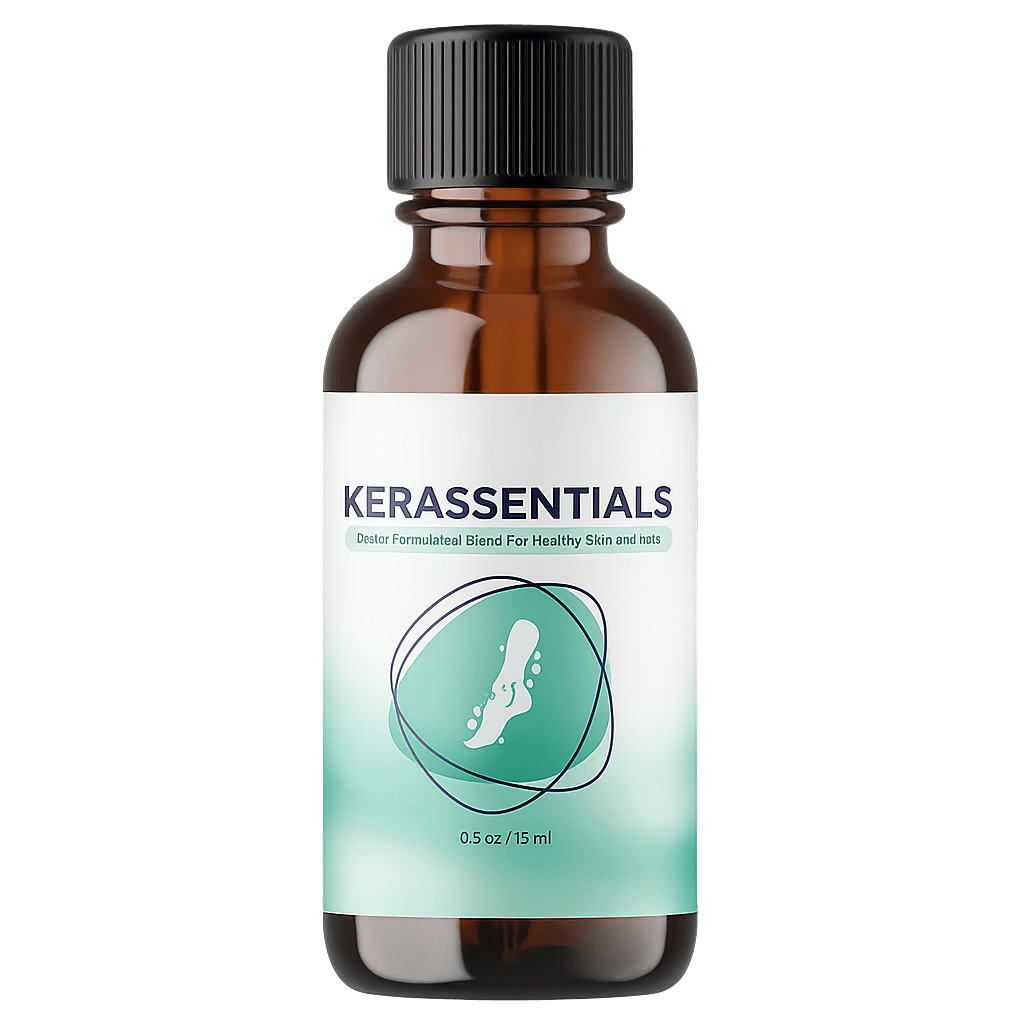
Kerassentials is a topical antifungal oil blend sold in a bottle equipped with a specialized brush applicator, designed to be applied directly to affected toenails and surrounding skin immediately after showering. The product sits at the intersection of two large consumer health categories: nail care and antifungal treatment. Its market positioning is explicitly anti-pharmaceutical, it frames itself as an alternative to both prescription oral antifungals (which the VSL repeatedly associates with liver damage) and over-the-counter topical products (which the VSL argues have become ineffective due to fungal drug resistance). The formula is said to contain seventeen active ingredients, the four "core" ones being clove bud oil, lavender oil, organic flaxseed oil, and manuka oil, supplemented by undecylenic acid, sweet almond oil, camphor oil, tea tree oil, aloe vera, menthol, walnut oil, chia seed oil, and vitamin E.
The stated target user is an adult who has dealt with persistent or recurring toenail fungus, has tried at least several conventional remedies without lasting success, and is now in a state of skeptical exhaustion, willing to try one more thing but requiring a compelling new explanation for why this one will be different. The product is sold exclusively through a dedicated website (not through Amazon or retail), in packages of one, three, or six bottles, with the six-bottle package heavily promoted as the medically necessary minimum for complete treatment. The brand is associated with the name Dr. Kimberly Langdon, who serves as the scientific face of the product and whose personal backstory anchors the credibility narrative.
Kerassentials belongs to a crowded category of direct-to-consumer antifungal supplements and topical solutions that have proliferated online over the past decade. Its distinguishing feature, from a marketing standpoint, is the "super fungus mutation" mechanism, the claim that conventional treatments have, paradoxically, created stronger, drug-resistant strains of fungus, making older natural remedies progressively less effective. This mechanism serves double duty: it explains away every prior treatment failure the buyer has experienced, and it creates a logical necessity for a fundamentally new approach.
The Problem It Targets
Onychomycosis, the clinical term for toenail fungus, affects roughly 10% of the global population, with prevalence rising sharply among people over 60. According to the American Academy of Dermatology, it is the most common nail disorder in adults and accounts for approximately half of all nail abnormalities seen in clinical settings. The condition is chronic by nature: the nail grows slowly, antifungal agents penetrate the nail plate poorly, and incomplete treatment cycles are extremely common. Recurrence rates after topical treatment routinely exceed 50% in observational studies, which means the majority of patients who achieve initial clearance will see the fungus return within twelve to eighteen months. This epidemiological reality gives the VSL its most powerful structural asset: the target buyer's lived experience of failure is not a bug in the sales pitch, it is the central premise.
The VSL escalates the problem considerably beyond the medical consensus. It invokes a 1.6-million annual death figure attributed to Scientific American, a statistic that originates in research on invasive systemic fungal infections, the kind that affect immunocompromised patients in hospital settings, rather than the garden-variety dermatophyte infections responsible for toenail discoloration. The letter also cites a University of Wisconsin-Madison statistic that 50% of hospitalized patients with fungal infections do not survive, a figure that is broadly accurate for specific invasive fungal diseases such as invasive candidiasis or aspergillosis in critically ill patients, but is presented in a way that implies it applies to the same population dealing with itchy toenails. This is a significant rhetorical sleight of hand, it borrows the fear associated with life-threatening systemic fungal disease and deploys it to sell a topical cosmetic remedy for a condition that does not, in otherwise healthy people, carry meaningful mortality risk.
The drug-resistance argument is more scientifically grounded, and it represents the VSL's most sophisticated claim. Antifungal resistance is a real and growing public health concern. The WHO identified it as a priority pathogen issue in 2022, and dermatophyte resistance to terbinafine, the most commonly prescribed oral antifungal, has been documented in multiple studies, including work published in the Journal of the American Academy of Dermatology. However, the VSL's extrapolation, that consumer-level incomplete treatment with tea tree oil and Vicks VapoRub is creating clinically significant resistant strains in individual patients, is a speculative extension of this science rather than an established finding. The mechanism is plausible in broad strokes; the specific claim that five or six failed home treatments have rendered a particular patient's fungus uniquely and personally resistant is not supported by published research at the level of confidence the letter implies.
The emotional landscape the VSL constructs around this problem is meticulously layered. It begins with relationship shame, moves through cosmetic embarrassment, escalates to fear of contagion (infecting children, partners, elderly parents), then to organ damage from pharmaceutical treatments, and finally to mortality. Each layer expands the perceived stakes without leaving the reader time to evaluate whether the escalation is proportionate. This stacked-fear architecture is a deliberate technique, by the time the product is introduced, the viewer has been psychologically moved from "I have an annoying cosmetic problem" to "I am in a medical emergency that threatens my relationships, my organs, and potentially my life."
Curious how other VSLs in this niche construct their fear escalation sequences? The persuasion tactics section below maps every psychological mechanism deployed in this letter with specific reference to the moments they appear.
How Kerassentials Works
The central mechanism claim in the Kerassentials VSL is what the letter calls antifungal resistance, specifically, the idea that years of partial, incomplete treatment with conventional products have produced a "mutated super fungus" that has learned to survive and actually grows stronger each time it encounters a familiar chemical agent. The analogy drawn to antibiotic-resistant bacteria is the rhetorical and scientific core of the entire pitch: just as Staphylococcus aureus evolved methicillin resistance through decades of antibiotic overuse, the letter argues, the dermatophytes responsible for toenail infections have evolved to resist tea tree oil, clotrimazole, and even pharmaceutical-grade antifungals when consumers stop treatment prematurely. This is framed as the "big breakthrough" that distinguishes Kerassentials from everything that came before it.
The mechanism has genuine plausibility in principle. Terbinafine-resistant Trichophyton species are a documented clinical reality, and the evolutionary logic of partial-treatment-driven selection pressure is sound. Where the VSL overreaches is in presenting this as an explanation for why every consumer's every treatment failure occurred, and in implying that the specific oil blend in Kerassentials is immune to the same resistance dynamic. The claim that natural oils are less likely to drive resistance than synthetic chemicals is an interesting hypothesis but is not established in the clinical literature. Resistance to essential oil components, including some terpene-based compounds found in the oils cited, has been observed in laboratory settings.
The application mechanism, showering for at least three minutes to soften the nail and open pores before applying the oil blend, is scientifically coherent and consistent with published guidance on improving topical antifungal penetration. Nail hydration does measurably increase the permeability of the nail plate to small molecules, and this is the rationale behind nail lacquer vehicles and urea-based pre-treatments used in clinical dermatology. The instruction to apply the oils immediately post-shower, while the nail is still softened, is a legitimate clinical insight that most over-the-counter product packaging does not adequately communicate. This is one of the areas where the VSL's practical guidance has genuine merit independent of the proprietary product.
The claim that the formula addresses the "nail matrix", the region at the base of the nail where new nail tissue forms, is where the topical application mechanism faces its most significant scientific constraint. The nail matrix sits beneath the proximal nail fold, several millimeters beneath the skin surface, and achieving therapeutic drug concentrations in that region via topical application alone is notoriously difficult. This is the primary reason oral antifungals remain the gold standard for confirmed onychomycosis in clinical guidelines from the American Academy of Dermatology: they achieve systemic distribution and reliably penetrate the nail matrix. The claim that manuka oil "goes way below the surface where infections are usually rooted" describes a desirable property, but the VSL does not cite pharmacokinetic data demonstrating that the oil blend in Kerassentials achieves nail matrix penetration at therapeutic concentrations.
Key Ingredients and Components
The Kerassentials formulation is presented as a seventeen-ingredient blend. The four "core" oils carry the primary therapeutic narrative, while the remaining thirteen serve supporting roles in skin repair, inflammation control, and immune modulation. The formulation philosophy, multiple synergistic compounds attacking the fungus through distinct mechanisms simultaneously, is a legitimate and widely used strategy in combination antifungal therapy, and it mirrors approaches taken in some clinical research settings.
The following ingredients receive specific scientific claims in the VSL:
Clove bud oil: Rich in eugenol, a phenolic compound with well-documented antifungal activity. A study published in the Journal of Microbiology (Korean Society of Mycology) is cited for its antispore and antifungal efficacy. Independent research, including work published in Mycopathologia, supports eugenol's ability to inhibit dermatophyte growth in vitro, though in vivo clinical data for topical nail applications remains limited.
Lavender oil: The VSL cites University of Cumbria researchers (described as working in Portugal, likely a reference to the Universidad de Coimbra or a similar institution) for the claim that lavender oil disrupts keratin utilization by fungal organisms. Linalool and linalyl acetate, the primary active terpenes in lavender oil, have demonstrated antifungal properties in laboratory studies. A 2011 study by Soković et al. in Journal of Agricultural and Food Chemistry found activity against several dermatophyte species, though the specific mechanism of keratin disruption described in the VSL is not a mainstream finding in the literature.
Organic flaxseed oil: Rich in alpha-linolenic acid (an omega-3 fatty acid) and lignans. The VSL's claims for flaxseed oil focus on skin barrier repair, anti-inflammation, and immune modulation rather than direct antifungal activity. These claims are broadly consistent with the published literature on flaxseed in dermatology, where it appears as a moisturizing and barrier-supportive ingredient rather than a primary antifungal agent.
Manuka oil: Distinct from manuka honey, manuka oil is derived from Leptospermum scoparium and contains high concentrations of triketone compounds (specifically flavesone, leptospermone, and iso-leptospermone) that have demonstrated antifungal activity in peer-reviewed research. A study in Microbiology, Immunology and Infection cited in the VSL has real parallels in the published literature on manuka-derived compounds and drug-resistant fungi, and this is the ingredient with the strongest independent scientific support for the specific antifungal claims made.
Undecylenic acid: A fatty acid with FDA-recognized over-the-counter antifungal status, it appears in the FDA monograph for OTC antifungal products, making it one of the most legitimately regulated antifungal active ingredients in the formula. The VSL cites a Journal of Pharmaceutical Studies comparison to tolnaftate; undecylenic acid's antifungal mechanism (disruption of fungal cell membrane ergosterol synthesis) is well established.
Camphor oil: Used historically as an antifungal and counterirritant. The VSL cites a small study in which 15 of 18 participants showed positive results. The evidence base here is thin, though camphor's presence in Vicks VapoRub, which has been evaluated in at least one randomized controlled trial published in the Journal of the American Board of Family Medicine (Derby et al., 2011) showing modest efficacy against onychomycosis, lends some indirect support.
Tea tree oil, aloe vera, menthol, walnut oil, chia seed oil, vitamin E, sweet almond oil: These supporting ingredients serve skin-soothing, antioxidant, moisturizing, and barrier-repair roles. The VSL's claims for these ingredients are generally consistent with their established cosmetic and dermatological applications, though their individual contributions to antifungal efficacy at the concentrations present in a combined formula are difficult to assess without published bioavailability data.
Hooks and Ad Angles
The opening hook, "It would have been better if you'd brought home Comedia", operates as a pattern interrupt in the strictest copywriting sense: it drops the viewer into an emotionally charged domestic conflict with no prior context, forcing the brain to orient and attend before any product claim has been made. This is structurally identical to what Eugene Schwartz described as the Stage 4/5 market sophistication approach, where a buyer who has seen every direct benefit claim and every natural-remedy pitch is now unreachable through conventional "this product fixes your fungus" framing. The only way back in is through a narrative door, a story that captures identity and relationship stakes before the skeptic's defenses are fully raised.
What makes this hook particularly well-engineered is its specificity. The girlfriend's line does not say "I'm disgusted by your feet", she reaches for a specific, shame-maximizing comparison to a sexually transmitted infection. This reframes foot fungus from a cosmetic condition (low stakes, easy to dismiss) into a contagion-linked identity threat (high stakes, socially devastating), which is precisely the emotional register the rest of the letter needs to maintain. The hook is doing four things simultaneously: establishing the stakes, introducing the avatar (a man in a relationship endangered by his health condition), creating an open loop (what happened next?), and pre-suading the viewer that this is not a story about nail polish.
The secondary hooks throughout the VSL are equally purposeful. The "super fungus" analogy to a superhero villain falling into a chemical pool is a vivid conceptual frame that makes a complex immunological argument instantly memorable. The mortality statistics (1.6 million deaths, 50% hospital fatality rate) function as what Kahneman would call availability heuristic activators, rare but vivid outcomes that the brain systematically overweights when estimating personal risk. The comparison of oral antifungals to "throwing a grenade in your living room to kill one cockroach" is a classic false-dilemma reframe that makes pharmaceutical treatment sound absurd before any alternative is offered.
Secondary hooks observed in the VSL:
- "If you don't do something about your foot fungus, they'll do something about you."
- "Every time you choose a chemical solution to fight the fungus, you are breeding a new generation of super fungi."
- "Your fungus already knows how to beat the Vicks, the Clotrimazole, the tea tree oil."
- "Doctors prefer to throw toxic chemicals at the fungus to get you off their hands."
- "The only regret you will have is that you didn't use the solution sooner."
Ad headline variations for Meta or YouTube testing:
- "The Reason Your Toenail Fungus Keeps Coming Back (It's Not What You Think)"
- "Fungal Expert with 31 Years' Experience: Stop Using These 3 Common Treatments"
- "Why Tea Tree Oil Worked in 1990 and Fails in 2024, And What Actually Works"
- "My Girlfriend Almost Left Me Over Toenail Fungus, This Fixed It in Weeks"
- "1 Minute After Your Shower: The Routine That Killed My 'Super Fungus'"
Psychological Triggers and Persuasion Tactics
The persuasive architecture of the Kerassentials VSL is not a flat list of claims, it is a deliberately sequenced emotional journey that compounds authority, loss aversion, and identity threat in a stacked progression. The letter opens in the emotional brain (shame, relationship fear), moves briefly into the analytical brain (mechanism explanation, scientific citations), then returns to the emotional brain (mortality statistics, family contagion fear) before finally arriving at the rational justification for purchase (price, guarantee, risk reversal). This sequence is consistent with what behavioral economists call the affect heuristic (Slovic et al., 2002): decisions made under emotional engagement are faster and less scrutinized, and the VSL strategically elevates emotion at the exact moments where a skeptical buyer might otherwise pause to evaluate.
The inoculation strategy, systematically discrediting every prior treatment before introducing the product, is particularly sophisticated. By the time Kerassentials is named, the letter has already explained why tea tree oil no longer works, why pharmaceutical antifungals are dangerous, why foot soaks fail two-thirds of users, and why Amazon products are probably fraudulent. This is a textbook application of McGuire's inoculation theory: by raising and defeating objections before the buyer can raise them independently, the pitch co-opts the buyer's critical thinking apparatus and redirects it toward the conclusion the seller wants reached.
Specific persuasion tactics deployed in the VSL:
Shame and social threat (Goffman's stigma theory): The opening girlfriend confrontation and the recurring imagery of refusing to go to the pool, hiding feet from partners, and dreading pedicures activate stigma-related anxiety, the fear of being seen and judged as unclean or undesirable, which is one of the most potent motivators in health-product purchasing.
Authority transfer via personal narrative (Cialdini's authority principle): Dr. Langdon's 31-year MD credential is reinforced by her personal story as a college swimmer with toenail fungus, creating dual authority, institutional (the expert) and experiential (the survivor). The combination is harder to dismiss than either credential alone.
Loss aversion and mortality salience (Kahneman & Tversky, prospect theory): The 50% hospital mortality statistic and the amputation anecdotes elevate perceived downside risk far beyond what the condition warrants for the target population, making the cost of inaction feel catastrophically high relative to the $49 purchase price.
False enemy / villain construction (Schwartz, market sophistication stage 5): "Mutated super fungus" created by irresponsible doctors is a constructed villain that simultaneously explains past failures, absolves the buyer of blame, and creates logical necessity for a new solution, the three things every effective VSL villain needs to accomplish.
Social proof through specificity (Cialdini's social proof): Testimonials are given with concrete details (open-toed pumps at the office, impulse purchase that cleared both partners' nails) rather than generic praise, which increases perceived authenticity and activates vicarious identification in the viewer.
Artificial scarcity and treatment-interruption fear (Cialdini's scarcity principle): The warning that running out mid-treatment will make the fungus stronger, a claim not supported by published evidence, transforms the purchase of multiple bottles from a upsell into what the buyer is made to feel is a medical necessity.
Risk reversal as loss neutralization (Thaler's mental accounting): The 60-day money-back guarantee is framed not just as a customer service policy but as a philosophical statement about the seller's confidence, "you have nothing to lose and everything to gain", which reframes the cognitive cost of the purchase to near zero at the moment of peak emotional engagement.
Want to see how these specific tactics compare across 50+ VSLs in the health supplement space? That's exactly what Intel Services is built to show you.
Scientific and Authority Signals
The Kerassentials VSL invests heavily in scientific authority, deploying institution names, journal references, and a credentialed spokesperson in a density unusual even by the standards of long-form health VSLs. Evaluating the quality of that authority requires distinguishing between four categories: legitimate citation, borrowed authority, speculative extrapolation, and claims that cannot be independently verified.
The clearest example of legitimate, verifiable scientific grounding is the undecylenic acid claim. Undecylenic acid holds an FDA OTC monograph status as a recognized antifungal active ingredient, its efficacy and mechanism are established in the regulatory and clinical literature, and the VSL's comparison to tolnaftate (another FDA-recognized antifungal) is a comparison between two real, studied compounds. Similarly, the broad claims about manuka oil's antifungal activity against drug-resistant strains have genuine support in the peer-reviewed literature; research published in journals including Frontiers in Microbiology has investigated the triketone components of Leptospermum scoparium oil against fungal isolates.
The University of Wisconsin-Madison mortality statistic (50% of hospitalized fungal infection patients do not survive) represents borrowed authority deployed misleadingly. The statistic itself is approximately accurate for specific invasive fungal diseases in immunocompromised ICU patients, and infectious disease literature from several institutions including Wisconsin-Madison has documented this. But the VSL presents it in a context where the viewer is being told their toenail fungus could kill them, creating a false implication of risk equivalence between athlete's foot and invasive candidemia. The institution is real, the statistic has a real basis, but the connection drawn to the viewer's condition is a rhetorical fabrication.
The "University of Cumbria in Portugal" citation for lavender oil is geographically incoherent, the University of Cumbria is a UK institution with no Portuguese campus, and may refer to a different institution entirely, possibly the University of Coimbra in Portugal. This ambiguity reflects a pattern common in health VSLs: scientific citations are included at a level of specificity sufficient to sound credible but insufficient to allow easy verification, exploiting the fact that most viewers will not attempt to look up "the University of Cumbria, Portugal" study on lavender oil and keratin. Whether the underlying research exists in some form cannot be determined from the transcript; what can be determined is that the citation as stated does not point to a verifiable source.
Dr. Kimberly Langdon is described as an inventor of medical devices and a leading international fungal expert. A physician by that name with an OB/GYN background has been associated with several direct-response health products in the supplement space. Her specific credentials in mycology as described in the VSL, "international leading expert on fungal and yeast infections", represent a specialization that is difficult to verify from publicly available information, and the VSL does not cite published research by Dr. Langdon herself, peer-reviewed clinical trials of the Kerassentials formula, or any institutional affiliation beyond her self-identification. This does not mean the authority is fabricated, but it is ambiguous in a way that a genuinely published fungal specialist would not be.
The Offer, Pricing, and Risk Reversal
The Kerassentials offer is structured around a six-bottle package as the anchored default, priced at $49 per bottle with the six-pack discount applied. The VSL calculates this as "as low as $1.50 a day", a price-per-day framing that reduces a $294 total purchase to a sub-coffee-cost daily figure, a standard cognitive reframing technique drawn from behavioral economics. The three-bottle option is presented as available but more expensive per unit and medically insufficient for most cases, while the single bottle is not meaningfully promoted. This is a classic decoy pricing structure: the middle option (three bottles) exists primarily to make the six-bottle package feel like the rational, economical choice rather than an upsell.
The price anchoring in this VSL is implicit rather than explicit, the letter does not name a specific competitor price and claim superiority. Instead, it anchors against the accumulated costs of failed prior treatments ("hundreds of dollars wasted on foot soaks"), the ongoing cost of liver monitoring required by oral antifungals, and the intangible cost of treatment failure and social embarrassment. This is a more sophisticated anchor than a simple "retail value $199, yours for $49" comparison, because it draws the comparison to real costs the buyer has already incurred rather than to a manufactured retail price. The anchor is functionally legitimate, though it omits the fact that comparable essential oil blends are available at significantly lower price points from other sources.
The 60-day money-back guarantee is positioned as a complete risk neutralizer, "if for any reason" the buyer is unhappy, a full refund is available with no questions asked. This is a standard direct-response guarantee structure, and for products sold through Clickbank or similar affiliate networks, such guarantees are generally enforceable through the payment processor's chargeback mechanism even if the seller is unresponsive. The guarantee is described as making the purchase "absolutely no risk," which is not strictly accurate (there is the risk of time lost and the friction of initiating a refund) but is broadly reasonable for a sixty-day window on a product that begins showing cosmetic improvement, per the VSL's claims, within the first few applications. The scarcity framing, product selling out fast, three-month restock delays, pandemic supply chain disruptions, creates urgency designed to compress the buyer's deliberation window, a standard but manipulative technique that deserves acknowledgment as such.
Who This Is For (and Who It Isn't)
The buyer this VSL is designed to reach has a specific psychographic profile that goes beyond the demographic of "person with toenail fungus." The ideal Kerassentials customer has already tried multiple products, at least three to five, which is why the VSL explicitly targets people who have gone through "five or six different treatments", and has reached a state of frustrated resignation punctuated by moments of renewed hope. They are likely between 40 and 65, have enough disposable income to have spent money on this problem before, and care about their physical appearance in social and romantic contexts (pools, beaches, sandals, barefoot confidence). Critically, they are not ideologically anti-medicine but have developed specific distrust of oral antifungals due to side-effect concerns, which makes them receptive to the VSL's "natural but scientifically grounded" positioning. The relationship-threat framing in the opening and the testimonial about not wanting to infect a partner suggest the pitch is most acutely targeted at people whose condition has already affected or threatens an intimate relationship.
For readers who match this profile, the product offers some genuine reasons to consider it: the post-shower application protocol is clinically sound, undecylenic acid is a legitimate FDA-recognized antifungal, and manuka oil has meaningful independent research support. The specialized applicator addresses a real compliance problem (topical treatments fail partly because they are inconvenient), and the multi-ingredient approach is at least theoretically more robust than single-agent treatments. If you are researching this product as a potential purchase, the strongest case for it is the combination of a legitimate application protocol, a few well-studied active ingredients, and a 60-day refund window that reduces financial risk substantially.
Readers who should approach with more caution include those with confirmed moderate-to-severe onychomycosis who have already seen a dermatologist, those with diabetes or compromised immune systems (for whom fungal infections carry the elevated risk the VSL describes, and who genuinely need physician supervision rather than a topical OTC product), and anyone whose treatment decision is being driven primarily by the mortality statistics and amputation anecdotes deployed in the letter, those fears are statistically disproportionate to the actual risk profile of common toenail fungus in otherwise healthy people. The product is unlikely to be harmful; whether it is more effective than a well-formulated single-agent topical antifungal available at a lower price point is a question the VSL's evidence does not definitively answer.
This breakdown is part of Intel Services, our ongoing library of VSL and ad-copy analyses. If you're researching similar products in the antifungal or skin-health space, keep reading.
Frequently Asked Questions
Q: Is Kerassentials a scam?
A: Based on available information, Kerassentials appears to be a real product with real ingredients, not a fraudulent listing. Several of its active ingredients, notably undecylenic acid and manuka oil, have independent scientific support for antifungal activity. The more legitimate concerns are whether the VSL's specific efficacy claims are proportionate to the published evidence, and whether the "super fungus" mechanism is as universal as the pitch implies. A 60-day money-back guarantee through a traceable payment processor reduces the financial risk of trying the product.
Q: Does Kerassentials really work for toenail fungus?
A: The formula contains ingredients with documented antifungal properties, and the post-shower application protocol is consistent with published guidance on improving topical penetration. However, no peer-reviewed clinical trial of the Kerassentials formula itself appears in publicly available literature, so the VSL's efficacy claims rest on ingredient-level research rather than product-level evidence. Individual results will depend heavily on infection severity, compliance, and whether the underlying fungal strain is susceptible to the active ingredients in the formula.
Q: What are the main ingredients in Kerassentials?
A: The formula's four featured oils are clove bud oil, lavender oil, organic flaxseed oil, and manuka oil. Supporting ingredients include undecylenic acid, sweet almond oil, camphor oil, tea tree oil, aloe vera, menthol, walnut oil, chia seed oil, and vitamin E, seventeen active ingredients in total, applied via a specialized brush applicator.
Q: Are there any side effects from using Kerassentials?
A: Topical essential oil blends can cause skin irritation, contact dermatitis, or allergic reactions in sensitive individuals, particularly at higher concentrations. The VSL specifically addresses concentration control as a quality-assurance feature. People with known sensitivities to any of the listed botanicals (clove, lavender, tea tree, camphor) should patch-test before full application. The product is not ingested, so systemic side effects associated with oral antifungals are not applicable.
Q: Is Kerassentials safe to use every day?
A: For most adults without known essential oil sensitivities, daily topical application of a well-formulated oil blend at appropriate concentrations is generally considered safe. The VSL emphasizes precision concentration control as a manufacturing priority specifically to avoid irritation from over-concentrated ingredients. As with any topical product, discontinue use if significant irritation, rash, or worsening occurs and consult a dermatologist.
Q: How long does Kerassentials take to show results?
A: The VSL claims cosmetic improvements (glossier nails, reduced itchiness) within the first few applications, with meaningful antifungal results visible over weeks to months. This timeline is consistent with the biology of nail growth: a toenail takes approximately six to twelve months to grow fully from matrix to free edge, meaning complete replacement of an infected nail with healthy tissue takes time regardless of which treatment is used. The VSL recommends continuing treatment for several weeks after visible clearance to eliminate remaining spores.
Q: Can I buy Kerassentials on Amazon?
A: According to the VSL, Kerassentials is sold exclusively through its dedicated website and is not available on Amazon or any other retail platform. The stated reason is quality control, the brand claims mass distribution compromises ingredient integrity. This exclusivity also serves the marketing goal of preventing price comparison and controlling the customer relationship.
Q: What is the Kerassentials money-back guarantee?
A: The VSL describes a 60-day, 100% money-back guarantee with no questions asked. Buyers who are unsatisfied for any reason are instructed to contact customer support by email for a full refund. The 60-day window is a standard direct-response guarantee structure and, for products sold through major affiliate payment networks, is typically backed by the processor's dispute resolution mechanism in addition to the seller's policy.
Final Take
The Kerassentials VSL is, by the standards of the long-form health supplement letter, a carefully engineered piece of persuasive writing. Its greatest technical achievement is the solution to what every antifungal product marketer faces: a buyer who has failed before, is skeptical of new claims, and has strong prior-experience-based reasons to dismiss another "natural" remedy. The VSL solves this by making the buyer's past failures not a reason for skepticism but a diagnostic indicator, if your fungus came back, that's proof you have the mutated super-resistant strain that only this specific formula can address. It is a brilliant rhetorical move, and it converts the category's biggest liability (a market full of cynical, burned customers) into its primary sales mechanism.
The product itself sits in an honest middle ground that the VSL, for commercial reasons, cannot fully acknowledge. Some of its ingredients are well-supported by independent research; others are present for their marketing appeal or their supportive skin-care roles rather than their direct antifungal potency. The application protocol is genuinely sound dermatological advice. The "super fungus" mechanism is a real phenomenon extrapolated beyond the scope of the evidence to serve as a universal explanatory framework. The mortality statistics are real numbers applied to the wrong population. The authority figures are presented with varying degrees of verifiability. This mix of genuine insight and rhetorical overreach is characteristic of the better-produced health VSLs in the direct-response space, they are not fabricated from nothing, but they are also not the transparent scientific summaries they present themselves as.
What this letter reveals about its market is significant. The antifungal consumer category has reached what Schwartz would call Stage 4 or 5 sophistication, buyers have been through the cycle of hope, product, partial result, relapse, and skepticism enough times that conventional benefit-based pitches no longer convert reliably. The market has responded by producing increasingly sophisticated mechanism stories, and the "drug-resistant super fungus" narrative represents a category-level attempt to reset the buyer's prior experience as irrelevant or even as explanatory evidence for the new product's necessity. This is the same structural move that the probiotic market made with gut microbiome theory, the same move the nootropics market made with neuroplasticity, and the same move the hair-loss market made with DHT blockers. Each time a category matures to the point of pervasive skepticism, the response is a new mechanism story sophisticated enough to reframe everything that came before it.
For the reader who arrived at this analysis while actively deciding whether to purchase Kerassentials: the product is unlikely to harm you, contains some legitimately active ingredients, and comes with a meaningful refund guarantee. The claims in the VSL are substantially overstated relative to the evidence base, the mortality framing is disproportionate to the actual risk of common onychomycosis in healthy adults, and the "super fungus" explanation for your specific treatment failures is more rhetorical convenience than established clinical science. Whether the formula works better than a single-agent undecylenic acid or terbinafine topical for your particular infection is a question that cannot be answered from the VSL or from this analysis, it can only be answered by a dermatologist who has examined your nails. This breakdown is part of Intel Services, our ongoing library of VSL and ad-copy analyses. If you're researching similar products in the health and wellness space, keep reading.
Disclaimer: This article is for research and educational purposes only. It is not medical, legal, or financial advice, and it is not affiliated with the product or its makers. Always consult a qualified professional before making health or financial decisions.
Source-backed reader context
Additional Reviews & Reported Experiences
These statements were presented in the product's sales transcript. Daily Intel did not independently verify the speakers, purchase status, or reported outcomes, and the statements are not used in Product aggregateRating.
Female testimonial
Date not stated
office worker who got a pedicure for the first time in years, wore open-toed pumps to dinner with her husband, felt more confident and beautiful
Male testimonial
Date not stated
man whose girlfriend Danielle contracted the fungus from him; an impulse purchase cleared both their toenails for the first time in years
General
Date not stated
thousands of men and women of all ages cleared fungus; all users reported excellent results, improved confidence, and praised ease of use
Comments(0)
No comments yet. Members, start the conversation below.
Related reads
 reviews
Mind Lab Pro Review: Does the 30-Day Study Match v4?
Mind Lab Pro v4 lists exact amounts for 11 ingredients and contains no caffeine or stimulants, according to its official page. A 30-day finished-product study reported favorable memory findings, but its abstract does not identify v4 or disclose the tested form or dose.
Read reviews
Life Extension Two-Per-Day Multivitamin Review: Evidence Limits
Life Extension Two-Per-Day is a 120-capsule multivitamin displayed as a 60-day supply. Its identity and dated prices are verified, but the supplied evidence does not reproduce the complete quantitative Supplement Facts panel or include a trial of the finished product. Research involving another multivitamin cannot prove that these capsules improve memory or deliver Life Extension’s broader health-support claims.
Read reviews
Ritual Essential for Women 50+ Review: Label, Study Fit, and Verdict
Ritual Essential for Women 50+ is an iron-free capsule multivitamin positioned by Ritual for women after menopause. Its verified label lists 100 micrograms of vitamin K2 as menaquinone-7. The supplied study did not test this finished product, and the packet provides no exact price.
Read