Lung Vita Drops VSL and Ads Analysis: What the Sales Pitch Really Says
The video opens with the unmistakable chyron of a CNN breaking news broadcast. A news anchor delivers a report about a discovery affecting people who have smoked for decades. Within thirty seconds, before a single product name is mentioned, the viewer has been placed inside the…
8,226+
Videos & Ads
+50-100
Fresh Daily
$29.90
Per Month
Full Access
12.5 TB database · 72+ niches · 28 min read
The video opens with the unmistakable chyron of a CNN breaking news broadcast. A news anchor delivers a report about a discovery affecting people who have smoked for decades. Within thirty seconds, before a single product name is mentioned, the viewer has been placed inside the visual grammar of a cable news emergency, a format culturally encoded as credible, urgent, and unrepeatable. This is not an accident. It is the opening move of a Video Sales Letter (VSL) for Lung Vita Drops, a sublingual respiratory supplement, and it tells the analyst nearly everything they need to know about the persuasive architecture that follows. The VSL proceeds through roughly thirty minutes of scripted narrative, testimonials, conspiracy framing, and urgency mechanics, all directed at a single conclusion: that an ancient Japanese tea recipe, now bottled as Lung Vita Drops, can dissolve a sticky toxic substance the presenter calls "lung glue" and restore full breathing in as few as three weeks.
For the roughly 16 million Americans living with COPD and the tens of millions more who report chronic cough, wheezing, or reduced lung capacity, this pitch lands in a space of genuine suffering. The CDC estimates that chronic lower respiratory diseases represent the fourth leading cause of death in the United States, and conventional management, bronchodilators, corticosteroids, pulmonary rehabilitation, remains expensive, imperfect, and for many patients, psychologically exhausting. The commercial opportunity is therefore real, even if, as this analysis will argue, the specific claims made in this VSL depart significantly from the available evidence. Understanding how that gap is constructed, and what techniques keep a viewer engaged despite it, is the purpose of this breakdown.
This piece reads the Lung Vita Drops VSL as a text, closely, analytically, with attention to both its marketing mechanics and its scientific assertions. Readers who are actively researching this product before buying will find a detailed account of its ingredients, its persuasion structure, and the questions its claims raise. Readers who study direct-response marketing will find a catalog of the specific rhetorical tools deployed and a diagnosis of how they function. The central question the piece investigates is straightforward: what does this VSL actually claim, how well do those claims hold up against publicly available science, and what should a prospective buyer understand before clicking the purchase button?
What Is Lung Vita Drops?
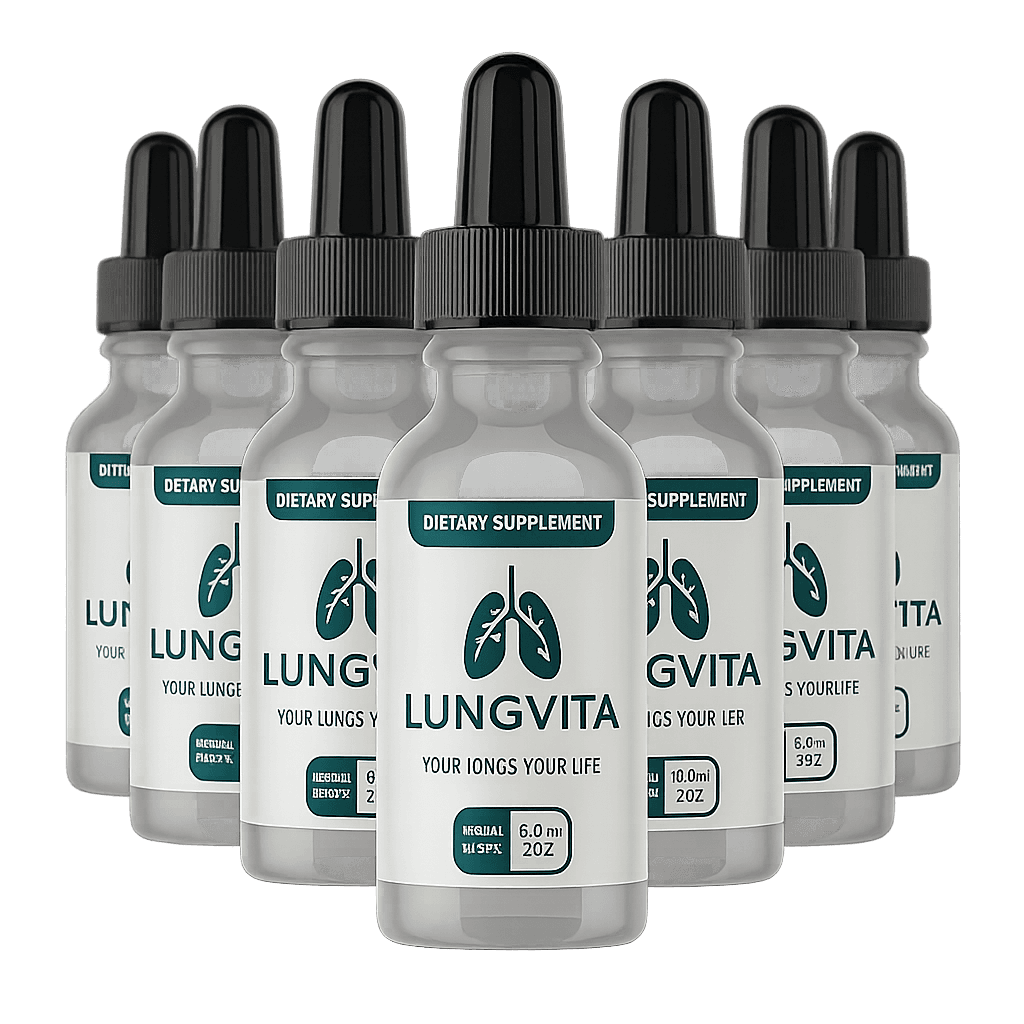
Lung Vita Drops is marketed as a sublingual liquid supplement targeting chronic respiratory conditions, including COPD, chronic bronchitis, asthma, and the general respiratory decline associated with decades of smoking or urban pollution exposure. The product is presented in dropper-bottle format, with the recommended protocol of 15 drops placed under the tongue twice daily, once in the morning and once before bed. The sublingual delivery method is a deliberate formulation choice that the VSL frames as superior to capsules or powders, citing faster absorption rates directly into the bloodstream without digestive processing.
The product positions itself firmly in the natural and alternative health supplement category, specifically within what has become a crowded niche of lung-support and respiratory-detox products. Its market positioning is defined in opposition to pharmaceutical treatments rather than alongside them: the entire value proposition rests on the idea that conventional medicine addresses symptoms while Lung Vita Drops addresses the root cause. The stated target user is an adult between approximately 45 and 85 years old with a history of smoking, repeated respiratory infections, or significant urban pollution exposure, someone who has already tried inhalers, antibiotics, or nebulizers and found them insufficient. The product is sold exclusively through a direct-to-consumer webpage with no retail, prescription, or intermediary distribution, which the VSL frames as a consumer benefit (lower prices, no middlemen) while simultaneously serving the seller's interest in controlling the sales environment.
The brand identity is constructed around a founder figure, Alex Morgan, described as a physician and researcher with a University of California background and fifteen years of specialization in respiratory physiology. The product narrative is inseparable from his personal story, which means the brand equity is almost entirely tied to the credibility of one claimed identity, a structural vulnerability that becomes significant when the authority claims are examined more carefully later in this piece.
The Problem It Targets
The problem Lung Vita Drops targets is not invented. Chronic respiratory disease represents one of the most prevalent and undertreated areas of American public health. According to the American Lung Association, more than 34 million Americans are diagnosed with a chronic lung disease, and millions more experience symptoms, persistent cough, dyspnea on exertion, reduced exercise tolerance, without a formal diagnosis. The economic burden is substantial: COPD alone accounts for more than $32 billion in direct healthcare costs annually, according to data compiled by the National Heart, Lung, and Blood Institute. For long-term smokers, the prognosis under conventional management is one of gradual decline punctuated by acute exacerbations, and the emotional weight of that trajectory is precisely what this VSL is designed to meet.
The VSL frames this problem through a specific invented mechanism: the concept of "lung glue," described as a combination of tar, smoke residue, chemical particles, and pollution byproducts that forms a sticky cement inside the lung alveoli, trapping mucus and preventing the body's natural self-cleaning process. The presentation draws on real pulmonary biology, the alveoli are indeed the primary site of gas exchange, and chronic obstructive disease does involve abnormal mucus production and impaired mucociliary clearance, but extrapolates from those facts into a proprietary narrative that has no recognized equivalent in the peer-reviewed literature. The term "lung glue" does not appear in any indexed medical database. This is a classic false mechanism framing: anchoring a novel commercial concept to a real biological substrate, then claiming that the novel concept is both the true cause of disease and the key to its solution.
What makes this framing commercially powerful is its universality. The VSL explicitly states that "even those who have never smoked are accumulating residues of this invisible cement" due to urban air pollution, cooking fumes, and indoor chemicals. This expands the addressable market from the roughly 34 million Americans with diagnosed chronic lung disease to, in effect, the entire adult population of anyone who has ever breathed city air. By making the threat omnipresent and invisible, the VSL creates a need that transcends clinical diagnosis, a move that parallels similar strategies in the gut health and heavy-metal detox supplement categories, where the condition is framed as universal, subclinical, and detectable only through the symptom relief the product itself provides.
The emotional dimension of the problem is handled with genuine craft. The VSL lingers on specific images of decline, a father too breathless to finish a sentence, a man who could no longer walk down his own hallway, a woman on a transplant waiting list who could not reach the kitchen. These are not abstract statistics; they are domestic, familial, and intimate, targeting the specific fear that drives the target demographic: not death itself, but dependence. The dread of becoming a burden, of watching one's grandchildren from a chair rather than running alongside them, is the emotional engine beneath every claim in this letter.
How Lung Vita Drops Works
The mechanism the VSL proposes operates in two sequential stages. First, the Kuro-Sen root extract acts as a natural mucolytic agent, a compound that breaks down the chemical bonds of thick, trapped mucus in the bronchi and alveoli, dissolving what the VSL calls lung glue and allowing the body to expel accumulated toxins through productive coughing. Second, the Himalayan black honey provides antioxidant and anti-inflammatory compounds that calm bronchial inflammation and support what the VSL describes as "cellular regeneration of lung tissue." Together, delivered sublingually for maximum bioavailability, the two ingredients are claimed to reverse years of respiratory damage within three to four weeks.
The mucolytic concept has genuine scientific grounding, even if the specific application here goes well beyond the evidence. Mucolytic agents, compounds that reduce the viscosity of mucus, are a real and studied class of therapeutics. N-acetylcysteine (NAC), for example, has been studied extensively for its mucolytic properties in COPD patients, with a 2019 meta-analysis published in Respiratory Research finding modest but measurable benefits in exacerbation frequency. The VSL's claim that saponins in the Kuro-Sen root perform a similar function is theoretically plausible in the very broad sense that saponins do exhibit surface-active properties, but the leap from "saponins are surface-active" to "this extract dissolves pathological mucus trapped in human alveoli" requires clinical evidence that is nowhere cited or produced. The specific extract named (Kuro-Sen) does not correspond to any recognized botanical name in Western pharmacopeial databases, making independent verification impossible.
The sublingual delivery claim, that drops absorb "up to five times faster" than oral capsules, draws on a real pharmacological principle. Sublingual administration does bypass first-pass hepatic metabolism and can achieve faster peak plasma concentrations for certain molecules, as documented in the pharmacokinetic literature for drugs like nitroglycerin and buprenorphine. Whether the specific plant compounds in Lung Vita Drops benefit meaningfully from this route, or whether they are even stable in the sublingual environment, is a question the VSL does not address with any cited evidence. The "five times faster" figure is presented as established fact with no source attribution. A careful buyer should register that the mechanism is directionally plausible but the specific magnitude claims are unsubstantiated.
The claim that the formula can "reverse years of damage caused by cigarettes" and restore lung tissue is the most scientifically ambitious and the least supported. Emphysematous changes in the lung, the destruction of alveolar walls that characterizes advanced COPD, represent structural tissue loss that no currently approved therapy, pharmaceutical or natural, is known to reverse. Slowing progression, reducing inflammation, and improving symptom burden are achievable goals. Tissue regeneration from a twice-daily sublingual drop is a claim that sits at the outer boundary of what the current state of respiratory medicine considers possible, and the VSL provides no peer-reviewed evidence to support it.
Curious how other VSLs in this niche structure their pitch? Keep reading, the Hooks and Ad Angles section breaks down the specific rhetorical moves that make this letter work on its target audience.
Key Ingredients and Components
The VSL names four ingredients in Lung Vita Drops, though the level of detail provided varies considerably across them. Two are positioned as the active core; two appear to be delivery or supporting agents. It is worth noting that no supplement facts panel, dosage breakdown, or third-party certificate of analysis is referenced anywhere in the letter, a meaningful omission for a product making clinical-grade claims.
Kuro-Sen extract, Described as a rare Japanese root used in traditional medicine to dissolve mucus deep in the bronchi, harvested from communities practicing centuries-old cultivation. The VSL claims it is rich in saponins and "natural mucolytic agents" with a unique ability to break bonds of thick mucus in the alveoli. The name "Kuro-Sen" does not correspond to a recognized botanical Latin name in standard herbal databases; it may be a proprietary tradename, a transliteration of a regional Japanese common name, or a constructed term. Without a verified botanical identity, independent assessment of the published research is not possible. Saponin-containing plants do have documented surface-active and expectorant properties in traditional medicine, but clinical trials in humans for this specific extract are not available in indexed literature.
Himalayan black honey / Himalayan Citrine Honey, Described as harvested by nomadic beekeepers above 3,000 meters altitude, with antioxidant compounds that reduce bronchial inflammation and facilitate cellular regeneration of lung tissue. "Mad honey" from high-altitude Himalayan sources (produced by Apis dorsata laboriosa) is a real product with documented bioactive properties, including grayanotoxin content and antioxidant capacity. A 2017 review in Food Chemistry noted antioxidant and antimicrobial properties in various high-altitude honeys, though specific bronchial regeneration effects in humans remain unstudied at clinical scale. The VSL's claim that the honey "loses its detoxifying properties when exposed to heat outside Himalayan altitude" is a quality-control narrative that conveniently reinforces why only the seller's sourced version can work.
Labelia extract, Briefly mentioned as grown in pure mineral soil from India. This likely refers to Lobelia inflata or a related species, which has a long history in herbalism as a respiratory antispasmodic and expectorant. Lobeline, the primary alkaloid, has been studied for bronchial effects and as a smoking cessation aid, with some evidence of bronchodilatory activity. However, lobelia at high doses carries toxicity concerns, and the FDA has historically cautioned about lobelia-containing products. The VSL provides no dosage information.
Organic Vegetable Glycerin, The carrier and sublingual vehicle, included to preserve compound potency without synthetic preservatives and to facilitate mucosal absorption. Vegetable glycerin is a well-understood, GRAS-classified (generally recognized as safe) ingredient with no therapeutic respiratory claims of its own.
Hooks and Ad Angles
The opening hook of this VSL is technically a pattern interrupt, a disruption of expected cognitive flow, but it operates at an unusually sophisticated level. The CNN chyron format does not merely grab attention; it grafts the letter's central claim onto a visual system the viewer already trusts. Before a word of copy is spoken, the product has borrowed the credibility of institutional broadcast journalism. The verbal hook that follows, "the key to everything isn't inhalers, antibiotics, or expensive surgeries... but rather, in a simple hot tea recipe", is a textbook contrarian frame, a structure that Eugene Schwartz described in Breakthrough Advertising (1966) as essential for market sophistication stage four, where the buyer has encountered every direct product pitch and responds only to a new mechanism presented as the secret the mainstream has overlooked. The target audience for this VSL, adults who have already tried multiple respiratory treatments, are precisely a stage-four market, and the hook is calibrated accordingly.
The secondary hook structure throughout the letter compounds this opening with open loops: the suppression threat ("I don't know how long this video will stay up"), the pharmaceutical conspiracy revelation ("they offered me $30 million to shut up"), and the Japan origin story (elderly villagers at the foot of Mount Aso breathing like 30-year-olds) each open a narrative thread that must be resolved, holding the viewer through the letter's considerable length. The Morgan Freeman testimonial, inserted early in the VSL, functions as a status frame, aligning the product with a figure whose voice and cultural authority are globally recognizable, creating an aspirational social proof that precedes any scientific claim.
Secondary hooks observed in the VSL:
- "Renowned doctors at Stanford and Johns Hopkins are already calling this the greatest lung health advancement of the 21st century"
- "My Instagram was taken down four times for talking about this"
- "They don't want cures, they want lifetime customers"
- "Within three weeks, tests showed a reversal of the inflammation" (father's recovery pivot)
- "At this very moment, there are only 79 bottles left"
Ad headline variations for Meta or YouTube testing:
- "Japanese villages where 90-year-olds breathe like 30-year-olds, the tea recipe they've never shared"
- "Doctors call it 'lung glue', and it's why your inhaler will never fix the real problem"
- "Stanford researchers: this natural approach is 7x more effective than traditional lung clearing"
- "She was on the transplant list. Then she tried two drops under her tongue."
- "Big Pharma offered $30 million to bury this. He said no."
Psychological Triggers and Persuasion Tactics
The persuasive architecture of this VSL is best understood as a stacked sequence rather than a parallel deployment of triggers. Each major section of the letter builds on the emotional and cognitive state established by the section before it: the CNN open installs authority before the personal story installs empathy; the personal story installs empathy before the mechanism installs curiosity; the mechanism installs curiosity before the clinical statistics install confidence; the pharmaceutical conspiracy installs anger before the scarcity frame converts that anger into urgency. This is not accidental structure, it is the hallmark of a letter written by someone with significant direct-response experience, deploying Robert Cialdini's influence levers not simultaneously but in a deliberate emotional sequence designed to carry the reader through doubt to commitment.
The inoculation against skepticism deserves particular note. Rather than ignoring the buyer's likely objection, "this sounds too good to be true", the VSL pre-empts it by attributing that skepticism to Big Pharma conditioning: "Big Pharma has been lying to you for decades, saying there's no cure for chronic respiratory diseases." This is a sophisticated deployment of Leon Festinger's cognitive dissonance reduction: if skepticism itself has been framed as a symptom of pharmaceutical brainwashing, then the act of trusting the product becomes an act of intellectual liberation rather than credulity. The buyer's critical faculty is not engaged; it is redirected.
Cialdini's Authority (borrowed): Stanford University and Johns Hopkins are cited as endorsing the formula as "the greatest lung health advancement of the 21st century" with no verifiable attribution. Real institutional names create the appearance of peer endorsement where none exists.
Kahneman & Tversky's Loss Aversion (Prospect Theory, 1979): The two-option close, "Option 1: close this page and keep suffering; Option 2: say yes", frames inaction as a guaranteed, ongoing loss rather than a neutral default. The asymmetric framing makes the status quo feel more costly than it objectively is.
Cialdini's Scarcity: The bottle count drops from 79 to 27 within a single presentation without any time reference to justify the change, creating the impression of real-time depletion. The 6-month micro-batch production cycle is then invoked to make the next opportunity feel genuinely distant.
Epiphany Bridge (Russell Brunson, Expert Secrets, 2017): Alex Morgan's father at the oxygen machine, unable to finish a sentence, serves as the emotional nadir, the moment of maximum suffering, from which the Japan discovery provides the relief. This structure transfers the reader's hope for their own recovery directly onto the founder's personal transformation narrative.
Festinger's Cognitive Dissonance Reduction: Skepticism is pre-empted by attributing it to pharmaceutical industry conditioning, converting the buyer's critical instinct into evidence of a problem with the industry rather than with the product.
Thaler's Endowment Effect (1980): The VSL tells the viewer "your bottles are reserved" and "if you close this page, they will be released to the next person in line", creating a sense of existing ownership over inventory the viewer does not yet possess, making the decision to not purchase feel like a loss of something already held.
Cialdini's Social Proof (cascading): Testimonials are layered from celebrity (Morgan Freeman) to anonymous patients to aggregate statistics (19,000 Americans, 91% improvement rate, Trustpilot reviews), each layer calibrated for a different type of doubt, social desirability, personal relatability, and statistical reassurance, in sequence.
Want to see how these tactics compare across 50+ VSLs in the health supplement space? That's exactly what Intel Services is built to show you.
Scientific and Authority Signals
The authority infrastructure of this VSL is extensive, and a careful audit reveals it to be almost entirely borrowed or unverifiable. Stanford University and Johns Hopkins Hospital are named as institutions whose "renowned doctors" endorse the approach as the greatest lung health advancement of the 21st century. No doctor's name is given, no study title is provided, no journal or publication date is mentioned. This is borrowed authority in its purest form, real institutional names invoked to imply endorsement that those institutions have not given. Neither Stanford Medicine nor Johns Hopkins has any indexed publication describing a Japanese two-ingredient tea as a landmark in respiratory medicine.
Alex Morgan himself is presented with specific credentials: a University of California graduate, a respiratory physiology specialist, author of articles in "The American Lung Journal," and a guest on "Health Channel International." The American Lung Journal does not correspond to any recognized indexed publication in PubMed or the National Library of Medicine's journal database. Health Channel International has no verifiable broadcast presence. These are the markers of what might be called fabricated institutional scaffolding, credential signals that are specific enough to sound real but untraceable enough to resist verification. Barbara O'Neill, credited as co-author of the bonus ebook, is a real Australian naturopath, though one who has been formally banned from providing health advice in New South Wales, Australia, a fact the VSL does not disclose and that constitutes a meaningful omission given her framing as "one of the world's most respected naturopaths."
The clinical statistics cited, 91% of participants reported improved breathing, 87% abandoned inhalers, 100% required no additional medications, are presented without a study design, sample size, control group, registration number, or publication reference. The regulatory standard for a claim of this type in a marketed health product, under FTC guidelines for dietary supplements, requires competent and reliable scientific evidence, typically at minimum a randomized controlled trial. The VSL provides none of the methodological information that would allow a reader to assess whether these figures come from a rigorous trial, an informal survey of product users, or a constructed data point. The Morgan Freeman testimonial, while dramatically effective, should be read with the awareness that celebrity product endorsements of this type are typically commercial arrangements; the VSL presents it as an organic personal account, which, if it is in fact a paid endorsement, would require FTC disclosure that is absent here.
The Japan origin story, elderly villagers at the foot of Mount Aso breathing without inhalers into their nineties, references a real cultural and epidemiological phenomenon (the Okinawan longevity advantage has been studied by researchers including Dan Buettner in the Blue Zones project), but Mount Aso is in Kumamoto Prefecture, not Okinawa, and the specific herb described (Kuro-Sen, or "Akane root" as it is alternately called in the letter) has no corresponding entry in standard databases of traditional Japanese Kampo medicine. The geographic and botanical inconsistencies are minor details in the context of a thirty-minute letter, but they are informative signals about the precision of the underlying research.
The Offer, Pricing, and Risk Reversal
The pricing architecture of this VSL is constructed around a cascade of anchors, each designed to make the eventual ask feel negligible by comparison. The sequence runs: $5,000 per bottle (claimed demand at relaunch) → $1,000 per bottle (claimed inbox offers) → "not even $500, not even $200" → a starter pack at $79 per unit with a 40% discount from a stated regular price of $250 → reframed as "less than $3 a day" and "cheaper than a cup of coffee." This is a well-executed price anchor ladder, a technique with deep roots in direct-response copywriting, and the final comparison to coffee is particularly effective because it reframes a health-product purchase as a trivial daily expenditure rather than a meaningful financial decision. Whether the $250 regular price is a real market price or a rhetorical construct is impossible to verify, given that the product is not available through any channel other than this page.
The bonus stack, two ebooks (stated combined value $158), a private Zoom consultation with Alex Morgan ($3,000 stated value), a Carnival Cruise gift card ($3,000 stated value), and a Tuscany trip giveaway entry, is a classic value stacking maneuver from the direct-response tradition. The stated values are almost certainly aspirational rather than market-rate; a consultation with a supplement founder does not carry a $3,000 market value in any comparable context. The Carnival Cruise gift card and Tuscany trip giveaway are structurally unusual additions for a respiratory supplement, suggesting they are inserted primarily for their headline value rather than their genuine relevance to the buyer's need.
The guarantee, a full refund if no difference is felt after a week, a month, or a full six months, is presented as comprehensive risk reversal. A six-month money-back guarantee, if genuinely honored, does represent a meaningful risk shift. The absence of any information about the refund process, customer service contact details, or dispute mechanism means its practical value cannot be assessed from the VSL alone. Buyers considering the purchase should document the guarantee terms at the time of ordering and verify the return process before beginning a multi-bottle kit.
Who This Is For (and Who It Isn't)
The ideal buyer for this pitch is a person in genuine respiratory distress, most likely between 55 and 75 years old, with a personal or family history of smoking, who has been managing a chronic cough or shortness of breath for years and has not found lasting relief through conventional treatment. This person is not a skeptic by default; they have already tried multiple approaches and are open to alternatives, particularly ones framed as natural, non-addictive, and free from pharmaceutical side effects. Emotionally, they are motivated not by a desire to optimize health but by a desire to reclaim specific freedoms, walking in a park, playing with grandchildren, sleeping through the night, that respiratory decline has taken from them. The Morgan Freeman testimonial and the grandfather-running-with-grandchildren imagery are calibrated precisely for this motivational state.
For this buyer, the product may offer a genuine placebo benefit, and some of the ingredients (particularly if lobelia is present at meaningful concentrations) could have mild bronchial effects. The ritual of a twice-daily sublingual regimen, the expectation of improvement, and the psychological relief of having "done something" about a frightening condition should not be dismissed as trivial outcomes. The risk, however, is real: relying on an unproven supplement in place of, or in significant delay of, evidence-based respiratory care for conditions like COPD or worsening asthma can have serious clinical consequences.
Prospective buyers who should approach with significant caution include anyone currently taking prescription respiratory medications (the absence of drug-interaction data for Kuro-Sen and lobelia is a genuine gap), anyone whose respiratory symptoms have not been formally evaluated by a physician, and anyone for whom the $79-$200+ cost represents a meaningful financial burden relative to their income. The VSL's framing that "if you can still draw air, you can improve" is motivationally powerful but clinically irresponsible as a substitute for professional assessment. If you are researching this product as a complement to medical care you are already receiving, the conversation should begin with your pulmonologist, not with a purchase decision.
If you found this breakdown useful, Intel Services publishes similar analyses for dozens of health supplement VSLs. The Final Take section below synthesizes what this specific pitch reveals about the broader respiratory supplement market.
Frequently Asked Questions
Q: Is Lung Vita Drops a scam?
A: The product uses a series of unverifiable authority claims, invented medical terminology ("lung glue" has no equivalent in peer-reviewed literature), and fabricated or borrowed institutional endorsements (Stanford, Johns Hopkins) that do not correspond to any traceable publication. Whether the supplement itself delivers measurable benefit beyond placebo is impossible to assess from the VSL alone, as no published clinical trial is cited with sufficient methodological detail to evaluate. Buyers should treat the marketing claims with significant skepticism and consult a physician before purchasing.
Q: What are the ingredients in Lung Vita Drops?
A: The VSL identifies four components: Kuro-Sen root extract (described as a rare Japanese mucolytic herb), Himalayan black honey (also called Himalayan Citrine Honey), Labelia extract (likely Lobelia species), and Organic Vegetable Glycerin as the carrier. No supplement facts panel with quantities or standardized extract ratios is provided in the VSL, which makes it impossible to compare dosages to any published research.
Q: Does Lung Vita Drops really work for COPD?
A: No peer-reviewed clinical trial for Lung Vita Drops in COPD patients has been identified in any indexed medical database. The VSL cites internal trial statistics (91% improvement, 87% inhaler abandonment) without providing study design, sample size, or publication details. COPD is a serious, progressive condition managed by pulmonologists; no dietary supplement has been approved or clinically validated as a treatment, and patients should not discontinue prescribed medications without physician guidance.
Q: Are there any side effects from Lung Vita Drops?
A: The VSL repeatedly claims "100% natural, no side effects, no contraindications," but this assertion is not supported by pharmacological data. Lobelia-containing products have documented toxicity concerns at higher doses, and the interaction profile of Kuro-Sen extract with common respiratory medications (corticosteroids, bronchodilators, theophylline) is unknown. Individuals on prescription respiratory medications should consult a pharmacist or physician before adding any supplement to their regimen.
Q: What is "lung glue" and is it a real medical condition?
A: "Lung glue" is a proprietary marketing term invented for this VSL; it does not appear in any indexed medical or scientific publication. The underlying biology it roughly describes, impaired mucociliary clearance and excessive mucus viscosity in the context of chronic respiratory disease, is real and well-studied. The term's purpose in the letter is to brand a common biological process as a novel, solvable mechanism unique to the product's solution.
Q: How do you take Lung Vita Drops and how long before results?
A: The recommended protocol is 15 drops placed under the tongue twice daily, morning and before bed. The VSL claims noticeable improvement within "a few weeks," with the father's recovery described occurring over three weeks. The letter also cautions that "the formula takes weeks to completely unblock the lungs," which is used to justify purchasing multi-bottle kits.
Q: Is the Morgan Freeman testimonial in the Lung Vita Drops VSL real?
A: No publicly verifiable statement from Morgan Freeman endorsing Lung Vita Drops or any product by Alex Morgan has been identified through standard media searches. The testimonial is presented as a personal account without FTC-required disclosure of any commercial relationship. Given that celebrity testimonials of this type are typically paid endorsements, the absence of disclosure is a meaningful red flag under FTC guidelines for advertising.
Q: What is the Lung Vita Drops money-back guarantee?
A: The VSL offers a full refund if no difference is felt after using the product for up to six months, framed as zero-risk to the buyer. No refund process details, customer service contact information, or terms and conditions are specified within the VSL itself. Buyers should request written confirmation of the guarantee terms before purchasing and document the transaction date to protect their ability to claim a refund within the stated window.
Final Take
The Lung Vita Drops VSL is a technically accomplished piece of direct-response copywriting operating in a category, chronic respiratory supplements, where the gap between what sufferers need and what conventional medicine can comfortably offer creates a persistent and exploitable commercial space. The letter's construction is not amateur work. The emotional sequencing, the epiphany bridge narrative, the pharmaceutical villain framing, the celebrity anchor, the scarcity mechanics, and the price ladder all reflect a writer who understands the target audience's psychological state in precise and empathetic detail. The question the analyst must ask is not whether the copy is effective, it clearly is, but whether the product beneath it warrants the trust the copy so skillfully generates.
On that question, the evidence in the VSL itself gives reason for pause at multiple levels. The core mechanism claim, that a sublingual honey-and-root formula dissolves pathological mucus and reverses years of emphysematous damage, extends well beyond what the current state of respiratory science supports. The authority signals (Stanford, Johns Hopkins, The American Lung Journal) are either borrowed without legitimate attribution or unverifiable in indexed databases. The celebrity testimonial lacks FTC-required commercial disclosure. The clinical statistics are presented without the methodological scaffolding that would make them meaningful. None of this establishes with certainty that the product is ineffective, absence of evidence is not evidence of absence, but it does establish that the buyer is being asked to make a significant trust investment in claims that have not been substantiated through publicly verifiable science.
For the category of buyer this VSL targets, someone in genuine, documented respiratory distress who has exhausted conventional options and is looking for something that addresses what conventional medicine has not, the emotional appeal of this letter is entirely understandable. That same buyer deserves to know that "lung glue" is a marketing construct, that Kuro-Sen extract has no verifiable clinical trial record, and that the suppression narrative ("they offered me $30 million to bury this") is a persuasion technique with a long history in alternative health marketing, not a documentary fact. Informed consent in commercial decisions, like informed consent in medicine, requires complete information. This analysis is an attempt to provide it.
The respiratory supplement market will continue producing VSLs of this type as long as chronic lung disease remains widespread, undertreated, and emotionally devastating. What distinguishes more responsible entrants in this space from less responsible ones is the willingness to publish verifiable ingredient dosages, cite real registered clinical trials, and make claims proportionate to the evidence. By those standards, this VSL, whatever the product's underlying merit, sets a benchmark for what the category should be required to improve.
This breakdown is part of Intel Services, our ongoing library of VSL and ad-copy analyses. If you're researching similar products in the respiratory health or general supplement space, keep reading.
Disclaimer: This article is for research and educational purposes only. It is not medical, legal, or financial advice, and it is not affiliated with the product or its makers. Always consult a qualified professional before making health or financial decisions.
Source-backed reader context
Additional Reviews & Reported Experiences
These statements were presented in the product's sales transcript. Daily Intel did not independently verify the speakers, purchase status, or reported outcomes, and the statements are not used in Product aggregateRating.
Anonymous participant
Date not stated
'lungs felt lighter in first week, slept through the night, breathing deeply like I hadn't in years
Anonymous participant
Date not stated
'I can leave the house without an inhaler, my grandchildren say I'm a different person
Anonymous participant with advanced chronic bronchitis
Date not stated
'climbing stairs again, off oxygen, dancing with my wife
Anonymous user
Date not stated
'sleeping through the night, breathing like I did at 25, doctor discontinued my inhaler
Comments(0)
No comments yet. Members, start the conversation below.
Related reads
 reviews
Mind Lab Pro Review: Does the 30-Day Study Match v4?
Mind Lab Pro v4 lists exact amounts for 11 ingredients and contains no caffeine or stimulants, according to its official page. A 30-day finished-product study reported favorable memory findings, but its abstract does not identify v4 or disclose the tested form or dose.
Read reviews
Life Extension Two-Per-Day Multivitamin Review: Evidence Limits
Life Extension Two-Per-Day is a 120-capsule multivitamin displayed as a 60-day supply. Its identity and dated prices are verified, but the supplied evidence does not reproduce the complete quantitative Supplement Facts panel or include a trial of the finished product. Research involving another multivitamin cannot prove that these capsules improve memory or deliver Life Extension’s broader health-support claims.
Read reviews
Ritual Essential for Women 50+ Review: Label, Study Fit, and Verdict
Ritual Essential for Women 50+ is an iron-free capsule multivitamin positioned by Ritual for women after menopause. Its verified label lists 100 micrograms of vitamin K2 as menaquinone-7. The supplied study did not test this finished product, and the packet provides no exact price.
Read