MemoVive Review and Ads Breakdown: A Research-First Look
The video opens like a breaking news bulletin; urgent chyrons, a composed anchor desk voice, and the promise of a discovery that "top health officials" are calling the definitive breakthrough in t…
8,226+
Videos & Ads
+50-100
Fresh Daily
$29.90
Per Month
Full Access
12.5 TB database · 72+ niches · 25 min read
The video opens like a breaking news bulletin, urgent chyrons, a composed anchor desk voice, and the promise of a discovery that "top health officials" are calling the definitive breakthrough in the fight against Alzheimer's. Within ninety seconds, the name Dr. Ben Carson appears, a 2024 Harvard double-blind study is cited, and Sharon Stone delivers a tearful account of reversed dementia. The production values are deliberate: this is not a supplement ad. It is a simulation of a news event, engineered to trigger the credibility heuristics a viewer applies when watching CNN, not when scrolling past a Facebook supplement ad. That distinction is the most important thing to understand before evaluating MemoVive, the two-ingredient memory supplement at the center of this video sales letter (VSL).
What follows in this analysis is a close reading of that VSL. Its scientific claims, its persuasive architecture, its use of a real public figure's identity, and what independent research actually says about the two ingredients at its core. The piece is written for the reader who has watched the video or seen an ad for MemoVive and is now conducting due diligence before making a purchase decision. That is exactly the right instinct. The VSL is a sophisticated piece of direct-response marketing that deploys at least seven distinct psychological persuasion mechanisms in sequence. Understanding those mechanisms does not automatically mean the product fails to work. But it does mean the claims deserve far more scrutiny than the broadcast format invites.
The central question this analysis investigates is straightforward: does the science behind MemoVive hold up to independent examination, and does the marketing around it accurately represent what the product is and who is behind it? The answers are not identical, and both matter.
What Is MemoVive?
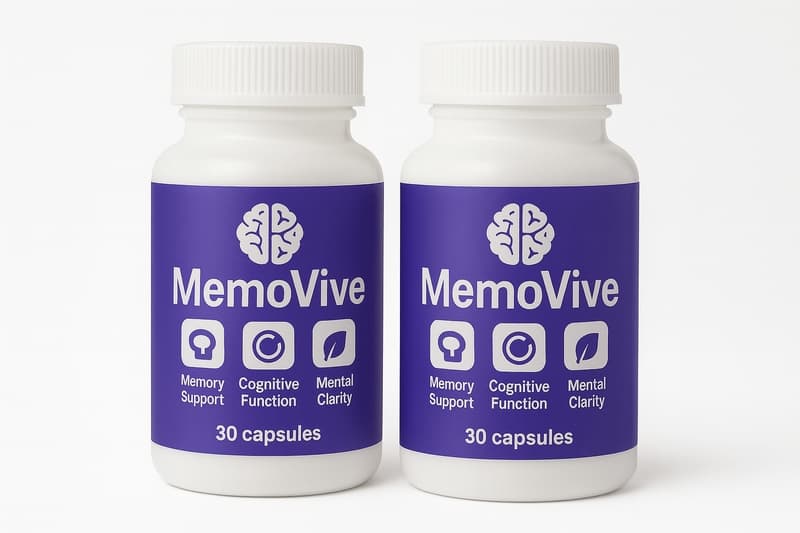
MemoVive is an oral dietary supplement sold in capsule form, marketed primarily for the prevention and reversal of cognitive decline, Alzheimer's disease, and dementia. Its stated formulation contains two active ingredients: Himalayan cedar honey and butterfly pea flower (Clitoria ternatea) extract. The product is sold exclusively through a direct-to-consumer sales page; the company explicitly states it is not available on Amazon, eBay, GNC, or Walgreens, and is positioned as a premium, small-batch formulation manufactured in a GMP-certified U.S. facility.
In category terms, MemoVive occupies the rapidly growing nootropic and cognitive-health supplement space, a market the Global Wellness Institute estimated at over $8 billion annually and climbing, driven largely by aging Baby Boomer demographics and heightened public anxiety about dementia. The product's positioning is unusually aggressive even within that competitive field: rather than claiming incremental cognitive support (the standard language in compliant supplement marketing), MemoVive explicitly claims to prevent, stop, and reverse Alzheimer's disease, language that, if applied to a drug, would require FDA approval and Phase III clinical trial evidence to substantiate.
The stated target user is broad: adults aged 45 and older experiencing any degree of memory difficulty, from occasional name-forgetting to advanced dementia diagnosis. The VSL also makes overtures toward younger professionals seeking cognitive performance enhancement, broadening the addressable market considerably. The product is sold in three tiers, a two-bottle starter pack at $79 per bottle, a three-bottle kit at $69 per bottle (one free), and a six-bottle kit at $49 per bottle (three free), with a prominently featured 180-day money-back guarantee.
The Problem It Targets
The VSL opens on a public health reality that is genuinely alarming and well-documented. According to the Alzheimer's Association's 2024 Facts and Figures report, approximately 6.9 million Americans aged 65 and older are living with Alzheimer's dementia, and that number is projected to rise to nearly 13 million by 2050 without significant medical advances. The World Health Organization estimates that 55 million people worldwide live with dementia, with nearly 10 million new cases diagnosed each year. These are not manufactured anxieties, they represent a legitimate and growing public health crisis for which conventional medicine has produced limited therapeutic options.
The VSL frames the problem around two interlocking mechanisms: the depletion of acetylcholine (a genuine and well-established neuroscience concern) and the accumulation of microplastics in brain tissue (an emerging and real area of scientific inquiry that the VSL significantly extrapolates beyond current evidence). Acetylcholine is indeed the primary neurotransmitter associated with learning and memory consolidation; its decline is a documented feature of Alzheimer's pathology, and the majority of FDA-approved Alzheimer's medications, including donepezil (Aricept), rivastigmine (Exelon), and galantamine, are acetylcholinesterase inhibitors, meaning they work by preventing the breakdown of acetylcholine. The VSL is correct that these drugs address a symptom pathway rather than an upstream cause, and the Alzheimer's Association has itself acknowledged that over 99% of Alzheimer's drug trials have failed. That specific statistic is legitimate.
The microplastics claim is more nuanced. Research published in Nature Medicine in 2024 by Nicastri et al. did confirm the presence of microplastics and nanoplastics in human brain tissue, and concentrations were found to be higher in individuals with dementia. A finding that was widely reported and is scientifically significant. However, the causal relationship the VSL asserts; that microplastics are the root cause of Alzheimer's by "feeding on acetylcholine", is an extrapolation that current science does not support. The field is at an early associative stage, not at mechanistic certainty. The VSL takes a preliminary research signal and presents it as settled scientific consensus, which misrepresents both the finding and the state of the literature.
Curious how other VSLs in this niche structure their pitch? Keep reading, the psychology section below breaks down every persuasion mechanism deployed in this broadcast, one by one.
How MemoVive Works
The mechanism the VSL proposes is internally coherent as a narrative, which makes it persuasive, but coherence as a story is not the same as validity as a physiological claim. The proposed two-step model works as follows: cedar honey, rich in what the VSL calls "natural chelators," binds to microplastic particles in the brain and flushes them from the body; butterfly pea flower extract then replenishes depleted acetylcholine and stimulates neurogenesis (the formation of new neurons and synaptic connections). The honey addresses the cause; the flower rebuilds the damage. It is elegant, and it echoes legitimate research concepts, chelation therapy is a real medical practice, and neurogenesis is a real phenomenon, but the specific claims require careful unpacking.
Chelation refers to the binding of metal ions (or other particles) by a chelating agent for excretion. Medical chelation therapy uses compounds like EDTA, administered intravenously under close medical supervision, primarily for heavy metal poisoning. The VSL claims honey contains "natural chelators" capable of crossing the blood-brain barrier and binding microplastic particles specifically, a claim that has no published peer-reviewed support as of this writing. Honey does contain polyphenols with antioxidant and some anti-inflammatory properties, and preliminary animal studies have examined honey's neuroprotective potential, but no credible published research describes honey as a microplastic chelator in human brain tissue. The specific variety named, "cedar honey". Appears to refer to honey produced by bees foraging on cedar or rhododendron plants in high-altitude regions, which does have documented antimicrobial and antioxidant properties, but none of the published research describes the microplastic-binding mechanism the VSL asserts.
The butterfly pea flower claim is on slightly more solid ground. Though still substantially overstated. Clitoria ternatea does contain anthocyanins, particularly ternatin compounds, that have demonstrated antioxidant and anti-inflammatory effects in cell and animal models. A study published in the Journal of Applied Pharmaceutical Science (Mukherjee et al., 2008) reviewed its traditional uses and documented some neuroprotective activity in rodent models. However, the VSL cites a "2024 Harvard double-blind study" showing that the extract reversed participants' cognitive age by 12 years; a claim that, as of this analysis, cannot be verified against any published literature. The study is not identified by journal, author, or DOI, which makes independent verification impossible. Extraordinary claims require extraordinary evidence; a 12-year cognitive reversal in human subjects over three months would be among the most significant clinical findings in the history of neuroscience and would be front-page news in every major medical journal simultaneously.
Key Ingredients and Components
The formulation's simplicity, two ingredients, is itself a marketing choice, conveying purity and intentionality in contrast to the multi-ingredient "kitchen sink" approach common in the nootropic category. Here is what independent research actually shows about each:
Himalayan Cedar Honey: Honey produced at high altitudes in the Himalayan region, often from bees foraging on rhododendron or other alpine plants. It contains elevated concentrations of polyphenols, hydrogen peroxide, and methylglyoxal, compounds with documented antimicrobial and antioxidant properties. Some animal-model research has explored honey's neuroprotective potential; a review published in Oxidative Medicine and Cellular Longevity (Othman, 2012) noted antioxidant properties relevant to neurological health. The VSL's specific claim that it chelates and flushes microplastics from the brain has no published peer-reviewed support. Its use is generally considered safe for healthy adults; individuals with diabetes should use honey-containing products with caution due to glycemic effects.
Butterfly Pea Flower Extract (Clitoria ternatea): A flowering plant native to Southeast Asia with deep roots in Ayurvedic and traditional Malaysian medicine. Its anthocyanin content, particularly the ternatin class of compounds, has demonstrated antioxidant activity in multiple in vitro and rodent studies. Research published in the Asian Pacific Journal of Tropical Biomedicine has documented anti-inflammatory and potential cognitive effects in animal models. A small human study published in the Journal of Functional Foods (Chusak et al., 2018) showed modest effects on postprandial glycemic response but did not specifically measure cognitive outcomes. The VSL's claim that it elevates acetylcholine levels and stimulates neurogenesis in humans is plausible as a hypothesis based on animal data but has not been established in peer-reviewed human clinical trials at the scale or magnitude the VSL describes.
Hooks and Ad Angles
The VSL's opening hook, "a natural, at-home solution for memory loss is being hailed by top health officials as the definitive breakthrough", operates as a pattern interrupt in the classic direct-response sense: it deploys the visual and sonic grammar of a credible news broadcast to hijack the viewer's existing trust framework for journalism and redirect it toward a commercial pitch. This is more sophisticated than a standard curiosity gap, because it does not merely withhold information to create desire, it borrows institutional authority through format mimicry, triggering what Cialdini would call the authority heuristic before a single credential has been stated. The choice to open in a news-desk format is not aesthetic; it is strategic, and it is effective precisely because viewers apply different cognitive scrutiny to news than to advertising.
What makes this hook particularly well-calibrated to its target audience is the specificity of the figure it invokes. Dr. Ben Carson is not a fictional character or a generic "neurosurgeon", he is one of the most recognizable medical figures in American public life, with genuine achievements (the first successful separation of conjoined twins joined at the head, youngest chief of pediatric neurosurgery at Johns Hopkins at 33) that the VSL describes accurately. This is a textbook example of what Eugene Schwartz would call a Stage 4 or Stage 5 market sophistication play: the audience for Alzheimer's supplements has heard every generic claim, has been burned by nootropic promises, and no longer responds to "supports cognitive function." The only move left at that sophistication level is a genuinely new mechanism (microplastics as the villain) delivered by a genuinely credentialed figure. The VSL executes both.
Secondary hooks observed throughout the broadcast include:
- "I've been receiving threats telling me to stay quiet". A suppression narrative that frames the broadcast as forbidden knowledge
- "Microplastics found in the brains of babies in their mothers' wombs. No one is safe"; a universalizing fear hook that expands the target audience beyond Alzheimer's patients
- "97% of participants showed significant cognitive improvements", a precision statistic functioning as a social proof anchor
- The photo album scene where Dr. Carson's mother fails to recognize him, a narrative peak designed to create maximum emotional identification
- "Only 79 bottles left" with real-time countdown, a hard scarcity trigger at the conversion moment
Ad headline variations a media buyer could test on Meta or YouTube:
- "The Himalayan Honey and Blue Flower That Reversed 17,000 Cases of Dementia"
- "Dr. Ben Carson's Two-Ingredient Recipe: What No Drug Company Will Tell You"
- "What Microplastics Are Doing to Your Brain Right Now (And How to Flush Them)"
- "She Forgot Her Own Children, Until This Natural Formula Changed Everything"
- "Harvard Researchers Say This Plant Turns Back the Cognitive Clock by 12 Years"
Psychological Triggers and Persuasion Tactics
The VSL's persuasive architecture is not a scattershot collection of tricks, it is a carefully sequenced stack that moves the viewer through a deliberate emotional journey: fear (cognitive decline is happening to you), grief (the mother's story), rage (Big Pharma is hiding the cure), hope (the formula works), urgency (act now before it is suppressed), and finally relief (the guarantee removes all risk). This is a Problem-Agitate-Solution structure expanded with a conspiracy layer and a faith-based identity appeal, and it is constructed to meet the viewer at every possible objection before that objection fully forms. Cialdini would recognize the stacking; Schwartz would call it advanced market writing for an audience that has exhausted its trust in institutional medicine.
The faith dimension deserves particular attention as a persuasion mechanism. By weaving Bible verses, prayers, and references to divine guidance throughout the narrative, the VSL aligns product purchase with the viewer's existing spiritual identity, a move that exploits what Festinger called cognitive consistency: if you believe Dr. Carson is a man of God following a divine mission, rejecting his product creates psychological dissonance with your own values. This is not accidental. The target demographic for Alzheimer's supplements skews older, Southern, and more religiously observant than the general population, and the faith framing is precisely calibrated to that psychographic.
Specific tactics deployed, with their theoretical grounding:
- Authority transfer (Cialdini, 1984): Real credentials (Johns Hopkins, conjoined twin surgery) are cited accurately, then used as a trust bridge to support unverifiable product claims, the viewer cannot easily separate the legitimate biography from the commercial assertions attached to it.
- Loss aversion (Kahneman & Tversky, 1979): The VSL consistently frames the purchase decision in terms of what the viewer will lose by not acting. Identity, family recognition, independence. Rather than what they gain, exploiting the documented 2:1 asymmetry of loss versus gain in human decision-making.
- Narrative transportation (Green & Brock, 2000): The photo album scene is a masterclass in transportation theory; its sensory specificity (the graduation photograph, the mother's confused frown, the phrase "who is that nice-looking boy?") pulls the viewer so deeply into the story that analytical processing is temporarily suspended.
- False enemy framing (Godin's Tribes, 2008): Big Pharma is constructed as a corrupt suppressor spending $179 million per year to hide natural cures, creating an in-group of "people who know the truth" that the viewer is invited to join through purchase.
- Scarcity stacking (Cialdini, 1984): At least five distinct scarcity signals operate simultaneously, bottle count, broadcast suppression threat, bonus limitation to ten buyers, six-month production cycle, and real-time stock countdown, each compounding the urgency of the last.
- Risk elimination via extreme guarantee (Thaler's Endowment Effect): The 180-day guarantee, reinforced by the testimonial of a man allowed to keep the product after refunding, shifts the psychological risk calculation entirely, the question becomes not "what if this fails?" but "what if I miss my only chance?"
- Divine authority (Festinger's Cognitive Consistency, 1957): Bible verses and prayer sequences position the product within a faith framework, making rejection of the offer feel inconsistent with the viewer's own spiritual identity.
Want to see how these tactics compare across 50+ VSLs in the health and wellness space? That is exactly what Intel Services is built to show you.
Scientific and Authority Signals
The VSL's use of authority falls into three distinct categories: legitimate, borrowed, and unverifiable, and it is critical to distinguish among them. In the legitimate category: Dr. Ben Carson's biography is presented accurately. He did perform the first successful separation of craniopagus conjoined twins, he was the youngest chief of pediatric neurosurgery in Johns Hopkins history, he is a University of Michigan graduate, and he did serve as U.S. Secretary of Housing and Urban Development. These facts are real and verifiable. The question is not whether Dr. Carson is credentialed, he manifestly is, but whether he is actually involved in the development, testing, or endorsement of MemoVive. The VSL presents this as a fact, but no independent confirmation of his involvement with the product exists in any published source as of this writing. The use of a real public figure's identity and likeness in a commercial VSL without verified consent is a significant red flag that prospective buyers should investigate directly.
In the borrowed authority category: Johns Hopkins School of Medicine and Harvard University are both repeatedly invoked as institutional affiliations for the unnamed researchers who conducted the 2,100-person clinical study and the 2024 double-blind butterfly pea trial. Neither study appears in any accessible peer-reviewed database, and neither institution has issued any press release or faculty acknowledgment corresponding to the findings described. Invoking an institution's name in a way that implies endorsement or affiliation when none has been confirmed is a practice the FTC has treated as deceptive advertising in multiple enforcement actions against supplement companies.
The claimed "FDA Seal of Confirmed Efficacy" is the most technically significant claim in the entire VSL and warrants direct scrutiny. The FDA does not issue a "Seal of Confirmed Efficacy" for dietary supplements. Under the Dietary Supplement Health and Education Act of 1994, supplements are not required to demonstrate efficacy before sale, and the FDA explicitly does not evaluate supplement claims for effectiveness. The agency does regulate manufacturing practices through GMP certification, which the VSL correctly notes proves only facility cleanliness, not product effectiveness. An "FDA seal of confirmed efficacy" for a dietary supplement, as described in the VSL, does not exist as a regulatory designation. This appears to be a fabricated credential, which is among the most serious accuracy failures in the broadcast.
Barbara O'Neill, credited as co-author of the bonus e-book 101 Herbal Cures, is a self-described naturopath who was banned from practicing in Australia in 2019 by the NSW Health Care Complaints Commission following a finding that her health advice posed a risk to public health. Her inclusion as an authority figure is itself a credibility concern rather than a credential.
The Offer, Pricing, and Risk Reversal
The pricing architecture of MemoVive follows the classic direct-response supplement playbook with unusual precision. The anchor price. $1,000 per bottle, described as the amount people were willing to pay when a final batch was announced online. Is almost certainly rhetorical rather than reflective of any real market transaction. This manufactured anchor makes the actual prices ($49–$79 per bottle) appear dramatically discounted, a pricing psychology move that Thaler's mental accounting research would predict is highly effective at shifting perceived value. The comparison to nursing home care ($90,000 per year) and lifetime Alzheimer's medication costs ($400,000) is more legitimate as an anchor; those figures are roughly consistent with published estimates, though using catastrophic long-term care costs to justify a supplement purchase conflates very different categories of expenditure.
The bonus stack, a personal Zoom consultation with Dr. Carson, a $3,000 Carnival cruise gift card, an all-expenses trip to Tuscany via sweepstakes, and two digital e-books, functions as a value stack, a standard direct-response technique designed to make the product's price feel negligible relative to the total perceived package value. The e-books are valued at $91 and $67 respectively, figures that appear to be assigned rather than market-tested. The cruise gift card and Tuscany trip are notable for their narrative logic: the VSL has spent considerable time urging the viewer to imagine creating new memories with family, and travel prizes are the literal embodiment of that promise, a persuasive coherence move that is genuinely well-executed.
The 180-day money-back guarantee is the offer's most powerful element, and it functions as a risk reversal mechanism in the technical direct-response sense: by removing the financial downside entirely (or appearing to), it eliminates the primary rational objection to purchase. Whether the guarantee is honored consistently in practice is something prospective buyers should research through independent review platforms, as guarantee enforcement varies significantly among direct-to-consumer supplement companies.
Who This Is For (and Who It Isn't)
The VSL's ideal buyer is an adult between 55 and 80, or an adult child of a parent in that range, who has watched cognitive decline progress in themselves or a loved one, has already tried one or more pharmaceutical options with limited results or troubling side effects, and experiences some degree of distrust toward institutional medicine. This buyer is likely spiritually active, responds to narrative over data, and is experiencing genuine fear about loss of independence and the burden they represent to their family. For this person, the emotional resonance of the VSL is real and the desire for a solution is legitimate, even if the specific solution being offered does not deliver what it promises.
If you are researching this supplement for yourself or a loved one with an Alzheimer's or dementia diagnosis, the most honest guidance is this: butterfly pea flower and high-quality honey are both substances with reasonable safety profiles and some preliminary scientific interest in cognitive health contexts. Neither is likely to cause harm at the doses typical in a supplement. However, no published, peer-reviewed clinical evidence supports the claim that either ingredient reverses Alzheimer's disease or removes microplastics from human brain tissue at the magnitude described in this VSL. The framing of this product as a suppressed cure being hidden by pharmaceutical companies is a persuasion narrative, not a verified account of events.
Readers who should approach with particular caution include: anyone with advanced dementia making healthcare decisions on behalf of a cognitively impaired loved one (where the emotional vulnerability is highest and the opportunity cost of delaying proven palliative care is real); anyone with diabetes or blood sugar management concerns (honey carries a meaningful glycemic load); and anyone who interprets the VSL's medical claims as grounds to discontinue prescribed Alzheimer's medications without consulting their physician.
Want to see how other supplement VSLs targeting the aging demographic build their authority and offer structures? Intel Services has a growing library of exactly these breakdowns.
Frequently Asked Questions
Q: Is MemoVive a scam?
A: The product itself, a supplement containing butterfly pea flower and honey, is unlikely to be a physically harmful product at standard doses. However, the VSL makes several claims that are not supported by published science, including a fabricated FDA credential and an unverifiable 2024 Harvard clinical study. The use of Dr. Ben Carson's name and likeness without confirmed consent is a serious concern. Calling it a scam depends on whether one evaluates the physical product or the accuracy of the claims made to sell it; on the latter dimension, the VSL contains significant misrepresentations.
Q: Does MemoVive really work for Alzheimer's or dementia?
A: No published, peer-reviewed clinical trial in an accessible scientific database confirms that MemoVive, or the specific combination of cedar honey and butterfly pea flower extract it contains, reverses Alzheimer's disease. The ingredients have some preliminary biological interest in cognitive health research, but the leap from that early-stage science to "reverses dementia in 97% of users" is not supported by current evidence.
Q: What are the ingredients in MemoVive?
A: The VSL describes two active ingredients: Himalayan cedar honey (claimed to act as a natural chelator for microplastics in the brain) and butterfly pea flower (Clitoria ternatea) extract (claimed to restore acetylcholine levels and stimulate neurogenesis). The specific dosages are not disclosed in the VSL.
Q: Are there side effects associated with MemoVive?
A: The VSL claims zero side effects. At typical supplement doses, both honey and butterfly pea flower extract are generally considered safe for healthy adults. However, honey can elevate blood sugar significantly. A meaningful concern for diabetics. Butterfly pea flower has been associated with occasional nausea and diarrhea at high doses in some reports. Neither ingredient has been tested for long-term safety at the doses used in this specific formulation.
Q: Did Dr. Ben Carson actually create MemoVive?
A: Dr. Ben Carson is a real and accomplished neurosurgeon whose biographical credentials are accurately described in the VSL. However, no independent source confirms his involvement in developing, funding, or endorsing MemoVive. The use of a real public figure's identity in a commercial VSL without confirmed consent is a pattern associated with fraudulent supplement marketing and has been the subject of multiple FTC enforcement actions.
Q: Is MemoVive safe to take alongside Alzheimer's medications like Aricept or Namenda?
A: The VSL does not address drug-supplement interactions. Anyone taking prescribed acetylcholinesterase inhibitors (Aricept, Exelon, Razadyne) or NMDA antagonists (Namenda) should consult their prescribing physician before adding any supplement, as potential interactions have not been studied in this combination.
Q: How long does MemoVive take to work?
A: The VSL claims noticeable improvements within the first week, with significant cognitive restoration within eight weeks. These timelines are not corroborated by any independent clinical research on the stated ingredients at the doses described.
Q: Is there real scientific evidence that butterfly pea flower improves memory?
A: There is preliminary evidence. Animal model research and some small human studies suggest Clitoria ternatea extract has antioxidant and anti-inflammatory properties potentially relevant to neurological health. A small human study published in the Journal of Functional Foods (Chusak et al., 2018) documented modest effects on metabolic markers. The large-scale human cognitive reversal data cited in the VSL has not been independently verified in peer-reviewed literature.
Final Take
MemoVive is a product that tells a great deal about the current state of the cognitive-health supplement market. A category defined by genuine consumer desperation, genuine scientific inadequacy in treating Alzheimer's, and an enormous commercial opportunity created by both. The VSL that sells it is among the more technically sophisticated in its category: the news-broadcast format, the real-world authority of Dr. Ben Carson's biography, the microplastics mechanism (which correctly identifies an emerging scientific concern and extrapolates it far beyond established evidence), and the faith-based narrative architecture are all well-calibrated to a specific, real, and emotionally vulnerable audience. The persuasion is not crude. That is precisely why it merits careful analysis.
The product's strongest elements are its ingredient simplicity and safety profile. Butterfly pea flower and high-quality honey are not dangerous substances, and if MemoVive delivers a capsule containing genuine concentrations of both, the likelihood of physical harm is low for most users. The ingredients also have enough preliminary scientific interest that a charitable reading; "this might help a little, it probably won't hurt", is not indefensible for healthy adults seeking general cognitive support. What is indefensible is the framing: a fabricated FDA seal of confirmed efficacy, an unverifiable Harvard clinical study, the unconsented use of a nationally recognized neurosurgeon's identity, and explicit claims that the product reverses Alzheimer's disease are not minor marketing exaggerations. They are material misrepresentations that the FTC has consistently treated as actionable deception when deployed in supplement advertising.
For readers who arrive here having already purchased MemoVive, the 180-day guarantee is worth noting, and worth testing if the product does not meet expectations. For readers who are still deciding, the most useful frame is this: if you want to explore butterfly pea flower or high-quality honey as general wellness additions, those ingredients are available through numerous suppliers at a fraction of this product's cost, and you can evaluate them against whatever baseline you establish without the pressure of a countdown clock and a suppression narrative. What you cannot purchase anywhere, and what MemoVive does not actually appear to deliver, despite its claims, is a clinically validated reversal of Alzheimer's disease.
The VSL ultimately reveals something important about where this market is headed. As consumer sophistication increases and the standard nootropic promise loses credibility, the category is moving toward higher-production-value narratives, more credible authority figures, and more precise pseudo-scientific mechanisms. MemoVive is near the leading edge of that shift. The sophistication of the pitch is worth studying independent of the product's merits, which is exactly what this breakdown has tried to do.
This breakdown is part of Intel Services, our ongoing library of VSL and ad-copy analyses across health, finance, and consumer products. If you are researching similar products in the cognitive-health space, keep reading.
Disclaimer: This article is for research and educational purposes only. It is not medical, legal, or financial advice, and it is not affiliated with the product or its makers. Always consult a qualified professional before making health or financial decisions.
Source-backed reader context
Additional Reviews & Reported Experiences
These statements were presented in the product's sales transcript. Daily Intel did not independently verify the speakers, purchase status, or reported outcomes, and the statements are not used in Product aggregateRating.
Sharon Stone (Hollywood actress)
Date not stated
reversed cognitive decline, seizures, and memory loss after becoming one of Dr. Carson's first patients
Male professional
Date not stated
regained mental clarity in the first week, most productive of his life
Older patient
Date not stated
reversed Alzheimer's diagnosis, recognizes family again, has lucid conversations and remembers everything
Female patient
Date not stated
went from being unable to walk alone to reversing her diagnosis within a month
Unnamed widow
Date not stated
lost her memory after pandemic grief, MemoVive restored her memory and dignity
86-year-old man
Date not stated
directed and starred in a film, won an Oscar, reversed his diagnosis
Male skeptic
Date not stated
demanded refund on delivery, received it plus kept the product, reversed brain fog in second week
Unnamed patient
Date not stated
reversed Alzheimer's diagnosis, doctor confirmed scans are clean, memory better than in their 30s
Comments(0)
No comments yet. Members, start the conversation below.
Related reads
 reviews
Jocko Greens Review: Does One Scoop Match the Evidence?
Jocko Greens is a one-scoop powder with approximately 30 calories and 9 billion colony-forming units of probiotics per serving. Jocko Fuel also confirms ashwagandha extract and makes a digestive-support claim. The harder question is whether the available research matches this specific formula. It does not match closely enough to establish a finished-product outcome.
Read reviews
NooCube Review: Does the 250 mg Bacopa Dose Match the Research?
NooCube is one of the few nootropics that prints a milligram number next to an ingredient instead of hiding it in a blend. This review takes that one number, 250 mg Bacopa monnieri, and checks it against a real trial that used 300 mg in a very different population, then shows exactly where the comparison breaks down.
Read reviews
Olly Goodbye Stress Review: Label Claims vs. Evidence
OLLY Goodbye Stress combines GABA, L-theanine, and lemon balm extract in a Berry Verbena gummy aimed at occasional stress, not sleep. Here's what the label discloses, what a real L-theanine trial found, and exactly where the evidence stops.
Read