Optivell VSL and Ads Analysis: What the Sales Pitch Really Says
Somewhere between a Cold War spy thriller and a late-night infomercial, the Optivell Video Sales Letter makes one of the more ambitious claims circulating in the dietary supplement space: that a cryogenically frozen blueberry extract, combined with two obscure botanical…
8,226+
Videos & Ads
+50-100
Fresh Daily
$29.90
Per Month
Full Access
12.5 TB database · 72+ niches · 25 min read
Somewhere between a Cold War spy thriller and a late-night infomercial, the Optivell Video Sales Letter makes one of the more ambitious claims circulating in the dietary supplement space: that a cryogenically frozen blueberry extract, combined with two obscure botanical compounds, can reactivate dormant eye stem cells, flush inflammatory cytokines from the ocular environment, and restore 20/20 vision in as little as 21 days, without surgery, without eye drops, and without changing your lifestyle. The VSL runs well over an hour, deploys fabricated celebrity interviews with Morgan Freeman and Reese Witherspoon, invokes a suppressed CIA document called "Operation Clearview," and culminates in a pricing sequence that anchors against a $700-per-bottle figure before landing at $49. It is, by any technical measure, a masterclass in high-pressure health marketing, and it deserves a close, honest reading.
This piece is not a takedown. Nor is it promotional. It is an analytical study of what the Optivell VSL actually claims, how those claims are constructed, what the underlying science looks like when examined independently, and what a prospective buyer should understand before clicking the order button. The questions worth investigating here are layered: Is there a legitimate kernel of nutritional science beneath the conspiracy framing? What persuasive machinery drives a letter this long? And who, precisely, is this pitch designed to reach?
The VSL opens with a fabricated broadcast-news frame, a fictional show called "Health Today America," hosted by a character named Kevin Kim, interviewing a character named Dr. Kenji Tanaka. The production mimics a CNN health segment with sufficient fidelity that a viewer scrolling quickly might not register it as scripted advertising. This is not a minor stylistic choice; it is a deliberate architectural decision that shapes how every claim in the following hour is received. Authority borrowed from a fictional broadcast carries more weight than authority claimed in a plain sales letter, and the VSL's architects clearly understand this. The question the piece investigates, then, is whether the product itself, stripped of the theatrical scaffolding, has merit, and whether the marketing apparatus around it is operating within the bounds of honest persuasion.
What Is Optivell?
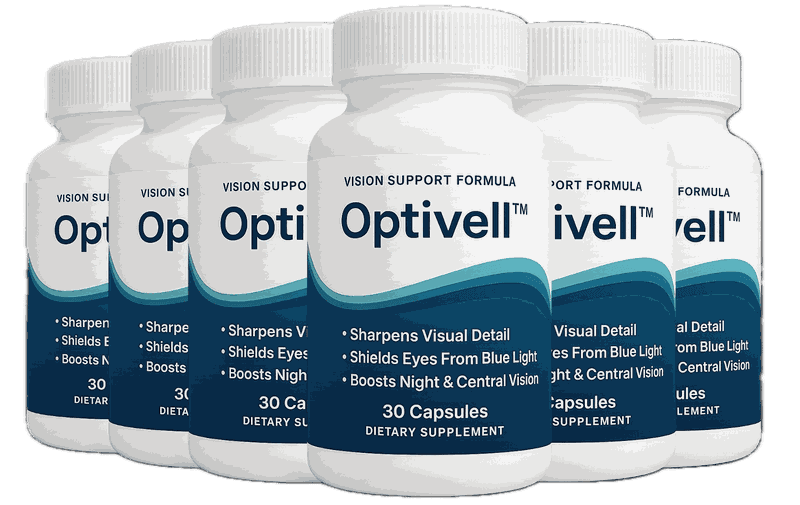
Optivell is marketed as a natural oral supplement, described variously across the VSL as drops and capsules, designed to address the root cause of vision loss. Its market positioning sits squarely in the vision-support supplement category, a segment that has grown considerably alongside aging demographics and increased screen exposure. The product is sold exclusively through a direct-to-consumer online funnel, explicitly unavailable at Amazon, Walmart, GNC, or pharmacy chains, a distribution choice the VSL frames as consumer protection but which also serves to eliminate comparison shopping and third-party reviews at the point of sale.
The stated target user is broad but centers on adults over fifty experiencing any form of vision deterioration, myopia, hyperopia, macular degeneration, cataracts, glaucoma, or general blurriness, who have become frustrated with glasses, contacts, or have been quoted for surgical procedures. The product's format, capsule, two taken each morning, is unremarkable; what differentiates the pitch is entirely the claimed mechanism and the narrative surrounding its discovery. The pricing structure offers one bottle at $89, three at roughly $63 each, and six at $49 each, with the six-bottle kit pushed aggressively as the medically necessary course for lasting results.
The manufacturer is not named prominently in the VSL. A fictional laboratory called "8 Labs" in Palo Alto, California is credited with developing the formula, and the VSL claims FDA-approved manufacturing facilities with GMP certification, standard language in the supplement industry that refers to facility standards, not product approval. Optivell itself, like all dietary supplements sold in the United States, is not FDA-approved as a drug and is not required to prove efficacy before going to market.
The Problem It Targets
Vision loss is a genuine and widespread public health issue, and the VSL is not wrong to identify it as such. According to the CDC, approximately 93 million American adults are at high risk for serious vision loss, and the World Health Organization estimates that at least 2.2 billion people globally have some form of vision impairment or blindness. Age-related macular degeneration, glaucoma, cataracts, and diabetic retinopathy are among the leading causes, and all increase in prevalence with age. The VSL's claim that over 75% of Americans have some form of vision problem, compared to less than 20% in 1950, is presented without a credible source, but the directional trend toward increasing prevalence of refractive errors, particularly myopia, is documented in peer-reviewed literature.
What the VSL does with this real problem is instructive. Rather than positioning vision loss as a complex, multifactorial condition shaped by genetics, UV exposure, dietary patterns, systemic disease, and aging physiology, which is how ophthalmology understands it, the letter reduces everything to a single suppressed mechanism: inflammatory cytokines blocking eye stem cells. This is a Problem-Agitate-Solution (PAS) structure operating at full intensity. The problem is real; the agitation involves CIA conspiracies, a drowning toddler, and celebrities going blind; and the solution is neatly contained in a bottle. The simplification is not incidental, it is the commercial engine of the pitch. A genuinely complex condition cannot be solved by a $49 bottle, so the condition must first be made to seem simple.
The VSL also weaponizes the financial and emotional costs of the established treatment landscape with some accuracy. LASIK surgery does cost several thousand dollars per eye. Prescription eyewear is a multi-billion-dollar annual market. Branded eye drops for conditions like glaucoma can be expensive. These are legitimate grievances that the pitch harvests effectively. What it omits is that LASIK has a documented efficacy and safety profile in peer-reviewed literature, that glasses and contacts are effective tools with known risk profiles, and that the "vision industry" the VSL vilifies includes the optometrists, ophthalmologists, and researchers who have generated the very stem-cell science the letter appropriates to sell its own narrative.
The three-question self-diagnostic test embedded in the VSL, do you have difficulty seeing up close or far? difficulty seeing in the dark? dry, red, or irritated eyes?, is designed to ensure that nearly every viewer self-identifies as symptomatic. These symptoms describe the majority of adults over forty-five. The test functions less as a diagnostic tool and more as a commitment device (Cialdini, 2009): once a viewer says "yes" to two or three questions, they have psychologically pre-committed to having the problem the product solves.
Curious how the psychological architecture of this VSL compares to others in the health supplement space? The hooks analysis in Section 6 and the persuasion breakdown in Section 7 map the full structure.
How Optivell Works
The mechanism the VSL proposes is three-layered, and each layer borrows selectively from real science before extending into territory that is speculative at best and fabricated at worst. The first layer, stem cells regenerate damaged tissue and decline in number and activity with age, is broadly accurate. Stem cell biology is a legitimate and active field of research, and the Nobel Prizes awarded to Mario Capecchi (2007, for targeted gene modification in mice) and Shinya Yamanaka (2012, for induced pluripotent stem cells) are real. The VSL cites both correctly by name, which functions as an authenticity anchor for the claims that follow.
The second layer, that chronic inflammation is the primary driver of stem cell suppression in the eye, is a plausible hypothesis that has partial support in the literature. Neuroinflammation and oxidative stress are genuinely implicated in age-related macular degeneration and other retinal degenerative diseases, and researchers have investigated whether systemic anti-inflammatory interventions might slow progression. The link between dietary anthocyanins (found in blueberries and other dark berries) and reduced oxidative stress in ocular tissue has been studied; a 2012 review in Nutrients by Zafra-Stone et al. noted some evidence for berry anthocyanins supporting retinal health, though results are modest and mechanism is not fully established. What the science does not support is the claim that a specific oral supplement can "reactivate dormant stem cells" in the human retina to restore 20/20 vision in three weeks. The retina contains specialized cell types, photoreceptors, retinal ganglion cells, Müller glia, and while research into stem-cell-based retinal regeneration is active, it remains in early-stage clinical trials involving direct intraocular cell delivery, not oral supplementation.
The third layer, the specific three-ingredient cascade producing what the VSL calls the "Eye Regeneration Cascade", is where the mechanism moves fully into promotional fiction. "Exatoetrina" does not correspond to any recognized compound name in nutritional or pharmacological databases; it appears to be a branded or invented term, possibly referring to astaxanthin (a carotenoid with documented antioxidant properties and some evidence of retinal protection) but presented with specificity, "multiplies stem cells 378% faster", that has no corresponding published literature. The Tagetes erecta L extract (African marigold) contains lutein and zeaxanthin, carotenoids that do have genuine evidence behind them for macular health; the AREDS2 study, conducted by the National Eye Institute, found that supplementation with lutein and zeaxanthin reduced the risk of advanced AMD progression. But programming stem cells to "transform specifically into eye cells," as the 2024 Johns Hopkins study cited in the VSL claims, is not a finding that appears in any publicly available Johns Hopkins research.
Key Ingredients and Components
The formula the VSL describes rests on three primary ingredients. Two of them have real analogues in nutritional science; the third is either fictitiously named or so obscurely proprietary that independent verification is impossible. What follows evaluates each based on what is publicly known.
Ultra-concentrated cryogenically frozen blueberry extract (anthocyanins). Anthocyanins are a class of flavonoid pigments found in dark-colored berries. Real research suggests they have antioxidant and anti-inflammatory properties. A 2020 review in Antioxidants (Zhu et al.) found some evidence for anthocyanin benefits to visual function, particularly in reducing eye fatigue and improving dark adaptation. The VSL's claim that cryogenic freezing preserves "300% more anthocyanins" and that a 2023 Oxford study demonstrated a "cellular Lazarus effect" are not findings traceable to any published literature. No such Oxford study appears in academic databases, and "cellular Lazarus effect" is not recognized terminology in stem cell biology.
Exatoetrina extract. This compound name does not exist in the pharmacopoeia or standard supplement databases. If this is a proprietary label for astaxanthin, that carotenoid does have genuine research behind it: a 2020 study in Nutrients (Giannaccare et al.) found that astaxanthin supplementation reduced symptoms of dry eye and showed antioxidant effects on ocular tissue. The specific claim of 378% faster stem cell multiplication, attributed to a 2022 NIH study, is not verifiable in any NIH-published research.
Tagetes erecta L extract (African marigold / lutein-zeaxanthin source). This is the most scientifically grounded component. Marigold-derived lutein and zeaxanthin are well-studied macular carotenoids. The NIH-funded AREDS2 trial (Age-Related Eye Disease Study 2) found that daily supplementation with lutein (10 mg) and zeaxanthin (2 mg) reduced the risk of advanced AMD by approximately 26% in high-risk patients. The claim that a 2024 Johns Hopkins study demonstrated it "programs stem cells to transform into eye cells" is not reflected in any published Johns Hopkins research and should be treated as unverified.
Hooks and Ad Angles
The VSL's opening hook, "Breaking news for people who wear glasses", is a compressed, well-engineered pattern interrupt (a disruption of expected cognitive flow that increases stimulus salience, as described by Cialdini in Influence, 2006). The phrase mimics a broadcast news alert, which triggers an attentional reflex conditioned by years of media consumption. The word "people" is inclusive enough to cast a wide net while "who wear glasses" provides the micro-targeting precision that makes the viewer feel personally addressed. It is simple, non-threatening, and, importantly, does not open with a product claim, which would trigger immediate skepticism. Instead, it opens with a frame: something newsworthy is about to be shared.
The VSL then escalates to a celebrity hook within the first thirty seconds, attributing a testimonial to Morgan Freeman. This is a stage-4 market sophistication move in Eugene Schwartz's framework: the target audience has already seen every direct pitch for vision supplements, every "natural cure" headline, and every ophthalmologist endorsement. At that level of saturation, the only hooks that break through are either radical mechanism novelty (the stem-cell angle), celebrity social proof, or institutional conspiracy (the CIA angle). The Optivell VSL deploys all three simultaneously, which explains its considerable length, each hook requires its own narrative arc to be credible.
The conspiracy hook, a former CIA agent leaking documents about a KGB blueberry program used by Soviet snipers, deserves particular attention as a rhetorical structure. It functions simultaneously as a false enemy (the government and vision industry), an open loop (what was in those files?), and an identity frame (the viewer who keeps watching is the kind of person smart enough to see past the establishment's lies). This stacked hook structure is sophisticated because it makes disengagement feel like intellectual surrender.
Secondary hooks observed in the VSL:
- "A population with perfect vision doesn't make money for the vision industry", conspiratorial rationality hook
- The granddaughter Emma nearly drowning in the pool, emotional devastation hook designed to make the product feel urgent and personal
- "In just six weeks, patients who could barely read large letters could see tiny details they hadn't noticed in decades", results-timeline hook
- The three-question self-diagnostic test, interactive engagement hook
- "We've reserved the next 84 bottles for those determined to take the first step today", artificial exclusivity hook
Ad headline variations for Meta or YouTube testing:
- "Harvard doctors found the real reason your vision is getting worse (it's not aging)"
- "The Soviet blueberry secret that US optometrists don't want you to know"
- "Morgan Freeman canceled cataract surgery after 21 days of this morning ritual"
- "Why stem cell researchers call this the 'Lazarus effect' for aging eyes"
- "This $49 formula outperforms LASIK, according to 117,000 users. Here's the science."
Psychological Triggers and Persuasion Tactics
The persuasion architecture of the Optivell VSL is not parallel, it does not simply stack authority, fear, and scarcity side by side. Instead, it sequences them in a deliberate compound structure: first build the world (the conspiracy, the suppressed science, the scope of the problem), then introduce the protagonist (Dr. Tanaka's suffering father), then demonstrate the mechanism (stem cells, cytokines, the three-phase cascade), then deliver social proof (celebrity testimonials, clinical numbers), and finally apply pricing pressure and scarcity. Each phase primes the next. By the time the price anchor of $700 appears, the viewer has already spent forty-plus minutes being emotionally activated and intellectually "educated" in the VSL's terms. This is the architecture Cialdini would recognize as commitment and consistency at scale: every head-nod along the way is a micro-commitment that makes the final purchase feel like the logical conclusion of positions already taken.
What distinguishes this VSL from simpler health-supplement letters is its willingness to invest in emotional devastation as a trust-building tool. The drowning granddaughter sequence, Dr. Tanaka's father frozen at the pool, unable to locate Emma in the water, is not a marketing gimmick in the conventional sense. It is a loss-framing event (Kahneman and Tversky's Prospect Theory, 1979) rendered in concrete, visceral terms, designed to make the stakes of inaction feel not abstract but physically present. The viewer is invited to imagine their own grandchild, their own failing eyes, their own frozen paralysis.
- Celebrity authority transfer (Cialdini's Authority): Morgan Freeman and Reese Witherspoon are presented via fabricated testimonials and fake podcast/interview clips. The VSL invests significant production value in making these appear authentic, which is both the most effective and most ethically problematic element of the pitch.
- Conspiratorial in-group identity (Godin's Tribes): The viewer who keeps watching past the CIA revelation has implicitly joined the tribe of people who "know the truth," making it psychologically costly to disengage or dismiss the product.
- Loss aversion framing (Kahneman & Tversky): The binary choice presented at the close, "Option 1: do nothing and go blind" vs. "Option 2: click the button", exaggerates the cost of inaction to the point of a scare tactic.
- Reciprocity priming (Cialdini's Reciprocity): Dr. Tanaka repeatedly frames his motivation as purely altruistic, saying "this isn't about money, it's about lives." This positions the viewer as receiving a gift, which triggers the social obligation to reciprocate, by buying.
- Endowment effect via reservation language (Thaler): "We've reserved your bottles" and "if you close this page, they'll be released to someone else" creates a sense of ownership before the purchase, making abandonment feel like a loss rather than merely a non-gain.
- Artificial scarcity with exact numbers (Cialdini's Scarcity): The specificity of "84 bottles available, only 27 remaining" lends false precision to what is almost certainly a manufactured shortage.
- Cognitive dissonance via self-test (Festinger, 1957): The three-question diagnostic ensures viewers have verbally identified themselves as symptomatic before the product pitch begins, making purchase refusal feel inconsistent with their self-declared need.
Want to see how these psychological mechanisms map across 50+ health supplement VSLs? That analysis is part of the Intel Services archive, keep reading to see how this one ranks.
Scientific and Authority Signals
The Optivell VSL constructs its scientific authority through three channels: legitimate institutional name-dropping, fabricated study citations, and fictional expert personas. Distinguishing among these is the most important analytical task for a buyer doing pre-purchase research. Mario Capecchi and Shinya Yamanaka are real Nobel laureates in stem cell biology, their work is correctly attributed in broad strokes, even if the VSL implies their research endorses the Optivell mechanism specifically. The mention of the Wilmer Eye Institute (a real and highly regarded ophthalmological institution at Johns Hopkins) and the American Academy of Ophthalmology as institutions "Dr. Kenji Tanaka" is affiliated with are real names borrowed to construct a fictional biography. There is no publicly traceable Dr. Kenji Tanaka in the directories of either institution.
The studies cited in the VSL present a more serious evidentiary problem. The 2023 University of Oxford "cellular Lazarus effect" study, the 2022 NIH study demonstrating 378% faster stem cell multiplication via exatoetrina, and the 2024 Johns Hopkins study demonstrating Tagetes erecta L programming stem cells into eye cells do not correspond to any published research in PubMed, Google Scholar, or the institutional repositories of those universities. They appear to be fabricated with sufficient institutional specificity to sound credible, which is a pattern the FTC has flagged in supplement advertising enforcement actions. The one ingredient area where real science exists, lutein, zeaxanthin, and anthocyanins for macular and retinal health, is not cited with actual studies; instead, the VSL invents more dramatic-sounding fictional studies around ingredients that have real but far more modest research support.
The celebrities, Morgan Freeman, Reese Witherspoon, Tom Cruise, Meryl Streep, are deployed as borrowed authority at best and fabricated endorsers at worst. There is no public record of any of these individuals endorsing Optivell or participating in a study led by Dr. Kenji Tanaka. The Reese Witherspoon "podcast clip" is almost certainly scripted and performed by voice actors; the Morgan Freeman testimonial is written in first person without any verifiable sourcing. Using the names and likenesses of real public figures to imply product endorsement they have not given constitutes a significant legal and ethical violation under FTC guidelines. Buyers encountering this VSL should treat all celebrity claims as unverified until confirmed by independent sourcing.
The Offer, Pricing, and Risk Reversal
The Optivell pricing sequence is a textbook anchor-and-relief structure. The VSL introduces $700 as a plausible price, through a fabricated audio clip from a customer named Jessica saying she would pay that amount, before the host character confirms that even $380 would be justified. The actual offer at $89 (one bottle) or $49 (six-bottle kit) then arrives as a dramatic discount from an anchor that was never a real price. This is a rhetorical anchor rather than a legitimate one: the $700 figure does not reflect a real market comparison (LASIK averages $2,000-$3,000 per eye, not per supplement bottle; no comparable oral supplement sells at $700), which means the savings narrative is constructed, not benchmarked.
The six-bottle kit at $294 is the economic center of gravity the entire funnel is designed to reach. The one-bottle option is priced high enough ($89) to make the six-bottle per-unit price feel like a bargain, and the VSL employs multiple rounds of medical necessity language, "you might have to start all over again if you stop early," "we don't know when the next batch will be produced", to make purchasing less than six bottles feel irresponsible. This is a commitment escalation tactic that converts a single purchase decision into an investment framing.
The 60-day money-back guarantee is framed unusually: rather than presenting it as standard consumer protection, Dr. Tanaka characterizes it as his own personal peace of mind. This reframes the guarantee from a transactional feature into an emotional contract, making refund requests feel socially costly, as if the buyer would be disappointing not a company but a dedicated physician. In structural terms, the guarantee is meaningless if the seller is difficult to contact or the refund process is obstructed; nothing in the VSL specifies a return address, a clear refund process, or a customer service commitment beyond "email us."
Who This Is For (and Who It Isn't)
The buyer this VSL is designed to reach is specific despite its broad language. The ideal target is a person over fifty-five who has been wearing glasses for years, has received a diagnosis of macular degeneration, cataracts, or glaucoma, has been quoted for surgery and found it financially or emotionally daunting, and has a low baseline trust in pharmaceutical companies or mainstream medicine. This person has likely tried other eye supplements with minimal results and is primed to believe that the right product simply hasn't been discovered yet, rather than that the category itself is limited. The emotional core of the pitch, fear of not recognizing grandchildren's faces, fear of losing independence, fear of total blindness, maps precisely onto the anxieties that accompany an aging parent or grandparent confronting vision loss. If you are researching this supplement and that description fits your situation, it is worth understanding that you are the audience this letter was built to persuade, which should inform how critically you evaluate its claims.
The VSL is poorly suited to buyers with a science background, buyers who will independently verify celebrity endorsements, or buyers whose vision problems have a well-established etiology that requires medical management, progressive glaucoma, diabetic retinopathy, or retinal detachment, for example. The supplement may contain legitimate antioxidant ingredients (lutein, zeaxanthin, anthocyanins) that support general eye health at a maintenance level, but there is no peer-reviewed evidence that any oral supplement can reverse established macular degeneration, restore vision lost to glaucoma, or eliminate cataracts. A buyer expecting the dramatic outcomes described in the VSL, driving at night without glasses after six weeks, recognizing faces from a distance after two months, is likely to be disappointed, which is precisely why the 60-day guarantee exists and why independent reviews should be consulted before purchase.
This kind of buyer-profile analysis, matching pitch structure to target psychographic, is one of the core frameworks Intel Services applies across every VSL in its library.
Frequently Asked Questions
Q: Is Optivell a scam?
A: Optivell appears to be a real product with real ingredients, but its VSL contains numerous fabricated elements: fictional celebrity endorsements, invented study citations, a non-existent physician persona, and a manufactured conspiracy narrative. Whether the product delivers meaningful vision improvement is unverifiable from the VSL alone. The pattern of false authority signals warrants significant caution before purchasing.
Q: Does Optivell really work to restore vision?
A: The ingredients with real research backing, lutein, zeaxanthin, and anthocyanins, have modest evidence for supporting retinal health and reducing AMD progression risk. There is no credible published evidence that any oral supplement can restore 20/20 vision in three to six weeks or reverse established conditions like glaucoma or cataracts, as the VSL claims.
Q: What are the actual ingredients in Optivell?
A: The VSL names cryogenically frozen blueberry extract (anthocyanins), an ingredient called "exatoetrina" (unverifiable in standard pharmacological databases, possibly a proprietary name for astaxanthin or a similar carotenoid), and Tagetes erecta L extract (African marigold, a known source of lutein and zeaxanthin). The full label with dosages is not disclosed in the VSL.
Q: Are there side effects from taking Optivell?
A: The VSL claims no side effects have been reported. Lutein, zeaxanthin, and blueberry anthocyanins are generally recognized as safe at typical supplement doses. If the "exatoetrina" compound is astaxanthin, that too has a well-tolerated safety profile. However, without a complete disclosed formula, it is impossible to fully assess safety, and anyone on prescription medications, particularly for eye conditions, should consult their ophthalmologist before adding any supplement.
Q: Is Optivell FDA approved?
A: No dietary supplement is FDA-approved in the way pharmaceutical drugs are. The VSL's claim that Optivell is manufactured in "FDA-approved, GMP-certified facilities" refers to the manufacturing facility meeting regulatory standards, not to FDA approval of the product or its efficacy claims. The VSL also references a Bayer FDA approval filing, this claim is not verifiable and should be treated skeptically.
Q: How long does it take for Optivell to work?
A: The VSL claims first results within days and significant vision restoration within three to six weeks. These timelines are not consistent with what is biologically plausible for oral antioxidant supplementation and retinal health. Established research on lutein and zeaxanthin supplementation suggests months of consistent use before measurable changes in macular pigment density, and even then the changes are protective rather than restorative.
Q: Who is Dr. Kenji Tanaka, and is he a real doctor?
A: No publicly verifiable Dr. Kenji Tanaka appears in the directories of the Wilmer Eye Institute, Harvard Eye Associates, or the American Academy of Ophthalmology. The character appears to be a fictional spokesperson constructed for the VSL, incorporating real institutional names as biographical details. The book Ocular Renewal: The Regenerative Vision Protocol attributed to him does not appear in Amazon's catalog under that title.
Q: Can Optivell replace glasses or cataract surgery?
A: Based on existing nutritional science, no oral supplement should be expected to replace corrective lenses or surgical intervention for established structural conditions. Cataracts involve the physical clouding of the eye's lens; macular degeneration involves the progressive death of photoreceptor cells. Neither process is reversible through dietary supplementation under current evidence. Anyone who has been advised by an ophthalmologist to consider surgery should not delay that evaluation based on supplement marketing claims.
Final Take
The Optivell VSL is a sophisticated piece of health-supplement marketing that sits at an important intersection: it borrows from real science (stem cell biology, the role of inflammation in retinal degeneration, the macular benefits of carotenoids) to build credibility, then extends those borrowings into claims that real science does not support. The fabricated celebrity endorsements, the invented physician biography, and the non-existent study citations are not minor embellishments, they are load-bearing elements of the persuasive structure. Without Morgan Freeman's canceled surgery and Reese Witherspoon's restored vision, the letter would have far less emotional authority. The conspiracy framing, CIA documents, KGB snipers, a suppressed blueberry protocol, is designed to preemptively explain away any skepticism the viewer might feel: if the vision industry has been lying for decades, then disbelief is exactly what they want you to feel.
What makes this VSL worth studying beyond its individual claims is what it reveals about the current state of the vision supplement market and its target audience. The pitch would not work on a cold audience with no prior exposure to supplement advertising. It works on people who have already encountered multiple failed remedies, who have been primed by years of health-conspiracy content online, and who are experiencing a genuine and frightening decline in one of their most valued senses. The sophistication of the persuasion architecture is, in a sense, proportional to the sophistication of the audience's defenses, and the VSL clears those defenses methodically, using real science as the lever.
The strongest element of the letter, analytically speaking, is not the conspiracy hook or the celebrity bait, it is the Dr. Tanaka origin story. A man watching his once-capable father go blind, unable to help despite his credentials, and then witnessing his daughter nearly drown because of his father's failed vision, this is emotionally true even if Dr. Tanaka himself is fictional. It works because it mirrors the exact fears and griefs of the target audience, and because it makes the product feel like a solution born of love rather than commerce. The weakest element is the scientific layer, which collapses under even light scrutiny. The invented compounds, the fabricated study citations, and the biologically implausible timelines are the points where a skeptical reader parts company with the letter entirely.
For anyone actively researching Optivell before a purchase decision: the ingredients that exist and are nameable, lutein, zeaxanthin, blueberry anthocyanins, have legitimate if modest evidence behind them for eye health maintenance. If you are seeking that level of support, those ingredients are widely available in verified, third-party-tested supplements at comparable or lower price points. If you are seeking the dramatic vision restoration the VSL describes, the honest assessment is that no oral supplement currently available to consumers delivers that outcome, and the claims in this letter should not be the basis for delaying evaluation or treatment by a licensed ophthalmologist.
This breakdown is part of Intel Services, our ongoing library of VSL and ad-copy analyses. If you are researching similar products in the vision supplement or broader health-supplement space, keep reading.
Disclaimer: This article is for research and educational purposes only. It is not medical, legal, or financial advice, and it is not affiliated with the product or its makers. Always consult a qualified professional before making health or financial decisions.
Source-backed reader context
Additional Reported Experience
These statements were presented in the product's sales transcript. Daily Intel did not independently verify the speakers, purchase status, or reported outcomes, and the statements are not used in Product aggregateRating.
Tom Cruise, needed perfect vision for Mission
Date not stated
Impossible, achieved through Dr. Tanaka
Comments(0)
No comments yet. Members, start the conversation below.
Related reads
 reviews
Mind Lab Pro Review: Does the 30-Day Study Match v4?
Mind Lab Pro v4 lists exact amounts for 11 ingredients and contains no caffeine or stimulants, according to its official page. A 30-day finished-product study reported favorable memory findings, but its abstract does not identify v4 or disclose the tested form or dose.
Read reviews
Life Extension Two-Per-Day Multivitamin Review: Evidence Limits
Life Extension Two-Per-Day is a 120-capsule multivitamin displayed as a 60-day supply. Its identity and dated prices are verified, but the supplied evidence does not reproduce the complete quantitative Supplement Facts panel or include a trial of the finished product. Research involving another multivitamin cannot prove that these capsules improve memory or deliver Life Extension’s broader health-support claims.
Read reviews
Ritual Essential for Women 50+ Review: Label, Study Fit, and Verdict
Ritual Essential for Women 50+ is an iron-free capsule multivitamin positioned by Ritual for women after menopause. Its verified label lists 100 micrograms of vitamin K2 as menaquinone-7. The supplied study did not test this finished product, and the packet provides no exact price.
Read