PotentStream Review and Ads Breakdown: A Research-First Look
Somewhere between the opening warning, "don't drink water until you watch this video", and a celebrity testimonial from Sylvester Stallone, the VSL for PotentStream assembles one of the more architecturally ambitious sales pitches in the men's health supplement space. The letter…
8,226+
Videos & Ads
+50-100
Fresh Daily
$29.90
Per Month
Full Access
12.5 TB database · 72+ niches · 29 min read
Somewhere between the opening warning, "don't drink water until you watch this video", and a celebrity testimonial from Sylvester Stallone, the VSL for PotentStream assembles one of the more architecturally ambitious sales pitches in the men's health supplement space. The letter runs well over an hour in full form, threading together a personal medical crisis, a secret uncovered by SpaceX researchers, a government cover-up of contaminated tap water, and a Japanese seaweed ritual into a single, propulsive narrative designed to carry a skeptical, middle-aged man from suspicion to checkout without ever giving him a natural stopping point. Whether the product delivers on its claims is one question. How the pitch is constructed, and what it reveals about the current state of direct-response prostate marketing, is a more interesting one, and it is the question this analysis is built to answer.
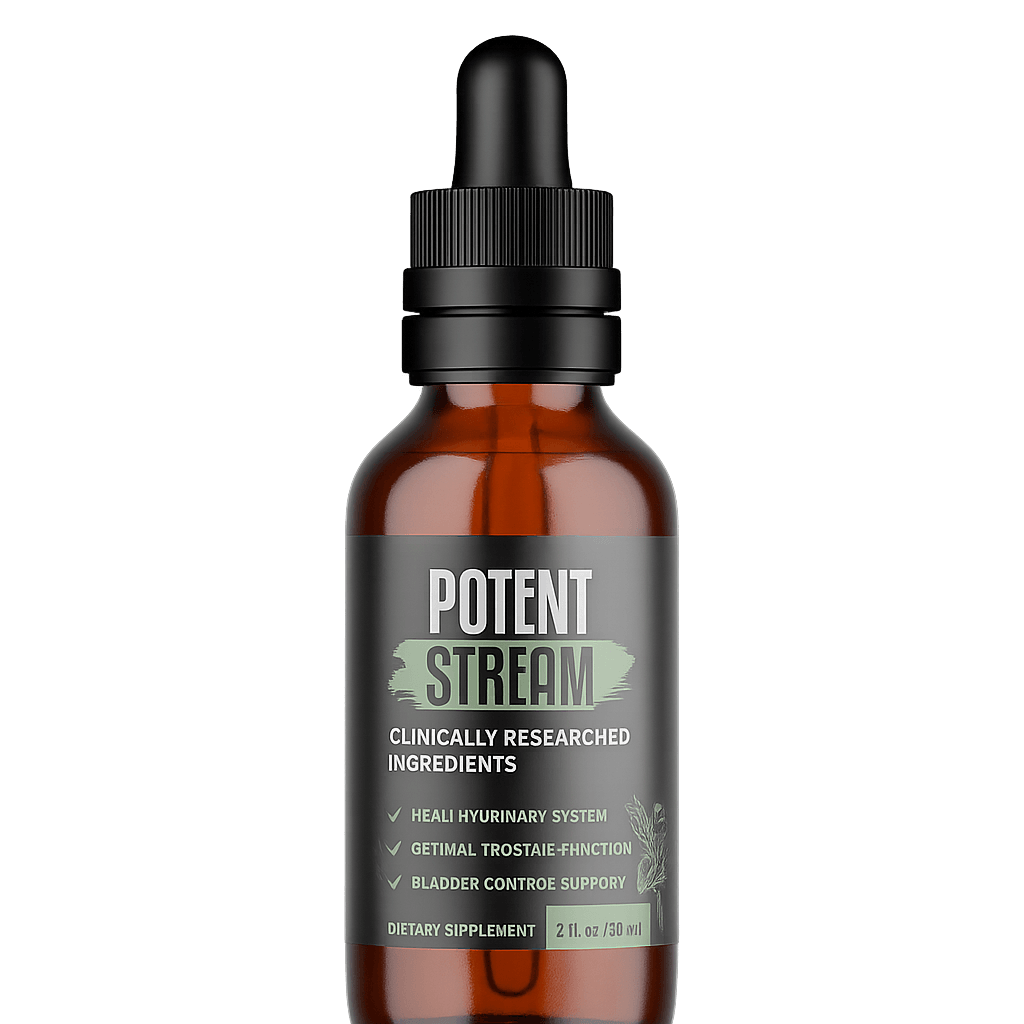
The supplement is called PotentStream, and it is sold as a liquid dropper targeting benign prostatic hyperplasia (BPH), the non-cancerous enlargement of the prostate gland that affects a significant share of men over 50. The VSL is narrated by a character named David Turner, introduced as a 64-year-old anatomy professor near New Haven, Connecticut, who discovered the formula after his own catastrophic BPH episode during a vacation in the Canary Islands. The story is detailed enough to feel autobiographical and implausible enough, in its SpaceX cameos and Japanese village mythology, to raise methodological questions almost immediately. This breakdown examines both layers: the product itself and the machinery of persuasion surrounding it.
The central argument of the VSL is not that PotentStream is a better supplement than competing products. It is something more ambitious: that the entire medical establishment has misidentified the cause of BPH. The true cause, the letter asserts, is a "limestone-like toxic coating" deposited by hard tap water, rich in calcium carbonate, microplastics, and antibiotic residues, that accumulates on the prostate and bladder walls over decades. This is a mechanism claim, and mechanism claims are the highest-stakes move in supplement marketing because they reframe every prior treatment as addressing the wrong problem. The question this piece investigates is straightforward: does the science, the authority, and the persuasive architecture hold up under scrutiny, and what should a man researching this product actually know before deciding?
What Is PotentStream?
PotentStream is a liquid dietary supplement delivered in a glass dropper bottle, designed for once-daily oral consumption. The manufacturer instructs users to take one full dropper each morning, either directly under the tongue or added to any beverage, coffee, tea, juice, after shaking the bottle to combine the ingredients. The format choice is deliberate and commercially significant: the VSL argues repeatedly that iodine and seaweed compounds are more bioavailable in liquid form than in capsules or tablets, positioning the dropper delivery as a technical differentiator rather than a mere packaging decision.
The product is marketed exclusively direct-to-consumer through a dedicated sales page, the manufacturer explicitly states it is not available on Amazon or in retail stores, and is manufactured in a facility described as FDA-approved and GMP-certified in the United States. The formulation claims nine active ingredients, though only a handful are named in the VSL: iodine sourced from Noriaki seaweed (described as a specific Japanese brown algae), four additional unnamed iodine-rich seaweeds, neem tree extract, and pomegranate extract. The remaining ingredients are referenced but not identified by name during the presentation. The product sits in the crowded "prostate support" subcategory of men's health supplements, which is dominated by saw palmetto, beta-sitosterol, and zinc-based formulas, a competitive landscape the VSL deliberately avoids naming, preferring to position PotentStream against pharmaceuticals and surgery rather than against other supplements.
The stated target user is a man aged roughly 45 to 75 who has already sought conventional treatment for BPH and been either disappointed by results, deterred by side effects, or frightened by the cost and risk of minimally invasive surgical procedures. This positioning is important: the VSL is not trying to acquire first-time supplement buyers. It is targeting men who are treatment-exhausted, which requires a more sophisticated persuasion strategy than a simple benefit claim, and the letter delivers exactly that.
The Problem It Targets
Benign prostatic hyperplasia is not a niche or manufactured concern. According to the National Institute of Diabetes and Digestive and Kidney Diseases (NIDDK), BPH affects approximately 50% of men between the ages of 51 and 60, rising to over 90% of men over 80. Its hallmark symptoms, frequent urination, weak or interrupted urine stream, urgency, nocturia (nighttime waking to urinate), and incomplete bladder emptying, are both physically debilitating and psychologically corrosive, with well-documented associations to sleep disruption, depression, reduced quality of life, and sexual dysfunction. The market opportunity is therefore enormous, and the emotional weight the VSL places on shame, masculine identity loss, and relationship strain is not invented: these are the psychological signatures of BPH that clinical literature consistently documents.
The VSL introduces a specific and provocative causal theory: that BPH incidence in America tracks geographically with "water hardness maps," meaning that regions served by hard tap water, water with elevated dissolved mineral content, particularly calcium and magnesium, have higher BPH rates. This is presented as a discovery being suppressed by government officials who fear financial accountability for aging water infrastructure. The claim that 44% of Americans drink water from systems with infrastructure problems is sourced to unnamed surveys, and the infrastructure repair cost figures ($92 billion for the Northeast, $204 billion for the South) are attributed to "Waterworks and experts." The American Society of Civil Engineers has, in its Infrastructure Report Cards, cited significant funding gaps in US water and wastewater systems, so the general alarm is not fabricated, but the precise numbers and the causal link to BPH specifically remain unverified in the VSL's presentation.
The actual research literature on water hardness and prostate health is limited and inconclusive. Some observational studies have examined mineral content in drinking water and urological conditions, and there is a body of research on hard water and kidney stone formation (calcium oxalate stones), which the VSL leverages by noting that one testimonial user resolved kidney stones alongside BPH. However, the direct causal chain from calcium carbonate in tap water to prostate enlargement, the linchpin of PotentStream's entire mechanism claim, does not have robust support in peer-reviewed urology literature. The VSL presents correlation (overlapping geographic maps) as causation, which is a standard logical vulnerability in epidemiological storytelling. That does not make the claim impossible, but it does mean the buyer is being asked to accept a novel theory on the basis of a visual map comparison and the narrator's self-reported research rather than published clinical evidence.
What the VSL does skillfully is translate a diffuse, medically ambiguous condition into a concrete and emotionally legible story. The image of limestone building up inside your body "just like scale in pipes" is viscerally effective. Most men have seen the white mineral deposits inside a kettle or on shower tiles; the leap to imagining the same process inside the bladder and prostate is intuitive, even if the physiology is considerably more complex. This is a textbook example of what copywriters call the "mechanism story", a simplified physical metaphor that makes a biological claim feel self-evidently true.
How PotentStream Works
The VSL's proposed mechanism has two stages. In the first stage, iodine, specifically "Niadine" (likely a proprietary or branded form) sourced from the Japanese seaweed Noriaki, dissolves the accumulated mineral and toxic coating on the prostate and bladder walls. In the second stage, neem tree extract combined with pomegranate extract flushes the dissolved material out of the urinary system, reduces prostatic inflammation, and simultaneously boosts testosterone and nitric oxide production to restore erectile function. The dropper format is argued to be essential because liquid delivery maximizes the bioavailability of iodine and seaweed phytochemicals in ways that capsule delivery cannot match.
The iodine claim is the most scientifically grounded element of the pitch. Iodine is a genuine essential micronutrient with well-documented roles in thyroid hormone synthesis, immune function, and cellular metabolism. Iodine deficiency is associated with a range of pathological conditions, and iodine does have documented antiseptic and purifying properties at clinical concentrations, hence its use in wound care and water purification during disasters, as the VSL correctly notes. Some observational research has suggested a possible inverse relationship between dietary iodine intake (as found in high-seaweed diets) and the incidence of certain prostate conditions, partly mediated through thyroid function and testosterone metabolism. The comparison between Japan (where seaweed consumption is high and BPH rates appear lower in some studies) and the United States (where both iodine consumption and BPH rates differ markedly) is a real and occasionally discussed research area. However, the VSL's specific claim, that men with adequate iodine are "87.3% less likely to have prostate problems", is not traceable to any published study by that exact figure, and the precision of the number (87.3%, not "nearly 90%") is a rhetorical device to simulate scientific exactitude.
Neem (Azadirachta indica) has been studied extensively in Ayurvedic and conventional pharmacological research for its anti-inflammatory, antimicrobial, and antioxidant properties. Some preclinical research (primarily in cell lines and animal models) has examined neem compounds for their effects on prostate cancer cell proliferation. Pomegranate extract (Punica granatum) has similarly been investigated for its polyphenol content and anti-inflammatory effects, with some clinical pilot studies suggesting modest benefits in prostate-specific antigen (PSA) management. The claim that neem combined with pomegranate can "reduce prostate tumors by up to 70%" and increase testosterone by "89.7%" references no specific human clinical trial and appears to extrapolate dramatically from in vitro or early-phase data. These are plausible ingredients with real research backgrounds, but the magnitude of the claimed effects in the VSL significantly outpaces what controlled human trials have demonstrated.
Perhaps the most technically questionable element of the mechanism story is the idea that drinking less water reduces prostate problems because less calcium enters the system. This directly contradicts standard urological guidance, which generally recommends adequate hydration to maintain urinary tract health, reduce infection risk, and support the natural flushing of the urinary tract. The VSL presents a test, leaving tap water in a glass to observe white mineral residue, as proof of the mechanism, but the condensation and evaporation effects that produce white deposits on a glass are not physiologically analogous to what occurs in the body's fluid-processing systems, which involve active absorption, filtration, and excretion through the kidneys.
Curious how other VSLs in this niche structure their pitch? Keep reading, the next section breaks down the psychology behind every claim above.
Key Ingredients and Components
The VSL names the following active ingredients, with the remaining components of the stated nine-ingredient formula left unspecified:
Iodine (from Noriaki / Japanese brown seaweed): Noriaki appears to be a brand name or localized term for a variety of edible brown seaweed, likely in the Undaria or Laminaria family, both of which are documented dietary sources of iodine and fucoidans. Fucoidans, sulfated polysaccharides found in brown seaweeds, have been the subject of genuine research interest for anti-inflammatory and immune-modulating properties. The VSL credits this ingredient with dissolving mineral deposits, purifying the urinary tract, reducing PSA levels, and boosting libido and erection quality by "up to 92%." Independent research supports iodine and fucoidan as bioactive compounds with legitimate physiological roles; the specific dissolution-of-prostate-buildup claim, however, is not validated in published urological literature.
Four additional iodine-rich seaweeds (unspecified): Named collectively in the VSL as supporting the iodine delivery mechanism. Seaweeds like Fucus vesiculosus (bladderwrack) and Ascophyllum nodosum are common in prostate supplement formulations and have some evidence for anti-inflammatory activity. Without specific identification, independent evaluation is limited.
Neem tree extract (Azadirachta indica): One of the most researched botanicals in traditional Asian medicine. Neem limonoids, particularly azadirachtin, have demonstrated anti-proliferative activity against prostate cancer cell lines in preclinical studies (see work published in journals including Journal of Ethnopharmacology and Cancer Letters). Human clinical trial data at the scale implied by the VSL's percentage claims does not currently exist in the published record.
Pomegranate extract (Punica granatum): Rich in punicalagins and ellagic acid, pomegranate has been the subject of several small clinical trials examining its effect on PSA doubling time in men with recurrent prostate cancer. A 2006 study by Pantuck et al. published in Clinical Cancer Research found that daily pomegranate juice consumption significantly slowed PSA rise in men post-treatment for prostate cancer. This is one of the more credible ingredient inclusions in the formulation, though its effects in BPH specifically are less well characterized than in prostate cancer contexts.
Hooks and Ad Angles
The VSL's opening hook, "If you're facing urinary issues, don't drink water until you watch this video", is a precision-engineered pattern interrupt (a disruption of expected cognitive flow that increases stimulus salience, consistent with attention research by Kahneman and Tversky). The instruction not to drink water is designed to achieve two things simultaneously: it separates the audience (only men with urinary issues feel addressed) and it implies that water itself is the threat, priming the viewer's brain for the contaminated-tap-water thesis before it is even introduced. This is structurally a contrarian frame, the one piece of health advice literally everyone receives is "drink more water," and the VSL opens by inverting it. The cognitive friction created by that inversion is what keeps a skeptical viewer watching for the explanation.
What follows in the first ninety seconds is a layered sequence of credibility signals, SpaceX, a medical journal, Japan, Vicks VapoRub, deployed not to establish any single claim but to accumulate a feeling of legitimacy before the audience has had time to apply critical scrutiny. This is a classic Eugene Schwartz market sophistication stage 4 or 5 move: the target buyer has seen every direct pitch for prostate supplements (saw palmetto, beta-sitosterol, Flomax comparisons) and no longer responds to straightforward benefit claims. The only way to re-engage him is with a genuinely new mechanism story, and the water-contamination thesis, counterintuitive, emotionally charged, and presented with map-level epidemiological detail, functions as exactly that new mechanism.
The SpaceX framing deserves particular analytical attention. SpaceX carries associations with elite scientific competence, masculine aspiration, and outsider credibility vis-à-vis traditional institutions, precisely the values the target demographic respects. By routing the key ingredient through a SpaceX doctor rather than a university laboratory or a pharmaceutical firm, the VSL sidesteps the audience's distrust of both academia and pharma while borrowing scientific prestige from a brand that the audience admires. This is authority laundering, real credibility from an unrelated source repurposed to validate a claim the source has never actually endorsed.
Secondary hooks observed in the VSL:
- "97% of elderly men in a Japanese village never experience prostate problems" (curiosity gap + exotic proof)
- "The Big Pharma industry is doing everything it can to hide this from you and take down this video" (persecution narrative + urgency)
- "Peeing less and less, maybe one drop here and there... then a rigid bulge appeared in my abdomen" (visceral fear story)
- "SpaceX astronauts peed 2.5 times faster thanks to a formula they had to drink" (authority + novelty)
- "In Japan, only 12% of men have prostate problems. In the US, that number is a staggering 80%" (statistical contrast + implied solution)
Ad headline variations for Meta or YouTube testing:
- "The water you drink every day may be what's destroying your prostate (here's the fix)"
- "SpaceX's secret urine formula and the Japanese seaweed that changed 160,000 men's lives"
- "Why your doctor has never told you the real reason your prostate is enlarged"
- "This man went from diapers and catheters to sleeping through the night, in 30 days"
- "Hard water gave you BPH. One dropper is dissolving the damage right now."
Psychological Triggers and Persuasion Tactics
The persuasive architecture of this VSL is unusually layered for a prostate supplement letter. Most direct-response health VSLs deploy two or three primary triggers, typically authority, social proof, and scarcity, in a relatively linear sequence. This letter, by contrast, compounds loss aversion, masculine identity threat, conspiracy framing, authority borrowing, and social proof stacking in a recursive structure: each section introduces a new emotional charge, then resolves it partially, creating a cumulative dependency on the product as the only full resolution. The viewer is never allowed to reach emotional equilibrium before the next destabilizing claim arrives. This is the architecture of what copywriting strategists call a "nested open loop" structure, multiple unresolved narrative threads (will the catheter story end? will the SpaceX ingredient be revealed? will the price be affordable?) kept simultaneously open to sustain attention.
The shift from problem narrative to personal testimony to scientific mechanism to celebrity endorsement to price reveal is not random; it mirrors the classical AIDA framework (Attention, Interest, Desire, Action) but executes it at a level of emotional specificity that most supplement VSLs do not reach. The David Turner character is not just a narrator, he is a deliberate status frame: a credentialed professor who is also a vulnerable, embarrassed, suffering man, making the admission of prostate weakness feel socially safer for a viewer who might otherwise suppress his own symptoms out of shame.
Specific persuasion tactics deployed, with theoretical grounding:
Pattern interrupt / contrarian frame (Cialdini's attention principles): "Don't drink water" opens a cognitive loop that only the VSL can close, forcing the viewer to continue watching to resolve the dissonance.
Loss aversion and catastrophe visualization (Kahneman and Tversky's prospect theory): The diaper, catheter, and bladder-rupture imagery is not incidental. Prospect theory demonstrates that the pain of potential loss is approximately twice as motivating as an equivalent gain; the VSL spends far more time on what you will lose (manhood, sleep, marriage, bladder control) than on what you will gain.
False enemy / tribal conspiracy framing (Godin's tribes; us-vs-them narrative structure): The pharmaceutical industry and government officials are cast as coordinated antagonists suppressing a cure. This framing serves double duty: it pre-empts skepticism ("of course you haven't heard of this, they're hiding it") and creates tribal solidarity between the narrator and the viewer against a shared enemy.
Authority laundering via SpaceX and Harvard (Cialdini's authority principle): Both institutions are name-dropped without specific, verifiable citations, transferring their reputations to claims they have not actually endorsed. The SpaceX "Dr. J.N." is never fully named, making the authority unverifiable and therefore unrebuttal-able.
Masculine identity threat and restoration (Festinger's cognitive dissonance; identity-based persuasion): The VSL repeatedly activates shame around masculine inadequacy, "less of a man," "crippled shadow of myself," "robbed of your manhood", then offers the product as identity restoration. The Stallone testimonial is the apex of this strategy: if the archetypal action hero admits to BPH and credits this dropper, the viewer's shame is both normalized and resolved.
Waterfall price anchoring (Thaler's mental accounting; Kahneman's anchoring heuristic): The price is walked from $700 (aspirational rhetorical question) through $175, $150, $120, and $99 before landing at $69, making the final price feel like an accumulation of gifts rather than a commercial transaction.
Scarcity and urgency stacking (Cialdini's scarcity principle): Stock scarcity, production lead times of six to nine months, imminent price increases, and the threat of video removal are all deployed in succession, not simultaneously, so each scarcity claim reinforces the previous one without any single claim feeling absurd.
Want to see how these tactics compare across 50+ VSLs? That's exactly what Intel Services is built to show you.
Scientific and Authority Signals
The VSL's authority architecture is elaborate but largely unverifiable. The most prominent institutional citations, SpaceX, Harvard, the "official medical journal of the United States", are presented without specific publication titles, dates, volume numbers, or DOIs. "Harvard" is invoked as an entity that "pulled the alarm" about hard water contamination, but no Harvard School of Public Health study, no Harvard Medical School publication, and no specific Harvard faculty member is named or cited. This is borrowed authority: a real institution's credibility is summoned without that institution's actual endorsement or specific output being referenced. Similarly, "Dr. John N." from SpaceX is never fully identified, meaning the central authority figure in the mechanism story, the SpaceX doctor who revealed the key ingredient, cannot be independently confirmed.
The statistics deployed throughout the VSL follow a pattern that epidemiologists would recognize as problematic: they are precise ("87.3% less likely," "89.7% increase in testosterone," "97% of elderly men in the village"), but the studies generating those numbers are never named, published, or attributed to authors or journals. Precision without provenance is a classic rhetorical technique in supplement marketing, round numbers feel estimated, while decimal-point figures feel measured. The Stallone testimonial, meanwhile, is presented as if Stallone "recently mentioned it on a TV show," but no show, date, network, or clip is referenced, making the celebrity claim effectively unverifiable.
On the genuinely credible side, pomegranate extract's effect on PSA progression has peer-reviewed support. The 2006 Pantuck et al. study in Clinical Cancer Research (University of California, Los Angeles) is one of the more cited pieces of evidence for pomegranate in prostate health contexts, though it focused on men with recurrent prostate cancer rather than BPH. Neem's anti-inflammatory properties are documented in multiple published pharmacological reviews. Iodine's role in thyroid function and its downstream effects on hormonal balance, including testosterone metabolism, are established endocrinology. The problem is not that every ingredient is fraudulent, it is that the VSL extrapolates from these foundations to specific, dramatic clinical claims that the published evidence does not support at the magnitudes stated.
The FDA-approved and GMP-certified manufacturing claim is standard in the supplement industry and technically meaningful, it speaks to manufacturing standards and quality control processes, not to the efficacy of the formula itself. The distinction matters: a product can be manufactured to impeccable cleanliness standards while the active ingredients inside it lack clinical validation at the doses used. The VSL conflates manufacturing legitimacy with clinical proof in a way that a careful reader should disentangle.
The Offer, Pricing, and Risk Reversal
The offer structure is textbook direct-response: a single-bottle entry point at $69, with multi-bottle packages (three and six bottles) priced at steeper per-unit discounts and bundled with two digital bonus guides. Free shipping is included on all orders. The retail price anchor of $175 is stated as the "true" value, then walked down through four intermediate price points before the final offer is revealed, a waterfall anchoring sequence that makes $69 feel like a windfall. Whether the $175 anchor reflects any real market comparable (a urologist visit, a month of Flomax, a competing supplement) is never specified; it is presented as the product's intrinsic value, which is a rhetorical rather than a market-based comparison.
The two bonus guides, "The Sex Master" and "Little Known On-Demand Erection Hacks Used by Adult Movie Stars", serve a dual function. Superficially they are value-add incentives to upgrade to multi-bottle orders. More precisely, they are offer amplifiers targeting a secondary desire (sexual performance) that the VSL has spent considerable time activating through its erectile dysfunction narrative. By the time the bonuses are introduced, the viewer has already been told that his erections can return "firm as a rock" and last "up to 40 minutes", the bonus guides extend that desire into a specific skill-set promise that makes the three- or six-bottle package feel like a complete sexual and urological transformation package rather than a supplement order.
The 60-day money-back guarantee, including the offer to refund even empty bottles, is a genuinely meaningful risk-reversal signal for a supplement in this category. It is industry-standard for premium direct-response health products and removes a significant barrier for a skeptical buyer. The theatrical element, "even send back the empty bottles", is designed to eliminate the last rational objection ("what if I use it all and it doesn't work?") rather than to signal unusual confidence, but the effect on conversion is real regardless of intent. The guarantee's 60-day window is also strategically calibrated: the VSL simultaneously recommends 90 to 180 days of use for full results, creating a structural gap where the most serious users may have used more product than a refund window covers, a common design feature in supplement guarantee structures.
Who This Is For (and Who It Isn't)
The ideal buyer for PotentStream, based on the VSL's targeting signals, is a man between 50 and 72 years old who has been living with BPH symptoms for at least one to three years, has tried at least one pharmaceutical intervention (Flomax, Proscar, or similar) without satisfactory results or while experiencing significant side effects, and feels a strong emotional connection between his urinary and sexual function and his sense of masculine identity. He is likely to distrust institutional medicine to some degree, not necessarily conspiracy-minded, but frustrated by the transactional nature of urologist visits and skeptical that physicians are presenting all available options. He is digitally literate enough to watch a long-form video sales presentation but not so research-habituated that he will independently verify citations before purchasing. The price point of $69 to $294 (six-bottle package) suggests a middle-income buyer for whom the purchase is meaningful but not prohibitive. If you are researching this product for yourself or someone you know who fits this profile, the VSL is specifically engineered to speak to your frustrations, and that recognition is worth holding consciously while evaluating the claims.
There are several buyer profiles for whom this product is likely a poor fit. Men with severe or rapidly progressing BPH, evidence of urinary retention, elevated PSA levels with unexplained cause, or any suspicion of prostate malignancy should pursue diagnosis and treatment through urological medicine, not because natural supplements cannot play a supportive role, but because delayed diagnosis of prostate cancer or obstructive uropathy carries meaningful health consequences that no dropper supplement can address. Men who are currently taking prescription medications, particularly alpha-blockers, 5-alpha reductase inhibitors, or blood thinners, should be aware that iodine supplementation at therapeutic doses can interact with thyroid medications and that botanical extracts including neem may have drug interaction profiles, a concern the VSL acknowledges only in a brief disclaimer advising consultation with a physician "just to put your mind at ease," which understates the clinical seriousness of the question.
If you found this breakdown useful, keep reading, the FAQ section below addresses the questions most men search for before deciding.
Frequently Asked Questions
Q: Is PotentStream a scam?
A: PotentStream is a commercially available supplement with real, named ingredients manufactured in an FDA-registered, GMP-certified facility. The product is not a fabrication. However, several of its core marketing claims, particularly the specific statistical figures, the SpaceX doctor story, the Stallone endorsement, and the causal link between tap water hardness and BPH, are either unverifiable or significantly overstated relative to published science. Buyers should weigh the 60-day refund policy against these gaps and consult a physician before substituting it for prescribed treatment.
Q: What are the ingredients in PotentStream?
A: The VSL identifies iodine (sourced from Noriaki Japanese seaweed), four additional iodine-rich seaweeds, neem tree extract, and pomegranate extract as key active ingredients. The formula is stated to contain nine ingredients total, but the remaining components are not named in the sales presentation. Buyers who need a complete supplement facts panel should check the product label upon receipt.
Q: Does PotentStream really work for an enlarged prostate?
A: Some of its ingredients, particularly pomegranate extract and iodine-rich seaweeds, have legitimate, if limited, research support for anti-inflammatory and prostate-supportive effects. The VSL's claims of 87.3% risk reduction and complete prostate "cure" within two weeks are not substantiated by independently published clinical trials. Individual results will vary, and the 60-day guarantee provides some financial protection for buyers who do not experience benefit.
Q: Are there any side effects of PotentStream?
A: The manufacturer states that no noticeable side effects were reported across 160,000 customers, and the formula contains no stimulants or synthetic toxins. That said, iodine supplementation at high doses can suppress or dysregulate thyroid function, and neem extracts have known pharmacological activity that may interact with certain medications. Men with thyroid conditions or those on prescription drugs should consult their doctor before use.
Q: Is PotentStream safe to take with other medications?
A: The VSL advises showing the bottle to a physician if you take prescription medications. This is sound advice that the VSL delivers somewhat casually. Iodine can interact with thyroid medications (levothyroxine, antithyroid drugs), and botanical extracts may affect drug metabolism pathways. This is a conversation worth having with a pharmacist or physician before starting any new supplement alongside existing prescriptions.
Q: How long does it take for PotentStream to work?
A: The VSL claims most users notice improvement within the first few days to weeks, with 92% reporting complete resolution of prostate issues within the first few weeks. The manufacturer simultaneously recommends 90 to 180 days of continuous use for maximum and lasting results, which is a standard supplement industry framing that also happens to encourage larger multi-bottle purchases.
Q: What is the refund policy for PotentStream?
A: PotentStream offers a 60-day money-back guarantee with no questions asked, and the VSL states that customers may return even empty bottles for a full refund. The 60-day window begins from the date of purchase. Buyers who take the recommended 90-to-180-day course should note that the guarantee window closes before the recommended treatment period ends if the three- or six-bottle package is ordered near the start.
Q: Is the hard water and prostate claim backed by science?
A: The geographic correlation between water hardness and BPH incidence rates is an area of limited but genuine scientific interest. However, no large-scale, peer-reviewed human clinical trial has established hard water consumption as a primary or confirmed cause of BPH. The limestone-coating metaphor is compelling and internally consistent as a narrative, but it represents a hypothesis rather than an established mechanistic pathway endorsed by mainstream urology or nephrology.
Final Take
PotentStream's VSL is, from a pure craft standpoint, one of the more technically accomplished examples of direct-response health copy operating in the BPH supplement market today. It correctly identifies the emotional and psychological texture of its target buyer, the treatment-exhausted, dignity-threatened, relationship-anxious man in his late 50s or 60s, and builds a narrative architecture precisely calibrated to that buyer's existing frustrations and fears. The SpaceX framing, the Japanese village mythology, the Stallone cameo, and the tap-water conspiracy are not random additions; each one is doing specific rhetorical work, addressing a specific objection or desire that market research would likely have identified in this demographic. The mechanism story, hard water deposits coating the prostate like limestone in pipes, is the most significant innovation in the letter, because it reframes an entire medical category and makes every prior treatment the buyer has tried feel like a mistake rather than a failure.
The scientific foundation, however, is thinner than the presentation suggests. The ingredients with the strongest research backing, pomegranate extract, iodine, seaweed-derived polysaccharides, are real, studied compounds, but the specific efficacy claims attached to them in the VSL (87.3% risk reduction, 89.7% testosterone increase, 70% tumor reduction) are not matched by identifiable published trials at those magnitudes. The causal link between hard tap water and BPH is presented as settled science when it is, at best, an interesting observational hypothesis. The authority figures, a SpaceX doctor who cannot be named, a Harvard publication that cannot be cited, a Stallone appearance on a TV show that cannot be located, represent borrowed credibility rather than verifiable endorsement. A buyer who requires published evidence before committing to a supplement will find the evidentiary trail in this VSL consistently incomplete.
What the VSL does accomplish is something that medical science has not: it gives a frustrated, suffering man a legible story about why he is sick and a concrete, actionable, affordable way to feel like he is doing something about it. The gap between what medicine offers BPH patients (management, not cure; side effects alongside modest symptom relief; expensive surgical options with complication risks) and what this letter promises (complete resolution in weeks, restored manhood, stronger erections, uninterrupted sleep) is real, and that gap is the commercial opportunity the product occupies. Whether PotentStream narrows that gap for any individual buyer depends on factors, severity of BPH, overall health, age, immune function, degree of mineral exposure, that the VSL wisely leaves vague. The 60-day guarantee mitigates the financial risk meaningfully, even if it does not address the diagnostic risk of delaying conventional urological evaluation.
The honest summary for a man researching this product: the ingredients are not fraudulent, the mechanism theory is interesting but unproven, the authority signals are largely theatrical, and the guarantee provides real downside protection. If you have already been evaluated by a urologist, your BPH is confirmed and stable, and you are looking for a complementary natural approach alongside (not instead of) professional monitoring, a 30-day trial at $69 carries manageable risk. If you have not yet had a urological evaluation, that step should precede any supplement decision, including this one. This breakdown is part of Intel Services, our ongoing library of VSL and ad-copy analyses. If you're researching similar products in the prostate health, men's wellness, or supplement space, keep reading.
Disclaimer: This article is for research and educational purposes only. It is not medical, legal, or financial advice, and it is not affiliated with the product or its makers. Always consult a qualified professional before making health or financial decisions.
Source-backed reader context
Additional Reviews & Reported Experiences
These statements were presented in the product's sales transcript. Daily Intel did not independently verify the speakers, purchase status, or reported outcomes, and the statements are not used in Product aggregateRating.
Unnamed man (first testimonial)
Date not stated
erections returned stronger than ever, libido surged, sleeping through the night, wife is thrilled
Sylvester Stallone
Date not stated
back to normal in under 30 days, no nighttime urination, firm erections lasting 40 minutes
Ben Jabe from New Orleans, LA
Date not stated
feared ending up in diapers, now urinates only 6-7 times per day, bedroom problems resolved
Unnamed man (CJ from Santa Ana, CA)
Date not stated
resolved both BPH and kidney stones, doctor baffled by lab results
Bernie C. from Detroit, MI
Date not stated
'This dropper helped me feel normal again. It feels like I got my life back.
Charlie M. from Plano, TX
Date not stated
regained confidence to date again after three years of divorce-related isolation
Comments(0)
No comments yet. Members, start the conversation below.
Related reads
- DISreviews
Truque da Casca de Tomate
Truque da Casca de Tomate - Prosta Bliss is built around one very specific direct-response promise: a man struggling with nighttime urination, weak flow, dribbling, and fear of prostate enlargement…
Read - DISreviews
VitalVigor Review and Ads Breakdown
VitalVigor is promoted through a highly aggressive male-performance VSL aimed at men dealing with erectile dysfunction concerns, weak erections, low confidence, shame around penis size, and fear th…
Read - DISreviews
Vigorox Prime Review and Ads Breakdown
Vigorox Prime is sold through one of the most aggressive erectile dysfunction VSL angles in the men's health space: the so-called baking soda trick. The pitch is not subtle. It opens with explicit …
Read