Prosta Vive Review and Ads Breakdown: A Research-First Look
The opening line arrives without preamble: "I peed myself in front of my family and dozens of other passengers on the plane." It is a sentence designed to stop a man cold, not with curiosity, but with recognition. For the estimated 14 million American men living with benign…
8,226+
Videos & Ads
+50-100
Fresh Daily
$29.90
Per Month
Full Access
12.5 TB database · 72+ niches · 27 min read
The opening line arrives without preamble: "I peed myself in front of my family and dozens of other passengers on the plane." It is a sentence designed to stop a man cold, not with curiosity, but with recognition. For the estimated 14 million American men living with benign prostatic hyperplasia (BPH), that scenario is not a dramatic exaggeration; it is a genuine, recurring fear. The Video Sales Letter for Prosta Vive, a direct-to-consumer prostate supplement powder, deploys that fear with precision in its first breath, and does not ease off for the next forty-odd minutes of runtime. What follows that opening is an elaborate persuasive architecture built from personal testimony, exotic origin mythology, selective scientific citation, and a carefully orchestrated villain narrative aimed squarely at the pharmaceutical industry. The question worth asking, the one this analysis is organized around, is how much of that architecture is built on solid ground, and what a well-informed buyer should make of it.
This piece is not a press release for Prosta Vive, nor is it a reflex dismissal. It is a structured reading of the VSL as both a marketing document and a product pitch, written for the reader who is actively researching the supplement before making a decision. The goal is to name what the sales letter is doing, evaluate whether its scientific claims survive scrutiny, and give an honest account of who this product is likely to help, and who it probably will not. If you are researching Prosta Vive ingredients, trying to determine whether the "Southeast Asian prostate formula" story is real, or simply trying to understand why this particular video kept you watching longer than you expected, the sections below will give you the most complete picture currently available.
The product sits at the intersection of two powerful commercial currents: the surging men's health supplement market and the long-running direct-response tradition of selling natural remedies as corrections to pharmaceutical industry failure. Both currents are real, both create genuine demand, and both attract products of wildly varying quality. Prosta Vive, as presented in its VSL, is a sophisticated specimen of this genre, more narratively complex than most, heavier on scientific-sounding language than average, and priced at a level that invites serious scrutiny before purchase.
What Is Prosta Vive?
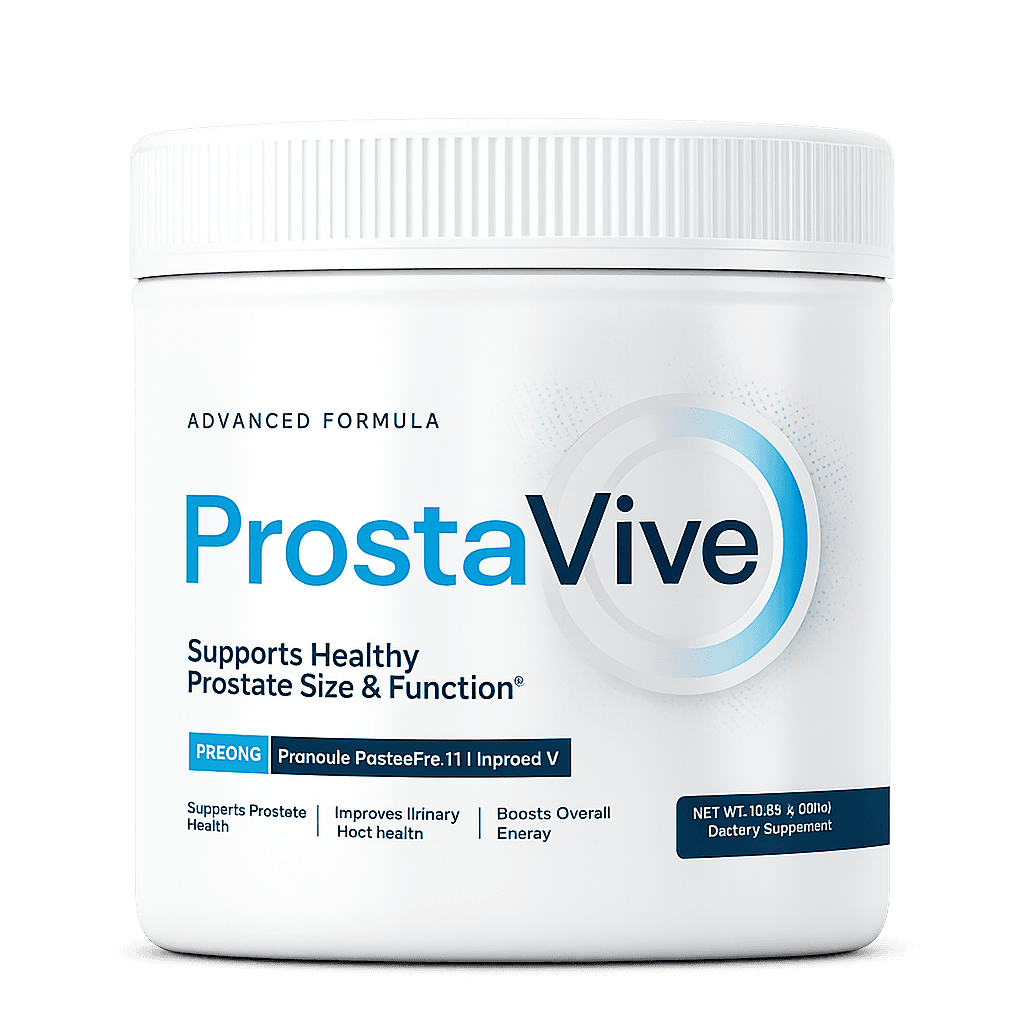
Prosta Vive is a prostate health supplement sold in powder form, designed to be mixed with water and consumed once each morning. Unlike the majority of prostate supplements on the market, which are sold as capsules or softgels, Prosta Vive's VSL makes the powder format central to its differentiation argument, claiming that a water-soluble powder achieves meaningfully higher bioavailability than encapsulated ingredients, reaching tissues that pills allegedly cannot. The product is available exclusively through its direct sales page and is not distributed through Amazon, retail pharmacies, or other online marketplaces, a distribution model common to VSL-driven supplement brands that depend on high-margin, single-channel sales.
The product is marketed primarily to men over 40, with the core pitch aimed at men over 50 experiencing symptomatic BPH. Its stated mechanism is the dissolution of what the VSL terms a "red clog" inside the prostate, a metaphor for accumulated dead cells resulting from restricted blood flow and oxidative stress, processes the letter links specifically to environmental phthalate exposure. The product is presented as the Western formulation of an indigenous Southeast Asian prostate formula, derived from research conducted in island communities near Okinawa, Taiwan, and Korea, where BPH rates are claimed to be as low as 3%, compared to 50% in the United States.
In terms of market positioning, Prosta Vive occupies the "root cause" niche: a growing segment of the supplement industry that positions itself against both pharmaceutical symptom management and generic vitamin-store formulations by claiming to address the underlying biological driver of a condition rather than managing its surface symptoms. This framing is commercially powerful and, depending on the strength of the underlying formula, is sometimes at least partially justified.
The Problem It Targets
Benign prostatic hyperplasia is neither a rare condition nor a mildly inconvenient one. According to the National Institute of Diabetes and Digestive and Kidney Diseases (NIDDK), BPH affects approximately 50% of men between the ages of 51 and 60, and that figure climbs to over 70% in men aged 60 to 69 and as high as 90% in men over 85. These are not fringe statistics; BPH is one of the most prevalent chronic conditions in aging men worldwide. The symptoms, reduced urine flow, incomplete bladder emptying, nocturia (waking at night to urinate), urgency, and in severe cases urinary retention requiring catheterization, have well-documented effects on sleep quality, sexual function, psychological wellbeing, and relationship satisfaction. The VSL does not exaggerate the clinical burden of the condition; if anything, Ben Locker's described experience (waking six to seven times per night, blood in his undergarments, emergency catheterization abroad) sits at the severe end of the clinical spectrum but is not fabricated.
The conventional treatment landscape that Prosta Vive positions itself against is also accurately sketched, if selectively framed. Five-alpha reductase inhibitors such as finasteride are indeed associated with sexual side effects, decreased libido, erectile dysfunction, and ejaculatory dysfunction, with rates reported in clinical literature at roughly 5-10% of users, though patient-reported rates in observational studies are sometimes higher. Alpha-blockers (tamsulosin, alfuzosin) do carry risks of orthostatic hypotension, dizziness, and in some patients retrograde ejaculation. Surgical options such as TURP (transurethral resection of the prostate) carry real, if uncommon, risks including retrograde ejaculation in the majority of cases and erectile dysfunction in a minority. The VSL inflates the dangers of these options dramatically, it describes surgery costs of "$46,000 to $70,000" without specifying whether these are out-of-pocket figures for uninsured patients, and it presents side-effect profiles as near-universal when they are statistically minority outcomes, but the underlying concern it exploits is legitimate.
The VSL's most scientifically ambitious claim concerns root cause: that BPH is not primarily driven by aging or hormones (as conventional medicine holds), but by oxidative stress triggered by phthalate accumulation, which restricts prostate blood flow and prevents normal cellular metabolism. The phthalate-BPH connection is not fabricated. A study published in Environmental Research and cited work from Taiwanese researchers has explored associations between urinary phthalate metabolites and prostate health, though the evidence base for phthalates as a primary driver of BPH in the general population remains preliminary rather than established. The 2024 New England Journal of Medicine study on microplastics in cardiovascular plaques is real (Marfella et al., 2024, New England Journal of Medicine), though it addressed atherosclerotic plaque, not prostate tissue, and the VSL's leap from "plastics clog blood vessels" to "plastics clog your prostate" is an extrapolation, not a finding.
Curious how other VSLs in this niche structure their pitch? Keep reading, the Hooks and Ad Angles section breaks down the rhetorical mechanics behind every major claim above.
How Prosta Vive Works
The VSL describes a three-step proprietary mechanism it frames as uniquely targeting BPH's root cause. Step one is reducing oxidative stress around the prostate and blood vessels using Maca root and artichoke extract, freeing up circulation. Step two is dissolving the "cellular buildup", the accumulated dead cells the letter calls stromal cell proliferation, using boron and nettle root. Step three is supporting healthy blood flow into and out of the prostate using Panax ginseng and Eurycoma longifolia (referred to in the VSL as "Uricoma"). Three additional layers, vitamin D, zinc, ashwagandha, and cordyceps mushroom, were reportedly added by a formulation team during the product development phase.
The three-step framing is rhetorically elegant and maps cleanly onto the VSL's causal chain (phthalates → oxidative stress → reduced blood flow → cellular buildup → BPH). It is worth evaluating how well the ingredient science supports each step. On step one, Maca (Lepidium meyenii) does have antioxidant properties documented in peer-reviewed literature and some evidence for libido support, though robust clinical trials specifically measuring its effect on prostate tissue inflammation are limited. Artichoke extract (Cynara scolymus) is a well-characterized antioxidant with hepatoprotective and anti-inflammatory properties, and the aphrodisiac claims in the VSL are borrowed from ancient cultural use rather than controlled trials. On step two, boron's association with PSA reduction is supported by research published in Cancer Epidemiology, Biomarkers & Prevention suggesting dietary boron intake may be inversely related to prostate cancer risk, a meaningful but not identical proposition to "dissolving cellular buildup" in BPH. Nettle root (Urtica dioica) has one of the stronger evidence bases in this formula, with a randomized study (Safarinejad, 2005, Journal of Herb Pharmacotherapy) of 558 men showing statistically significant improvements in BPH symptoms compared to placebo, which the VSL references accurately. On step three, Panax ginseng has modest evidence for erectile function, and Eurycoma longifolia (Tongkat Ali) has genuine clinical backing for testosterone support and libido in several Malaysian university studies.
The honest assessment is that several of these ingredients have real biological plausibility, and the combination addressing oxidative stress, hormonal balance, and urinary tract inflammation is not frivolous. What the VSL overclaims is the degree of certainty: the language of "laser precision," "proven to shrink your prostate," and a 94% improvement rate tested on 12,500 men is presented without any independently verifiable clinical trial data for the specific Prosta Vive formulation itself. The studies cited support individual ingredients in isolation, not this product combination at these doses.
Key Ingredients and Components
The Prosta Vive formula as described in the VSL includes the following components:
Maca root (Lepidium meyenii), An Andean root vegetable with antioxidant and adaptogenic properties. The VSL credits a 2020 Lima University study for its anti-inflammatory and blood-flow benefits. Independent literature (Gonzales et al., published in Asian Journal of Andrology) does support libido and energy claims; prostate-specific evidence is thinner.
Artichoke extract (Cynara scolymus), A polyphenol-rich plant extract with documented antioxidant activity. The aphrodisiac claim is cultural lore rather than clinical trial data. Its anti-inflammatory properties are well established and plausibly relevant to prostate tissue.
Boron, A trace mineral found in water and soil. An article in Integrative Cancer Therapies (Scorei & Popa, 2010) and work by Miljkovic et al. in Cancer Causes & Control support an association between dietary boron and lower prostate cancer risk; direct BPH-shrinking evidence in humans is less robust than the VSL implies.
Nettle root (Urtica dioica), Among the best-supported ingredients in the formula. A 2005 randomized controlled trial (Safarinejad, Journal of Herb Pharmacotherapy) on 558 BPH patients showed 81% of the nettle group reported symptom improvement versus 16% of controls. The VSL cites this accurately.
Panax ginseng, A well-studied adaptogen with evidence for erectile function support (Jang et al., British Journal of Clinical Pharmacology, 2008) and modest anti-inflammatory effects. Prostate-blood-flow claims are plausible but extrapolated.
Eurycoma longifolia (Tongkat Ali / "Uricoma"), A Southeast Asian shrub with clinical evidence for testosterone and libido support in aging men (Tambi et al., Asian Journal of Andrology, 2012). Circulation and energy claims have some backing; the combination with Panax ginseng is a sensible pairing.
Vitamin D, Inverse associations between vitamin D deficiency and BPH risk have been observed in epidemiological studies. The claim that vitamin D supports arterial health and testosterone is consistent with mainstream literature.
Zinc, Men's prostate tissue naturally contains high concentrations of zinc, and studies have noted lower prostate zinc levels in BPH and prostate cancer patients (Costello & Franklin, The Prostate, 1998). Inclusion is scientifically justified.
Ashwagandha (Withania somnifera), An adaptogen with evidence for stress reduction, sleep quality improvement, and some testosterone support (Wankhede et al., Journal of the International Society of Sports Nutrition, 2015). The "oxygen flow" claim references a study from Mangalore, India, with plausible mechanistic support via nitric oxide pathways.
Cordyceps mushroom, A fungal ingredient with emerging evidence for urinary and reproductive health. Researchers from Tzu Chi University in Taiwan have investigated cordyceps effects on lower urinary tract symptoms; the evidence is promising but not yet conclusive for BPH specifically.
Hooks and Ad Angles
The VSL's opening hook, "I peed myself in front of my family and dozens of other passengers on the plane", is a textbook pattern interrupt in the Cialdini sense: it disrupts the viewer's passive consumption posture by delivering visceral, identity-threatening content before any product has been introduced. Crucially, it does not open with a product or even a problem, it opens with shame, the most potent motivator for men in this demographic. The protagonist is not merely inconvenienced; he is humiliated in front of his family, stripped of the grandfatherly dignity that defines his social identity. For a viewer experiencing even mild BPH symptoms, the scene functions as a worst-case mirror, and the mirror is held up before the viewer has had a moment to raise his critical guard.
This is recognizably a Eugene Schwartz Stage 4 or Stage 5 market sophistication move. Men over 50 researching prostate supplements have seen every direct pitch, every "this one weird trick" formulation, every celebrity urologist endorsement. The VSL skips product-level persuasion almost entirely for its first fifteen minutes, instead constructing an emotional and narrative infrastructure so that by the time the product is named, the viewer has already emotionally committed to the problem and the story. The exotic-origin mechanism, indigenous Southeast Asian islanders with 3% BPH rates, is a curiosity gap layered on top of the initial pattern interrupt, providing intellectual novelty to complement the emotional opening.
What follows in the middle sections of the VSL is a false enemy structure: the pharmaceutical industry is presented not merely as imperfect but as actively complicit in keeping men sick, because cured patients do not buy prescriptions. This framing activates pre-existing skepticism toward corporate medicine (a sentiment the target demographic holds at high rates) and positions the narrator as a whistleblower rather than a salesperson, a move that simultaneously builds trust and creates urgency around watching before "they" take the video down.
Secondary hooks observed in the VSL:
- "The true root cause has nothing to do with your age, family history, hormones, or lifestyle"
- "A hidden red clog inside your prostate is slowly blocking off your urethra"
- "What I'm about to show you is highly controversial and has made the pharmaceutical industry nervous"
- "Men on these islands live 10 years longer and have the smallest prostates in the world"
- "New plastic particles are being found in the blood vessels of 58.4% of cardiac event patients"
Ad headline variations for Meta or YouTube media buyers:
- "The 'Prostate Clog' Discovery That BPH Doctors Won't Discuss (Watch Before Removed)"
- "Why Do Men on These Pacific Islands Almost Never Get Prostate Problems?"
- "He Was Catheterized in a London Hospital. Here's What Fixed His Prostate in 6 Weeks."
- "This Powder vs. $46,000 Surgery: A Medical Researcher's Uncomfortable Comparison"
- "Still Waking Up 5 Times a Night? The Phthalate-BPH Link Nobody Told You About"
Psychological Triggers and Persuasion Tactics
The persuasive architecture of the Prosta Vive VSL is not a flat collection of independent tactics, it is a stacked sequence in which each mechanism prepares the ground for the next. The opening shame-hook creates emotional vulnerability; the villain narrative channels that vulnerability into anger at a third party; the exotic-origin story converts anger into hope; the social proof cascade transforms hope into confidence; and the scarcity-urgency close converts confidence into immediate action. Cialdini would recognize this as a complete influence loop. What is distinctive is the degree to which the letter weaponizes masculine identity specifically, the word "man" ("feel like a real man again," "less of a man," "real man") appears as a recurring touchstone precisely because the target audience's self-concept, not just their health, is at stake.
The scientific language throughout, stromal cell proliferation, oxidative stress, PSA, phthalates, serves a dual psychological function: it signals that the narrator has real expertise (authority) while also flattering the viewer that he is receiving insider knowledge unavailable to mainstream medicine (in-group status). This is what Seth Godin would call tribal identity construction: the viewer is invited into the tribe of men who "know the real truth" about their prostates, a tribe defined by its opposition to pharmaceutical industry deception.
Pattern interrupt + identity threat (Cialdini, Influence, 2006): The airplane humiliation scene opens not as a story but as a mirror, forcing immediate emotional identification before critical evaluation is active.
False enemy / villain narrative (classic VSL structure; Ogilvy's "the enemy in the room"): The pharmaceutical industry is the external villain, activating distrust and positioning the product as resistance rather than commerce.
Social proof cascade (Cialdini's social proof; Schwartz proof-stacking): Evidence scales from one man (Ben), to nine neighbors, to 12,500 testers, to "tens of thousands" of current users, each layer harder to dismiss than the last.
Loss aversion via two-futures framing (Kahneman and Tversky's prospect theory): The closing "two paths" sequence makes the cost of inaction, catheter, failing marriage, loss of masculinity, feel more real and more present than the cost of purchase.
Reciprocity through personal sacrifice narrative (Cialdini's reciprocity): Andrew Ellis describes his father's suffering, his own decade of research, and his decision to sell "at cost", creating psychological debt in the viewer that a purchase symbolically repays.
Risk reversal via endowment effect (Thaler's endowment effect; Cialdini's commitment and consistency): The 180-day guarantee is framed as "you don't have to decide today", but once the order is placed, ownership psychology reduces the likelihood of return regardless of outcomes.
Urgency and scarcity stacking (Cialdini's scarcity): Price increases are described as possible "tonight or tomorrow"; stock is framed as liable to "run out at any moment"; exclusive availability is emphasized. All three scarcity signals appear in the same closing sequence, layered for maximum pressure.
Want to see how these tactics compare across 50+ VSLs in the men's health niche? That's exactly what Intel Services is built to show you.
Scientific and Authority Signals
The VSL's authority architecture rests on three named figures: Andrew Ellis (the narrator-researcher), Dr. Li/Lee (the East Asian prostate specialist), and Dr. David Livingstone (the British-trained formulation consultant). Of the three, none can be independently verified through public academic or clinical records based on information available at the time of this analysis. Andrew Ellis is described as a TV documentary contributor and bestselling author on prostate health, significant credentials that, if real, would produce easily searchable publication records; the absence of those records in public databases is a meaningful flag. Dr. "Li" or "Lee" is described as an "acclaimed author and research scientist" in East Asia, again, a description vague enough to resist verification. Dr. David Livingstone's British-and-Singapore background is consistent with a plausible real biography, but no institution is named.
The studies cited, however, represent a mixed picture. The 2005 nettle root double-blind study on 558 BPH patients (Safarinejad) is a real published study, cited with reasonable accuracy, the 81% vs. 16% improvement figures align with the published findings. The 2024 New England Journal of Medicine microplastics study (Marfella et al.) is real and the 58.4% figure is cited accurately, but the VSL misapplies it: that study examined atherosclerotic plaques in cardiovascular patients, not prostate tissue, and the leap to prostate-clogging plastics is the VSL's own extrapolation. The Fukushima Medical University 2023 stromal cell proliferation study and the Chengkang University Taiwan 2019 phthalate-BPH study are described but not named precisely enough to verify independently, which should prompt caution. The Nature Communications boron-PSA article is plausibly consistent with published research directions in that journal, but the specific claim that boron "blasts away" elevated PSA reads as marketing elaboration rather than journal language.
The overall authority posture of the VSL is what might be called borrowed legitimacy: real institutions (Fukushima Medical University, New England Journal of Medicine, Nature Communications) are invoked in ways that imply endorsement of the product when in fact the studies, to the extent they exist as described, support individual ingredients in specific contexts, not Prosta Vive as a formula or its dosing. This is a common pattern in supplement VSLs and is worth understanding clearly: citing a real journal does not mean the product has been tested in that journal. The distinction matters enormously for any buyer trying to assess clinical evidence.
The Offer, Pricing, and Risk Reversal
The pricing structure follows the standard bulk-incentive model common to direct-response supplement brands. A single bottle (60-day supply) is priced at $79; a three-bottle bundle drops the per-unit cost to $69; and the six-bottle bundle brings it to $39 per bottle, or roughly $1.30 per day. The anchor points established before this reveal are important: the narrator references prices of $400, $200, and $100 as what "others would charge," and flags an imminent price increase to $99 per bottle, both of which function as psychological anchors that make the actual offer feel dramatically discounted. The comparison to $46,000-$70,000 surgery serves the same function at a grander scale: when the mental reference point is five figures, $39 feels negligible.
The bonus structure adds further perceived value to the higher-tier bundles: a Prostate Shrinking Smoothies Guide (valued at $47) and a 21-Day Healthy Sex Drive Plan are included free with three- or six-bottle orders, alongside "surprise bonuses" left unspecified. A 20-minute countdown window offers a free extended guarantee, creating micro-urgency within the broader urgency frame. These are standard value-stacking mechanics, and they function reliably in this market because the cost of the bonuses to the seller is essentially zero, they are digital PDFs, while their perceived value to the buyer is several multiples of their actual production cost.
The 180-day money-back guarantee is presented with unusual expansiveness: the narrator states "you don't have to decide on anything today" and promises a full refund within 48 hours via a real customer service representative. In principle, a six-month no-questions guarantee is a meaningful risk reversal, and for direct-response supplement brands selling through reputable payment processors, such guarantees are typically honored. The practical catch, acknowledged only implicitly in the VSL, is that buyers of six-bottle bundles are investing $234 upfront, and the guarantee's utility depends entirely on the buyer's willingness to actually request a refund if unsatisfied, which behavioral economics (particularly Thaler's endowment effect and inertia bias) suggests a significant minority will not do.
Who This Is For (and Who It Isn't)
The ideal Prosta Vive buyer is a man in his mid-50s to early 70s with diagnosed or self-assessed BPH who has cycled through at least one pharmaceutical treatment (likely finasteride or tamsulosin), experienced side effects that were unacceptable to him, and is now seeking a non-prescription alternative. He is likely health-conscious, skeptical of pharmaceutical marketing, and influenced by the growing men's wellness category. He may have tried saw palmetto capsules or other prostate supplements with modest results and is drawn to the VSL's claim that a fundamentally different mechanism, addressing root cause rather than symptoms, explains why those products failed him. Psychographically, his sense of masculine identity is meaningfully tied to his sexual function and physical capability, making the VSL's repeated invocations of virility and performance particularly resonant. If you are researching Prosta Vive from this position, the formula's ingredient profile, particularly the nettle root, zinc, vitamin D, and Eurycoma longifolia, has genuine evidence backing that makes it a more credible option than many competitors in its price range.
There are also readers for whom this product is a poor fit, and they deserve honest acknowledgment. Men with severe, progressive BPH, particularly those who have experienced urinary retention, recurrent urinary tract infections, or hematuria (blood in urine), should be consulting a urologist, not a supplement VSL. The product is explicitly positioned as an alternative to pharmaceutical management, but for men with advanced BPH, unmanaged deterioration carries real risks including bladder damage and renal impairment. Men who are currently on alpha-blockers or 5-alpha reductase inhibitors should consult a physician before adding any supplement regimen that claims to affect blood pressure, hormone levels, or urinary function. Additionally, the exclusive availability and urgency framing in the VSL are designed to discourage the comparison shopping and deliberation that careful buyers should do, any product that tells you it "may be removed tonight" is using pressure as a substitute for merit.
If you're comparing prostate supplement options and want a side-by-side look at how different VSLs structure their evidence and pricing, Intel Services has you covered, start with the Frequently Asked Questions below for quick answers, then explore the full library.
Frequently Asked Questions
Q: Does Prosta Vive really work for enlarged prostate symptoms?
A: Several of Prosta Vive's ingredients, notably nettle root, zinc, vitamin D, and Tongkat Ali, have individual clinical evidence supporting prostate health and urinary symptom improvement. The VSL's claim of a 94% improvement rate across 12,500 testers cannot be independently verified, and results from individual ingredients in isolation do not guarantee equivalent outcomes from this specific formula. Men with mild to moderate BPH are the most likely to see meaningful benefit; severe cases warrant urological evaluation first.
Q: Is Prosta Vive a scam?
A: The product does not appear to be an outright scam in the sense of selling an empty container or refusing refunds, its ingredients are real, the 180-day guarantee is structurally consistent with reputable supplement brands, and the ingredient choices are not medically reckless. However, the VSL employs a number of high-pressure persuasion tactics (false scarcity, unverifiable testimonial numbers, inflated authority claims) that warrant skepticism. The absence of verifiable clinical trial data for the specific Prosta Vive formula is a meaningful limitation.
Q: What are the main ingredients in Prosta Vive?
A: As described in the VSL, the formula includes maca root, artichoke extract, boron, nettle root, Panax ginseng, Eurycoma longifolia (Tongkat Ali), vitamin D, zinc, ashwagandha, and cordyceps mushroom. Each is presented as targeting a specific phase of the product's three-step mechanism. The published label (available on the official purchase page) should be reviewed before ordering to confirm exact ingredients and doses.
Q: Are there side effects from taking Prosta Vive?
A: The VSL repeatedly states there are "no known side effects," and the ingredients at typical supplemental doses are generally well tolerated. However, Tongkat Ali and ashwagandha can interact with hormone-sensitive conditions; Panax ginseng can interact with blood thinners; and cordyceps has not been evaluated in men taking prostate medications. Men on prescription medications should consult a physician or pharmacist before starting any new supplement regimen.
Q: Is Prosta Vive safe to take alongside BPH medications?
A: The VSL does not address this directly. Several ingredients (ashwagandha, ginseng, Tongkat Ali) have known or potential interactions with medications commonly prescribed for BPH or cardiovascular conditions. This is a conversation for a qualified healthcare provider, not a sales video. Do not discontinue prescribed medication to take a supplement without medical supervision.
Q: How long does it take for Prosta Vive to work?
A: The VSL references improvements beginning "almost right away" and significant changes within "a few weeks," with the six-month supply framed as the optimal course for sustained results. These timelines are consistent with the general pattern for herbal prostate supplements, where meaningful symptom changes typically require 4-12 weeks of consistent use. Individual results will vary based on BPH severity, age, and overall health.
Q: How does the 180-day money-back guarantee work?
A: From the moment of purchase, buyers reportedly have 180 days to contact customer service for a full refund if unsatisfied, with the VSL promising a 48-hour processing window and assistance from a live representative. The guarantee structure is presented as unconditional, which is consistent with payment processor requirements for many supplement brands. Keep your order confirmation and purchase receipt, and contact the company directly through official channels if you need to invoke it.
Q: Where can I buy Prosta Vive and what does it cost?
A: According to the VSL, Prosta Vive is sold exclusively through its official direct sales page and is not available on Amazon, eBay, or in retail stores. Pricing at the time of the VSL was $79 for a one-month supply, $69 per bottle for a three-month supply, and $39 per bottle for a six-month supply. The VSL warns of imminent price increases, though this should be treated as a persuasion tactic rather than a reliable forecast, urgency-based pricing claims are standard in this sales format and often persist indefinitely.
Final Take
The Prosta Vive VSL is a high-craft piece of direct-response marketing operating in one of the most commercially crowded spaces in health supplements. Its strengths are real: the narrative is constructed with genuine skill, the shame-to-hope emotional arc is well executed, and the ingredient selection, while not proven at the formula level, includes several components with credible individual evidence bases. Nettle root, vitamin D, zinc, and Tongkat Ali are not fringe ingredients; they are included in discussions of evidence-based complementary approaches to BPH in respected urological literature. For a man who has been failed by pharmaceutical side effects and is looking for a non-prescription alternative, this formula is a more considered choice than the generic saw palmetto bottle from a drugstore shelf.
The weaknesses, however, are substantial and should not be minimized. The three named authority figures, Andrew Ellis, Dr. Li, Dr. David Livingstone, cannot be independently verified in public academic or clinical records, which is a serious credibility problem for a product making specific scientific claims. The application of the NEJM microplastics study to prostate pathology is an extrapolation dressed as a citation. The 94% improvement rate across 12,500 men is a powerful claim that, without a published protocol, IRB registration, or peer-reviewed report, is simply a marketing number. And the urgency and scarcity mechanics, the imminent price increase, the possible video removal, the limited stock warnings, are not factual statements about inventory; they are pressure tactics designed to suppress the deliberation that a $234 purchase decision deserves.
What this VSL reveals about its category is that the men's prostate supplement market has matured enough that buyers no longer respond to simple product pitches. The sophistication of the storytelling here, the embedded interview, the physician villain arc, the exotic-origin mythology, the two-futures close, reflects a market where buyers have seen basic pitches and tuned them out. The seller has responded by building a forty-minute narrative that functions less like an advertisement and more like a documentary. That documentary structure is the most effective camouflage available for a product that, stripped of its wrapping, is a once-a-day supplement powder making unverified clinical claims at a $39-per-bottle price point.
If you are a man over 50 with BPH symptoms who has exhausted pharmaceutical options and is considering a supplement, the ingredient profile of Prosta Vive is worth a closer look, with a physician's input and with realistic expectations about the level of clinical evidence behind the formula. If you are a researcher, media buyer, or marketer studying how supplement VSLs construct persuasive narratives in this category, this letter is one of the more technically sophisticated examples currently circulating. This breakdown is part of Intel Services, our ongoing library of VSL and ad-copy analyses. If you're researching similar products in the men's health or prostate supplement space, keep reading.
Disclaimer: This article is for research and educational purposes only. It is not medical, legal, or financial advice, and it is not affiliated with the product or its makers. Always consult a qualified professional before making health or financial decisions.
Source-backed reader context
Additional Reviews & Reported Experiences
These statements were presented in the product's sales transcript. Daily Intel did not independently verify the speakers, purchase status, or reported outcomes, and the statements are not used in Product aggregateRating.
Ben Locker, main testimonial subject
Date not stated
went from waking up 6-7 times per night to sleeping 8 hours; regained urine flow, sex drive, and marriage intimacy
Anonymous male testimonial 1
Date not stated
'I've tried everything out there and this has been by far the best one... strong for your libido too
Anonymous male testimonial 2
Date not stated
'Nine weeks now and feeling better than ever... more active than I've been in years
Anonymous male testimonial 3
Date not stated
'Sleeping all through the night... feel like I'm ready to take on today
Anonymous male testimonial 4
Date not stated
'I recommend it to guys that feel like they're aging too fast... no side effects at all, just pure energy
Comments(0)
No comments yet. Members, start the conversation below.
Related reads
- DISreviews
Truque da Casca de Tomate
Truque da Casca de Tomate - Prosta Bliss is built around one very specific direct-response promise: a man struggling with nighttime urination, weak flow, dribbling, and fear of prostate enlargement…
Read - DISreviews
VitalVigor Review and Ads Breakdown
VitalVigor is promoted through a highly aggressive male-performance VSL aimed at men dealing with erectile dysfunction concerns, weak erections, low confidence, shame around penis size, and fear th…
Read - DISreviews
Vigorox Prime Review and Ads Breakdown
Vigorox Prime is sold through one of the most aggressive erectile dysfunction VSL angles in the men's health space: the so-called baking soda trick. The pitch is not subtle. It opens with explicit …
Read