Bark Parental Controls Review: Fit, Price, and the iOS Question
Bark offers apps, phones, a watch, an iOS smart charger, and home-network controls. Its official material documents several prices and workflows, but the supplied evidence does not independently establish monitoring performance, support quality, or complete cancellation and refund terms.
8,226+
Videos & Ads
+50-100
Fresh Daily
$29.90
Per Month
Full Access
12.5 TB database · 72+ niches · 28 min read
Bark can be a reasonable candidate when its documented product path matches a family's primary need, devices, accounts, budget, and tolerance for setup. The supplied evidence does not support a universal recommendation.
Commission disclosure: Daily Intel may earn a commission if you use the offer link in this article and complete a qualifying action. This commercial relationship does not change our evidence standard or show that Bark is right for your family.
Bark's official website presents a family of related products. It includes the Bark App, Bark Phone, Bark Phone Pro, Bark Watch, Bark Sync, and Bark Home. These options should not be evaluated as if they were interchangeable.
The official material retrieved in October 2026 supplies several consumer prices, device categories, geographic limits, language statements, and workflow details. It also leaves material questions unanswered. No independent finished-service test, monitoring-accuracy assessment, support audit, security audit, cancellation test, or current competitor comparison was supplied.
That produces a conditional verdict. The supplied evidence supports consideration only when the exact product's documented path matches the household's devices, accounts, language, main parental-control job, and acceptable total commitment. The verdict changes if an essential function is unavailable, if the iOS charging workflow is unsuitable, or if renewal, cancellation, refund, privacy, and hardware obligations cannot be verified before payment.
All prices and terms in this review are dated snapshots from evidence retrieved in October 2026. They are not guarantees of current checkout terms.
Decision snapshot
Exact product: Bark Parental Controls by Bark Parental Controls
exact offer snapshot: Verify the current selection, complete checkout total, renewal status, shipping, and exit terms before paying.
claim versus evidence boundary: Official sources establish identity, label, offer and manufacturer-attributed claims; they do not establish efficacy.
Before deciding: Match the exact option to the reader's constraints, evidence standard, budget, and current seller terms.
what would change the verdict: A required function, compatibility condition, price, or exit term failing verification.
The Decision Bark Needs to Earn
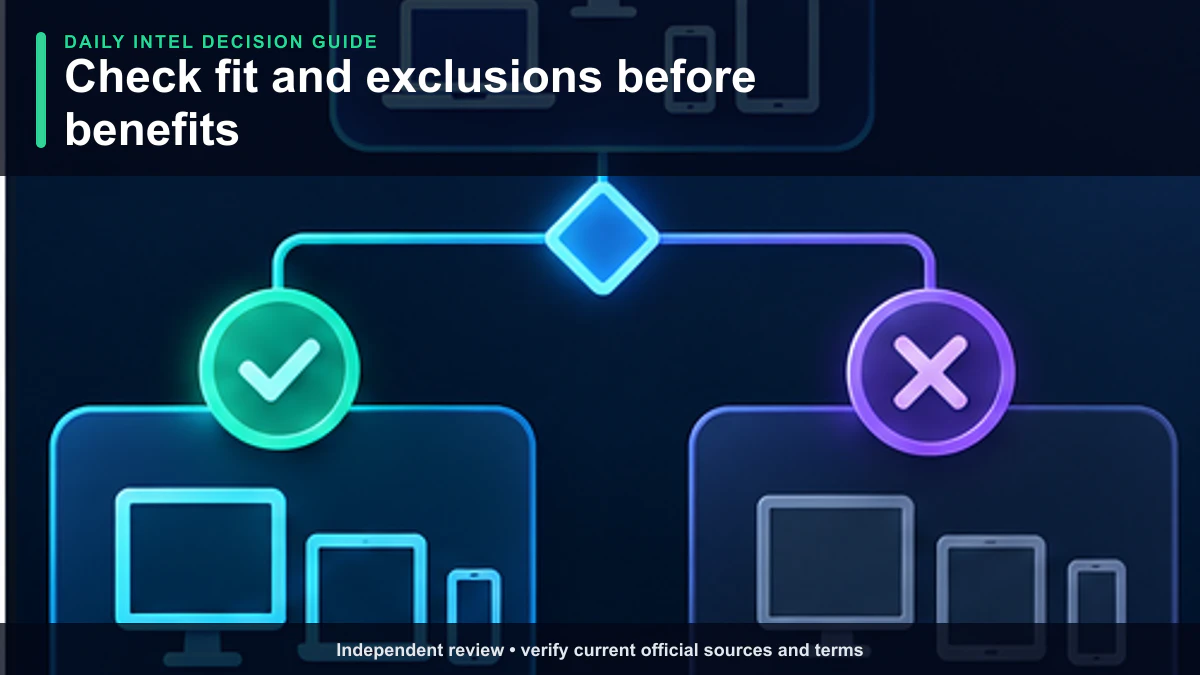
Decision: The first decision is not whether Bark has many features. It is which job the household needs to perform.
Screen-time scheduling, social-media monitoring, app blocking, location sharing, and choosing a child's first connected device are separate jobs. A product can fit one and fail another. Hardware, account access, operating-system rules, permissions, connectivity, and family routines can change the result.
Bark says its parental controls help families monitor social media, manage screen time, and track location. Its official page also says Bark scans texts, more than 30 social-media apps, browsers, and emails. It describes artificial-intelligence-powered alerts in more than 29 categories. Artificial intelligence, or AI, means software that Bark says evaluates content and context to identify potentially concerning activity.
Those statements establish Bark's intended utility. They do not establish detection accuracy, false-alert rates, missed events, response speed, or equal coverage across devices and accounts.
Bark must therefore clear four gates.
- The exact Bark product must match the household's primary job.
- The required devices, operating systems, accounts, permissions, language, and connectivity must be supported.
- The combined subscription, service, data, and device commitment must fit the budget.
- Renewal, cancellation, refunds, support, privacy, and any remaining hardware obligation must be acceptable before activation.
The packet provides useful evidence for the first three gates. It does not fully clear the fourth.
A general compatibility statement is not enough when a feature depends on a specific workflow. An iPhone may fall within Bark's compatibility list, for example, while deeper monitoring still depends on Bark Sync under Bark's own description. The relevant question is not simply whether Bark supports iPhones. It is whether the documented iPhone workflow covers the family's actual need.
The same discipline applies to Android devices, social-media accounts, location functions, and connected hardware. Each essential dependency should be confirmed before price becomes the deciding factor.
What the Bark Page Actually Offers
Product identity: Bark Parental Controls is a brand-level product family rather than one exact service variant. The official destination recorded in the packet resolved to Bark's secure canonical website during capture, but the individual options have different ownership models.
Bark App
The Bark App is the bring-your-own-device path. Bark says one subscription covers every child, account, and device in a family without a stated numerical limit. It presents the app for iOS and Android and attributes content monitoring, screen-time management, app and website blocking, and location functions to its service.
The supplied FAQ lists iPhones, iPads, Android phones, Android tablets, laptops, computers, Chromebooks, and Amazon Fire tablets as compatible device categories. It does not provide model numbers, minimum operating-system versions, or a feature-by-device table. Compatibility with a category therefore does not prove that every Bark function works identically on every listed device.
Bark Phone and Bark Phone Pro
Bark Phone and Bark Phone Pro combine hardware, wireless service, and parental controls. Bark says its software is built into the phones and cannot be deleted. It lists contact approvals, app-install approvals, remote alarms, daily screen-time limits, and what it calls completely tamper-proof settings as phone-specific functions.
These are Bark claims. The packet contains no independent attempt to remove, disable, or bypass the controls. The absolute-sounding tamper-resistance statement should not be treated as a verified guarantee.
Bark describes the Pro as faster and more durable than the standard phone. The packet does not supply specifications, durability-test methods, or independent measurements supporting that comparison.
Bark Watch
Bark describes Bark Watch as supporting calls, texts, and GPS location while excluding a browser, social media, and games. Those exclusions can be useful when a restricted device is the intended job. They make the Watch a poor substitute when a child needs a general smartphone.
The Watch also has separate device and service payments. Its purchase decision therefore includes more than the advertised monthly service amount.
Bark Sync
Bark Sync is described as a smart charger for iPhones and iPads. Bark says it scans a child's device for potential issues when the device is plugged into it. The supplied FAQ presents Sync as the route to deeper monitoring of texts, photos, videos, and more on iOS.
Bark calls Sync optional. That does not mean it is irrelevant to every iOS buyer. It can be optional to the base subscription while remaining important to a family whose primary need is the deeper iOS monitoring Bark associates with Sync.
The packet does not state scan duration, behavior when Sync is not used, interaction with other charging methods, offline behavior, lock-state requirements, or supported device generations.
Bark Home
Bark Home is positioned for managing internet-connected devices in the home, including televisions and gaming consoles. The packet provides monthly and one-time prices but does not explain router requirements, installation steps, network limitations, replacement terms, warranty coverage, or how functions behave when a device leaves the home network.
A responsible Bark Parental Controls review cannot merge these paths into one verdict. The correct product must be named before compatibility, price, or ownership friction can be judged.
Process and Requirements: From First Click to an Active Bark Account
The evidence documents part of the customer journey. It does not establish the complete signup, checkout, activation, support, renewal, or cancellation experience.
1. Choose the product path
Bark offers a quiz intended to point families toward a product. The packet does not document its questions, scoring, recommendation rules, or treatment of edge cases. It can be used as a navigation aid, but the evidence does not support treating its result as an independent suitability assessment.
The household should begin by naming one primary job. Examples include monitoring content, managing screen time, blocking apps or websites, sharing location, limiting available functions, or providing a first phone.
2. Confirm geographic eligibility
Bark says the App is available in the United States, including US territories, South Africa, and Australia. It says Bark Phone is available only to families in the United States.
The affiliate contract separately permits United States traffic. That is a commercial restriction on the documented promotion. It does not redefine Bark's stated product availability in other countries.
3. Confirm device and account compatibility
Bark supplies a broad device-category list, but the packet lacks minimum operating-system versions, supported models, and a complete current account matrix. It also lacks a function-by-device comparison.
A family should therefore confirm the exact phone, tablet, computer, operating-system version, social account, and required function. The statement that Bark scans more than 30 social-media apps does not establish that a particular account is included or that every function is available for it.
4. Install the required components
Bark says the Bark Kids app must be installed on the child's iPhone, iPad, or Android device. On iOS, Bark attributes app and site blocking plus location to the child app. It directs families to Bark Sync for deeper monitoring of texts, photos, videos, and more.
On Android, Bark says the child app enables content monitoring, screen-time management, app and website blocking, and location. The packet does not provide Android-version requirements, manufacturer-specific restrictions, permission lists, or installation-source details.
5. Select and pay for the plan
The App, Sync, Home, Watch, Phone, and Phone Pro carry different commitments. The Watch and both Phone variants include device payments lasting 24 months in the supplied official answers. Their required service charges are separate.
The packet does not provide the full checkout flow, taxes, shipping charges, credit requirements, payment-failure rules, or the treatment of a hardware balance after service cancellation. The absence of those details does not prove an unfavorable term. It means the term was not established by the supplied evidence.
6. Activate and manage the service
Bark says parents can manage settings through a parent dashboard. It also describes Bark Assistant as a plain-language interface for asking questions and making changes. Official examples include pausing a phone, blocking YouTube, setting a bedtime, and changing content filtering.
These examples identify designed functions. No supplied evidence shows the interface being used, measures response accuracy, or confirms that every example is available across every product and configuration.
7. Obtain support or leave
Bark says customers can contact the company for help. The packet does not state support hours, response targets, escalation procedures, or a measured resolution rate.
It also does not supply complete renewal language, cancellation steps, the point at which billing stops, a general refund policy, or the treatment of financed devices after cancellation. Those questions belong before payment, not after a problem appears.
Claims That Need a Stress Test
Evidence boundary: Bark's main positioning is that parental controls are made easier and can help keep a family safer online. Both parts remain seller claims in this packet.
Ease is a workflow question. A meaningful test would record installation time, required permissions, connected accounts, hardware dependencies, recurring maintenance, disconnected accounts, device changes, and the time needed to review alerts. No such test was supplied.
Bark's dashboard and Assistant may reduce menu navigation as designed. That does not by itself establish that the entire setup and maintenance process is easy for a particular household.
The online-safety language also needs boundaries. Monitoring software may surface information or enforce settings. The supplied evidence does not show that Bark detects every relevant event, that every alert is correct, or that a particular response follows from an alert.
No sensitivity, specificity, false-positive rate, false-negative rate, or independent validation appears for Bark's AI categories. Sensitivity would describe how often a test detects relevant material that is present. Specificity would describe how often it avoids flagging material that does not meet the target condition. The packet supplies neither measure.
Bark says it scans texts, more than 30 social-media apps, browsers, and emails. A useful verification would require a current platform list, supported account types, operating-system limits, and a function matrix. The headline count cannot answer whether one family's critical account is supported.
Bark says its AI understands context rather than only keywords. Testing that claim would require category definitions, a disclosed test method, representative examples, and measured results. None is included.
The official FAQ says Bark's algorithms are trained in English, Spanish, and Afrikaans. That is a relevant compatibility statement. It does not prove equal performance across those languages or establish behavior in mixed-language conversations, slang, or other languages.
Bark describes personalized insights and expert recommendations with alerts. The packet does not identify the experts, explain the review process, or distinguish automated guidance from human input. The statement should remain attributed to Bark.
The page includes company-reported scale and detection figures. It refers to more than seven million families protected in one location, more than seven million children covered in another, more than six million self-harm situations detected, more than nine million bullying situations detected, and 11.1 billion messages, videos, and searches analyzed in 2025.
Those figures should not be blended or converted into outcome evidence. The packet provides no methodology, overlap rule, deduplication method, independent audit, accuracy measure, severity definition, or evidence that a detected situation produced a successful intervention.
Bark also says its website uses SSL encryption and that analyzed data is stored in an encrypted database. The packet contains no independent security assessment, technical architecture, access-control review, retention schedule, deletion procedure, or certification. The claims establish Bark's stated practices, not independently verified security.
Finally, Bark says its phone controls cannot be deleted and uses completely tamper-proof language. No independent penetration test or bypass attempt was supplied. The evidence does not justify turning that statement into an unqualified editorial conclusion.
The Proof Ladder Stops Earlier Than the Marketing
Evidence boundary: The strongest packet evidence establishes identity, offer structure, official prices, stated compatibility, and the commercial relationship.
The first level confirms that Bark is an identifiable provider with an official website. The next records its product paths, device categories, geographic statements, trained languages, and October 2026 prices. These facts make the purchase question more specific.
The next level consists of manufacturer-attributed functions. Bark says the App monitors content, manages screen time, blocks apps and sites, and tracks location. Bark says Sync scans an iOS device when it is plugged in. Bark says its phones integrate controls that cannot be removed. These statements describe the intended mechanism. They are not independent test results.
Selected testimonials visible on Bark's page do not establish representative performance. The packet provides no sampling method, verification process, complete customer histories, or representative dataset. This review therefore does not use those testimonials as proof or infer a rating from them.
The affiliate contract sits on a separate commercial level. It records content permission, qualifying-action compensation, and permitted United States traffic. It does not establish monitoring quality, compatibility, privacy, support, household fit, or value.
The missing levels are material. There is no reproducible finished-service test, independent technical assessment, support-response dataset, cancellation test, independent privacy review, or sourced comparison with another parental-control service.
The supported conclusion is narrower than Bark's marketing position. The official evidence describes a substantial product family and several concrete workflows. It does not establish how reliably the finished service performs those jobs.
Price, Recurring Charges, Refunds, and the Real Commitment
Commercial check: Bark's price depends on the chosen product path. A headline monthly figure may exclude another required component or device payment.
Bark App and Bark Sync
The supplied official FAQ lists the Bark App at $14 per month or $99 per year for iOS and Android. Bark says one subscription covers every child, account, and device in the family without a stated numerical limit. The product page also advertises a seven-day free trial.
The packet does not supply the trial's eligibility rules, payment-authorization process, conversion timing, cancellation deadline, or treatment of former subscribers.
Bark Sync is listed in the FAQ at $6 per month or $49 per year and requires a Bark App subscription. Under the captured figures, an annual App-plus-Sync path requires both listed annual charges before any unlisted charge. Monthly billing likewise requires both listed monthly charges. These are relationships within the snapshot, not verified current checkout totals.
The main product grid separately shows Bark Sync at $6 per month with a 60-day money-back guarantee. It does not display the $49 annual option in that same grid entry. The FAQ supplies the annual figure. Both presentations should be checked on the current offer rather than treated as one complete set of guarantee terms.
No full guarantee conditions were supplied. The packet does not establish eligibility, request steps, return requirements, shipping responsibility, exclusions, or the timing of a refund.
Bark Home
Bark Home is listed at $6 per month or a $79 one-time purchase. The evidence does not explain which continuing functions accompany the one-time option, whether an account remains necessary, or what warranty and replacement terms apply.
Bark Watch
The captured FAQ lists a $12 monthly device payment for 24 months and a separate $15 monthly service plan. Both listed charges apply during the device-payment period.
Bark says the Watch plan includes cell service, parental controls, and Bark Premium for the family, covering unlimited children and devices. It also says the Watch device can be paid off early by contacting Bark. The packet does not explain the early-payoff calculation or what happens to the remaining device obligation if service is canceled.
Bark Phone and Bark Phone Pro
The standard Bark Phone has a $15 monthly device payment for 24 months. Bark Phone Pro has a $25 monthly device payment for 24 months. Bark says there is no activation fee, but a separate wireless plan is required.
The captured wireless options are:
- $29 per month for unlimited talk and text, with no internet, app store, or games.
- $39 per month for unlimited talk and text with Wi-Fi-only use and no mobile data.
- $49 per month with 4 GB of mobile data.
- $59 per month with 8 GB of mobile data.
- $79 per month with unlimited data.
Bark says data speeds are reduced after 35 GB in a monthly billing cycle. After 50 GB, speeds may be reduced further or the data connection may be turned off for the rest of that cycle.
At the listed starting plan, each phone path combines its device payment with the separate service charge during the 24-month device schedule. Selecting a listed higher-data plan changes the stated service charge. These descriptions exclude any charge not established in the packet.
What the snapshot does not settle
The evidence does not provide complete automatic-renewal language, a general refund policy, cancellation instructions, return rules, warranty terms, or the effect of service cancellation on phone and watch device balances. It also does not establish every checkout charge.
That distinction matters. Price is the amount displayed for a component. Commitment includes required subscriptions, hardware schedules, renewal, exit terms, and the consequences of cancellation.
The FTC's disclosure guidance says financial relationships should be disclosed clearly and in a way that is hard to miss. Daily Intel's commission relationship is commercial provenance. It does not strengthen Bark's product evidence.
Commission disclosure: Daily Intel may earn a commission if you use the offer surface below and complete a qualifying action. This does not guarantee Bark's suitability or performance.
Where Ownership Friction Is Most Likely
Product selection is the first likely friction point. A buyer can choose the broad parental-control category and still select the wrong Bark workflow.
The iOS path is the clearest example. Bark says the child app supports app and site blocking plus location. It directs families to Bark Sync for deeper monitoring of texts, photos, videos, and more. Under Bark's description, that deeper workflow occurs when the iPhone or iPad is plugged into Sync.
The packet does not establish scan duration, what happens between scans, behavior with other charging methods, offline performance, required lock state, or device-generation limits. A family should verify those details if deeper iOS monitoring is the main job.
Android is described as a more direct app-based path. Bark says its Android child app supports content monitoring, screen time, app and website blocking, and location. The packet does not list supported Android versions, manufacturer-specific restrictions, required permissions, or the effect of battery-management settings.
Account coverage is another possible friction point. More than 30 social-media apps is a broad count, not a substitute for checking each important account. The supplied extract does not include the complete current platform list or feature coverage for each service.
Language may affect fit. Bark names English, Spanish, and Afrikaans as trained languages. The evidence does not establish performance in other languages or in conversations that combine languages, slang, or code switching.
Ongoing permissions and connectivity may create maintenance. The packet does not document how Bark reports disconnected accounts, revoked permissions, offline devices, replacement phones, operating-system changes, or failed scans.
Support is offered but not measured. Bark invites customers to contact the company and directs Watch owners to contact it for early payoff. No supplied source states support hours, available channels, response targets, escalation procedures, or resolution rates.
Privacy deserves direct review because Bark says the service analyzes children's communications and activity. Bark states that its website uses encryption and that analyzed data is stored in an encrypted database. The packet does not supply complete privacy terms, retention periods, deletion procedures, employee-access rules, or an independent security assessment.
These omissions are unresolved questions. They are not proof that Bark has unfavorable practices. Accordingly, the supplied evidence does not verify those practices.
Who Bark Fits and Who Should Keep Looking
Buyer fit: Bark may fit a household that wants several parental-control functions from one provider and is willing to verify the exact workflow. Bark's unlimited-family statement may matter to families with several children, accounts, or devices, provided the selected plan contains the required functions.
The App is the clearest candidate for families keeping existing devices. Android households may prefer the app-based workflow Bark describes. iPhone and iPad households should determine whether blocking and location are enough or whether the Sync charging workflow is necessary and acceptable.
Bark Watch may fit a family that intentionally wants calls, texts, and GPS without a browser, games, or social media. Bark Phone may fit a family that wants a more capable phone with controls integrated into the device and accepts separate wireless and 24-month device payments.
Keep looking if the household requires independently measured detection performance, a documented security audit, guaranteed support response, or complete cancellation terms before purchase. The same applies when a critical account is not explicitly supported, the child's primary language falls outside the three Bark names, or Sync's charging workflow does not fit normal use.
A family should also pause if it cannot determine what happens to a Watch or Phone device balance after service cancellation. A 24-month device schedule creates a different exit risk from a stand-alone app subscription.
Alternatives Can Change the Verdict, but None Were Supplied
Decision: The packet contains no current source for a competing parental-control service. Naming a winning competitor or publishing a feature comparison would require unsupported facts.
The supported alternatives are therefore decision paths, not named products. A bring-your-own-device service may be preferable when replacing hardware creates unnecessary cost. A restricted Watch or Phone path may be preferable when removing functions is part of the objective. Another provider becomes the stronger candidate if it documents the required device, account, language, price, renewal, refund, privacy, and support terms more clearly.
Waiting is also a valid option. If cancellation, a hardware balance, or a critical compatibility point cannot be confirmed, postponing payment avoids committing before the required evidence is available.
Daily Intel VSL Strategy We Would Test for Bark Parental Controls
This is an original Daily Intel strategy for a possible video sales letter, or VSL. It is not Bark's VSL. The packet contains no evidence that Bark used this script, tested it, or obtained any advertising result from it.
Hook
Start with a concrete mismatch: a parental-control product can list monitoring, screen time, blocking, and location while still failing the household's most important job.
The problem is not necessarily that the product lacks features. It may be that the wrong Bark path was chosen, an account was not supported, an iPhone needed an additional charging workflow, or a hardware payment remained after the family wanted to leave.
The opening should promise a fit check, not a safety outcome. It should tell the viewer that Bark has several documented product paths and that choosing among them requires matching the main job, technical dependencies, and total commitment.
Lead
The lead should establish what is known without overstating proof.
Bark is an identifiable parental-control provider. Its official material presents an App for existing devices, two Phone variants, a Watch, Sync for an iOS charging-and-scanning workflow, and Home for internet-connected devices. The evidence also supplies several prices and compatibility statements.
The missing evidence must be named just as plainly. The packet contains no independent monitoring-accuracy test, finished-service comparison, measured support performance, general refund policy, complete cancellation procedure, or independent security audit.
This creates a practical promise for the VSL: the viewer will learn how to identify the relevant Bark path and the questions that must be answered before paying. The script should not promise that Bark will detect every event or make a family safer.
Mechanism Frame
Use a three-stage decision mechanism: define the job, trace the dependencies, and total the commitment.
First, define one primary job. It could be monitoring content, managing screen time, blocking apps and websites, obtaining location information, or choosing a restricted first device. Secondary features should not compensate for failure at that primary job.
Second, trace the dependencies. Record the child's exact device, operating system, important accounts, language, permissions, connectivity, and normal charging routine. A dependency is anything that must remain available for a feature to operate as described.
Third, total the commitment. Include every required subscription, service plan, data plan, device payment, and additional component. Then verify renewal, cancellation, refunds, warranty, support, privacy, and the treatment of any hardware balance.
This framework offers useful decision control without inventing a performance claim.
Worked Execution
Use a clearly labeled hypothetical household. It must not be presented as a customer, testimonial, or observed result.
A parent plans to give a child an existing iPhone. The main concern is deeper review of texts, photos, and videos. App blocking matters, while location is secondary.
For this hypothetical, the evidence review would not stop at the seller's broad iPhone-support statement. That is too broad for this job.
The evidence-led story separates the functions. Bark says the Bark Kids app supports app and site blocking plus location on iOS. Bark then directs families to Bark Sync for deeper monitoring of texts, photos, videos, and more. Sync scans when the device is plugged into the smart charger, according to Bark.
The purchase has now changed. The relevant snapshot combines the separately listed App and Sync charges before any unlisted charge. The household must also accept the charging workflow and verify the details the packet does not supply.
The parent has several legitimate outcomes. The family may accept the added component and cost. It may decide the child app's stated functions are sufficient. It may compare another current provider. It may wait for Bark to answer unresolved questions.
The story should stop there. It should not invent a successful installation, an alert, a family conversation, or a favorable outcome.
Proof Sequence
The proof section should move from the strongest evidence to the weakest.
Begin with identity and official product paths. Then show the dated prices, device categories, geographic limits, trained languages, and the different iOS and Android descriptions. These facts qualify the offer.
Next, present Bark's functional statements with attribution. Bark says its software monitors content, manages screen time, blocks apps and websites, tracks location, and generates alerts. Bark says Sync scans an iOS device during charging. Bark says its Phone controls cannot be deleted.
Then draw the boundary. No independent test in the packet confirms accuracy, equal performance across devices or languages, tamper resistance, support quality, or safety outcomes.
Selected testimonials should not be used as representative proof. Company-reported scale and detection counts should not be converted into accuracy or outcome claims. Affiliate compensation should not appear as a quality signal.
The strongest available proof is operational specificity, not efficacy: exact product paths, dated prices, separate device obligations, stated device categories, geography, and language coverage.
Objections
The first objection is complexity. The answer is to reduce the decision to one primary job, one dependency list, and one commitment calculation. Do not simply repeat Bark's ease claim.
The second objection is compatibility. The answer is to verify the exact device and account. A broad list or a count of supported social apps is not enough.
The third objection is iOS friction. The answer is to distinguish what Bark attributes to the child app from the deeper monitoring it associates with Sync. The buyer can then decide whether the additional component and charging routine fit normal use.
The fourth objection is price. The response should add required components. The App price alone is incomplete when Sync is central. A Phone service price is incomplete while a device payment continues.
The fifth objection is trust. The answer is not an invented endorsement. It is a clear separation between official product statements and missing independent evidence.
The sixth objection is exit risk. The script should say that complete cancellation, general refund, warranty, and post-cancellation hardware terms were not supplied. Those points should be confirmed before payment.
The seventh objection is privacy. Bark's encryption statements can be reported with attribution. The buyer should still review current retention, deletion, access, and privacy terms because the packet does not contain them.
Offer Logic and CTA
Present Bark as several offer paths, not as one monthly price.
Existing-device users may begin with the App. Deeper iOS monitoring may add Sync and a physical routine. Home has monthly and one-time prices in the snapshot. Watch and Phone paths combine required service with device payments.
Do not add urgency. The packet supplies no verified deadline, expiring discount, inventory restriction, or scarcity condition.
Disclose the affiliate relationship before the offer surface. State that Daily Intel may receive compensation after a qualifying action and that this does not establish product quality.
The CTA should request verification rather than immediate purchase. Ask the viewer to confirm the exact product, device, operating system, accounts, language, required hardware, total current price, renewal, cancellation, refunds, warranty, support, privacy, and any hardware balance.
The final VSL rule is falsifiable. Bark remains a candidate when its documented path covers the primary job on the household's exact setup at an acceptable commitment. If an essential dependency or exit term fails that check, the decision changes.
Frequently Asked Questions
Is Bark Parental Controls legitimate?
A: Bark is an identifiable parental-control provider with an official website and documented products, prices, and compatibility statements. That establishes its commercial identity, not independent proof of performance. The supplied packet contains no finished-service test, verified support metrics, or independent assessment of Bark's monitoring accuracy.
How much does Bark Parental Controls cost?
A: The October 2026 official snapshot lists the Bark App at $14 per month or $99 per year. Bark Sync is listed at $6 per month or $49 per year and requires the app. Bark Home is shown at $6 per month or $79 as a one-time purchase. Phone and watch paths add separate service and device payments.
What devices does the Bark App support?
A: Bark says its app is compatible with iPhones, iPads, Android phones, Android tablets, laptops, computers, Chromebooks, and Amazon Fire tablets. That device-category list does not establish identical functions on every device. The supplied material describes an additional Bark Sync workflow for deeper monitoring on iPhones and iPads.
Does Bark monitor iPhones the same way it monitors Android devices?
A: The supplied official answers describe different workflows. On iOS, Bark attributes app and site blocking plus location to the Bark Kids app and directs families to Bark Sync for deeper monitoring of texts, photos, and videos. On Android, Bark says the child app enables content monitoring, screen time, blocking, and location.
Can I cancel Bark and get a refund?
A: The packet does not provide a complete cancellation procedure or general refund policy. It shows a seven-day Bark App trial and a 60-day money-back guarantee beside Bark Sync, but it does not supply the full conditions. Confirm cancellation timing, eligibility, return requirements, hardware obligations, and final charges before subscribing.
What are the best Bark Parental Controls alternatives?
A: No competing service has a current source in the supplied evidence, so this review cannot responsibly rank named alternatives. A better option would be one that more clearly documents the required device and account support, equivalent controls, total recurring cost, cancellation method, refund terms, privacy terms, and supporting evidence for your household.
Sources and Evidence Notes
Evidence Card 1: Bark official product page
This official source establishes the reviewed service's identity and Bark's attributed description and claims. It does not independently establish efficacy, performance, compatibility, support quality, or complete consumer terms.
Commission disclosure: Daily Intel may earn a commission if you use the captured publisher link below and complete a qualifying action.
Evidence Card 2: Katalys publisher link for Daily Intel
The captured Katalys publisher link establishes the exact commercial URL recorded for Daily Intel. It was deliberately not opened, so its redirect and destination remain unverified. This commercial relationship and link provenance provide no evidence of Bark's efficacy, suitability, or value.
Evidence Card 3: FTC Disclosures 101
This government guidance supports clear disclosure of Daily Intel's financial relationship near the commercial surface. It does not assess Bark, its products, performance, prices, or terms.
Evidence Card 4: Bark Terms of Service
This official terms page is the seller-controlled reference for service conditions. It is cited so the reader can inspect the operative terms directly; it does not establish monitoring accuracy, safety outcomes, support quality, or customer satisfaction.
The packet contains four evidence records. The affiliate redirect was captured but not opened, so its destination remains unverified. No packet source independently tests Bark or supplies measured monitoring accuracy or support-performance evidence.
Final Take: What Would Change This Verdict
Decision: Bark earns a place on a shortlist, not a blanket recommendation.
The official evidence shows a developed product family with documented App, Sync, Home, Watch, Phone, and Phone Pro paths. It supplies concrete October 2026 prices, device categories, geographic limits, trained languages, and different iOS and Android workflows.
It does not show monitoring accuracy, missed-event rates, false-alert rates, measured support performance, easy cancellation, or independently assessed security. It also does not support a current named-competitor ranking.
The verdict would become more favorable if independent, reproducible testing documented useful finished-service performance across supported devices and languages, and if complete renewal, cancellation, refund, warranty, privacy, support, and hardware-balance terms were supplied clearly.
It would become less favorable if current checkout terms conflict with the captured prices, critical accounts have narrower coverage than expected, the Sync routine does not fit the household, or cancellation leaves an unclear hardware obligation.
The decision rule is simple: Bark fits when the documented product path covers the family's primary job on its exact devices and accounts, at an acceptable total commitment with a clear exit. If a required dependency fails, the verdict changes.
This article is for informational and educational purposes only. Daily Intel is independent and may earn an affiliate commission. Bark Parental Controls did not write, review, or control this article.
Comments(0)
No comments yet. Members, start the conversation below.
Related reads
 reviews
ARMRA Colostrum Review: Evidence, Dose Gaps, Price, and Verdict
ARMRA’s 120-serving colostrum powder comes with notable manufacturer-reported survey percentages. However, the undisclosed amount per serving and a materially different ingredient trial leave the finished product’s highlighted outcomes unproven.
Read reviews
Olly Goodbye Stress Review: Label Claims vs. Evidence
OLLY Goodbye Stress combines GABA, L-theanine, and lemon balm extract in a Berry Verbena gummy aimed at occasional stress, not sleep. Here's what the label discloses, what a real L-theanine trial found, and exactly where the evidence stops.
Read reviews
Kaged Pre-Kaged Sport Review: Does the Citrulline Study Fit?
Kaged Pre-Kaged Sport provides 3.5 grams of fermented L-citrulline in each 13-gram scoop. The supplied trial tested a higher dose of isolated L-citrulline and found no performance benefit, so it cannot prove whether this finished formula works.
Read