Joint Genesis Review and Ads Breakdown: A Research-First Look
Somewhere in the opening seconds of the Joint Genesis Video Sales Letter, a narrator makes a claim calculated to stop a viewer mid-scroll: joint decay, the VSL insists, may have "nothing to do with so-called wear and tear", directly contradicting what most people's physicians…
8,226+
Videos & Ads
+50-100
Fresh Daily
$29.90
Per Month
Full Access
12.5 TB database · 72+ niches · 28 min read
Introduction
Somewhere in the opening seconds of the Joint Genesis Video Sales Letter, a narrator makes a claim calculated to stop a viewer mid-scroll: joint decay, the VSL insists, may have "nothing to do with so-called wear and tear", directly contradicting what most people's physicians have told them for decades. The move is deliberate. It is not an accident of phrasing or an overenthusiastic copywriter straying from the brief. It is, rather, the precise application of a well-documented persuasion structure known as the false-enemy reframe: identify the belief your target audience already holds, declare it a lie promoted by an untrustworthy establishment, and position yourself as the bearer of suppressed truth. If that sounds familiar, it should, it is the same rhetorical architecture used in everything from political messaging to alternative health marketing for the better part of a century. What makes the Joint Genesis VSL worth studying is how competently it executes that architecture within a short-form sales letter, and what it reveals about the current state of the joint supplement market.
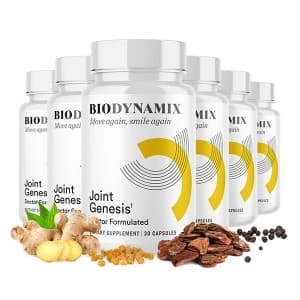
The product at the center of this analysis is Joint Genesis, a daily oral capsule developed by Biodynamix (also rendered as BioDynamics in the VSL). The letter is voiced by a figure introduced as Dr. Mark Wines, who serves simultaneously as the product's spokesperson, its stated formulator, and its closing authority. The VSL is built around a single central mechanism, the concept of "joint jello," a lay term for synovial fluid, and a single hero ingredient: a patented compound called Mobilee, which the letter credits with multiplying hyaluronan levels in the joints by a factor of ten. That specificity of mechanism, that reduction of a complex biological problem to a single memorable metaphor and a single proprietary fix, is characteristic of a sophisticated direct-response copywriting tradition. It is worth examining closely before any purchasing decision is made.
This piece approaches the Joint Genesis VSL the way a researcher approaches a primary source: with genuine curiosity about what the letter says, disciplined skepticism about what it implies, and honest assessment of where the clinical record agrees or diverges. The goal is not to dismiss the product and not to endorse it, but to give the reader who is actively researching it the most complete analytical picture available. That means evaluating the hook structure, the ingredient science, the authority signals, the offer mechanics, and the psychological levers being pulled, all of it together. The central question is straightforward: does the science behind Joint Genesis support the pitch being made, and is the pitch itself constructed honestly?
What Is Joint Genesis?
Joint Genesis is a dietary supplement in capsule form, manufactured and sold by Biodynamix, a direct-to-consumer supplement brand operating primarily through online Video Sales Letters and paid digital advertising. The product is positioned squarely in the joint health category, targeting adults who experience what the VSL calls "occasional joint discomfort", a regulatory-friendly phrase that encompasses a wide range of experiences, from mild morning stiffness to more persistent mobility limitations associated with osteoarthritis or cartilage degradation. The supplement's primary differentiator, as stated in the letter, is its delivery of an 80-milligram dose of Mobilee, a patented hyaluronan-rich ingredient derived from rooster comb extract, at the dosage used in its clinical research program.
The product's market positioning is notable for what it refuses to be. It is not presented as a glucosamine-and-chondroitin formula, the dominant paradigm in joint supplementation for the past thirty years, nor does it position itself against the anti-inflammatory turmeric-and-boswellia wave that swept the category more recently. Instead, Joint Genesis stakes its claim on a mechanistically distinct argument: that the primary driver of joint decline is not cartilage erosion per se but the degradation of synovial fluid quality, specifically the loss of hyaluronan concentration in that fluid. This is a genuine scientific argument, not a wholly invented one, though the degree to which it is proven versus plausible is something the ingredients section of this analysis addresses in detail.
The stated target user is an adult, likely over forty-five, who has noticed declining joint comfort or flexibility and who has been unsatisfied with conventional explanations or previous supplement interventions. The VSL is designed to reach someone who is actively searching for an alternative framework, not a first-time supplement buyer, but someone sophisticated enough to have tried something before and found it inadequate. That positioning has significant implications for the copywriting structure the letter deploys, as the hooks section explores.
The Problem It Targets
The problem framed by the Joint Genesis VSL is joint discomfort as experienced during aging, and it is a problem with genuinely enormous commercial and epidemiological weight. According to the Centers for Disease Control and Prevention (CDC), approximately 58.5 million American adults have been diagnosed with some form of arthritis, making it one of the most common chronic conditions in the country. The global market for joint health supplements was valued at over eight billion dollars in 2022 and continues to grow, driven by aging demographics in North America, Europe, and Asia-Pacific. This is not a niche audience, it is one of the largest addressable markets in consumer health.
What the VSL does with this epidemiology is instructive. Rather than cite prevalence figures to build empathy, it deploys them implicitly: the phrase "if you or anyone you know" in the opening line is a probabilistic near-certainty for most viewers over fifty, ensuring near-universal identification with the problem before the pitch begins. The letter then performs a critical reframe, it does not dispute that joint pain is real, widespread, and worth addressing. Instead, it disputes the cause that the viewer has been assigned by the medical mainstream. The villain of the narrative is not aging itself, but the "wear and tear" explanation, which is characterized as something "your doctor or the mainstream media" has told you. This is a textbook false-enemy construction: the problem is real, the villain is the wrong explanation (and the authority figures who propagated it), and the hero is the brand that knows the truth.
The underlying biology the VSL invokes, synovial fluid and its role in joint health, is real and well-documented in the scientific literature. Synovial fluid is a viscous, lubricating substance secreted by the synovial membrane in joint cavities. Its primary components include hyaluronan, lubricin, and phospholipids, and its mechanical properties are critical to joint function. Research published in journals including Osteoarthritis and Cartilage and Arthritis & Rheumatism has confirmed that hyaluronan concentration and molecular weight in synovial fluid decline with age and with osteoarthritis progression. The VSL quotes a Nutrition Journal study finding "diminished hyaluronin concentrations" in people with age-related joint decay, which is consistent with established science. The letter does not fabricate the problem. Where it becomes more contentious is in the degree to which an oral supplement can meaningfully reverse this process, which is where mechanism evaluation becomes essential.
The VSL also gestures toward inflammation as a secondary driver of joint decline, mentioning an "unhealthy inflammatory response" among the harms caused by thin synovial fluid. This is a well-accepted element of osteoarthritis pathophysiology: synovitis, or inflammation of the synovial membrane, is now understood to contribute to both pain and structural deterioration. By naming inflammation without leaning on it heavily, the letter stays scientifically defensible while leaving room to appeal to viewers who associate joint pain with inflammation as a general concept.
Curious how the persuasion architecture across this VSL compares to other joint supplement pitches? Section 7 breaks down every psychological mechanism at work, with the specific theoretical framework behind each one.
How Joint Genesis Works
The mechanism proposed by Joint Genesis is, at its core, a replenishment argument: as the body ages, hyaluronan concentrations in synovial fluid decline; the patented ingredient Mobilee, taken at 80 milligrams daily, restores those concentrations, thereby restoring the protective and lubricating qualities of synovial fluid. The VSL supports this with a specific and striking claim: that Mobilee "multiplies hyaluronin levels in the joints by a factor of 10." This is the kind of numerical claim that functions as the spine of the entire argument, it is memorable, it is falsifiable in principle, and it carries enormous weight if accurate.
Mobilee is a real, commercially available ingredient developed by Bioiberica, a Spanish biotech company specializing in animal-derived joint health compounds. It is produced from rooster comb (Gallus gallus) and is standardized to contain a high concentration of hyaluronan along with collagen and chondroitin sulfate. Bioiberica has funded and published a research program for Mobilee that includes multiple human clinical trials, some of which are randomized and placebo-controlled. A study published in Clinical Nutrition by Méndez and colleagues found significant improvements in joint function and pain scores in women with knee discomfort following 80mg daily Mobilee supplementation over twelve weeks. The ingredient is not fictional, and its clinical backing is more substantive than what most proprietary supplement ingredients can claim.
The more scientifically nuanced question is the "10x" hyaluronan claim and the bioavailability pathway. Hyaluronan taken orally has historically been viewed with skepticism by some researchers because the molecule is large and structurally complex, raising doubts about intestinal absorption in its intact form. However, more recent research has complicated that simple dismissal. Studies using isotope-labeled hyaluronan, including work referenced in the Journal of Agricultural and Food Chemistry, suggest that orally ingested hyaluronan fragments are absorbed and may stimulate endogenous hyaluronan production, rather than delivering intact molecules to joint tissue directly. The plausible mechanism, then, is indirect: Mobilee may stimulate the body's own synoviocytes (synovial membrane cells) to produce more hyaluronan rather than depositing it there wholesale. The VSL does not explain this distinction, it implies a more direct replenishment than the science currently supports, but the general direction of the claim is not without basis.
Beyond Mobilee, the VSL references a "doctor-formulated blend of other research-backed joint health ingredients" without naming them individually. This is a common VSL pattern: the hero ingredient is named and substantiated in detail, while supporting components remain in deliberate shadow, positioned as a bonus rather than a core claim. This structure concentrates the persuasive argument on the most defensible element while avoiding scrutiny of ingredients that might be less novel or less well-evidenced.
Key Ingredients / Components
The Joint Genesis formulation, as disclosed in the VSL and consistent with publicly available label information, centers on Mobilee with supporting compounds. The full label as disclosed beyond the VSL includes several additional ingredients not named in the letter itself:
Mobilee (Rooster Comb Extract, 80mg): Mobilee is a patented ingredient standardized to contain high-molecular-weight hyaluronan, collagen, and chondroitin sulfate derived from rooster comb. The VSL claims it is backed by 14 randomized, placebo-controlled, double-blind clinical trials. Published research by Méndez et al. (Clinical Nutrition, 2011) and Kalman et al. (Journal of the International Society of Sports Nutrition, 2008) supports improvements in joint comfort and mobility at the 80mg dose. The 10x hyaluronan amplification claim appears to derive from preclinical or synoviocyte-stimulation models and should be understood as a mechanistic hypothesis rather than a directly observed clinical measurement in humans.
Ginger Root Extract: Ginger (Zingiber officinale) is an established botanical with anti-inflammatory properties mediated through inhibition of COX-2 and 5-LOX enzymes. A meta-analysis published in Osteoarthritis and Cartilage (Bartels et al., 2015) found modest but statistically significant reductions in pain and disability scores for osteoarthritis patients using ginger supplementation. It is a plausible and well-studied complement to a synovial-fluid-focused formulation.
Boswellia Serrata Extract: Boswellia is a resin extract with strong clinical support for joint comfort, particularly in osteoarthritis of the knee. A double-blind, placebo-controlled trial published in Phytomedicine (Kimmatkar et al., 2003) found significant reductions in pain and improvements in function with 333mg daily supplementation. The active compounds, boswellic acids (particularly AKBA), inhibit 5-lipoxygenase, a key enzyme in the leukotriene inflammatory pathway.
BioPerine (Black Pepper Extract): BioPerine is a standardized piperine extract from black pepper, included primarily as a bioavailability enhancer. Research published in Planta Medica (Shoba et al., 1998) demonstrated that piperine significantly increases the bioavailability of curcumin and other compounds, and it is frequently included in supplement formulations to improve absorption of co-administered ingredients. Its inclusion is mechanistically coherent given that Mobilee's oral bioavailability questions make absorption enhancement relevant.
Pine Bark Extract: Oligomeric proanthocyanidins (OPCs) from pine bark exhibit antioxidant and anti-inflammatory activity. A controlled trial published in Phytotherapy Research found that pine bark extract supplementation reduced pain scores in patients with mild to moderate knee osteoarthritis. It is a reasonable supporting ingredient, though the evidence base is thinner than that for Boswellia.
Hooks and Ad Angles
The main opening hook of the Joint Genesis VSL, the claim that "joint decay may have nothing to do with so-called wear and tear, despite what your doctor or the mainstream media might have told you", is a precise example of what Eugene Schwartz identified in Breakthrough Advertising (1966) as a Stage 4 or Stage 5 market sophistication move. At these stages, the buyer has heard every direct claim ("relieves joint pain"), every mechanism pitch ("supports cartilage"), and every celebrity endorsement the category can produce. They have become, in Schwartz's taxonomy, immune to conventional pitch structures. The only copy that penetrates is copy that presents a new enemy or a new mechanism, something that reframes what the buyer thought they already understood. Telling a joint pain sufferer that their doctor's explanation is wrong is not a shock tactic for its own sake; it is a calculated attempt to break the pattern of skeptical dismissal that sophisticated buyers in a crowded category have developed as a cognitive defense.
The secondary structural move, naming the mechanism "joint jello", functions as what Chip and Dan Heath would call a concrete anchor: a sticky, sensory metaphor that gives an abstract biological concept a physical reality in the mind. Once a viewer accepts that their joint fluid is meant to be thick and jellylike, and that it is progressively drying out, the emotional register shifts from abstract concern to visceral unease. That shift is the psychological engine of the middle section of the VSL, and it is why the metaphor is introduced before any ingredient or solution is named. The problem must be felt before the solution can be wanted.
Secondary hooks observed in the VSL:
- "Scientists now call it your protective joint jello, and it's disappearing as you age"
- "A world-leading expert has dubbed this molecule the guardian of your joints"
- "Multiplies hyaluronin levels in your joints by a factor of 10"
- "Tested in 14 randomized, placebo-controlled, double-blind clinical studies, the gold standard"
- "You have up to six months to let us know" (risk-reversal hook embedded in the close)
Ad headline variations suitable for Meta or YouTube pre-roll testing:
- "Harvard Research Reveals the Real Cause of Joint Pain (It's Not Wear and Tear)"
- "Your Doctor Has This Wrong: The Molecule That Keeps Joints Young Is Disappearing"
- "One Patented Ingredient, Backed by 14 Clinical Trials, That Multiplies Joint Fluid by 10x"
- "Why 'Wear and Tear' Is the Worst Explanation for Your Joint Pain, And What's Really Happening"
- "Try It for 6 Months, Risk-Free: The Joint Supplement Built Around Real Clinical Science"
Psychological Triggers and Persuasion Tactics
The persuasive architecture of the Joint Genesis VSL is best understood as a sequenced stack rather than a parallel deployment of independent tactics. The letter opens with authority disruption (discrediting the mainstream), shifts to mechanism education (building a new cognitive model), then moves to fear activation (the drying-out synovial fluid), and closes with risk removal (the six-month guarantee). Each stage creates the emotional and cognitive conditions necessary for the next stage to land. Cialdini would recognize the sequencing as a deliberate commitment-and-consistency ladder; a behavioral economist would note that loss aversion is activated before the solution is presented, ensuring that the viewer is already in a threat-response state when the product appears as a rescue.
The overall structure also reflects what marketers in the direct-response tradition call a mechanism-first architecture, a format popularized by Russell Brunson and before him by Gary Halbert, in which the brand's primary job in the first half of the letter is not to sell the product but to sell the explanation of the problem. Once the viewer has accepted the explanation (synovial fluid degrades, hyaluronan depletes, joint jello thins), the product becomes an almost logical conclusion rather than a persuasive claim. This is a more durable persuasion structure than pure emotional appeal because it engages the viewer's rational system rather than bypassing it.
Specific tactics deployed:
False-Enemy Reframe (Contrarian Frame): Rooted in Schwartz's market sophistication theory. The mainstream "wear and tear" narrative is named and dismissed in the opening lines, positioning Biodynamix as truth-tellers against a credulous or misguided medical establishment. The intended effect is to dissolve the viewer's existing framework and create a vacancy that the brand's narrative fills.
Authority Borrowing (Institutional Credibility): Cialdini's principle of authority (Influence, 1984) is deployed twice in rapid succession: first via "Harvard research" (unnamed), then via Dr. JR Levick of the University of London. Neither citation is fabricated, Dr. Levick is a real researcher, but the framing implies a degree of institutional endorsement that the citation itself does not confirm.
Sticky Metaphor / Concrete Language: Chip and Dan Heath (Made to Stick, 2007) demonstrate that concrete, sensory language dramatically increases message retention and persuasive impact. "Joint jello" is the single most strategically important piece of language in the letter, it converts an invisible biological concept into something the viewer can picture degrading.
Loss Aversion Activation: Kahneman and Tversky's Prospect Theory (1979) established that losses are psychologically approximately twice as powerful as equivalent gains. The VSL describes the thinning and drying of synovial fluid as an ongoing loss the viewer is already experiencing, not a future risk but a present deterioration, which is a more powerful emotional driver than describing what the product will add.
Social Proof via Clinical Data: In the absence of customer testimonials, the VSL substitutes scientific trial data as its proof structure. The phrase "14 randomized, placebo-controlled, double-blind clinical studies" functions as a social proof signal by invoking the consensus of the scientific community rather than the consensus of satisfied customers. This is a sophisticated substitution that speaks directly to the skeptical, research-literate buyer the VSL is targeting.
Endowment Effect via Risk Reversal: Thaler's endowment effect predicts that people overvalue things they already feel they own. The six-month guarantee is structured to give the viewer psychological ownership of the outcome, "your success story", before the purchase, reducing the perceived cost of trying.
Scarcity of Mechanism (Not Price): Rather than deploying conventional urgency tactics (limited stock, expiring discounts), the VSL creates urgency through mechanism scarcity, the implicit message that most joint supplements do not target synovial fluid at all, making Joint Genesis the only logical option within its own framing. This is a more sophisticated and less detectable form of competitive exclusion.
Want to see how these persuasion tactics compare across 50+ VSLs in the health supplement space? That's exactly what Intel Services is built to map.
Scientific and Authority Signals
The Joint Genesis VSL makes more substantive use of scientific citation than most supplement letters in its category, which sets a higher analytical bar for evaluation. The letter invokes three distinct authority structures: a reference to "new Harvard research," a named academic authority (Dr. JR Levick of the University of London), and a body of clinical trial data on Mobilee. These deserve individual scrutiny.
The Harvard reference is the weakest of the three. No specific study is named, no authors are cited, no publication date or journal is identified. "According to new Harvard research" is a rhetorical device, it borrows the institutional prestige of Harvard without making a verifiable claim. This is what might fairly be called borrowed authority: real institutions referenced in ways that imply endorsement or specific finding that cannot be traced. Harvard's name has appeared in health marketing copy for decades precisely because it functions as a credibility anchor that few viewers think to verify. A rigorous buyer should treat this reference as unverifiable and evaluate the VSL's other claims independently.
The reference to Dr. JR Levick is substantively stronger. J.R. Levick is a genuine researcher whose work on synovial fluid physiology, including hyaluronan's role in joint lubrication, is documented in peer-reviewed literature. His characterization of hyaluronan as central to joint protection is consistent with his published positions. The VSL's use of this authority is legitimate in that it cites a real expert accurately representing a real position. Whether Dr. Levick has reviewed, endorsed, or is even aware of Joint Genesis is a separate question the VSL does not address.
The Mobilee clinical evidence is the most credible pillar of the letter's authority structure. Bioiberica has published multiple peer-reviewed trials on Mobilee, some independently conducted, including the work of Kalman et al. and Méndez et al. referenced in the ingredients section. The claim of 14 randomized controlled trials is broadly consistent with Bioiberica's published research dossier for the ingredient, though the letter conflates the entire trial history of the ingredient with the specific claims being made about Joint Genesis as a formulation. The ingredient has a real evidence base; the specific formulation does not have independent clinical validation as far as public records indicate. That distinction matters, and a careful reader should hold it.
Dr. Mark Wines, who closes the VSL, is presented as both the product's formulator and its medical endorser. The letter does not detail his specific credentials, specialty, or institutional affiliation beyond the Biodynamics brand. In direct-response health marketing, the practice of featuring a physician spokesperson, real or presented, is a well-established authority-building device. Whether Dr. Wines is a licensed physician and what his clinical background encompasses are questions the VSL leaves deliberately open.
The Offer, Pricing, and Risk Reversal
The Joint Genesis VSL is notable for what it withholds as much as what it reveals. No price is stated in the transcript. This is a deliberate structural choice in certain VSL formats: the viewer is brought through the full educational and emotional arc of the letter before being presented with a price on the order page, at which point the perceived value has been established and the risk of price resistance is lower. The absence of price anchoring within the letter itself is unusual, most VSLs in the joint supplement category employ an "original price / sale price" comparison to manufacture perceived savings, and it signals either a landing-page-based pricing reveal or a multi-tier offer structure resolved at checkout.
The guarantee structure, however, is clearly stated and is one of the more generous in the category. Six months is approximately three to four times the standard thirty-day guarantee common in direct-to-consumer supplements, and it is functionally significant rather than merely theatrical. A six-month window gives the buyer enough time to genuinely evaluate whether the product is working, which removes the most common objection to supplement purchases ("what if I can't feel anything in thirty days?"). It also functions as an implicit confidence signal: a brand willing to offer a six-month refund window on a consumable product is either confident in its results or confident in the low refund-request rate among buyers who reach the six-month mark, both interpretations are commercially coherent.
The risk reversal is framed with a closing line, "So why not put Joint Genesis to the test today, risk-free", that is designed to function as a zero-resistance CTA. The word "test" reframes the purchase as an experiment rather than a commitment, which reduces the psychological weight of the decision and aligns with the broader mechanism-education framing of the letter. No bonuses are mentioned in the VSL transcript, no urgency or scarcity devices are deployed, and no multi-bottle discount structure is detailed, all of which are deferred to the order page.
Who This Is For (and Who It Isn't)
The ideal buyer for Joint Genesis, based on the VSL's framing and formulation design, is an adult between the ages of fifty and seventy-five who experiences regular joint discomfort that has not been adequately addressed by conventional approaches, whether that means prior supplement use, physical therapy, or physician management of mild to moderate osteoarthritis. This is a buyer who reads health content, trusts scientific framing over testimonial-heavy advertising, and is willing to invest in a premium supplement (direct-to-consumer joint supplements in this category typically retail between forty and seventy dollars per bottle) when the clinical rationale is compelling. The six-month guarantee is likely to appeal specifically to a buyer who has been burned by supplements before and wants time to evaluate without financial pressure.
The product's mechanism focus on synovial fluid and hyaluronan also makes it particularly relevant for individuals whose joint discomfort is rooted in inflammation and fluid degradation rather than structural cartilage damage. Someone with advanced osteoarthritis, bone-on-bone joint deterioration, or inflammatory arthritis conditions such as rheumatoid arthritis is likely to find the product's mechanism insufficient for their clinical reality, the VSL appropriately uses the phrase "occasional joint discomfort" rather than therapeutic language, and buyers with diagnosed pathological joint conditions should treat this as a wellness supplement rather than a medical intervention.
Who should probably pass: anyone expecting rapid, dramatic relief from significant joint pathology; anyone allergic to avian-derived ingredients (Mobilee is rooster comb-derived); anyone seeking a low-cost entry-level joint formula; and anyone who requires full transparency about every ingredient and dosage before purchasing, given that the VSL does not disclose the full formulation.
If you're researching multiple joint supplements before making a decision, Intel Services has analyzed the VSLs and ad structures of the most widely marketed products in this category, keep reading.
Frequently Asked Questions
Q: What is Joint Genesis and how does it work?
A: Joint Genesis is a daily oral supplement developed by Biodynamix that delivers 80mg of Mobilee, a patented rooster comb extract standardized to high-molecular-weight hyaluronan, along with a supporting blend of botanicals. The product's claimed mechanism is the restoration of hyaluronan concentrations in synovial fluid, the joint-lubricating "joint jello", to improve joint comfort, flexibility, and function over time. Supporting ingredients include Boswellia serrata and ginger root for anti-inflammatory activity.
Q: Is Joint Genesis a scam?
A: The product is built around a real, commercially validated ingredient (Mobilee) with a published clinical research program, and it is sold through a legitimate brand with a stated six-month refund policy. That said, some of the marketing claims, notably the "Harvard research" reference and the "10x hyaluronan" figure, are either unverifiable or mechanistically oversimplified. Joint Genesis is not a scam in any conventional sense, but it is marketed with the hyperbolic confidence typical of the direct-response supplement industry, and buyers should calibrate their expectations accordingly.
Q: Does Joint Genesis really work for joint pain?
A: Evidence for Mobilee at the 80mg dose shows meaningful improvements in joint comfort and function in clinical trials, particularly for age-related knee discomfort. Whether these effects translate universally, and whether the full Joint Genesis formulation adds meaningful benefit over Mobilee alone, is less clearly established. Results are likely to vary based on the underlying cause and severity of an individual's joint issues.
Q: What are the ingredients in Joint Genesis?
A: The VSL names Mobilee (80mg, rooster comb hyaluronan extract) as the primary active ingredient, plus a "doctor-formulated blend" of unspecified supporting compounds. Publicly available label information for Joint Genesis typically includes Mobilee, Boswellia serrata extract, ginger root extract, pine bark extract, and BioPerine (black pepper extract for bioavailability). Anyone with dietary restrictions or allergies should review the full label before purchasing.
Q: Are there any side effects of taking Joint Genesis?
A: Mobilee and the supporting botanical ingredients in Joint Genesis are generally well-tolerated in clinical research, with no serious adverse events reported in published trials. Individuals with allergies to poultry or bird-derived products should avoid Mobilee, as it is derived from rooster comb. As with any supplement, those on prescription medications, particularly anti-inflammatory drugs or anticoagulants, should consult a physician before use.
Q: Is Joint Genesis safe for long-term use?
A: The clinical research on Mobilee extends to twelve-week trial periods, with no significant safety signals identified. Long-term safety data beyond that window is limited for this specific ingredient. The botanical components (Boswellia, ginger, pine bark) have longer safety records in the literature. Long-term use is unlikely to pose risks for most healthy adults, but the absence of multi-year safety data means this conclusion is based on reasonable extrapolation rather than direct evidence.
Q: What is the refund policy for Joint Genesis?
A: The VSL states a six-month (180-day) satisfaction guarantee: if the buyer is not satisfied for any reason, they are entitled to a full refund within six months of purchase. This is one of the more generous guarantee structures in the direct-to-consumer supplement space and functions as a meaningful risk buffer for first-time buyers.
Q: How does Joint Genesis compare to other joint supplements like glucosamine and chondroitin?
A: Glucosamine and chondroitin have a decades-long evidence base and are the most widely studied oral joint supplements, though large trials (notably the GAIT trial funded by the NIH) found mixed results, particularly for moderate-to-severe osteoarthritis. Joint Genesis takes a mechanistically different approach, targeting synovial fluid quality rather than cartilage matrix directly. The two approaches are not mutually exclusive, but Joint Genesis positions Mobilee as a more targeted and better-evidenced alternative to the traditional glucosamine paradigm.
Final Take
The Joint Genesis VSL represents a mature, well-constructed entry in one of the most competitive categories in direct-to-consumer health marketing. What distinguishes it from the typical joint supplement pitch is not the product alone, though Mobilee is a more credible hero ingredient than most, but the sophistication of the persuasion architecture surrounding it. The false-enemy reframe, the mechanism-education structure, the sticky "joint jello" metaphor, and the six-month guarantee are all deployed with a competence that suggests an experienced copywriting team working with a genuine understanding of their buyer's psychology and prior experiences with the category. This is not a hastily assembled VSL. It is a deliberate study in how to reach a jaded, research-literate buyer in a saturated market.
The product's scientific foundation is genuine in its core elements but overstated at its margins. Mobilee is a real ingredient with a real clinical program, and the synovial fluid mechanism it targets is a legitimate area of joint health science. The "10x hyaluronan" claim is the most aggressive extrapolation in the letter, it likely derives from in vitro or mechanistic research rather than directly observed clinical measurement and should be understood as a theoretical ceiling rather than a guaranteed clinical outcome. The Harvard reference is unverifiable and should be discounted. The formulation as a whole, combining Mobilee with Boswellia and ginger, is mechanistically coherent and unlikely to be harmful for most users; whether it delivers the degree of benefit the VSL implies is a question that individual physiology and baseline joint condition will answer differently for each buyer.
For a reader actively making a purchasing decision: if your joint discomfort is mild to moderate, if you have found glucosamine-based supplements underwhelming, and if you are willing to invest two to three months in a genuine evaluation, the Mobilee ingredient at 80mg has enough clinical backing to make the trial reasonable. The six-month guarantee reduces the financial risk to near zero if the brand honors it as stated. What the VSL cannot promise, and what no honest supplement analysis can promise, is that the mechanisms that work in clinical populations will work in your specific body at this specific moment. That uncertainty is not a critique of Joint Genesis in particular; it is the irreducible reality of nutritional supplementation as a category.
This breakdown is part of Intel Services, an ongoing library of VSL and ad-copy analyses across health, finance, and consumer product categories. If you are researching similar joint supplements or want to understand how other brands in this space structure their pitch, keep reading.
Disclaimer: This article is for research and educational purposes only. It is not medical, legal, or financial advice, and it is not affiliated with the product or its makers. Always consult a qualified professional before making health or financial decisions.
Comments(0)
No comments yet. Members, start the conversation below.
Related reads
 reviews
Olly Goodbye Stress Review: Label Claims vs. Evidence
OLLY Goodbye Stress combines GABA, L-theanine, and lemon balm extract in a Berry Verbena gummy aimed at occasional stress, not sleep. Here's what the label discloses, what a real L-theanine trial found, and exactly where the evidence stops.
Read reviews
Jocko Greens Review: Does One Scoop Match the Evidence?
Jocko Greens is a one-scoop powder with approximately 30 calories and 9 billion colony-forming units of probiotics per serving. Jocko Fuel also confirms ashwagandha extract and makes a digestive-support claim. The harder question is whether the available research matches this specific formula. It does not match closely enough to establish a finished-product outcome.
Read reviews
NooCube Review: Does the 250 mg Bacopa Dose Match the Research?
NooCube is one of the few nootropics that prints a milligram number next to an ingredient instead of hiding it in a blend. This review takes that one number, 250 mg Bacopa monnieri, and checks it against a real trial that used 300 mg in a very different population, then shows exactly where the comparison breaks down.
Read