
Tadalafil review: HealthRX price conflicts and evidence gaps
HealthRX presents tadalafil through an online provider-review and pharmacy-fulfillment service. The evidence supports tadalafil research under defined conditions, but it does not settle the exact prescription, formulation, compounding status, pharmacy, or final price a HealthRX patient would receive.

8,226+
Videos & Ads
+50-100
Fresh Daily
$29.90
Per Month
Full Access
12.5 TB database · 72+ niches · 29 min read
HealthRX tadalafil does not earn an unconditional recommendation from the supplied evidence. The packet verifies tadalafil listings, an online provider-review process, pharmacy-fulfillment claims, and several dated price displays. It does not settle the exact prescription, dose, formulation, quantity, dispensing pharmacy, compounding status, or complete checkout terms a reader would receive.
The largest problem is not whether tadalafil has been studied. It has relevant human evidence under defined conditions. The problem is evidence transfer. The cited research does not identify the exact medication dispensed through HealthRX. It cannot establish that an unspecified HealthRX prescription has the studied dose, formulation, population, route, duration, or use conditions.
The commercial evidence also conflicts. Another packet field records a $62 offer snapshot, while portions of the captured sexual-health page discuss sildenafil. One top-level description associated with the reviewed record belongs to the structured Sildenafil listing, and the packet labels the variant as Sildenafil.
Those conflicts do not prove that HealthRX will dispense the wrong medication. They do mean that this review cannot choose a convenient price or description and present it as settled. A shared page, variant state, or extraction problem could explain the record, but the packet does not establish which explanation is correct.
The bounded verdict is therefore verify before proceeding. A US adult seeking an online prescription pathway may find the process worth investigating. That investigation should stop short of payment until the exact medication, dose, form, quantity, pharmacy, compounding status, first charge, recurring charge, cancellation method, and refund restrictions are clear.
Our view would become more favorable if the prepayment and clinical-review process supplied one coherent product identity and complete billing schedule. It would become less favorable if the standard and daily variants, pharmacy, regulatory status, or recurring terms remained unclear.
Affiliate disclosure: Daily Intel may earn a commission if a reader later uses the disclosed commercial offer link and completes a qualifying transaction. That relationship does not change the evidence limits, the medical boundaries, or the reader’s ability to decline. The commercial link appears only in the article’s controlled offer surface.
Decision snapshot
- Exact product: Tadalafil by HealthRX
- Exact offer snapshot: USD 62
- Evidence boundary: Official sources establish identity, label, offer and manufacturer-attributed claims; they do not establish efficacy.
- Before deciding: Compounded drugs are not FDA-approved. FDA does not verify their safety, effectiveness, or quality before marketing. A compounded drug may be appropriate for a patient whose medical need cannot be met by an FDA-approved drug, but…
This Tadalafil review focuses on the exact product, the current offer, the evidence boundary, and the conditions that should change the decision.

What the HealthRX page actually offers
Product identity: The reviewed commercial destination is the HealthRX tadalafil destination named in the affiliate contract. The broader HealthRX sexual-health page presents a telehealth service rather than an over-the-counter sale.
HealthRX describes an online visit that takes about three minutes. It says an independent US-licensed provider reviews each request and determines whether treatment is appropriate. If a prescription is approved, HealthRX says a US-licensed pharmacy fills it and ships it in plain packaging. The page also advertises free expedited shipping, unlimited provider follow-ups, and a period of three to five days from prescription to delivery.
These are seller statements about the proposed workflow. The packet does not independently document a completed questionnaire, provider decision, prescription, pharmacy fill, shipment, delivery, or follow-up exchange. It also contains no first-hand account from a patient and no verified performance data for the service.
HealthRX’s terms describe the company as a marketplace platform. According to those terms, independently licensed providers deliver medical care through the HealthRX portal, while pharmacies dispense the medication. HealthRX says it does not itself provide medical services or dispense drugs. Clinical decisions remain with the independent provider.
That division matters. Payment is not evidence that an applicant will qualify. HealthRX states that payment does not guarantee a prescription or that medication will be dispensed. A provider may decline care when, in the provider’s professional judgment, treatment would not be medically or ethically appropriate.
The captured page says nothing ships before a physician approves it. That is evidence only of the clinical gate HealthRX describes in its stated process. It does not prove that tadalafil is suitable for every applicant, that the questionnaire captures every relevant risk, or that the resulting medication matches a product used in the cited research.
The page also says no insurance is required. Its captured FAQ states that displayed plan pricing includes the provider visit, medication, and shipping. That is useful commercial context, but it does not establish which tadalafil variant applies, whether the amount is a one-time or recurring charge, or whether a dose change would alter the price.
The offer should therefore be understood as access to a review and fulfillment pathway. It is not a guaranteed prescription, a verified outcome, or proof that a specific formulation is appropriate for a particular reader.
The exact tadalafil version is still unresolved
A drug name is not a complete product identity. A responsible assessment also requires the dose, dosage form, directions, frequency, quantity, dispensing pharmacy, and regulatory status of the medication.
The packet contains at least two tadalafil listings. Structured data describes standard Tadalafil as remaining in the system for up to 36 hours, but the verified fact card supplies no separate standard-listing price. It separately describes Tadalafil Daily as an everyday option and displays $62. Captured visible text associates the daily option with one tablet daily, a low dose, a one-month subscription, and 30 doses per month.
Those details cannot automatically be transferred between the two listings. The evidence does not show that the standard listing contains 30 doses, renews monthly, uses the same strength, or follows the same schedule as Tadalafil Daily. It also does not establish which listing the tracked destination selects before or after provider review.
A top-level packet fact records a $62 offer snapshot for the reviewed product. The same record contains tadalafil and sildenafil wording, so the packet does not establish which exact drug version and terms the snapshot covers. That ambiguity must remain visible. It is not defensible to call $62 the universal tadalafil price.
The product description is also inconsistent. One top-level fact assigns “Your starting dose, and the step up if you need it” to the reviewed tadalafil offer. The bounded structured capture associates that description with Sildenafil. The packet’s product metadata also labels the variant as Sildenafil.
Sildenafil and tadalafil are different named drugs. Sildenafil timing, duration, food-effect, interaction, or dosing statements cannot be silently reassigned to tadalafil. The packet contains sildenafil-specific language about use before sex and a 30-to-60-minute working window. That language is not evidence about the exact HealthRX tadalafil prescription.
The packet does contain seller language describing tadalafil as a long-acting phosphodiesterase type 5 inhibitor, or PDE5 inhibitor, and saying it may remain in the system for up to 36 hours. A PDE5 inhibitor is a drug that limits the activity of the PDE5 enzyme. The duration statement may be reported as HealthRX’s captured description, but it is not a promise of a particular response for every patient.
Compounding status creates another unresolved identity field. HealthRX’s site discusses compounded medications generally. Its terms say HealthRX does not manufacture compounded medications and that packaging and prescription labels can vary by dispensing pharmacy. Those statements do not establish that every tadalafil prescription offered through the service is compounded. They also do not establish that a particular applicant would receive an FDA-approved product.
The reader should ask for the exact prescription and the name of the dispensing pharmacy. If the medication is compounded, ask why that option is being considered and how it differs from an FDA-approved option. If the medication is represented as FDA-approved, identify the exact product rather than inferring approval from the ingredient name.
The evidence-transfer boundary is mandatory: evidence for an approved active ingredient or an FDA-approved product does not establish FDA review of a compounded product that is separately prepared and dispensed. A study involving tadalafil also does not validate every tadalafil formulation, dose, pharmacy preparation, or telehealth configuration.
Until those identity fields are supplied, this review can assess the proposed service and tadalafil research separately. It cannot treat them as proof of one exact finished product.
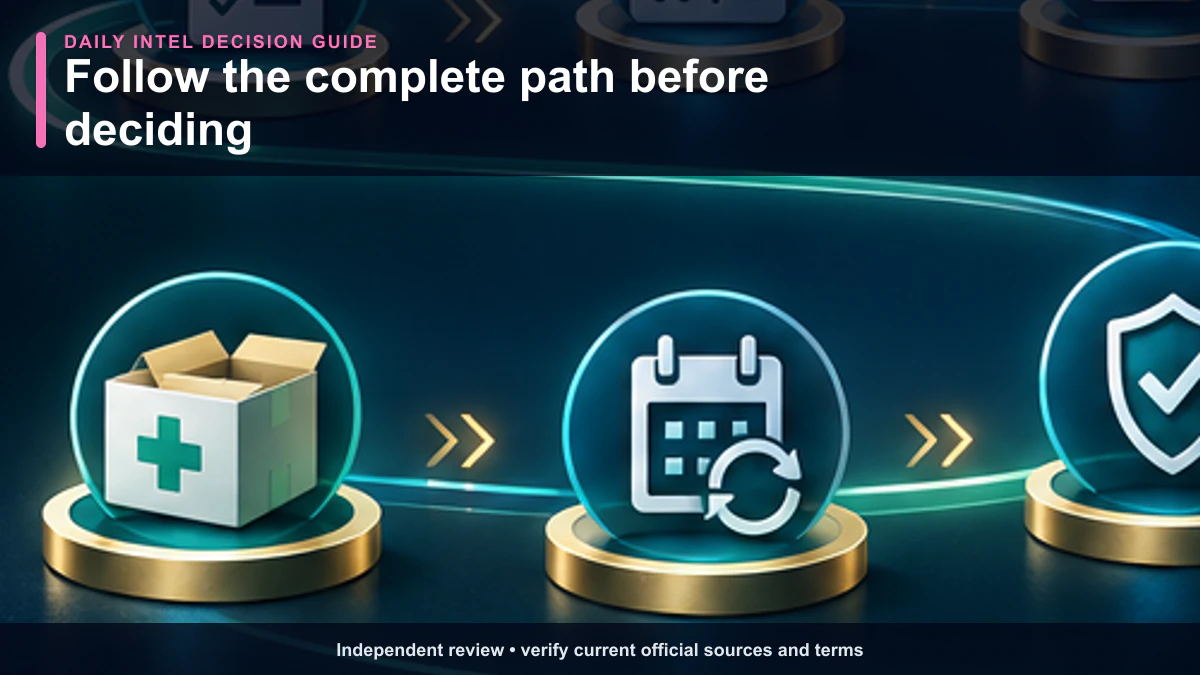

What HealthRX claims and what each claim establishes
Claim versus evidence boundary: The official sources support several observations. Each has a defined limit.
HealthRX says an independent licensed provider reviews the online visit. The page and terms support that this is the intended workflow. They do not reveal the questions used in a particular review or establish that every relevant clinical issue will be identified from a form.
HealthRX says licensed US pharmacies dispense approved prescriptions. This describes its claimed fulfillment model. The packet does not name the pharmacy that would fill a particular tadalafil prescription. It supplies no pharmacy-specific license record, formula, quality documentation, or production record.
HealthRX says nothing ships before physician approval. That is HealthRX’s description of a gate between application and shipment. It is not an assurance that the medication is safe for everyone, that approval guarantees benefit, or that no adverse event can occur.
HealthRX says approved medication ships in plain packaging and includes ongoing clinical support. Those claims describe the service. The packet does not independently verify a shipment, delivery, provider response, or support outcome.
HealthRX presents tadalafil as a long-acting PDE5 inhibitor. The supplied research supports tadalafil’s drug class and reports outcomes under specific study conditions. Drug-class evidence does not determine personal eligibility, prescribe a dose, identify the pharmacy preparation, or validate the HealthRX service.
HealthRX’s captured material says tadalafil can support erectile function for up to 36 hours. That remains seller language in this review. The packet does not support promising that duration to a particular patient or treating it as continuous erectile activity.
Price claims have the same scope problem. A $62 display establishes what appeared in a dated capture. It does not establish today’s price, the correct variant, the total amount charged, or the cost of a future change in dose or plan.
The evidence should therefore be kept in separate layers.
The first layer is seller description. It identifies listings, displayed prices, and the proposed workflow. It does not establish efficacy.
The second layer is operative service terms. Those terms address provider discretion, subscriptions, cancellation, prescription returns, and refunds after clinical denial. They do not establish medical outcomes.
The third layer is tadalafil research. It supports findings under reported dose, population, schedule, and duration conditions. It does not test the HealthRX telehealth platform or an unidentified dispensed product.
The fourth layer is FDA compounding guidance. It defines the regulatory boundary and describes potential risks. It does not determine whether the exact HealthRX prescription is compounded.
Combining true statements from these different layers would still not create finished-product proof. The missing connection must be supplied by exact product identity and evidence that matches that product.
Where dose, form, population, and duration break evidence transfer
Evidence boundary: The PubMed-indexed tadalafil abstract describes evidence involving men with mild-to-severe erectile dysfunction, including men with diabetes mellitus. In the trials summarized, participants used on-demand tadalafil at 10 or 20 mg, no more than once daily, for 12 weeks.
Reported measures included the erectile-function domain of the International Index of Erectile Function, abbreviated IIEF. The abstract also discusses the percentages of sexual-intercourse attempts involving successful vaginal penetration and completion. It reports significantly greater improvements with tadalafil than placebo on those measures.
The abstract reports improvement on other IIEF domains and on a global question measuring erection improvement. It describes adverse events as generally mild to moderate and decreasing in frequency with continued administration. Headache and dyspepsia, meaning indigestion, were the most commonly reported adverse events.
The abstract also says the incidence of cardiovascular adverse events was not significantly different between tadalafil and placebo recipients in the summarized evidence. That study-level statement must not be expanded into a general cardiovascular safety assurance. It does not settle an individual applicant’s risk, contraindications, interactions, or suitability.
The research is relevant to tadalafil, but several transfer gaps remain.
First, the summarized trials concern on-demand tadalafil at 10 or 20 mg. The packet does not provide the dose a HealthRX provider would prescribe to a particular patient. It separately lists Tadalafil Daily, which is a different schedule from the on-demand conditions described in the abstract.
Second, the packet does not identify the exact formulation, manufacturer, route, or production controls represented in the summarized trials. It does not demonstrate that a HealthRX-dispensed medication has the same formulation or quality characteristics.
Third, the study population does not establish eligibility for every applicant. Evidence involving men with mild-to-severe erectile dysfunction, including some with diabetes mellitus, cannot replace review of an individual’s medical history, current medication, and circumstances.
Fourth, the reported duration was 12 weeks. That does not establish the experience of an unspecified recurring subscription beyond those conditions. It also does not mean every participant obtained the same result or had the same adverse-event profile.
Fifth, the abstract does not evaluate HealthRX’s questionnaire, provider network, pharmacy fulfillment, shipping, cancellation process, refund handling, or follow-up support. Evidence about a drug is not evidence about the performance of a telehealth service.
Sixth, the packet supplies no finished-product trial for the exact medication a HealthRX patient would receive. It does not establish equivalence among standard Tadalafil, Tadalafil Daily, an FDA-approved product, and a compounded preparation.
This does not make the tadalafil research irrelevant. It determines how the research may be used. The evidence supports saying that tadalafil has been studied under the reported conditions. It does not support saying that the exact HealthRX product was studied, that every offered variant is equivalent, or that a particular patient will obtain the reported results.
The distinction between ingredient or drug evidence and finished-product evidence should remain visible at every stage of the decision.
Price, recurring charges, refunds, and the real commitment
Commercial check: The price record needs variant confirmation. A verified packet field records an official offer snapshot of $62, while the broader record also contains Sildenafil wording. The packet does not establish that $62 is the total price for every tadalafil version.
No single amount should be presented as the universal HealthRX tadalafil price. These are dated observations from the supplied capture, not guaranteed current prices.
The Tadalafil Daily material is the most detailed tadalafil price record. It describes $62 charged monthly for a one-month subscription with 30 doses per month. That schedule belongs to the captured daily listing. It cannot be assigned to the standard listing without confirmation.
HealthRX says plan pricing includes medication, clinician review, and shipping. It also advertises free expedited shipping. Before payment, verify that those inclusions apply to the exact tadalafil version selected and review the complete checkout charge.
The HealthRX Returns and Refund Policy says Subscribe & Save plans renew automatically at the price and interval shown at checkout until canceled. An introductory discount, when offered, applies only to the first payment. The recurring price is supposed to be disclosed before payment.
HealthRX says future renewals can be canceled by emailing support. One-time purchases do not renew automatically. The policy also says that if HealthRX proposes a change to the renewal price or billing period, it will notify the customer by email before the change takes effect, allowing cancellation before the change.
Those general terms do not reveal whether the selected tadalafil checkout is a subscription or one-time purchase. The product, quantity, interval, first payment, and future payment must be checked on the actual checkout screen.
The policy says state and federal pharmacy regulations do not allow prescription medications to be returned after dispensing. Once charged and handed to a carrier, the sale becomes final. Customers may modify orders before shipment through their accounts, according to the captured policy. Canceling a subscription does not reverse medication already dispensed.
Damaged or lost items require contact with patient care. The policy says HealthRX will reship an order lost in transit. These provisions concern fulfillment problems, not dissatisfaction with a dispensed prescription.
The HealthRX Terms of Use provide a separate rule for clinical denial. If an independent provider declines to prescribe after payment, HealthRX says it will issue a full refund of the related charge to the original payment method. Support processes the refund manually after the decline is recorded, and the time required for the refund to appear depends on the financial institution.
That clinical-denial refund is not a general satisfaction guarantee for medication that has already been dispensed.
The refund page also describes a 30-day money-back guarantee for a first HealthRX.com Daily order and return terms for over-the-counter products. The packet does not establish that either provision covers the reviewed prescription tadalafil offer. A guarantee associated with another program or product category cannot be transferred to this medication without confirmation.
The financial decision therefore requires more than relying on the $62 snapshot. Before paying, record the exact product name, quantity, first charge, recurring amount, billing interval, renewal date, cancellation method, included services, and point at which the transaction becomes final.
A disclosed commercial offer surface follows this section. Its presence is not a recommendation, proof of value, or evidence of eligibility. Daily Intel may earn a commission from a qualifying transaction. The exact affiliate link, without a sub-ID, appears only in that controlled surface.
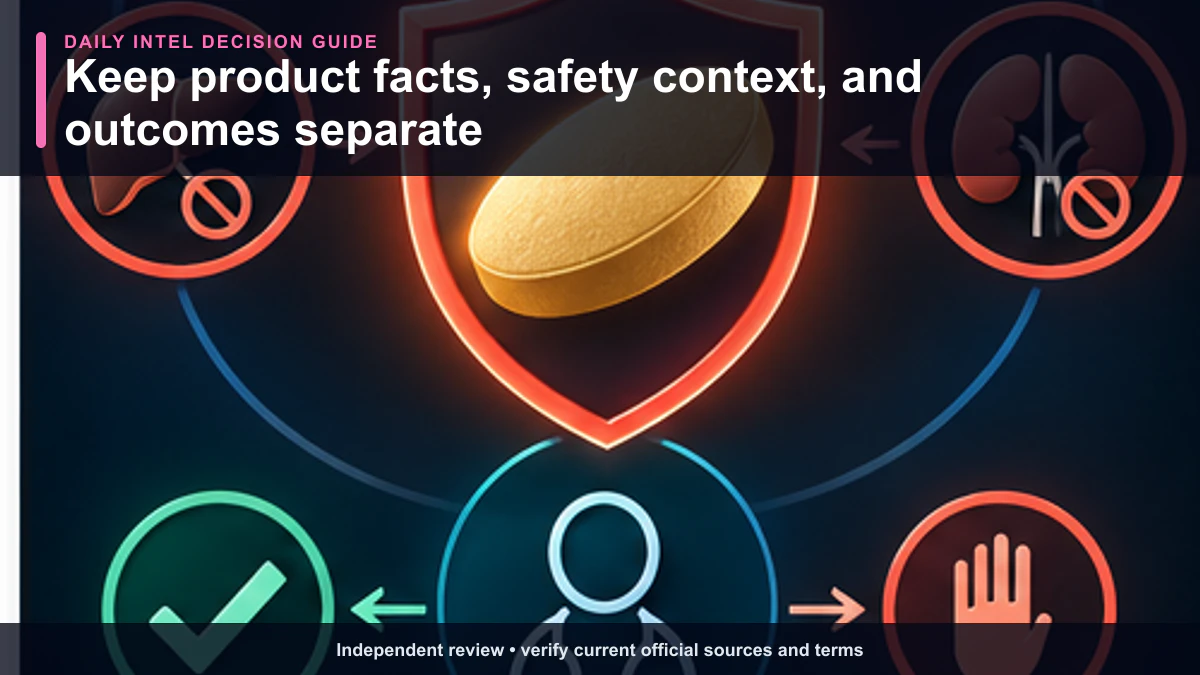
Safety and interaction boundaries the page cannot settle
Safety boundary: This packet is not a complete prescribing resource. It does not contain a full tadalafil label, comprehensive contraindication list, interaction table, dose-adjustment framework, or population-specific eligibility standard.
Some captured HealthRX material discusses medication timing, food effects, heart medications, and dosing for sildenafil. Those instructions cannot be transferred to tadalafil merely because both drugs are described as PDE5 inhibitors. Shared drug class does not make the products interchangeable.
A reader should not use the sildenafil statements in this packet as tadalafil instructions. The review also cannot determine whether tadalafil can be combined with any medication a particular reader uses because the required tadalafil-specific evidence is absent.
The appropriate boundary is to provide the reviewing provider with a complete health and medication history. Follow the exact prescription and pharmacy label. Do not start, stop, combine, or alter medication based on this article. Ask the provider to explain the contraindications, interactions, adverse effects, and warning signs relevant to the exact proposed prescription.
The cited tadalafil abstract provides limited adverse-event context. It reports headache and indigestion as the most common adverse events in the evidence summarized and describes reported events as generally mild to moderate. That does not guarantee a mild reaction, establish safety outside the studied conditions, or settle an individual interaction risk.
Compounding requires a separate boundary. The FDA’s Compounding and the FDA questions and answers states that compounded drugs are not FDA-approved. FDA does not verify their safety, effectiveness, or quality before they are marketed.
FDA explains that compounding can serve a patient whose medical need cannot be met by an FDA-approved drug. The agency also says unnecessary use may expose patients to potentially serious risks. Poor compounding practices can result in contamination or a preparation containing too much or too little active ingredient.
That guidance does not prove that the reviewed HealthRX tadalafil prescription is compounded. It defines the questions that matter if it is.
The exact boundary must remain explicit: evidence for an approved active ingredient or an FDA-approved drug does not establish FDA review of a compounded product dispensed to a patient. The existence of tadalafil studies likewise does not establish the quality, safety, effectiveness, or equivalence of an unidentified compounded preparation.
HealthRX’s terms say customers must be at least 18 years old. Beyond that threshold, the packet does not supply complete tadalafil eligibility criteria. Provider review is therefore a substantive clinical decision point, not a guarantee or a formality.
Who may continue and who should keep looking
Buyer fit: The HealthRX pathway may warrant further review for a US adult who wants an online prescription process, understands that approval is not automatic, and is prepared to provide complete medical information. Someone who values pharmacy delivery and provider follow-up may also find the stated service model useful if the exact prescription and costs are clear before payment.
That is a reason to investigate. It is not a medical recommendation or a prediction of benefit.
Pause if the service will not identify the exact medication, dose, formulation, directions, quantity, or dispensing pharmacy. Pause if compounding status remains unclear or if the provider cannot explain why the proposed option is appropriate for the applicant’s circumstances.
Keep looking if the budget depends on the lowest captured amount. The packet records a $62 offer snapshot while also containing tadalafil and sildenafil wording. A $62 display cannot safely be treated as the complete price of every tadalafil option.
A reader with a high evidence threshold should recognize the central research limitation. The supplied study concerns tadalafil under defined conditions, not the exact HealthRX medication and service. The packet contains no finished-product trial for the product that would be dispensed.
The same caution applies to safety. The packet does not provide a complete tadalafil-specific interaction or contraindication framework. A person who cannot obtain individualized review should not use this article to fill that gap.
The no-purchase option remains legitimate. Provider access, free shipping, a refund following clinical denial, or an affiliate commission does not create an obligation to proceed.
The closest supported alternatives change the verdict
Decision: The closest named alternative in the packet is sildenafil. HealthRX lists Sildenafil at $62 and describes it as a prescription option with provider review, pharmacy dispensing, shipping, and ongoing support.
That does not make sildenafil the better choice. The packet does not provide a matched comparison of the two drugs’ exact prescribed doses, formulations, eligible populations, contraindications, interactions, quantities, total costs, or outcomes. It would be misleading to choose between them from price or duration language alone.
Sildenafil becomes a relevant alternative only when the provider and applicant compare the exact prescriptions, medical fit, expected use pattern, and current commercial terms. Tadalafil’s captured longer-window or daily-use positioning matters only if it corresponds to the actual prescribed version and the provider determines that version is appropriate.
An FDA-approved product is also a relevant decision category if the HealthRX medication proves to be compounded. FDA guidance says compounded drugs should be used for patients whose medical needs cannot be met by an FDA-approved drug. The packet does not identify, price, or establish availability for a particular FDA-approved alternative, so a product-level comparison cannot be completed here.
The defensible comparison is therefore not based on which drug name sounds more convenient. It asks which exact prescription has a clear identity, appropriate clinical fit, acceptable evidence boundary, transparent total commitment, and adequately explained regulatory status.
The VSL strategy we would test for tadalafil
This is an original Daily Intel strategy. It is not HealthRX’s actual video sales letter, advertisement, or campaign. There is no evidence that HealthRX ran this presentation or that it produced clicks, prescriptions, sales, or medical outcomes.
Hook: make the missing fields visible
The opening would show a compact decision card with three headings: exact prescription, matching evidence, and complete cost. Verified facts would appear in one column. Unresolved fields would remain visibly blank.
The script would state that the packet identifies HealthRX tadalafil listings and an online provider-review pathway. It would then present the conflict without accusation: a $62 tadalafil offer snapshot appeared alongside other captured material that discussed Sildenafil.
The hook would not claim that the seller intentionally mixed products. A shared page, selected variant, or extraction issue could account for the record. The packet does not settle the explanation. The decision problem is narrower and fully supported: a buyer cannot compare value or study fit until the exact prescription and billing structure are identified.
The opening would also establish the commercial boundary. Daily Intel may earn a commission from a qualifying transaction, but the commission is not evidence of safety, effectiveness, or value. There would be no countdown, scarcity claim, unverified discount, testimonial, or implied medical outcome.
Lead: give the bounded answer first
The lead would say that tadalafil has relevant human evidence under reported conditions. It would immediately add that those findings do not validate an unidentified HealthRX medication.
HealthRX would be described using its own stated model: a marketplace connecting applicants with independent licensed providers and pharmacies. Payment would be framed as entry into a clinical and fulfillment process. It would not be described as purchasing a guaranteed prescription.
The largest uncertainty would be named plainly. The packet does not connect the exact HealthRX dose, form, pharmacy, or compounding status to the conditions in the cited tadalafil research.
The viewer would be promised a practical decision tool, not a health result. By the end, the viewer should know which identity, evidence, safety, and billing questions must be answered before deciding whether to proceed.
Mechanism and proof limits: replace the product name with a prescription identity
The core educational device would be a prescription-identity card. The word tadalafil would fill only the active-drug field. It would not complete the card.
Other required fields would include dose, dosage form, directions, frequency, quantity, dispensing pharmacy, and regulatory status. For a recurring service, the card would also include the first charge, later charge, billing interval, renewal date, cancellation route, and refund restrictions.
This framework is intended to keep unsupported facts from being transferred across variants. Standard Tadalafil, Tadalafil Daily, Sildenafil, an FDA-approved product, and a compounded preparation should not inherit one another’s price, dose, directions, or evidence.
The strategy would explain PDE5 inhibitor briefly as a drug class that limits the PDE5 enzyme. It would then state the boundary: knowing the class does not determine a personal dose, identify an interaction, establish eligibility, or verify the quality of a particular pharmacy preparation.
Story: follow a labeled hypothetical applicant
The narrative would use a clearly labeled hypothetical person. It would not present a real customer, testimonial, doctor endorsement, or first-hand account.
A US adult prefers an online process and notices a $62 figure. He initially assumes it is the complete tadalafil price. The decision card prompts him to inspect the evidence. He finds a $62 tadalafil offer snapshot and additional captured text about Sildenafil.
He does not accuse the seller of deception or decide which listing is correct. He asks which medication and schedule the provider is considering, what dose and quantity would be prescribed, and whether the medication would be compounded. He requests the dispensing pharmacy’s identity and the complete checkout schedule.
He then supplies his complete health and medication history. Because the packet does not contain a full tadalafil interaction list, he does not attempt to clear himself from the article. He asks the provider to explain risks, interactions, contraindications, alternatives, and the exact instructions that would apply to the prescription.
The hypothetical ends before treatment or purchase. He might proceed, select a different pathway, or decline. The narrative illustrates a verification process and predicts no medical outcome.
Proof: build an evidence ladder without merging its rungs
The first rung would be official seller evidence. The HealthRX page supports the existence of tadalafil listings, the proposed online-review workflow, and dated price displays. It does not prove effectiveness or identify the exact prescription a patient will receive.
The second rung would be service terms. HealthRX’s terms and refund policy explain that a provider controls prescribing, subscriptions may renew automatically, dispensed prescription medication is generally not returnable, and a clinical decline after payment triggers a refund of the related charge. Those provisions establish commercial rules, not medical outcomes.
The third rung would be tadalafil research. The cited abstract summarizes 12-week trials involving on-demand tadalafil at 10 or 20 mg in men with mild-to-severe erectile dysfunction. It reports greater improvements than placebo on specified measures and identifies headache and indigestion as common adverse events.
The mismatch fields would then appear. The exact HealthRX dose is unknown. Daily and on-demand schedules differ. The formulation, pharmacy, and compounding status are not matched. The HealthRX telehealth service was not tested in the cited evidence.
The fourth rung would be FDA compounding guidance. It establishes that compounded drugs are not FDA-approved and that FDA does not verify their safety, effectiveness, or quality before marketing. It does not establish that the reviewed prescription will be compounded.
The visual rule would be explicit: evidence can inform the decision across these layers, but the layers cannot be merged into proof that the exact finished product is safe or effective.
Objections and Decision Split
For the objection “Tadalafil has clinical evidence, so why hesitate?” the response would be that studied tadalafil conditions and an unidentified dispensed product are not the same evidence object. Dose, form, schedule, population, duration, and production source matter.
For “Does licensed-provider review guarantee safety?” the answer would be no. Review is an important clinical gate, but the packet supports no absolute safety assurance. Suitability depends on the applicant’s health and medication history, the provider’s judgment, and the exact prescription.
For “Is $62 a good price?” the answer would be that value cannot be calculated until the variant, quantity, first payment, later payment, billing interval, and included services are confirmed. The packet records a $62 offer snapshot without settling the exact variant and complete charge.
For “Can I obtain a refund?” the answer would distinguish clinical denial from regret after dispensing. HealthRX says it refunds the related charge when a provider declines to prescribe after payment. Its policy also says dispensed prescription medication generally cannot be returned and that a sale becomes final after charge and carrier handoff.
For “Should I choose sildenafil instead?” the response would preserve the medical boundary. Sildenafil is a named alternative in the packet, but the evidence does not provide a complete matched comparison or authorize a personal recommendation.
For “Is compounded tadalafil equivalent?” the answer would be that the packet does not establish equivalence. FDA does not approve compounded drugs or verify their safety, effectiveness, or quality before marketing. Evidence involving an approved active ingredient does not establish FDA review of the compounded product dispensed.
Offer: show the commitment without urgency
The offer segment would present the latest captured observations with dates and limitations. The verified fact card records an official $62 offer snapshot, while the broader record contains tadalafil and sildenafil wording. HealthRX says displayed plan prices include medication, provider review, and shipping, but the selected checkout controls the actual transaction.
The script would explain that subscription plans renew at the displayed price and interval until canceled. It would instruct viewers to save the checkout terms and confirm whether the selected option is recurring. It would distinguish the refund after clinical denial from the restrictions on returning dispensed prescription medication.
No inventory warning, countdown, unverified sale, or guaranteed result would appear. An active affiliate contract and permission to publish content would remain commercial facts, not clinical evidence.
CTA: invite verification rather than immediate treatment
The final action would invite the viewer to review the offer and complete the prescription-identity card before paying. The checklist would request the exact drug, dose, form, directions, quantity, compounding status, pharmacy, first charge, recurring charge, renewal date, cancellation route, and refund limits.
The script would state that the independent provider, not Daily Intel, determines eligibility. If the prescription or financial commitment remains unclear, waiting or comparing another pathway is the evidence-led choice.
This strategy is falsifiable. Clear product identity, matched pricing, named pharmacy fulfillment, and evidence corresponding to the dispensed product would narrow the uncertainty. Continued variant confusion or missing material terms would weaken the case for proceeding.
Frequently asked questions
Q: What exactly is the HealthRX tadalafil offer?
A: It is a telehealth pathway involving medical questions, independent licensed-provider review, a prescription when clinically appropriate, pharmacy fulfillment, and shipment. The packet does not establish the exact dose, formulation, quantity, dispensing pharmacy, or compounding status that a particular applicant would receive.
Q: How much does HealthRX tadalafil cost?
A: The supplied evidence does not support one universal price. The packet records a $62 offer snapshot but does not establish the exact variant, quantity, or billing interval it covers. Confirm the selected product, quantity, billing interval, included services, first charge, and recurring charge at checkout.
Q: Is the HealthRX tadalafil medication compounded?
A: The packet does not settle that question for the exact prescription a patient would receive. HealthRX discusses compounded medications generally and says pharmacy packaging and labels may vary. Ask whether the proposed medication is an FDA-approved product or a compounded preparation and identify the dispensing pharmacy.
Q: Does the cited research prove that HealthRX tadalafil works?
A: No. The cited abstract summarizes on-demand tadalafil at 10 or 20 mg in 12-week trials involving men with erectile dysfunction. It does not identify or test the exact HealthRX medication, formulation, pharmacy, telehealth process, subscription, or prescription that a particular patient would receive.
Q: Can I take tadalafil with my other medications?
A: This packet does not contain a complete tadalafil-specific contraindication or interaction list. Do not transfer the captured sildenafil instructions to tadalafil or use this review to change medication. Give the reviewing provider a complete health and medication history and follow the exact prescription and pharmacy label.
Q: Can I cancel a HealthRX subscription or obtain a refund?
A: HealthRX says subscriptions renew until canceled and future renewals may be canceled by emailing support. Dispensed prescription medication generally cannot be returned, and sales become final after charge and carrier handoff. HealthRX says it refunds the related charge if a provider declines to prescribe after payment.
Sources and evidence notes
Evidence card: HealthRX tadalafil destination. This is the program-specific destination identified in the packet. It matters for defining the commercial subject. The affiliate redirect was deliberately not opened, and the destination does not by itself establish the exact prescription, eligibility, product quality, or effectiveness.
Evidence card: HealthRX sexual-health page. This capture supplies structured listings, seller descriptions, dated prices, and the proposed provider-review and pharmacy-fulfillment workflow. It also contains the standard Tadalafil, Tadalafil Daily, and Sildenafil conflicts that prevent one clean product and price statement.
Evidence card: HealthRX Terms of Use. The terms describe HealthRX as a marketplace, place clinical decisions with independent providers, say payment does not guarantee a prescription, require customers to be at least 18, and describe a refund after clinical denial. They are not efficacy evidence.
Evidence card: HealthRX Returns and Refund Policy. This policy matters for automatic renewal, future cancellation, final-sale restrictions, and lost or damaged shipments. Its over-the-counter rules and separate HealthRX.com Daily guarantee cannot be assumed to cover this prescription without confirmation.
Evidence card: FDA Compounding and the FDA: Questions and Answers. This regulator source states that compounded drugs are not FDA-approved and that FDA does not verify their safety, effectiveness, or quality before marketing. It does not determine whether the exact HealthRX prescription is compounded.
Evidence card: PubMed abstract for Tadalafil. This source reports tadalafil doses, population, duration, outcomes, and adverse-event context from the evidence it summarizes. It is relevant to tadalafil but does not test the exact HealthRX medication, pharmacy, subscription, or telehealth workflow.
Final Take: what would change the verdict
Bottom line: The present verdict is verify before proceeding, not “buy” or “avoid.” Tadalafil has relevant human evidence, and HealthRX documents a provider-review process with pharmacy fulfillment. Those facts are meaningful but incomplete.
The exact offer remains uncertain because the packet contains different tadalafil prices, a separate daily version, and sildenafil wording within the broader record. It also lacks the exact prescribed dose, dosage form, directions, quantity, pharmacy, compounding status, and complete tadalafil-specific interaction framework.
The verdict would become more favorable if the prepayment process clearly identified the prescription and pharmacy, distinguished standard from daily tadalafil, explained regulatory and compounding status, displayed one complete billing schedule, and supplied evidence matched to the medication that would be dispensed.
It would become less favorable if identity, safety, or billing details remained ambiguous after provider review or before payment.
The affiliate redirect was not tested, and promotional-image rights were not verified. Those are publication and commercial-verification limits, not clinical findings. No tracked click, purchase, prescription, shipment, delivery, or patient outcome is claimed.
A reader who continues should use the provider review to resolve medical fit and the checkout screen to resolve financial commitment. If either remains unclear, waiting is the evidence-led decision.
The exact compounded product reviewed here is not FDA-approved; clinician review and pharmacy fulfillment do not establish FDA review of its safety, effectiveness, or quality.
This article is for informational and educational purposes only. It is not medical advice. Daily Intel is independent and may earn an affiliate commission. HealthRX did not write, review, or control this article.
This article is for informational and educational purposes only. It is not medical advice. Daily Intel is independent and may earn an affiliate commission. HealthRX did not write, review, or control this article.
Comments(0)
No comments yet. Members, start the conversation below.
Related reads
 reviews
ARMRA Colostrum Review: Evidence, Dose Gaps, Price, and Verdict
ARMRA’s 120-serving colostrum powder comes with notable manufacturer-reported survey percentages. However, the undisclosed amount per serving and a materially different ingredient trial leave the finished product’s highlighted outcomes unproven.
Read reviews
Olly Goodbye Stress Review: Label Claims vs. Evidence
OLLY Goodbye Stress combines GABA, L-theanine, and lemon balm extract in a Berry Verbena gummy aimed at occasional stress, not sleep. Here's what the label discloses, what a real L-theanine trial found, and exactly where the evidence stops.
Read reviews
Kaged Pre-Kaged Sport Review: Does the Citrulline Study Fit?
Kaged Pre-Kaged Sport provides 3.5 grams of fermented L-citrulline in each 13-gram scoop. The supplied trial tested a higher dose of isolated L-citrulline and found no performance benefit, so it cannot prove whether this finished formula works.
Read